Aluminium Extrusion Press Automation Guide for Modern Factories

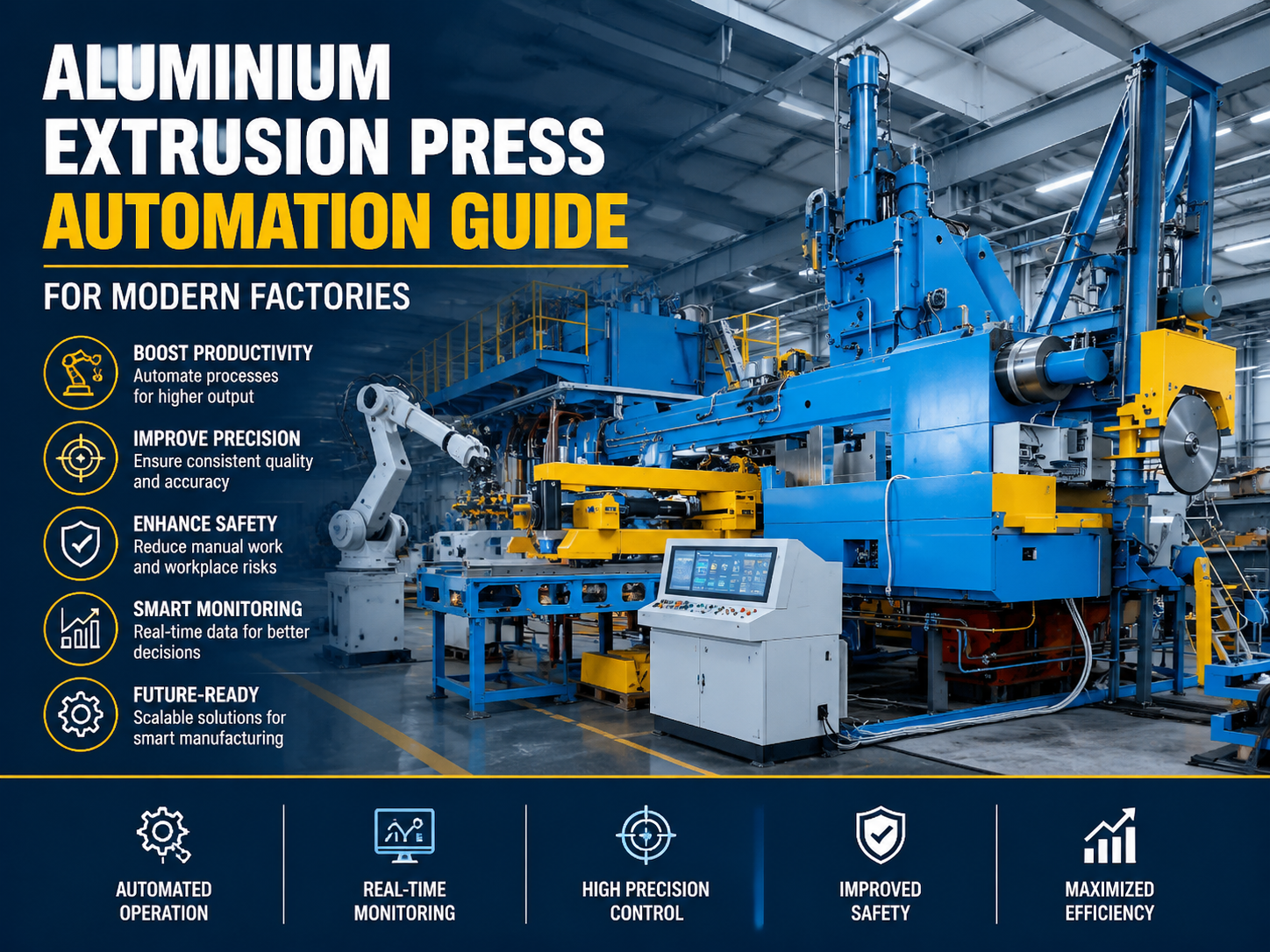
Introduction to Aluminium Extrusion Press Automation Modern Factories
In the rapidly evolving landscape of global manufacturing, the transition toward Aluminium Extrusion Press Automation Modern Factories has become a necessity rather than a luxury. As industries ranging from aerospace and automotive to construction and consumer electronics demand higher precision and faster turnaround times, the traditional manual extrusion process is being phased out. Modern automation integrates sophisticated hydraulic systems, programmable logic controllers (PLCs), and robotic handling to ensure that every profile produced meets stringent quality standards while minimizing waste and labor costs.
HARSLE has been at the forefront of this industrial revolution, providing state-of-the-art extrusion solutions that bridge the gap between raw material and finished high-performance profiles. Automation in this sector involves more than just the press itself; it encompasses the entire production line, from billet heating and log shearing to the final aging oven and packing stations. This guide aims to provide factory owners, engineers, and procurement specialists with a deep dive into the financial and technical aspects of automating an aluminium extrusion line.
Price Range Overview for Automated Extrusion Lines
When considering the investment for Aluminium Extrusion Press Automation Modern Factories, it is essential to understand that pricing is highly dependent on the press tonnage and the level of peripheral automation. A basic, semi-automated line for small-scale production differs significantly in cost from a fully integrated Industry 4.0-ready facility. Generally, the market is divided into three primary tiers based on production capacity and automation depth.
For entry-level automated lines, typically featuring a 600T to 1000T press, prices usually range from $250,000 to $600,000. These lines often include basic automated billet loading and a single puller system. While they reduce the need for manual intervention during the extrusion stroke, they may still require manual handling at the cooling table or during the stretching phase. These are ideal for startups or factories focusing on simple architectural profiles.
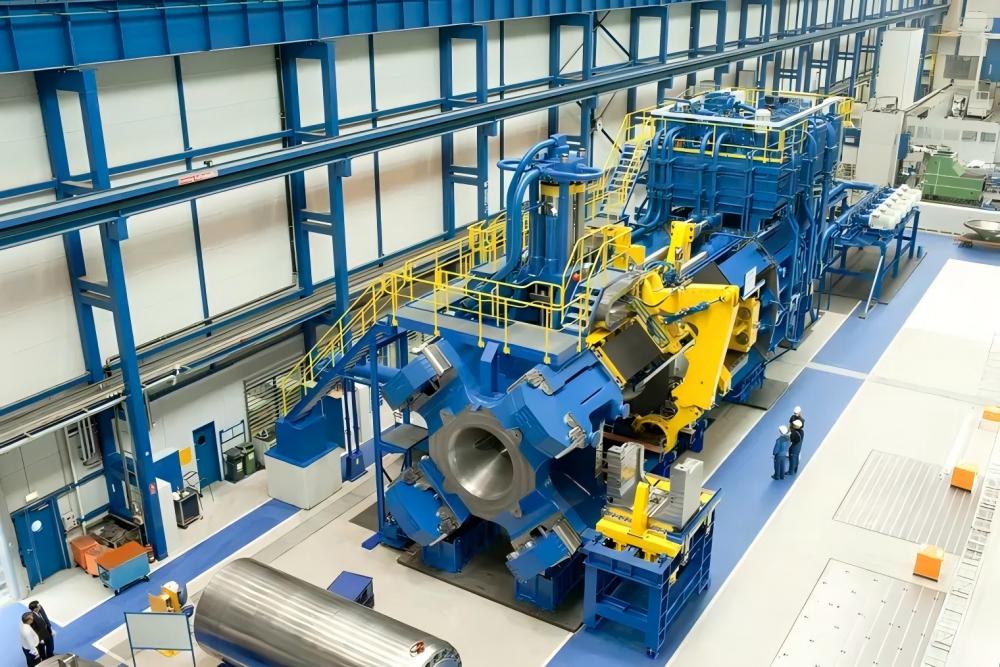
Mid-range systems, which are the backbone of most Modern Factories, utilize presses between 1450T and 2500T. These systems typically cost between $800,000 and $2,500,000. At this level, automation becomes much more comprehensive, featuring double-puller systems, automated quenching (air and water), and sophisticated walking-beam cooling tables. The integration of a PLC-controlled log furnace with a multi-billet heater is also standard, ensuring that the thermal cycle is perfectly synchronized with the press speed.
High-end, heavy-duty automated lines (3600T to over 10,000T) are designed for industrial applications like high-speed rail components or large structural beams. These installations can exceed $5,000,000. These facilities are characterized by full-stack automation, including robotic stacking, automated die ovens, and real-time data monitoring systems that track every parameter from extrusion pressure to exit temperature. HARSLE provides customized solutions across all these tiers, ensuring that the machinery fits the specific output requirements of the client.
Main Cost Drivers in Automation
The cost of Aluminium Extrusion Press Automation Modern Factories is driven by several critical components. Understanding these drivers allows factory managers to allocate their budget effectively. The first major driver is the hydraulic system. High-performance automation requires variable displacement pumps (such as those from Rexroth or Vickers) and servo-driven motors. These components are more expensive than standard gear pumps but offer the precision and energy efficiency required for automated cycles.
The second driver is the control system. A modern automated press relies on a robust PLC (Programmable Logic Controller) and HMI (Human Machine Interface). Systems that utilize Siemens S7-1500 series or similar high-end controllers allow for complex recipe management, where the press automatically adjusts its speed and pressure based on the specific alloy and die being used. This software layer adds significant value but also increases the initial capital expenditure.
Thirdly, the handling system—often referred to as the “back-end”—is a massive cost factor. An automated cooling table with a walking beam mechanism prevents surface damage to the profiles, which is critical for high-end finishes. If you add a double-puller system, which allows the press to continue extruding while the previous profile is being cut and moved, you significantly increase throughput, but also the mechanical and electronic complexity of the line.
Configuration Impact on Production Efficiency
The configuration of an Aluminium Extrusion Press Automation Modern Factories setup directly dictates the daily output and the quality of the finished goods. One of the most impactful configurations is the choice of the quenching system. For 6000-series alloys, precise cooling is required to achieve the desired mechanical properties. Automated lines can feature multi-stage quenching zones with adjustable water sprays and high-velocity air fans, all controlled by the central PLC to match the extrusion speed.
Another critical configuration is the billet heating method. Modern factories are moving away from traditional gas-fired ovens toward multi-log induction heaters or high-efficiency flame heaters with log shears. This allows for “hot shearing,” which ensures the billet is at the optimal temperature the moment it enters the container. This synchronization reduces the “dead cycle” time—the period when the press is not extruding—thereby maximizing the ROI of the machine.
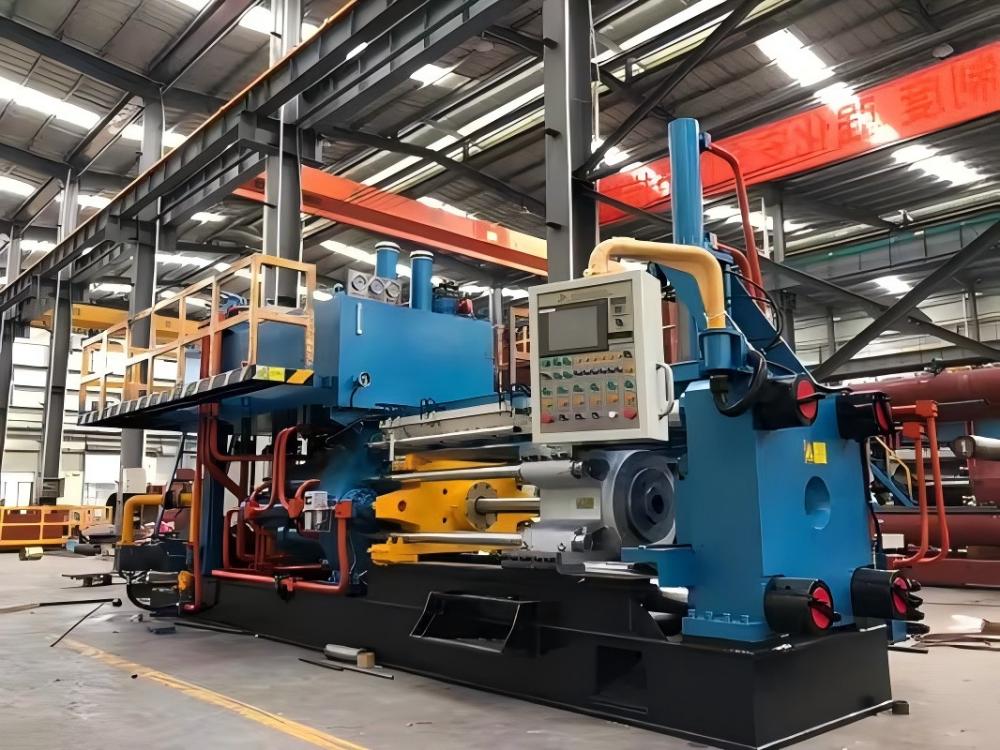
The stretcher configuration also plays a vital role. In a fully automated line, the stretcher is integrated with sensors that measure the exact length and tension applied to the profile. This prevents over-stretching and reduces scrap. When combined with an automated finish saw and stacking system, the entire process from billet to packed bundle can be handled with minimal human contact, ensuring a cleaner, safer, and more efficient workspace.
Hidden Costs of Implementing Automation
While the sticker price of the machinery is the most visible expense, several hidden costs must be accounted for when planning Aluminium Extrusion Press Automation Modern Factories. Site preparation is often underestimated. Automated lines are long—sometimes exceeding 50 to 80 meters. This requires a perfectly level, reinforced concrete foundation capable of withstanding the massive vibration and weight of the press and the handling tables.
Utility upgrades are another significant hidden cost. An automated 2000T press line requires substantial electrical power, not just for the main motors but for the induction heaters and cooling fans. Furthermore, a high-capacity water cooling and filtration system is necessary to manage the hydraulic oil temperature and the quenching process. If the existing factory infrastructure cannot support these loads, the cost of transformers and industrial plumbing can add tens of thousands of dollars to the project.
Training and software maintenance are also ongoing costs. Operating an automated HARSLE press requires a different skill set than a manual one. Operators need to be trained in HMI navigation, troubleshooting PLC errors, and performing preventative maintenance on sensitive sensors and encoders. Additionally, as Industry 4.0 evolves, software updates and cybersecurity measures for connected machines become a necessary part of the operational budget.
ROI Calculation: Is Automation Worth It?
Calculating the Return on Investment (ROI) for Aluminium Extrusion Press Automation Modern Factories involves looking at three main areas: labor savings, scrap reduction, and increased throughput. In a manual setup, a 1500T line might require 6 to 8 workers per shift. An automated HARSLE line can often be operated by 3 to 4 people. Over three shifts, this reduction in headcount can save a factory $150,000 to $300,000 annually, depending on local labor rates.
Scrap reduction is perhaps the most significant financial benefit. Automation ensures consistent extrusion speeds and temperatures, which minimizes the “butt” size and reduces the number of profiles rejected due to surface defects or incorrect dimensions. If automation reduces scrap by even 3-5%, the savings in raw aluminium costs over a year can be astronomical, often paying for the automation upgrade within 18 to 24 months.
Finally, throughput increases because the “dead cycle” time is minimized. An automated press doesn’t get tired; it maintains a consistent cycle time from the start of the shift to the end. By squeezing out an extra 2-3 billets per hour through better synchronization, a factory can increase its total annual output by hundreds of tons without adding a second press. This increased capacity allows the business to take on more orders and grow its market share rapidly.
Buying Advice for Modern Factory Owners
When purchasing an Aluminium Extrusion Press Automation Modern Factories, the first step is to define your product mix. Are you producing thin-walled profiles for electronics or heavy structural sections for the solar industry? This will determine the tonnage and the specific quenching requirements. HARSLE recommends choosing a press with slightly more capacity than your current needs to allow for future growth and the ability to run the machine at 80% capacity, which extends the lifespan of the hydraulic components.
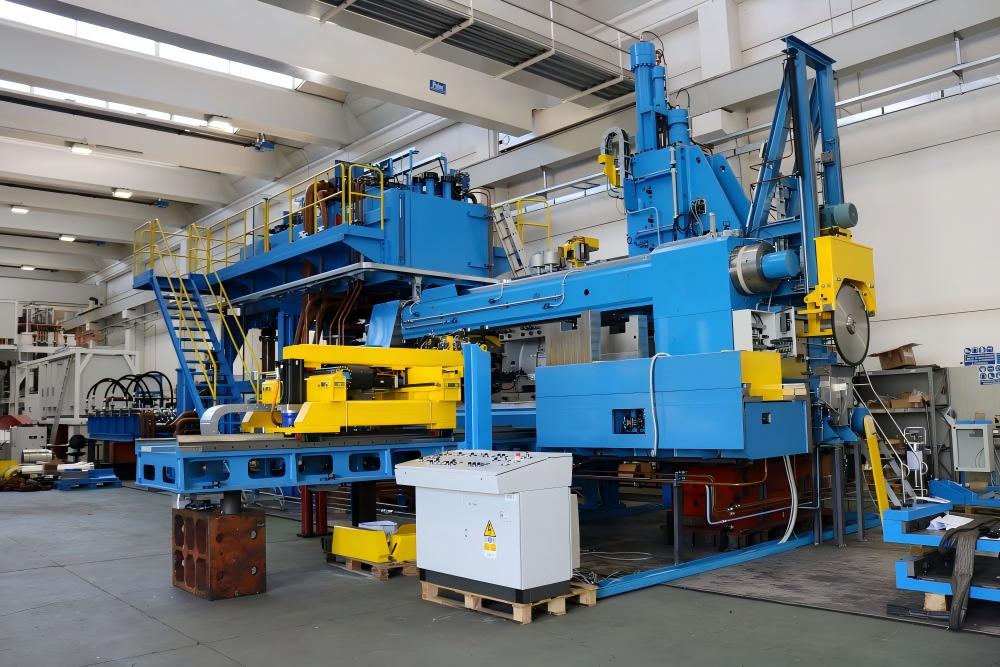
Always vet the supplier’s after-sales support and software capabilities. An automated machine is only as good as the support behind it. Ensure that the manufacturer provides remote diagnostic capabilities, allowing their engineers to log into your PLC from across the world to fix software glitches or optimize settings. This can save days of downtime. Furthermore, check the availability of spare parts like hydraulic seals, sensors, and PLC modules in your local region.
Lastly, consider the “modular” approach to automation. If your budget is tight, you can start with a high-quality HARSLE press and a basic handling system, ensuring that the control architecture is ready for future upgrades. You can add a double puller, robotic stacker, or automated aging oven later as your cash flow allows. This ensures you aren’t over-leveraged while still positioning your factory for modern efficiency.
Frequently Asked Questions (FAQ)
1. What is the typical lifespan of an automated aluminium extrusion press?
With proper maintenance, a high-quality press from HARSLE can last 20 to 30 years. However, the automation components (PLCs, sensors, and HMI) typically have a technology cycle of 10 to 15 years, after which they may need upgrading to remain compatible with modern software and to maintain peak efficiency.
2. Can an old manual press be retrofitted with automation?
Yes, it is possible to retrofit older presses with modern PLC controls and automated handling systems. However, the cost-benefit analysis often favors buying a new integrated system, as the mechanical wear on an old press may prevent it from achieving the precision that modern automation software demands.
3. How much space is required for a fully automated 1500T extrusion line?
A typical 1500T automated line requires a space approximately 60 to 70 meters long and 15 to 20 meters wide. This includes the billet furnace, the press, the cooling table, the stretcher, and the finish saw. It is crucial to allow for additional space for die storage, raw material handling, and finished goods packing.
4. What are the most common maintenance issues in automated lines?
The most common issues involve hydraulic leaks and sensor misalignment. Because automated lines rely on precise feedback, a single dirty or misaligned limit switch can halt the entire production. Regular cleaning of the sensors and scheduled hydraulic oil filtration are essential to prevent these minor issues from causing major downtime.
5. Does automation improve the surface quality of the aluminium?
Absolutely. Automated handling systems, such as walking beams with heat-resistant felt or specialized belts, eliminate the manual dragging of profiles across metal surfaces. This significantly reduces scratches and “pick-up” marks, which is vital for profiles that will be anodized or powder-coated.
6. How does Industry 4.0 integration benefit an extrusion factory?
Industry 4.0 allows for real-time data collection. Factory managers can monitor energy consumption per kilogram of aluminium, track die performance to predict when a die needs polishing, and integrate the press data directly with their ERP system for accurate order tracking and inventory management.
7. What kind of cooling is best for automated extrusion?
The “best” cooling depends on the alloy. However, a modern automated line should ideally have a combination of high-pressure air fans and water mist/spray systems. Automation allows the system to switch between these modes or use both simultaneously based on the profile’s exit temperature and thickness, ensuring consistent T5 or T6 tempering.