New vs Used Aluminium Extrusion Press: Which Is Better for Your Business?

Introduction to the Aluminium Extrusion Investment Dilemma
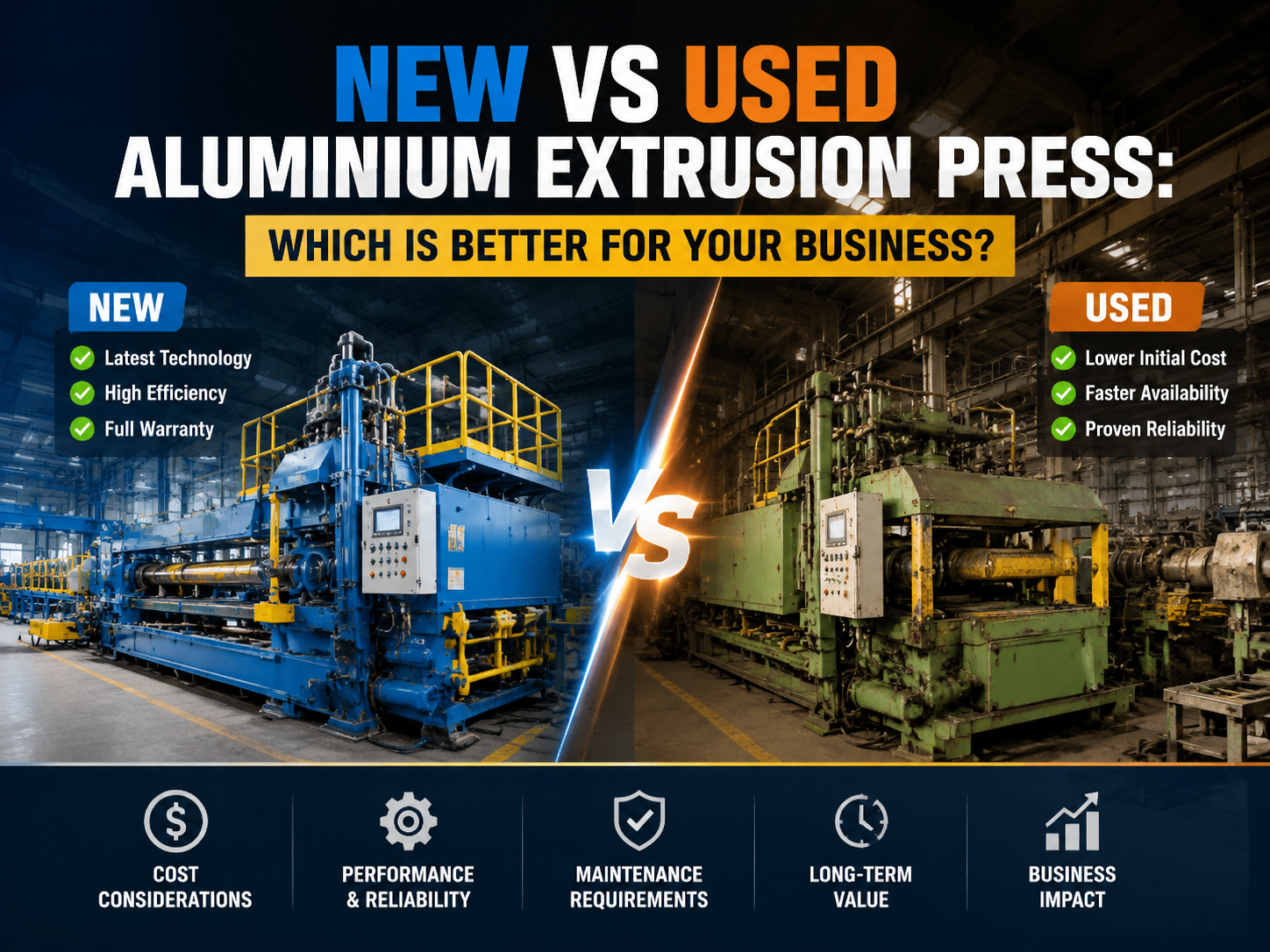
The global demand for aluminium profiles is skyrocketing, driven by the automotive, construction, and renewable energy sectors. For manufacturers looking to enter this lucrative market or expand their existing capacity, the most critical decision involves the heart of the operation: the extrusion press. The debate of New Vs Used Aluminium Extrusion Press: Which Is Better Business is not merely a question of upfront capital but a complex calculation involving long-term operational efficiency, maintenance cycles, and technological relevance. At HARSLE, we understand that this investment defines your production capabilities for the next two decades.
Choosing between a brand-new machine and a pre-owned unit requires a deep dive into the technical specifications and the total cost of ownership. While a used press might offer a lower entry barrier, a new press brings the advantages of modern automation, energy efficiency, and manufacturer warranties. This guide provides a comprehensive breakdown to help you navigate this high-stakes decision, ensuring your choice aligns with your business’s financial health and production goals.
Price Range Overview: Initial Capital Requirements
The price gap between new and used aluminium extrusion presses is significant, often being the primary driver for small to medium enterprises (SMEs). A new, high-quality aluminium extrusion press from a reputable manufacturer like HARSLE can range from $400,000 for a basic 600-ton model to well over $5,000,000 for large-scale 5000-ton systems equipped with full automation. These prices typically include the latest PLC controls, high-efficiency hydraulic systems, and comprehensive safety features.
In contrast, used machinery can often be acquired for 30% to 60% of the cost of a new unit. A 10-year-old 1000-ton press might be listed for $150,000 to $250,000. However, the ‘sticker price’ of a used machine is rarely the final cost. Buyers must account for dismantling, shipping, and the inevitable refurbishment required to bring an older machine up to modern production standards. When considering New Vs Used Aluminium Extrusion Press: Which Is Better Business, the initial price is only the tip of the iceberg.
Furthermore, the market for used machinery is highly volatile. Prices depend heavily on the machine’s brand, its maintenance history, and the urgency of the seller. A well-maintained press from a top-tier European or Asian brand will hold its value much better than a generic model, making the ‘bargain’ used machine a potential risk if the previous owner neglected routine servicing.
Main Cost Drivers in Extrusion Press Acquisition
Several factors dictate the final price of an extrusion press, whether new or used. The most obvious is the tonnage. The press force (measured in metric tons) determines the size of the billets you can process and the complexity of the profiles you can produce. Higher tonnage requires larger castings, more powerful hydraulic pumps, and more robust frames, all of which drive up the cost exponentially.
Technology and automation levels are the second major cost driver. Modern presses feature sophisticated sensors that monitor temperature, pressure, and speed in real-time. These systems reduce human error and maximize yield. When buying new, you are paying for the latest R&D in ‘Dead Cycle Time’ reduction—the time the press is not extruding. Older machines often have dead cycle times 20-40% longer than modern HARSLE presses, which directly impacts your daily output and profitability.
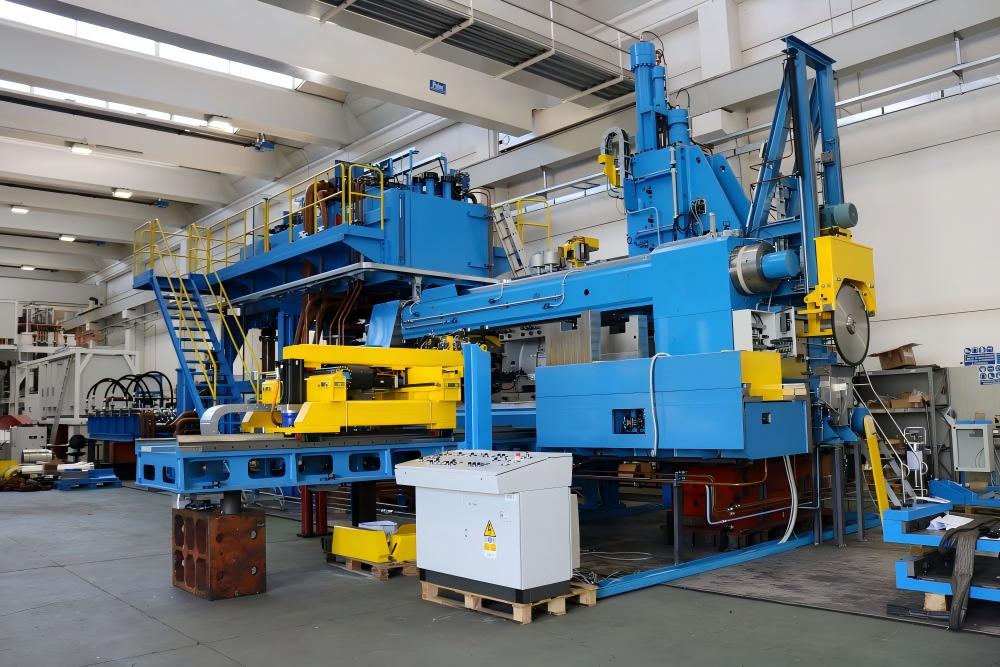
The hydraulic system’s complexity also plays a role. Modern presses utilize servo-driven pumps that only consume energy when the machine is moving. Older used machines typically use standard vane or piston pumps that run constantly, leading to massive energy waste. While the initial cost of a servo-system is higher, the long-term savings in electricity often justify the investment in a new machine.
Configuration Impact: Technical Specifications and Customization
When you purchase a new aluminium extrusion press, you have the luxury of customization. You can specify the container size, the stroke length, and the type of die slide that best fits your specific product mix. For businesses focusing on high-precision aerospace components, a press with enhanced structural rigidity and ultra-precise speed control is essential. This level of tailoring is rarely possible with used equipment, where you must adapt your production to the machine’s existing limitations.
The control system is another area where configuration makes a massive difference. New machines come with integrated PLC systems (like Siemens or Mitsubishi) that offer user-friendly interfaces and remote diagnostic capabilities. A used machine might still be running on obsolete software or hardware, making it difficult to find replacement parts or technicians who understand the system. Upgrading the electronics on a used press can cost upwards of $50,000, narrowing the price gap between new and used options.
Handling systems—including the puller, cooling table, and saw—must also be compatible with the press. Buying a new, integrated line ensures that every component communicates perfectly. With used equipment, you often end up with a ‘Frankenstein’ line where different components from different eras are patched together, leading to frequent synchronization issues and increased downtime.
Hidden Costs: What the Quote Doesn’t Tell You
The true cost of an extrusion press often lies in the details that aren’t on the invoice. For a used machine, the hidden costs start with the ‘As-Is’ condition. You may discover worn-out liners, leaking hydraulic seals, or a cracked main cylinder only after the machine is installed. The cost of replacing a main cylinder on a large press can be astronomical, sometimes exceeding the original purchase price of the used unit.
Installation and foundation work are often overlooked. An extrusion press requires a massive, precision-engineered concrete foundation. If you buy a used machine, you may not have access to the original foundation drawings, leading to expensive engineering consultations. Furthermore, the cost of rigging and transporting a 100-ton machine across borders can add tens of thousands of dollars to your budget.
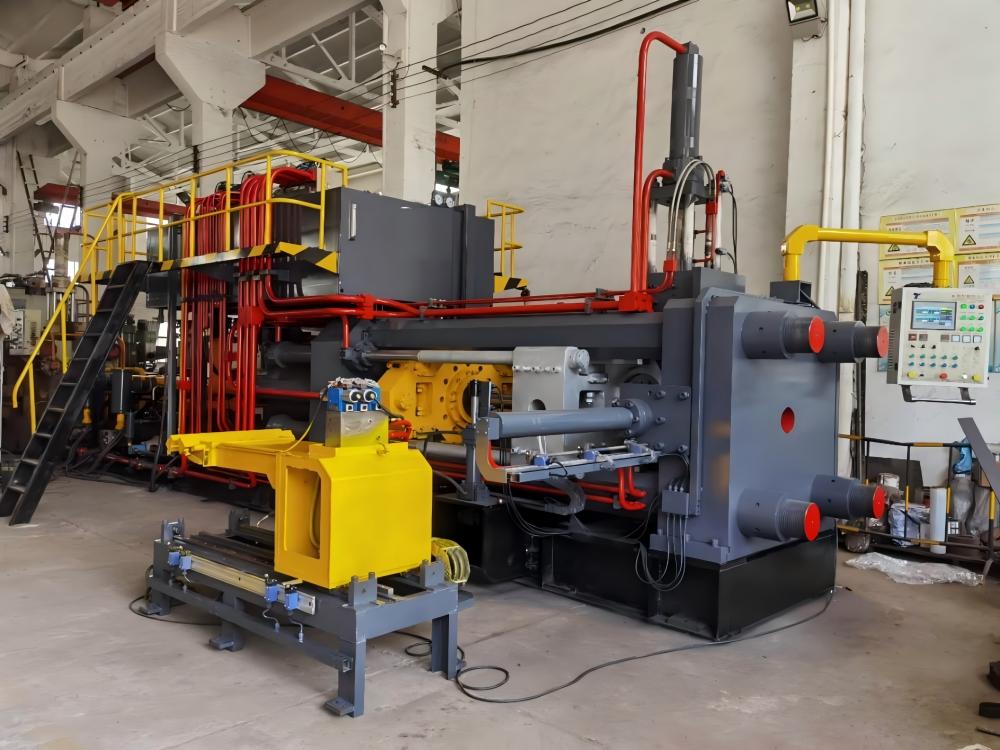
Energy efficiency is perhaps the most significant hidden cost. In many regions, electricity costs are the second-highest operational expense after raw materials. A new HARSLE press with energy-saving technology can reduce power consumption by 25-35% compared to a 15-year-old used press. Over a five-year period, these savings can amount to hundreds of thousands of dollars, making the New Vs Used Aluminium Extrusion Press: Which Is Better Business debate lean heavily toward ‘new’ for high-volume producers.
ROI Calculation: Measuring the Payback Period
To determine which option is better for your business, you must calculate the Return on Investment (ROI). The formula is simple: (Total Gain from Investment – Cost of Investment) / Cost of Investment. However, calculating the ‘gain’ requires looking at several variables. For a new machine, the gain comes from higher uptime, lower scrap rates, and lower energy bills. For a used machine, the gain is the lower initial debt service and faster setup time if the machine is already in the region.
Consider a scenario where a new press costs $1,000,000 and a used one costs $500,000. If the new press produces 10% more sellable profiles due to better precision and has 15% less downtime, the annual revenue difference could be $200,000. Additionally, if the new press saves $40,000 a year in energy and $20,000 in maintenance, the ‘extra’ $500,000 spent on the new machine is recovered in just over two years. After that point, the new machine generates significantly higher pure profit every year.
Used machines often have a faster ‘initial’ ROI because they start producing with less debt. This makes them attractive for startups or businesses testing a new market. However, the ‘risk-adjusted’ ROI is often lower for used machines because one major component failure can halt production for weeks, wiping out months of profit. When evaluating New Vs Used Aluminium Extrusion Press: Which Is Better Business, always factor in a ‘risk premium’ for used equipment.
Buying Advice: Making the Right Choice for Your Scale
If you are a high-volume manufacturer with a stable customer base, buying a new aluminium extrusion press is almost always the superior choice. The reliability, warranty, and technological edge provided by a new HARSLE press ensure that you remain competitive in a market where margins are often thin. You also benefit from the manufacturer’s support for installation, training, and long-term maintenance, which is invaluable for maintaining high OEE (Overall Equipment Effectiveness).
On the other hand, a used press might be the right choice if you are a small shop doing custom, low-volume work where the machine isn’t running 24/7. In this case, the lower capital expenditure allows you to stay flexible. If you choose the used route, ensure you perform a rigorous ‘due diligence’ process. Hire an independent engineer to inspect the hydraulic fluid for metal shavings (a sign of pump wear), check the alignment of the platen, and verify the integrity of the main tie-rods.
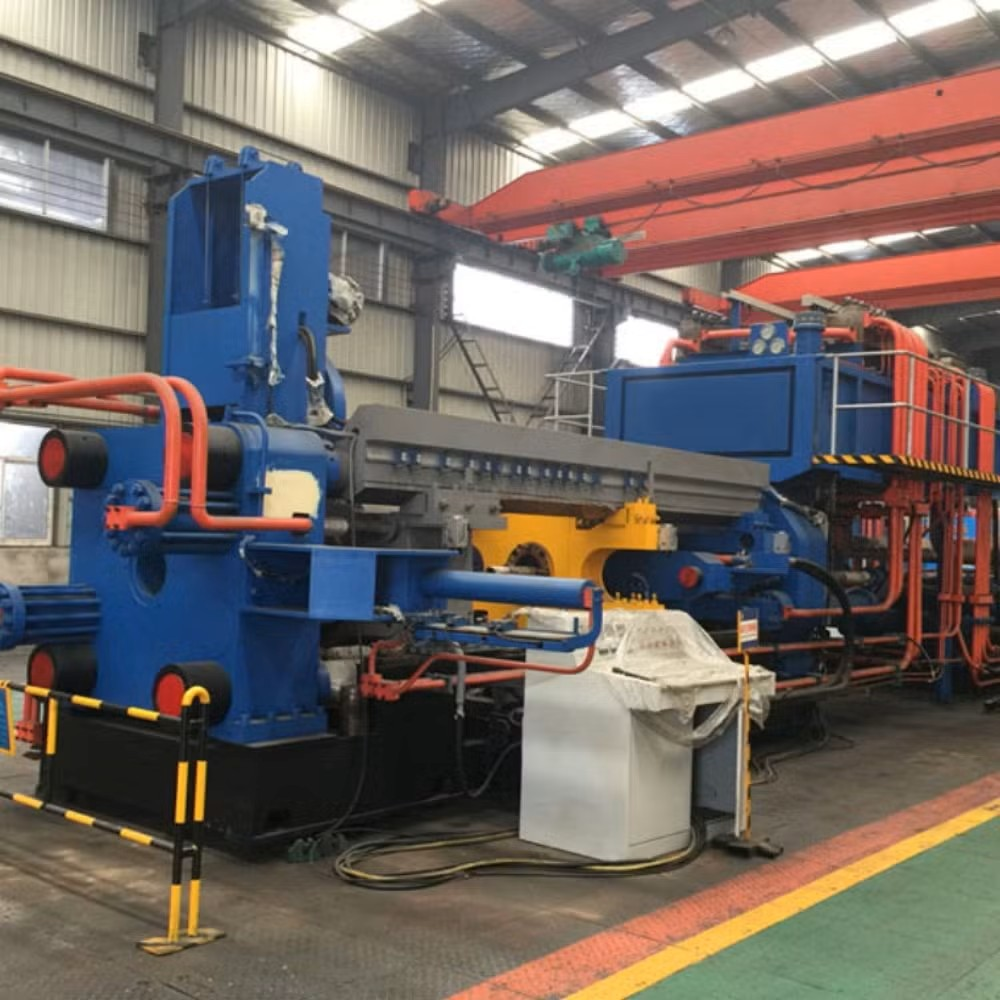
Regardless of your choice, always look at the availability of spare parts. A machine is only an asset if it’s running. At HARSLE, we provide extensive support for our new machines, but we also help clients evaluate the feasibility of upgrading their older units. The goal is to ensure that your machinery investment serves as a foundation for growth, not a drain on your resources.
Frequently Asked Questions (FAQ)
1. What is the typical lifespan of a new aluminium extrusion press?
A well-maintained new aluminium extrusion press can last 25 to 30 years. While the mechanical frame is extremely durable, the hydraulic and electronic systems usually require major overhauls or upgrades every 10 to 15 years to maintain peak efficiency and compatibility with modern standards.
2. Can I upgrade a used press to match the efficiency of a new one?
To an extent, yes. You can retrofit a used press with modern PLC controls, servo-driven pumps, and new heating systems. However, the cost of these upgrades, combined with the initial purchase price and the inherent wear on the mechanical structure, often approaches the cost of a new machine without the benefit of a full factory warranty.
3. How much should I budget for maintenance on a used vs. new press?
For a new press, maintenance costs are typically low for the first 3-5 years, mostly involving consumables like filters and seals. Budget around 1-2% of the machine’s value annually. For a used press, maintenance can jump to 5-10% of its value annually, as older components fail more frequently and parts become harder to source.
4. Does the brand of the press matter when buying used?
Absolutely. Buying a used press from a recognized global brand is much safer than buying an obscure brand. Major brands have better documentation, more available spare parts, and a larger pool of technicians who know how to service them. This significantly reduces the risk of long-term downtime.
5. How long does it take to install a new vs. used extrusion press?
A new press usually has a lead time of 6-10 months for manufacturing, followed by 4-8 weeks for installation and commissioning. A used press can be acquired faster, but the dismantling, shipping, and re-assembly process can still take 3-5 months, especially if refurbishment is required before the machine can be put into service.
6. Is it harder to get financing for a used aluminium extrusion press?
Generally, yes. Banks and leasing companies view used industrial machinery as higher risk. They may require a larger down payment, offer shorter loan terms, or charge higher interest rates. New machinery often qualifies for manufacturer financing or better terms from banks because the asset has a predictable value and a longer productive life.