
What to Look for Before Buying a Four-Shaft Shredder for Industrial Waste Processing

Introduction to Industrial Four-Shaft Shredders
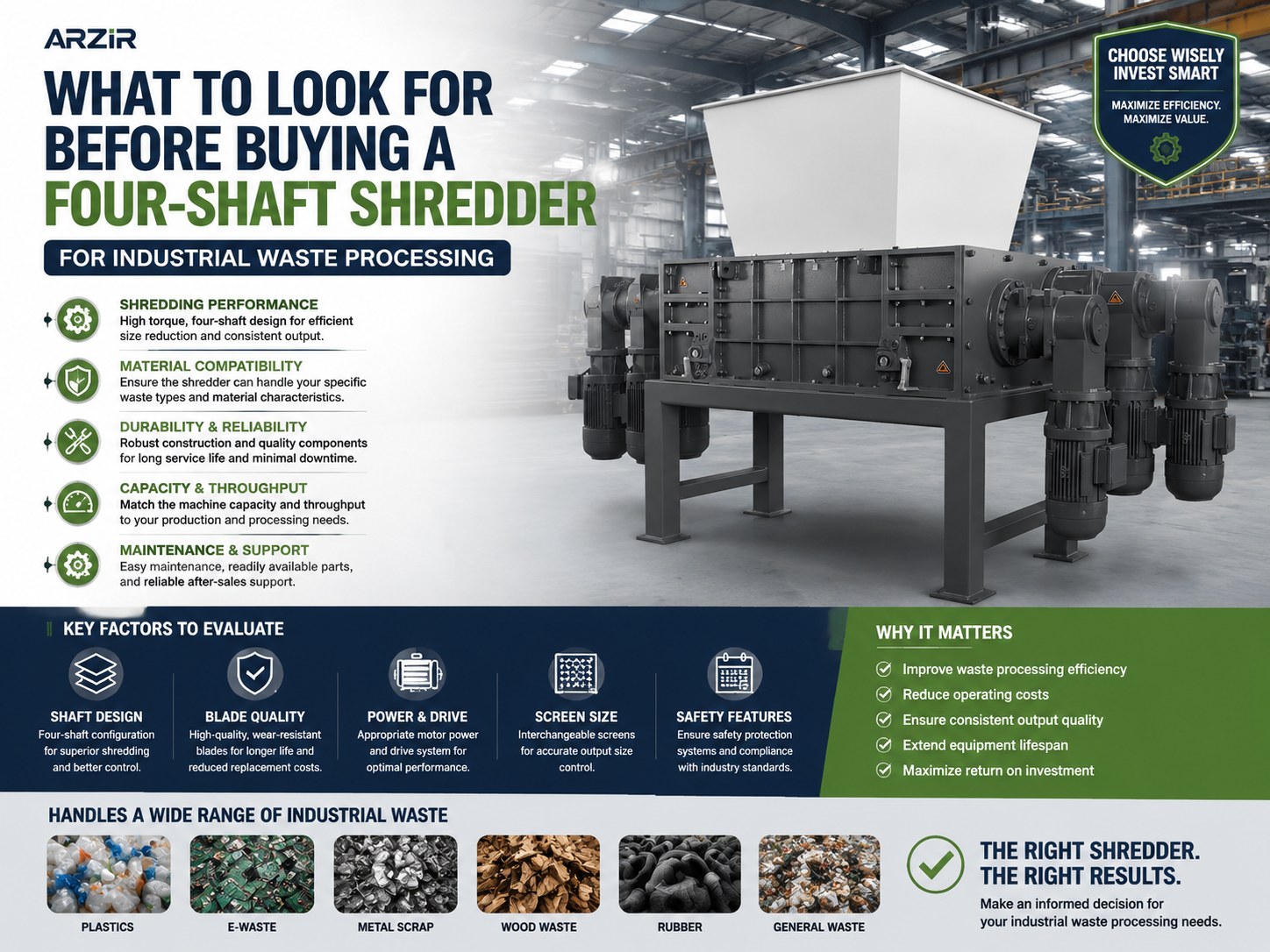
In the modern industrial landscape, waste management is no longer just a matter of disposal; it is a critical component of operational efficiency and environmental sustainability. The four-shaft shredder stands at the pinnacle of size reduction technology, offering unparalleled versatility for processing complex materials. Whether you are dealing with electronic waste (e-waste), bulky plastics, metal drums, or hazardous materials, understanding what to look before buying a four-shaft shredder for industrial waste processing is essential to ensure a high return on investment and long-term reliability.
Unlike single or double-shaft shredders, the four-shaft design incorporates two main cutting shafts and two auxiliary shafts. This configuration allows for superior material grabbing and a built-in screening process that ensures consistent output size. However, the complexity of these machines means that a generic purchase can lead to significant operational headaches. This guide provides a deep dive into the technical and financial considerations necessary for a successful acquisition.
Price Range Overview: What to Expect
When you begin to look before buying a four-shaft shredder for industrial waste processing, the first thing you will notice is the wide variance in pricing. Industrial-grade four-shaft shredders typically fall into three broad categories based on their capacity, durability, and technological integration. Understanding these tiers helps in aligning your budget with your actual processing needs.
- Entry-Level Industrial Models ($30,000 – $60,000): These machines are designed for lighter industrial duties, such as processing thin plastics, paper, or small electronic components. They usually feature lower horsepower (20-40 HP) and smaller cutting chambers. While affordable, they may lack the heavy-duty torque required for continuous metal or tire shredding.
- Mid-Range Workhorses ($60,000 – $150,000): This is the most common segment for professional recycling facilities. These shredders offer robust motor power (50-150 HP), advanced PLC control systems, and high-alloy steel blades. They are capable of handling mixed waste streams, including light metals and reinforced plastics, with a throughput of 1 to 5 tons per hour.
- High-Capacity/Specialized Systems ($150,000 – $500,000+): Designed for 24/7 operations, these systems are often integrated into full recycling lines. They feature massive torque, specialized cooling systems for the gearboxes, and custom-engineered blade configurations. These are the go-to choice for car body parts, large-scale e-waste plants, and hazardous waste processing.
It is vital to remember that the initial purchase price is only the beginning. A lower-priced machine might save capital upfront but could lead to higher costs in energy consumption and frequent blade replacements. Always evaluate the total cost of ownership over a five-to-ten-year period.
Main Cost Drivers in Four-Shaft Shredder Manufacturing
The price of a four-shaft shredder is driven by several critical engineering components. When you look before buying a four-shaft shredder for industrial waste processing, you must scrutinize these drivers to understand why one machine costs significantly more than another. The quality of these components directly correlates with the machine’s uptime and processing capability.
1. Blade Material and Heat Treatment
The blades are the most significant wear part of any shredder. High-quality four-shaft shredders use specialized alloy steels such as D2, SKD-11, or DC53. The manufacturing process involves precision CNC machining followed by multiple stages of vacuum heat treatment to achieve a balance between hardness (to maintain a sharp edge) and toughness (to prevent cracking when hitting hard objects). Cheap machines often use inferior carbon steel that dulls quickly, leading to increased power consumption and poor shredding quality.
2. Motor and Drive System
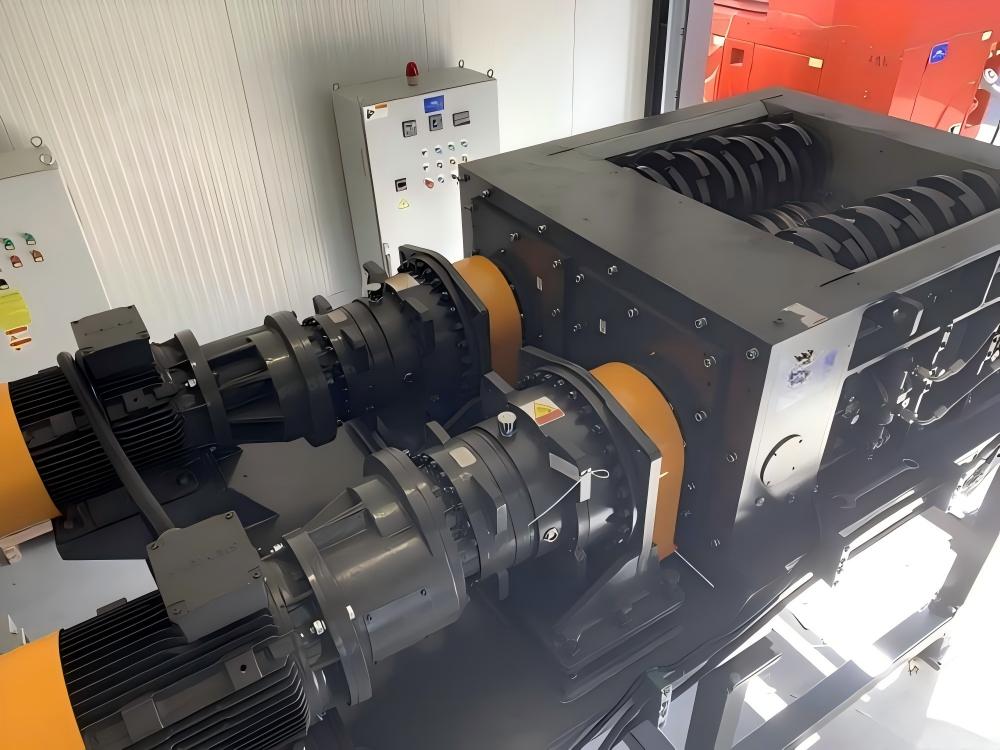
The drive system is the heart of the shredder. Premium manufacturers like HARSLE utilize high-efficiency motors (often Siemens or ABB) paired with heavy-duty planetary gearboxes. Planetary gearboxes are preferred in four-shaft designs because they can handle the immense shock loads and high torque required to tear through tough materials. The inclusion of a variable frequency drive (VFD) also adds to the cost but allows for better control over shaft speeds and reduces electrical surges during startup.
3. PLC and Automation Logic
Modern industrial waste processing requires smart machinery. A sophisticated PLC (Programmable Logic Controller) system, such as those from Schneider or Mitsubishi, manages the interaction between the four shafts. This includes auto-reverse functions that trigger when the machine senses an overload, preventing shaft breakage. The complexity of the programming—ensuring the four shafts work in harmony to pull material down and through the screen—is a major cost factor that ensures operational safety.
Configuration Impact: Tailoring the Machine to Your Waste Stream
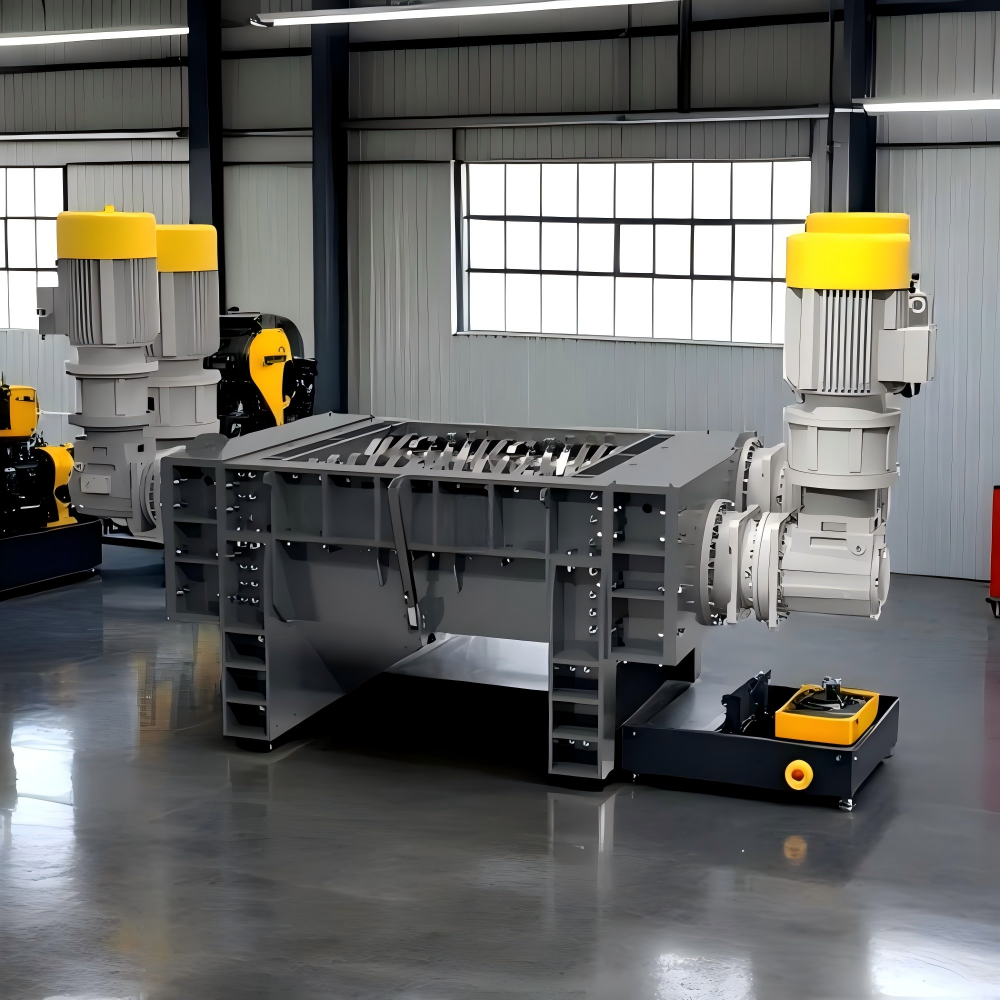
One of the most critical aspects to look before buying a four-shaft shredder for industrial waste processing is the specific configuration of the shafts and screens. Unlike two-shaft shredders, which produce long strips, the four-shaft shredder is designed to produce a specific particle size in a single pass. This is achieved through the interaction of the cutting discs and the discharge screen located beneath the shafts.
The configuration of the teeth on the blades (the “hooks”) must be matched to your material. For example, shredding rubber tires requires a different hook geometry than shredding aluminum casting scrap. If the hooks are too aggressive, the machine may jam; if they are too shallow, the throughput will drop. Furthermore, the screen size determines the final product size. A smaller screen ensures a finer output but reduces the overall hourly capacity. You must find the “sweet spot” between the desired output size and the required production volume.
Another configuration detail is the shaft speed. In a four-shaft setup, the auxiliary shafts often rotate at different speeds than the main cutting shafts to help “feed” the material into the center. High-speed configurations are better for brittle materials like hard plastics, while low-speed, high-torque configurations are essential for metals and tough elastomers. Ensure your supplier provides a configuration that has been tested with your specific waste material.
Hidden Costs: Beyond the Invoice
Many buyers focus solely on the machine’s price tag and forget the secondary expenses that come with industrial machinery. To truly look before buying a four-shaft shredder for industrial waste processing, you must account for the following hidden costs:
- Installation and Site Preparation: These machines are heavy and vibrate during operation. You may need a reinforced concrete foundation. Additionally, the electrical requirements for a 100 HP motor might necessitate an upgrade to your facility’s power transformer or switchgear.
- Consumables and Spare Parts: Blades, spacers, and cleaning fingers are consumables. Depending on the abrasiveness of your waste (e.g., glass-filled plastics or sandy tires), you might need to sharpen or replace blades every few months. A set of high-quality blades for a four-shaft shredder can cost several thousand dollars.
- Maintenance Labor: Four-shaft shredders are more complex to maintain than two-shaft models. Accessing the inner shafts for blade changes requires more time and specialized tools. Factor in the cost of training your maintenance team or hiring external technicians.
- Energy Consumption: Industrial shredders are power-hungry. A machine that is not optimized for your material will run longer and consume more kilowatt-hours per ton of processed waste, significantly impacting your monthly utility bills.
ROI Calculation: Is the Investment Justified?
Calculating the Return on Investment (ROI) is the ultimate step when you look before buying a four-shaft shredder for industrial waste processing. To do this, you need to compare the total cost of ownership against the value generated. Value is typically generated in three ways: volume reduction, material recovery, and labor savings.
Volume Reduction: If you are paying for waste hauling by volume (e.g., by the cubic yard), shredding can reduce your waste volume by 3:1 or even 5:1. This directly reduces the number of truck trips and disposal fees. For many facilities, the savings in logistics alone can pay for the machine within 18 to 24 months.
Material Recovery: Shredding is often the first step in a recycling process. By reducing e-waste or metal scrap to a uniform size, you can use magnetic separators or eddy current separators to extract valuable metals. The resale value of clean, shredded aluminum or copper is significantly higher than that of mixed, bulky scrap.
Labor Efficiency: Manual sorting and breaking down of large waste items is labor-intensive and dangerous. An automated four-shaft shredder can replace several manual laborers, allowing them to be reassigned to higher-value tasks while increasing the safety of the work environment. When calculating ROI, include the reduction in potential workers’ compensation claims due to the elimination of manual cutting and lifting.
Buying Advice: A Checklist for Success
Before finalizing your purchase with a manufacturer like HARSLE, use this checklist to ensure no detail is overlooked. This is the practical application of what to look before buying a four-shaft shredder for industrial waste processing.
- Material Testing: Never buy a shredder without seeing it process your specific material. Send a sample to the manufacturer for a trial run. Request a video of the test and a sample of the output to verify the size and quality.
- Supplier Reputation and Support: Industrial waste processing is a harsh environment. Machines will eventually need parts. Choose a supplier with a proven track record, available spare parts inventory, and responsive technical support. Ask for references from customers in similar industries.
- Safety Features: Ensure the machine complies with international safety standards (like CE or UL). It should have emergency stop buttons, safety interlocks on access doors, and a robust overload protection system.
- Ease of Maintenance: Look for designs that allow for easy access to the cutting chamber. Some modern four-shaft shredders feature “quick-change” shaft systems or split-bearing housings that significantly reduce downtime during blade maintenance.
- Future-Proofing: Consider if your waste stream might change in the next five years. Buying a slightly larger machine than you currently need can provide the flexibility to handle increased volumes or tougher materials in the future.
Frequently Asked Questions (FAQ)
What is the main advantage of a four-shaft shredder over a two-shaft shredder?
The primary advantage is the ability to produce a consistent, pre-determined particle size in a single pass. The four-shaft design uses the upper shafts to pre-shred and feed the material, while the lower shafts and the screen ensure that only material of the correct size exits the machine. Two-shaft shredders generally produce long, irregular strips and require a separate granulator or screen if a specific size is needed.
How often do the blades need to be sharpened?
This depends entirely on the material being processed. If you are shredding clean plastic, blades may last for over 1,000 hours. If you are shredding abrasive materials like glass-reinforced polymers or contaminated electronic scrap, you may need to sharpen or rotate the blades every 200-400 hours. Using high-quality alloy steel blades significantly extends these intervals.
Can a four-shaft shredder handle metal?
Yes, but with limitations. Four-shaft shredders are excellent for light to medium metals like aluminum extrusions, copper wiring, thin-walled steel drums, and electronic housings. They are not typically designed for heavy structural steel or thick engine blocks, which require massive primary shear shredders. Always specify the type and thickness of metal you intend to process when consulting with the manufacturer.
What kind of power supply do I need?
Most industrial four-shaft shredders require a three-phase power supply. The voltage (e.g., 220V, 380V, 480V) will depend on your local grid and the motor specifications. It is crucial to ensure your facility’s electrical panel can handle the high starting current (amperage) of the shredder motors, or consider a Soft Start or VFD system to mitigate this.
Is it better to buy a new or used four-shaft shredder?
While used machines are cheaper, they come with significant risks in industrial waste processing. Shredders are high-wear machines; a used unit may have hidden structural fatigue, worn-out gearboxes, or blades that are near the end of their life. For a critical production line, a new machine with a warranty and modern PLC safety features is usually the safer and more cost-effective long-term investment.
Conclusion
Investing in industrial machinery is a significant decision that impacts your facility’s productivity for years. When you look before buying a four-shaft shredder for industrial waste processing, you are not just buying a piece of equipment; you are buying a solution to a complex waste problem. By focusing on blade quality, drive system reliability, and a clear understanding of your ROI, you can select a machine that turns waste into a valuable resource. HARSLE remains committed to providing high-quality, durable shredding solutions tailored to the rigorous demands of modern industry, ensuring that your investment is protected by engineering excellence and dedicated support.


