Four-Shaft Shredder Buying Guide: How to Choose the Right Machine for Your Recycling Line

Introduction to Four-Shaft Shredder Technology
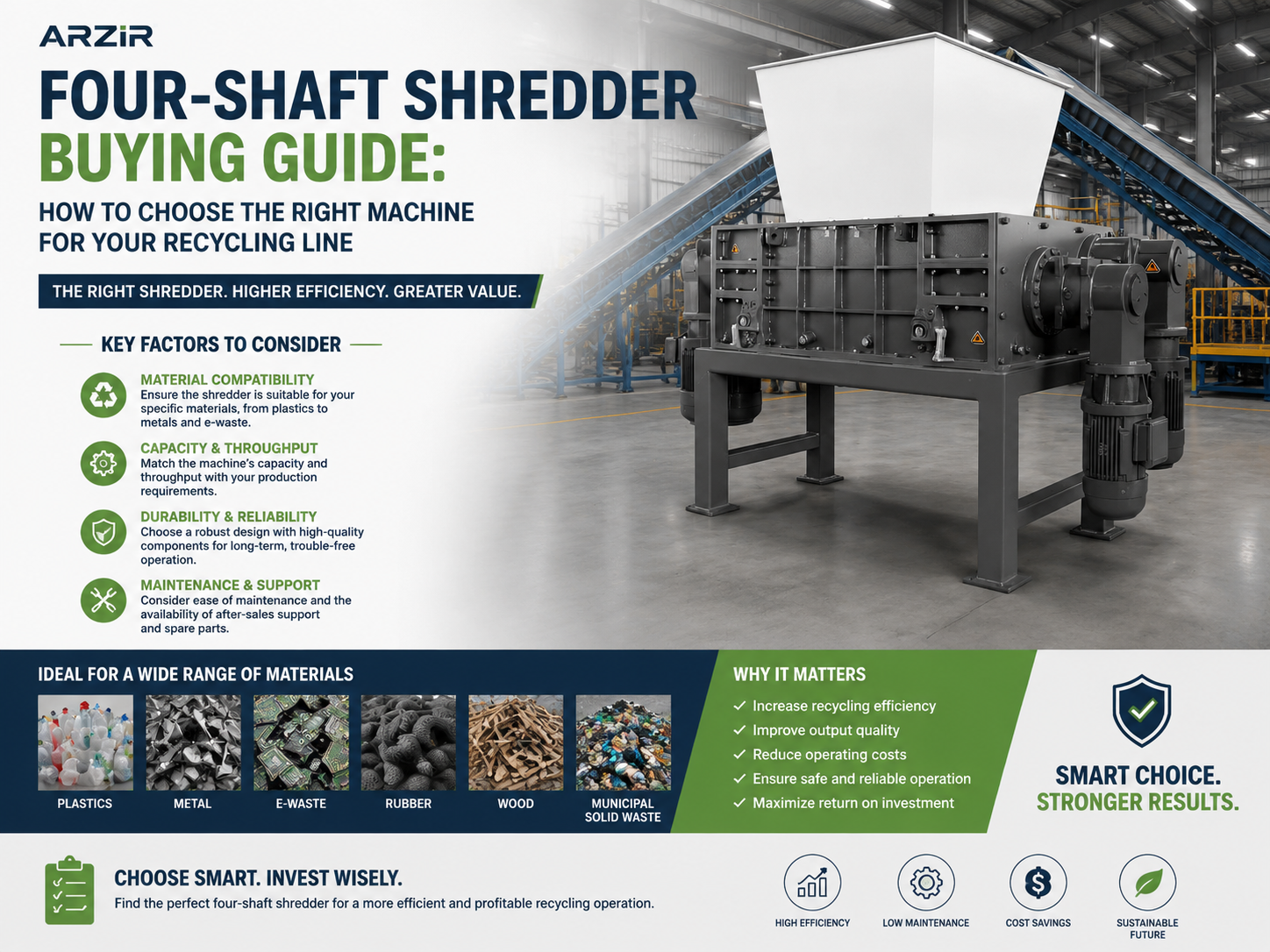
In the modern industrial landscape, the demand for efficient waste management and material recovery has never been higher. As global regulations tighten and the economic value of recycled materials rises, choosing the right equipment becomes a critical business decision. The four-shaft shredder stands out as a versatile powerhouse in the recycling industry, capable of handling diverse materials ranging from electronic waste (e-waste) and plastics to tires and light metals. Unlike single or double-shaft variants, the four-shaft design offers superior material grabbing capabilities and consistent output sizing thanks to its integrated screen system.
When embarking on the journey of Four-Shaft Shredder Buying : Choose Machine Recycling Line, stakeholders must navigate a complex landscape of technical specifications, vendor promises, and long-term operational costs. This guide is designed to provide a comprehensive roadmap for procurement managers, factory owners, and recycling specialists. We will delve deep into the mechanics, financial considerations, and strategic selection criteria that ensure your investment yields the highest possible return. By understanding the nuances of torque, blade geometry, and control systems, you can transform a standard recycling line into a high-efficiency profit center.
Price Range Overview: What to Expect
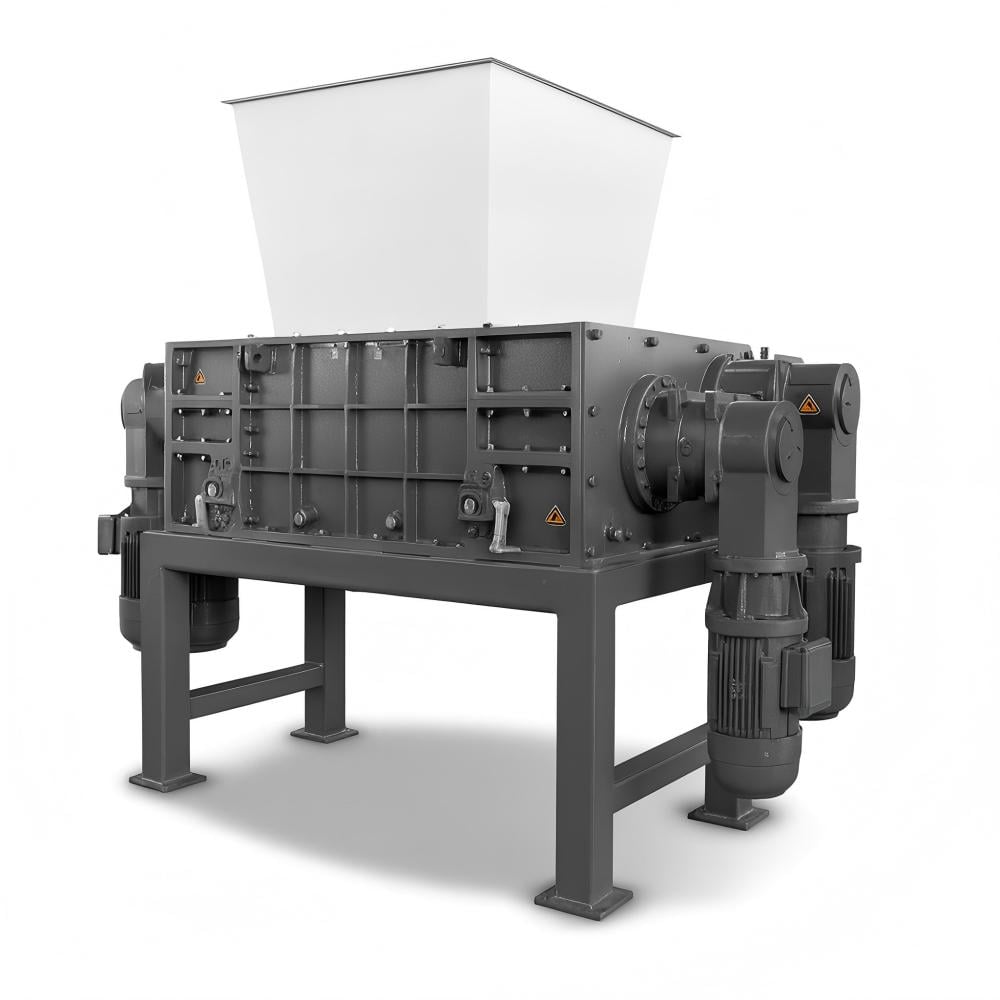
The financial commitment required for a four-shaft shredder varies significantly based on capacity, build quality, and technological sophistication. Generally, the market is divided into three primary tiers. Entry-level or small-scale four-shaft shredders typically range from $25,000 to $50,000. These machines are often used for lighter applications like plastic purging, document destruction, or small-scale e-waste processing. While they offer the benefits of four-shaft technology, they may lack the heavy-duty structural reinforcement needed for 24/7 continuous operation in harsh environments.
Mid-range industrial shredders, which are the workhorses of most commercial recycling facilities, fall between $60,000 and $150,000. These machines feature more robust motors, advanced PLC (Programmable Logic Controller) systems, and higher-grade alloy blades. They are designed to handle tougher materials like rubber tires, aluminum scrap, and mixed municipal waste. At this level, buyers can expect better energy efficiency and more comprehensive safety features, making them ideal for growing businesses looking to scale their throughput.
High-end, heavy-duty four-shaft shredders can exceed $250,000. These are massive installations designed for high-tonnage processing of the most challenging materials, such as car bodies, large-scale industrial scrap, and hazardous waste. These machines often incorporate custom-engineered blade configurations, sophisticated hydraulic drive systems, and remote monitoring capabilities. When considering the Four-Shaft Shredder Buying : Choose Machine Recycling Line process, it is vital to match the price point not just with your current budget, but with the projected volume and material density of your future operations.
Main Cost Drivers in Four-Shaft Shredder Procurement
Understanding what drives the price of a four-shaft shredder is essential for making an informed purchase. The most significant cost driver is the motor and drive system. High-torque motors, especially those from reputable brands like Siemens or ABB, command a premium but offer reliability and energy savings. Furthermore, the choice between an electric drive and a hydraulic drive system impacts the initial cost. Hydraulic drives are often more expensive but provide superior shock absorption and variable speed control, which is crucial for processing unpredictable waste streams.
The second major cost driver is the metallurgy of the cutting tools. The blades (or cutters) are the heart of the machine. High-quality alloy steels such as D2, SKD-11, or specialized heat-treated vacuum-hardened steels are expensive but essential for longevity. A four-shaft shredder requires a large number of these blades, and the cost of the raw material and the precision machining involved in their production significantly influences the final machine price. Cheaper machines often cut costs here, leading to frequent blade changes and increased downtime.
Finally, the structural integrity of the machine frame and the quality of the gearbox play a pivotal role. A four-shaft shredder generates immense internal forces. A heavy-duty, CNC-machined frame made from high-tensile steel prevents vibration and misalignment, which can destroy bearings and gears over time. Similarly, a high-factor-of-safety gearbox (often a planetary gearbox) is required to translate motor power into the crushing torque needed for heavy recycling. Investing in these “hidden” components during the Four-Shaft Shredder Buying : Choose Machine Recycling Line phase prevents catastrophic failures later.
Configuration Impact: Tailoring the Machine to Your Material
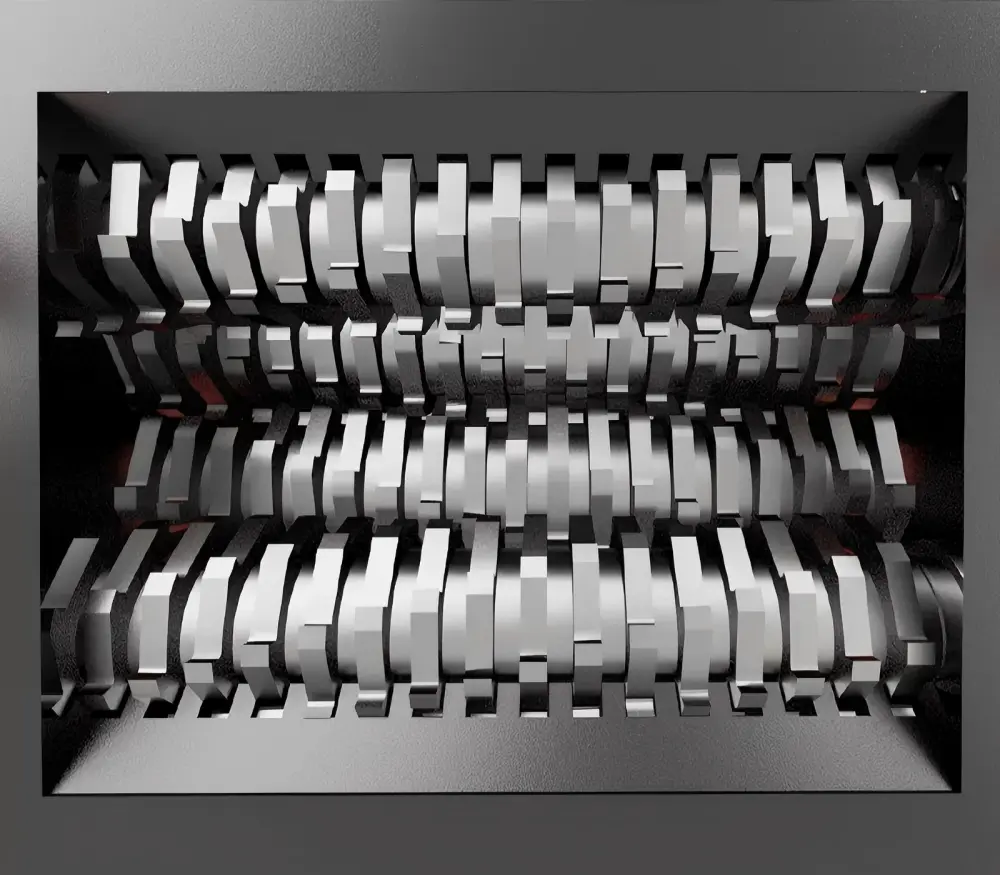
The configuration of a four-shaft shredder is not a one-size-fits-all matter. The primary advantage of the four-shaft design is the interaction between the two sets of shafts. The upper shafts act as feeders, grabbing bulky materials and forcing them down into the lower cutting shafts. The geometry of these blades—their thickness, number of hooks, and diameter—must be matched to the specific material being processed. For example, shredding thin plastic film requires a different blade profile than shredding thick-walled HDPE pipes or metal drums.
The screen size is another critical configuration element. Unlike two-shaft shredders, four-shaft models utilize a screen located beneath the cutting chamber. Material that is not yet small enough to pass through the screen is carried back up by the teeth of the blades for another round of shredding. Choosing the right screen hole diameter is a balancing act: smaller holes produce a finer, more valuable output but reduce the overall throughput (tons per hour). Buyers must define their required output size early in the procurement process to ensure the machine is geared correctly.
Additionally, the hopper design and feeding mechanism can be customized. For automated recycling lines, a vibrating feeder or a conveyor belt system is often integrated. Some materials may require a hydraulic ram (pusher) to force the material against the shafts, although this is more common in single-shaft designs. In a four-shaft setup, the “self-feeding” nature of the shafts usually suffices, but for extremely light and bulky materials like foam or loose plastic bottles, custom hopper extensions and baffles are necessary to prevent material from “bridging” or floating above the cutters.
Hidden Costs: Beyond the Initial Purchase Price
When calculating the total cost of ownership (TCO) during the Four-Shaft Shredder Buying : Choose Machine Recycling Line process, many buyers overlook the “hidden” costs that emerge after the machine is installed. The most prominent of these is the cost of wear parts. Blades are consumable items. Depending on the abrasiveness of the material (e.g., glass-filled plastics or sandy tires), blades may need sharpening or replacement every few hundred to a few thousand hours. The ease of access to the shafts for blade maintenance can significantly impact labor costs.
Energy consumption is another ongoing expense that varies wildly between machines. A poorly designed shredder with an inefficient drivetrain will bleed money through high electricity bills. Modern four-shaft shredders often feature “smart” PLC controls that automatically reverse the shafts when a jam is detected and shut down the motors during idle periods. These features might add to the upfront cost but save thousands in utility bills over the machine’s lifespan. Furthermore, consider the cost of spare parts inventory; choosing a manufacturer that uses standardized components (bearings, seals, electrical switches) ensures you aren’t held hostage by proprietary part pricing.
Installation and commissioning costs should also be factored in. This includes the physical placement of the machine, electrical wiring, integration with existing conveyors, and operator training. A machine that arrives with poor documentation or requires specialized technicians from overseas for setup can lead to expensive delays. Always clarify what is included in the shipping quote—import duties, local delivery, and on-site assembly can add 10-15% to the total project cost if not properly negotiated upfront.
ROI Calculation: Measuring Success in Your Recycling Line
To justify the investment in a four-shaft shredder, a clear Return on Investment (ROI) calculation is necessary. The primary driver of ROI in recycling is the “value-add” of the shredded material. For instance, raw e-waste might sell for a low price per ton, but once shredded and separated into copper, plastic, and circuit board fractions, the combined value increases exponentially. Calculate your ROI by estimating the daily throughput (tons per day) multiplied by the price difference between raw waste and shredded output, then subtract daily operating costs (labor, power, maintenance).
Another factor in ROI is the reduction in transportation costs. Shredding bulky waste like plastic crates or tires significantly increases the bulk density of the material. This means more weight can be packed into a single truckload, reducing the number of trips required to transport material to end-users or landfills. In many cases, the savings in logistics alone can pay for a mid-range shredder within 18 to 24 months. Additionally, consider the “uptime” factor; a more expensive, reliable machine that runs 95% of the time will always outperform a cheaper machine that is down for repairs 20% of the time.
| Factor | Impact on ROI | Optimization Strategy |
|---|---|---|
| Throughput (TPH) | High | Match motor power to material density. |
| Blade Longevity | Medium | Use high-alloy steels and regular sharpening. |
| Energy Use | Medium | Invest in VFDs and efficient gearboxes. |
| Output Quality | High | Select appropriate screen size for market demand. |
Buying Advice: A Step-by-Step Selection Checklist
When you are ready to finalize your Four-Shaft Shredder Buying : Choose Machine Recycling Line decision, follow this checklist to ensure no detail is missed. First, conduct a material test. Any reputable manufacturer should allow you to send a sample of your specific waste material to their facility for a test shred. This provides empirical data on throughput, output size, and power draw. If a vendor refuses a material test, consider it a major red flag.
Second, evaluate the after-sales support infrastructure. Does the manufacturer have a local service partner? How quickly can they ship replacement blades or electronic components? In the recycling industry, downtime is the ultimate profit killer. A slightly more expensive machine from a company with a robust service network is often a better long-term choice than a bargain machine with no support. Ask for references from current customers who are processing similar materials to yours.
Third, look at the safety and compliance features. Ensure the machine meets CE or UL standards. It should have emergency stop buttons at multiple points, safety interlocks on all access doors, and a robust control system that prevents the machine from starting during maintenance. Finally, consider the future. Is the machine scalable? Can the screen be easily swapped if your customer’s requirements change? Choosing a flexible platform ensures that your recycling line remains relevant as market trends evolve.
Frequently Asked Questions (FAQ)
1. What is the main advantage of a four-shaft shredder over a two-shaft shredder?
The primary advantage is the integrated screen and the recirculating action of the four shafts. A two-shaft shredder produces long, irregular strips, whereas a four-shaft shredder ensures that all output material is smaller than the screen mesh size. This makes it ideal for applications requiring a specific, uniform particle size in a single pass.
2. How often do the blades need to be sharpened?
Blade life depends entirely on the material. For clean plastics, blades may last 2,000+ hours. For contaminated materials like e-waste or tires with steel belting, they may need attention every 500-800 hours. Many modern blades are designed to be removed and sharpened several times before needing full replacement.
3. Can a four-shaft shredder handle metal?
Yes, but with limitations. They are excellent for light metals like aluminum cans, thin-walled copper tubing, and electronic housings. However, they are not intended for heavy structural steel or thick engine blocks, which require specialized scrap shearers or massive hammer mills.
4. What happens if an unshreddable object enters the machine?
Quality four-shaft shredders are equipped with PLC-controlled auto-reverse systems. If the sensors detect a torque spike (indicating a jam or an unshreddable object), the shafts will automatically stop and reverse to clear the jam. If the object remains, the machine will trip an alarm and shut down to prevent damage to the motor and gearbox.
5. Is a hydraulic drive better than an electric drive?
Hydraulic drives offer higher torque at low speeds and better protection against shock loads, making them ideal for very tough, unpredictable materials. Electric drives are generally more energy-efficient, easier to maintain, and quieter, making them the preferred choice for consistent materials like plastics and paper.
6. How do I choose the right screen size?
The screen size should be determined by your end-user’s requirements. If you are selling shredded plastic to a pelletizing plant, they may require a 20mm or 30mm minus product. If you are shredding for volume reduction only, a larger screen (50mm-80mm) will allow for much higher throughput and lower energy costs.
7. What maintenance is required daily?
Daily maintenance is minimal but crucial. It includes checking for loose bolts, inspecting the hopper for debris, ensuring the lubrication system is functioning (for bearings and chains), and a quick visual inspection of the blade edges. Keeping the machine clean and well-lubricated is the simplest way to extend its service life.