Recycling Baler Motor Trips Frequently: Troubleshooting Guide for Operators

Introduction to Recycling Baler Motor Issues
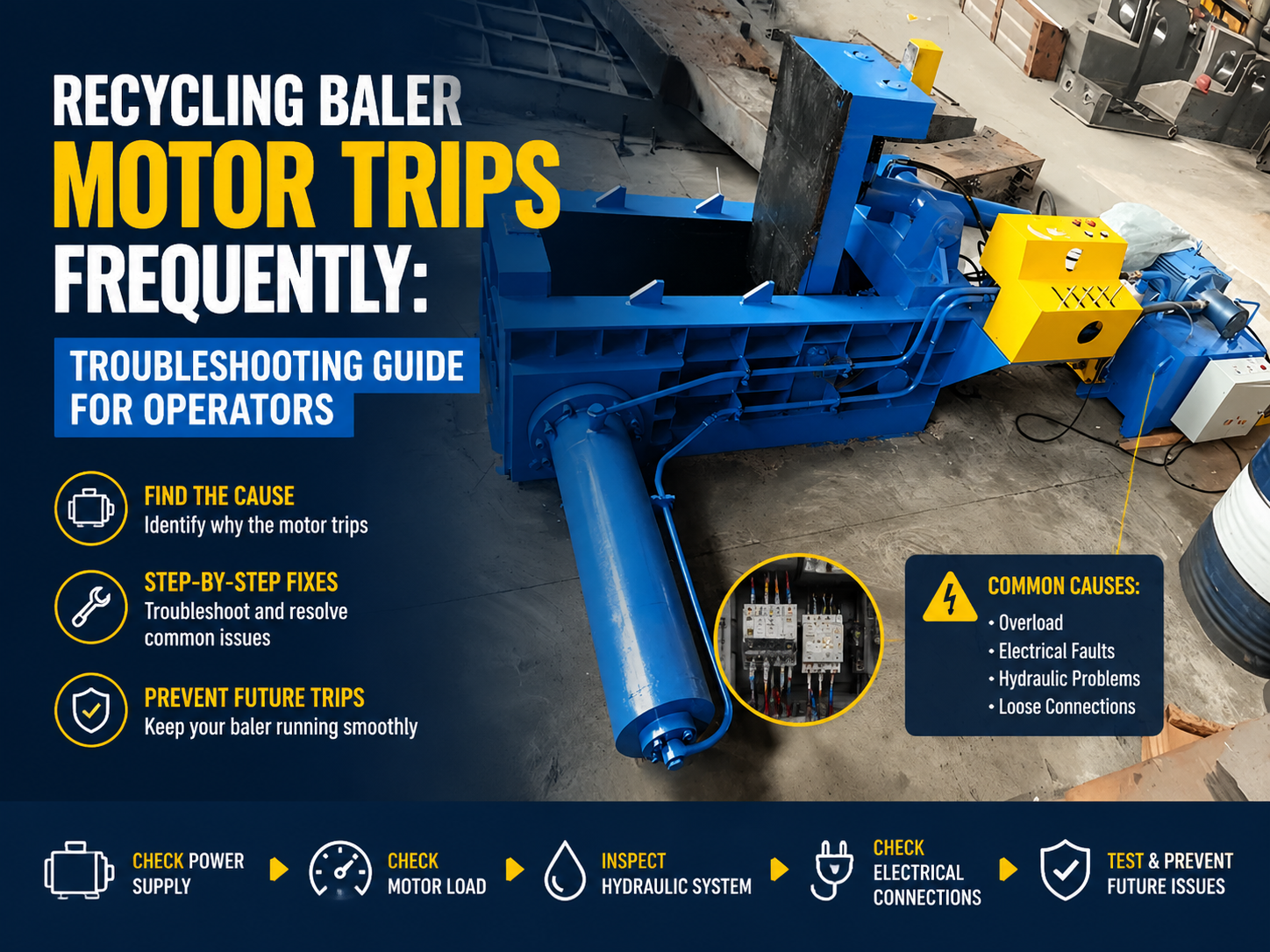
In the fast-paced environment of waste management and scrap processing, the recycling baler is the heartbeat of the operation. Whether you are processing cardboard, plastics, or scrap metal, a sudden halt in production due to a motor trip can lead to significant downtime, missed deadlines, and increased operational costs. When a Recycling Baler Motor Trips Frequently: Troubleshooting Operators must understand that the trip is not merely an annoyance; it is a critical safety response designed to protect the machine’s most expensive component—the electric motor—from permanent damage.
HARSLE understands that industrial machinery must be reliable. A motor trip usually indicates that the electrical current drawn by the motor has exceeded the preset limit of the thermal overload relay or the circuit breaker. This can be caused by a variety of factors ranging from simple electrical fluctuations to complex hydraulic imbalances or mechanical obstructions. For operators, the first step is not simply to reset the breaker and continue, but to diagnose the root cause to prevent a catastrophic failure.
This guide is designed to provide operators and maintenance teams with a structured approach to identifying why a recycling baler motor trips frequently. By following these troubleshooting steps, you can ensure the longevity of your HARSLE equipment and maintain a high level of productivity in your facility. We will explore the electrical, mechanical, and hydraulic variables that contribute to motor instability and provide actionable advice on how to mitigate these risks.
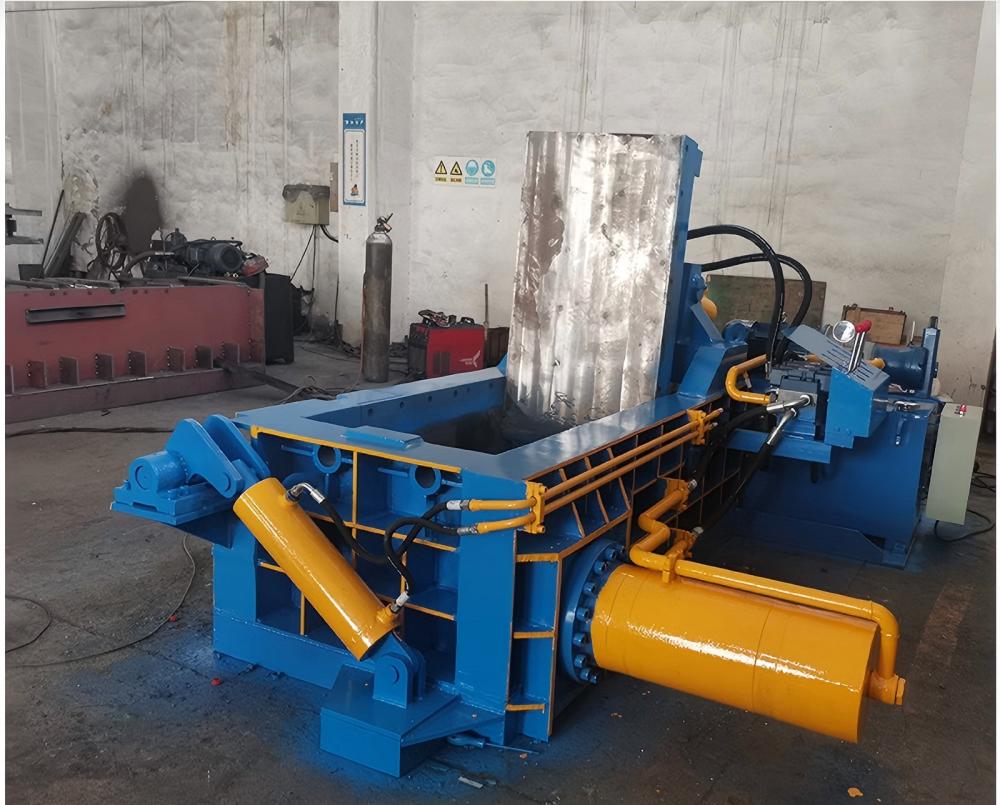
Key Considerations for Motor Stability
Before diving into the technical minutiae, it is essential to consider the broader operational environment. Motor tripping is rarely a random event; it is usually a symptom of an underlying condition that has reached a breaking point. Operators should first look at the consistency of the material being processed. If the baler is rated for cardboard but is being fed dense plastics or light metals without adjusting the settings, the motor will naturally work harder, drawing more current and eventually tripping the overload protection.
Another key consideration is the power supply quality. Industrial facilities often share power grids with other heavy machinery. When a large machine nearby starts up, it can cause a momentary voltage drop (brownout). To compensate for lower voltage, the motor must draw more current (amperage) to maintain the same torque, which leads to overheating and tripping. Monitoring the incoming voltage during peak hours is a fundamental step in troubleshooting Recycling Baler Motor Trips Frequently: Troubleshooting Operators should prioritize.
Ambient temperature also plays a significant role. Most recycling balers are equipped with thermal overload relays. If the baler is located in a poorly ventilated area or is exposed to direct sunlight in a hot climate, the ambient heat adds to the internal heat generated by the motor. This causes the thermal relay to reach its tripping point much faster than it would in a climate-controlled environment. Ensuring proper airflow around the motor housing is a simple yet often overlooked solution.
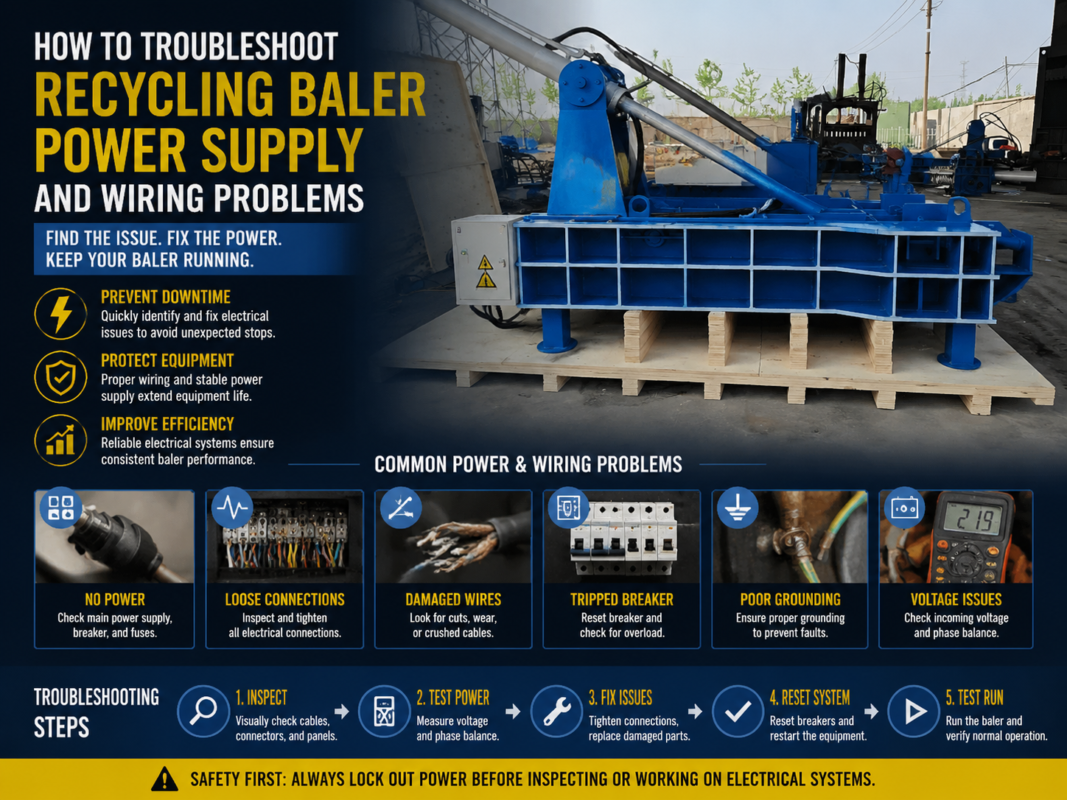
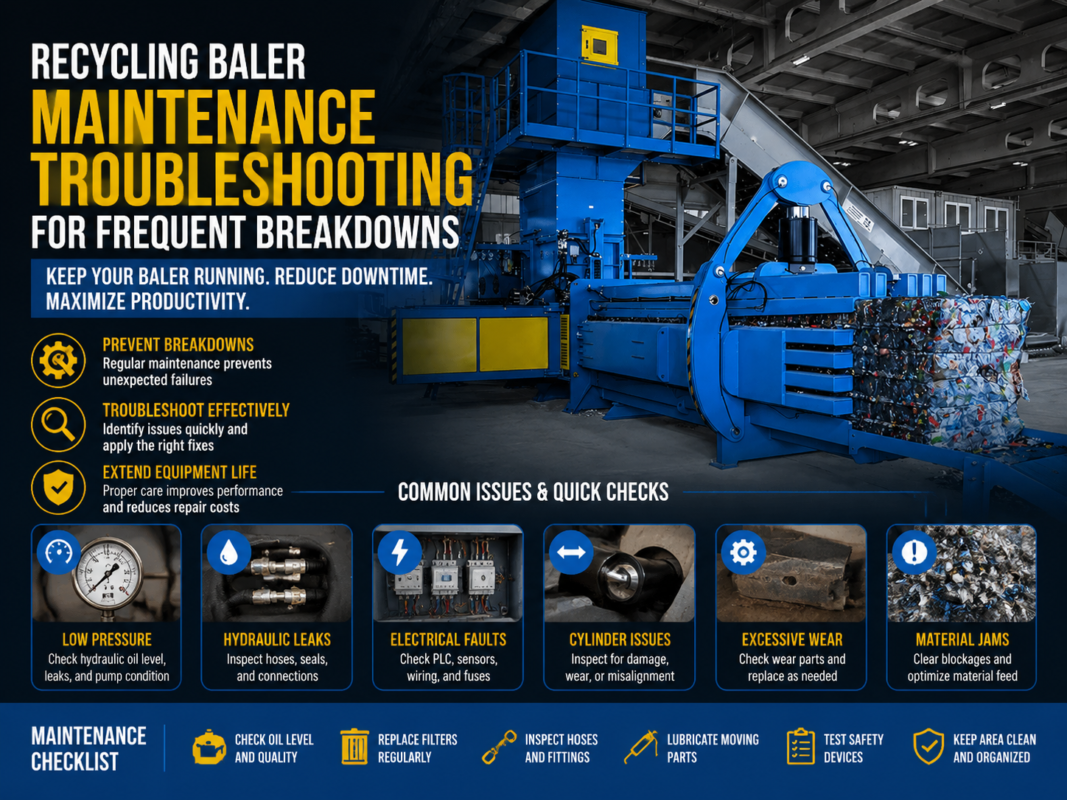
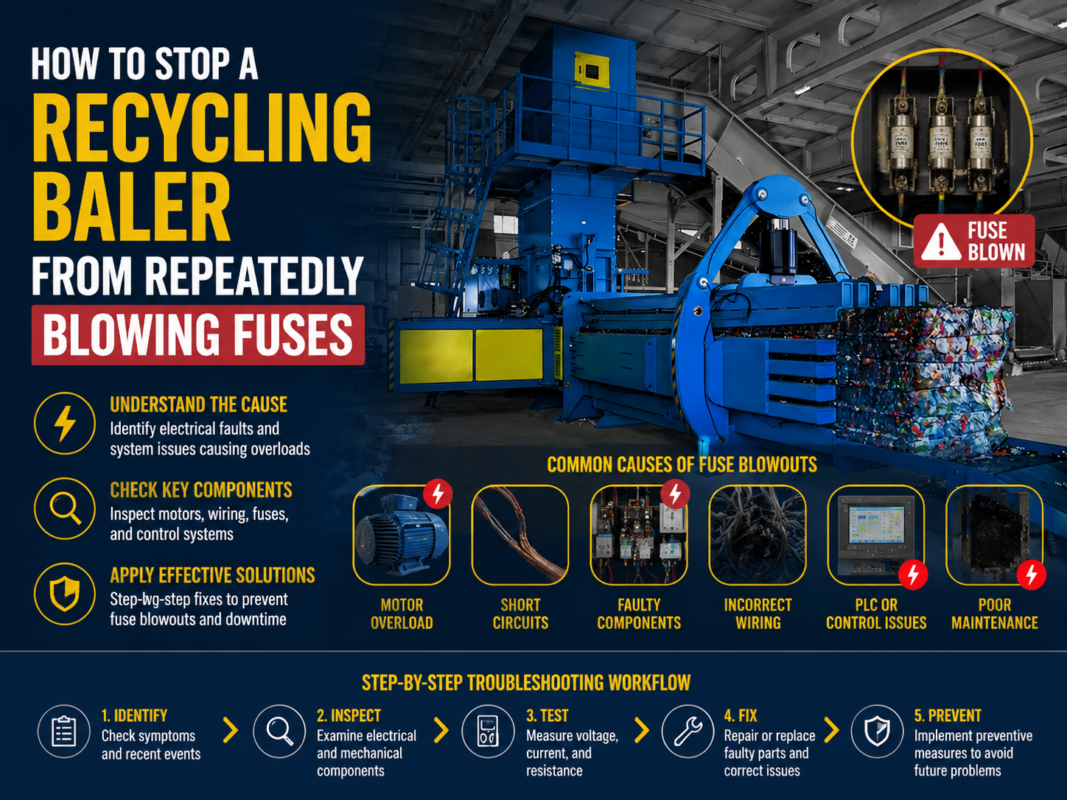
Finally, the age and condition of the electrical components themselves must be considered. Over time, contactors can develop pitted surfaces, and wires can become brittle or loose due to vibration. A loose connection creates high resistance, which generates heat and causes the breaker to trip. Regular visual inspections of the control cabinet are necessary to identify these issues before they lead to a complete shutdown.
Technical Details: Electrical and Hydraulic Causes
Electrical Overload and Phase Imbalance
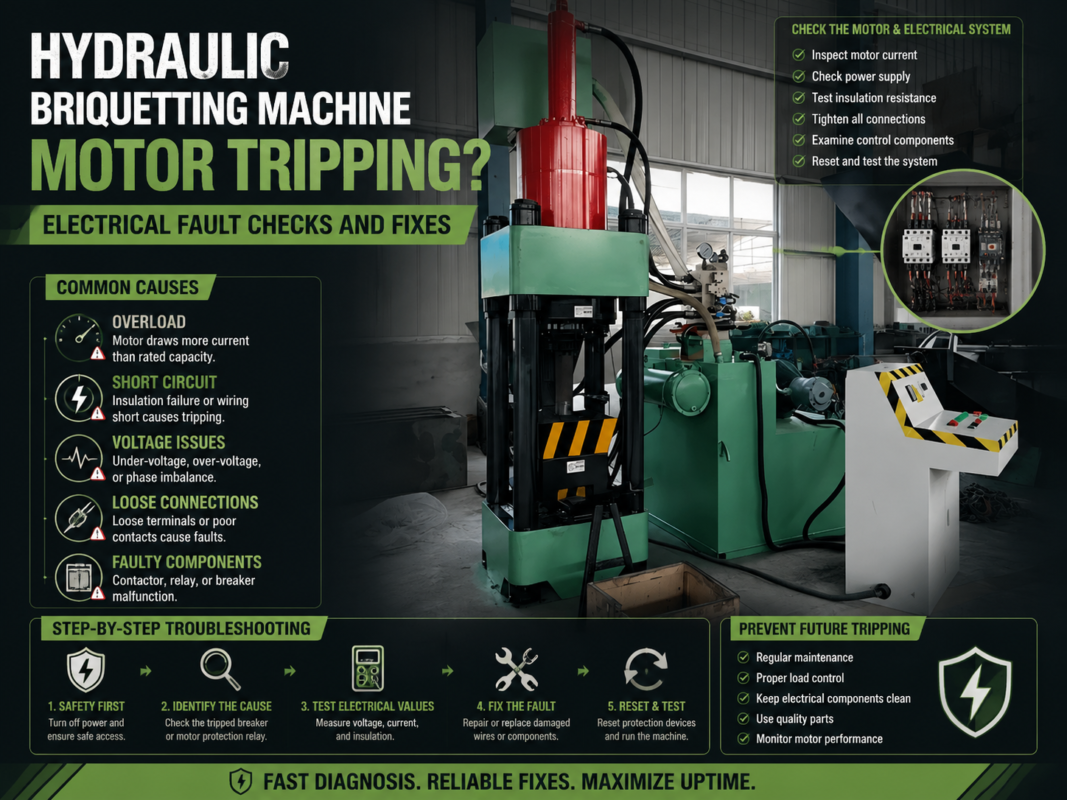
The most common electrical cause for a motor trip is an overload. This occurs when the motor is asked to perform more work than its rated horsepower allows. In a recycling baler, this usually happens during the final compression stage of the bale. If the pressure relief valves are set too high, the motor will struggle to drive the hydraulic pump against extreme resistance. Operators should check the ammeter on the control panel; if the reading consistently exceeds the Full Load Amps (FLA) listed on the motor nameplate, the system is overloaded.
Phase imbalance is another critical technical issue. In a three-phase motor, each phase should carry an equal amount of current. If one phase has a significantly different voltage than the others (often due to a faulty transformer or a loose connection at the main busbar), the motor will vibrate excessively and overheat. A voltage imbalance of even 1% can lead to a current imbalance of 6-10%, which is more than enough to trip the motor protection circuits.
Hydraulic System Resistance
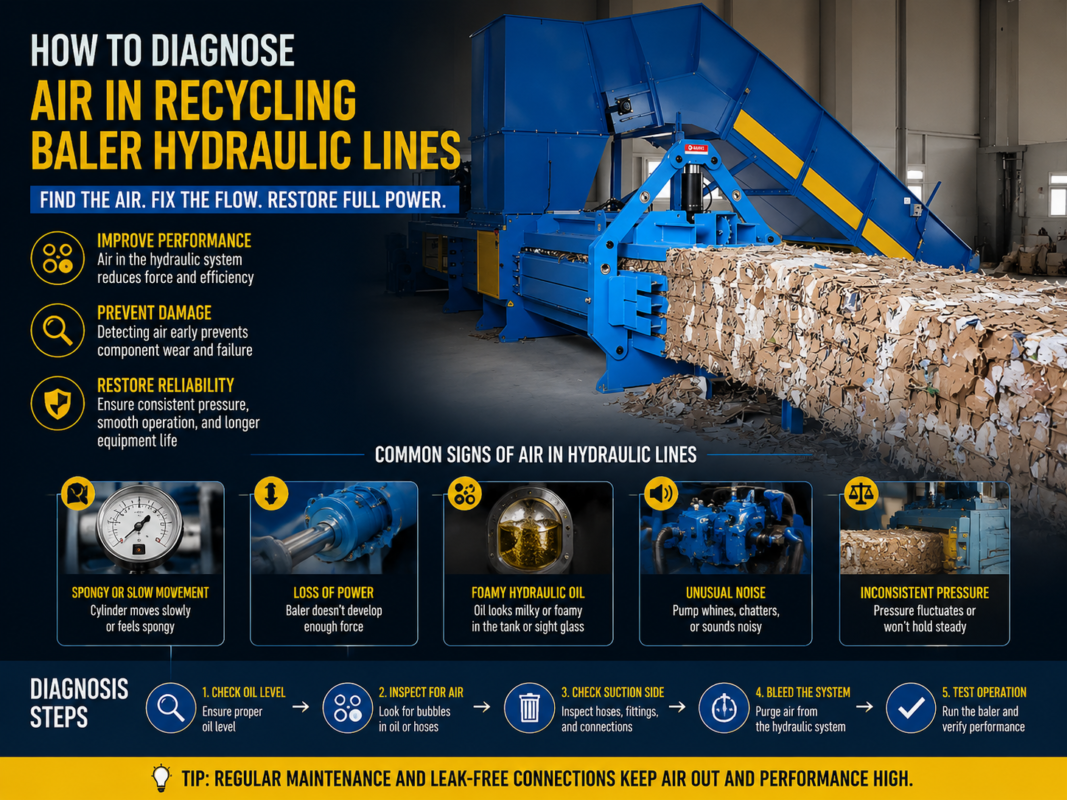
Since the motor drives the hydraulic pump, any inefficiency in the hydraulic circuit translates directly into electrical strain. A clogged hydraulic oil filter is a frequent culprit. When the filter is dirty, the pump must work harder to push oil through the system, increasing the load on the motor. Similarly, if the hydraulic oil viscosity is too high (due to cold weather or using the wrong grade of oil), the motor will face significant resistance during startup, leading to an immediate trip.
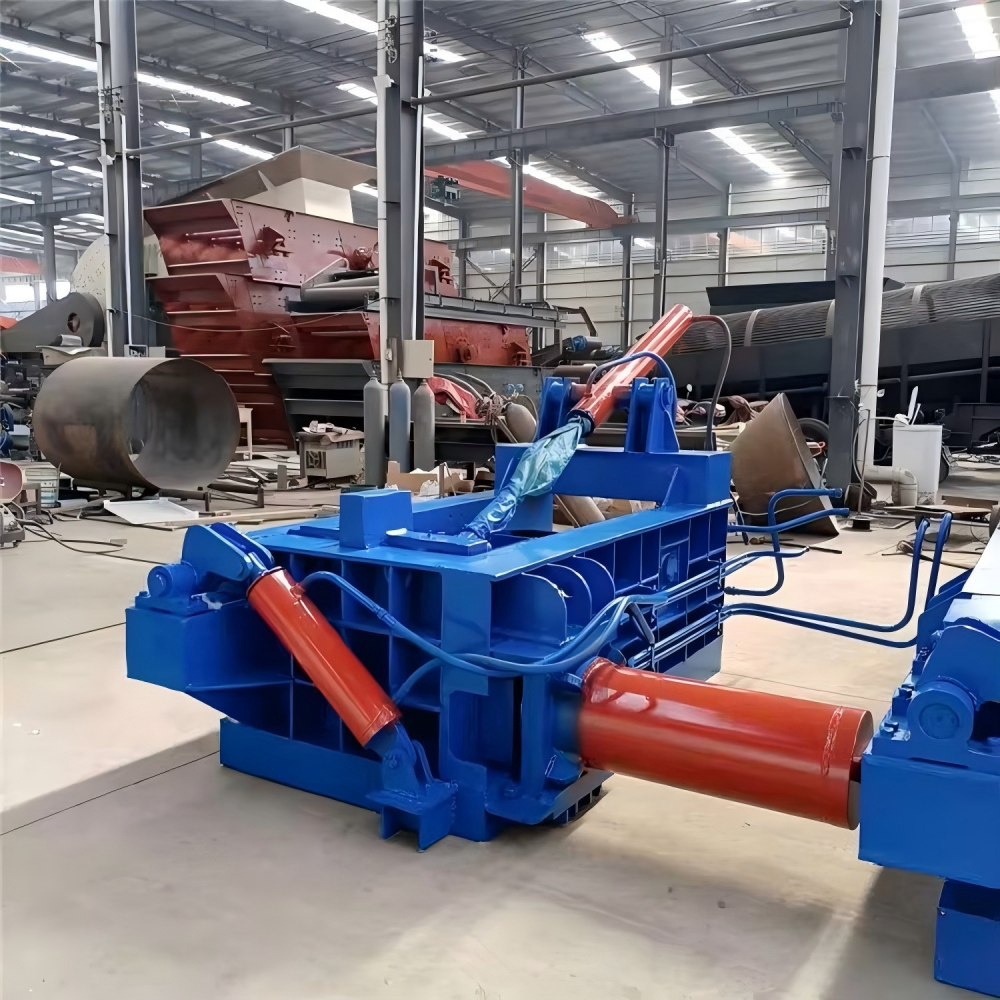
Mechanical Obstructions and Wear
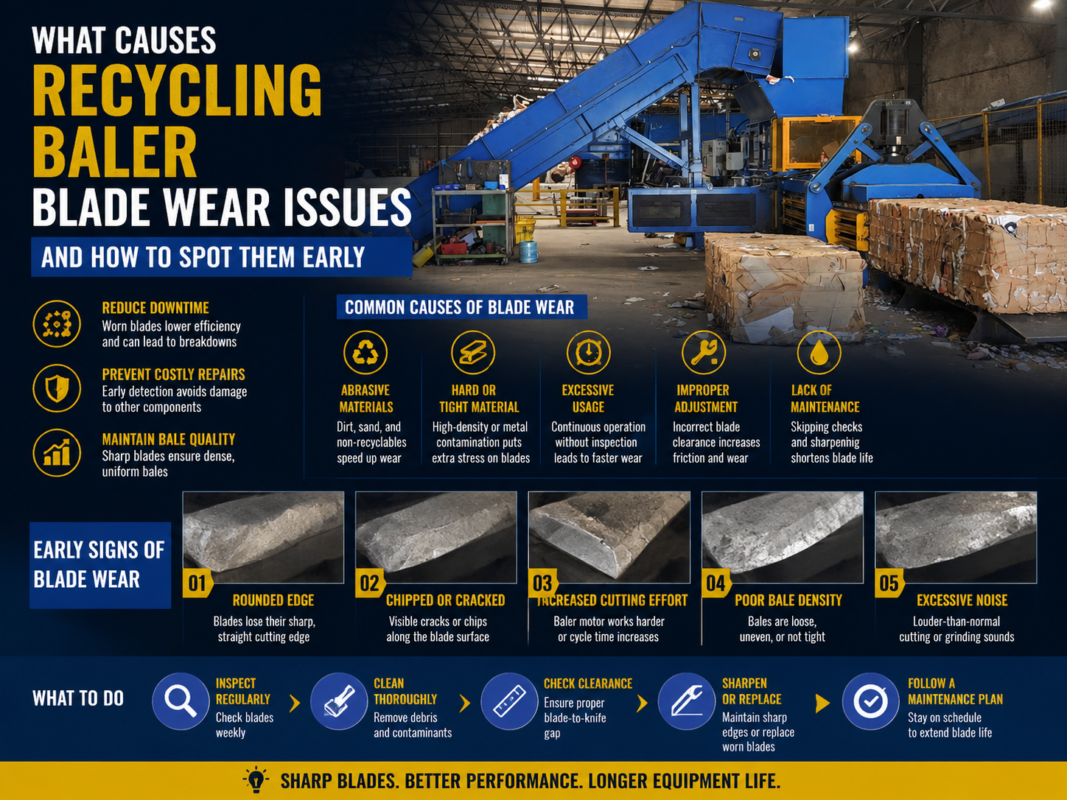
Mechanical issues within the baling chamber can also cause the motor to trip. If the shear blades are dull, they will not cut through the material cleanly, requiring the ram to use more force. This extra force demands more torque from the motor. Furthermore, if the guide tracks for the ram are worn or improperly lubricated, the resulting friction adds a constant parasitic load to the motor. Operators should regularly inspect the chamber for jammed debris that might be wedging between the ram and the side walls.
Selection Advice: Choosing the Right Baler and Motor
When purchasing a new recycling baler or replacing a motor, selection is key to preventing future tripping issues. At HARSLE, we recommend choosing a motor with a high service factor (SF). A motor with an SF of 1.15 can handle a 15% overload for short periods without damage, providing a safety buffer for those particularly dense bales. Additionally, investing in a motor with Class H insulation allows the internal components to withstand higher temperatures, which is ideal for heavy-duty recycling environments.
Consider the integration of a Variable Frequency Drive (VFD). A VFD allows for a “soft start,” gradually ramping up the motor speed rather than hitting it with a massive inrush of current. This not only prevents tripping during startup but also reduces mechanical stress on the hydraulic pump and couplings. For facilities with unstable power grids, a VFD can also help regulate the voltage supplied to the motor, ensuring consistent performance despite external fluctuations.
Furthermore, ensure the baler’s hydraulic system is equipped with high-quality pressure sensors and automated shut-off valves. Modern HARSLE balers include PLC-controlled monitoring systems that can detect an impending overload and pause the cycle or adjust the pressure before a trip occurs. This proactive technology is essential for high-volume operations where every minute of uptime counts. Always match the baler’s capacity to your specific material needs; under-speccing a machine is the fastest way to ensure frequent motor failures.
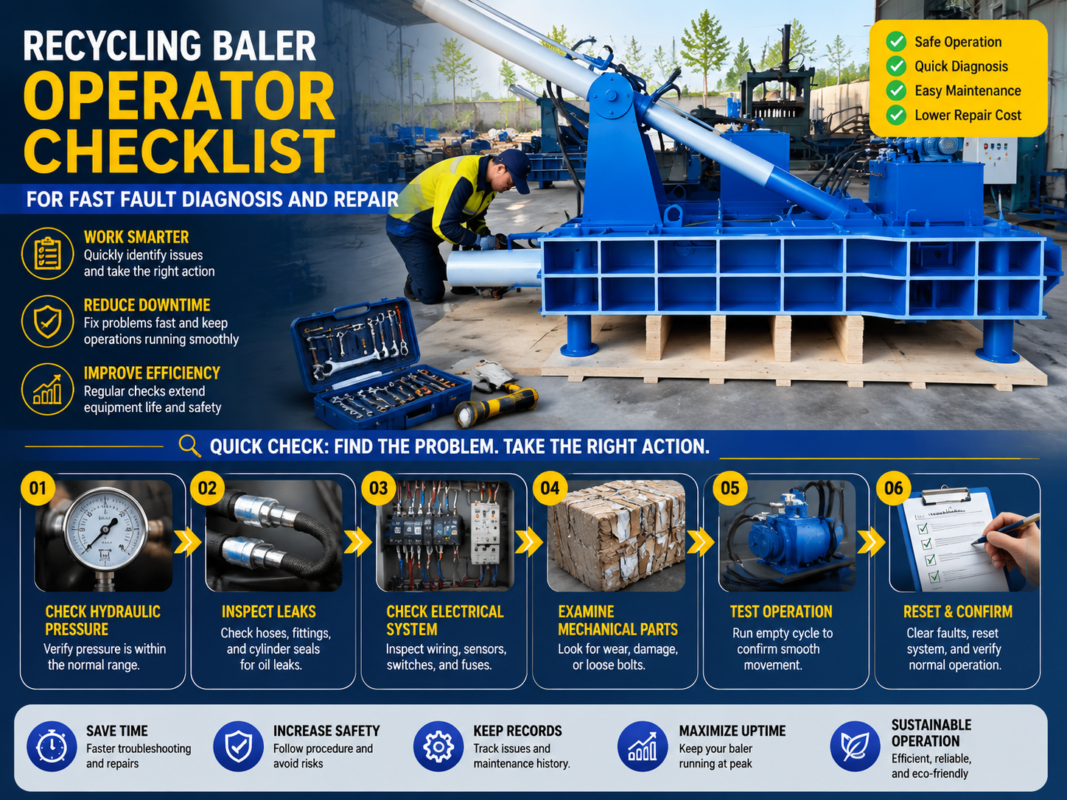
Detailed Troubleshooting Checklist for Operators
| Component | Checklist Item | Potential Issue |
|---|---|---|
| Electrical Cabinet | Check for loose wire terminals | High resistance and localized heating |
| Motor Housing | Feel for excessive heat or vibration | Bearing failure or phase imbalance |
| Hydraulic Oil | Check oil level and clarity | Low oil causes cavitation; dirty oil clogs filters |
| Baling Chamber | Inspect shear blades and ram guides | Dull blades increase mechanical resistance |
| Control Panel | Monitor Amperage (A) and Voltage (V) | Overload or poor power quality from the grid |
| Cooling Fans | Ensure fans are spinning and clear of dust | Motor overheating due to poor ventilation |
Operators should perform these checks daily. A simple “touch test” on the motor (carefully!) can reveal if it is running hotter than usual. If the motor is too hot to touch for more than a second, it is likely operating near its thermal limit. Additionally, listening for changes in the sound of the hydraulic pump can provide early warning of air entering the system or a pump beginning to fail, both of which increase the load on the motor.
Frequently Asked Questions (FAQ)
1. Why does my baler motor trip only when the bale is almost finished?
This is the point of maximum resistance. As the bale reaches its target density, the hydraulic pressure peaks. If the relief valve is set too high or the motor is slightly underpowered for that material density, the current draw will spike and trip the breaker. Consider reducing the pressure setting slightly or ensuring the material is distributed evenly in the chamber.
2. Can a faulty capacitor cause the motor to trip?
Yes, in single-phase motors, a start or run capacitor helps create the necessary torque. If the capacitor is failing, the motor will struggle to start or maintain speed under load, drawing excessive current and tripping the thermal protection. For three-phase motors, check the contactor points for welding or pitting.
3. How does cold weather affect motor tripping?
Cold weather increases the viscosity of hydraulic oil, making it thicker and harder to pump. When you start the baler in a cold morning, the motor must work much harder to move this thick oil. It is recommended to use a tank heater or allow the oil to circulate at low pressure to warm up before starting full compression cycles.
4. Is it safe to just keep resetting the breaker?
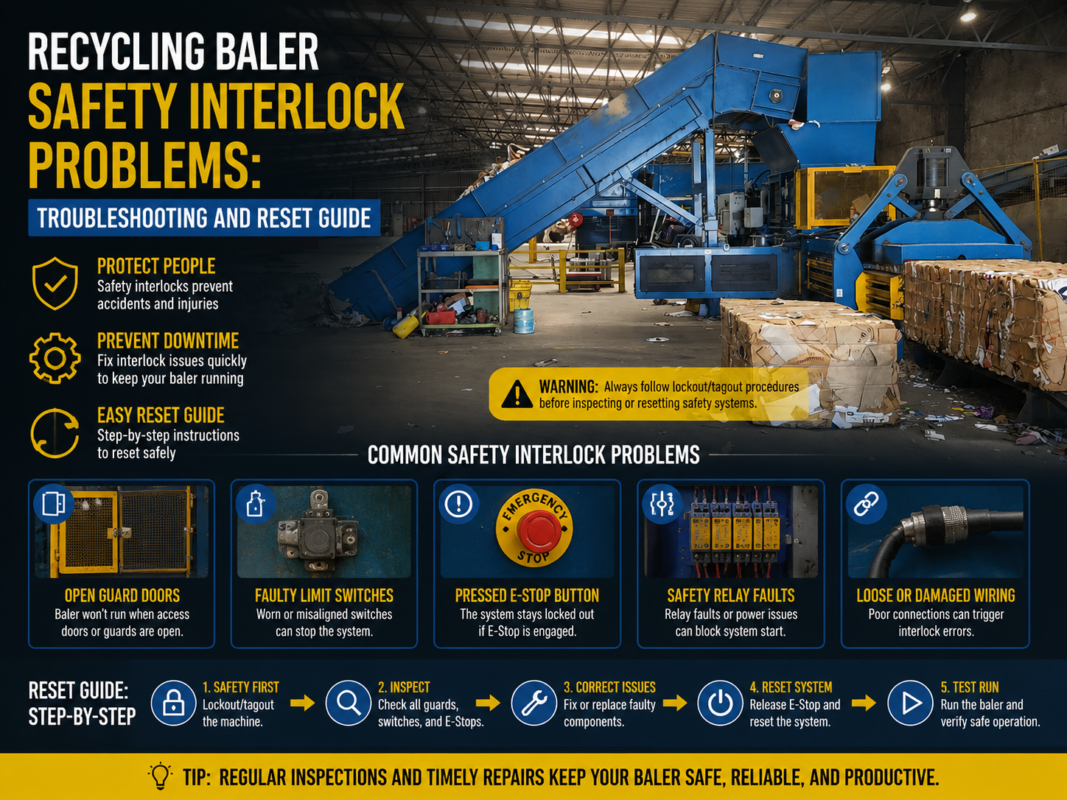
No. A breaker or overload relay trips to prevent a fire or motor burnout. Resetting it repeatedly without fixing the underlying cause will eventually lead to a catastrophic failure of the motor windings or the electrical panel. Always investigate the cause after the second consecutive trip.
5. Does the length of the power cable matter?
Absolutely. If the baler is located far from the main power distribution board, you may experience a voltage drop across the long cable run. A lower voltage at the motor terminals forces the motor to draw more current to perform the same work, leading to frequent trips. Ensure the cable gauge is sufficient for the distance and the motor’s amperage requirements.
6. How often should I replace the hydraulic filters to prevent motor strain?
Generally, hydraulic filters should be replaced every 500 to 1,000 hours of operation, or sooner if the indicator shows they are clogged. A clogged filter creates backpressure that the motor must overcome, directly contributing to electrical overload.
Conclusion: Maintaining Peak Performance
Dealing with a Recycling Baler Motor Trips Frequently: Troubleshooting Operators must adopt a holistic view of the machine. It is rarely just an “electrical problem” or just a “mechanical problem.” The motor sits at the intersection of these systems, and its performance is a reflection of the health of the entire baler. By maintaining clean hydraulic fluid, ensuring sharp shear blades, and verifying a stable electrical supply, you can eliminate the vast majority of tripping issues.
HARSLE is committed to providing robust machinery that stands up to the rigors of the recycling industry. However, even the best machine requires diligent oversight. Regular maintenance, operator training, and a proactive approach to troubleshooting will not only prevent motor trips but also extend the service life of your equipment by years. Remember, the goal is not just to get the machine running again, but to ensure it runs efficiently, safely, and profitably for the long term. If problems persist after following this guide, consulting with a certified industrial electrician or a HARSLE technical specialist is the best course of action to protect your investment.