Double-Shaft Shredder Purchasing Guide: Material Type, Output Size, and Throughput Explained

Introduction to Double-Shaft Shredder Procurement
In the modern industrial landscape, waste management and material recycling have transitioned from secondary concerns to primary operational priorities. The double-shaft shredder, often referred to as a twin-shaft shredder, stands as the workhorse of this transition. Designed to handle high-torque, low-speed shearing, these machines are capable of processing everything from bulky plastics and rubber tires to electronic waste and light metals. However, the process of Double-Shaft Shredder Purchasing : Material Type, Output Size, Throughput Explained is far from simple. It requires a deep understanding of how your specific material interacts with the machine’s mechanical components.
Choosing the wrong shredder can lead to catastrophic failures, such as broken blades, stalled motors, or insufficient throughput that bottlenecks your entire production line. Conversely, over-specifying a machine can lead to unnecessary capital expenditure and high energy costs. This guide is designed to navigate the complexities of the shredder market, focusing on the three pillars of selection: the nature of the material you are processing, the desired dimensions of the final product, and the volume of material you need to move per hour.
At HARSLE, we recognize that every recycling facility has unique needs. Whether you are a small-scale recycler focusing on post-consumer plastics or a large industrial plant processing scrap metal, understanding the technical nuances of double-shaft shredders is the first step toward a successful investment. In the following sections, we will break down the costs, configurations, and ROI factors that define a high-quality industrial shredder.
Price Range Overview: What to Expect
The price of a double-shaft shredder varies significantly based on its scale, power, and specialized features. Generally, the market is divided into three tiers: entry-level industrial, mid-range versatile, and heavy-duty custom systems. Understanding where your needs fall within these tiers is essential for budgeting.
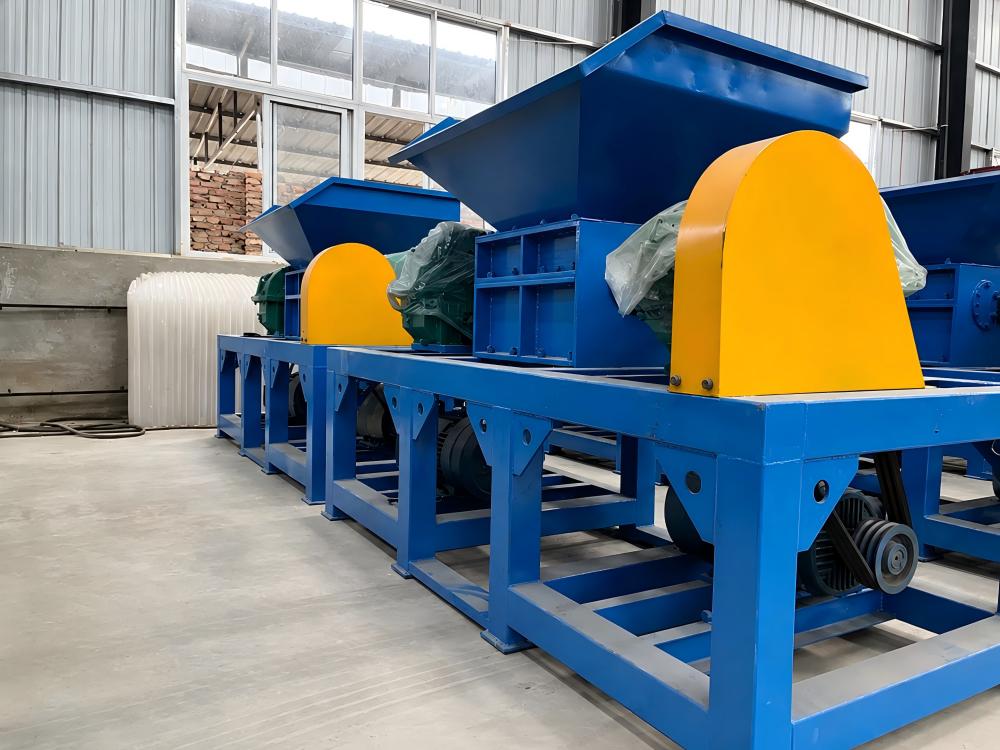
Entry-Level Industrial Shredders ($15,000 – $40,000): These machines are typically equipped with motors ranging from 7.5kW to 22kW. They are ideal for processing relatively soft materials like thin plastics, cardboard, and light wood waste. While they offer the same dual-shaft shearing principle, their frames are lighter, and their blades may require more frequent maintenance if pushed beyond their intended material limits.
Mid-Range Versatile Shredders ($40,000 – $120,000): This is the most common category for professional recycling centers. These machines feature robust frames, advanced PLC control systems, and motors between 30kW and 75kW. They can handle tougher materials like HDPE pipes, rubber, and electronic scrap (E-waste). At this price point, you often see features like automatic reverse functions to prevent jamming and higher-grade alloy steel blades.
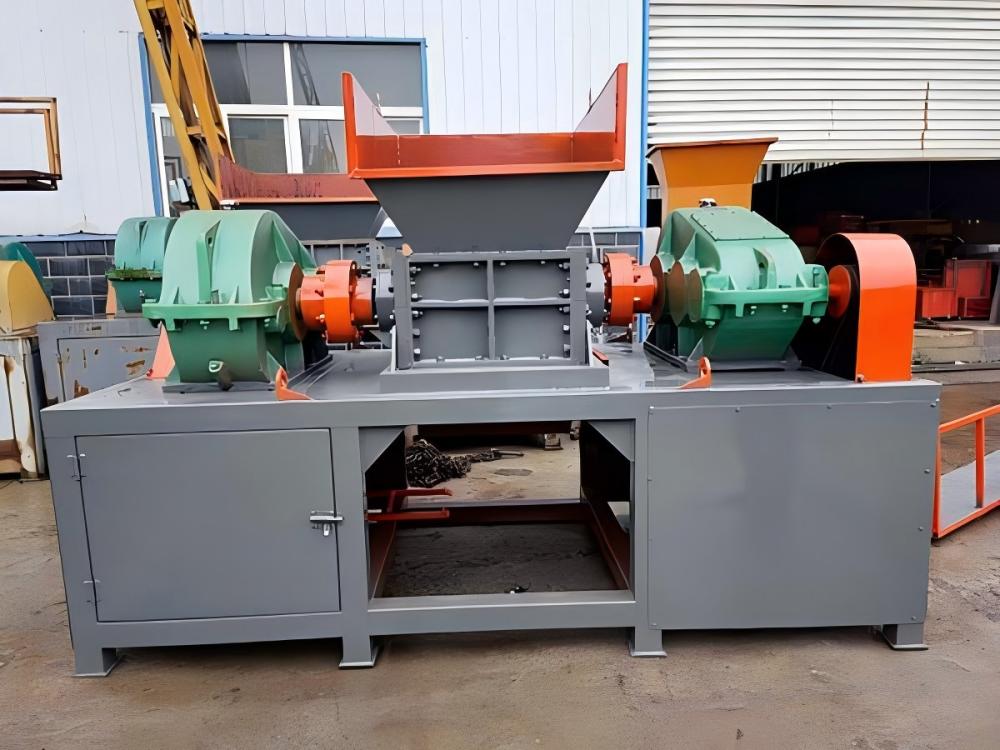
Heavy-Duty and Custom Systems ($120,000 – $500,000+): These are massive installations designed for high-volume throughput (5-20 tons per hour). They are used for car shredding, large-scale tire recycling, and municipal solid waste (MSW). These systems often include integrated conveyors, magnetic separators, and specialized hydraulic drive systems that provide immense torque at very low speeds. The cost reflects the massive amount of high-grade steel used in construction and the sophisticated engineering required to ensure 24/7 reliability.
Main Cost Drivers in Shredder Manufacturing
When evaluating a quote for a double-shaft shredder, it is important to look beyond the sticker price and understand what components are driving the cost. The quality of these components directly correlates with the machine’s lifespan and operational efficiency.
1. Blade Material and Manufacturing Process
The blades (or cutters) are the most critical part of the shredder. High-quality blades are made from specialized alloy steels such as D2, SKD-11, or DC53. The cost is driven by the material itself and the heat treatment process used to achieve the perfect balance between hardness (to maintain sharpness) and toughness (to prevent cracking under impact). Detachable blades, which allow for individual replacement of teeth rather than the entire disk, are more expensive upfront but significantly reduce long-term maintenance costs.
2. Motor and Drive System
The choice between an electric motor drive and a hydraulic drive is a major cost factor. Electric drives are more common and cost-effective for most applications. However, for materials that cause frequent shocks or require extreme torque, hydraulic drives are superior because they can handle sudden stalls without damaging the motor. Furthermore, the brand of the motor (e.g., Siemens, ABB) and the gearbox (e.g., Bonfiglioli, SEW) will influence the price and the ease of finding replacement parts.
3. The PLC and Control Logic
A sophisticated control system is vital for protecting your investment. High-end shredders use PLC (Programmable Logic Controller) systems from reputable brands like Schneider or Siemens. These systems monitor the motor’s current; if the shredder encounters an un-shreddable object, the PLC automatically reverses the shafts to clear the jam and then tries again. This automation prevents shaft breakage and motor burnout, but it adds to the initial cost.

Configuration Impact: Material Type, Output Size, and Throughput
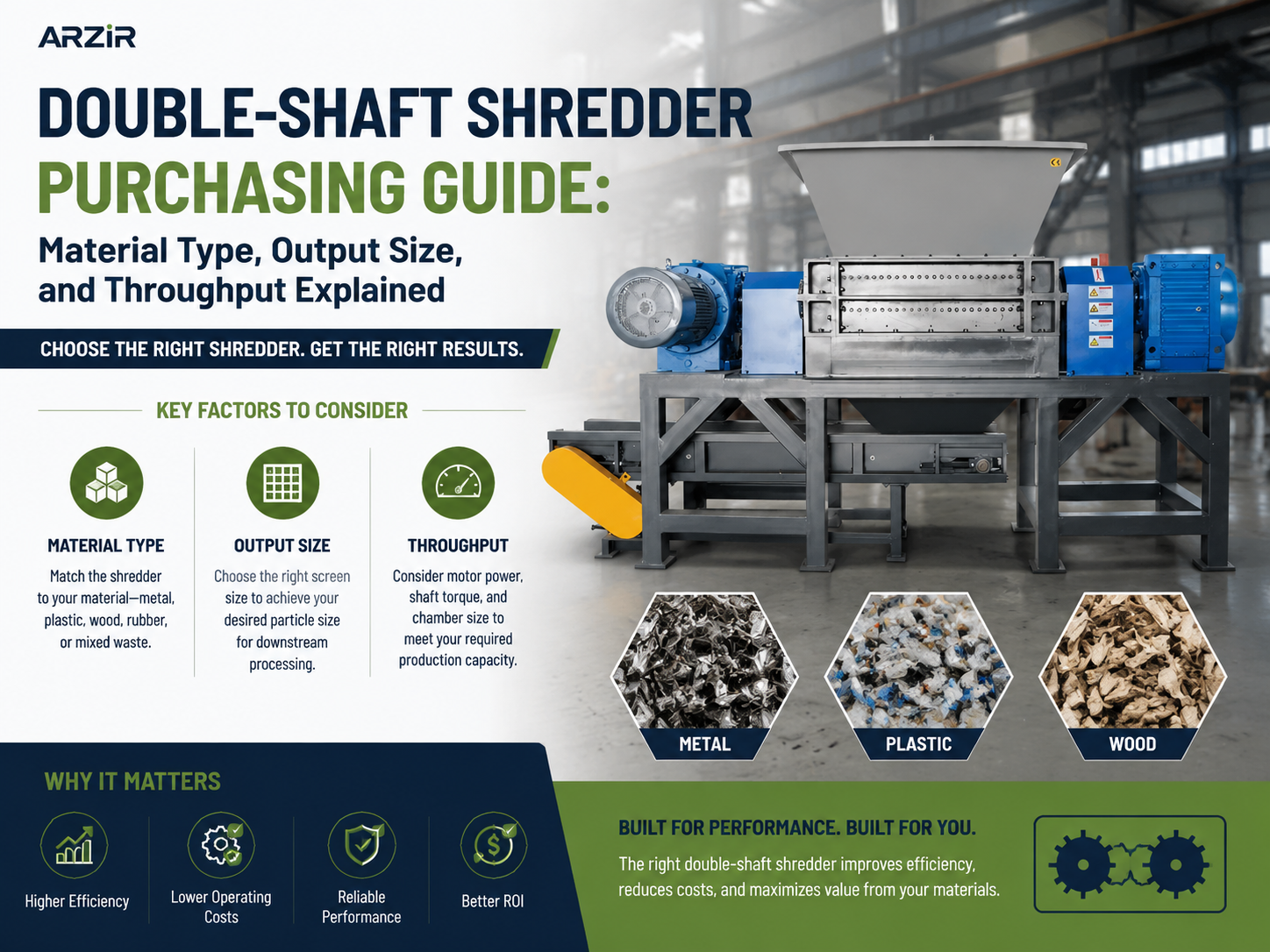
The core of Double-Shaft Shredder Purchasing : Material Type, Output Size, Throughput Explained lies in how these three variables interact. You cannot change one without affecting the others.
Material Type: The Foundation of Design
The physical properties of your material dictate the shredder’s geometry. For example:
- Brittle Materials (Glass, Hard Plastics): Require sharp, thin blades to shatter the material efficiently.
- Elastic Materials (Rubber, Tires): Require high-torque shearing and specific hook designs on the blades to grab and tear the material.
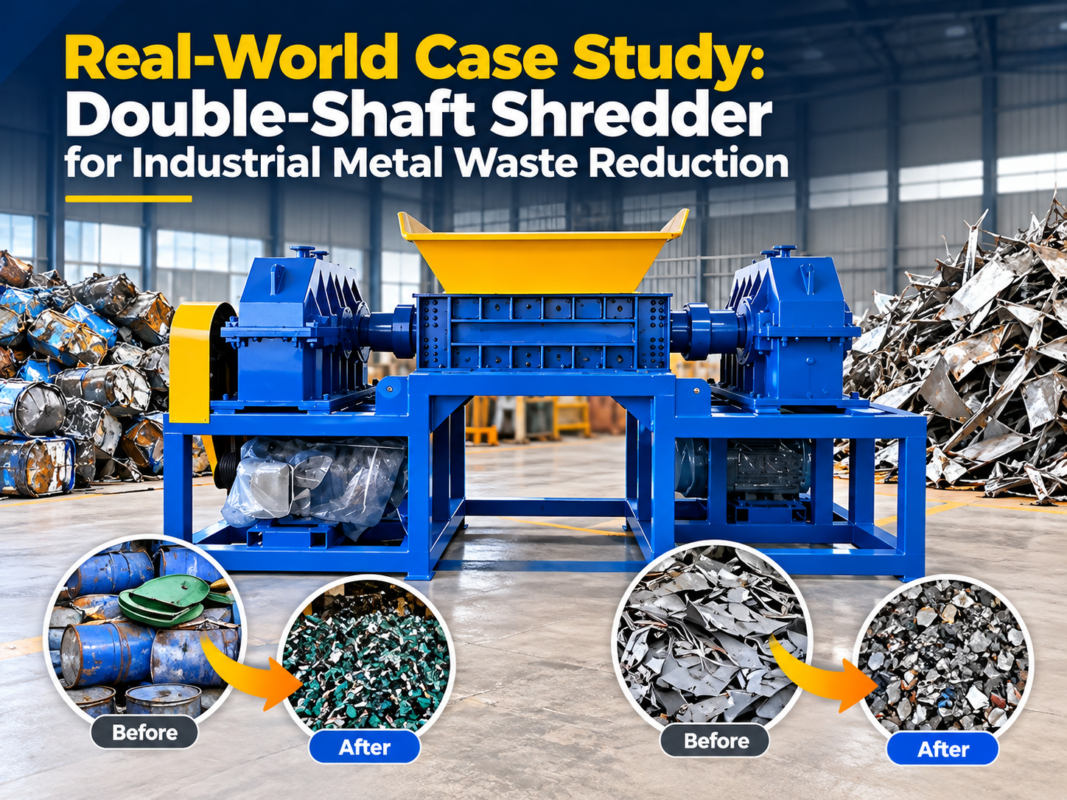
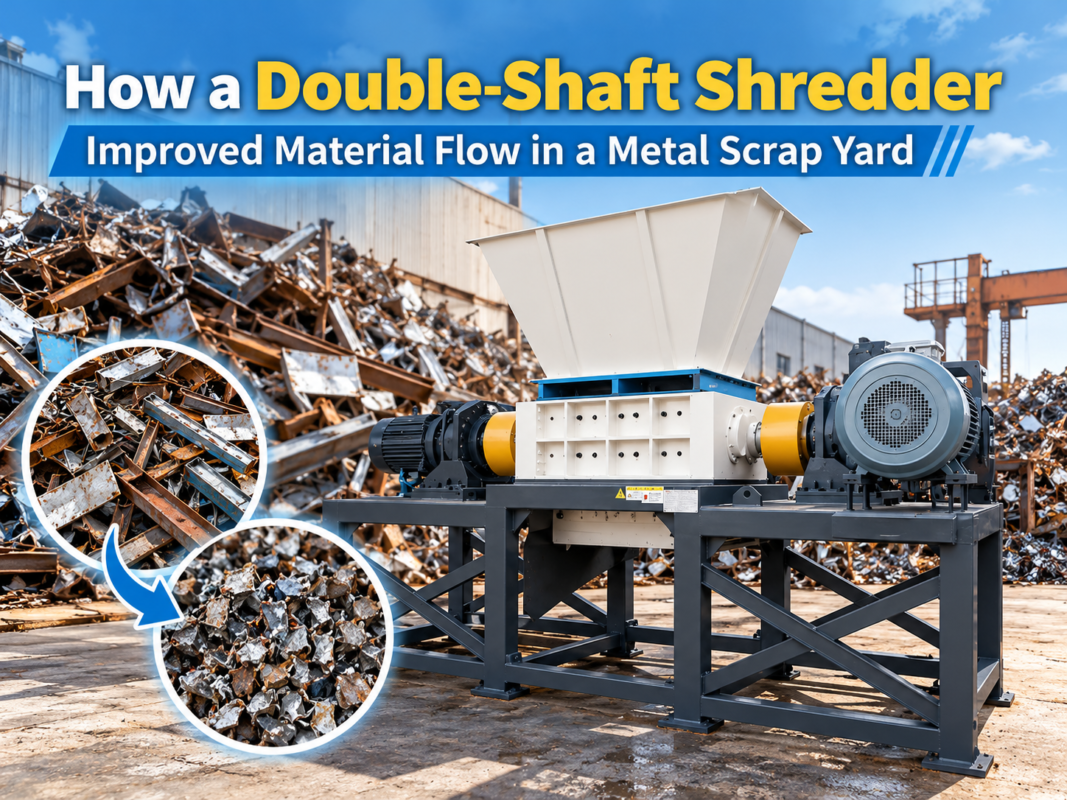
- Ductile Materials (Metals, Copper Wire): Require extremely durable blade edges and tight tolerances between the shafts to ensure a clean cut rather than just folding the metal.
Output Size: Determining the Blade Profile
In a double-shaft shredder, the width of the shredded strips is determined by the thickness of the blades. If you need 20mm strips, you need 20mm thick blades. However, the length of the pieces is less controlled unless a screen is used. Most double-shaft shredders do not use screens because they can easily clog; instead, they rely on the number of “hooks” on the blade to determine the length of the output. If your application requires a very specific, small particle size (e.g., 10mm granules), you may need a two-stage process: a double-shaft shredder for primary reduction followed by a granulator.
Throughput: Calculating Tons Per Hour (TPH)
Throughput is a function of the chamber size, motor power, and shaft speed. To increase throughput, you generally need a larger cutting chamber to accept more material at once and a more powerful motor to maintain shaft speed under load. It is important to note that throughput is also highly dependent on material density. Shredding one ton of loose plastic film takes much longer and requires more volume than shredding one ton of heavy rubber mats.
| Material Type | Recommended Blade Type | Typical Throughput (Mid-Range) | Key Consideration |
|---|---|---|---|
| Plastic Drums/Barrels | Multi-hook (3-5 hooks) | 800 – 1500 kg/h | Volume reduction focus |
| Car Tires | Single/Double hook (High Torque) | 1000 – 3000 kg/h | Steel wire contamination |
| E-Waste (PCBs) | Fine-tooth Alloy | 500 – 1200 kg/h | Precious metal recovery |
| Wood Pallets | Wide-gap Shearing | 1500 – 4000 kg/h | Nail/Screw resistance |
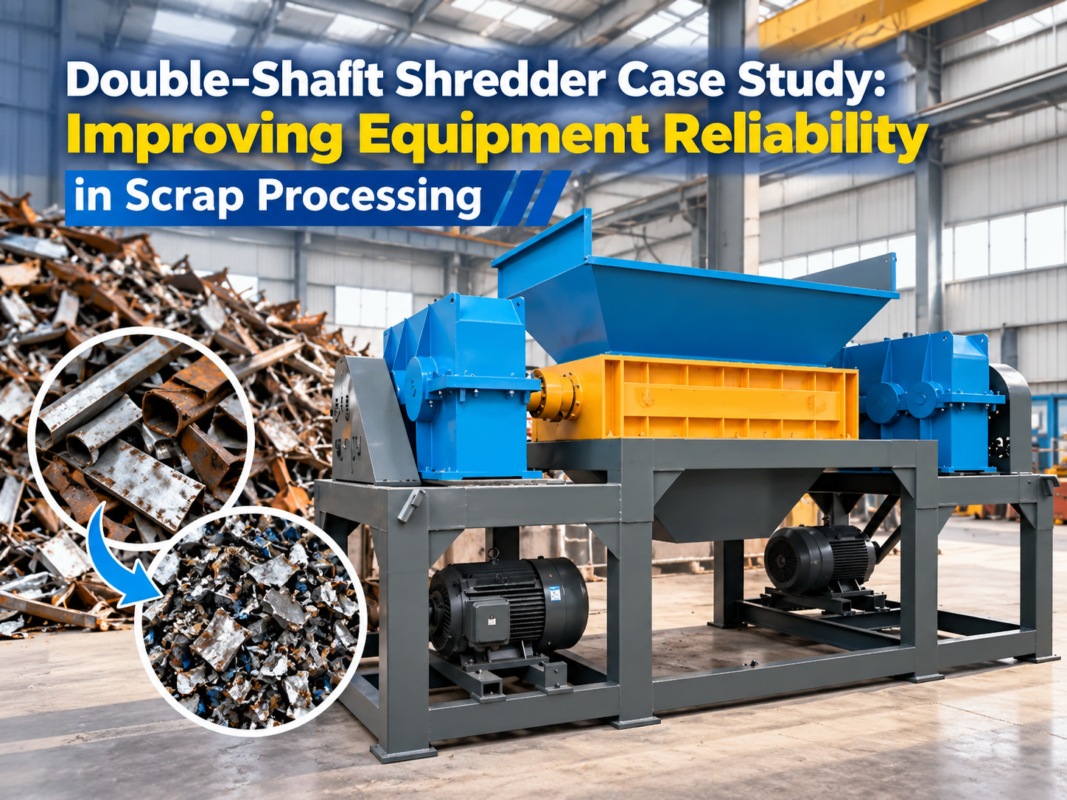
| Light Metal Scraps | Hardened D2 Steel | 400 – 1000 kg/h | Blade wear monitoring |
Hidden Costs of Owning a Double-Shaft Shredder
The purchase price is only the beginning. To truly understand the cost of ownership, buyers must account for several “hidden” expenses that occur over the machine’s lifecycle.
1. Consumables and Blade Sharpening: Blades are not permanent. Depending on the material (especially if it contains abrasives like sand or glass), blades will dull. Sharpening requires specialized equipment or sending the blades back to the manufacturer. Eventually, blades must be replaced entirely. A full set of blades for a mid-sized shredder can cost several thousand dollars.
2. Energy Consumption: Industrial shredders are power-hungry. A 50kW motor running 8 hours a day can significantly impact your monthly utility bill. Choosing a machine with an efficient gearbox and a smart PLC that idles the motor when not in use can save thousands of dollars annually.
3. Maintenance Labor: Shredders operate in harsh environments. Regular lubrication of bearings, checking gearbox oil levels, and inspecting blade bolts are mandatory. If the machine is not designed for easy access, these tasks will take longer, increasing labor costs and downtime.
4. Foundation and Installation: Large shredders generate significant vibration. You may need to pour a reinforced concrete pad or install vibration-dampening mounts. Additionally, the cost of bringing high-voltage power to the machine’s location should be factored into the initial setup budget.
ROI Calculation: Is the Investment Worth It?
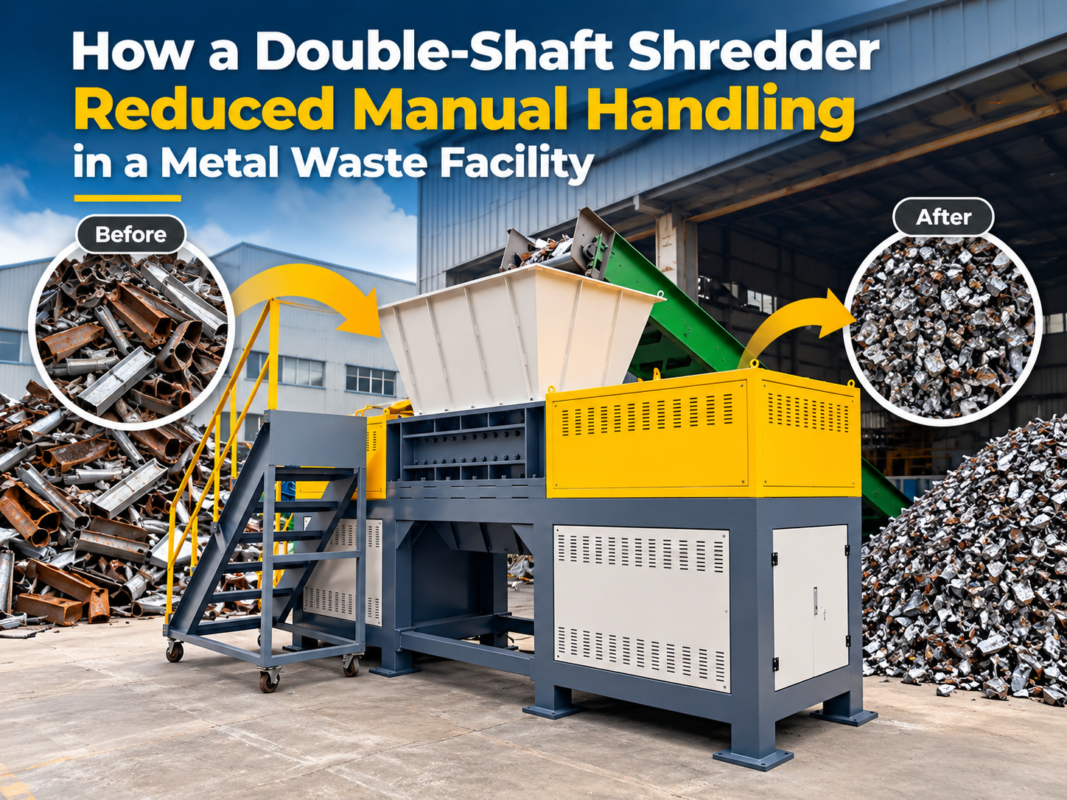
Calculating the Return on Investment (ROI) for a double-shaft shredder involves looking at both cost savings and revenue generation. For many businesses, the primary ROI comes from waste volume reduction. By shredding bulky waste, companies can reduce the number of trash hauls required, often cutting disposal costs by 50% to 70%.
Another revenue stream is the resale of processed materials. Shredded plastic, metal, and wood have a higher market value than raw, mixed waste because they are ready for secondary processing (like pelletizing or smelting). For example, shredded copper wire is much easier to separate from insulation, allowing for the recovery of high-value copper.
To calculate the payback period, use this simple formula:
Payback Period (Months) = Total Investment / (Monthly Savings in Disposal + Monthly Revenue from Recyclables – Monthly Operating Costs)
Most high-quality shredders in a busy facility will pay for themselves within 12 to 24 months. Beyond that point, the machine becomes a significant profit center for the business.
Buying Advice: How to Choose the Right Partner
When you are ready to move forward with Double-Shaft Shredder Purchasing : Material Type, Output Size, Throughput Explained, keep these tips in mind to ensure you get the best value:
- Request a Material Test: Any reputable manufacturer, including HARSLE, should be willing to test your specific material in one of their machines. This is the only way to verify the actual throughput and output size.
- Check the Blade Hardness: Ask for the specific Rockwell hardness (HRC) of the blades. For most industrial applications, you want a rating between 55 and 60 HRC.
- Evaluate After-Sales Support: Where are the spare parts located? How quickly can a technician arrive if the PLC fails? A cheaper machine from a company with no local support will cost you more in the long run during a breakdown.
- Safety First: Ensure the machine complies with CE or local safety standards. It should have emergency stop buttons, safety interlocks on access doors, and protective hoppers to prevent operator injury.
- Future-Proofing: If you expect your business to grow, consider a machine with a slightly higher capacity than you currently need. It is much cheaper to buy a larger machine now than to replace a small one in two years.
Frequently Asked Questions (FAQ)
How long do the blades on a double-shaft shredder last?
Blade life depends entirely on the material being shredded. For clean plastics, blades can last 1,000 to 2,000 hours before needing sharpening. If shredding contaminated materials like tires with steel wire or wood with nails, the interval may drop to 500 hours. Using high-quality alloy steels like D2 can significantly extend these intervals.
Can a double-shaft shredder handle metal?
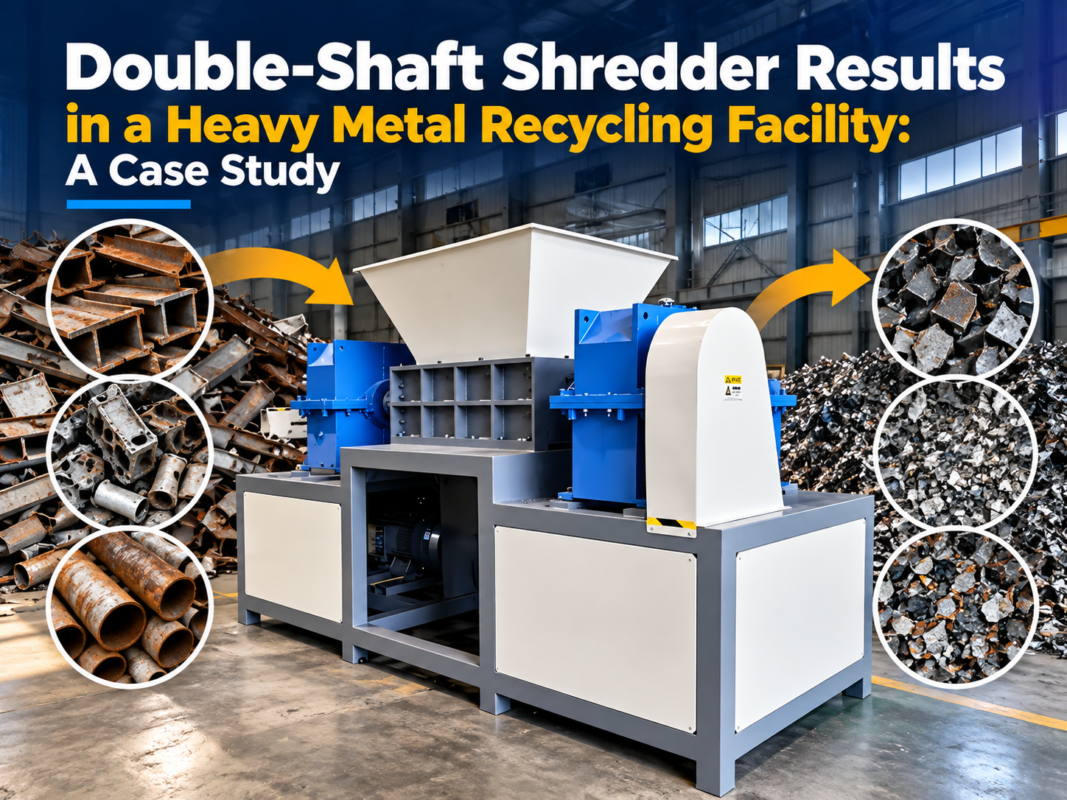
Yes, but with limitations. Double-shaft shredders are excellent for “light” metals such as aluminum extrusions, copper wiring, and thin steel sheets (like car body panels). They are not designed for thick structural steel, engine blocks, or heavy rebar, which require specialized hammer mills or heavy-duty shears.
What is the difference between a single-shaft and a double-shaft shredder?
A single-shaft shredder uses a high-speed rotor with small cutters and a hydraulic pusher to force material against the rotor; it is best for achieving a small, uniform particle size in plastics. A double-shaft shredder uses low-speed, high-torque shearing; it is better for bulky materials, heavy waste, and applications where high throughput and volume reduction are more important than precise particle size.
What power supply is required for an industrial shredder?
Most industrial shredders require a three-phase power supply (e.g., 380V, 415V, or 480V). The amperage required depends on the motor size. It is crucial to consult with an electrician to ensure your facility’s electrical infrastructure can handle the startup current of large motors, which can be significantly higher than the running current.
How do I prevent the shredder from jamming?
The best way to prevent jamming is to use a machine with a high-quality PLC that features an auto-reverse function. Additionally, ensuring that the material fed into the shredder does not exceed the chamber’s physical dimensions and avoiding “un-shreddable” objects (like large chunks of solid steel) will keep the machine running smoothly.
Is it better to buy a new or used shredder?
While used shredders are cheaper, they come with significant risks. The blades and bearings may be near the end of their life, and hidden structural cracks in the shaft can be expensive to repair. For a critical production line, a new machine with a manufacturer’s warranty and modern safety features is usually the safer and more cost-effective investment over time.