How to Diagnose Scrap Metal Shear Pump Failure Symptoms: A Comprehensive Industrial Guide

Introduction to Scrap Metal Shear Hydraulic Pump Health
In the demanding world of metal recycling and industrial fabrication, the scrap metal shear stands as a cornerstone of efficiency. At the heart of this powerful machine lies the hydraulic pump, a component responsible for converting mechanical energy into hydraulic flow and pressure. When the pump begins to fail, the entire operation grinds to a halt, leading to costly downtime and potential safety hazards. Learning how to diagnose scrap metal shear pump failure symptoms is not just a maintenance task; it is a critical skill for ensuring the longevity of your investment and the safety of your workshop.
HARSLE understands that industrial environments are unforgiving. Scrap metal shears are often subjected to extreme pressures, fluctuating temperatures, and abrasive contaminants. These factors place immense stress on the hydraulic pump. Early detection of failure symptoms can mean the difference between a simple seal replacement and a catastrophic system-wide failure that requires a complete overhaul of the hydraulic circuit. This guide provides a deep dive into the technical indicators of pump distress and the systematic approach required to identify them.
The complexity of modern hydraulic systems means that symptoms can often be misleading. A drop in pressure might suggest a pump failure, but it could just as easily be a faulty relief valve or a leaking cylinder. Therefore, a structured diagnostic process is essential. By understanding the relationship between flow, pressure, and temperature, operators and maintenance technicians can pinpoint the exact cause of performance degradation. This article will explore the most common signs of pump failure, the technical reasons behind them, and how to address them effectively.
Key Considerations Before Beginning Diagnostics
Before diving into the technical symptoms, it is vital to establish a baseline for your scrap metal shear’s performance. Every machine has a unique “signature” in terms of operating sound, cycle time, and heat generation. Recognizing when the machine deviates from this baseline is the first step in diagnosis. Furthermore, safety must always be the primary consideration. Hydraulic systems operate under immense pressure, and a pinhole leak can cause serious injury. Always follow Lockout-Tagout (LOTO) procedures and wear appropriate personal protective equipment (PPE).
Another key consideration is the quality of the hydraulic fluid. Many “pump failures” are actually symptoms of contaminated or degraded oil. Before blaming the pump, check the fluid’s viscosity, color, and cleanliness. If the oil is milky, it indicates water contamination; if it is dark and smells burnt, it has undergone thermal degradation. These issues will destroy a pump regardless of its build quality. Ensuring that the filtration system is functioning correctly is a prerequisite for any diagnostic work on the pump itself.
Finally, consider the environment in which the scrap metal shear operates. High ambient temperatures can lead to overheating, while extremely cold conditions can cause cavitation during startup. The diagnostic process must account for these external variables. A pump that performs poorly in the heat of the afternoon but fine in the morning may be suffering from internal wear that becomes apparent only when the oil thins out. Understanding these nuances is critical for an accurate diagnosis.
Technical Details: Identifying Pump Failure Symptoms
1. Abnormal Noise and Vibration
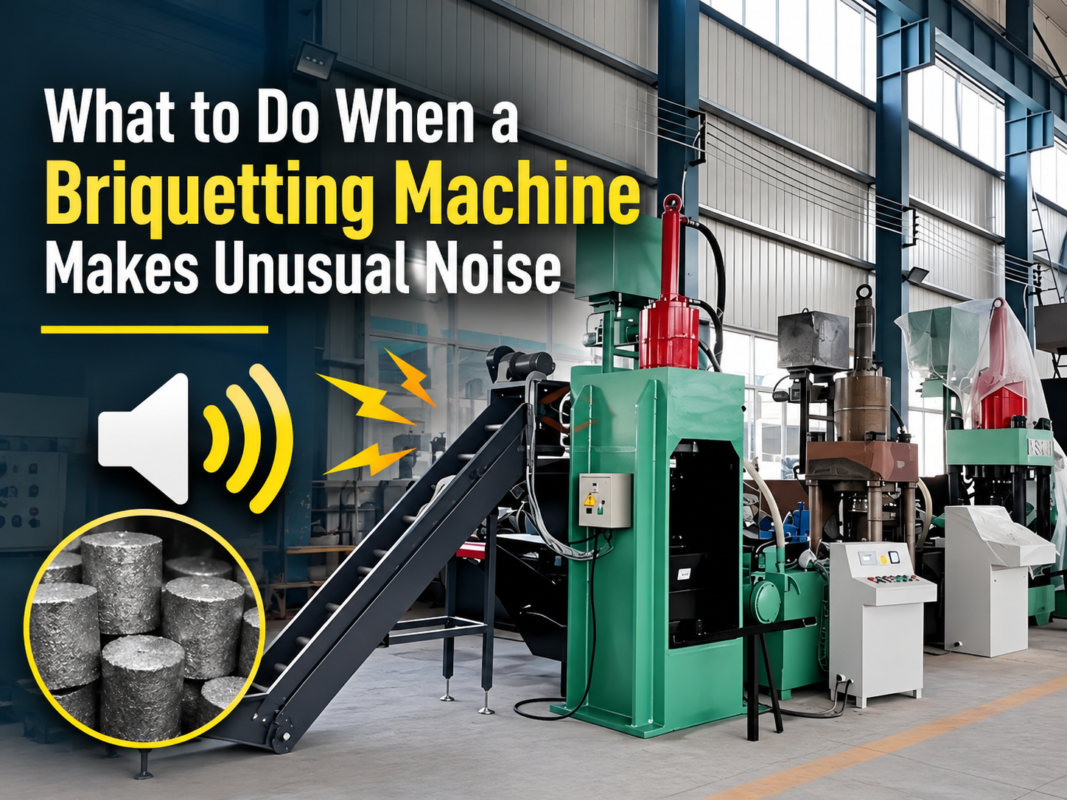
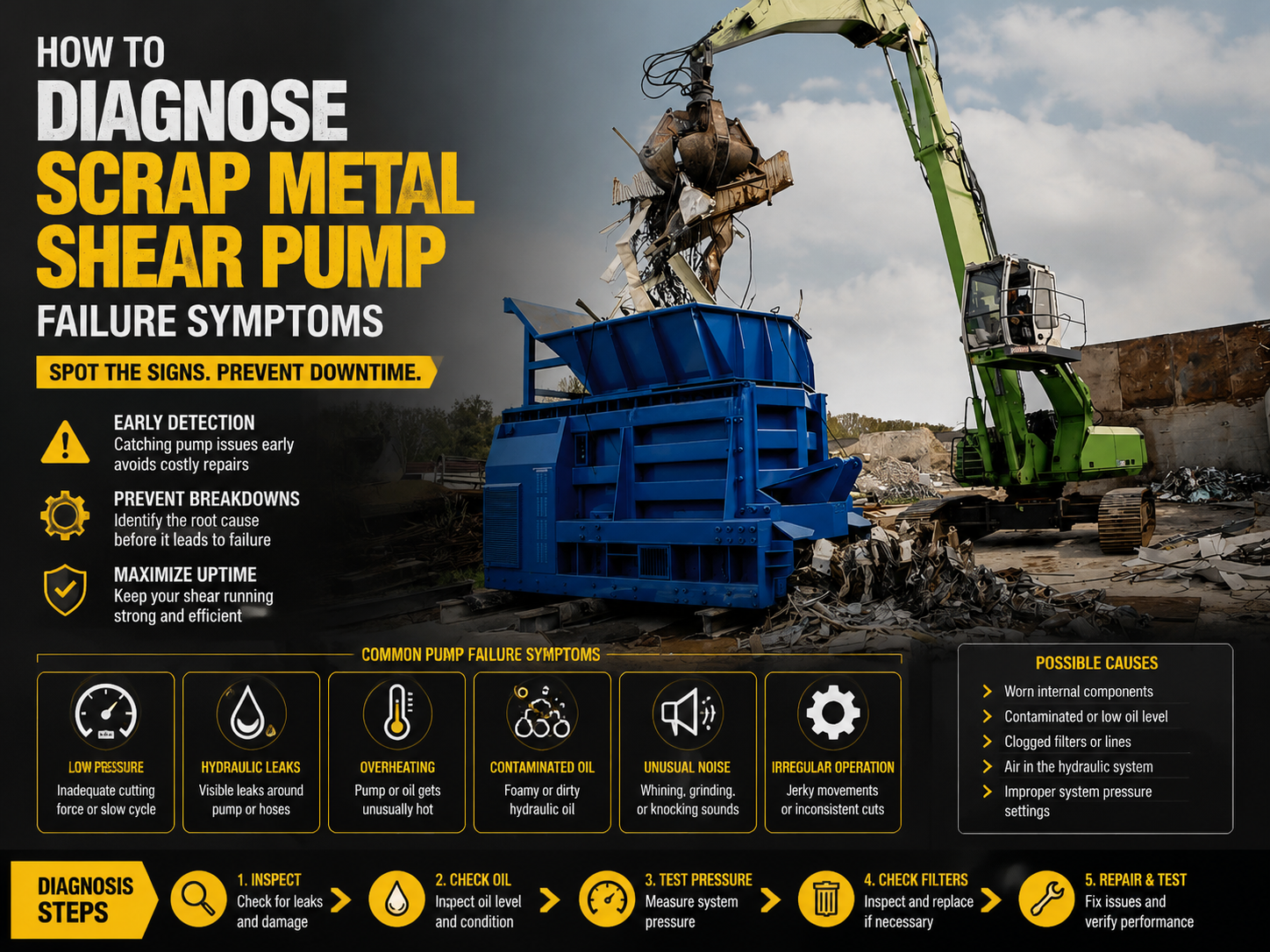
One of the most immediate indicators of a failing hydraulic pump is an increase in noise levels. While all pumps produce some sound, certain types of noise are red flags. Cavitation is a common issue, characterized by a high-pitched screaming or “marbles in a can” sound. This occurs when the pump cannot get enough fluid, causing vacuum bubbles to form and collapse violently against the internal components. If left unchecked, cavitation will pit the metal surfaces of the pump, leading to total failure.
Aeration is another noise-related symptom, often sounding like a rhythmic banging or knocking. This happens when air enters the hydraulic system through a leak in the suction line or a faulty shaft seal. Unlike cavitation, aeration usually causes the hydraulic fluid to foam. Both issues result in erratic shear movement and loss of power. Identifying the specific sound can help you determine whether the problem is an intake restriction (cavitation) or an air leak (aeration).
2. Excessive Heat Generation
Hydraulic systems are naturally inefficient, converting some energy into heat. However, excessive heat is a primary symptom of internal pump leakage. As the internal components of the pump—such as the vanes, pistons, or gears—wear down, high-pressure fluid leaks back to the low-pressure side. This “slippage” generates significant heat. If the pump casing is significantly hotter than the reservoir, it is a clear sign that the pump is working too hard to maintain pressure due to internal wear.
Overheating thins the hydraulic oil, which further increases internal leakage and reduces lubrication. This creates a destructive feedback loop. To diagnose this, use an infrared thermometer to compare the temperature of the pump inlet and outlet. A temperature differential that exceeds the manufacturer’s specifications (typically more than 10-15°F) suggests that the pump’s volumetric efficiency has dropped significantly.
3. Reduced Cycle Times and Loss of Power
In a scrap metal shear, performance is measured by how quickly and forcefully it can cut through material. If the shear begins to move sluggishly or fails to complete a cut that it previously handled with ease, the pump is likely failing to provide the necessary flow. This is often a gradual process. As internal clearances increase due to wear, the pump’s ability to move a specific volume of fluid per revolution decreases.
To confirm this, a flow meter test is required. By measuring the flow at various pressures, you can calculate the pump’s volumetric efficiency. If the flow drops significantly as the pressure increases, the pump is worn out. This symptom is often most noticeable when the oil is hot, as the lower viscosity allows for more internal leakage. If your HARSLE shear is losing its “bite,” the pump’s internal health is the first place to look.
| Symptom | Potential Cause | Diagnostic Action |
|---|---|---|
| High-pitched Whining | Cavitation / Suction Blockage | Check suction filters and inlet hoses. |
| Foaming Oil | Aeration / Air Leak | Inspect shaft seals and suction line fittings. |
| Slow Shear Movement | Low Volumetric Efficiency | Perform a flow meter test under load. |
| Excessive Pump Heat | Internal Component Wear | Check case drain flow and temperature. |
| Erratic Pressure Gauges | Contaminated Fluid / Valve Issue | Analyze oil sample and check relief valves. |
Selection Advice: Choosing the Right Replacement Pump
When diagnostics confirm that a pump is beyond repair, selecting the right replacement is crucial for restoring your scrap metal shear to its original performance. Not all hydraulic pumps are created equal. For heavy-duty applications like scrap shearing, you must consider the pump’s pressure rating, displacement, and mounting configuration. HARSLE machines are engineered with specific pump curves in mind; replacing a high-quality piston pump with a cheaper gear pump will result in poor performance and a shorter lifespan.
Consider the duty cycle of your operation. If your shear runs 24/7, investing in a premium pump with hardened components and advanced sealing technology is a wise financial decision. Look for pumps that offer high volumetric efficiency even at peak pressures. Additionally, ensure that the replacement pump is compatible with the type of hydraulic fluid you are using. Some synthetic fluids can degrade standard seal materials, leading to premature failure.
It is also an opportune time to evaluate the entire hydraulic circuit. If the original pump failed due to contamination, installing a new pump without cleaning the reservoir and replacing all filters is a recipe for disaster. We recommend installing a high-quality suction strainer and a fine-micron return line filter to protect the new investment. When in doubt, consult with HARSLE technical support to ensure the replacement part meets the exact specifications of your machinery.
Frequently Asked Questions (FAQ)
How often should I check the hydraulic pump on my scrap metal shear?
Routine inspections should be performed daily as part of a pre-shift checklist. This includes checking for visible leaks and listening for unusual noises. A more technical diagnostic, including temperature checks and oil analysis, should be conducted every 500 to 1,000 operating hours, depending on the intensity of your scrap processing operations.
Can a clogged filter cause symptoms similar to pump failure?
Absolutely. A clogged suction filter will restrict flow to the pump, causing cavitation. This produces noise and loss of power that mimics a failing pump. Always check and replace filters before concluding that the pump itself is faulty. It is the most cost-effective first step in any diagnostic process.
What is the average lifespan of a hydraulic pump in a scrap shear?
The lifespan varies greatly based on maintenance and operating conditions. In a well-maintained system with clean oil and proper cooling, a high-quality hydraulic pump can last 10,000 to 15,000 hours. However, in poor conditions with contaminated oil, a pump might fail in less than 2,000 hours. Regular oil analysis is the best way to predict and extend pump life.
Is it better to repair or replace a failing pump?
This depends on the extent of the damage. If the failure is limited to seals or a single worn component, a rebuild may be cost-effective. However, if the internal housing is scored or if multiple rotating groups are damaged, the cost of labor and parts often approaches the price of a new unit. Furthermore, a new pump comes with a manufacturer’s warranty, providing greater peace of mind.
Why does my pump only lose pressure when the machine gets hot?
This is a classic sign of internal wear. As hydraulic oil heats up, its viscosity decreases (it becomes thinner). Thinner oil escapes more easily through the increased clearances inside a worn pump. When the oil is cold and thick, it can still build pressure despite the wear, but as it thins out, the pump’s volumetric efficiency drops, leading to a loss of pressure and speed.
Conclusion: Proactive Maintenance for Long-Term Success
Diagnosing scrap metal shear pump failure symptoms is a vital part of industrial maintenance that requires a blend of sensory observation and technical testing. By staying alert to changes in noise, heat, and cycle times, you can catch pump issues before they lead to catastrophic failure. Remember that the pump is part of a larger ecosystem; its health is inextricably linked to the cleanliness of the oil and the integrity of the entire hydraulic circuit. A proactive approach—combining regular inspections, oil analysis, and timely filter changes—will ensure that your HARSLE scrap metal shear remains a productive asset for years to come.
Investing time in understanding these diagnostic techniques pays dividends in reduced downtime and lower repair costs. When a pump does eventually reach the end of its service life, choosing a high-quality replacement and performing a thorough system flush will protect your machinery and maintain the high standards of your metal fabrication or recycling operation. Keep your shears sharp and your pumps pressurized, and your facility will continue to operate at peak efficiency.