How to Buy a Horizontal Baler: Capacity, Automation, and Safety Features Explained

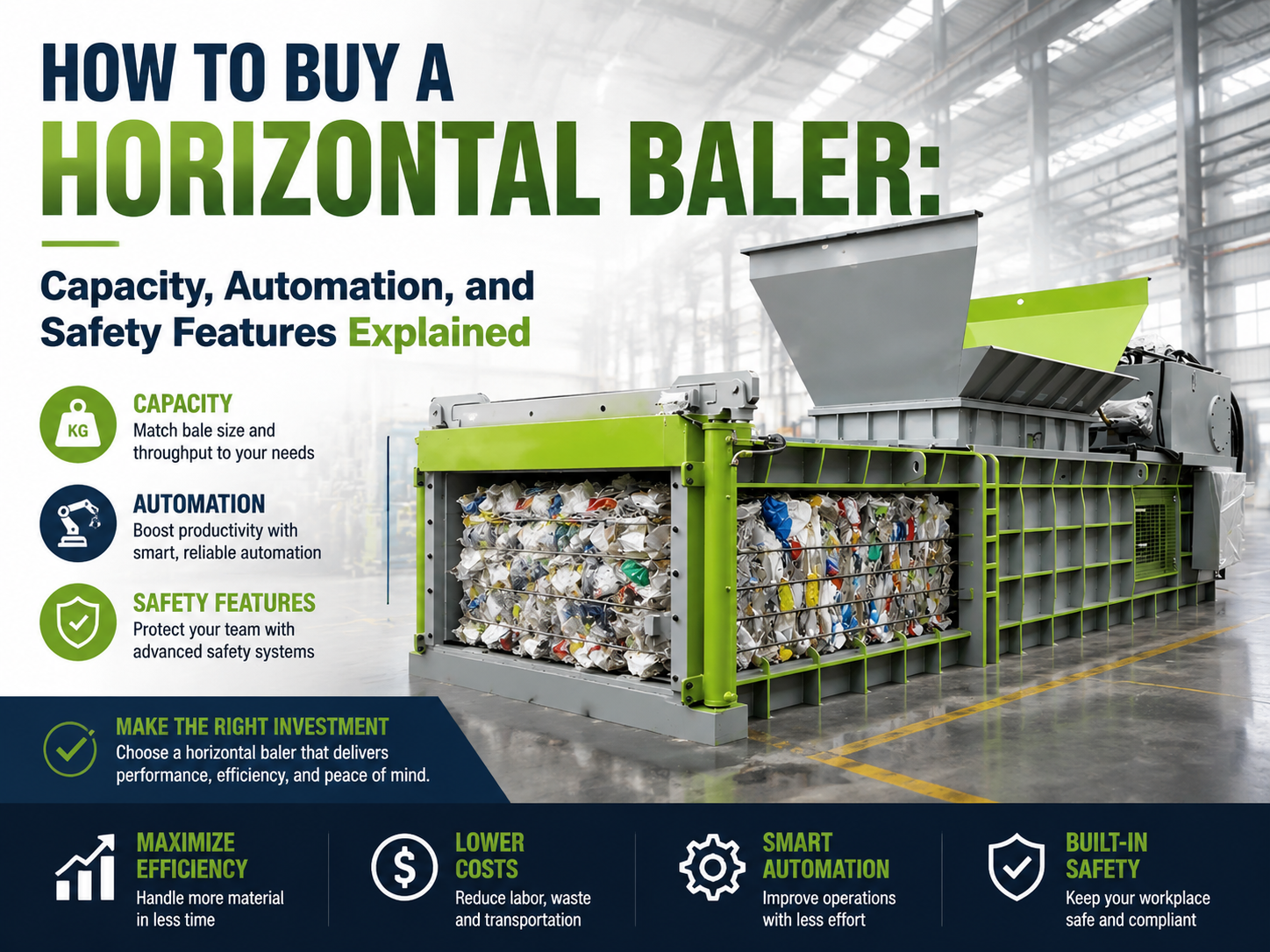
Introduction to Horizontal Baler Procurement
In the world of industrial waste management and recycling, the decision to buy a horizontal baler is a significant capital investment that can transform the efficiency of your operations. Unlike vertical balers, which are often suited for smaller volumes, horizontal balers are the workhorses of high-capacity facilities, capable of processing massive amounts of cardboard, plastic, paper, and even non-ferrous metals. However, the market is filled with various configurations, ranging from manual-tie entry-level machines to fully automated, high-speed systems. Understanding the nuances of capacity, automation, and safety is essential to ensuring you select a machine that provides the best return on investment (ROI) for your specific needs.
HARSLE, a leader in industrial machinery, recognizes that a baler is more than just a press; it is a critical link in the supply chain. A well-chosen horizontal baler reduces labor costs, minimizes storage space requirements, and increases the market value of your recyclable materials by producing dense, mill-sized bales. This guide will walk you through every aspect of the purchasing process, from initial price considerations to the technical specifications that define a high-performance machine.
Price Range Overview: What to Expect
When you begin to look at the market to buy a horizontal baler, the price range can be quite broad. Generally, horizontal balers are categorized into three main price brackets based on their size, power, and level of automation. Understanding these tiers helps in setting a realistic budget and aligning expectations with operational requirements.
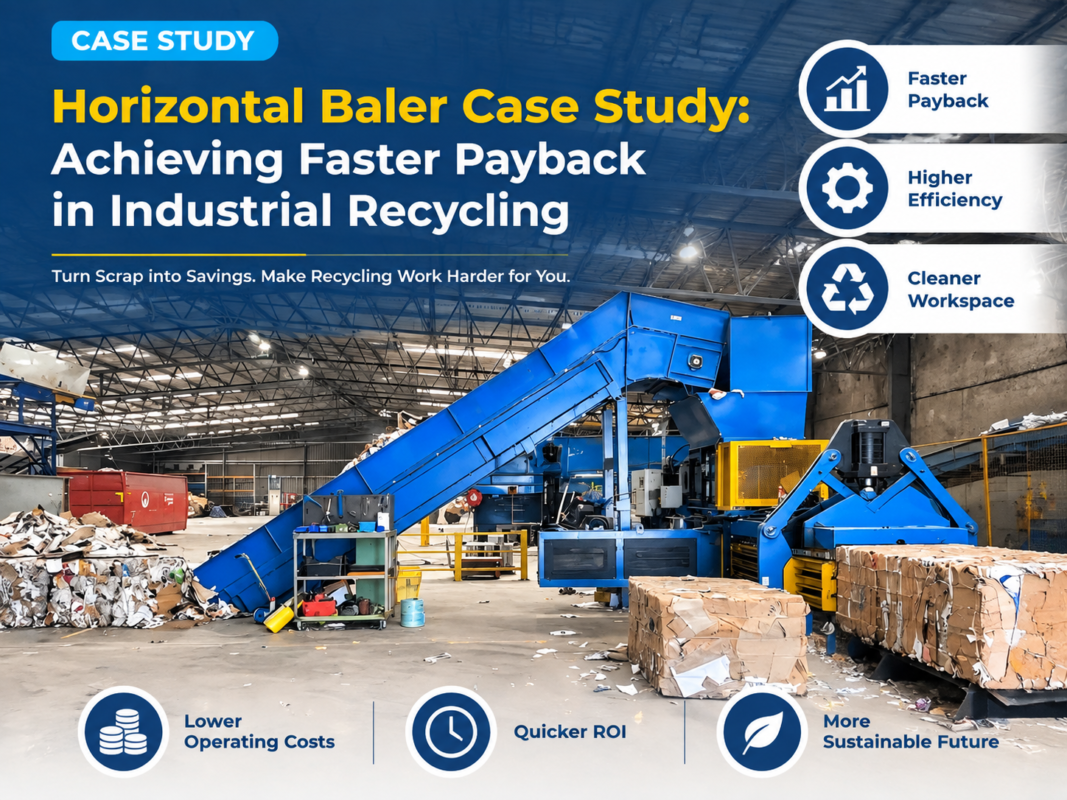
- Entry-Level Horizontal Balers ($20,000 – $45,000): These are typically closed-end balers that require manual tying. They are ideal for businesses processing 1 to 3 tons of material per hour. While they offer the horizontal footprint and larger hopper size compared to vertical units, they still require significant operator intervention.
- Mid-Range Semi-Automatic Balers ($50,000 – $95,000): These machines often feature higher hydraulic pressure and larger cylinders. They may include semi-automatic features or more advanced PLC controls. They are suitable for mid-sized recycling centers processing 3 to 7 tons per hour.
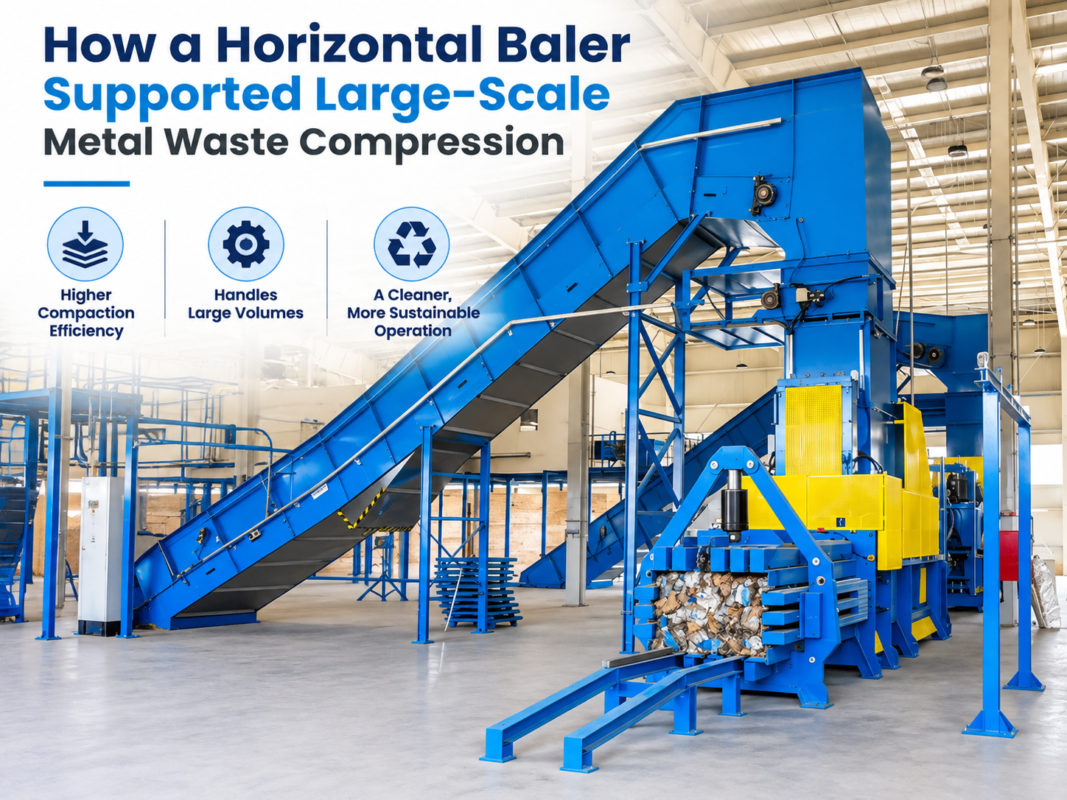
- High-End Fully Automatic Balers ($100,000 – $250,000+): These are the industry standards for high-volume operations. They feature automatic wire-tying systems, continuous feed capabilities via conveyors, and advanced shear blades. These machines can process upwards of 10 to 20 tons per hour and are designed for 24/7 operation.
It is important to note that while the upfront cost of a fully automatic machine is higher, the reduction in labor costs often makes it the more economical choice for high-volume facilities over a five-year period.
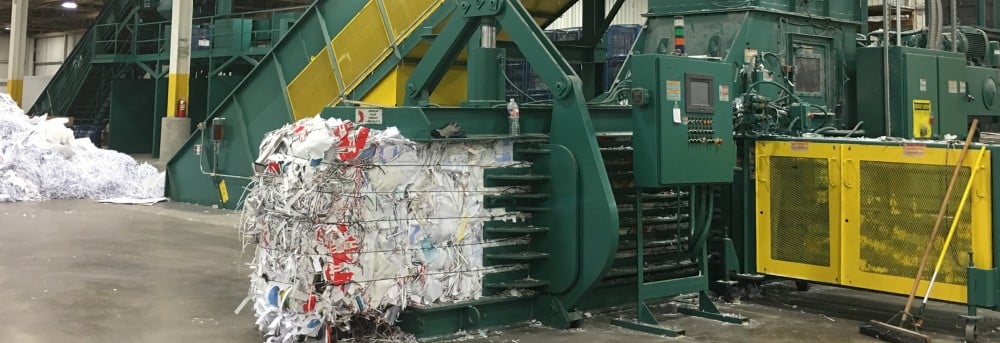
Main Cost Drivers in Horizontal Baler Manufacturing
Several technical factors influence the final price of a horizontal baler. When comparing quotes, it is vital to look beyond the sticker price and evaluate the engineering quality of the components. The primary cost drivers include the hydraulic system, the frame construction, and the power unit.
1. Hydraulic Pressure and Cylinder Bore
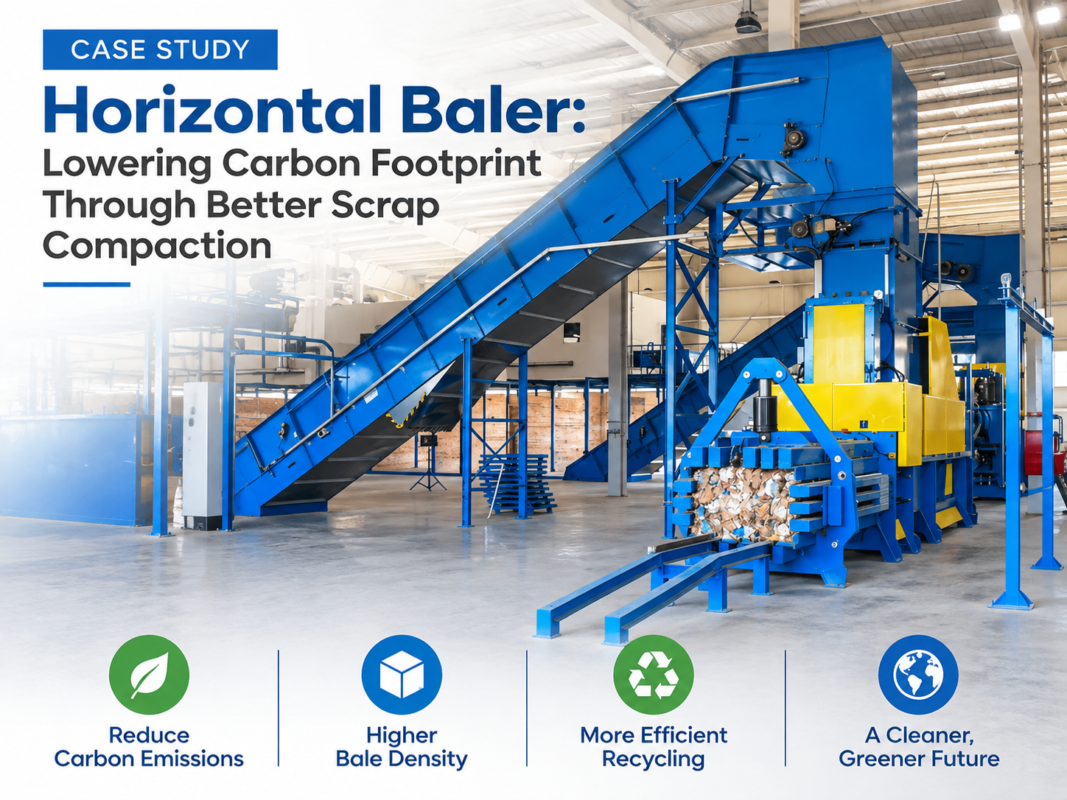
The force exerted by the baler is determined by the hydraulic system. A larger cylinder bore and higher PSI (pounds per square inch) allow the machine to create denser bales. Denser bales are more valuable because they maximize shipping container weights. High-quality hydraulic components from reputable brands like Rexroth or Vickers often add to the cost but ensure long-term reliability and easier sourcing of spare parts.
2. Steel Quality and Frame Reinforcement
Horizontal balers undergo immense stress during the compression cycle. The thickness of the steel plates and the quality of the welding are paramount. A machine built with high-tensile steel and reinforced stress points will last decades, whereas a cheaper, lighter frame may warp or crack under heavy use. HARSLE emphasizes heavy-duty frame construction to ensure the longevity of the equipment under industrial loads.
3. Motor Horsepower and Cycle Time
The speed at which the ram moves (cycle time) is dictated by the motor’s horsepower and the pump’s flow rate. A 20HP motor will be significantly slower than a 50HP or 100HP motor. If your facility needs to process material quickly to keep up with incoming waste, investing in a higher horsepower motor is a necessity, though it increases both the purchase price and electrical consumption.
Configuration Impact: Manual vs. Auto-Tie Systems
One of the most critical decisions when you buy a horizontal baler is choosing between a manual-tie and an automatic-tie (auto-tie) system. This configuration choice has the single largest impact on both the machine’s price and its operational efficiency.
| Feature | Manual-Tie Baler | Auto-Tie Baler |
|---|---|---|
| Labor Requirement | High (Operator must tie every bale) | Low (Fully automated tying) |
| Throughput | Lower (Interrupted by tying process) | Higher (Continuous feeding) |
| Initial Cost | Lower ($20k – $50k) | Higher ($80k – $200k+) |
| Material Versatility | Good for varied materials | Best for consistent high-volume streams |
| Bale Consistency | Depends on operator skill | Highly consistent and uniform |
Manual-tie balers are usually “closed-end,” meaning the ram pushes the material against a solid door. Once the bale is formed, the operator manually threads wires through the bale and ties them. This is suitable for low-volume applications where labor is readily available. In contrast, auto-tie balers are usually “open-end” or use a channel-style extrusion process. As the material is pushed through, an automated needle system wraps and twists the wire without stopping the machine. This allows for a continuous flow of material from a conveyor belt directly into the hopper.
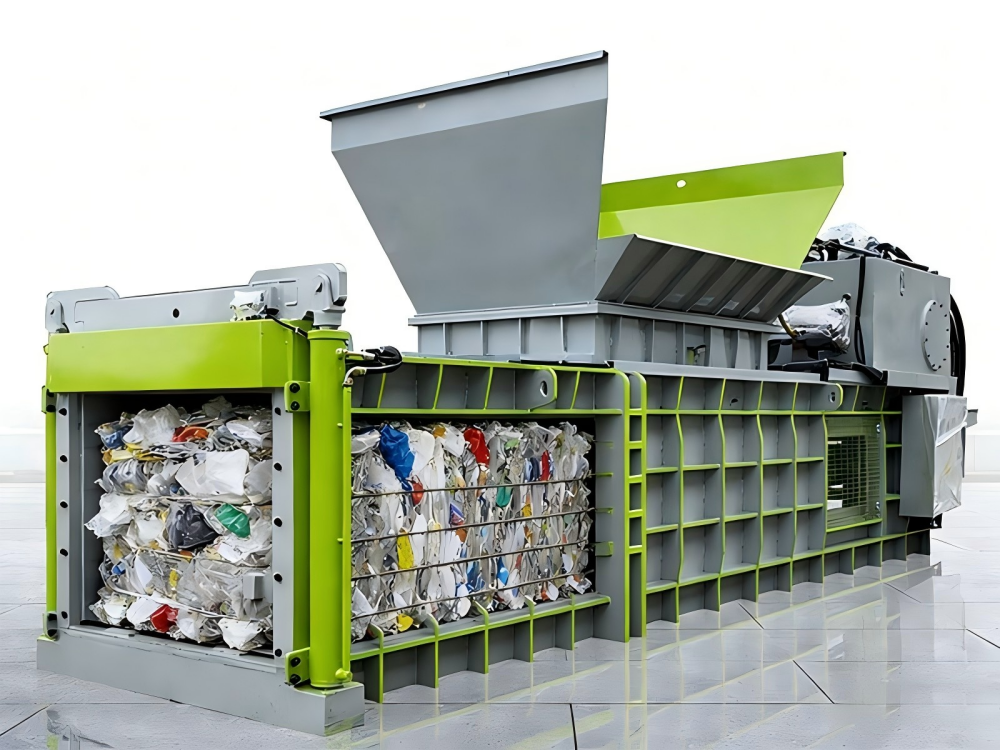
Capacity and Automation: Finding the Sweet Spot
Capacity is measured in two ways: hourly throughput (tons per hour) and bale density (lbs per cubic foot). To determine the capacity you need, calculate your peak daily waste volume. If you generate 40 tons of cardboard a day, a machine that processes 2 tons per hour will require 20 hours of operation, which may necessitate two shifts. A machine that processes 6 tons per hour could finish the job in a single 8-hour shift, significantly reducing labor costs.
Automation extends beyond just the tying system. Modern horizontal balers feature advanced PLC (Programmable Logic Controller) systems with touch-screen interfaces. These systems allow operators to select presets for different materials. For example, baling plastic bottles requires different pressure and timing settings than baling shredded paper. Advanced automation can also include:
- Auto-Start Sensors: Infrared sensors in the hopper that start the compression cycle as soon as the material reaches a certain level.
- Remote Diagnostics: Allowing technicians to troubleshoot the machine via the internet, reducing downtime.
- Bale Length Adjustment: Digitally setting the exact length of the bale to optimize truck loading.
Safety Features Explained
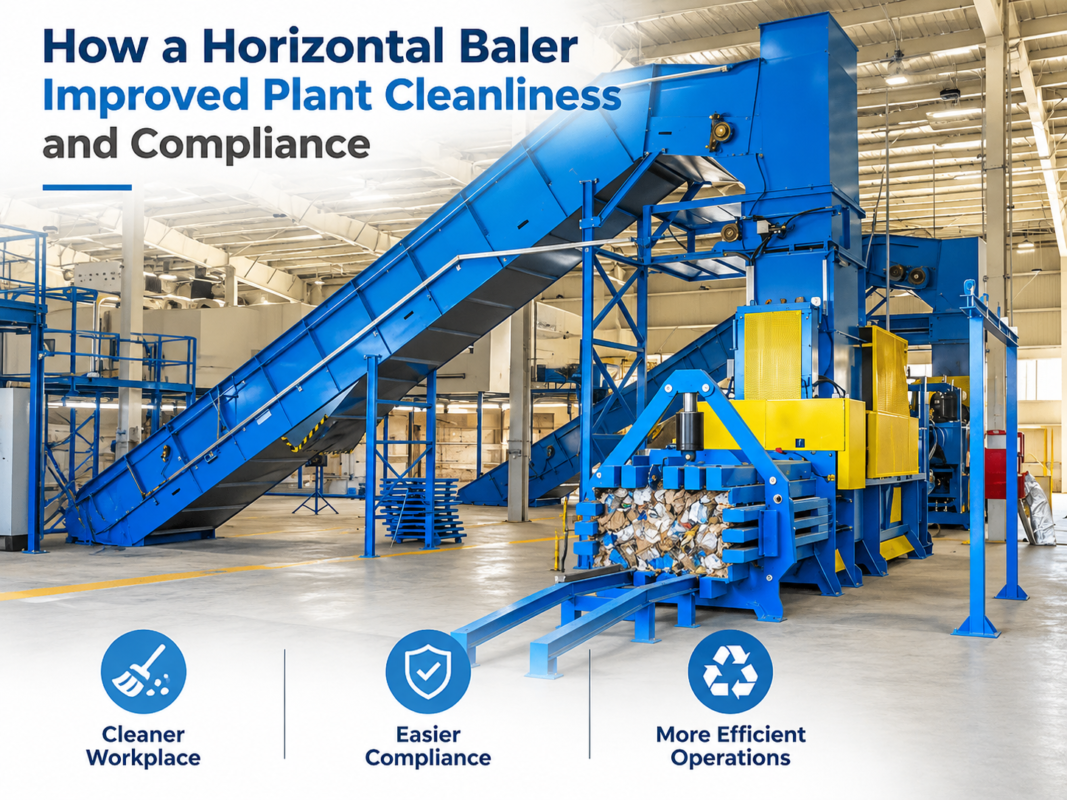
Safety is non-negotiable in industrial environments. When you buy a horizontal baler, you must ensure it complies with local safety standards (such as CE in Europe or ANSI in the US). High-quality balers like those from HARSLE incorporate multiple layers of protection to prevent accidents.
Key safety features to look for include:
- Emergency Stop Buttons: Located at multiple points around the machine for immediate shutdown.
- Safety Interlocks: Mechanical or electrical switches that prevent the machine from operating if access doors or panels are open.
- Light Curtains: Optical sensors that stop the ram if a person or object enters the hopper area during operation.
- Pressure Relief Valves: To prevent hydraulic over-pressurization, which could lead to component failure.
- Warning Alarms: Audible and visual signals that activate before the machine starts or when a bale is ready for discharge.
Investing in a machine with comprehensive safety features not only protects your employees but also reduces your insurance premiums and protects the company from legal liabilities.
Hidden Costs of Owning a Horizontal Baler
The purchase price is just the beginning. To accurately calculate the total cost of ownership, you must consider several “hidden” expenses that often catch first-time buyers off guard.
1. Installation and Freight
Horizontal balers are massive and heavy. Shipping them requires specialized heavy-haul trucking, which can cost thousands of dollars depending on the distance. Once the machine arrives, you will likely need a professional rigger and a large forklift or crane to position it. Electrical installation must be performed by a certified industrial electrician, as these machines require high-voltage, three-phase power.
2. Consumables (Baling Wire)
Unlike vertical balers that might use plastic strapping, horizontal balers typically use galvanized or black annealed steel wire. For high-volume operations, the cost of wire can be significant. You should factor in the cost per ton of material processed to understand your ongoing operational expenses.
3. Maintenance and Wear Parts
The shear blades that cut the material as the ram moves forward will eventually dull and need sharpening or replacement. Hydraulic oil needs to be filtered and changed periodically. Seals, hoses, and wear liners (the replaceable plates inside the baling chamber) are all items that will require maintenance over the life of the machine. A proactive maintenance schedule is essential to prevent costly unplanned downtime.
ROI Calculation: Is It Worth It?
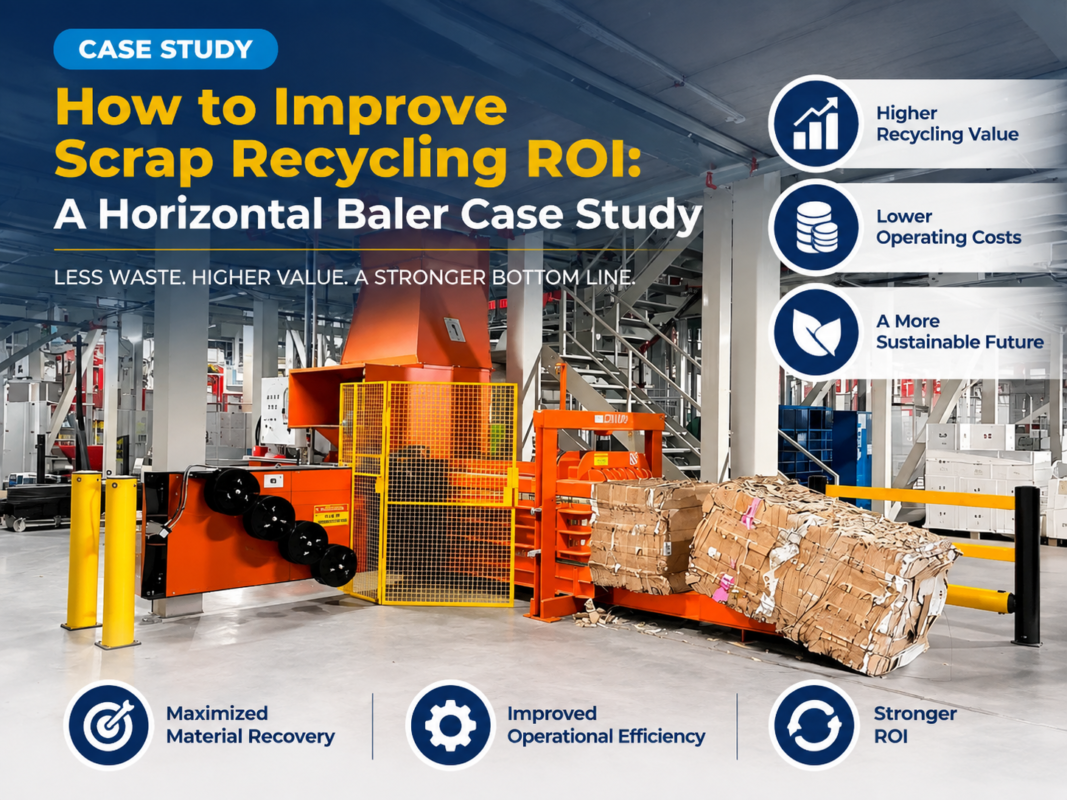
To justify the cost of a horizontal baler, you need to perform a Return on Investment (ROI) calculation. The ROI is generally driven by three factors: labor savings, transportation savings, and material revenue.
Labor Savings: If an automatic horizontal baler replaces two employees who were previously manual-loading and tying a vertical baler, the annual salary savings alone could pay for the machine in 2-3 years.
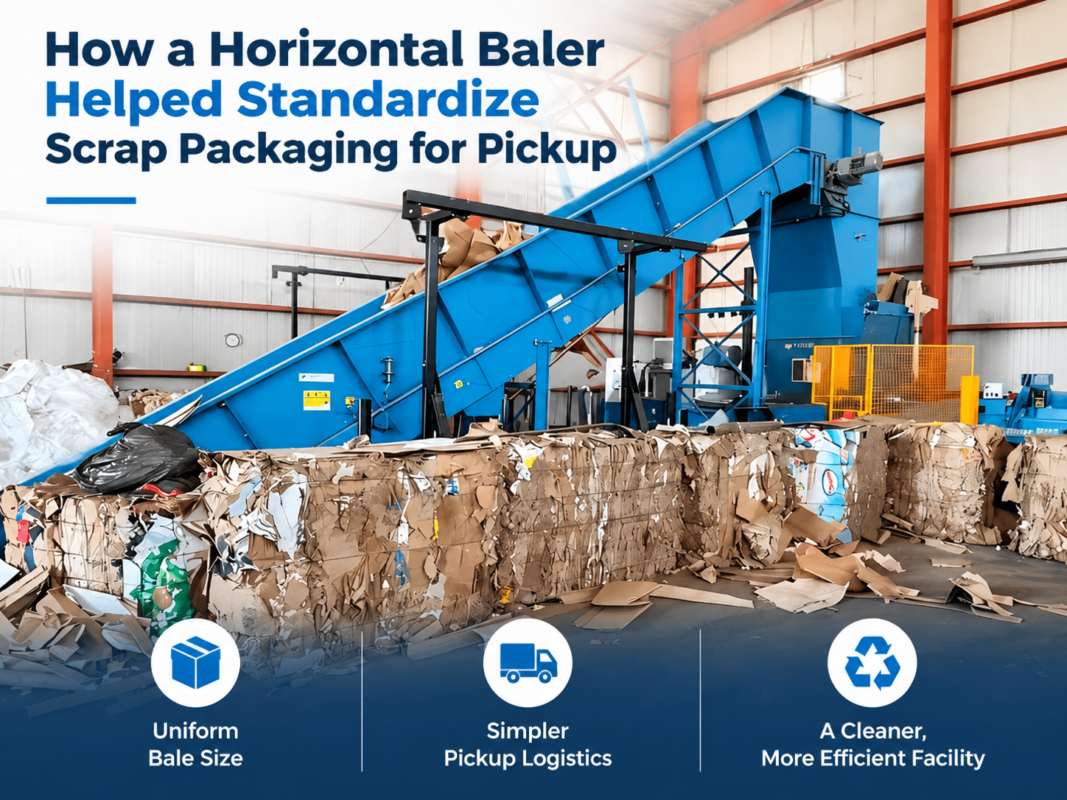
Transportation Savings: Loose or poorly baled cardboard is expensive to transport because you are “shipping air.” A high-density horizontal baler can increase the weight of a trailer load from 15 tons to 22 tons. This reduces the number of trips required, saving thousands in freight costs annually.
Material Revenue: Recycling centers pay more for “mill-sized” bales that meet specific density and size requirements. By producing high-quality bales, you can negotiate better rates for your processed waste, turning a waste stream into a revenue stream.
Buying Advice: A Step-by-Step Checklist
Before signing a purchase agreement, follow this checklist to ensure you are getting the right machine for your facility:
- Analyze Your Material: Is it mostly cardboard, plastic film, PET bottles, or a mix? Ensure the baler’s shear strength and hopper design are compatible with your toughest material.
- Measure Your Space: Horizontal balers have a large footprint. Include space for the conveyor, the bale discharge area, and room for maintenance access around the machine.
- Check Your Power Supply: Ensure your facility has the amperage and voltage required for the motor. Upgrading a transformer can be a massive unexpected expense.
- Evaluate the Manufacturer: Does the company offer local support? What is the warranty period? HARSLE provides extensive documentation and support to ensure customer success.
- Request a Demo or Reference: If possible, see the machine in action or speak with another business using the same model to verify its real-world performance.
Frequently Asked Questions (FAQ)
What is the difference between an open-end and a closed-end horizontal baler?
A closed-end baler has a door at the end of the chamber that stays shut until the bale is finished. It produces very dense bales but requires the machine to stop for tying. An open-end baler uses hydraulic tensioners to create resistance, allowing for continuous extrusion and automatic tying without stopping the ram.
How long does a horizontal baler typically last?
With proper maintenance, a high-quality horizontal baler from a reputable manufacturer like HARSLE can last 15 to 25 years. The lifespan depends heavily on the volume of material processed and the consistency of hydraulic oil changes and blade maintenance.
Can a horizontal baler handle metal?
Standard horizontal balers are designed for paper, cardboard, and plastics. While they can handle light non-ferrous metals like aluminum cans, they are not designed for heavy scrap metal. For that, you would need a specialized scrap metal baler with much higher structural reinforcement and shearing force.
What kind of maintenance does the hydraulic system require?
The hydraulic system is the heart of the baler. It requires regular oil level checks, annual oil filtration or replacement, and periodic inspection of hoses for leaks or wear. Keeping the oil cool and clean is the most important factor in extending the life of the pump and valves.
Is an automatic tie system worth the extra cost?
If you are processing more than 5 tons of material per day, the labor savings from an automatic tie system usually justify the extra cost within the first 18-24 months. For lower volumes, a manual-tie horizontal baler may be more cost-effective.
What safety certifications should I look for?
Look for machines that are CE certified or meet ANSI Z245.5 standards. These certifications ensure the machine has been designed with the necessary guards, interlocks, and emergency stops to protect operators in an industrial environment.