How Hydraulic Briquetting Machines Support Sustainable Metal Recycling Operations

Introduction to Sustainable Metal Recycling
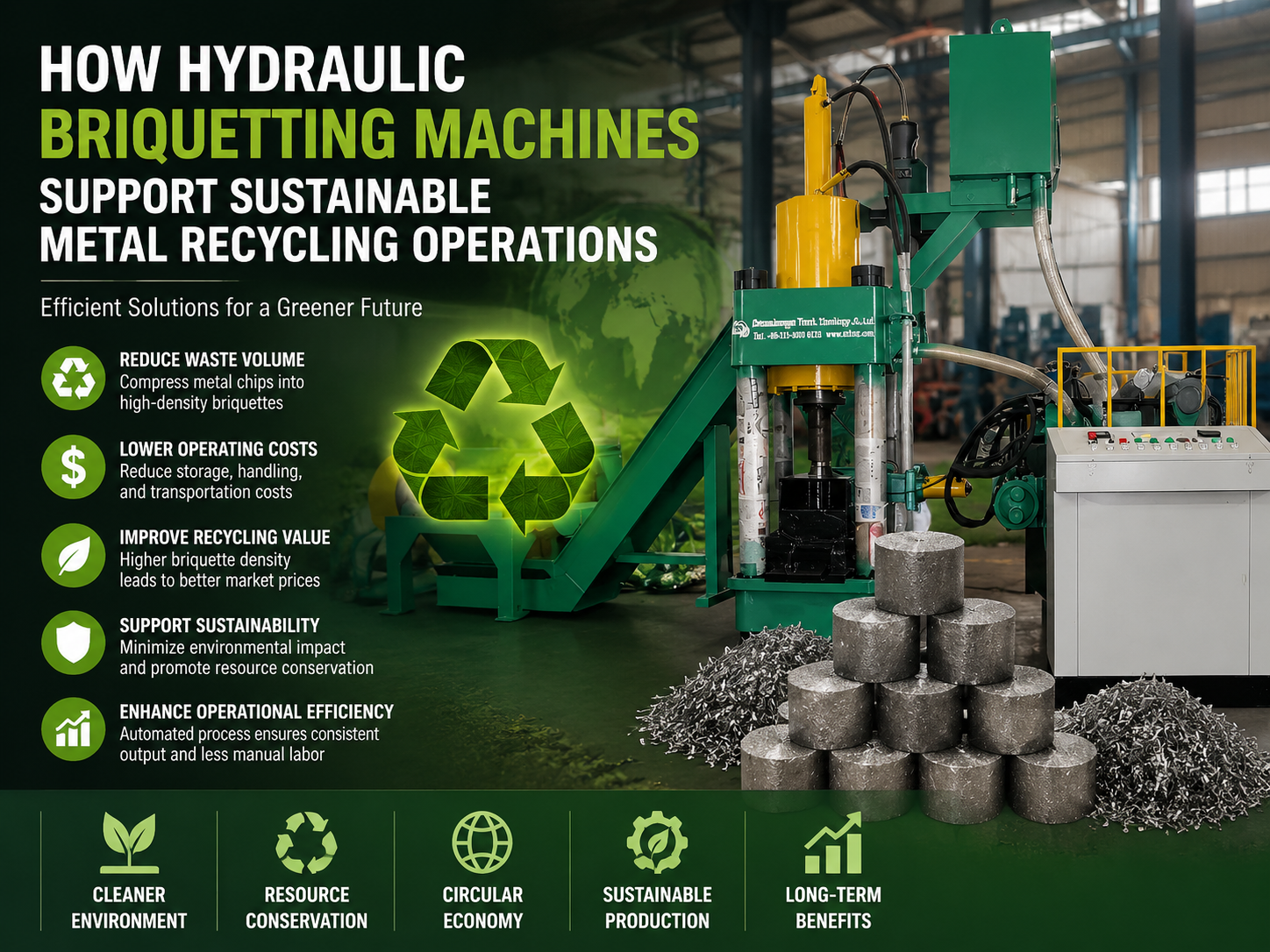
In the modern industrial landscape, the concept of a circular economy has transitioned from a theoretical ideal to a practical necessity. As global manufacturing faces increasing pressure to reduce its carbon footprint and minimize waste, the role of advanced machinery in scrap management has never been more critical. Among these technologies, the hydraulic briquetting machine stands out as a cornerstone of sustainable metal recycling operations. By transforming loose metal chips, turnings, and swarf into dense, manageable blocks, these machines address both environmental concerns and economic inefficiencies.
Metal fabrication processes, including milling, turning, and drilling, generate vast quantities of metal waste. Traditionally, this waste was treated as a low-value byproduct, often contaminated with cutting fluids and difficult to transport. However, the implementation of Hydraulic Briquetting Machines Support Sustainable Metal Recycling Operations by providing a systematic way to reclaim value from what was once considered trash. HARSLE, a leader in metal fabrication equipment, has engineered solutions that allow manufacturers to close the loop on their material usage, ensuring that every gram of metal is accounted for and repurposed.
The shift toward sustainability is not merely about compliance; it is about optimizing the entire lifecycle of industrial materials. When metal scrap is briquetted, its volume is reduced by up to 90%, making storage and logistics significantly more efficient. Furthermore, the process allows for the recovery of expensive coolants and oils, which can be filtered and reused in the production line. This article explores the multifaceted ways in which hydraulic briquetting technology empowers the recycling industry and why it is an essential investment for forward-thinking manufacturing facilities.
Key Considerations for Sustainable Metal Recycling
Volume Reduction and Logistics Efficiency
One of the primary challenges in metal recycling is the sheer bulk of loose scrap. Metal shavings and chips are incredibly low-density, meaning they occupy vast amounts of floor space and require frequent transport. This logistical nightmare leads to increased fuel consumption and higher carbon emissions from transport vehicles. Hydraulic briquetting machines solve this by compressing loose material into high-density briquettes. This reduction in volume means that a single truckload of briquettes can carry the equivalent of ten truckloads of loose scrap, drastically cutting down on transportation costs and the associated environmental impact.
Beyond transportation, the storage of loose scrap poses safety and environmental risks. Sharp metal turnings can cause injuries, and the large surface area of loose chips makes them prone to oxidation and spontaneous combustion in certain materials like magnesium or fine aluminum. By compacting these materials into solid blocks, the surface area exposed to oxygen is minimized, reducing the risk of fire and material degradation. This ensures that the scrap remains high-quality for the smelting process.
Fluid Recovery and Environmental Protection
Metalworking fluids, such as coolants and lubricants, are essential for machining but become a hazardous waste problem when they coat scrap metal. When loose scrap is stored outdoors or in unsealed containers, these fluids can leak into the ground, contaminating soil and groundwater. Hydraulic briquetting machines are equipped with collection systems that squeeze out these fluids during the compression process. This dual-action benefit prevents environmental contamination while allowing the manufacturer to reclaim and reuse expensive fluids, leading to significant cost savings.
The recovery of these fluids also makes the scrap more attractive to foundries. Smelters often penalize suppliers for scrap that has high moisture or oil content because it causes smoke, emissions, and potential explosions during the melting process. Briquettes produced by HARSLE machines are significantly cleaner and drier, commanding a higher market price and ensuring a safer melting environment at the recycling facility.
Enhancing Smelting Yields
The ultimate goal of metal recycling is to return the material to a molten state for reuse. However, loose chips have a high surface-to-volume ratio, which leads to significant “burn-off” or oxidation when they are introduced to a furnace. In many cases, up to 20% of loose aluminum chips can be lost to oxidation during melting. Briquettes, being dense and solid, sink to the bottom of the melt pool, where they are protected from the furnace atmosphere. This results in much higher metal recovery rates, often exceeding 95%, which is a critical factor in the sustainability of the metal lifecycle.
Technical Details of Hydraulic Briquetting Machines
The Hydraulic Power System
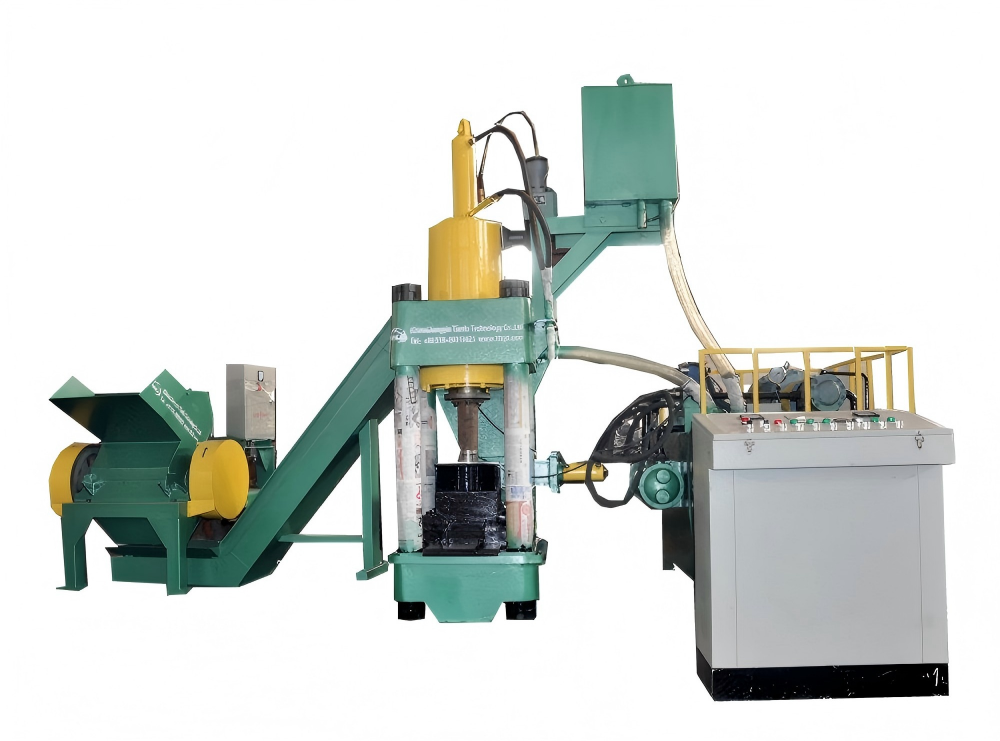
At the heart of every briquetting machine is a sophisticated hydraulic system. HARSLE utilizes high-pressure pumps and precision-engineered cylinders to exert the force necessary to bind metal particles together without the need for external binders. The hydraulic system must be capable of delivering consistent pressure to ensure that every briquette meets the required density specifications. Advanced manifolds and valves control the flow of hydraulic oil, allowing for smooth, rapid cycles that maximize throughput.
Modern machines also incorporate energy-efficient hydraulic designs. Variable displacement pumps and load-sensing technology ensure that the motor only draws the power needed for the specific stage of the compression cycle. This reduces energy consumption and heat generation, extending the life of the hydraulic components and the oil itself. For sustainable operations, minimizing the energy input required to process scrap is just as important as the recycling process itself.
PLC Control and Automation
To achieve consistent results in a high-volume environment, Hydraulic Briquetting Machines Support Sustainable Metal Recycling Operations through advanced PLC (Programmable Logic Controller) systems. These controllers manage the entire sequence: from the feeding of the material into the hopper to the final ejection of the finished briquette. Sensors monitor the pressure, temperature, and material levels in real-time, allowing the machine to adjust its parameters automatically to accommodate variations in scrap size or moisture content.
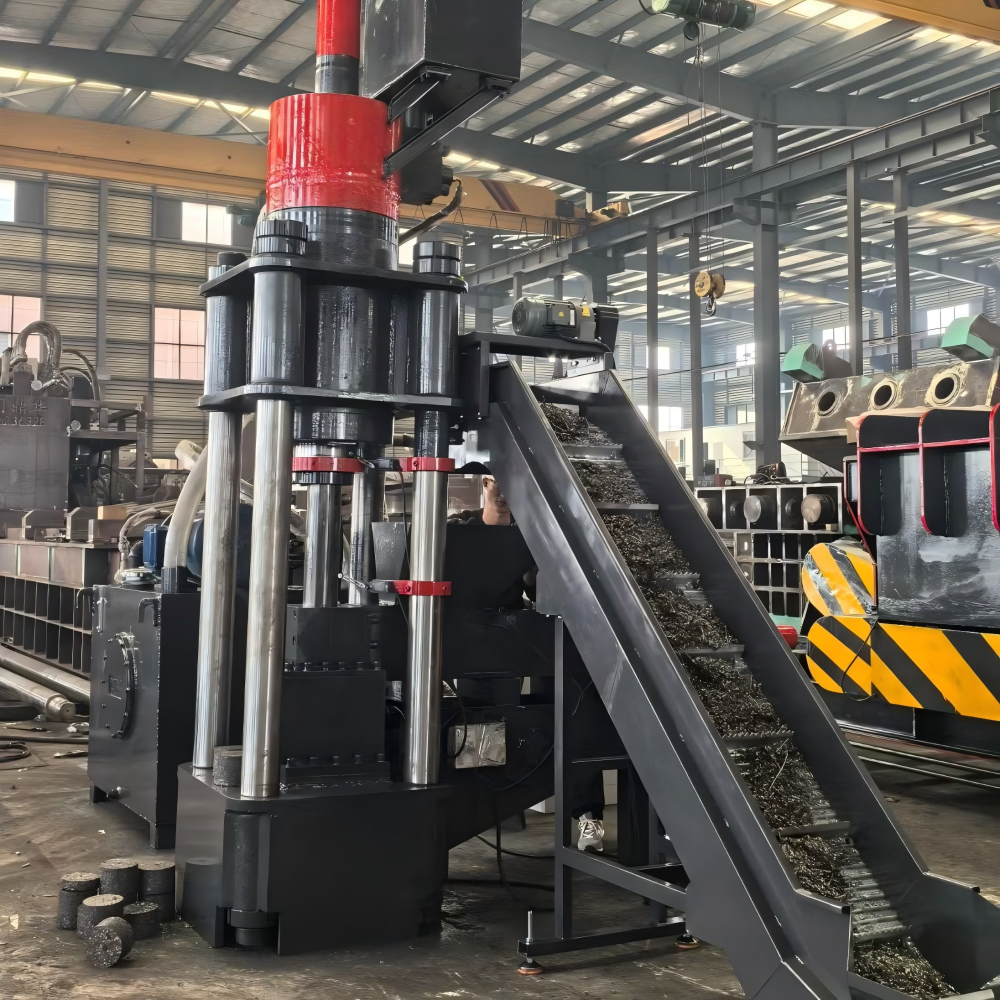
Automation also plays a key role in safety and labor efficiency. HARSLE machines can be integrated into existing production lines, where conveyors automatically feed scrap into the machine. This reduces the need for manual handling of sharp, oily waste. Furthermore, the PLC can be programmed with remote monitoring capabilities, allowing maintenance teams to track performance metrics and receive alerts for scheduled servicing, ensuring the machine operates at peak efficiency with minimal downtime.
Material Compatibility and Die Design
Different metals require different compression forces and die configurations. For instance, cast iron chips are brittle and require specific pressure profiles to form a stable briquette, while aluminum is more ductile but tends to stick to the die surfaces. HARSLE offers a variety of die shapes and sizes, often treated with wear-resistant coatings to handle abrasive materials like steel or brass. The design of the compression chamber is critical to ensuring that the briquette is ejected cleanly and maintains its structural integrity during handling.
Selection Advice for Industrial Buyers
Assessing Your Scrap Volume and Type
The first step in selecting a hydraulic briquetting machine is a thorough analysis of your waste stream. You must determine the volume of scrap generated per hour and the specific types of metals involved. A machine designed for light aluminum chips may not have the structural rigidity required for heavy steel turnings. Buyers should look for a machine that offers a capacity slightly higher than their current peak output to allow for future growth. HARSLE provides a range of models, from compact units for small shops to heavy-duty systems for large-scale industrial recyclers.
Evaluating Density and Fluid Recovery Requirements
Not all briquettes are created equal. Depending on your end-user (the foundry or scrap dealer), there may be specific density requirements. Higher density usually translates to higher value. Additionally, if your scrap is heavily saturated with cutting oils, ensure the machine you choose has an integrated fluid collection and filtration system. Ask the manufacturer for test data on the residual moisture content of the briquettes produced by their machines. A high-quality machine should be able to reduce moisture content to less than 2-3%.
Maintenance and After-Sales Support
Industrial machinery is a long-term investment, and its ROI depends on its uptime. When selecting a vendor, evaluate the accessibility of wear parts like seals, filters, and die liners. A machine that is easy to service will save thousands of dollars in labor and downtime over its lifespan. HARSLE is known for its robust after-sales support and the availability of spare parts, which is a crucial consideration for operations that run 24/7. Check for features like self-lubricating components and easy-access hydraulic manifolds.
Integration with Existing Infrastructure
Consider how the briquetting machine will fit into your current workflow. Does it require a dedicated operator, or can it be fully automated with conveyors and sensors? The footprint of the machine is also important, especially in facilities where floor space is at a premium. Some HARSLE models are designed with a vertical orientation to save space, while others are horizontal for easier integration with low-profile conveyor systems. Ensure the electrical requirements of the machine match your facility’s power supply to avoid costly electrical upgrades.
Frequently Asked Questions (FAQ)
1. Do I need to add a binder to make the metal briquettes stay together?
In most cases, no. The high pressure exerted by the hydraulic system is sufficient to create a mechanical bond between the metal particles. For certain materials like very dry cast iron or specific alloys, the machine’s pressure settings can be adjusted to ensure stability. The absence of binders is actually preferred by foundries, as it ensures the purity of the recycled metal.
2. Can one machine handle multiple types of metal?
Yes, HARSLE hydraulic briquetting machines are versatile. However, it is important to clean the hopper and compression chamber between different materials to prevent cross-contamination, which can lower the value of the scrap. Many facilities use the PLC to store different pressure profiles for different metals, making the switch-over process quick and efficient.
3. What is the typical ROI for a hydraulic briquetting machine?
The ROI varies based on scrap volume and the price difference between loose scrap and briquettes. Most medium-to-large facilities see a return on investment within 12 to 24 months. This calculation includes savings on transportation, reclaimed fluids, and the premium price paid for high-density, dry briquettes.
4. How much maintenance does the machine require?
Routine maintenance involves checking hydraulic oil levels, replacing filters, and inspecting seals and die surfaces for wear. Because these machines operate under high pressure, a daily visual inspection is recommended. HARSLE machines are designed for durability, but following the manufacturer’s maintenance schedule is essential for long-term reliability.
5. Is the machine noisy or dangerous to operate?
Modern hydraulic systems are designed to operate relatively quietly, often below 75-80 decibels. Safety is a priority, and HARSLE machines include emergency stop buttons, safety interlocks on all access doors, and pressure relief valves to prevent over-pressurization. When integrated with automated feeding systems, the operator’s exposure to moving parts is virtually eliminated.
Conclusion: The Future of Metal Fabrication with HARSLE
As the global manufacturing sector continues to evolve, the integration of sustainable practices is no longer optional. Hydraulic Briquetting Machines Support Sustainable Metal Recycling Operations by turning a waste management challenge into a profit center. By reducing volume, recovering valuable fluids, and improving the quality of scrap for smelting, these machines provide a clear path toward more efficient and environmentally responsible production.
HARSLE remains committed to providing the metal fabrication industry with the tools needed to succeed in this new era. Our hydraulic briquetting machines are engineered for performance, reliability, and ease of use, ensuring that your facility can maximize its recycling potential. Investing in a HARSLE briquetting solution is not just a purchase of a machine; it is a commitment to a cleaner, more profitable, and more sustainable future for your business and the planet. Whether you are a small machine shop or a large-scale industrial manufacturer, the benefits of briquetting are clear: less waste, more value, and a smaller environmental footprint.