
A Complete Four-Shaft Shredder Purchasing Guide for Recycling Businesses

Introduction to Four-Shaft Shredding Technology
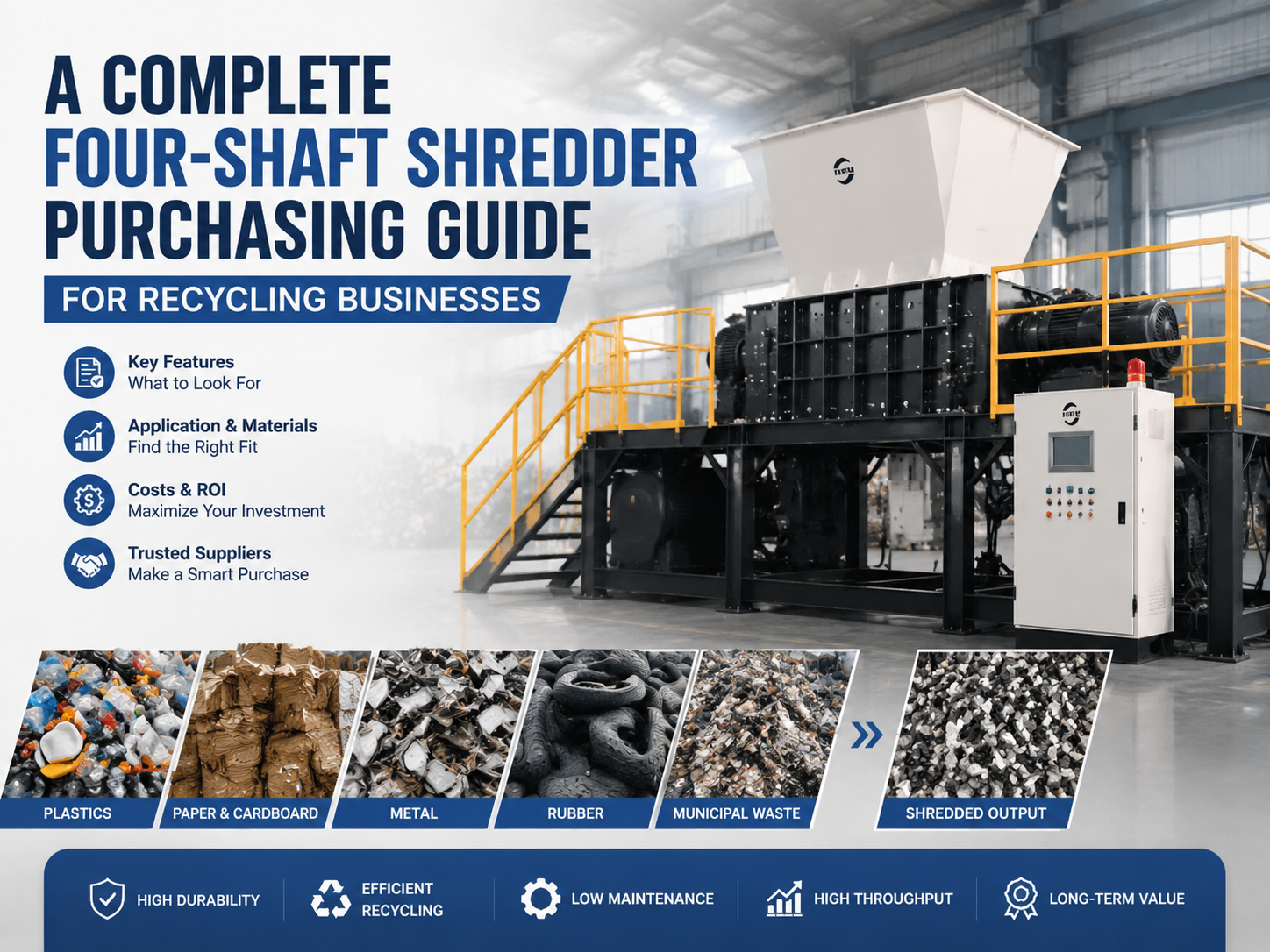
In the rapidly evolving landscape of global recycling, the demand for efficient, high-torque, and precise size-reduction machinery has never been higher. For recycling businesses looking to process complex materials—ranging from electronic waste (e-waste) and plastics to bulky metal scrap and tires—the four-shaft shredder stands out as the gold standard. Unlike single or double-shaft alternatives, the four-shaft design offers a unique combination of high throughput and controlled output size, thanks to its integrated screen system and multi-axial cutting action.
Choosing the right machinery is a pivotal decision that dictates the long-term profitability of a recycling facility. This A Complete Four-Shaft Shredder Purchasing Guide for Recycling Businesses is designed to navigate the complexities of the market, helping stakeholders understand the technical nuances, financial implications, and operational requirements of these powerful machines. Whether you are a startup looking for your first industrial shredder or an established enterprise upgrading your fleet, understanding the ‘A Complete Four-Shaft Shredder Purchasing Recycling Businesses’ framework is essential for a successful investment.
Price Range Overview: What to Expect
The price of a four-shaft shredder can vary significantly based on its capacity, motor power, and the quality of its components. Generally, the market is divided into three primary tiers. Entry-level industrial four-shaft shredders, often used for light plastics or small-scale e-waste processing, typically range from $25,000 to $50,000. These machines usually feature motor powers between 15kW and 30kW and are suitable for businesses processing less than 500kg of material per hour.
Mid-range shredders, which are the workhorses of the recycling industry, fall into the $60,000 to $150,000 bracket. These units are designed for continuous operation and can handle tougher materials like aluminum profiles, medical waste, and heavy-duty plastics. They often come equipped with advanced PLC (Programmable Logic Controller) systems and high-grade alloy steel blades. High-end, heavy-duty four-shaft shredders can exceed $250,000. These are massive installations capable of processing several tons per hour, featuring dual-drive systems, specialized cooling mechanisms, and custom-engineered blade configurations for specific industrial applications.
Main Cost Drivers in Four-Shaft Shredder Procurement
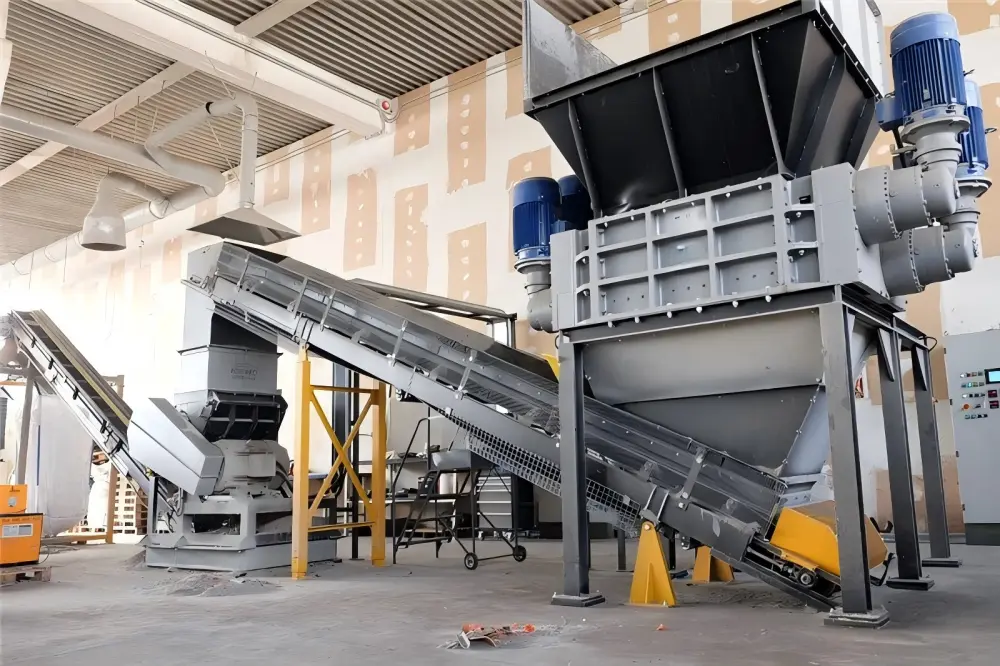
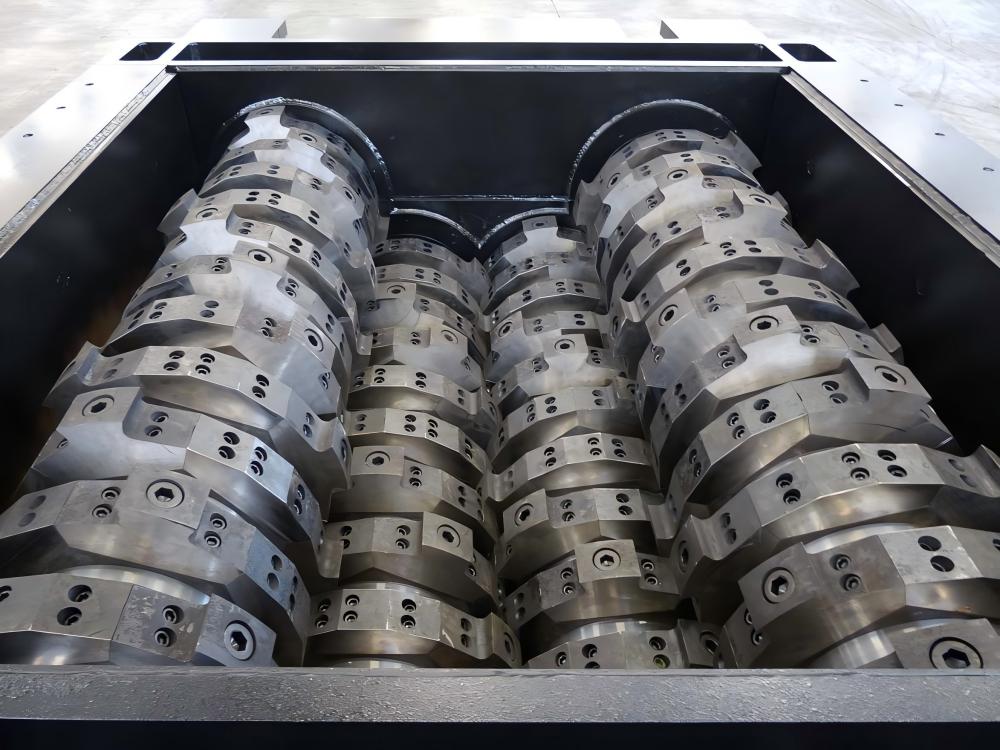
When analyzing the cost of a four-shaft shredder, several key factors influence the final quote. The most significant driver is the cutting unit. The quality of the steel used for the blades—typically D2, SKD-11, or specialized tungsten carbide inserts—directly impacts the price. Higher-quality steel lasts longer between sharpenings, reducing downtime but increasing the initial capital expenditure. Additionally, the complexity of the blade geometry, designed to ‘grab’ and ‘shear’ specific materials, adds to the manufacturing cost.
The drive system is another major cost component. You must choose between electric and hydraulic drives. Electric drives are generally more cost-effective and easier to maintain for standard applications, while hydraulic drives offer superior torque management and shock absorption for extremely tough materials like heavy metals or reinforced tires. Furthermore, the inclusion of premium gearboxes (such as those from SEW-Eurodrive or Siemens) and high-efficiency motors (IE3 or IE4 ratings) will push the price higher but ensure lower energy consumption and higher reliability over the machine’s lifespan.
Configuration Impact: Tailoring the Machine to Your Needs
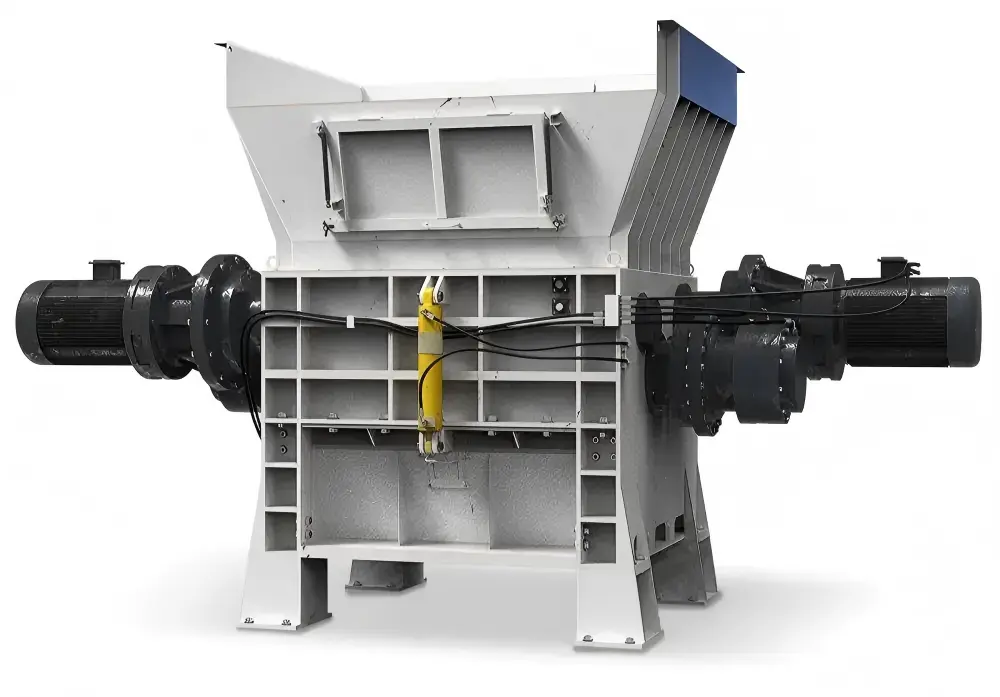
The configuration of a four-shaft shredder is what defines its performance. Unlike two-shaft shredders, four-shaft models utilize two main cutting shafts and two secondary shafts that help feed the material and clean the main cutters. This configuration allows for the use of a screen (sieve) underneath the shafts. The screen size is a critical configuration choice; a smaller screen ensures a finer, more uniform output but reduces the overall throughput (kg/h). Conversely, a larger screen allows for faster processing but results in a coarser product.
Another vital configuration aspect is the hopper and feeding mechanism. For bulky items like IBC tanks or large plastic drums, a wide-mouth hopper with a hydraulic pusher is necessary to force the material into the cutting chamber. For e-waste, a standard gravity-fed hopper might suffice. Furthermore, the integration of an automated ‘auto-reverse’ function in the PLC is essential. This feature detects overloads and reverses the shafts to clear jams, preventing motor burnout and mechanical failure. Customizing these features ensures that the ‘A Complete Four-Shaft Shredder Purchasing Recycling Businesses’ strategy aligns with your specific waste stream.
Hidden Costs: Beyond the Initial Purchase Price
Smart buyers look beyond the sticker price. One of the most overlooked hidden costs is logistics and installation. These machines are heavy and often require specialized freight, cranes for offloading, and professional technicians for onsite assembly and calibration. Depending on your location, this can add 5% to 10% to your total project cost. Additionally, the electrical infrastructure of your facility might need an upgrade. High-torque shredders have significant ‘inrush current’ requirements, which may necessitate new transformers or heavy-duty wiring.
Wear parts and maintenance represent the most significant ongoing hidden cost. Shredder blades are consumables. Depending on the abrasiveness of your material (e.g., glass-filled plastics or sandy tires), you may need to sharpen or replace blades every few months. A full set of replacement blades for a four-shaft shredder can cost thousands of dollars. It is also important to factor in the cost of lubricants, hydraulic fluids, and the labor required for routine inspections. Choosing a manufacturer like HARSLE, which provides clear maintenance schedules and accessible spare parts, can help mitigate these long-term expenses.
ROI Calculation: Measuring the Value of Your Investment
Calculating the Return on Investment (ROI) for a four-shaft shredder involves comparing the total cost of ownership against the increased revenue generated by the shredded material. In the recycling industry, volume reduction is the first step toward profitability. Shredded material is much cheaper to transport; for example, shredding plastic bottles can increase transport density by 500%, drastically cutting logistics costs. Furthermore, many recyclers find that ‘processed’ scrap commands a much higher market price than ‘unprocessed’ bulky waste.
To calculate ROI, use the following formula: (Annual Revenue from Shredded Material – Annual Operating Costs) / Total Investment Cost. Operating costs must include electricity, labor, and maintenance. For instance, if a $100,000 shredder allows you to process 2,000 tons of e-waste per year, increasing the value of that waste by $100 per ton, you generate $200,000 in additional gross revenue. After subtracting $50,000 in operating costs, you have a $150,000 net gain, meaning the machine pays for itself in less than a year. This high ROI potential is why the ‘A Complete Four-Shaft Shredder Purchasing Recycling Businesses’ focus is so critical for modern waste management firms.
Buying Advice: How to Choose the Right Partner
When you are ready to make a purchase, the vendor you choose is as important as the machine itself. Start by requesting a material test. Any reputable manufacturer, including HARSLE, should be willing to process a sample of your specific waste material to demonstrate the throughput and output quality. This ‘proof of concept’ eliminates the risk of buying a machine that cannot handle your specific challenges. Secondly, evaluate the after-sales support. Does the company offer remote diagnostics? How quickly can they ship replacement blades? A machine that sits idle for three weeks waiting for a part is a massive financial drain.
Furthermore, consider the scalability of the equipment. If your business grows, can the shredder be integrated into a larger automated line with conveyors, magnetic separators, and granulators? Buying a machine with modular capabilities ensures that your investment remains relevant as your business expands. Finally, always check for safety certifications (such as CE or UL). Industrial shredders are powerful and potentially dangerous; ensuring the machine has proper emergency stops, safety interlocks, and robust housing is non-negotiable for protecting your workforce.
Frequently Asked Questions (FAQ)
1. What is the main advantage of a four-shaft shredder over a two-shaft shredder?
The primary advantage is the ability to control output size. Because four-shaft shredders utilize a screen, material stays in the cutting chamber until it is small enough to pass through the holes. Two-shaft shredders typically produce long, irregular strips, whereas four-shaft shredders produce uniform, smaller pieces in a single pass.
2. How often do the blades need to be sharpened?
This depends entirely on the material being processed. For soft plastics or paper, blades may last 1,000 to 2,000 hours. For abrasive materials like contaminated e-waste or glass-reinforced polymers, sharpening may be required every 400 to 600 hours. Regular inspection is key to maintaining efficiency and preventing motor strain.
3. Can a four-shaft shredder handle metal?
Yes, but it depends on the thickness and type of metal. Four-shaft shredders are excellent for light metals like aluminum cans, thin-walled profiles, and electronic housings. However, for heavy steel plates or structural beams, a heavy-duty pre-shredder or a specialized metal crusher is usually required before the four-shaft stage.
4. What kind of power supply do I need?
Most industrial four-shaft shredders require a three-phase power supply (e.g., 380V/480V). The amperage required will depend on the motor size. It is essential to consult with an industrial electrician to ensure your facility’s transformer and switchgear can handle the high startup torque of the shredder motors.
5. Is it better to buy a new or used four-shaft shredder?
While used machines have a lower upfront cost, they often come with hidden wear and tear on the gearbox and shafts that can be expensive to repair. New machines come with warranties, modern PLC controls, and the latest blade metallurgy. For a business where uptime is critical, a new machine from a trusted manufacturer like HARSLE is generally the safer and more profitable long-term investment.
6. How does the ‘auto-reverse’ feature work?
The PLC monitors the current (amps) drawn by the motors. If the shredder encounters an unshreddable object or a massive clump of material, the current spikes. The PLC immediately stops the shafts and reverses them for a few seconds to reposition the material before attempting to shred again. This prevents mechanical breakage and motor overheating.
Conclusion
Investing in a four-shaft shredder is a transformative step for any recycling business. By following this A Complete Four-Shaft Shredder Purchasing Guide for Recycling Businesses, you can ensure that your capital is spent wisely on a machine that offers the right balance of power, precision, and durability. Remember that the lowest price is rarely the best value; focus on the total cost of ownership, the quality of the cutting components, and the reliability of the manufacturer. With the right equipment, your recycling operation will be well-positioned to turn waste into a high-value commodity, securing your place in the circular economy of the future.


