
Key Specifications to Compare When Buying a Four-Shaft Shredder

Introduction to Four-Shaft Shredding Technology
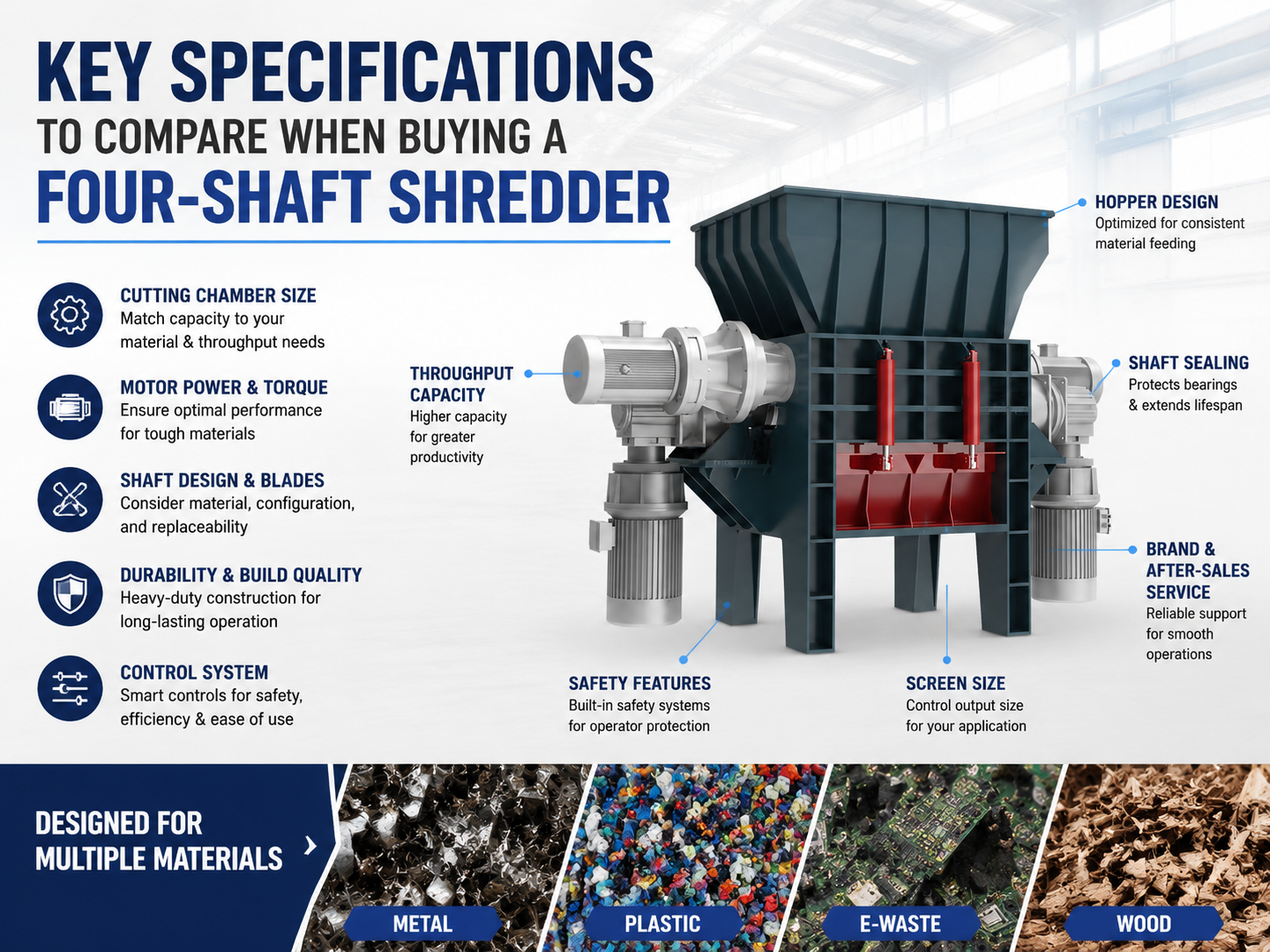
In the modern industrial landscape, waste management and material recycling have transitioned from secondary concerns to primary operational priorities. The four-shaft shredder stands at the pinnacle of size reduction technology, offering a unique combination of high torque, controlled output size, and the ability to process diverse materials ranging from plastics and electronic waste to metal drums and tires. Unlike traditional two-shaft shredders, the four-shaft design incorporates two main cutting shafts and two auxiliary shafts that facilitate material feeding and internal screening. This ensures that material is continuously processed until it is small enough to pass through an integrated screen, providing a uniform end-product in a single pass.
Choosing the right machine requires a deep dive into technical data. When you begin to Key Specifications Compare When Buying A Four-Shaft Shredder, you are not just looking at a price tag; you are evaluating the long-term viability of your recycling line. A mismatch in specifications can lead to frequent jams, premature blade wear, or insufficient throughput, all of which erode your return on investment. This guide provides a comprehensive breakdown of the critical parameters that define a high-performance four-shaft shredder, ensuring that your procurement process is backed by technical rigor and industrial foresight.
Price Range Overview: What to Expect
The market for four-shaft shredders is broad, with prices varying significantly based on capacity, build quality, and automation levels. Generally, industrial-grade four-shaft shredders fall into three primary price tiers. Entry-level models, often designed for light plastics or electronic scrap with lower throughput requirements (500kg – 1000kg/h), typically range from $25,000 to $50,000. These machines are suitable for smaller recycling facilities or as secondary shredders in a larger line.
Mid-range shredders, which represent the bulk of the industrial market, are priced between $60,000 and $150,000. These machines feature robust frames, higher motor power (typically 30kW to 75kW), and more advanced PLC control systems. They are designed for continuous operation and can handle tougher materials like light metal scrap, large plastic purgings, and medical waste. At this level, buyers expect better blade alloys and more sophisticated gearbox configurations.
High-end, heavy-duty four-shaft shredders can exceed $250,000. These are massive installations designed for high-volume municipal waste, car tires, or heavy metal drums. They feature dual or quad-drive systems, specialized cooling for hydraulic units, and high-alloy, vacuum-heat-treated blades. When you Key Specifications Compare When Buying A Four-Shaft Shredder at this level, you are paying for extreme durability and the lowest possible cost-per-ton of processed material over a 10-year lifecycle.
Main Cost Drivers in Four-Shaft Shredder Manufacturing
Understanding why one machine costs twice as much as another requires looking at the components. The primary cost driver is the motor and drive system. High-efficiency motors from reputable brands like Siemens or WEG carry a premium but offer better energy savings and reliability. Furthermore, the choice between an electric drive and a hydraulic drive significantly impacts the initial cost. Hydraulic drives offer superior torque management for heavy-duty applications but come with a higher price tag and more complex maintenance needs.
The second major cost driver is the blade assembly. The blades are the primary wear part of any shredder. High-quality four-shaft shredders use blades made from D2, SKD-11, or DC53 tool steel. The manufacturing process—including precision CNC machining and multi-stage heat treatment—adds to the cost. Cheaper machines may use lower-grade alloys that require frequent sharpening or replacement, leading to higher operational costs despite a lower initial purchase price.
Finally, the structural integrity of the shredding chamber and the quality of the gearbox are critical. A heavy-duty, vibration-dampened frame prevents structural fatigue over years of high-torque operation. Planetary gearboxes, which are essential for converting high-speed motor rotation into the high-torque, low-speed rotation required for shredding, are expensive precision components. Investing in a machine with a high-service-factor gearbox ensures that the system can handle the shock loads inherent in shredding tough materials.
Configuration Impact: Shafts, Blades, and Screens
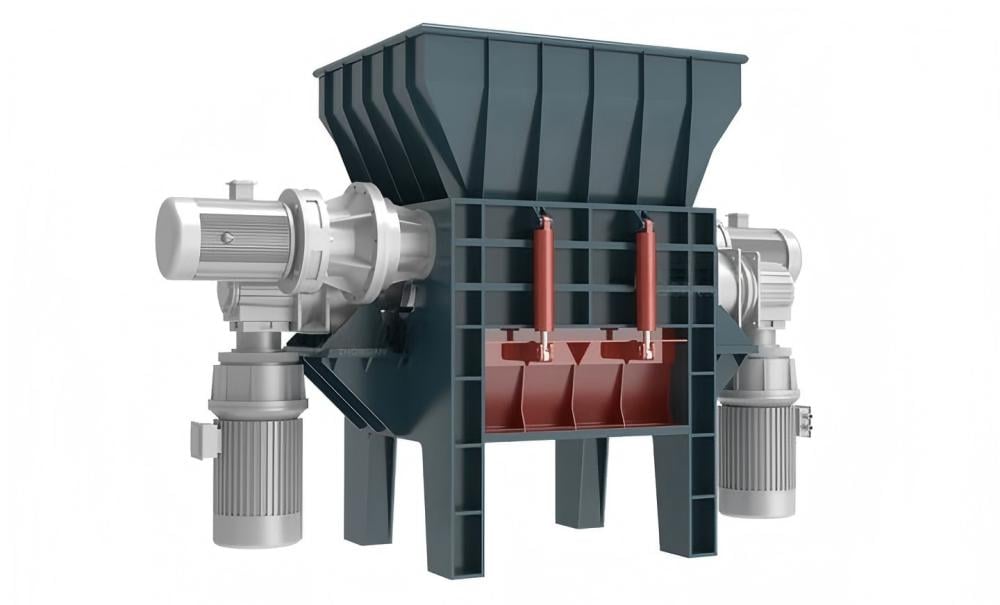
The configuration of the shafts is what sets the four-shaft shredder apart. The two inner shafts are the primary cutters, while the two outer shafts act as cleaning and feeding shafts. This four-way interaction ensures that material is grabbed effectively and forced into the cutting zone. When you Key Specifications Compare When Buying A Four-Shaft Shredder, you must look at the shaft diameter and the distance between centers. Larger shaft diameters allow for higher torque loads without the risk of shaft deflection or breakage.
Blade geometry is another critical configuration factor. Blades can be configured with different numbers of “hooks” or teeth. A single-hook blade is excellent for aggressive grabbing of bulky items like plastic drums, while multi-hook blades provide a finer cut and are better for materials like paper or textiles. The thickness of the blades also determines the width of the shredded output. Most modern four-shaft shredders allow for interchangeable blades, giving the operator flexibility to adapt to different waste streams.
The integration of the screen is perhaps the most vital configuration aspect for output control. In a four-shaft shredder, the material is recirculated by the shafts until it is small enough to fall through the screen located beneath the cutters. Screen hole sizes typically range from 20mm to 100mm. A smaller screen size results in a more uniform product but reduces the overall throughput of the machine. It is essential to choose a machine where the screen is easily accessible for cleaning or replacement, as different jobs may require different output sizes.
Hidden Costs of Ownership
The purchase price is only the beginning of the financial commitment. One of the most significant hidden costs is energy consumption. A shredder running 8 to 16 hours a day can consume a massive amount of electricity. Machines equipped with VFDs (Variable Frequency Drives) can mitigate this by adjusting motor speed to the load, but the initial investment is higher. When you Key Specifications Compare When Buying A Four-Shaft Shredder, calculate the expected KWh per ton of material to understand the long-term energy impact.
Maintenance and wear parts represent another ongoing expense. Blades will eventually dull. The cost is not just the replacement blades themselves, but the labor and downtime required to change them. Some high-end four-shaft shredders feature “quick-change” shaft systems that allow for a full blade swap in a fraction of the time required for traditional designs. Additionally, consider the cost of consumables like gearbox oil, hydraulic fluid, and the grease for the heavy-duty bearings that support the shafts.
Installation and site preparation are often overlooked. A large four-shaft shredder requires a reinforced concrete foundation to handle the weight and vibration. You may also need to invest in peripheral equipment such as infeed conveyors, discharge conveyors, and magnetic separators to remove ferrous metals from the shredded stream. Furthermore, operator training is essential; an untrained operator can easily damage the blades by feeding non-shreddable items (like heavy steel plates) into a machine not rated for such loads.
ROI Calculation: Turning Waste into Profit
Calculating the Return on Investment (ROI) for a four-shaft shredder involves balancing the total cost of ownership against the value generated. Value is typically generated in two ways: volume reduction and material recovery. For companies dealing with bulky waste, a shredder can reduce waste volume by up to 80%, significantly lowering the costs associated with waste transport and landfill tipping fees. In many regions, these savings alone can pay for the machine within 18 to 24 months.
For recycling operations, the ROI is driven by the purity and size of the output. Shredded plastic, for example, fetches a much higher price when it is uniform in size and free of contaminants. A four-shaft shredder’s ability to produce a specific grain size in a single pass eliminates the need for a secondary granulator in some processes, saving both capital expenditure and operational floor space. To calculate ROI, use the formula: (Annual Savings + Annual Revenue from Material) / (Annual Operating Costs + Annualized Capital Cost).
Buying Advice: How to Choose the Right Partner
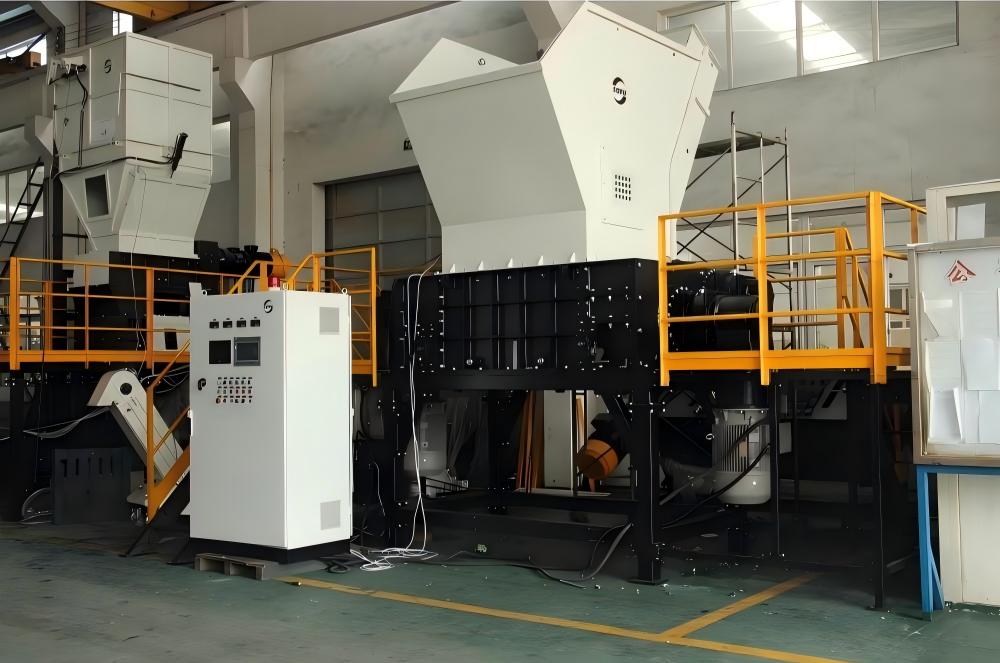
When you are ready to Key Specifications Compare When Buying A Four-Shaft Shredder, the manufacturer’s reputation is as important as the technical specs. Look for a partner like HARSLE that offers comprehensive technical support and a transparent supply chain for wear parts. Always request a material test. A reputable manufacturer should allow you to send samples of your specific waste material to their facility to verify throughput and output quality on a test machine.
Check the PLC and control logic. A good four-shaft shredder should have an auto-reverse function. If the machine encounters an unshreddable object or a jam, the PLC should automatically reverse the shafts to clear the obstruction and then attempt to shred again. This prevents motor burnout and reduces the need for manual intervention. Additionally, ensure the machine complies with local safety standards, including emergency stop circuits and safety interlocks on all access panels.
Finally, consider the future-proofing of your investment. Is the machine modular? Can you upgrade the motor or change the screen size easily if your business needs change? Buying a slightly larger capacity than you currently need is often a wise move, as it reduces the strain on the machine and allows for business growth without requiring a completely new installation in a few years.
Technical Specification Comparison Table
| Specification | Entry-Level | Mid-Range | Heavy-Duty |
|---|---|---|---|
| Motor Power (kW) | 15 – 30 kW | 37 – 75 kW | 90 – 200+ kW |
| Shaft Speed (RPM) | 15 – 25 RPM | 10 – 20 RPM | 5 – 15 RPM |
| Blade Material | 9CrSi / 42CrMo | D2 / SKD-11 | DC53 / Hardox |
| Throughput (kg/h) | 300 – 800 | 1,000 – 3,000 | 4,000 – 10,000+ |
| Control System | Basic Relay/PLC | Siemens/Delta PLC | Advanced SCADA/Remote |
Frequently Asked Questions (FAQ)
What is the main advantage of a four-shaft shredder over a two-shaft shredder?
The primary advantage is the integrated screen and the two auxiliary shafts. While a two-shaft shredder produces long strips of material, a four-shaft shredder recirculates the material until it passes through the screen, ensuring a consistent and smaller particle size in a single pass. This makes it ideal for applications requiring specific output dimensions.
How often do the blades need to be sharpened?
Blade longevity depends entirely on the material being processed. If you are shredding clean plastics, blades may last for 1,000 to 2,000 hours before needing attention. However, if the material contains abrasives or contaminants like sand or glass, the interval could drop to 500 hours. Using high-quality alloys like D2 significantly extends these intervals.
Can a four-shaft shredder handle metal?
Yes, but with limitations. Four-shaft shredders are excellent for light metals like aluminum extrusions, copper wiring, and thin-walled steel drums. They are not designed for heavy structural steel, engine blocks, or thick rebar. Attempting to shred such materials will likely trigger the safety reverse or damage the blades.
What maintenance is required daily?
Daily maintenance is relatively simple: check for any loose bolts, inspect the blades for major chips or damage, ensure the lubrication system is functioning, and clear any material buildup around the bearings or screen. Regular grease application to the main bearings is the most critical task to prevent premature failure.
Is a hydraulic drive better than an electric drive?
Hydraulic drives are superior for applications with frequent stalls or extremely tough materials because they can provide maximum torque at zero speed and are more resilient to shock loads. However, electric drives with VFDs are more energy-efficient and easier to maintain for most standard recycling applications.
How do I choose the correct screen size?
The screen size should be chosen based on your downstream requirements. If you are feeding the shredded material into a granulator or an extruder, a smaller screen (20-30mm) is better. If you are simply looking for volume reduction for landfilling, a larger screen (80-100mm) will allow for much higher throughput and lower energy costs.


