Double-Shaft Shredder Buying Guide for Manufacturers: Key Specs, Capacity, and Blade Options

Introduction to Industrial Double-Shaft Shredders
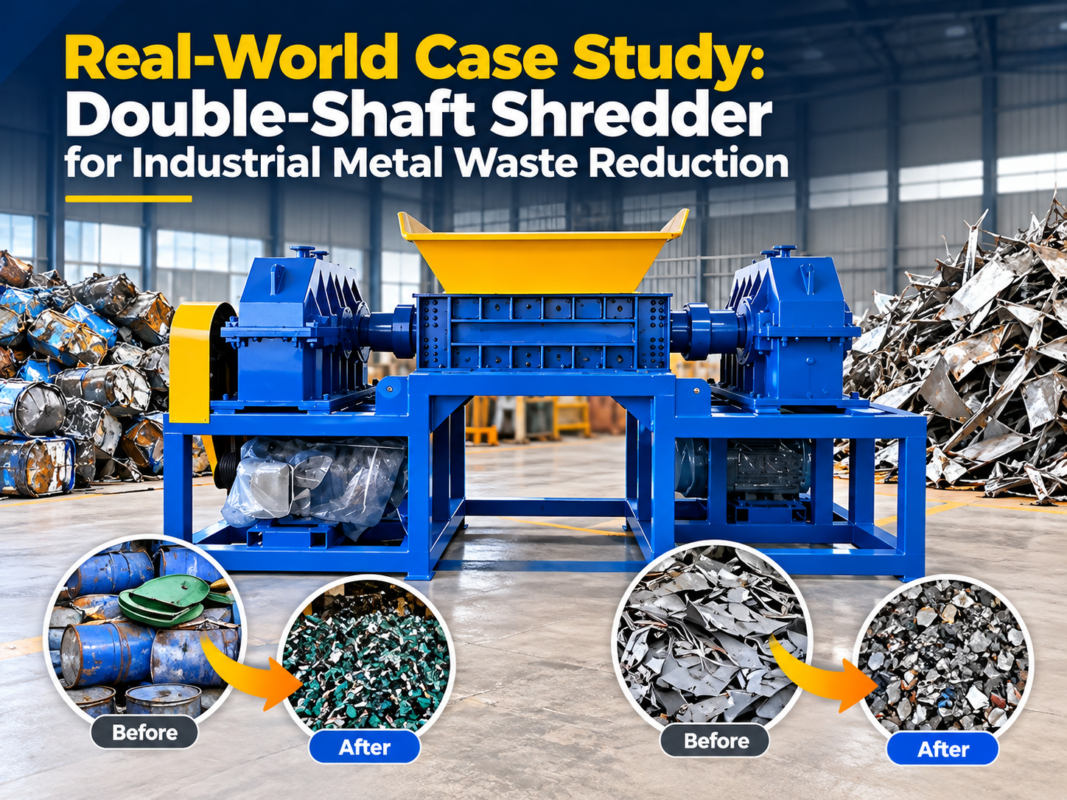
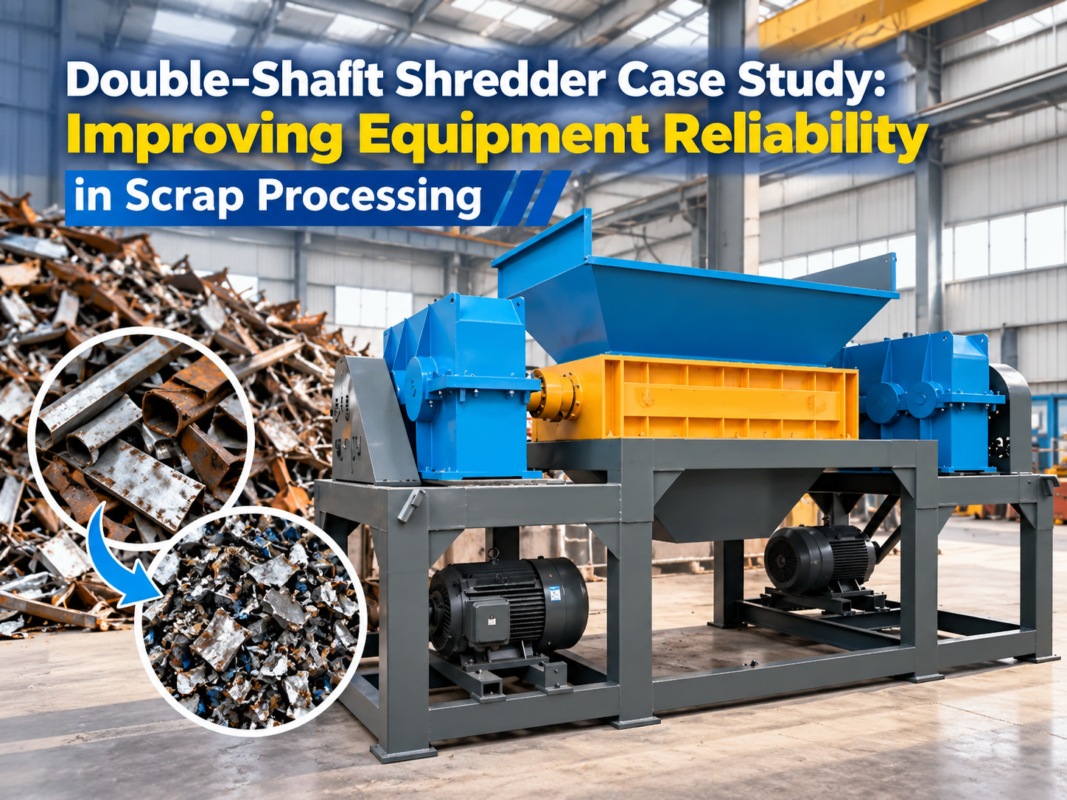
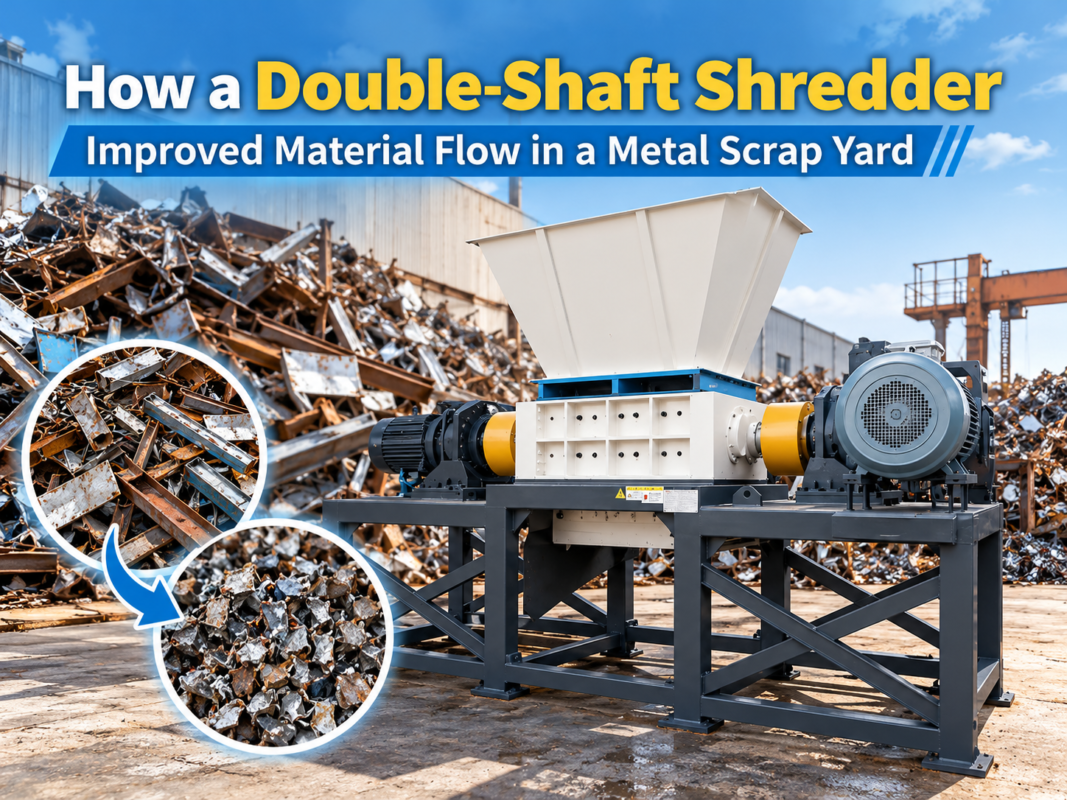
In the modern manufacturing landscape, waste management and material recycling have transitioned from secondary concerns to primary operational priorities. The industrial double-shaft shredder, often referred to as a twin-shaft shredder, stands as the workhorse of this transition. Designed to handle high volumes of diverse materials—ranging from metal scrap and plastic drums to electronic waste and tires—these machines utilize high-torque, low-speed shearing technology to reduce material size efficiently. For manufacturers, investing in a Double-Shaft Shredder Buying Manufacturers: Key Specs, Capacity, Blade Options strategy is essential to ensure long-term profitability and operational efficiency.
Unlike single-shaft shredders that rely on high speeds and screens to determine output size, double-shaft shredders use two counter-rotating shafts equipped with interlocking blades. This design allows the machine to ‘grab’ bulky materials and pull them through the cutting chamber. The result is a consistent shred that is ideal for volume reduction, pre-conditioning for further processing, or preparing scrap for smelting. As global regulations on industrial waste tighten, the ability to process waste in-house provides manufacturers with a significant competitive advantage, reducing disposal costs and potentially creating new revenue streams from recycled materials.
Choosing the right machine requires a deep dive into technical specifications. It is not merely about the size of the motor; it is about the synergy between the gearbox torque, the blade metallurgy, and the structural integrity of the frame. This guide is designed to walk manufacturers through the complexities of the procurement process, ensuring that the selected equipment aligns with specific production goals and material requirements.
Price Range Overview: What to Expect
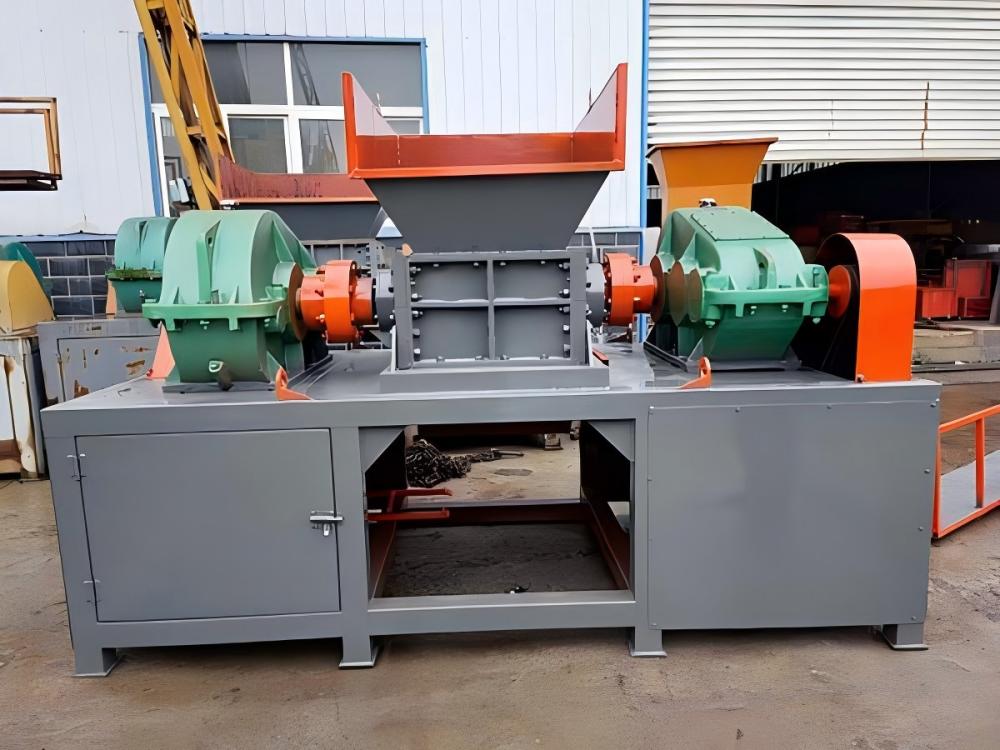
The market for double-shaft shredders is broad, with prices varying significantly based on capacity, build quality, and origin. Understanding the price tiers helps manufacturers budget effectively and avoid the pitfalls of under-speccing or over-paying for features they don’t need. Generally, the market can be divided into three primary categories: entry-level/light-duty, mid-range industrial, and heavy-duty custom solutions.
Entry-level double-shaft shredders typically range from $15,000 to $35,000. These machines are usually designed for lighter materials such as thin plastics, cardboard, or light electronic scrap. They often feature smaller motors (15kW to 30kW) and narrower cutting chambers. While they are cost-effective for small-scale operations, they may lack the structural reinforcement required for continuous 24/7 operation or for processing dense metals.
Mid-range industrial shredders, which are the most common choice for medium-sized manufacturing plants, fall between $40,000 and $90,000. These units are built with higher-grade steel frames and more robust gearboxes. They typically offer power ratings between 45kW and 90kW. At this price point, you can expect better control systems, such as PLC-based automation with auto-reverse functions to prevent jamming, and higher-quality blade materials like D2 or SKD-11 tool steel.
High-end, heavy-duty shredders can exceed $150,000 to $300,000+. These are massive machines designed for the most demanding applications, such as car body shredding, large-scale tire recycling, or processing heavy industrial metal scrap. They feature dual-drive systems, massive torque outputs, and advanced hydraulic feeding systems. For these machines, the price reflects the extreme engineering required to withstand the massive forces generated during the shredding of high-tensile materials.
Main Cost Drivers in Shredder Procurement
When evaluating a quote for a Double-Shaft Shredder Buying Manufacturers: Key Specs, Capacity, Blade Options, it is important to look beyond the bottom line. Several critical components drive the cost, and compromising on these can lead to higher maintenance expenses down the road. The first major driver is the drive system, which includes the motor and the gearbox. Premium brands like Siemens or WEG for motors and Bonfiglioli or Guomao for gearboxes add to the initial cost but offer superior reliability and parts availability.
The second major cost driver is the cutting chamber and blade assembly. The thickness of the chamber walls and the quality of the bearing housings are vital. High-quality shredders use specialized seals to protect bearings from dust and liquid contaminants, which is particularly important when shredding wet waste or materials that produce fine particulates. Furthermore, the complexity of the PLC (Programmable Logic Controller) system impacts the price. A sophisticated PLC allows for custom shredding programs, remote monitoring, and integrated safety protocols that protect both the operator and the machine.
Material of construction also plays a role. While standard A3 steel might suffice for the frame of a light-duty machine, heavy-duty units require manganese steel or reinforced carbon steel to prevent frame warping under high torque. Additionally, the inclusion of auxiliary equipment—such as magnetic separators, conveyor belts, and dust extraction systems—will significantly increase the total project cost but is often necessary for a complete recycling line.
Configuration Impact: Key Specs and Capacity
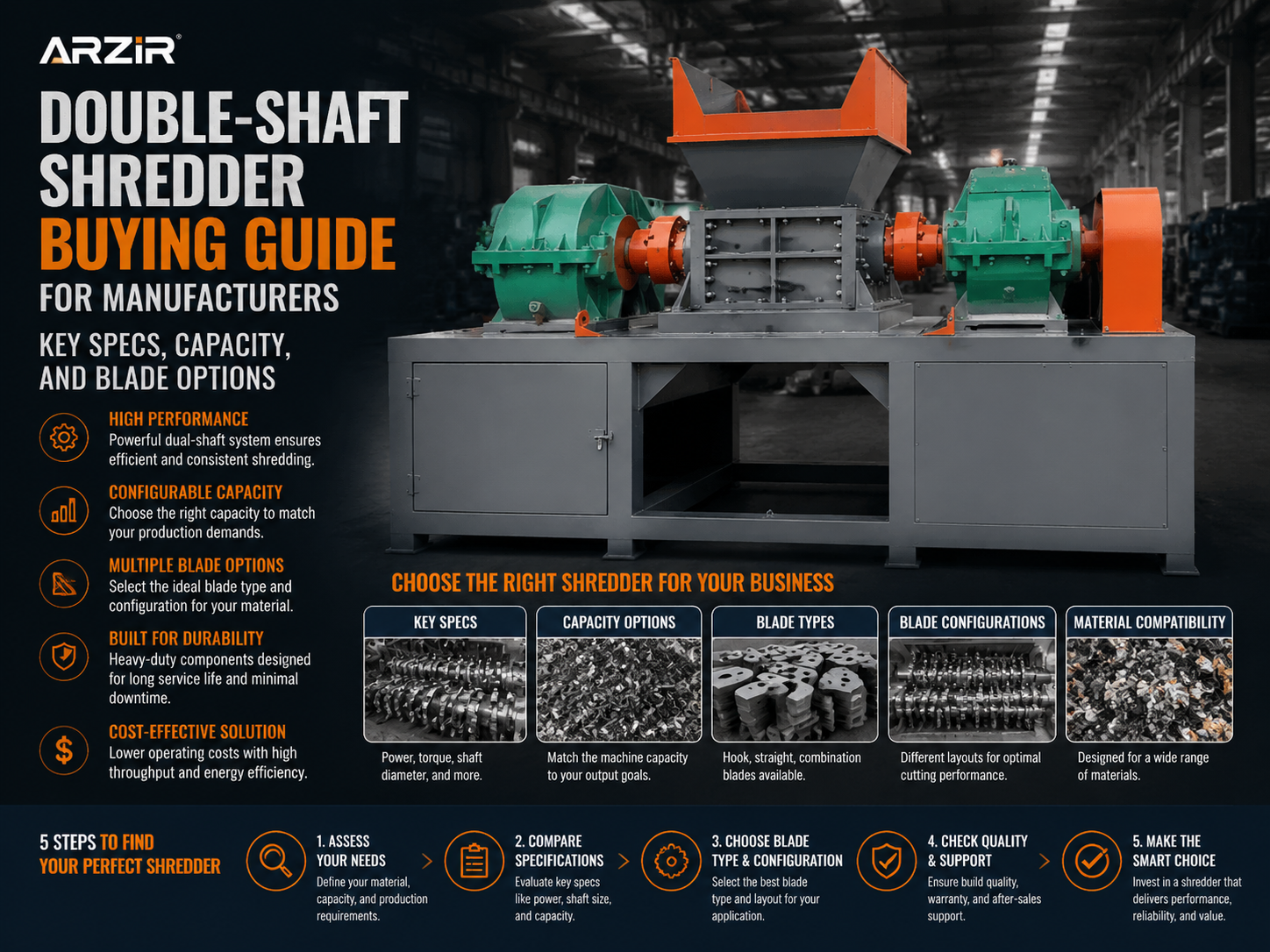
The configuration of a double-shaft shredder determines its throughput and the quality of the output. Manufacturers must match the machine’s specs to their specific material stream. The most critical specification is Torque. In shredding, torque is more important than raw horsepower. High torque allows the blades to shear through tough materials without stalling. This is achieved through high-ratio gearboxes that reduce the motor’s RPM while multiplying its rotational force.
Understanding Capacity and Throughput
Capacity is usually measured in kilograms or tons per hour (kg/h or t/h). However, capacity is highly dependent on the density of the material. For example, a shredder might process 2 tons of plastic bottles per hour but only 500kg of bulky foam due to the volume-to-weight ratio. When discussing capacity with manufacturers, always provide specific material samples or detailed descriptions. The chamber size (the length and width of the opening) must also be large enough to accept the largest pieces of waste without manual pre-cutting.
Blade Options and Geometry
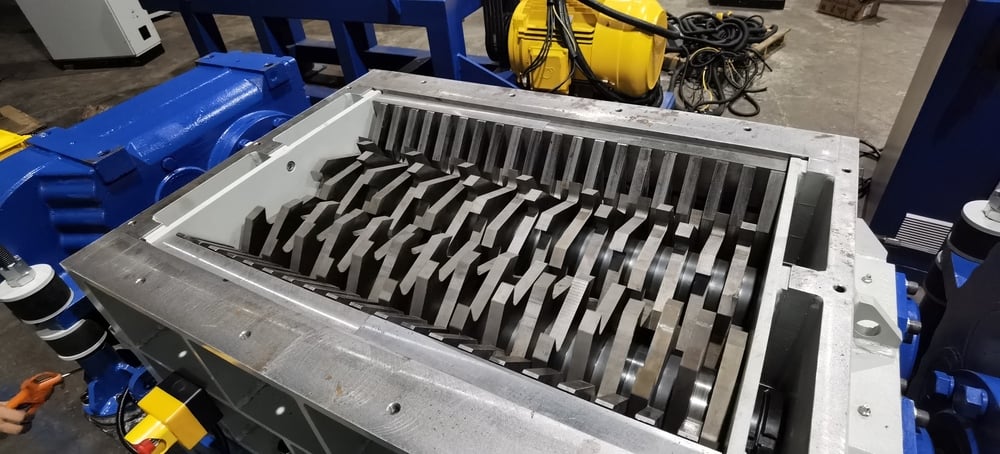
The blades (or cutters) are the heart of the machine. There are several factors to consider regarding blade configuration:
- Blade Thickness: Thicker blades are more durable but produce a coarser shred. Thinner blades produce a finer output but are more susceptible to damage from non-shreddable contaminants.
- Number of Claws: Blades come with different ‘claw’ counts (e.g., 1, 2, 3, 5, or 7 claws). A single-claw blade has a massive ‘bite’ for grabbing large, hollow objects like drums. Multi-claw blades provide a more aggressive shear for flat materials and result in a smaller particle size.
- Material Grade: Common materials include 9CrSi, Cr12MoV, and D2 (SKD-11). For metal shredding, H13 or specialized alloy steels are preferred for their impact resistance and ability to hold an edge under heat.
Hidden Costs of Operating a Double-Shaft Shredder
The purchase price is only the beginning of the total cost of ownership (TCO). Manufacturers often overlook the operational and maintenance costs that accumulate over the machine’s lifespan. One of the most significant hidden costs is Blade Maintenance. Blades are wear parts; they will eventually dull. Depending on the material being shredded (e.g., abrasive glass-filled plastics vs. soft aluminum), blades may need sharpening every few months or every year. The cost of removing, sharpening, and reinstalling a set of 40-60 blades can be substantial, both in labor and specialized grinding fees.
Power Consumption is another factor. A 90kW motor running 16 hours a day consumes a vast amount of electricity. Manufacturers should look for high-efficiency motors and PLC programs that put the machine into a ‘sleep’ mode when not being fed. Additionally, the cost of Spare Parts should be factored in. Keeping a spare set of blades, spacers, and a backup gearbox can prevent weeks of downtime, but it requires an upfront investment in inventory.
Finally, consider the Installation and Infrastructure costs. A heavy-duty shredder requires a reinforced concrete foundation to handle vibrations. It also requires a significant electrical drop, often necessitating an upgrade to the facility’s power distribution panel. If the shredder is part of a larger system, the cost of integrating conveyors and sensors can add 20-30% to the initial equipment cost.
ROI Calculation: Is the Investment Worth It?
To justify the purchase of a double-shaft shredder, manufacturers must perform a rigorous Return on Investment (ROI) calculation. The primary savings come from Waste Volume Reduction. By shredding bulky waste, companies can reduce the number of dumpster pulls required, often cutting waste hauling fees by 50% to 70%. In many regions, the cost of a single industrial waste pickup can exceed $500; reducing this frequency provides immediate cash flow benefits.
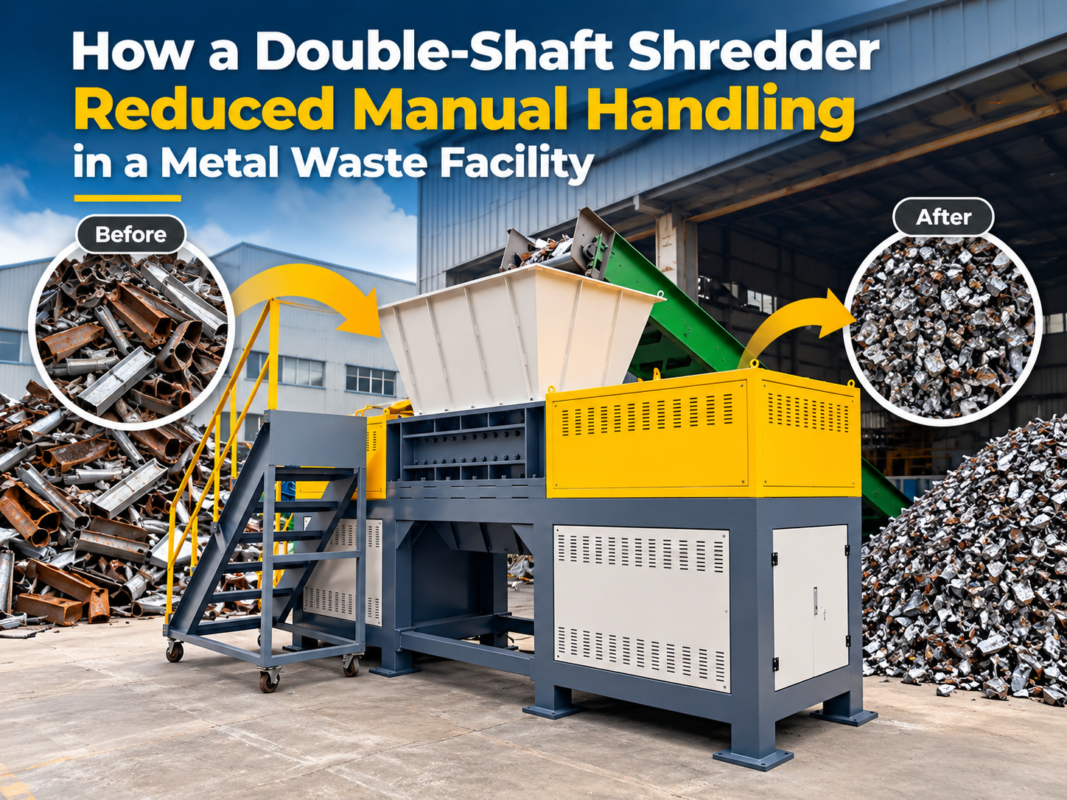
Another factor is the Increased Value of Scrap. Shredded and sorted scrap (such as clean aluminum or specific plastics) fetches a much higher price from recyclers than mixed, bulky waste. If a manufacturer produces 20 tons of scrap per month, the price difference between ‘loose’ and ‘processed’ scrap could pay for the machine in less than two years. Furthermore, labor savings should be considered. Manually breaking down crates or cutting up scrap is labor-intensive and carries a high risk of workplace injury. An automated shredder replaces these manual tasks, allowing labor to be redirected to value-added production activities.
| Factor | Manual Processing | Double-Shaft Shredder |
|---|---|---|
| Labor Requirement | High (Multiple workers) | Low (One operator/Automated) |
| Waste Volume | High (Bulky) | Low (Dense/Shredded) |
| Disposal Cost | Premium rates | Reduced rates |
| Safety Risk | High (Manual cutting) | Low (Enclosed chamber) |
| Scrap Value | Low (Unprocessed) | High (Uniform size) |
Buying Advice for Manufacturers
When you are ready to move forward with a Double-Shaft Shredder Buying Manufacturers: Key Specs, Capacity, Blade Options plan, follow these strategic steps to ensure a successful acquisition. First, always conduct a Material Test. Reputable manufacturers like HARSLE will allow you to send samples of your toughest waste to be processed in their test lab. This provides video proof of the machine’s capability and helps determine the exact blade configuration needed.
Second, prioritize Serviceability. Ask the vendor for a detailed maintenance manual and a list of recommended spare parts. Check if the machine uses standard bearings and seals that can be sourced locally, or if you are locked into proprietary components. The ease of blade removal is also critical; some designs allow the shafts to be lifted out easily, while others require a complete teardown of the chamber.
Third, evaluate the Safety Features. The machine must have emergency stop buttons at multiple locations, safety interlocks on all access panels, and an auto-reverse function that triggers when the motor detects an amperage spike (indicating a jam). For manufacturers in the EU or North America, ensure the machine meets CE or UL standards respectively. Finally, consider the future. If you expect your production to grow by 20% over the next three years, buy a machine with the capacity to handle that growth today. Retrofitting a shredder for higher capacity is rarely cost-effective.
Frequently Asked Questions (FAQ)
1. What is the difference between a single-shaft and a double-shaft shredder?
A single-shaft shredder uses a high-speed rotor with small cutters and a screen to produce a very specific, small output size. It is best for plastics and wood. A double-shaft shredder uses low-speed, high-torque counter-rotating shafts. It is better for bulky, tough materials like metal, tires, and large drums where volume reduction is the primary goal.
2. Can a double-shaft shredder handle metal?
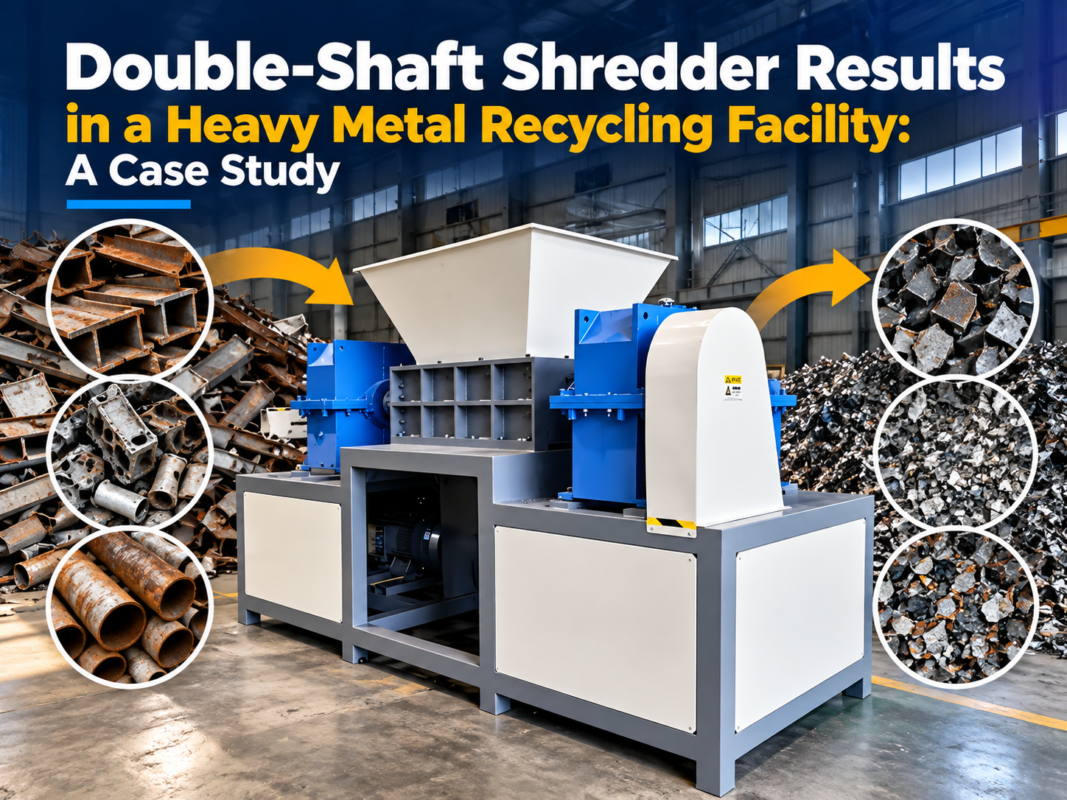
Yes, but the machine must be specifically configured for it. This includes using high-torque gearboxes, reinforced frames, and blades made from shock-resistant alloys like H13 or D2. It is excellent for light to medium metal scrap, such as aluminum extrusions, copper wire, and thin steel sheets.
3. How long do the blades last?
Blade life depends entirely on the material being shredded. For clean plastics, blades can last 1,000 to 2,000 hours before needing sharpening. For abrasive materials or metals, they may need attention every 500 hours. Proper maintenance and avoiding non-shreddable ‘tramp’ metal will significantly extend blade life.
4. What happens if a non-shreddable object enters the machine?
Modern double-shaft shredders are equipped with PLC-controlled auto-reverse systems. When the blades hit an object they cannot shear, the motor’s current spikes. The PLC detects this and immediately reverses the shafts to clear the jam, then tries again. If it fails three times, the machine will shut down and sound an alarm for manual intervention.
5. Does the output size stay consistent?
In a double-shaft shredder, the output size is determined by the thickness of the blades and the number of claws. Unlike a single-shaft shredder, there is usually no screen, so some long pieces (strips) may pass through. If a very specific particle size is required, a secondary granulator or a screen-equipped shredder may be needed after the initial double-shaft process.
6. Is it better to have more claws on the blades?
Not necessarily. More claws result in a smaller, more uniform shred, but they have less ‘grab’ for large, bulky items. Fewer claws (like a 1-claw or 3-claw design) are better for ‘hooking’ into large plastic drums or tires to pull them into the chamber. The choice depends on your specific input material.