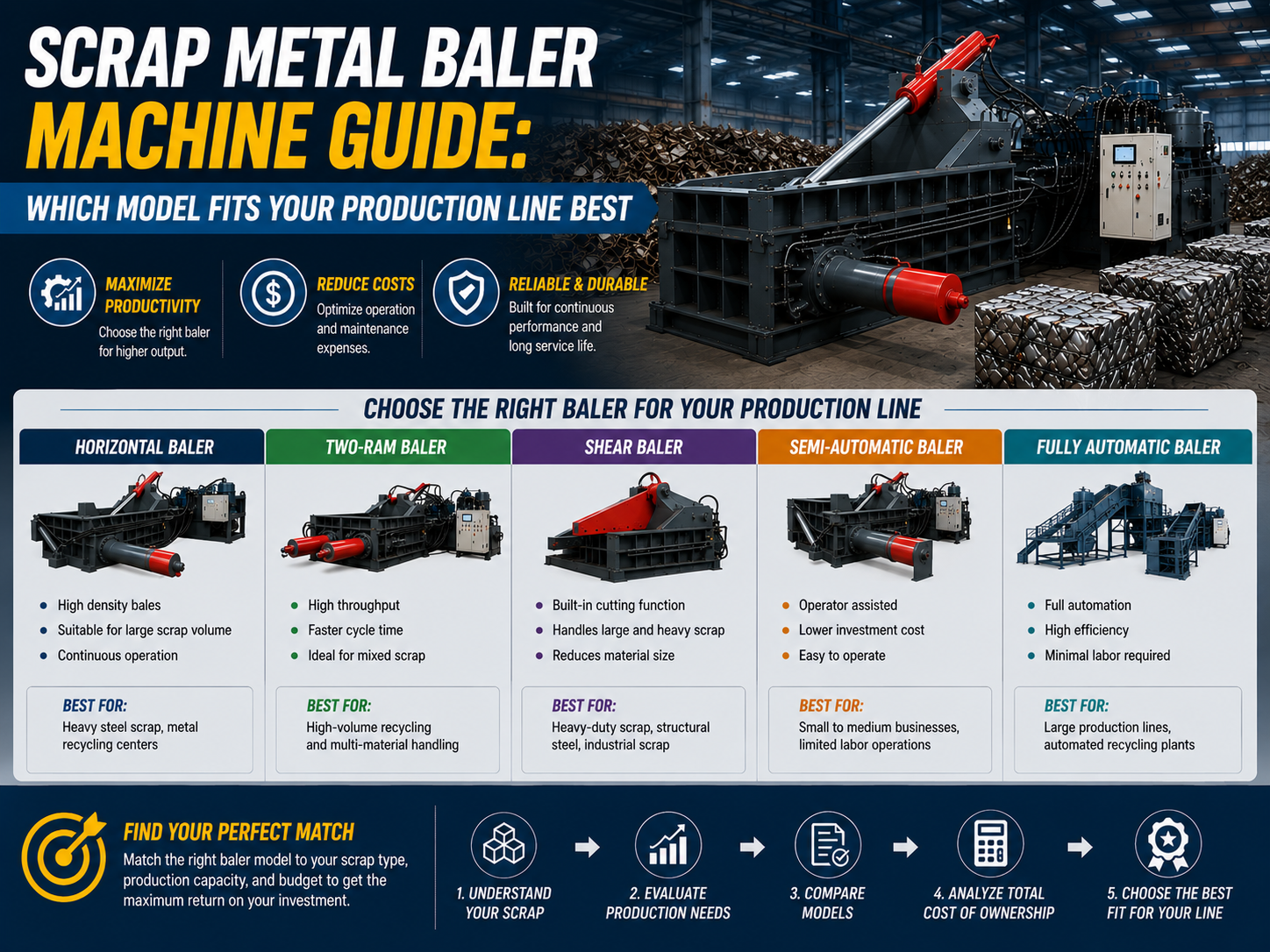
Scrap Metal Baler Machine Guide: Which Model Fits Your Production Line Best

Introduction to Scrap Metal Management
In the modern industrial landscape, the efficiency of waste management is no longer just an environmental concern; it is a critical factor in operational profitability. For metal fabrication shops, recycling centers, and manufacturing plants, the accumulation of metal offcuts, shavings, and structural scrap can quickly become a logistical nightmare. This is where the Scrap Metal Baler Machine : Which Model Fits Production Line Best becomes the central question for facility managers looking to streamline their operations.
A scrap metal baler is designed to compress loose metal scrap into dense, manageable blocks or ‘bales.’ This process significantly reduces the volume of the waste, making it easier to store, handle, and transport. More importantly, dense bales often fetch a higher price at refineries and foundries compared to loose scrap, as they are easier to melt down and process. Choosing the right model requires a deep understanding of your material volume, the type of metal you process, and your long-term production goals.
HARSLE has been at the forefront of providing high-performance hydraulic solutions for decades. We understand that a baler is a long-term investment. Whether you are dealing with aluminum cans, steel turnings, or heavy copper wire, the configuration of your machine will dictate your daily throughput and your ultimate return on investment. This guide aims to break down every technical and financial aspect of selecting the perfect scrap metal baler for your specific needs.
Price Range Overview: Understanding the Investment
When evaluating the cost of a scrap metal baler, it is essential to view it through the lens of production capacity. Prices vary wildly based on the force of the hydraulic cylinders, the size of the compression chamber, and the level of automation. Generally, the market is divided into three primary tiers: entry-level, mid-range, and industrial-scale systems.
Entry-Level Balers ($5,000 – $15,000): These are typically vertical balers or small-scale horizontal units. They are ideal for small workshops or retail environments that generate a few tons of scrap per month. These machines usually require manual loading and manual tying of the bales. While they have a lower upfront cost, their labor requirements are higher, and their compression force is usually limited to under 60 tons.
Mid-Range Balers ($15,000 – $60,000): This is the most common category for dedicated recycling centers and medium-sized fabrication plants. These machines offer hydraulic pressures ranging from 100 to 250 tons. They often feature semi-automatic operation, where the compression cycle is automated, but loading might still involve a forklift or a small conveyor. These units are built for durability and can handle a wider variety of materials, including thicker steel plates and stainless steel scrap.
Industrial-Scale Systems ($60,000 – $250,000+): These are the heavyweights of the industry. Designed for 24/7 operation, these fully automatic horizontal balers can process hundreds of tons of scrap daily. They feature advanced PLC controls, integrated conveyor systems, and massive compression forces exceeding 400 tons. These machines are a significant capital expenditure but offer the lowest cost-per-ton processing rate due to their extreme efficiency and minimal labor requirements.
Main Cost Drivers in Metal Baler Selection
The price tag of a scrap metal baler isn’t arbitrary; it is driven by several high-value components and engineering choices. Understanding these drivers helps you determine where to invest and where you might be able to save. The primary driver is the Hydraulic System. High-quality pumps from brands like Rexroth or Vickers, combined with precision-engineered valves, ensure that the machine operates smoothly under immense pressure. A cheaper hydraulic system might save money upfront but will lead to frequent leaks, overheating, and slower cycle times.
Material Quality and Frame Construction also play a massive role. A baler is subjected to intense internal stresses. Machines built with high-tensile Q345B steel and reinforced with wear-resistant plates (like Hardox) in the compression chamber will last significantly longer than those using standard carbon steel. The thickness of the chamber walls determines how well the machine resists warping over years of heavy use.
Another significant cost driver is the Control System. Modern balers utilize Programmable Logic Controllers (PLCs) to manage the timing of the rams, the pressure sensors, and the safety interlocks. A Siemens or Schneider PLC system adds to the cost but provides a user-friendly interface, remote diagnostics capabilities, and much higher reliability. Furthermore, the inclusion of specialized features like ‘shear blades’ on the ram—which cut through overhanging scrap as the ram closes—adds complexity and cost but prevents machine jams.
Configuration Impact: Vertical vs. Horizontal Models
Choosing between a vertical and a horizontal configuration is the most critical decision in the “Scrap Metal Baler Machine : Which Model Fits Production Line Best” evaluation process. Each has distinct advantages and limitations based on your floor space and throughput requirements.
Vertical Scrap Metal Balers
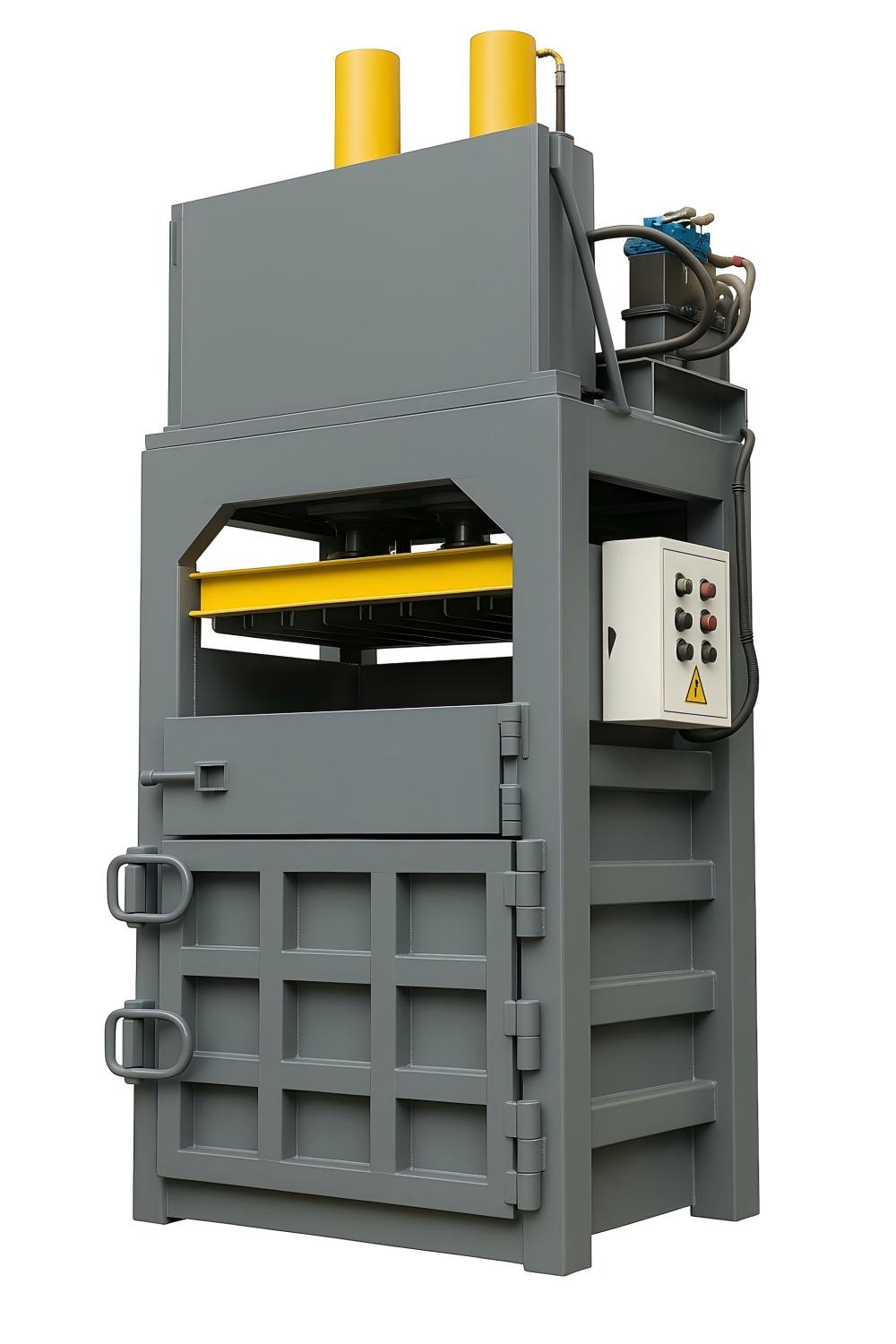
Vertical balers are the space-savers of the recycling world. They have a small footprint and are loaded from the front. The hydraulic ram moves from top to bottom to compress the material. These are excellent for non-ferrous metals like aluminum and copper, or for light-gauge steel. However, they are generally slower because they must be manually loaded and unloaded. If your production line generates less than 5 tons of scrap per day, a vertical baler is often the most cost-effective choice.
Horizontal Scrap Metal Balers
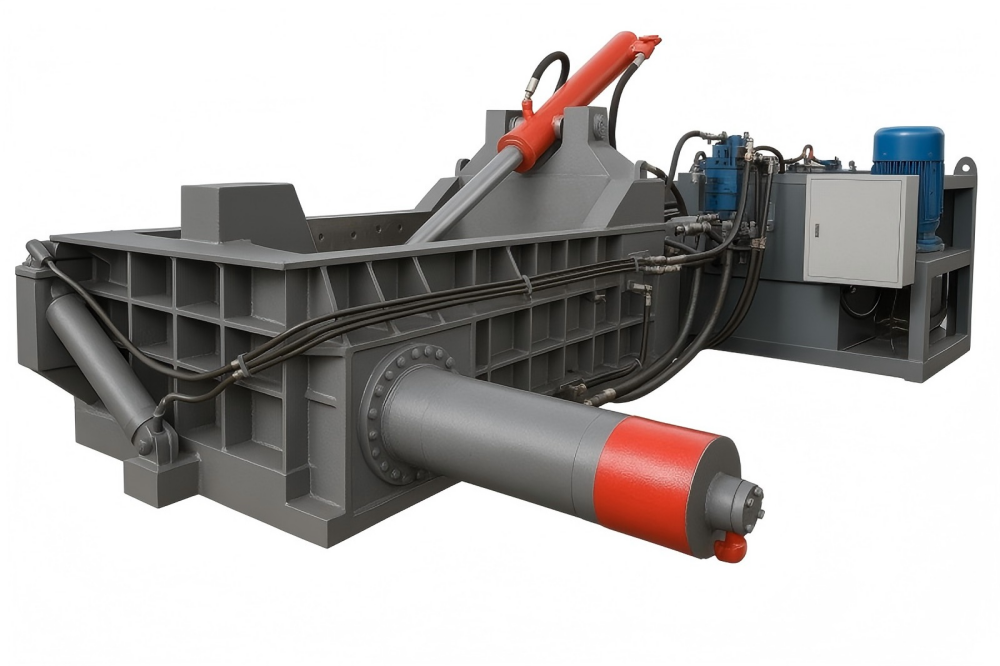
Horizontal balers are the workhorses of high-volume production lines. They are designed for continuous feeding, often via a conveyor belt or a crane. The ram moves horizontally, and the finished bales are pushed out the side or the end. These machines can produce much denser bales and operate at much higher speeds. Within the horizontal category, you can choose between ‘closed-end’ (for maximum density) and ‘open-end’ (for continuous, automatic tying). For any facility processing more than 10 tons of scrap daily, a horizontal model is almost always the superior choice for efficiency.
Hidden Costs of Owning a Scrap Metal Baler
The purchase price is only the beginning of the total cost of ownership (TCO). To truly understand which model fits your production line, you must account for the ongoing expenses that aren’t always visible on the quote. Installation and Commissioning can be substantial, especially for large horizontal units that require specialized foundations, heavy-duty electrical hookups, and professional calibration.
Maintenance and Wear Parts are another factor. The liners inside the compression chamber are designed to be sacrificial; they will wear down over time as metal grinds against metal. Depending on the abrasiveness of your scrap, these may need replacement every 12 to 24 months. Additionally, hydraulic oil is a significant recurring cost. A large baler might require 500 to 1,000 liters of high-grade hydraulic fluid, which must be filtered and occasionally replaced to prevent pump failure.
Energy Consumption is often overlooked. A 50HP motor running 8 hours a day can significantly impact your utility bill. High-efficiency motors and variable frequency drives (VFDs) can reduce these costs, but they increase the initial purchase price. Finally, consider the Labor Cost. A manual baler requires a dedicated operator, whereas a fully automatic system might only require occasional monitoring. Over five years, the labor savings of an automated system can often pay for the entire machine.
ROI Calculation: When Does a Baler Pay for Itself?
Calculating the Return on Investment (ROI) for a scrap metal baler involves looking at three main areas: transportation savings, labor efficiency, and scrap value appreciation. Let’s look at a hypothetical scenario for a medium-sized fabrication plant.
- Transportation Savings: Loose scrap is mostly air. A truck that can carry 20 tons of baled steel might only be able to carry 4 tons of loose scrap. If each truck trip costs $500, and you produce 100 tons of scrap per month, you would need 25 trips for loose scrap ($12,500) versus 5 trips for baled scrap ($2,500). That is a monthly saving of $10,000.
- Scrap Value: Foundries prefer bales because they are easier to handle and have less surface area, which reduces oxidation during melting. This often results in a premium of $20 to $50 per ton. For 100 tons, that’s an extra $2,000 to $5,000 in revenue per month.
- Labor Reduction: If an automated baler saves 40 man-hours per week at $25/hour, that is another $4,000 in monthly savings.
In this scenario, the total monthly benefit is approximately $16,000. A $100,000 industrial baler would pay for itself in just over six months. Even with maintenance and electricity costs factored in, the ROI is exceptionally strong for high-volume producers.
Buying Advice: Choosing the Right Model for Your Line
To ensure you select the model that fits your production line best, follow this strategic checklist before making a commitment:
- Analyze Your Material: Not all balers are created equal. If you are baling stainless steel, you need much higher pressure and harder wear plates than if you are baling aluminum. Be specific about the thickness and type of metal.
- Measure Your Volume: Don’t just look at today’s volume; look at your projected growth over the next 3-5 years. It is much cheaper to buy a slightly larger machine now than to replace an undersized one in two years.
- Evaluate Your Space: Horizontal balers require significant floor space, not just for the machine, but for the loading area and the bale storage. Ensure your facility layout can accommodate the workflow.
- Check for Local Support: A baler is a mechanical beast. Eventually, it will need service. Ensure that the manufacturer or distributor has a local presence or can provide rapid parts shipping and technical support.
- Test the Cycle Time: In a high-volume environment, every second counts. Compare the dry cycle times of different models. A 30-second cycle versus a 50-second cycle can mean the difference between clearing your daily scrap and falling behind.
Technical Specifications Comparison Table
| Feature | Vertical (Small) | Horizontal (Mid) | Horizontal (Heavy) |
|---|---|---|---|
| Nominal Force | 30 – 60 Tons | 100 – 200 Tons | 250 – 500+ Tons |
| Bale Weight (Steel) | 50 – 150 kg | 200 – 500 kg | 600 – 1500 kg |
| Operation Mode | Manual | Semi-Automatic | Fully Automatic |
| Cycle Time | 60 – 90 sec | 40 – 60 sec | 20 – 40 sec |
| Power (kW) | 5.5 – 11 kW | 15 – 37 kW | 45 – 110+ kW |
Frequently Asked Questions (FAQ)
1. How do I know if I need a side-push or a forward-out baler?
Side-push balers are generally better for smaller, denser bales and are often more compact. Forward-out (or ‘turn-out’) balers are typically used for larger bales and are easier to integrate into a continuous conveyor line. The choice depends on your bale size requirements and how you plan to move the finished product.
2. Can one baler handle different types of metal?
Yes, most hydraulic balers can handle various metals, but you must adjust the pressure settings. Baling soft aluminum requires less force than thick stainless steel. If you frequently switch materials, look for a model with a PLC that allows you to save different ‘recipes’ or pressure profiles.
3. What is the average lifespan of a HARSLE scrap metal baler?
With proper maintenance, a high-quality industrial baler should last 15 to 20 years. The key is regular hydraulic oil filtration, timely replacement of wear liners, and ensuring the machine is not consistently operated beyond its rated tonnage capacity.
4. Do I need a special foundation for a horizontal baler?
For mid-range and heavy-duty horizontal balers, a reinforced concrete pad is usually required to handle the vibration and the concentrated weight of the machine. We provide detailed foundation drawings for all our industrial models to ensure a safe and stable installation.
5. How does the ‘shear’ function work in a baler?
Many horizontal balers feature a hardened steel blade on the leading edge of the ram and the frame. As the ram moves forward, it shears off any scrap that is sticking out of the chamber. This prevents the machine from jamming and ensures a clean, rectangular bale every time.
6. Is it better to buy a new or used scrap metal baler?
While used machines have a lower entry price, they often come with hidden hydraulic issues or worn-out structures that are expensive to repair. A new machine comes with a warranty, modern safety features, and the latest energy-efficient technology, which usually results in a lower total cost of ownership over time.
Conclusion
Selecting the right scrap metal baler is a pivotal decision for any metal-related business. By focusing on the specific needs of your production line—volume, material type, and automation requirements—you can transform a waste management headache into a streamlined profit center. At HARSLE, we are committed to helping you find the perfect balance between performance and price. Whether you need a compact vertical unit or a massive automated system, our engineering team is ready to assist you in optimizing your recycling workflow.