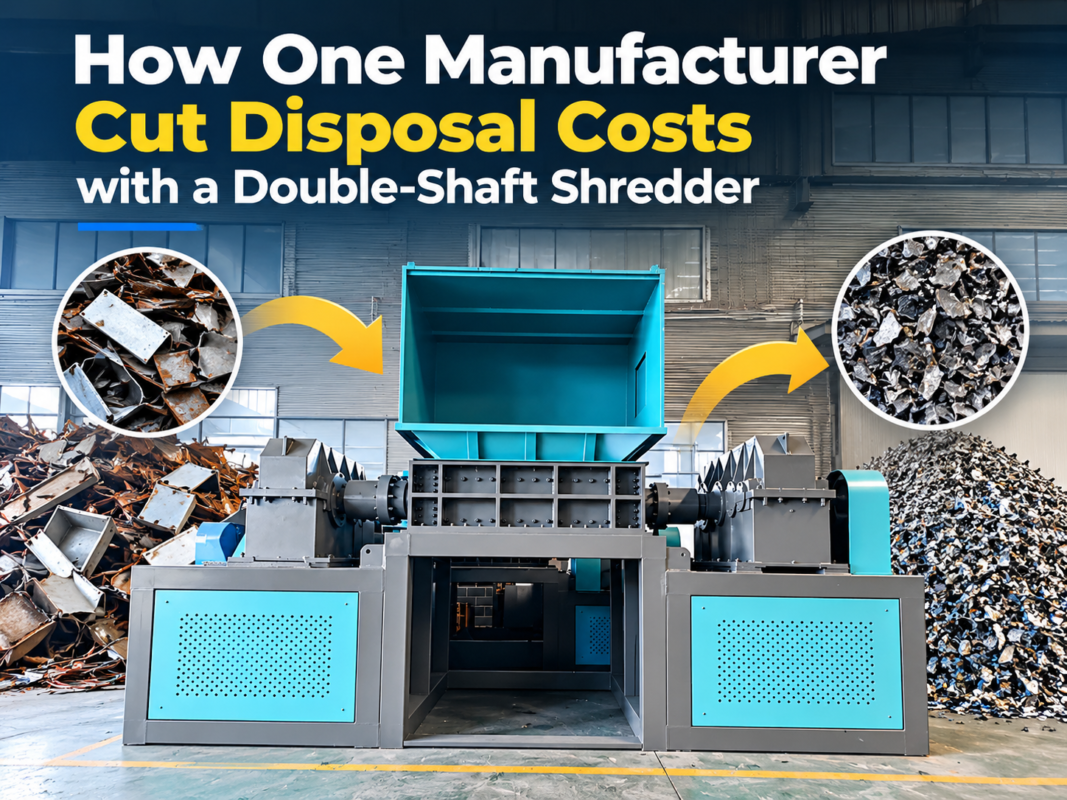
How Scrap Metal Shears Cut Processing Costs In Recycling Facilities

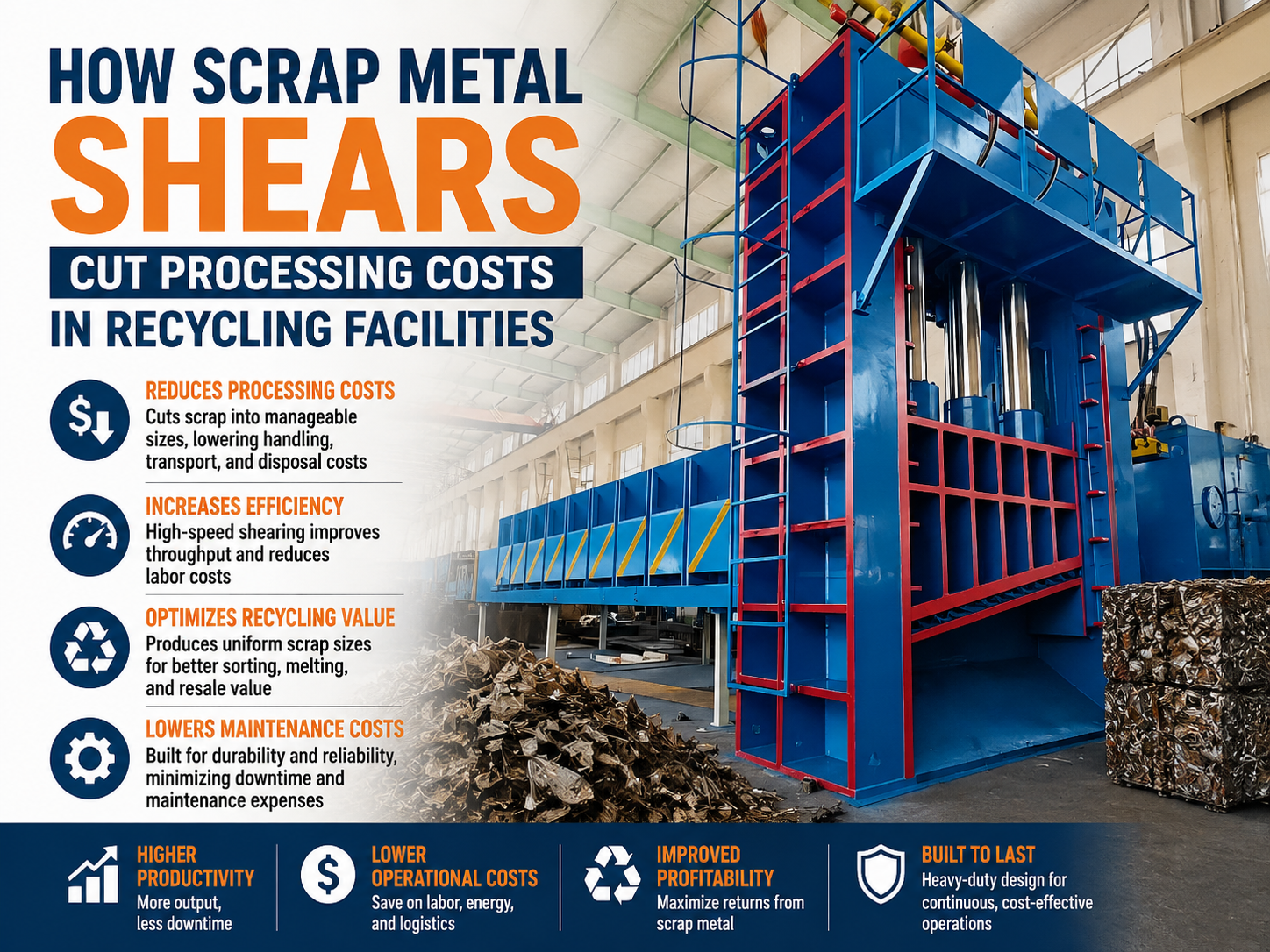
Introduction: The Economic Impact of Advanced Shearing Technology
In the modern industrial landscape, the efficiency of a recycling facility is often measured by its ability to process high volumes of material with minimal overhead. As global demand for recycled steel and non-ferrous metals continues to rise, facility managers are increasingly looking for ways to optimize their operations. One of the most effective solutions is the implementation of high-capacity hydraulic shears. This article explores in depth how Scrap Metal Shears Cut Processing Costs In Recycling Facilities, focusing on the technical advantages, operational workflows, and long-term financial benefits of HARSLE’s advanced machinery.
The transition from manual sorting and torch cutting to automated hydraulic shearing represents a significant leap in productivity. Manual methods are not only labor-intensive but also pose significant safety risks and environmental concerns due to fumes and waste. In contrast, a heavy-duty gantry shear can process tons of material per hour, transforming oversized, irregular scrap into dense, furnace-ready bundles. This transformation is the cornerstone of cost reduction, affecting everything from labor allocation to logistics and energy consumption.
Application Scenarios for Scrap Metal Shears
Scrap metal shears are versatile workhorses found in various sectors of the recycling industry. Their primary role is to reduce the size of large metal structures into manageable pieces. One of the most common application scenarios is in Automotive Recycling. End-of-life vehicles (ELVs) contain a mix of heavy steel frames and lighter body panels. A gantry shear can quickly flatten and cut these frames, preparing them for the shredder or direct smelting. By reducing the volume of the car frames, facilities can store more units in the same footprint, optimizing yard space.
Another critical scenario is Demolition and Construction Waste Management. Large-scale demolition projects generate massive amounts of structural steel, rebar, and I-beams. These materials are often too long or bulky for standard transport. On-site or yard-based shearing allows these materials to be cut to standard lengths (typically 2 feet or 5 feet), which are preferred by steel mills. This process significantly increases the market value of the scrap, as “prepared” scrap commands a higher price than “unprepared” bulk material.
In Shipbreaking and Heavy Industrial Decommissioning, the scale of the material is even more daunting. Thick hull plates and massive engine components require immense shearing force. HARSLE’s heavy-duty gantry shears are designed to handle these extreme thicknesses, providing a safer and faster alternative to oxygen-fuel cutting. By eliminating the need for constant gas supplies and reducing the risk of fire, facilities can lower their insurance premiums and operational expenses simultaneously.
Material and Process Requirements
To understand how Scrap Metal Shears Cut Processing Costs In Recycling Facilities, one must first understand the materials they handle. Scrap is generally categorized into Heavy Melting Steel (HMS 1 & 2), P&S (Plate and Structural), and various non-ferrous grades. Each material has different tensile strengths and thicknesses, requiring specific shear forces. For instance, HMS 1 typically consists of wrought iron or steel scrap 1/4 inch and over in thickness. Processing this requires a machine with high blade pressure and a robust clamping mechanism to prevent material slippage during the cut.
The process requirements also involve the “density factor.” Steel mills and foundries prioritize dense scrap because it improves furnace charging efficiency and reduces energy loss during the melt. Therefore, the shearing process isn’t just about cutting; it’s about densification. Modern shears often include a pre-compression hopper or a “wing” system that crushes the scrap into a compact log before the blade descends. This dual action—compression and shearing—is vital for meeting the stringent quality standards of modern metallurgy.
Furthermore, the metallurgical integrity of the blade is a critical process requirement. Blades must be made from high-alloy tool steel, such as 6CrW2Si or H13, to withstand the immense friction and impact of cutting hardened steel. HARSLE ensures that its blade configurations are adjustable, allowing operators to maintain the optimal gap between the upper and lower blades. This precision prevents “tearing” of the metal, which consumes more energy and causes premature wear on the hydraulic system.
Recommended Machine Configuration
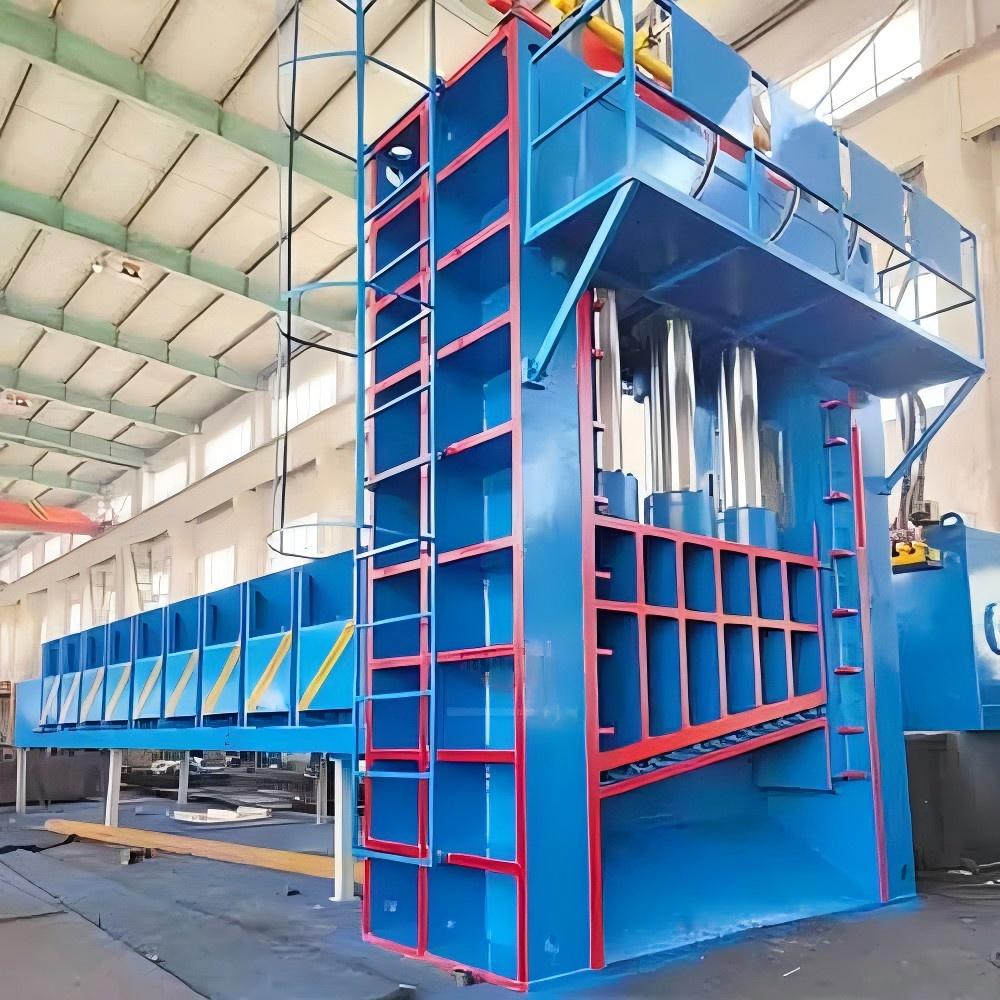
Choosing the right configuration is essential for maximizing ROI. For most medium-to-large recycling facilities, the Hydraulic Gantry Shear (MS Series) is the recommended choice. Unlike smaller alligator shears, gantry shears offer automated feeding and much higher cutting forces, ranging from 400 to over 2000 tons. A typical high-efficiency configuration includes a large-capacity charging box, which allows for continuous feeding by a grapple crane or magnet.
The hydraulic system is the heart of the machine. We recommend a configuration utilizing high-pressure plunger pumps (such as those from Rexroth or Parker) and integrated valve blocks. This setup minimizes the number of hydraulic hoses and connections, which are common failure points in high-vibration environments. Additionally, an advanced cooling system—either air-cooled or water-cooled—is necessary to maintain the hydraulic oil at an optimal viscosity, especially during multi-shift operations in hot climates.
Key Technical Specifications Table
| Feature | Standard Configuration | High-Performance Upgrade |
|---|---|---|
| Cutting Force | 400 – 630 Tons | 800 – 2000+ Tons |
| Blade Material | 9CrSi / 6CrW2Si | H13 / Custom Alloy Steel |
| Control System | Manual / Semi-Auto PLC | Full Auto PLC with Remote Monitoring |
| Hydraulic Pump | Domestic High-Pressure Pump | Rexroth / Vickers Plunger Pump |
| Cooling System | Standard Air Cooler | Industrial Water Chiller / Large Air Heat Exchanger |
For facilities focusing on non-ferrous metals like aluminum or copper, a smaller, faster shear might be more appropriate. However, for general ferrous scrap, the gantry shear’s ability to process mixed loads without constant manual intervention is what truly drives down costs. The inclusion of a PLC (Programmable Logic Controller) allows for various modes of operation, such as “automatic continuous cutting,” which synchronizes the feed ram and the shear head for maximum throughput.
Workflow: From Raw Scrap to Marketable Product
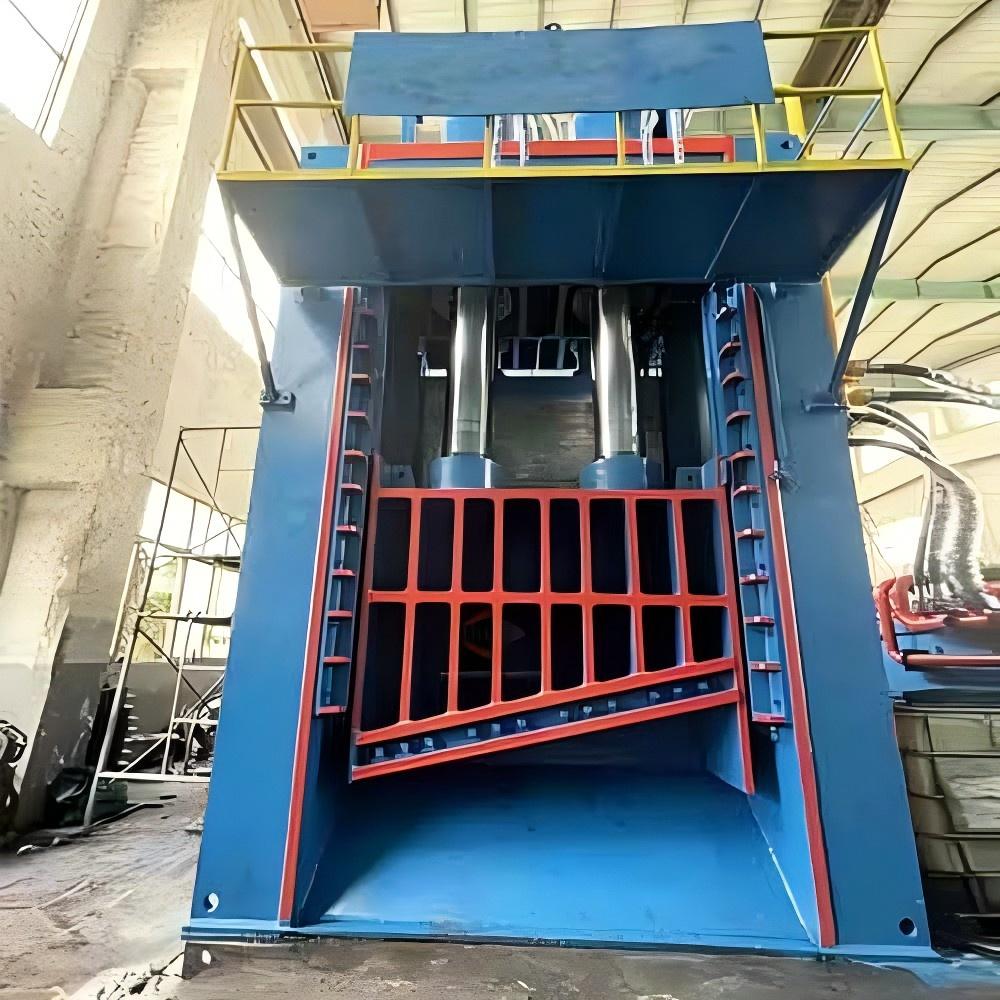
The workflow of a HARSLE scrap shear is designed for seamless integration into a recycling yard’s logistics. The process begins with Material Loading. A crane operator drops bulk scrap into the large hopper. Because the hopper is designed to be wide and deep, it can accept irregular shapes like pipes, beams, and even small machinery without prior preparation.
Next is the Pre-Compression Phase. Once the hopper is full, the side-press or “wings” close, exerting hundreds of tons of pressure to crush the scrap into a rectangular log. This step is crucial because it stabilizes the material. Without proper compression, the scrap would shift during the shearing process, leading to uneven cuts and potential damage to the blade seats. This compression also begins the process of increasing the material’s bulk density.
The third stage is Feeding and Shearing. A horizontal pushing cylinder moves the compressed log forward toward the shear throat. The PLC determines the feed length based on the operator’s settings (e.g., 600mm for standard furnace feed). The hydraulic hold-down cylinder descends first to lock the material in place, followed immediately by the shear blade. The cut piece falls onto a discharge conveyor or directly into a collection bin. This cycle repeats automatically until the hopper is empty, allowing the crane operator to focus on sorting the next load while the machine works.
Productivity Benefits: How Scrap Metal Shears Cut Processing Costs
The core thesis that Scrap Metal Shears Cut Processing Costs In Recycling Facilities is supported by four primary pillars: labor reduction, logistics optimization, energy efficiency, and material value enhancement. Let’s examine each in detail.
1. Significant Labor Savings
Traditional scrap processing often requires a team of workers using torches to cut large pieces. This is slow, requires expensive gases (oxygen and acetylene), and necessitates strict safety protocols. A single gantry shear operator, often the same person operating the loading crane, can replace a crew of 5-10 manual cutters. This reduction in headcount directly lowers the monthly payroll and reduces the facility’s liability and workers’ compensation costs.
2. Logistics and Transport Efficiency
Unprocessed scrap is “light and bulky.” A standard truck might reach its volume capacity long before it reaches its weight capacity when carrying loose pipes or car bodies. By shearing the metal into dense, uniform pieces, the bulk density increases from perhaps 200 kg/m³ to over 800 kg/m³. This means fewer truck trips are required to transport the same tonnage of metal. In an era of rising fuel prices and driver shortages, the ability to maximize every load is a massive competitive advantage.
3. Energy and Consumable Reduction
While a large hydraulic shear requires significant electrical power, the cost per ton of processed material is much lower than the combined cost of gas, electricity, and manual labor in traditional methods. HARSLE machines utilize variable displacement pumps that only draw maximum power when the blade meets resistance, idling at low power during the return stroke. Furthermore, the elimination of torch cutting removes the need for expensive consumables and the maintenance of gas delivery systems.
4. Higher Market Value (The “Prepared” Premium)
Steel mills pay a premium for “prepared” scrap. Prepared scrap is easier to handle, fits better in electric arc furnaces (EAF), and has a known density. By using a shear to convert “unprepared” scrap into high-quality HMS 1 or P&S, a recycling facility can increase its revenue per ton by 15-25%. This increased margin, combined with lower operational costs, ensures a rapid return on investment (ROI) for the machinery.
Case Example: A Success Story in Metal Recycling
Consider a mid-sized recycling facility in Eastern Europe that was processing approximately 1,500 tons of mixed steel scrap per month using manual torch cutting and two small alligator shears. Their processing cost was roughly $45 per ton, and they struggled with a backlog of oversized material. The facility invested in a HARSLE 1000-ton Gantry Shear (MS-1000).
After six months of operation, the results were transformative. The facility increased its throughput to 3,500 tons per month without hiring additional staff. The automated feeding system allowed the yard to operate two shifts with minimal supervision. The processing cost dropped from $45 per ton to $18 per ton, primarily due to the elimination of gas consumables and the reduction in transport costs. Furthermore, because they were now producing high-density prepared scrap, they secured a contract with a major local steel mill at a $30/ton premium over their previous selling price. The machine paid for itself in less than 14 months.
Frequently Asked Questions (FAQ)
What is the maintenance schedule for a heavy-duty scrap shear?
Maintenance is critical for longevity. Daily tasks include lubricating the slide guides and checking hydraulic oil levels. Weekly, operators should inspect the blade bolts and the gap between blades. A full hydraulic oil change and filter replacement are typically required every 2,000 to 3,000 operating hours, depending on the environment and oil quality.
Can these shears handle non-ferrous metals like aluminum and copper?
Yes, hydraulic gantry shears are excellent for non-ferrous metals. In fact, because these metals are softer than steel, the machine operates with less strain, often allowing for faster cycle times. Shearing is preferred for high-grade aluminum scrap to avoid the contamination that can occur with shredding or melting.
How do I choose between a gantry shear and an alligator shear?
The choice depends on volume and material size. Alligator shears are best for small-scale operations, cleaning non-ferrous scrap, or cutting long pipes manually. Gantry shears are designed for high-volume, heavy-duty applications where automation and high cutting force are required to process bulk loads efficiently.
What safety features are included in HARSLE shears?
HARSLE prioritizes operator safety. Our shears include emergency stop buttons at multiple stations, hydraulic overload protection, safety interlocks on the charging box, and protective shielding around the cutting zone. We also provide comprehensive training for operators to ensure safe handling of the equipment.
How does the machine handle very thick structural steel?
The machine uses a combination of high-pressure hydraulics and a specific blade angle to concentrate force. For exceptionally thick materials, the PLC can be set to a “pressure-sensing” mode where the blade makes incremental progress, ensuring the frame and hydraulic cylinders are not overstressed while still completing the cut.
Conclusion: Investing in the Future of Recycling
The evidence is clear: Scrap Metal Shears Cut Processing Costs In Recycling Facilities by streamlining every aspect of the operation. From reducing the physical footprint of scrap to minimizing labor and maximizing transport efficiency, these machines are essential for any facility looking to remain profitable in a competitive global market. HARSLE’s commitment to engineering excellence ensures that our shears provide the durability and performance needed to handle the toughest materials day after day.
If you are looking to upgrade your facility’s capabilities and significantly reduce your operational overhead, HARSLE is here to help. Our team of experts can assist you in selecting the perfect machine configuration tailored to your specific material types and volume requirements. Contact us today to learn more about our hydraulic gantry shears and how we can help you turn scrap into profit more efficiently than ever before.