Horizontal Baler Comparison Guide: Features That Improve Efficiency and Reduce Labor

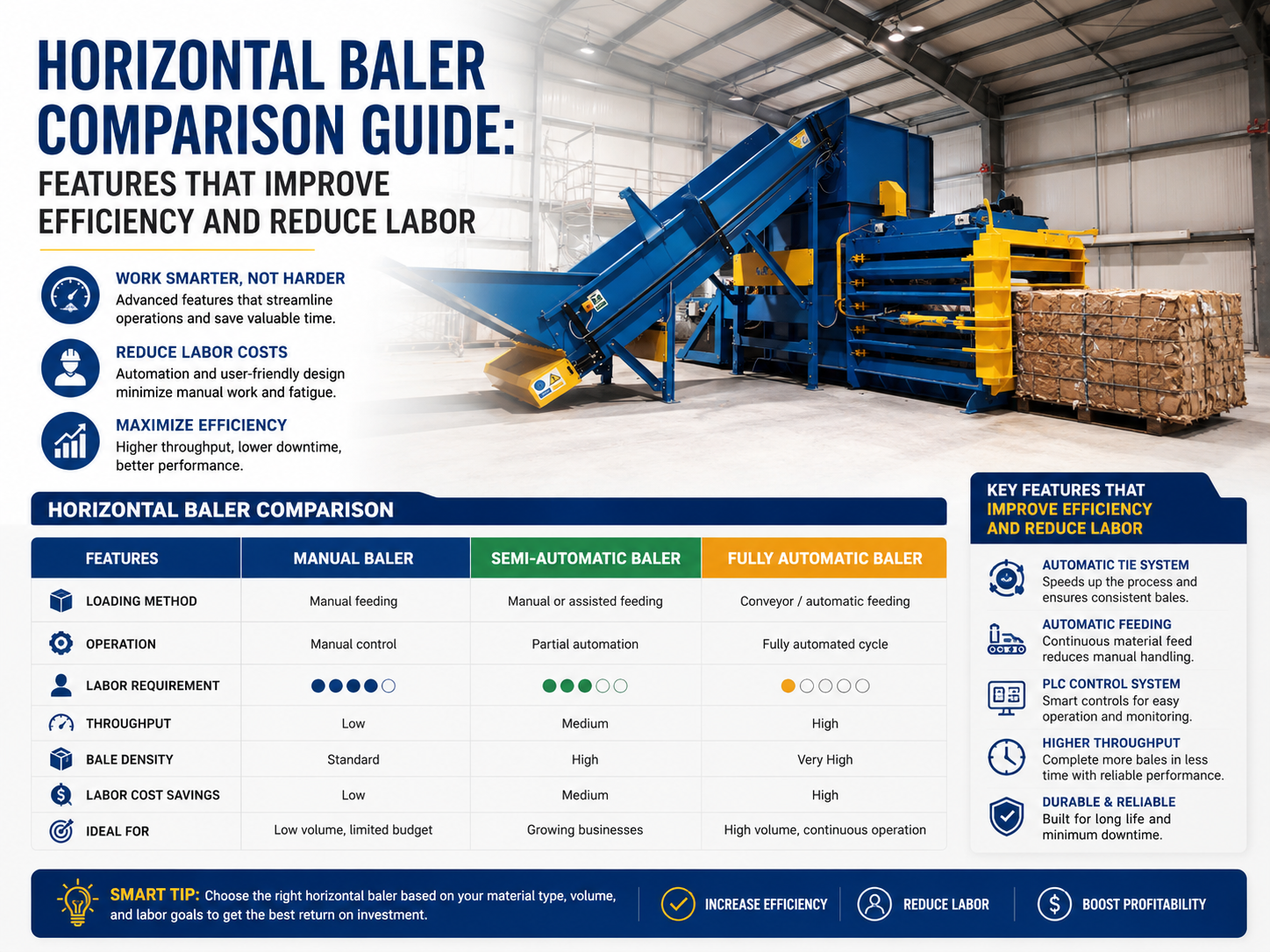
Introduction to Horizontal Baler Efficiency
In the modern industrial landscape, waste management is no longer just a secondary concern; it is a critical component of operational efficiency and sustainability. For facilities dealing with high volumes of recyclable materials—such as cardboard, plastics, paper, and non-ferrous metals—the choice of equipment can significantly impact the bottom line. This Horizontal Baler Comparison Guide: Features That Improve Efficiency and Reduce Labor aims to provide a deep dive into the technical aspects and economic benefits of horizontal baling systems. Unlike their vertical counterparts, horizontal balers are designed for continuous operation, high throughput, and minimal human intervention, making them the gold standard for large-scale recycling operations.
Efficiency in baling is measured not just by how fast a machine can compress material, but by how effectively it integrates into a facility’s workflow. A high-efficiency horizontal baler reduces the need for manual sorting and feeding, optimizes transport costs through superior bale density, and minimizes downtime through robust engineering. As labor costs continue to rise globally, the shift toward automated waste processing is becoming a necessity rather than a luxury. By understanding the nuances of different horizontal baler configurations, facility managers can make informed decisions that lead to long-term profitability and streamlined operations.
Price Range Overview: Investing in Industrial Scalability
When evaluating a Horizontal Baler Comparison : Features That Improve Efficiency Reduce Labor, the first point of consideration is often the capital expenditure. Horizontal balers occupy a wide price spectrum, typically ranging from $25,000 for entry-level semi-automatic models to over $300,000 for fully automated, high-capacity systems designed for 24/7 industrial use. The price is a direct reflection of the machine’s capacity, the complexity of its hydraulic system, and the level of automation integrated into its control unit.
Entry-level horizontal balers are often semi-automatic, meaning they require an operator to manually tie the bales once the compression cycle is complete. These are suitable for businesses processing 1 to 3 tons of material per hour. Mid-range models, priced between $60,000 and $120,000, often feature automatic tying systems and larger feed hoppers, significantly increasing throughput. At the top end of the scale, heavy-duty industrial balers feature high-pressure hydraulics, advanced PLC (Programmable Logic Controller) systems, and integrated conveyor feeds, capable of processing upwards of 15-20 tons per hour. While the initial investment is high, these machines are designed to last decades, providing a lower total cost of ownership over time.
Main Cost Drivers in Horizontal Baler Manufacturing
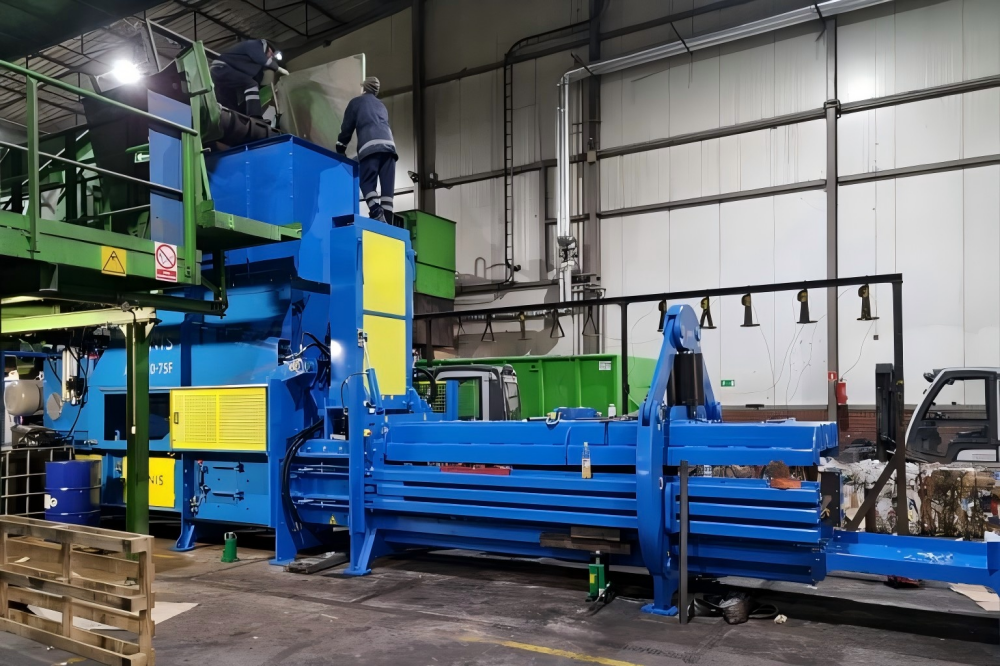
Several technical factors drive the cost of a horizontal baler. Understanding these drivers is essential for a comprehensive Horizontal Baler Comparison : Features That Improve Efficiency Reduce Labor. The primary driver is the hydraulic system. The force exerted by the main ram—measured in tons—determines the density of the bale. Higher tonnage requires larger cylinders, more powerful motors, and reinforced structural steel to withstand the immense pressure. A machine capable of 100 tons of pressure will naturally cost more than one rated for 50 tons, but it will also produce denser bales that are cheaper to transport.
Another significant cost driver is the tying mechanism. Automatic tying systems are complex mechanical assemblies that require precision engineering. The difference between a 4-wire and a 5-wire tying system, or the inclusion of a specialized plastic wire tier for waste-to-energy applications, can add thousands to the price. Additionally, the quality of the components—such as Siemens PLCs, Rexroth hydraulics, and high-grade wear-resistant liners (like Hardox steel)—contributes to the initial cost but ensures the machine can handle abrasive materials without frequent breakdowns.
Configuration Impact: Automation and Throughput
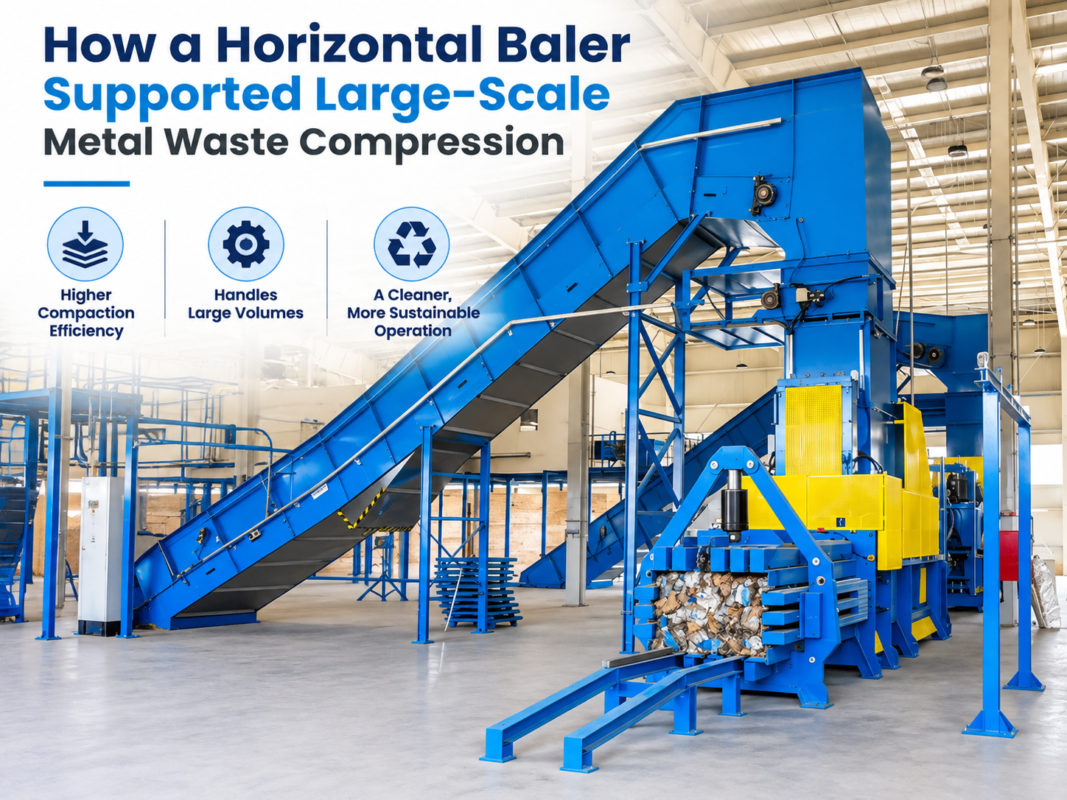
The configuration of a horizontal baler is perhaps the most critical factor in reducing labor. In our Horizontal Baler Comparison Guide: Features That Improve Efficiency and Reduce Labor, we categorize configurations into three main types: closed-end, open-end (auto-tie), and two-ram balers. Closed-end balers are typically semi-automatic and are excellent for high-density requirements but require more labor for bale removal. Open-end balers with automatic tying systems allow for continuous feeding and discharging, which is the primary feature for reducing labor costs in high-volume environments.
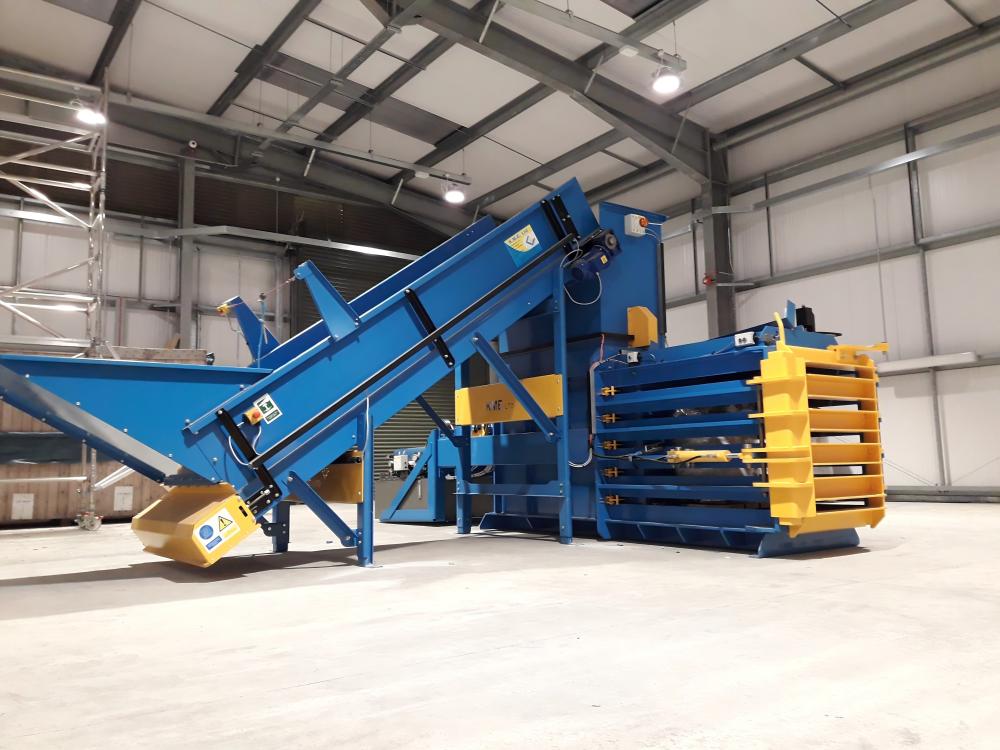
The integration of conveyor systems and fluffers also plays a vital role. A fluffer or distributor helps break up dense materials like newspapers or stacked cardboard before they enter the compression chamber, ensuring a more uniform bale and preventing jams. Furthermore, the use of advanced sensors (such as ultrasonic level sensors) allows the machine to start and stop automatically based on the material level in the hopper. This “set it and forget it” capability allows operators to focus on other tasks, such as forklift operation or material sorting, rather than monitoring the baler’s cycle.
Hidden Costs: Maintenance, Energy, and Consumables
While the purchase price is visible, the hidden costs of operating a horizontal baler can significantly impact the long-term ROI. One of the most overlooked costs is energy consumption. Modern balers equipped with VFDs (Variable Frequency Drives) can reduce energy usage by up to 40% by adjusting the motor speed based on the load. In a Horizontal Baler Comparison : Features That Improve Efficiency Reduce Labor, checking for VFD technology is a must for facilities looking to minimize utility bills.
Consumables, specifically baling wire or twine, represent a recurring expense. Automatic tiers use large coils of wire, and the efficiency of the tying head determines how much wire is wasted. Maintenance is another critical factor; machines with easy-access grease points, remote diagnostic capabilities, and readily available spare parts will have lower downtime costs. It is also important to consider the cost of hydraulic oil and the cooling systems required to keep the oil at optimal temperatures during high-speed operations. Neglecting these hidden costs can lead to a situation where a “cheap” machine becomes more expensive than a premium model within just a few years of operation.
ROI Calculation: Measuring the Value of Efficiency
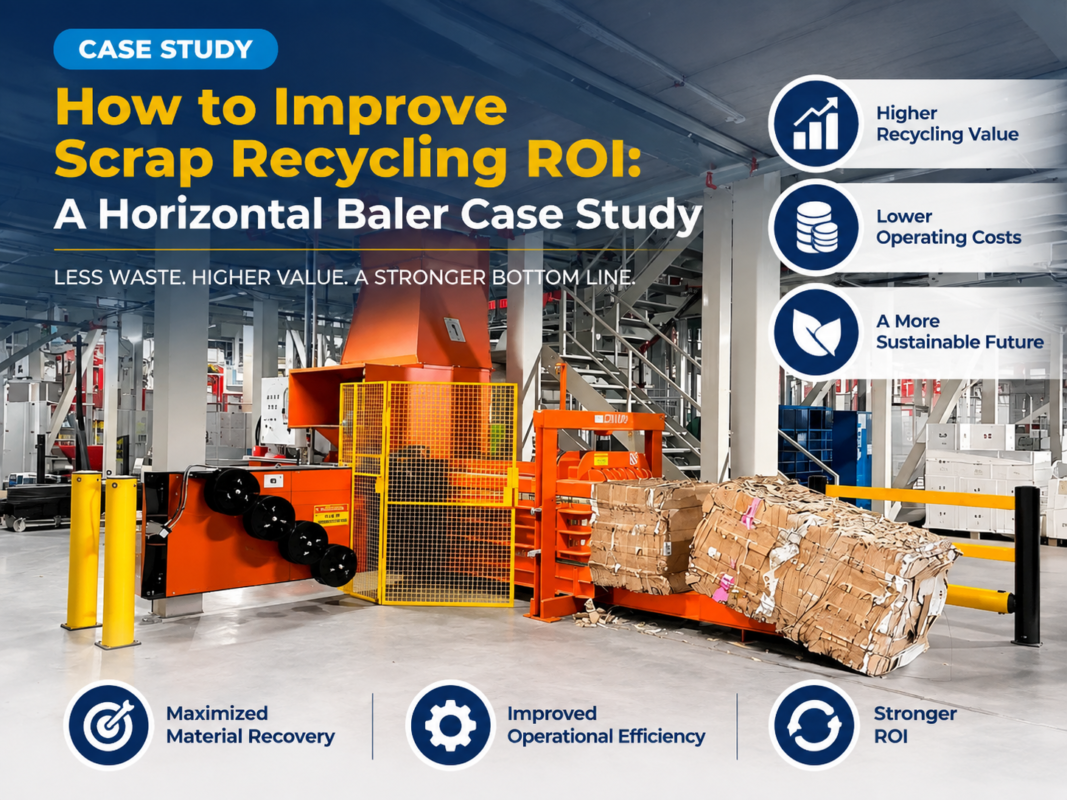
Calculating the Return on Investment (ROI) for a horizontal baler involves more than just looking at labor savings. To perform a proper Horizontal Baler Comparison : Features That Improve Efficiency Reduce Labor, one must consider the following formula: (Labor Savings + Increased Material Value + Reduced Transport Costs) – (Operating Costs + Depreciation). For example, a fully automatic baler can replace 2-3 manual laborers per shift. If the average annual cost of a laborer is $40,000, the machine pays for itself in labor alone within 18-24 months.
Furthermore, bale density plays a massive role in ROI. Shipping companies charge by the truckload. If a low-pressure baler produces 800lb bales and a high-pressure baler produces 1,200lb bales, the high-pressure machine allows you to fit 50% more material in every truck. This drastically reduces the carbon footprint and the logistics cost per ton of material sold. Additionally, high-density bales often fetch a higher price from recyclers because they are easier to process and store. When these factors are combined, the ROI of a high-quality horizontal baler often exceeds 30-40% annually.
Buying Advice: Choosing the Right HARSLE Solution
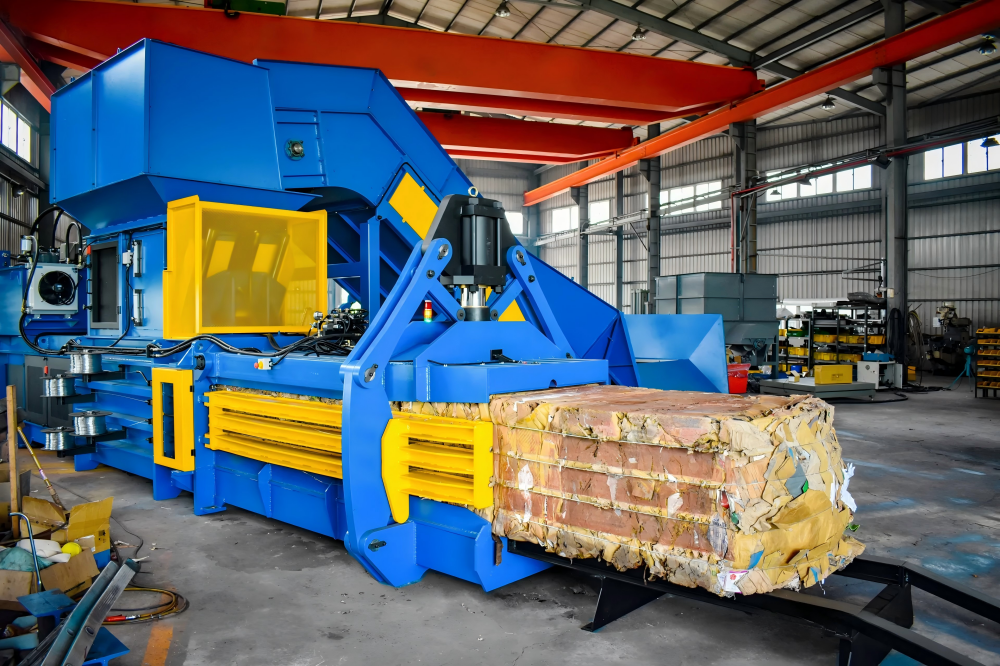
When selecting a machine based on this Horizontal Baler Comparison Guide: Features That Improve Efficiency and Reduce Labor, start by auditing your waste stream. What is the maximum volume you expect to process in a peak hour? What are the physical characteristics of the material? For example, if you are baling plastic PET bottles, you will need a baler with a specific “piercing” mechanism to release trapped air. If you are baling scrap metal, you need a machine with high-abrasion resistance and immense shearing force.
At HARSLE, we recommend looking for machines that offer modularity. As your business grows, your baler should be able to adapt. Look for manufacturers that provide comprehensive after-sales support, including installation training and preventative maintenance programs. Always request a bale density test with your specific material before finalizing a purchase. Finally, ensure the machine complies with local safety standards (such as CE or ANSI), as safety features like light curtains and emergency stops are not just regulatory requirements but essential for protecting your workforce and reducing liability.
Technical Comparison Table
| Feature | Semi-Automatic | Fully Automatic (Auto-Tie) | Two-Ram Baler |
|---|---|---|---|
| Labor Requirement | High (Manual Tying) | Low (Operator Oversight) | Minimal (Fully Automated) |
| Throughput (Tons/Hr) | 1 – 4 | 5 – 15 | 10 – 25+ |
| Bale Density | Moderate | High | Very High |
| Material Versatility | Limited | Broad (Cardboard/Plastic) | Extreme (Multi-material) |
| Initial Investment | Low | Medium to High | Very High |
Frequently Asked Questions (FAQ)
1. What is the main difference between a horizontal and vertical baler?
The main difference lies in the orientation and the workflow. Vertical balers are loaded from the front and compressed from the top down; they are generally smaller, cheaper, and require manual tying. Horizontal balers are loaded from the top (often via conveyor) and compressed from the side. They are designed for much higher volumes and offer automation features like automatic tying that are not possible with vertical models.
2. How often does a horizontal baler require maintenance?
Routine maintenance should be performed daily (visual checks and cleaning), weekly (greasing moving parts), and monthly (checking hydraulic oil levels and filters). A major service, including oil changes and structural inspections, should occur every 2,000 operating hours. Using a machine with a PLC that tracks cycles and alerts the operator to maintenance needs can significantly extend the machine’s lifespan.
3. Can one horizontal baler handle multiple types of materials?
Yes, many horizontal balers are versatile. However, the settings (such as pressure and timing) need to be adjusted for different materials like cardboard versus plastic film. High-end balers allow you to save “recipes” in the PLC, so the operator can switch between materials with the touch of a button. For extremely diverse waste streams, a two-ram baler is often the best choice due to its ability to clear the chamber completely between different material runs.
4. What safety features should I look for in a horizontal baler?
Key safety features include emergency stop buttons at multiple locations, safety interlocks on all access doors, light curtains around the discharge area, and pressure relief valves in the hydraulic system. Additionally, the machine should have clear labeling and lockout/tagout (LOTO) points to ensure the safety of maintenance personnel.
5. How does an automatic tying system work?
An automatic tying system uses a series of needles and a twisting mechanism. Once the bale reaches the desired length, the needles push the baling wire through the chamber, and the twisting head secures the wire ends together. This process happens in seconds without stopping the machine, which is the primary reason horizontal balers are so much more efficient than manual systems.
6. Is it worth buying a used horizontal baler?
Buying used can save upfront costs, but it comes with risks. Horizontal balers are subject to extreme mechanical stress. If you consider a used machine, ensure you have a full service history, inspect the hydraulic cylinders for leaks, and check the frame for structural cracks. Often, the cost of refurbishing an old baler and the lack of modern energy-saving features make a new HARSLE baler a more economical choice in the long run.