How Aluminium Extrusion Press Systems Support Modern Building Facade Production

Introduction to Modern Facade Engineering and Extrusion Technology
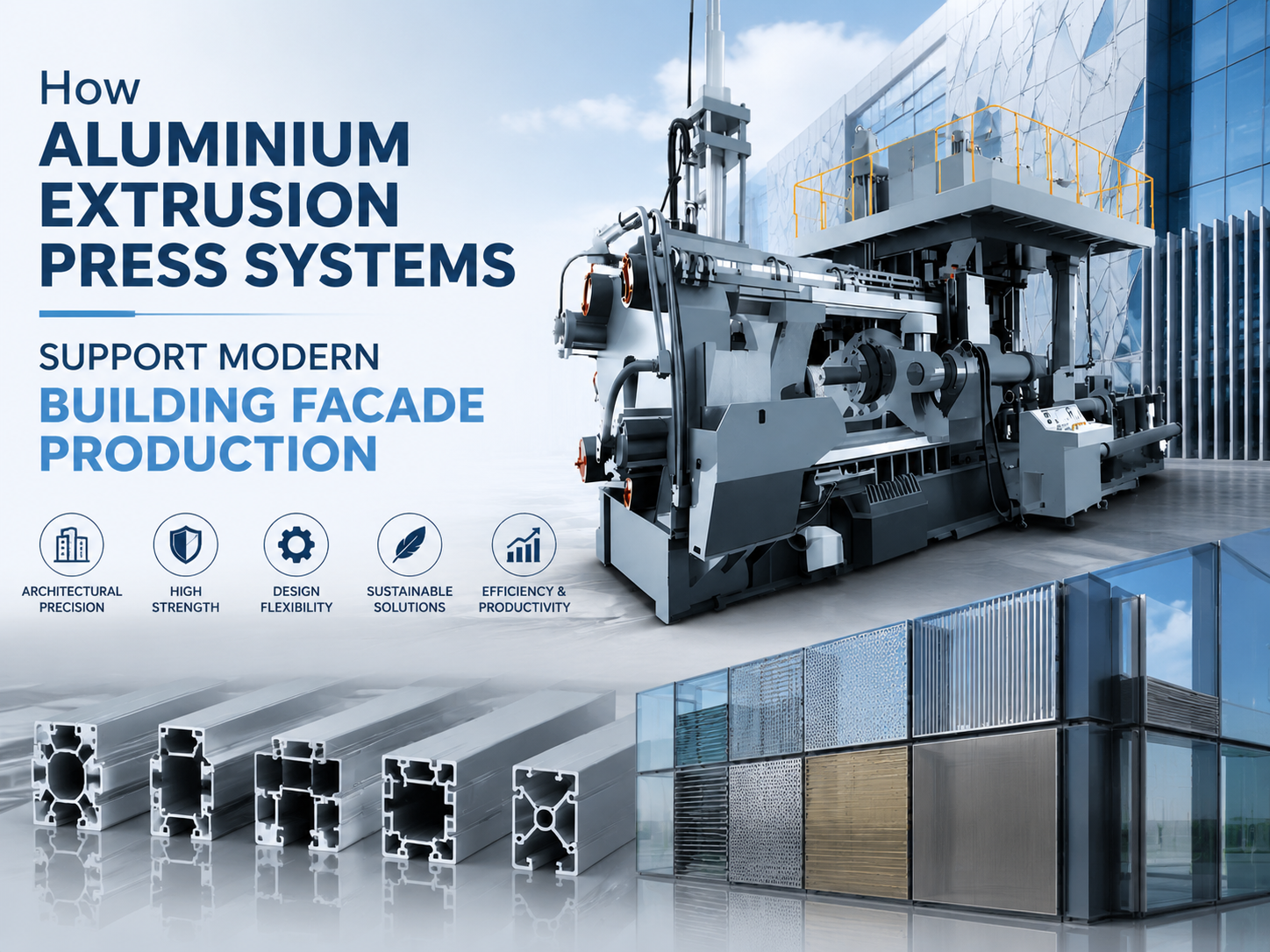
The skyline of the modern world is a testament to the evolution of material science and industrial engineering. At the heart of this transformation lies the architectural facade—the protective and aesthetic skin of a building. Today, architects demand more than just flat surfaces; they require complex geometries, high thermal efficiency, and structural integrity. This is where Aluminium Extrusion Press Systems Support Modern Building Facade Production by providing the precision and scale necessary to turn raw aluminium billets into sophisticated structural components.
Aluminium has become the material of choice for modern facades due to its exceptional strength-to-weight ratio, corrosion resistance, and infinite recyclability. However, the transition from a solid cylindrical billet to a 15-meter-long curtain wall mullion requires immense force and surgical precision. Aluminium extrusion press systems are the workhorses of this industry, utilizing hydraulic power to force heated metal through custom-designed dies. This process allows for the creation of hollow sections, intricate fins, and interlocking profiles that would be impossible to manufacture through traditional machining or casting methods.
As building regulations become stricter regarding energy consumption and carbon footprints, the role of the extrusion press has expanded. It is no longer just about shaping metal; it is about ensuring that the resulting profiles can accommodate thermal breaks, high-performance glazing, and integrated sensors. In this comprehensive guide, we will explore how HARSLE’s advanced extrusion technologies empower manufacturers to meet the rigorous demands of the global construction market.
Application Scenario: The Rise of Complex Curtain Walls
Modern building facades have evolved from simple window frames into complex, multi-functional systems known as curtain walls. These systems are non-structural outer coverings of a building, designed to keep the weather out and the occupants in. Because they are non-structural, they can be made of lightweight materials like aluminium, which reduces the overall dead load on the building’s primary frame. The application of aluminium extrusion press systems in this sector is vast, ranging from high-rise commercial towers to bespoke residential developments.
One of the primary scenarios where Aluminium Extrusion Press Systems Support Modern Building Facade Production is in the creation of unitized curtain wall systems. Unlike stick systems, which are assembled on-site, unitized systems consist of large factory-assembled modules. These modules require highly consistent aluminium profiles that can snap together with millimeter-level precision. The extrusion press must produce profiles that are perfectly straight and dimensionally stable to ensure that the seals between units remain airtight and watertight over decades of thermal expansion and contraction.
Beyond standard rectangular mullions, modern architecture frequently utilizes decorative fins and solar shading devices (brise-soleil). These components often feature aerodynamic shapes or large cantilevered sections that require specialized die designs and high-tonnage presses. Furthermore, the trend toward “Green Buildings” has led to the development of thermally broken profiles. These consist of two separate aluminium extrusions joined by a low-conductivity material like polyamide. The extrusion press must be capable of producing the precise “pockets” or grooves where these thermal strips are later inserted and crimped.
Material and Process Requirements for Architectural Profiles
To understand how Aluminium Extrusion Press Systems Support Modern Building Facade Production, one must look at the specific material requirements of the construction industry. The most commonly used materials are the 6000 series aluminium alloys, specifically 6063 and 6061. Alloy 6063 is favored for architectural applications because it offers an excellent balance of strength, extrudability, and surface finish quality, making it ideal for anodizing or powder coating.
The process begins with the selection of high-quality billets. These billets must be free of impurities and gas inclusions, as any defect in the raw material will be magnified during the extrusion process, leading to structural weaknesses or surface blemishes. The temperature of the billet is critical; it must be heated to a plastic state (typically between 400°C and 500°C) without reaching the melting point. This requires sophisticated induction or gas-fired billet heaters integrated into the extrusion line.
Precision is the hallmark of architectural extrusion. Tolerances for facade profiles are often much tighter than standard industrial benchmarks. For instance, a 10-meter mullion must exhibit minimal twist and bow to ensure that glass panels fit perfectly. This necessitates not only a high-quality press but also advanced downstream equipment, such as precision pullers and stretchers, which stabilize the metal as it cools. The cooling rate itself—known as quenching—is vital for achieving the desired mechanical properties (T5 or T6 temper), ensuring the facade can withstand wind loads and seismic forces.
Recommended Machine Configuration for Facade Production
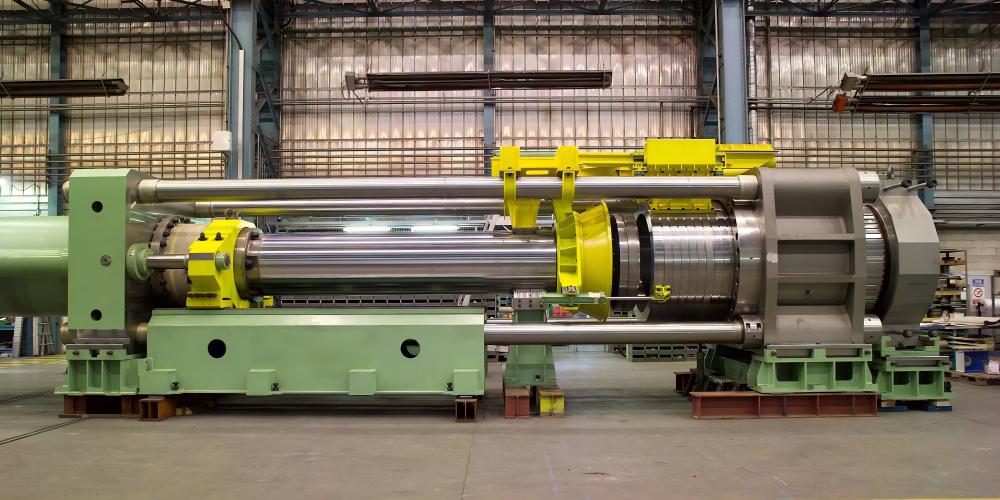
When configuring an Aluminium Extrusion Press System for building facades, several key components must be harmonized to ensure high-quality output. For architectural profiles, a medium-to-high tonnage press is usually required, typically ranging from 1800 tons to 3600 tons, depending on the cross-sectional area of the largest profiles intended for production.
- Main Press Structure: A four-column heavy-duty frame ensures maximum rigidity. This prevents deflection during the extrusion stroke, which is essential for maintaining uniform wall thickness in complex hollow profiles.
- Hydraulic System: Modern systems utilize servo-driven hydraulic pumps. These provide precise control over the extrusion speed (ram speed), which is critical for maintaining a consistent temperature at the die face, thereby ensuring a uniform surface finish.
- PLC Control System: An advanced interface allows operators to store “recipes” for different profiles. This includes specific pressures, speeds, and cooling parameters, ensuring repeatability across different production runs.
- Billet Heating and Handling: An automated log shear and induction heater ensure that each billet is delivered to the press at the exact required temperature, minimizing waste and energy consumption.
- The Die Station: For facade work, the die slide must be robust and allow for quick die changes, as architectural projects often require multiple custom shapes in relatively small batches.
Step-by-Step Workflow in Facade Profile Manufacturing
The workflow of how Aluminium Extrusion Press Systems Support Modern Building Facade Production is a choreographed sequence of heating, pressure, and cooling. It begins with the loading of the aluminium log onto the charging table. The log is heated and then sheared into individual billets of the required length. This “hot shearing” process ensures a clean face for the extrusion cycle.
Once the billet is loaded into the container, the hydraulic ram moves forward, forcing the softened aluminium through the die. As the profile emerges from the die, it is gripped by a “puller.” The puller maintains a constant tension on the profile, guiding it down the run-out table and preventing it from warping or touching the table surface, which could cause scratches. For architectural profiles, the surface finish is paramount, so the run-out tables are often covered with heat-resistant felt or graphite rollers.
Immediately after exiting the die, the profile undergoes quenching. Depending on the alloy and the required strength, this may involve high-velocity air fans or water spray systems. After cooling, the profiles are moved to the stretching station. Here, the long sections are pulled from both ends to straighten them and relieve internal stresses. Finally, the profiles are cut to the desired lengths and placed in an aging oven. The aging process (precipitation hardening) stabilizes the molecular structure of the aluminium, giving the facade components their final structural strength.
Productivity Benefits of Advanced Extrusion Systems
Investing in high-end Aluminium Extrusion Press Systems Support Modern Building Facade Production by significantly boosting factory productivity and reducing operational costs. One of the primary benefits is the reduction in “dead cycle time”—the time when the press is not actively extruding (e.g., loading a new billet). Modern HARSLE systems are designed with high-speed valves and automated handling to minimize this downtime, allowing for more “pounds per hour” of finished product.
Energy efficiency is another critical factor. Older hydraulic systems were notorious for wasting energy by running pumps at full speed even when the press was idle. Modern servo-hydraulic systems only consume power when movement is required, leading to energy savings of up to 30-50%. In the competitive world of facade manufacturing, where margins can be thin, these operational savings directly impact the bottom line.
Furthermore, advanced extrusion systems reduce scrap rates. Precision control over the extrusion speed and temperature means fewer profiles are rejected due to surface defects or dimensional inaccuracies. The ability to produce longer lengths also reduces the amount of “butt end” waste. For large-scale projects like airports or stadiums, the ability to produce consistent, high-quality profiles at scale is the difference between meeting a construction deadline and facing heavy penalties.
Case Example: High-Rise Unitized Facade Project
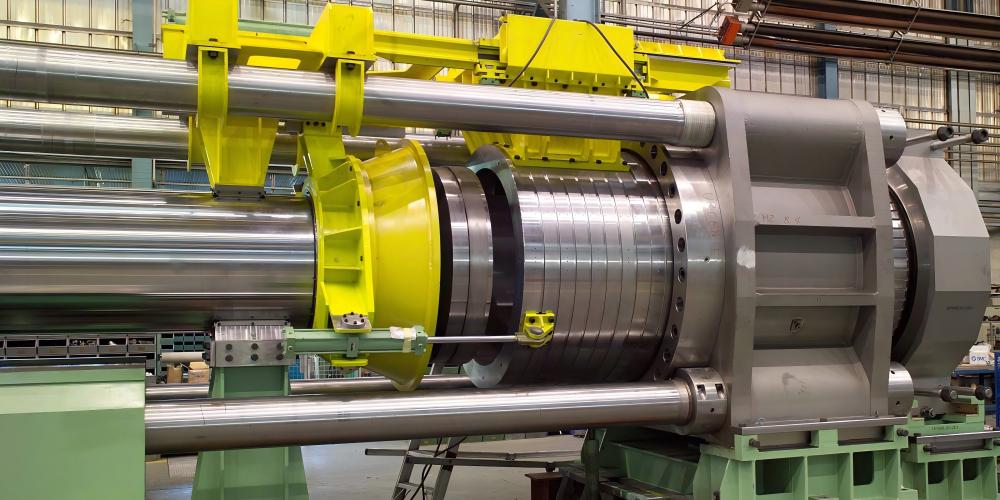
Consider a recent project involving a 60-story commercial tower in a coastal city. The design called for a unitized curtain wall with deep vertical fins to provide solar shading. These fins were not only structural but also had to feature a high-gloss anodized finish. The manufacturer utilized a HARSLE 2500-ton extrusion press system to meet the project’s demands.
The challenge was the complexity of the fin profile, which featured thin walls and a large hollow center. Using the press’s precision ram speed control, the manufacturer was able to extrude the profiles at a constant temperature, avoiding the “streaking” that often occurs with inconsistent speeds. The integrated air-water quench system ensured that the 6063-T6 alloy reached its required hardness without distorting the thin-walled sections.
By utilizing the automated puller and stretching system, the factory achieved a straightness tolerance that exceeded the architect’s requirements. This allowed the unitized modules to be assembled with perfect alignment, significantly speeding up the on-site installation process. The project was completed ahead of schedule, demonstrating how the right Aluminium Extrusion Press Systems Support Modern Building Facade Production even under the most demanding architectural specifications.
Frequently Asked Questions (FAQ)
1. What is the ideal tonnage for building facade extrusion?
For most standard window and door profiles, a 1000T to 1400T press is sufficient. However, for modern curtain walls and large structural mullions, a press between 1800T and 3600T is recommended to handle the larger die sizes and higher extrusion ratios.
2. How does the extrusion press affect the surface finish of the facade?
The press affects the finish through speed and temperature control. Inconsistent speeds can cause “chatter marks” or variations in the oxide layer, which become visible after anodizing. A stable hydraulic system and precise die heating are essential for a premium finish.
3. Can these machines produce thermally broken profiles?
The press produces the individual aluminium components of a thermally broken system. These profiles are designed with specific cavities. After extrusion, a separate machine inserts the thermal strip and crimps the aluminium to create the final insulated profile.
4. What maintenance is required for an extrusion press?
Regular maintenance includes monitoring hydraulic oil cleanliness, checking the alignment of the container and stem, and inspecting the heating elements in the billet heater. Modern systems often include self-diagnostic software to alert operators to maintenance needs.
5. How long does a typical extrusion press system last?
With proper maintenance and occasional hydraulic/electronic upgrades, a high-quality extrusion press can last 20 to 30 years or more in a high-production environment.
Conclusion: Partnering with HARSLE for Facade Excellence
As the architectural world continues to push the boundaries of what is possible with glass and metal, the importance of reliable, high-precision machinery cannot be overstated. Aluminium Extrusion Press Systems Support Modern Building Facade Production by bridging the gap between an architect’s vision and the reality of structural engineering. From ensuring the thermal efficiency of a skyscraper to providing the sleek lines of a modern storefront, these machines are indispensable to the construction industry.
HARSLE is committed to providing the metal fabrication industry with cutting-edge extrusion solutions. Our machines are designed with the latest in hydraulic and control technology, ensuring that your production line is efficient, sustainable, and capable of meeting the highest quality standards. Whether you are expanding an existing facility or building a new facade production plant, HARSLE has the expertise and the equipment to help you succeed. Contact us today to learn more about our aluminium extrusion press systems and how we can support your next landmark project.