How Aluminium Extrusion Press Machines Enable Precision Profile Manufacturing

Introduction to Precision in Aluminium Extrusion
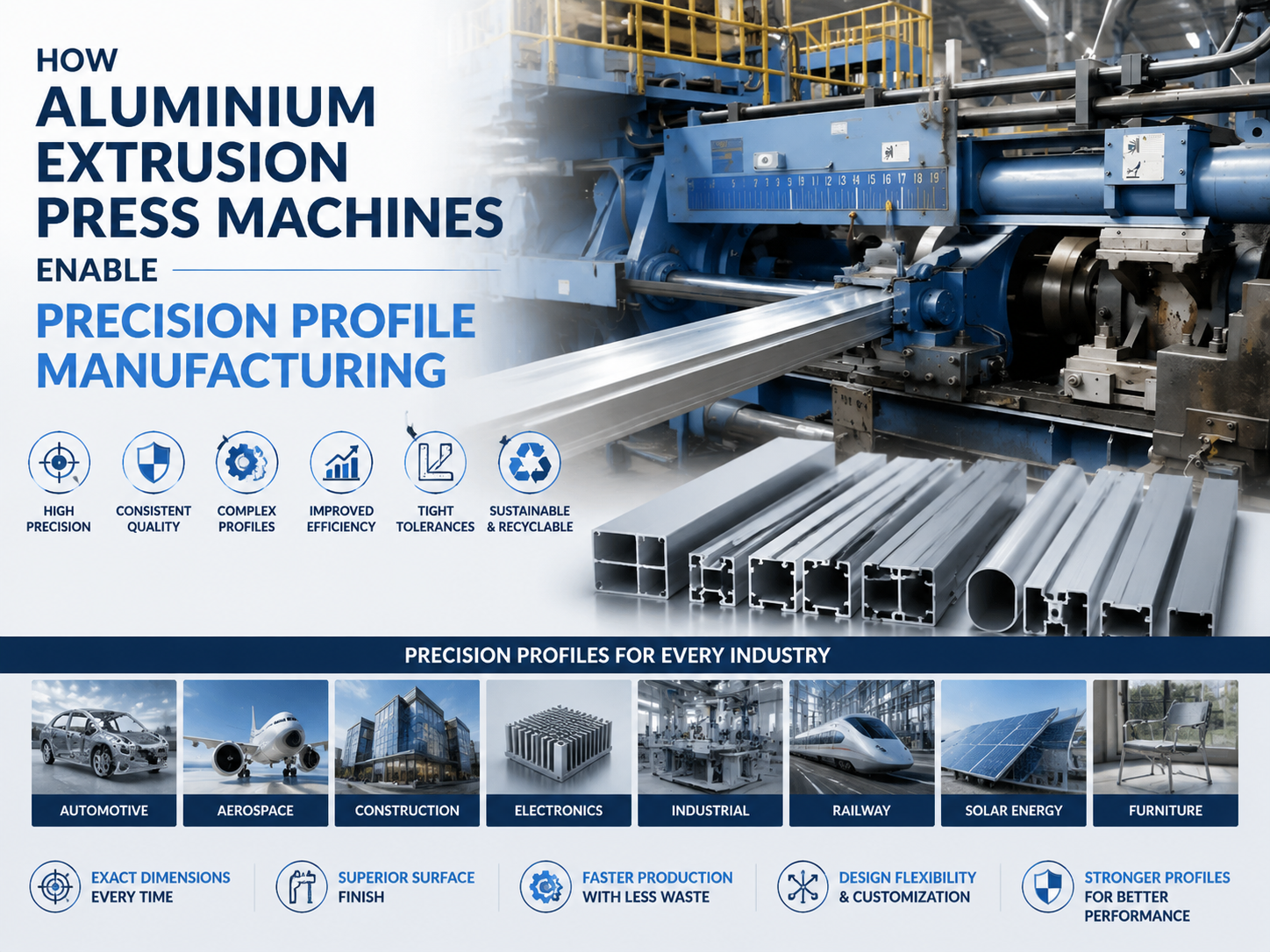
In the modern industrial landscape, the demand for complex, lightweight, and high-strength components has never been higher. Aluminium, with its exceptional strength-to-weight ratio and corrosion resistance, has become the material of choice for industries ranging from aerospace to renewable energy. However, the true potential of aluminium is unlocked through the process of extrusion. This is where Aluminium Extrusion Press Machines Enable Precision Profile Manufacturing by transforming raw aluminium billets into intricate cross-sectional shapes with microscopic accuracy.
Precision profile manufacturing is not merely about pushing metal through a die; it is a sophisticated orchestration of thermal dynamics, hydraulic force, and digital control. HARSLE, a leader in metal fabrication machinery, provides the technological backbone for this process. By integrating advanced hydraulic systems with precision-engineered mechanical components, these machines ensure that every millimeter of the extruded profile meets stringent industrial tolerances. This article explores the technical nuances of how these machines operate and why they are indispensable for high-end manufacturing.
The evolution of extrusion technology has moved from simple manual operations to fully automated, high-speed production lines. Today, the focus is on ‘smart extrusion’—where sensors monitor temperature, pressure, and speed in real-time to prevent defects before they occur. For manufacturers, understanding the capabilities of an aluminium extrusion press is the first step toward achieving global competitiveness in quality and cost-efficiency.
Application Scenarios for Precision Aluminium Profiles
Automotive and Electric Vehicles (EV)
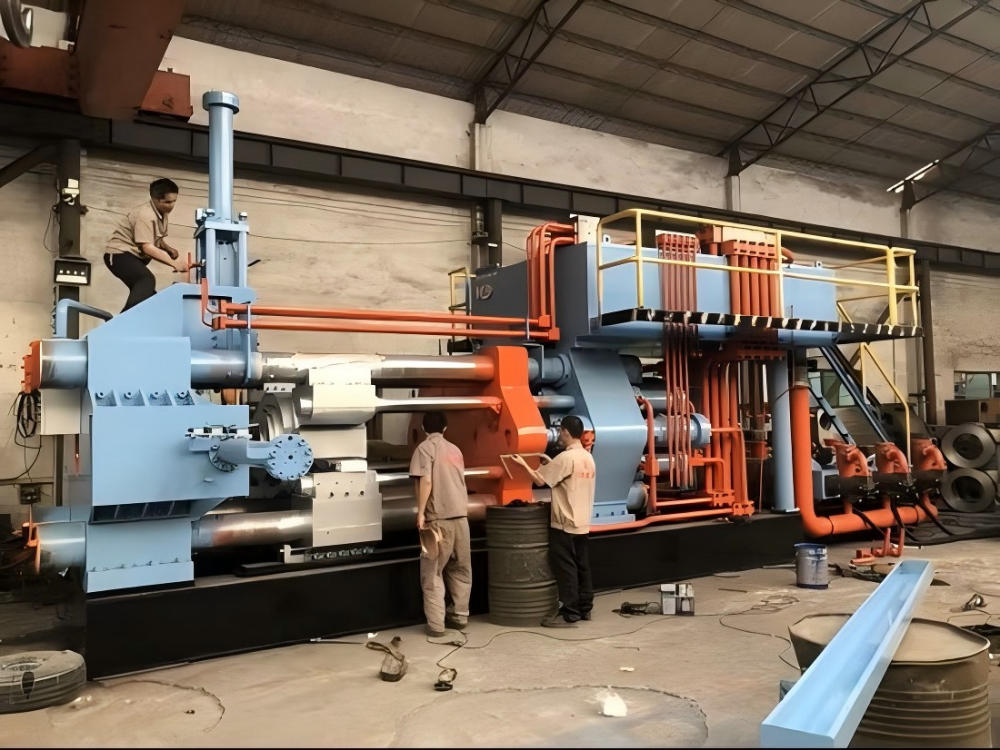
The automotive industry is perhaps the most significant driver of precision extrusion technology today. As manufacturers pivot toward electric vehicles, reducing vehicle weight is critical to extending battery range. Aluminium extrusion press machines enable the creation of complex structural components, such as battery trays, crash boxes, and chassis frames. These parts require extreme precision to ensure they fit perfectly within the vehicle assembly and perform reliably under stress. The ability to create hollow, multi-chambered profiles allows for high rigidity without the weight of solid steel.
Aerospace and Defense
In aerospace, every gram counts. Precision profiles are used for seat tracks, wing spars, and fuselage stringers. These applications demand alloys that are difficult to extrude, such as the 7000 series. High-performance extrusion presses provide the necessary force and temperature control to handle these high-strength materials while maintaining the dimensional stability required for flight safety. The precision enabled by HARSLE machinery ensures that these components meet the rigorous standards of the aviation industry.
Architecture and Construction
Modern architecture relies heavily on aluminium for curtain walls, window frames, and structural glazing systems. These profiles must not only be aesthetically pleasing but also structurally sound and weather-resistant. Precision manufacturing ensures that interlocking parts fit together seamlessly, providing airtight and watertight seals. Furthermore, the ability to produce long, straight profiles with minimal bowing or twisting is essential for high-rise construction projects where alignment is critical.
Electronics and Heat Management
As electronic devices become more powerful, managing heat becomes a challenge. Aluminium heat sinks, produced via precision extrusion, feature thin fins that maximize surface area for cooling. The extrusion press must be capable of producing very thin walls with high aspect ratios. This level of detail is only possible through precise control of the extrusion speed and die pressure, showcasing how Aluminium Extrusion Press Machines Enable Precision Profile Manufacturing in the micro-scale electronics sector.
Material and Process Requirements
Alloy Selection and Billet Quality
The success of the extrusion process begins with the material. Most industrial profiles use 6000 series alloys (like 6061 or 6063) due to their excellent extrudability and mechanical properties. However, for specialized applications, 2000 or 7000 series alloys may be required. The extrusion press must be calibrated to the specific flow characteristics of the chosen alloy. High-quality billets, free from impurities and with uniform grain structures, are essential to prevent surface defects and internal structural weaknesses in the final profile.
Temperature Control and Isothermal Extrusion
Temperature is the most critical variable in aluminium extrusion. The billet must be heated to a specific ‘plastic’ state (usually between 400°C and 500°C) before entering the press. During the extrusion process, friction generates additional heat. If the temperature rises too high, the profile may suffer from ‘speed cracks’ or surface melting. Modern HARSLE machines utilize isothermal extrusion techniques, where the extrusion speed is dynamically adjusted to maintain a constant temperature at the die exit, ensuring uniform material properties throughout the entire length of the run.
Die Design and Pressure Distribution
The die is the heart of the extrusion process. It must withstand immense pressure while shaping the hot aluminium. Precision profile manufacturing requires dies that are engineered with complex flow channels to ensure the metal fills all parts of the geometry simultaneously. Uneven pressure distribution can lead to profile warping or inconsistent wall thickness. Advanced extrusion presses provide stable, pulse-free hydraulic pressure to ensure the metal flows smoothly through even the most intricate die designs.
Recommended Machine Configuration
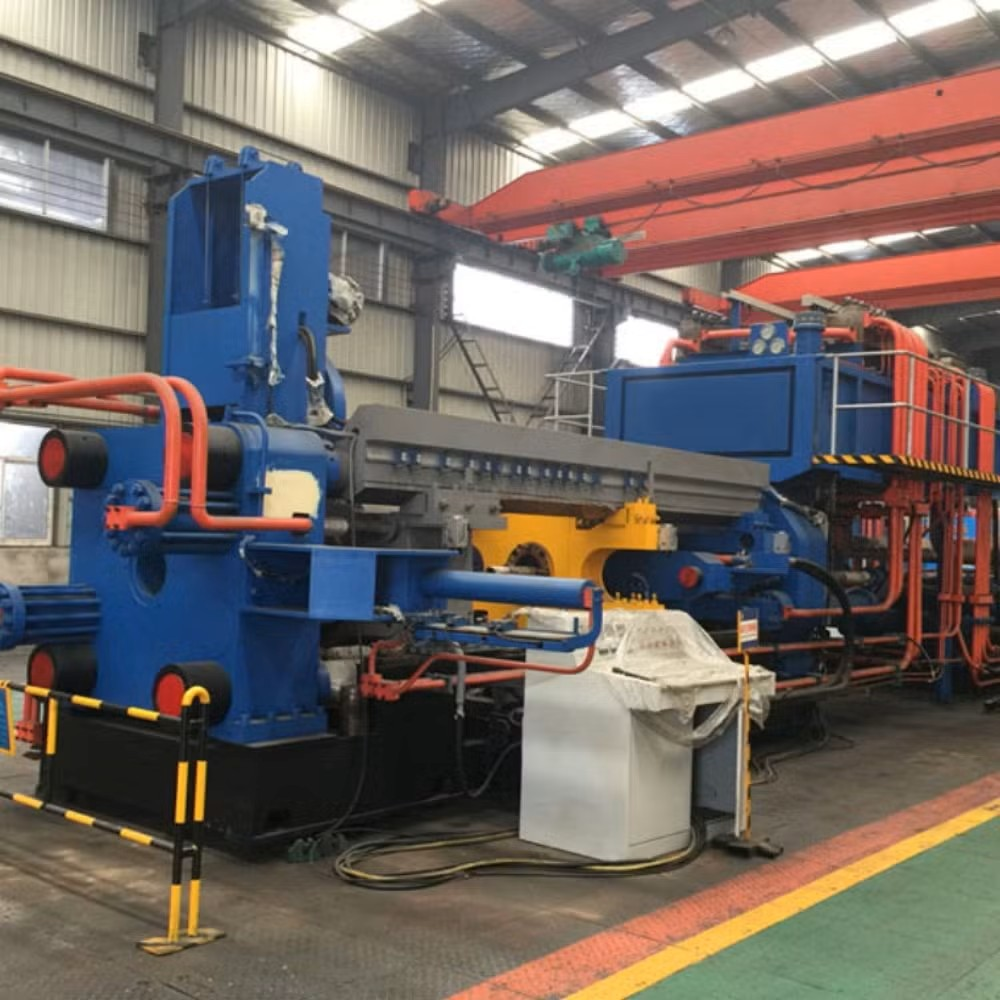
To achieve the highest levels of precision, an aluminium extrusion press must be equipped with specific high-end components. HARSLE recommends the following configuration for manufacturers seeking to optimize their profile production:
- High-Rigidity Frame: A pre-stressed tension bolt frame structure minimizes deflection under high pressure, ensuring the container and die remain perfectly aligned.
- Advanced Hydraulic System: Utilizing Rexroth or Vickers valves and high-efficiency servo pumps allows for precise control of the ram speed, which is vital for maintaining profile consistency.
- PLC Control System: A Siemens or Schneider PLC system with a user-friendly HMI allows operators to store ‘recipes’ for different profiles, ensuring repeatability and reducing setup times.
- Double Puller System: To maintain the straightness of the profile as it exits the die, a double puller system provides constant tension, preventing the ‘snaking’ effect common in manual operations.
- Infrared Temperature Sensors: Non-contact sensors at the billet heater and die exit provide real-time data to the control system for isothermal extrusion management.
| Feature | Technical Specification | Benefit for Precision |
|---|---|---|
| Main Cylinder Force | 600T – 5000T | Handles various profile sizes and high-strength alloys. |
| Extrusion Speed Control | 0.1 – 20 mm/s | Allows for fine-tuning based on profile complexity. |
| Ram Positioning Accuracy | ±0.05 mm | Ensures consistent billet compression and minimal scrap. |
| Cooling System | Air/Water Mist Hybrid | Rapidly sets the profile shape to prevent deformation. |
Detailed Workflow of the Extrusion Process
Step 1: Billet Preparation and Heating
The process begins with the aluminium billet, which is cut to the required length. It is then passed through a gas or induction furnace. Induction heating is often preferred for precision work as it allows for ‘taper heating,’ where the back of the billet is slightly cooler than the front to compensate for the heat generated by friction during the extrusion stroke.
Step 2: Loading and Lubrication
Once heated, the billet is transferred to the press loader. A small amount of lubricant or an anti-friction agent is applied to the die and the dummy block to prevent the aluminium from sticking. In high-precision environments, this process is automated to ensure consistent application and to keep the work area clean.
Step 3: The Extrusion Stroke
The hydraulic ram pushes the billet into the container. As the pressure builds, the aluminium is forced through the die. This is the stage where Aluminium Extrusion Press Machines Enable Precision Profile Manufacturing by maintaining a steady, controlled advance. The ram speed must be perfectly synchronized with the material flow to avoid internal stresses.
Step 4: Cooling and Quenching
As the profile emerges from the die, it must be cooled quickly to ‘freeze’ its dimensions and achieve the desired metallurgical properties (T4, T5, or T6 tempers). Depending on the alloy and wall thickness, this is done using high-velocity air fans or water mist sprayers. Uniform cooling is essential to prevent the profile from twisting or bowing.
Step 5: Stretching and Straightening
Even with the best cooling, long profiles may have slight internal stresses. The profile is moved to a stretching table where it is gripped at both ends and pulled. This process straightens the profile and slightly increases its yield strength. Precision sensors measure the amount of stretch to ensure it stays within the 1-3% range required for most industrial standards.
Step 6: Cutting and Aging
The straightened profiles are cut to the final customer-specified lengths using high-precision saws. Finally, the profiles are placed in an aging oven for several hours. This artificial aging process allows the alloying elements to precipitate, significantly increasing the hardness and strength of the aluminium.
Productivity and Quality Benefits
Investing in a high-quality aluminium extrusion press from HARSLE offers numerous benefits beyond just ‘making shapes.’ The primary advantage is the reduction of material waste. Precision control means that the ‘butt’ (the un-extruded end of the billet) is kept to a minimum, and the dimensional accuracy reduces the need for secondary machining operations. This ‘near-net-shape’ manufacturing is a cornerstone of modern lean production.
Furthermore, the surface finish produced by a high-end press is superior. For architectural or consumer electronics applications, where the aluminium will be anodized or powder-coated, a smooth, defect-free surface is mandatory. The stability of the HARSLE press ensures that ‘die lines’ and other surface imperfections are minimized, reducing the cost of post-processing and finishing.
Energy efficiency is another major benefit. Modern servo-driven hydraulic systems only consume power when the machine is actively moving, unlike older constant-volume pump systems. This can lead to energy savings of up to 30-50%, which is a significant factor in the high-overhead environment of metal fabrication. By combining precision with efficiency, these machines provide a rapid return on investment (ROI).
Case Example: Automotive Component Production
A leading Tier-1 automotive supplier recently upgraded their production line with a HARSLE 2500T Aluminium Extrusion Press. Their goal was to produce high-strength side-impact beams for a new electric SUV model. These beams required a complex triple-hollow profile with a wall thickness tolerance of ±0.1mm.
Before the upgrade, the client struggled with inconsistent wall thickness and high scrap rates due to thermal instability. By implementing the HARSLE system with integrated isothermal control and an automated puller, they achieved a 25% increase in production speed and reduced their scrap rate from 12% to less than 2%. The precision of the extruded profiles allowed for direct robotic welding into the chassis without the need for corrective milling, saving the company thousands of dollars in labor and machine time per month.
Frequently Asked Questions (FAQ)
What is the difference between direct and indirect extrusion?
In direct extrusion, the billet is pushed through a stationary die. In indirect extrusion, the die is pushed into the billet. Direct extrusion is more common and versatile for complex profiles, while indirect extrusion reduces friction and is often used for simpler shapes or harder alloys.
How often should an extrusion press be maintained?
Daily checks should be performed on hydraulic fluid levels and seals. A deep maintenance cycle, including alignment checks of the container and ram, should occur every 6 to 12 months depending on the shift load. Proper lubrication of moving parts is essential to prevent premature wear.
Can one machine handle different alloys?
Yes, but the machine settings (pressure, speed, and temperature) must be adjusted. Some high-strength alloys may require a higher tonnage press than softer architectural alloys for the same profile size.
What causes surface defects in extruded profiles?
Surface defects are usually caused by incorrect billet temperature, worn dies, or contaminated lubricants. Precision machines with real-time monitoring help identify these issues before they affect a large batch of material.
Conclusion: Partnering with HARSLE for Extrusion Excellence
The role of Aluminium Extrusion Press Machines Enable Precision Profile Manufacturing cannot be overstated in today’s industrial world. From the cars we drive to the buildings we inhabit, precision-extruded aluminium is everywhere. Achieving this precision requires more than just force; it requires a machine designed with an understanding of metallurgy, hydraulics, and digital precision.
HARSLE is committed to providing manufacturers with the tools they need to push the boundaries of what is possible with aluminium. Our extrusion presses are engineered for durability, accuracy, and ease of use, ensuring that your production line stays ahead of the curve. Whether you are entering the EV market or looking to optimize your architectural profile production, HARSLE has the expertise and equipment to support your goals.
Ready to elevate your manufacturing capabilities? Contact HARSLE today to discuss your specific extrusion requirements and discover how our precision machinery can transform your production floor. Visit our website or speak with one of our technical consultants to find the perfect configuration for your business.