What to Do When a Scrap Metal Shear Loses Cutting Force: A Comprehensive Troubleshooting Guide

Introduction to Scrap Metal Shear Performance
In the high-stakes world of metal recycling and industrial fabrication, the scrap metal shear stands as a cornerstone of productivity. These robust machines are designed to exert massive amounts of force to rend steel, aluminum, and various alloys into manageable sizes. However, even the most well-engineered equipment, such as those produced by HARSLE, can encounter performance dips. One of the most frustrating issues an operator can face is a sudden or gradual decline in power. Knowing exactly what to do when a scrap metal shear loses cutting force is essential for minimizing downtime and preventing costly secondary damage to the hydraulic system.
Loss of cutting force is rarely a single-source problem; it is often a symptom of underlying issues ranging from simple maintenance oversights to complex hydraulic failures. When a shear fails to bite through material it previously handled with ease, the entire production line grinds to a halt. This guide is designed to provide a deep dive into the technical and practical steps required to diagnose and rectify force loss in industrial scrap shears. By understanding the relationship between hydraulic pressure, mechanical leverage, and blade integrity, operators can restore their machinery to peak efficiency.
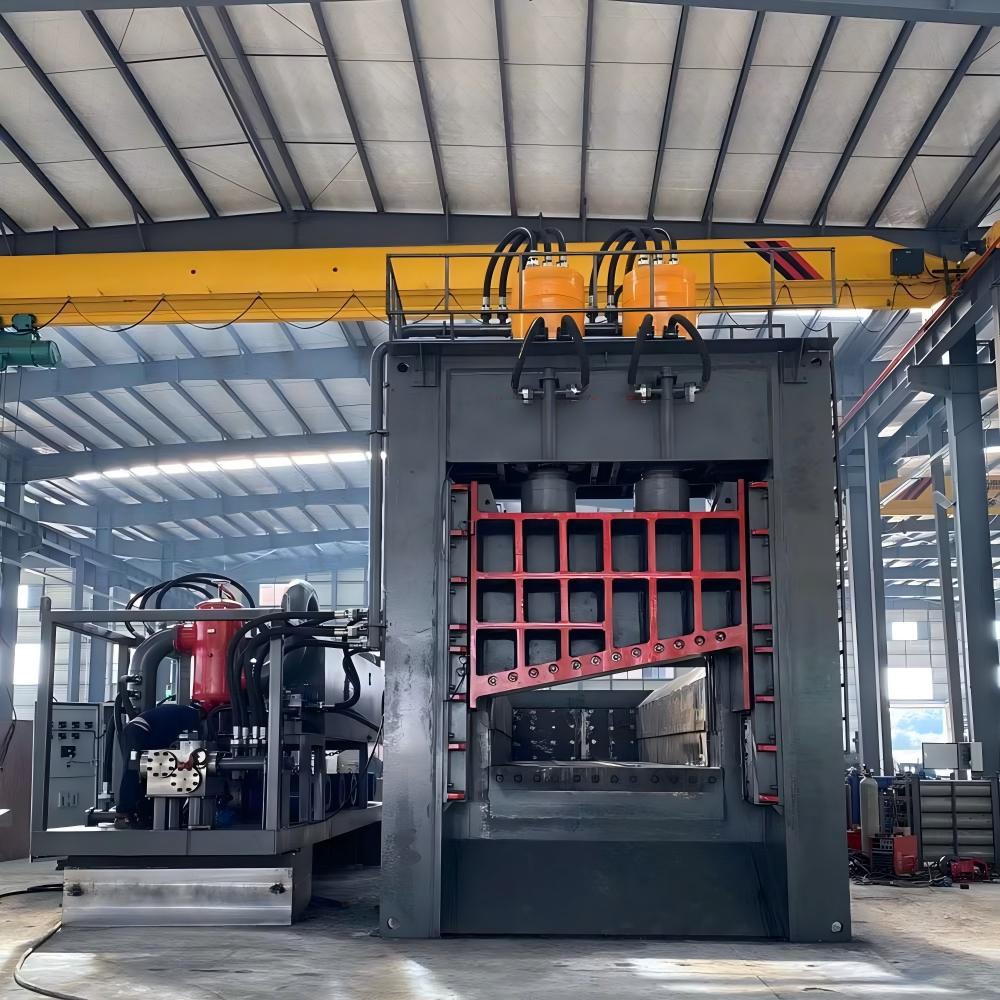
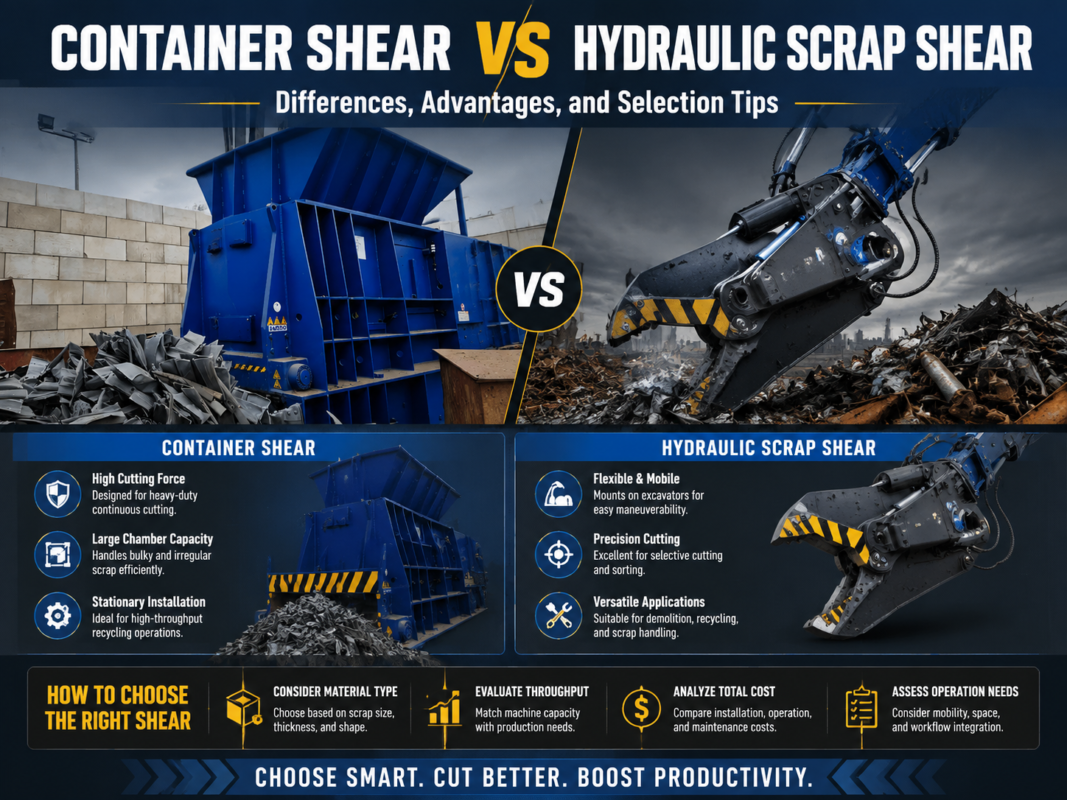
HARSLE has long been at the forefront of manufacturing durable metal fabrication equipment. Our experience shows that a proactive approach to troubleshooting not only fixes the immediate problem but also extends the lifespan of the machine by years. Whether you are dealing with an alligator shear, a container shear, or a heavy-duty guillotine shear, the principles of force generation remain consistent. In the following sections, we will explore the key considerations and technical nuances of maintaining maximum cutting power.
Key Considerations for Immediate Troubleshooting
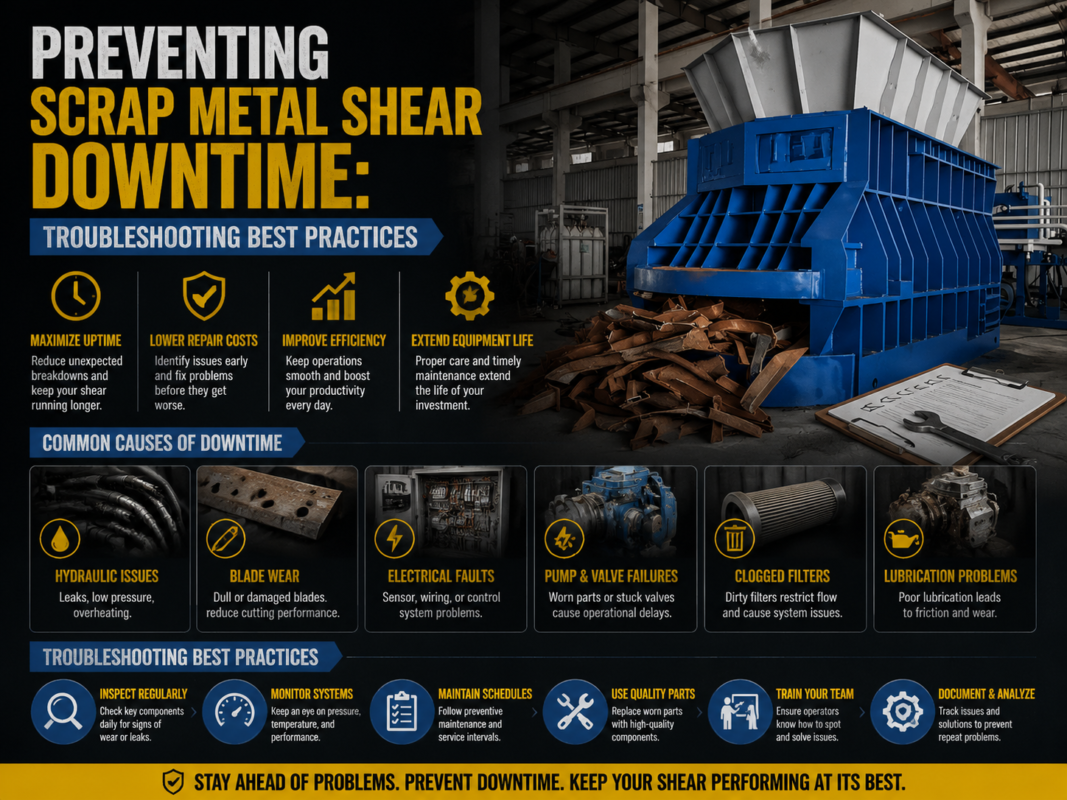
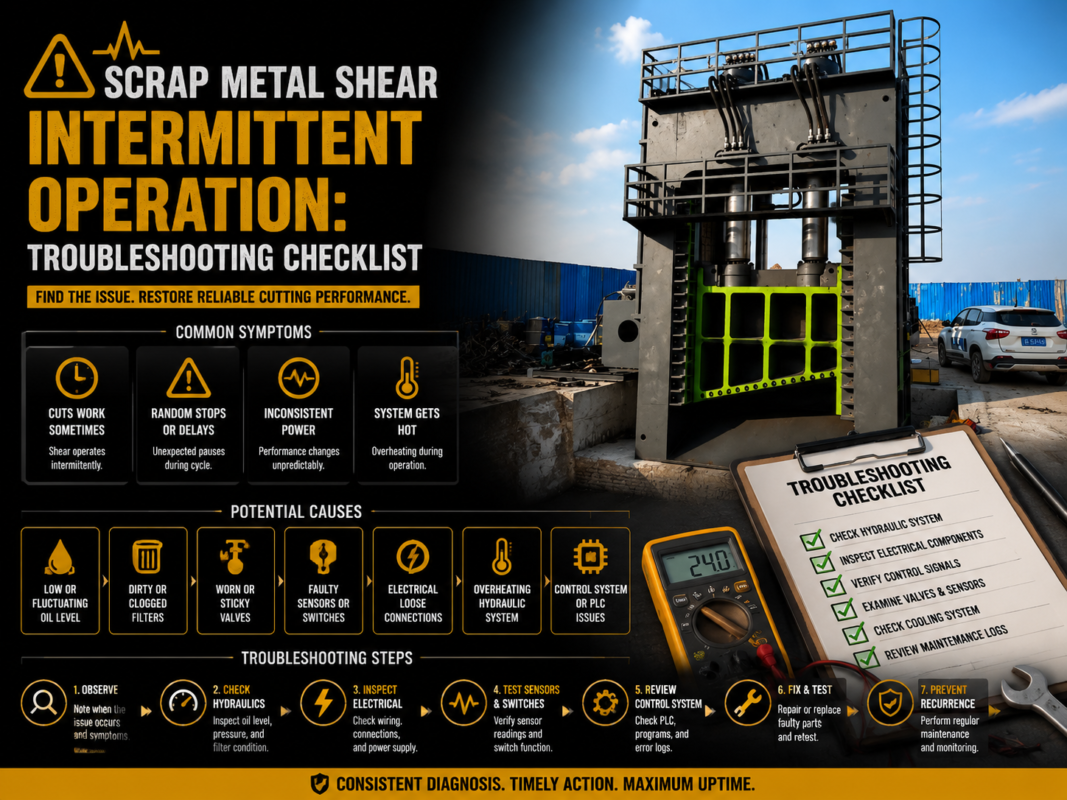
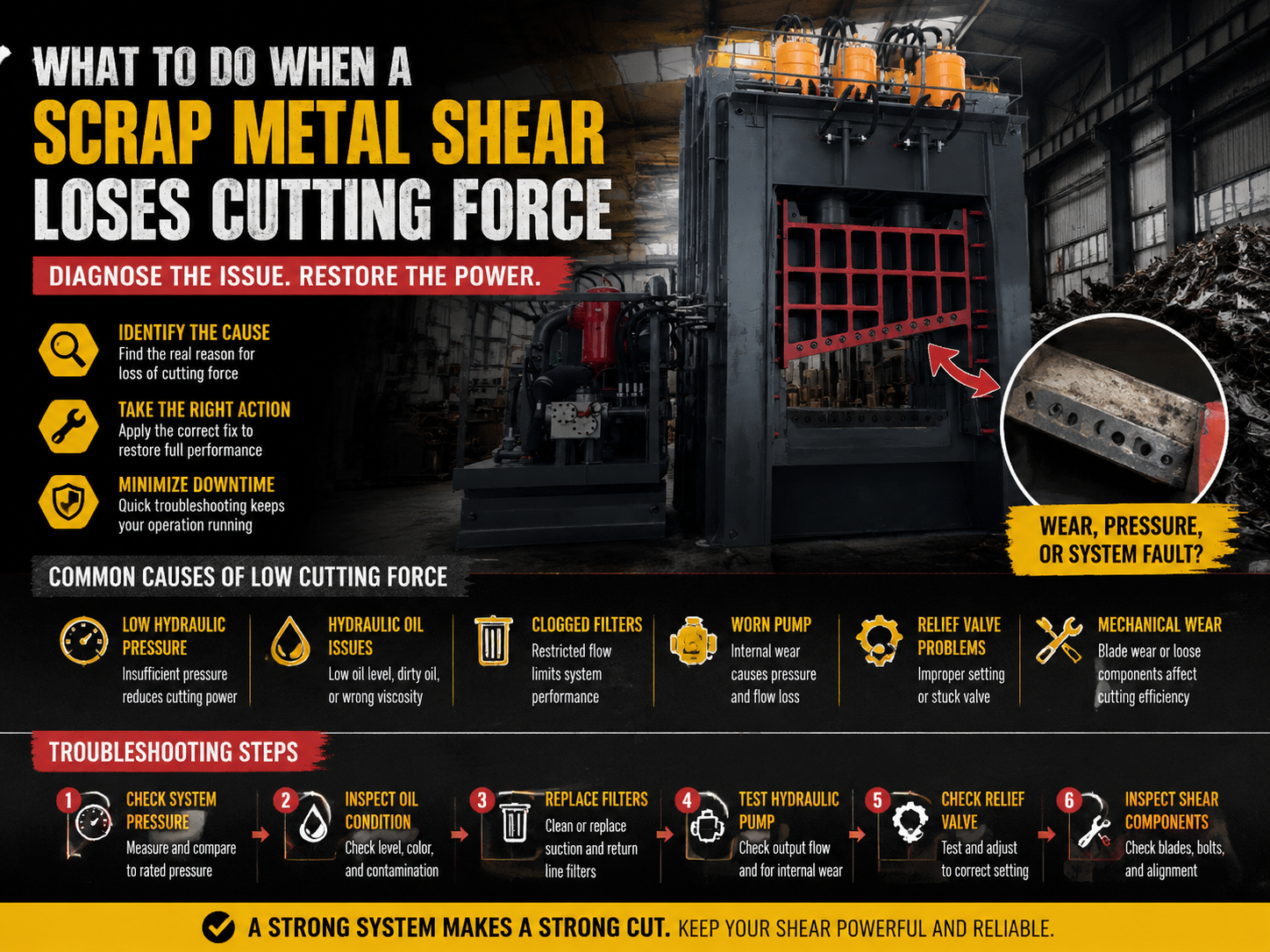
When you first notice a decline in performance, the first thing to do when a scrap metal shear loses cutting force is to perform a visual and sensory audit. Before dismantling any components, check the hydraulic oil levels and the temperature of the fluid. Hydraulic systems rely on the incompressibility of oil; if the oil is aerated or too thin due to overheating, the pump cannot generate the necessary pressure to drive the shear blades through tough scrap. Overheated oil loses its viscosity, leading to internal slippage within the pump and valves.
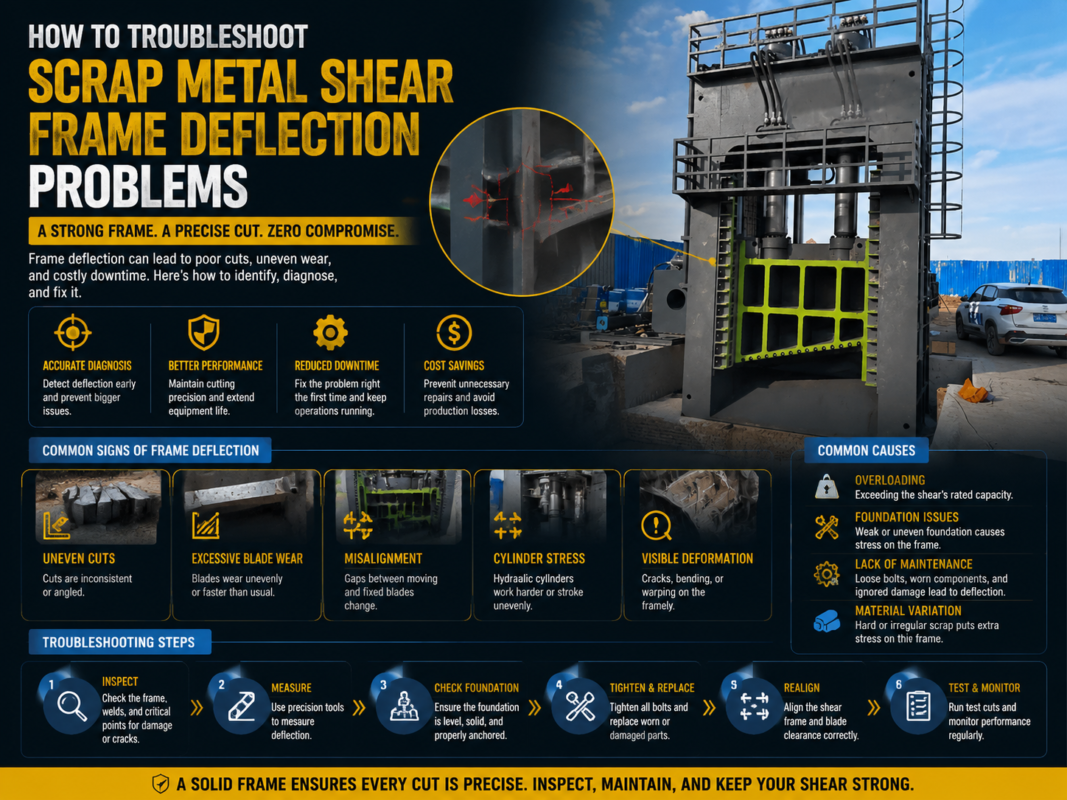
Next, examine the material being processed. It is common for operators to inadvertently feed the machine materials that exceed its rated capacity or hardness. If the shear is struggling with a specific grade of stainless steel or reinforced structural beams, verify the machine’s specifications. If the material is within limits, the focus must shift to the machine’s mechanical state. Loose bolts, misaligned frames, or worn bushings can cause the energy intended for cutting to be dissipated through structural deflection rather than being concentrated at the blade edge.
Another critical consideration is the condition of the blades themselves. A common misconception is that force loss is always a hydraulic issue. However, dull or improperly gapped blades require significantly more force to achieve a clean shear. If the blades are rounded or chipped, the machine will attempt to “tear” rather than “cut,” which demands higher tonnage than the system may be calibrated to provide. Checking the blade gap (clearance) is a fundamental step that should be performed early in the diagnostic process.
Finally, consider the environment. In extremely cold climates, hydraulic fluid can become too viscous, preventing the pump from reaching operating pressure quickly. Conversely, in hot environments, cooling systems may fail, leading to the aforementioned thinning of the oil. Ensuring that the machine is operating within its designed thermal envelope is a prerequisite for accurate troubleshooting. If these basic checks do not reveal the culprit, a more technical investigation into the hydraulic and electrical systems is required.
Technical Details: Diagnosing the Root Cause
1. Hydraulic System Pressure and Flow
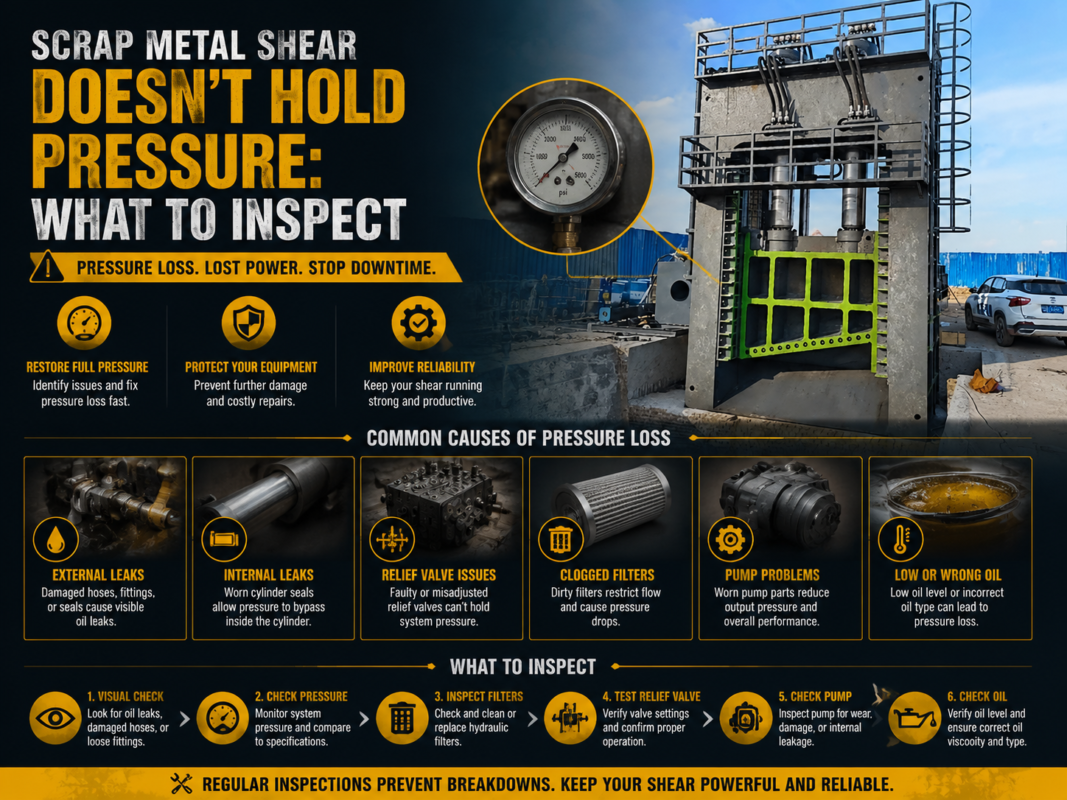
The heart of any scrap metal shear is its hydraulic circuit. To understand what to do when a scrap metal shear loses cutting force, one must understand how pressure is regulated. The first technical step is to install a calibrated pressure gauge at the pump outlet and the cylinder inlet. If the pump is producing the rated PSI but the cylinder is not receiving it, the problem lies in the distribution network—likely a malfunctioning directional control valve or a leaking relief valve.
Relief valves are designed to protect the system by bypassing oil to the tank when pressure exceeds a set limit. Over time, the internal springs in these valves can weaken, or debris can prevent the poppet from seating correctly. This causes the valve to “crack” open at a lower pressure than intended, effectively bleeding off the force needed for cutting. Cleaning or replacing the relief valve is a common fix for mysterious force loss.
2. Internal Cylinder Leakage
If the pump and valves are functioning correctly, the issue may reside within the hydraulic cylinder itself. Internal leakage occurs when the piston seals are worn or damaged, allowing high-pressure oil to bypass the piston and flow into the low-pressure side of the cylinder. This results in a significant drop in effective force, as the pressure differential required to move the ram is neutralized. A simple way to test this is the “end-of-stroke” test, where the cylinder is extended to its limit and the return line is checked for excessive oil flow.
3. Pump Volumetric Efficiency
Hydraulic pumps, whether gear, vane, or piston types, undergo wear over thousands of cycles. As internal tolerances increase, the pump’s volumetric efficiency drops. This means that while the pump may still produce pressure, it cannot maintain the flow rate necessary to sustain that pressure under load. If the shear starts the cut with power but slows down or stops as resistance increases, a worn pump is a likely candidate. Replacing or rebuilding the pump is often necessary to restore the machine to its original HARSLE factory specifications.
4. Blade Clearance and Metallurgy
The mechanical interface of the cut is just as vital as the hydraulics. The gap between the upper and lower blades must be precisely set according to the thickness and type of metal being cut. If the gap is too wide, the metal will fold or wedge between the blades, creating immense friction and absorbing the cutting force. If the gap is too tight, the blades may clash, causing damage. Furthermore, the metallurgy of the blades matters; using low-quality replacement blades that cannot hold an edge will result in rapid force degradation.
Selection Advice: Choosing a Shear That Maintains Force
When purchasing new metal fabrication equipment, selecting a machine that is built for longevity and ease of maintenance is the best way to avoid future force loss issues. HARSLE recommends looking for shears with oversized hydraulic reservoirs and high-efficiency cooling systems. These features ensure that the oil remains at an optimal temperature, preserving its viscosity and protecting the pump and seals from premature wear. A machine that runs cool is a machine that maintains its cutting force throughout a full work shift.
Furthermore, consider the frame construction. A heavy, cast, or welded steel frame with minimal deflection is crucial. In cheaper machines, the frame may flex under maximum load, which changes the blade gap mid-cut and leads to a perceived loss of power. High-quality scrap metal shears utilize robust guide systems for the ram, ensuring that the force is always directed vertically through the material without lateral energy loss. Look for machines that offer easy access to the blade bolts and adjustment shims, as this encourages operators to perform the necessary maintenance to keep the cutting edge sharp.
Another factor in selection is the control system. Modern shears equipped with PLC (Programmable Logic Controller) systems can monitor pressure in real-time and provide diagnostic codes if the system detects a drop. This technology takes the guesswork out of troubleshooting, telling the operator exactly what to do when a scrap metal shear loses cutting force before the problem escalates. Investing in a machine with integrated pressure sensors and filtration monitors will save thousands of dollars in long-term repair costs.
Finally, always choose a manufacturer that provides comprehensive technical support and readily available spare parts. When a pump fails or a seal blows, the speed at which you can acquire OEM (Original Equipment Manufacturer) parts determines your downtime. HARSLE’s global support network ensures that owners of our scrap metal shears have the resources they need to keep their operations running at maximum capacity.
Frequently Asked Questions (FAQ)
Q1: How often should I change the hydraulic oil in my scrap metal shear?
Generally, hydraulic oil should be changed every 2,000 to 4,000 operating hours, or at least once a year. However, you should also monitor the oil’s color and clarity. If it appears milky (water contamination) or dark and smells burnt (oxidation), it should be replaced immediately to prevent damage to the pump and loss of cutting force.
Q2: Why does my shear lose power only after working for a few hours?
This is almost always related to heat. As the hydraulic oil heats up, its viscosity decreases. If your cooling system is clogged or the pump is slightly worn, the thinner oil will bypass seals and internal pump components more easily, leading to a drop in pressure and cutting force. Check your heat exchanger and cooling fans.
Q3: Can I sharpen my scrap shear blades myself?
While minor touch-ups can be done, scrap shear blades are made of specialized hardened tool steel. Professional grinding is recommended to ensure the edges are perfectly flat and the angles are correct. Improperly sharpened blades can lead to uneven cutting and increased stress on the hydraulic system.
Q4: What is the ideal blade gap for a scrap metal shear?
The ideal gap typically ranges between 5% and 10% of the thickness of the material being cut. For example, if you are cutting 10mm thick steel, a gap of 0.5mm to 1.0mm is standard. Always refer to your HARSLE manual for the specific tolerances of your machine model.
Q5: Is it normal for the shear to make a loud banging noise during a cut?
While some noise is expected, a loud “bang” followed by a loss of force can indicate that the material has fractured suddenly or, more seriously, that a structural bolt or hydraulic component has failed. If the noise is new or accompanied by a drop in performance, stop the machine and inspect the ram guides and blade seats.
Conclusion: Maintaining Peak Cutting Performance
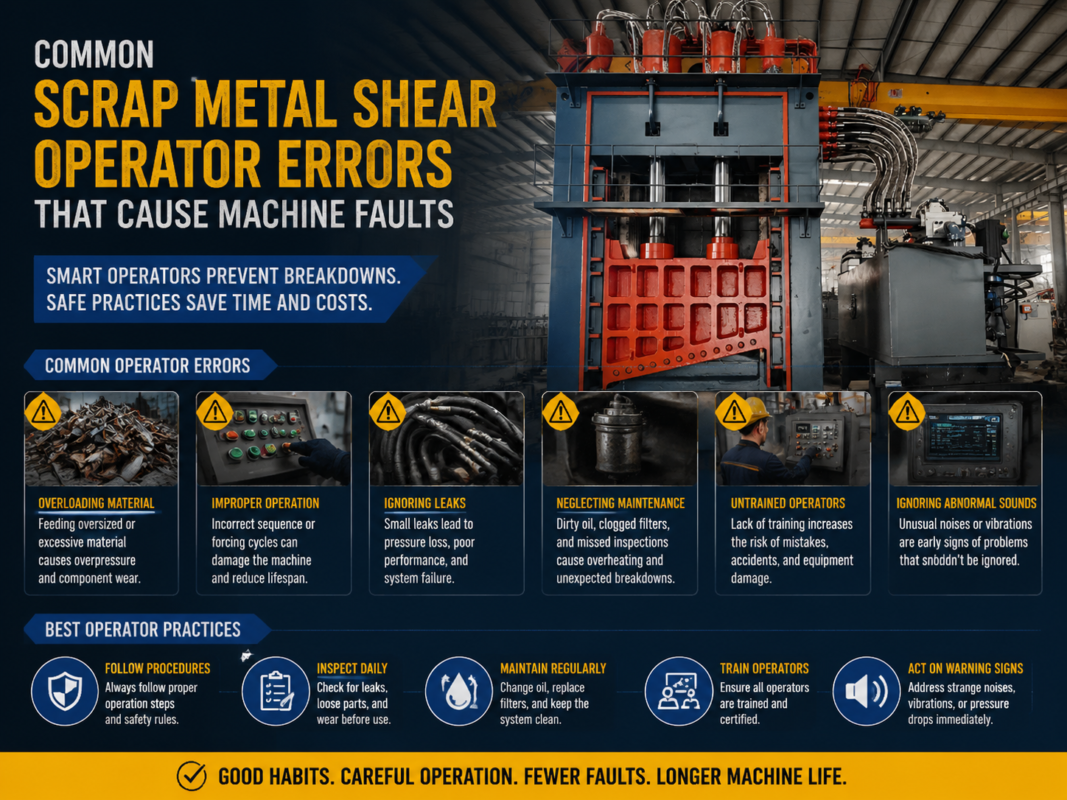
Understanding what to do when a scrap metal shear loses cutting force is a vital skill for any industrial operator. By systematically checking the hydraulic pressure, oil quality, cylinder integrity, and blade condition, you can quickly identify the root cause of the problem. Most issues with force loss are preventable through a rigorous schedule of preventative maintenance. Regularly cleaning filters, monitoring oil temperatures, and ensuring that blades are sharp and properly gapped will keep your HARSLE equipment performing at its rated tonnage for years to come.
In the competitive landscape of metal fabrication and recycling, equipment reliability is the key to profitability. A shear that loses its cutting force is not just a mechanical failure; it is a bottleneck that affects the entire supply chain. By investing in high-quality machinery and committing to the technical best practices outlined in this guide, you ensure that your operations remain efficient, safe, and productive. Remember, when in doubt, consult with technical experts and always use genuine parts to maintain the structural and functional integrity of your industrial machinery.