Comprehensive Guide: How to Troubleshoot Scrap Metal Shear Frame Deflection Problems

Introduction to Scrap Metal Shear Frame Deflection
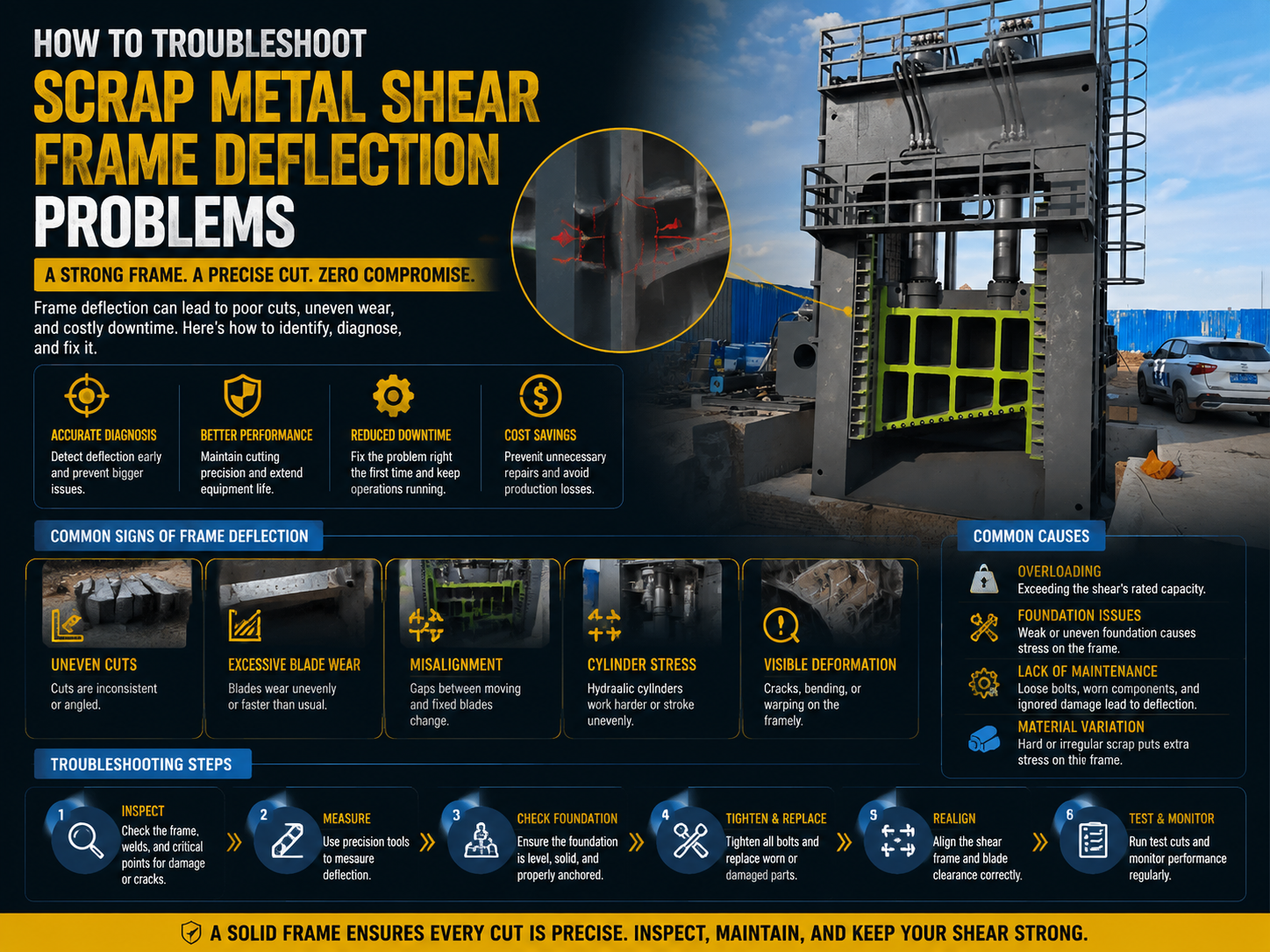
In the high-intensity world of metal recycling and industrial fabrication, the scrap metal shear stands as a cornerstone of productivity. These machines are engineered to exert hundreds, sometimes thousands, of tons of force to slice through heavy-duty steel, rebar, and mixed scrap. However, the sheer magnitude of these forces places immense stress on the machine’s structural integrity. One of the most critical issues that operators and maintenance teams face is frame deflection. When you need to troubleshoot scrap metal shear frame deflection problems, you are essentially diagnosing the machine’s ability to maintain its geometric alignment under load.
Frame deflection refers to the temporary or permanent bending, twisting, or displacement of the shear’s main structure during the cutting cycle. While a microscopic amount of elastic deflection is expected in any metal structure under load, excessive deflection leads to a cascade of operational failures. It results in poor cut quality, accelerated blade wear, hydraulic seal failure, and, in extreme cases, catastrophic structural cracking. Understanding how to identify and rectify these issues is paramount for any facility utilizing HARSLE equipment or similar heavy-duty industrial machinery.
At HARSLE, we recognize that a scrap metal shear is a significant investment. Maintaining that investment requires a proactive approach to structural health. This guide will delve deep into the mechanics of frame deflection, providing a technical roadmap for troubleshooting and resolving these complex issues. By the end of this article, you will have a comprehensive understanding of how to keep your shearing operations precise, safe, and efficient.
Key Considerations Before Troubleshooting
Understanding the Physics of Shearing Forces
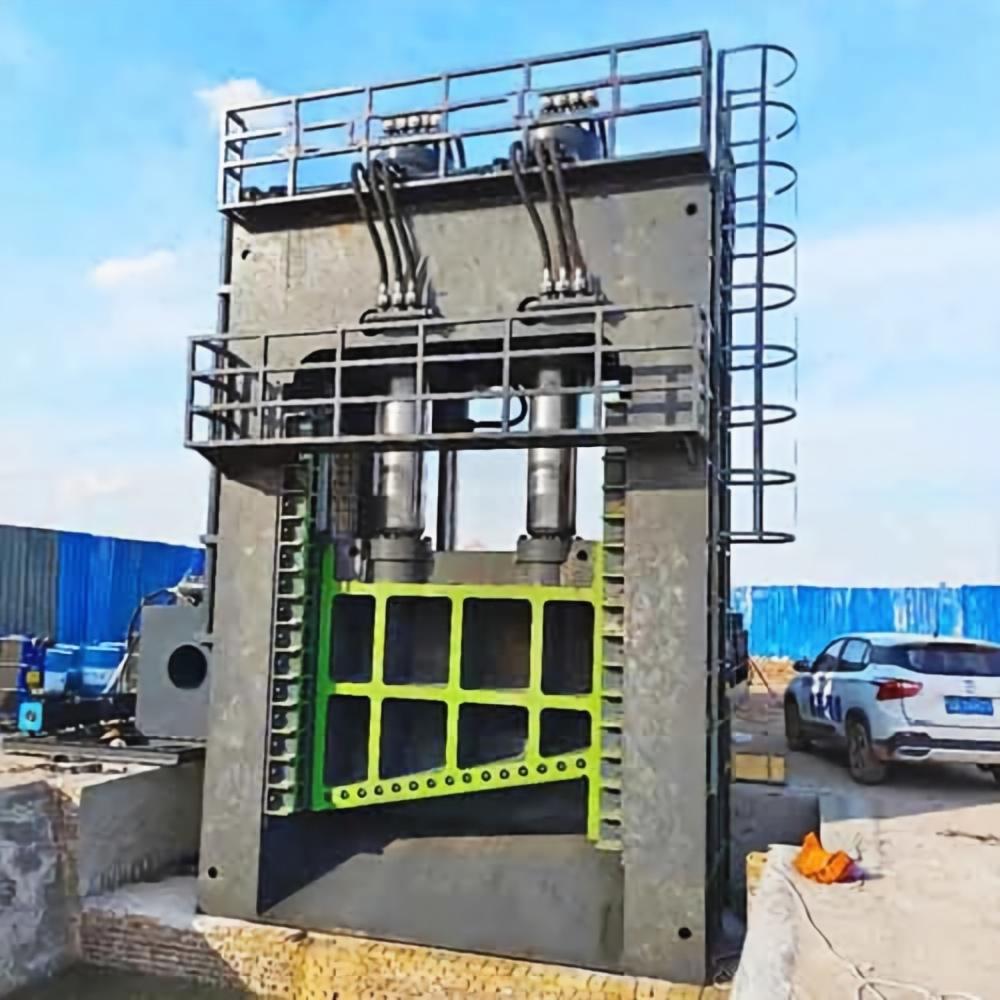
To effectively troubleshoot scrap metal shear frame deflection problems, one must first understand the forces at play. During a cut, the hydraulic cylinders push the upper blade slide downward. As the blade contacts the scrap material, the resistance of the metal creates an equal and opposite reaction force. This force attempts to push the upper slide upward and the lower bed downward. If the frame is not sufficiently rigid, these opposing forces cause the frame to “open up” like a jaw. This is particularly prevalent in C-frame shears, though gantry-style shears are also susceptible if the side housings or cross-members are compromised.
Lateral forces are another major consideration. If the material being cut is not centered or if the blades are dull, the shear may experience side-loading. This lateral force pushes the blade slide against the guide rails, causing the frame to twist. Over time, this twisting can lead to permanent deformation of the guide ways, making it impossible to maintain the necessary blade gap for clean cuts.
Material Type and Machine Capacity
Often, what appears to be a mechanical failure is actually an operational mismatch. Every scrap metal shear has a rated capacity based on material thickness and tensile strength. Attempting to shear hardened tool steel or oversized structural beams can exceed the elastic limit of the frame. Before diving into mechanical repairs, review the logs to see if the machine has been consistently pushed beyond its design limits. Overloading is the primary cause of permanent frame set, where the metal stretches beyond its ability to return to its original shape.
Environmental and Installation Factors
The foundation upon which a scrap metal shear sits is just as important as the frame itself. If the concrete pad is uneven or has cracked under the weight of the machine, the frame may be subjected to torsional stress even before it starts cutting. A shear that is not perfectly level will experience uneven load distribution, which manifests as deflection during operation. Always check the leveling bolts and the integrity of the foundation as a preliminary step in your troubleshooting process.
Technical Details: How to Troubleshoot Frame Deflection
Step 1: Visual Inspection and Symptom Identification
The first step to troubleshoot scrap metal shear frame deflection problems is a thorough visual audit. Look for “witness marks”—areas where paint has flaked off or where metal appears shiny due to rubbing. These are clear indicators of movement. Check the weld joints for hairline cracks, especially around the cylinder mounts and the corners of the throat. If you notice that the blade gap is wider at the center of the cut than at the ends, this is a classic sign of bed deflection.
Listen to the machine during operation. Unusual groaning, popping, or metallic “clangs” often signal that the frame is shifting or that structural bolts have loosened. Observe the hydraulic hoses; excessive jumping or vibration in the lines can indicate that the frame is flexing and causing the cylinders to misalign momentarily during the stroke.
Step 2: Measuring Deflection with Precision Tools
To move beyond guesswork, you must quantify the deflection. This is typically done using dial indicators or laser alignment systems. Place a dial indicator on a stationary part of the frame with the probe touching the moving slide. Run a dry cycle (no material) and then a loaded cycle. The difference in the readings indicates the amount of elastic deflection. Compare these figures with the manufacturer’s specifications. For a HARSLE gantry shear, the tolerances are tight; any deviation beyond a few millimeters under full load warrants further investigation.
Another effective method is the “feeler gauge test” during a cut. While following all safety protocols, stop the machine mid-cut when the pressure is at its peak. Measure the blade gap at multiple points along the length of the blade. If the gap increases significantly in the middle compared to the resting gap, the frame or the blade carrier is bowing.
Step 3: Analyzing the Hydraulic System’s Role
Sometimes, the frame isn’t the problem, but the hydraulic system is applying force unevenly. If a dual-cylinder system is out of sync, one side of the frame will be stressed more than the other, causing a twisting motion. Check the pressure transducers and the synchronization valves. If one cylinder is lagging, the resulting “racking” of the slide can mimic the symptoms of frame deflection. Ensure that the relief valves are set correctly; if they are set too high, the system may allow the cylinders to exert forces that the frame was never designed to handle.
Step 4: Checking Guide Way and Gib Adjustments
The guide ways (or gibs) are responsible for directing the force of the cylinders into a straight, vertical path. If the gibs are worn or improperly adjusted, the slide will have too much “play.” This allows the slide to kick back or tilt during a cut, which the operator might perceive as frame deflection. Tightening the gibs to the manufacturer’s recommended clearance can often resolve “deflection” issues that are actually just mechanical looseness. However, if the guide ways themselves are warped, the frame may require professional machining or shimming.
Selection Advice: Choosing a Shear to Minimize Deflection
Prioritize Structural Mass and Steel Quality
When purchasing a new machine, the best way to troubleshoot scrap metal shear frame deflection problems is to prevent them through smart selection. Look for machines constructed from high-tensile steel, such as Q345B or better. The thickness of the plates used in the frame construction is a direct indicator of rigidity. HARSLE machines utilize heavy-plate box-frame construction, which offers superior torsional rigidity compared to cheaper, single-plate designs.
Gantry vs. C-Frame Designs
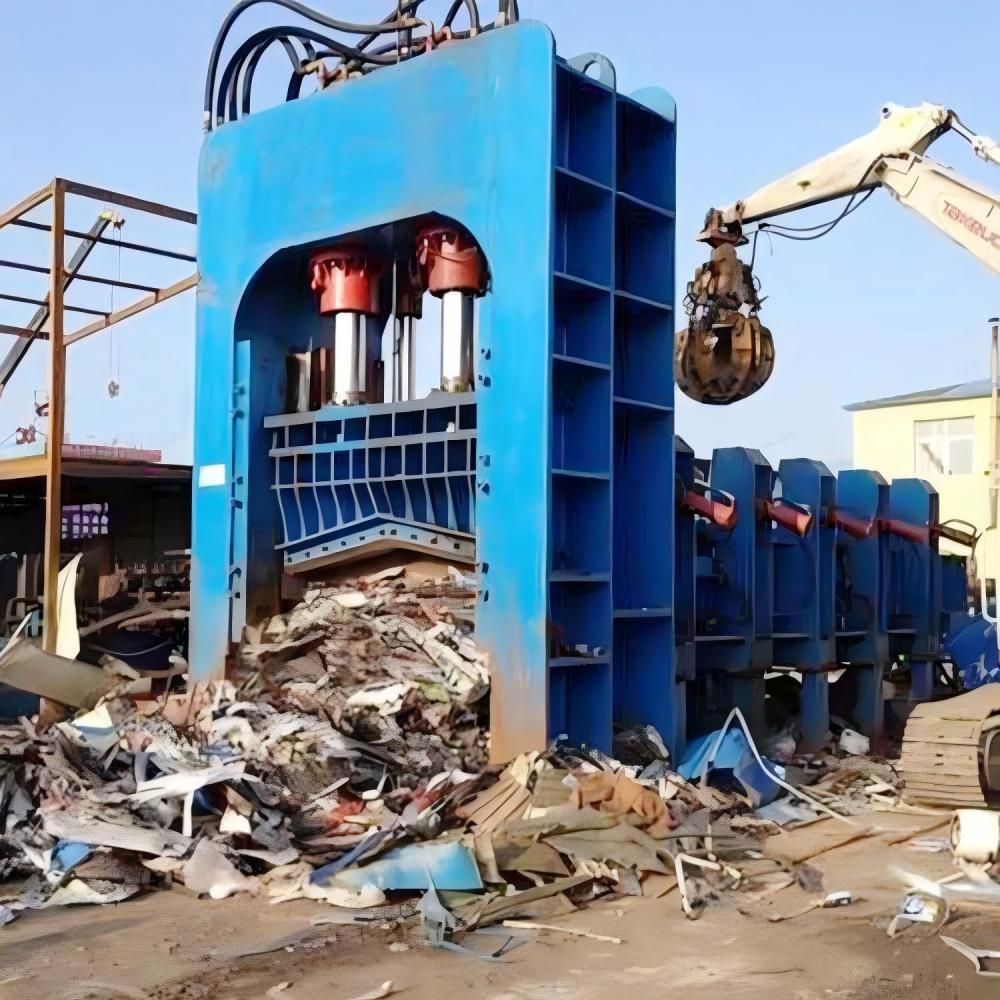
For heavy-duty scrap processing, a gantry (or bridge) design is almost always superior to a C-frame (alligator) design in terms of deflection. A gantry shear supports the cutting force on both sides, distributing the load evenly across two vertical housings. This closed-loop force path significantly reduces the tendency of the frame to “spring” open. If your application involves consistently shearing thick plate or heavy structural steel, investing in a HARSLE MS series gantry shear will provide much better long-term accuracy and lower maintenance costs.
Stress-Relieved Frames
Ask the manufacturer about their welding and heat-treatment processes. A high-quality shear frame should be vibrationally or thermally stress-relieved after welding. This process ensures that the internal stresses created during welding are neutralized, preventing the frame from warping or cracking over years of heavy use. HARSLE employs rigorous stress-relief protocols to ensure that our frames remain true even under the most demanding recycling environments.
Detailed Maintenance Checklist for Frame Integrity
| Component | Maintenance Action | Frequency |
|---|---|---|
| Main Frame Bolts | Check torque settings and tighten to spec. | Monthly |
| Weld Joints | Visual inspection for cracks or paint flaking. | Weekly |
| Guide Way Lubrication | Ensure automatic greasing system is functioning. | Daily |
| Blade Gap | Measure and adjust to match material thickness. | Every Shift |
| Foundation Level | Check machine level with precision spirit level. | Annually |
| Hydraulic Sync | Verify cylinders are moving in perfect unison. | Quarterly |
Frequently Asked Questions (FAQ)
1. How much frame deflection is considered “normal”?
Normal elastic deflection varies by machine size, but generally, it should not exceed 0.5mm to 1mm per meter of throat depth under maximum load. If the deflection is visible to the naked eye or causes the blades to rub, it is excessive and needs immediate attention.
2. Can a deflected frame be repaired?
If the deflection is elastic (temporary), it can usually be fixed by adjusting the gibs, leveling the machine, or sharpening the blades. If the frame has suffered plastic deformation (permanent set) or cracking, it requires professional structural repair, which may include welding, reinforcing plates, or re-machining the guide surfaces.
3. Why does my shear only deflect when cutting near the end of the blades?
This is usually due to off-center loading. When you cut at the edge of the blade, the force is not balanced, creating a moment arm that twists the frame. Always try to center the material in the throat of the shear to distribute forces evenly.
4. Does blade sharpness affect frame deflection?
Absolutely. Dull blades require significantly more force to penetrate the metal. This extra force is transferred directly into the frame. Keeping blades sharp is one of the simplest ways to reduce the structural load on your scrap metal shear.
5. How do I know if my foundation is causing deflection?
If you notice that the machine’s level changes over time or if there are visible cracks in the concrete around the anchor bolts, the foundation is likely settling. An unstable base will cause the frame to twist under its own weight and the forces of operation.
Conclusion
To troubleshoot scrap metal shear frame deflection problems effectively, one must combine a keen eye for detail with a solid understanding of mechanical engineering principles. Frame deflection is rarely a standalone issue; it is often the result of a combination of factors including improper maintenance, operational overloading, and natural wear and tear. By following the systematic approach outlined in this guide—from visual inspection to precision measurement and hydraulic analysis—you can identify the root cause of the problem before it leads to expensive downtime or machine failure.
At HARSLE, we build our scrap metal shears to withstand the harshest industrial environments, but even the toughest machines require proper care. Regular inspections, blade maintenance, and adherence to capacity limits are the keys to longevity. If you are experiencing persistent deflection issues or are looking to upgrade to a more rigid, reliable shearing solution, our team of experts is ready to assist you with technical support and industry-leading machinery solutions. Protect your productivity by ensuring your shear’s frame remains the rock-solid foundation it was designed to be.