How Aluminium Extrusion Press Machines Improve Custom Profile Production

Introduction to Modern Aluminium Extrusion
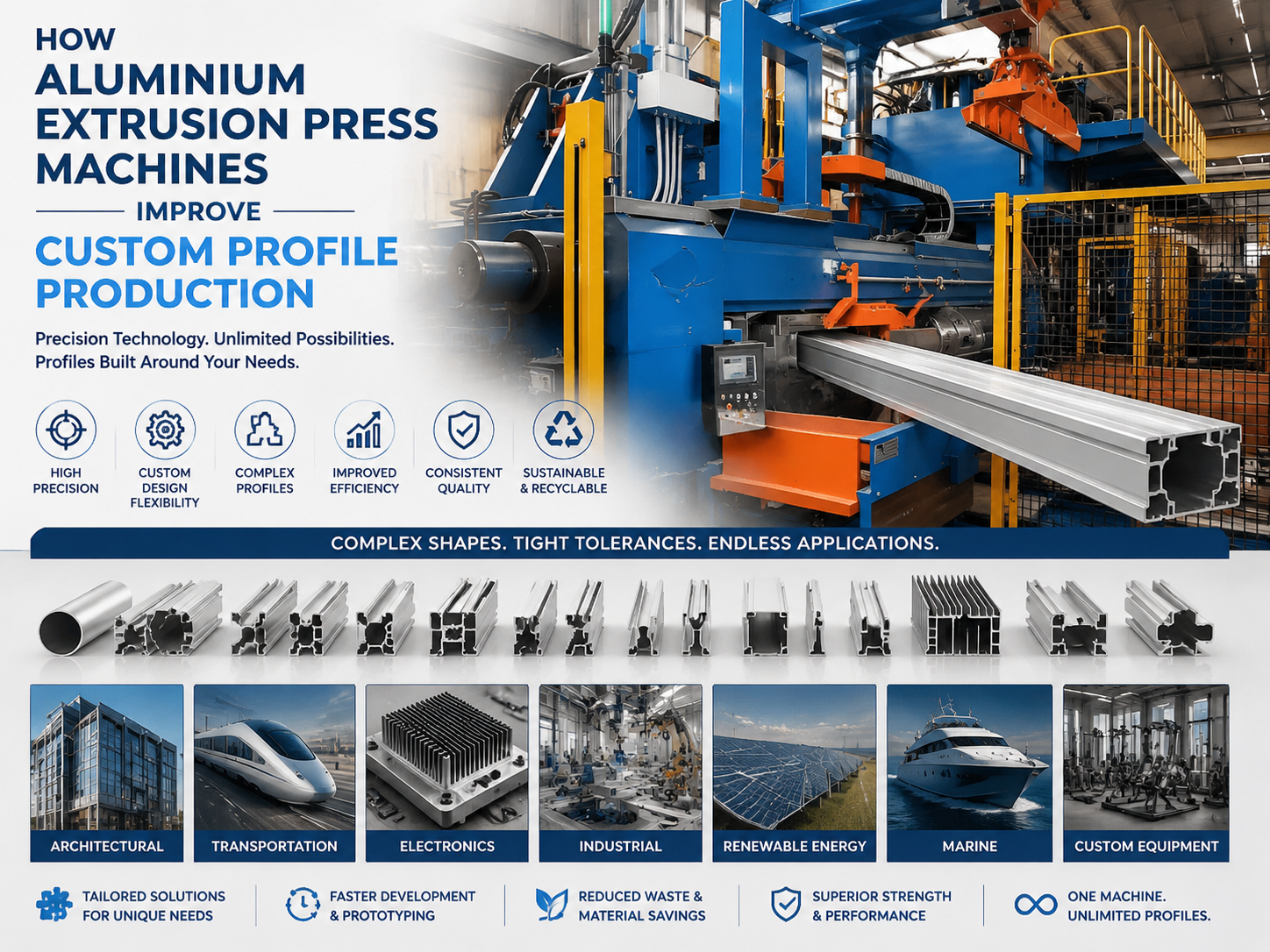
In the contemporary manufacturing landscape, the demand for lightweight, durable, and complex structural components has skyrocketed. Aluminium, known for its excellent strength-to-weight ratio and corrosion resistance, has become the material of choice for industries ranging from aerospace to renewable energy. Central to this manufacturing revolution is the aluminium extrusion press. Understanding how aluminium extrusion press machines improve custom profile production is essential for any fabrication business looking to scale its operations and meet the rigorous demands of modern engineering.
Custom profile production involves creating specific cross-sectional shapes that are tailored to unique functional requirements. Unlike standard off-the-shelf profiles, custom extrusions allow engineers to consolidate multiple parts into a single profile, reducing assembly time and improving structural integrity. HARSLE, a leader in metal fabrication machinery, provides the high-precision equipment necessary to turn these complex designs into reality. By leveraging advanced hydraulic systems and precision control units, modern extrusion presses have transformed what was once a labor-intensive process into a highly automated, efficient production line.
Application Scenarios for Custom Aluminium Profiles
The versatility of aluminium extrusion allows it to be used in a staggering array of applications. In the architectural sector, custom profiles are used for curtain walls, window frames, and structural supports that require specific thermal break properties and aesthetic finishes. These profiles must be produced with extreme dimensional accuracy to ensure they fit perfectly within large-scale building envelopes. The ability to create intricate hollow shapes and interlocking joints directly through the extrusion process is a significant advantage for modern construction.
In the automotive industry, the shift toward electric vehicles (EVs) has intensified the need for custom aluminium extrusions. Battery trays, crash management systems, and chassis components are often made from extruded profiles to minimize weight without compromising safety. These components often feature variable wall thicknesses and complex internal geometries that can only be achieved through high-performance extrusion presses. By using custom profiles, automotive manufacturers can optimize the energy efficiency of their vehicles while maintaining high production speeds.
Beyond construction and automotive, the electronics industry relies heavily on custom extrusions for heat sinks and enclosures. As electronic components become more powerful, the need for efficient thermal management grows. Custom-designed fins and cooling channels can be integrated into the extrusion profile, providing a surface area that is optimized for heat dissipation. Similarly, the solar energy sector uses custom profiles for mounting systems and frames, where durability and ease of installation are paramount. In each of these scenarios, the extrusion press is the engine that drives innovation and efficiency.
Material and Process Requirements
Successful custom profile production begins with a deep understanding of material properties and process variables. Most industrial extrusions utilize the 6000 series aluminium alloys (such as 6061 and 6063) due to their excellent extrudability, weldability, and heat-treatability. However, high-strength applications may require 2000 or 7000 series alloys, which present greater challenges during the extrusion process due to their higher flow stress. The extrusion press must be capable of exerting consistent pressure while maintaining precise temperature control to handle these diverse material requirements.
The process starts with the aluminium billet, which must be heated to a specific temperature—usually between 400°C and 500°C—to reach a plastic state. If the billet is too cold, the pressure required to extrude it may exceed the machine’s capacity or damage the die. If it is too hot, the metal may become too soft, leading to surface defects or structural weaknesses in the finished profile. Modern presses often incorporate induction heating or sophisticated gas furnaces to ensure uniform billet temperature, which is critical for maintaining the quality of custom profiles.
Die design is another critical factor. For custom profiles, the die is a precision-engineered tool that dictates the final shape of the extrusion. The die must withstand immense pressure and friction while allowing the metal to flow smoothly through its orifices. Advanced simulation software is now used to predict metal flow and identify potential issues before the die is even manufactured. This synergy between digital design and mechanical execution is what allows modern extrusion presses to produce profiles with tolerances as tight as ±0.1mm.
Recommended Machine Configuration for Custom Profiles
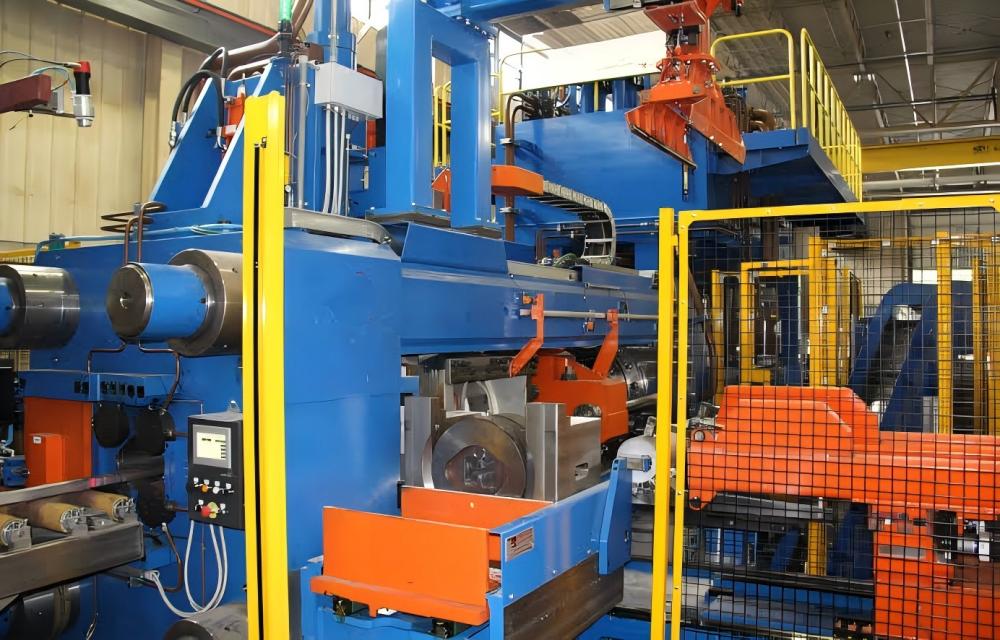
To maximize the benefits of custom profile production, the extrusion press must be configured with the right components. A standard high-performance setup includes a robust main frame, a high-pressure hydraulic system, a precision PLC control unit, and automated handling equipment. For custom work, the flexibility of the machine is just as important as its raw power. HARSLE recommends configurations that prioritize control over the extrusion speed and pressure, allowing for the fine-tuning required for complex geometries.
The hydraulic system is the heart of the press. Utilizing high-quality pumps from manufacturers like Rexroth or Vickers ensures that the pressure remains stable throughout the extrusion cycle. Variable frequency drives (VFDs) and servo-motor-driven pumps are increasingly popular because they allow for precise control of the ram speed while significantly reducing energy consumption. This is particularly important for custom profiles that may require slower extrusion speeds to prevent tearing or distortion in thin-walled sections.
| Component | Recommended Specification | Benefit for Custom Profiles |
|---|---|---|
| Main Cylinder | Forged Steel with Chrome Plating | High durability and leak prevention under pressure. |
| Control System | Siemens or Mitsubishi PLC | Precise monitoring of extrusion parameters and recipes. |
| Billet Heater | Multi-zone Induction Heater | Ensures uniform temperature for consistent metal flow. |
| Cooling System | Air and Water Quench Combo | Rapidly sets the shape of complex profiles to prevent warping. |
| Puller System | Double-head Linear Puller | Maintains tension to ensure straightness and reduce waste. |
The Workflow of Custom Profile Production
The workflow of an aluminium extrusion line is a synchronized dance of heat, pressure, and motion. It begins with the loading of the aluminium log into the furnace. Once heated, the log is sheared into individual billets of the required length. These billets are then transferred to the press container. A lubricant is often applied to the die and the billet to reduce friction and prevent the metal from sticking, which is vital for maintaining a high-quality surface finish on custom profiles.
As the hydraulic ram moves forward, it pushes the billet through the container and against the die. The metal is forced through the die opening, taking on its shape. This is the most critical phase, where the machine’s control system must manage the “extrusion ratio”—the relationship between the cross-sectional area of the billet and the profile. For complex custom shapes, the ram speed may need to be adjusted dynamically to compensate for changes in resistance as the metal flows through different parts of the die.

Once the profile emerges from the die, it is guided onto a cooling table by a puller. The puller maintains a constant tension on the profile, which is essential for keeping it straight as it cools. Depending on the alloy and the profile’s thickness, cooling may involve forced air, water mist, or a full water bath (quenching). After cooling, the profiles are moved to a stretching machine, which pulls them slightly to relieve internal stresses and ensure perfect straightness. Finally, the profiles are cut to the desired length and moved to an aging oven, where they are heated for several hours to achieve their final hardness and strength.
Productivity Benefits of Advanced Extrusion Presses
How do these machines specifically improve productivity? The first major benefit is the reduction in secondary operations. Because an extrusion press can create complex shapes in a single pass, there is often no need for subsequent welding, machining, or assembly. This not only saves time but also eliminates the potential for errors at each stage of the manufacturing process. For custom profiles, this means a faster time-to-market for new designs.
Material efficiency is another significant advantage. Modern extrusion presses are designed to minimize the “butt”—the small piece of the billet that remains in the container after the extrusion is complete. Furthermore, the precision of the puller and stretching systems reduces the amount of scrap generated at the ends of each profile. In a high-volume production environment, even a 2-3% increase in material utilization can lead to substantial cost savings over the course of a year. Advanced HARSLE machines are engineered to maximize this yield through superior hydraulic control.
Automation plays a pivotal role in productivity. Modern lines feature automated billet loading, die changing, and profile handling. This reduces the reliance on manual labor and minimizes the risk of human error. Furthermore, the integration of IoT (Internet of Things) technology allows for real-time monitoring of the machine’s performance. Operators can track energy usage, cycle times, and maintenance needs from a central dashboard, enabling proactive management that prevents costly downtime. For custom profile production, where die changes may be frequent, automated die-slide systems can reduce changeover times from hours to minutes.
Case Example: Improving Solar Frame Production
Consider a manufacturer specializing in custom solar panel mounting frames. These frames require specific grooves for mounting hardware and internal reinforcement for wind resistance. Initially, the manufacturer used standard profiles and performed extensive drilling and milling to achieve the final design. This process was slow, expensive, and resulted in significant material waste.
By investing in a custom-configured HARSLE aluminium extrusion press, the manufacturer was able to design a single profile that incorporated all the necessary mounting features and structural reinforcements. The new workflow eliminated three secondary machining steps. Production capacity increased by 40%, and the cost per unit dropped by 25%. Additionally, the structural integrity of the frames improved because the features were part of the continuous grain structure of the extrusion, rather than being added later through mechanical means. This case illustrates the transformative power of matching the right machinery to specific production goals.
Frequently Asked Questions (FAQ)
1. What is the typical lifespan of an aluminium extrusion die?
The lifespan of a die depends on the complexity of the profile and the alloy being extruded. For standard 6000 series alloys, a well-maintained die can produce between 1,000 and 5,000 kilograms of aluminium before requiring reconditioning. Custom dies with very thin walls or sharp corners may have a shorter lifespan due to the higher stresses involved.
2. Can one press handle different types of aluminium alloys?
Yes, most modern extrusion presses are versatile enough to handle various alloys. However, the press must have sufficient tonnage and sophisticated temperature control to manage high-strength alloys like the 7000 series. Switching between alloys also requires careful cleaning of the container to prevent contamination.
3. How does the extrusion ratio affect the machine choice?
The extrusion ratio is the area of the billet divided by the area of the profile. A higher ratio requires more pressure. If you plan to produce very small, intricate custom profiles from large billets, you need a press with higher tonnage and a robust hydraulic system to overcome the resistance.
4. What maintenance is required for an aluminium extrusion press?
Regular maintenance is crucial. This includes monitoring hydraulic oil quality, checking for leaks, lubricating moving parts, and inspecting the alignment of the ram and container. Modern PLC systems often include maintenance alerts based on cycle counts to help operators stay on top of these tasks.
5. How does a servo-driven hydraulic system save energy?
Traditional hydraulic systems run the pump at a constant speed, even when the press is idle or moving slowly. Servo-driven systems adjust the pump speed to match the actual demand of the cycle. This can reduce energy consumption by up to 30-50%, depending on the production mix.
Conclusion and Call to Action
The ability to produce high-quality custom profiles is a significant competitive advantage in today’s industrial market. Aluminium extrusion press machines are the cornerstone of this capability, providing the precision, power, and flexibility needed to meet diverse engineering challenges. By understanding the nuances of the extrusion process—from material selection to machine configuration—manufacturers can significantly improve their productivity, reduce waste, and deliver superior products to their customers.
HARSLE is committed to providing the industry with cutting-edge extrusion technology. Our machines are designed with the latest hydraulic and electronic controls to ensure that your custom profile production is as efficient and profitable as possible. Whether you are looking to upgrade an existing line or establish a new facility, our team of experts is here to guide you through every step of the process.
Ready to elevate your production capabilities? Contact HARSLE today to discuss your specific requirements and discover how our aluminium extrusion press machines can transform your business. Visit our website or speak with a technical representative to get a customized quote and take the first step toward manufacturing excellence.