Comprehensive Guide to Aluminium Extrusion Press Applications in LED Lighting Heat Sink Extrusion

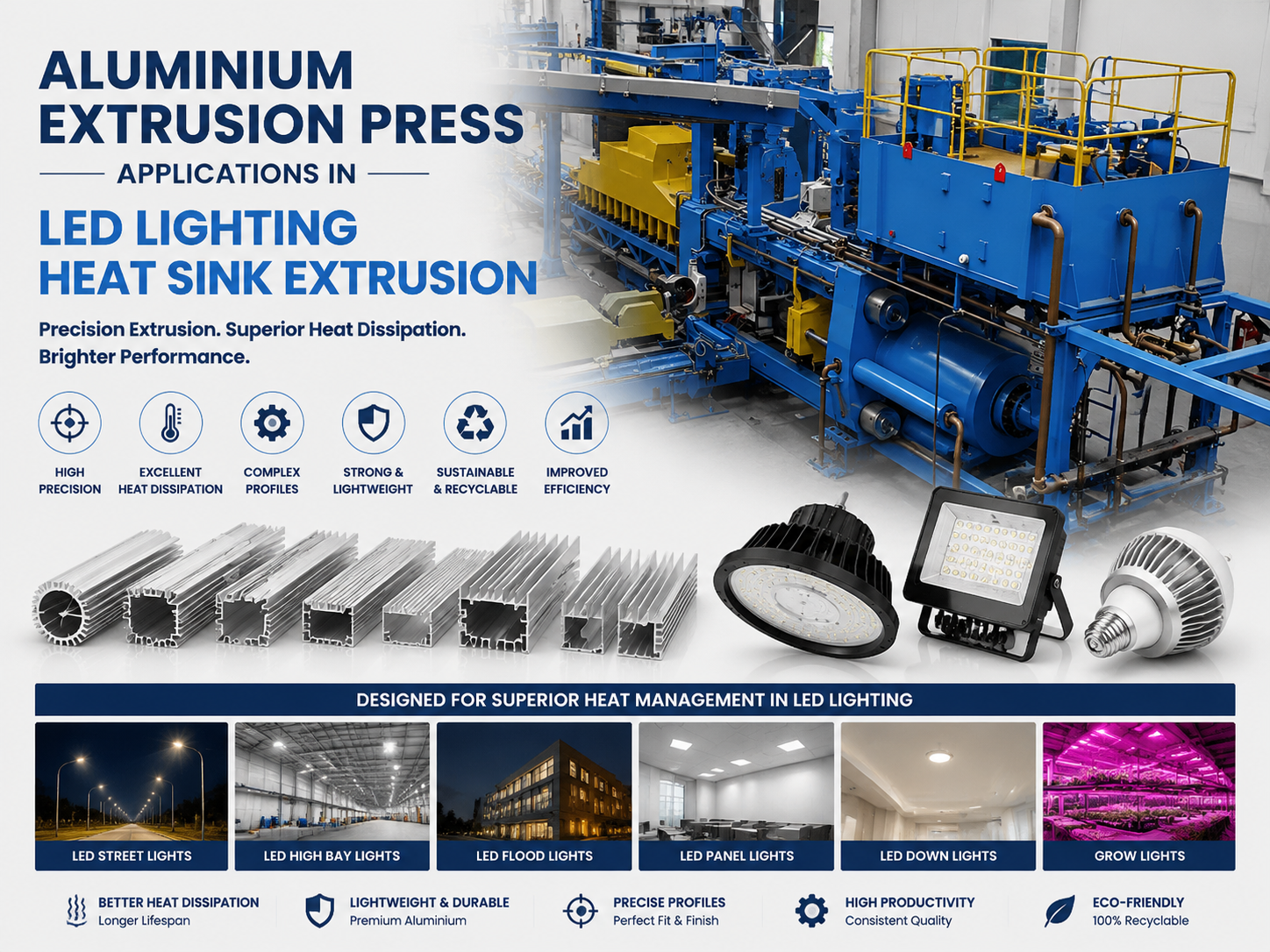
Introduction to Aluminium Extrusion in the LED Industry
The global shift toward energy-efficient lighting has positioned Light Emitting Diodes (LEDs) as the primary illumination technology for residential, commercial, and industrial sectors. However, the efficiency and lifespan of an LED are heavily dependent on thermal management. This is where Aluminium Extrusion Press Applications In Led Lighting Heat Sink Extrusion become vital. Aluminium, known for its excellent thermal conductivity and lightweight properties, is the ideal material for dissipating the heat generated by high-power LEDs. Without an effective heat sink, LED chips can overheat, leading to color shifting, reduced brightness, and premature failure.
The extrusion process allows for the creation of complex cross-sectional profiles that maximize surface area—a critical factor in convective cooling. By using a high-precision aluminium extrusion press, manufacturers can produce intricate fin designs that would be impossible or prohibitively expensive to manufacture through machining or casting. This article explores the technical nuances, machine requirements, and industrial benefits of using HARSLE extrusion technology for LED heat sink production.
Application Scenario: The Demand for High-Performance Heat Sinks
In the realm of modern lighting, the application scenarios for extruded aluminium heat sinks are vast. From high-bay industrial lights in warehouses to sleek architectural strip lighting, the thermal requirements vary significantly. In industrial settings, high-power LEDs generate substantial heat that must be moved away from the core components rapidly. Here, the aluminium extrusion press is used to create large, heavy-duty heat sinks with deep fins that facilitate natural or forced air convection.
Another growing scenario is the automotive industry, where LED headlights require compact yet highly efficient cooling solutions. The precision offered by modern extrusion presses allows for the production of micro-channel heat sinks that fit within the tight confines of a modern vehicle’s headlamp assembly. Furthermore, the street lighting sector relies on long, durable extruded profiles that serve both as the structural housing and the thermal management system for the light fixture.
Beyond standard lighting, the growth of grow-lights for indoor farming has introduced a new demand for specialized heat sinks. These lights often operate for 18-24 hours a day, requiring robust thermal solutions to maintain the spectrum stability needed for plant growth. The versatility of the extrusion process means that a single press can be reconfigured with different dies to meet the needs of all these diverse application scenarios, making it a cornerstone of the LED supply chain.
Material and Process Requirements for LED Heat Sinks
When discussing Aluminium Extrusion Press Applications In Led Lighting Heat Sink Extrusion, the choice of material is paramount. The most common alloy used is 6063 aluminium. This alloy offers an excellent balance of extrudability, surface finish, and thermal conductivity (approximately 200 W/m·K). While 6061 is stronger, its thermal conductivity is slightly lower, making 6063 the preferred choice for most heat dissipation applications. The purity of the aluminium billet also plays a role; impurities can hinder the flow of heat through the metal lattice.
The extrusion process itself must be tightly controlled to ensure the structural integrity of the fins. Heat sinks often feature high “aspect ratios”—the ratio of the height of the fin to the width of the gap between fins. High aspect ratios are desirable for cooling but difficult to extrude because they put immense pressure on the die tongues. This requires a press with exceptional stability and a sophisticated hydraulic control system to maintain a constant extrusion speed, preventing the fins from waving or snapping during the process.
Temperature management during the process is equally critical. The billet must be heated to a specific plastic state (usually between 450°C and 500°C). If the temperature is too low, the pressure required exceeds the die’s limits; if it is too high, the metal may become too soft, leading to poor surface quality or “tearing” at the edges of the fins. Modern HARSLE presses utilize multi-zone heating and infrared sensors to ensure the billet enters the container at the perfect temperature for the specific profile being produced.
Recommended Machine Configuration for Heat Sink Extrusion
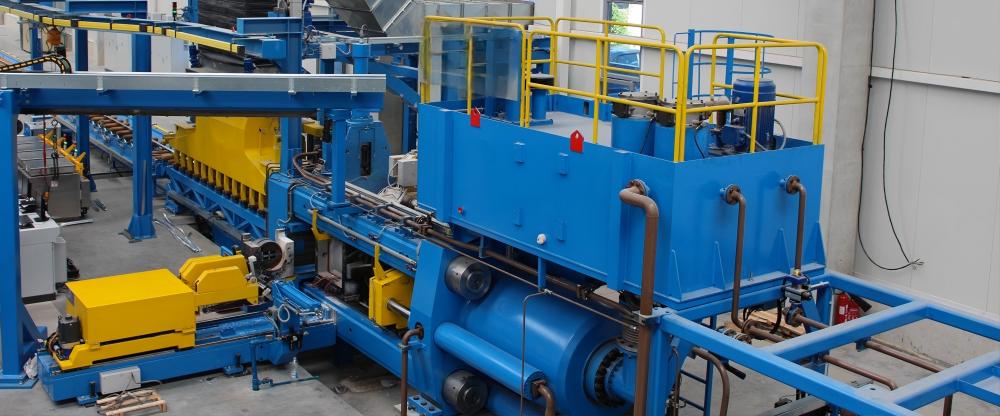
For LED heat sink production, the configuration of the aluminium extrusion press must prioritize precision and pressure consistency. A standard setup typically involves a horizontal hydraulic press with a capacity ranging from 600 tons to 2500 tons, depending on the size of the heat sink. For small residential LED components, a 600T to 1000T press is often sufficient. However, for large industrial UFO high-bay lights or street light housings, a 1450T or 2000T press is required to provide the necessary force to push the metal through complex dies.
Key components of a recommended configuration include:
- Servo-Driven Hydraulic System: Modern presses should utilize servo motors to drive the hydraulic pumps. This allows for precise control over the ram speed, which is essential for maintaining the thin-walled structures of heat sink fins. It also reduces energy consumption by up to 50% compared to traditional systems.
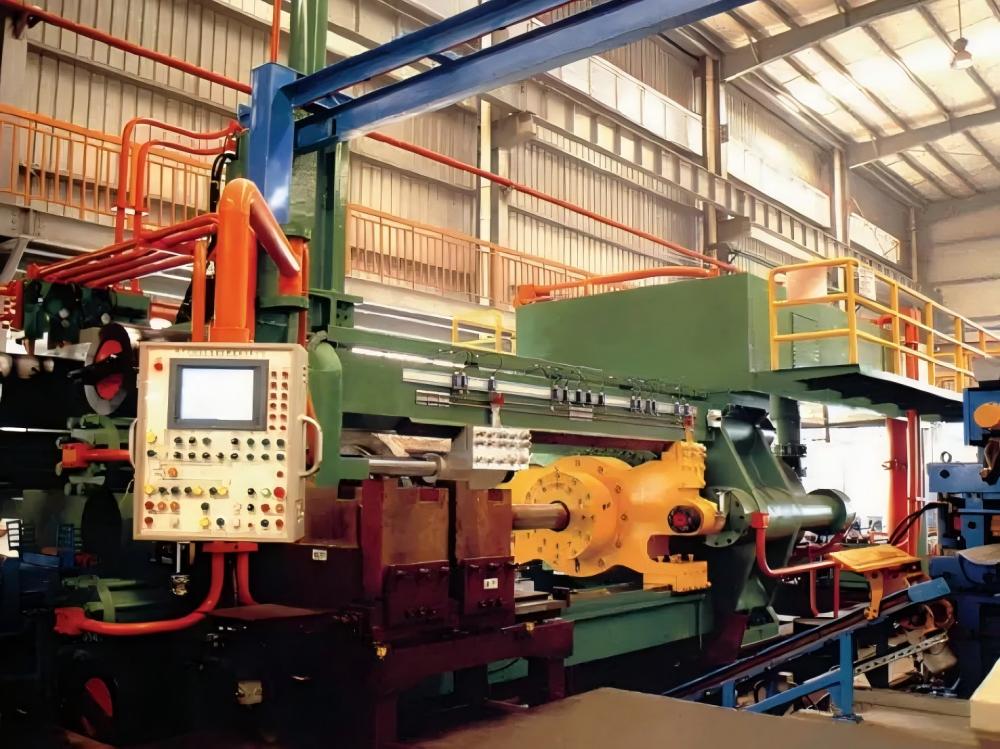
- Advanced PLC Control: A high-end PLC (like Siemens or Mitsubishi) with a touchscreen interface allows operators to store “recipes” for different heat sink profiles. This ensures repeatability and fast changeover times between different product lines.
- Isothermal Extrusion Control: This feature adjusts the extrusion speed in real-time based on the temperature of the profile as it exits the die, ensuring uniform mechanical properties and dimensions across the entire length of the extrusion.
- Robust Die Heating Oven: To prevent thermal shock and ensure smooth flow, the die must be preheated to a temperature close to the billet temperature.
The Workflow: From Billet to Finished Heat Sink
The production workflow for LED heat sinks using an aluminium extrusion press is a highly choreographed sequence of mechanical and thermal events. It begins with the Billet Preparation, where long aluminium logs are cut into shorter billets and cleaned of any surface oxides. These billets are then fed into a Billet Heater (usually an induction or gas furnace) where they are brought to the optimal extrusion temperature.
Once heated, the billet is transferred to the Extrusion Press. The hydraulic ram pushes the billet into the container and through the die. As the aluminium emerges from the die in the shape of the heat sink profile, it is immediately met by a Quenching System. For 6063 alloy, air quenching or water mist quenching is used to rapidly cool the metal, “freezing” the alloying elements in a solid solution. This is the first step in achieving the T5 or T6 temper required for structural rigidity.
Following quenching, the long extrusion (which can be up to 50 meters long) is pulled onto a cooling table by a Puller. Once cooled, the profile undergoes Stretching to straighten any twists or bows that occurred during extrusion and to relieve internal stresses. The profile is then cut to manageable lengths before being placed in an Aging Oven. In the aging oven, the profiles are held at a constant temperature (around 170°C-190°C) for several hours to allow the magnesium silicide to precipitate, significantly increasing the hardness and strength of the aluminium. Finally, the profiles are cut to their final dimensions, and surface treatments like anodizing are applied to enhance thermal emissivity and corrosion resistance.
Productivity and Economic Benefits
Investing in a high-quality aluminium extrusion press for LED heat sink production offers significant productivity benefits. First and foremost is Material Efficiency. Extrusion is a near-net-shape process, meaning the profile produced is very close to the final part dimensions. This minimizes scrap compared to machining from solid blocks. Furthermore, the ability to produce multi-cavity dies allows a single press stroke to produce multiple heat sink profiles simultaneously, dramatically increasing hourly output.
From an economic standpoint, the Design Flexibility of extrusion allows engineers to integrate mounting features, screw ports, and aesthetic elements directly into the heat sink profile. This reduces the need for secondary assembly operations, lowering the total cost per unit. Additionally, the use of energy-efficient servo-hydraulic systems in HARSLE presses reduces operational overhead, making the manufacturer more competitive in a price-sensitive market.
| Feature | Benefit for LED Heat Sinks |
|---|---|
| High Aspect Ratio Fins | Increased surface area for better cooling |
| Servo-Hydraulic Control | Consistent wall thickness and fin stability |
| Automated Handling | Reduced labor costs and improved safety |
| Integrated Cooling | Optimized hardness (T5/T6) for durability |
Case Example: High-Power Street Light Housing
A leading manufacturer of municipal LED street lighting faced challenges with their previous heat sink supplier regarding dimensional consistency and thermal performance. They decided to bring production in-house by installing a HARSLE 1450T Aluminium Extrusion Press. The goal was to produce a 300mm wide heat sink with 50mm deep fins and integrated channels for the LED driver and wiring.
By utilizing a custom-designed bridge die and the HARSLE press’s precision speed control, the manufacturer was able to achieve a fin thickness of just 1.5mm while maintaining a height of 50mm. This increased the effective cooling surface area by 25% compared to their previous cast design. The in-house production reduced their lead times from six weeks to just three days and lowered the cost per component by 18%. This case demonstrates how Aluminium Extrusion Press Applications In Led Lighting Heat Sink Extrusion can transform a company’s supply chain and product performance.
Frequently Asked Questions (FAQ)
What is the best aluminium alloy for LED heat sinks?
The 6063 alloy is widely considered the best choice due to its high thermal conductivity, excellent extrusion properties, and ability to accept high-quality anodized finishes. For applications requiring higher structural strength, 6061 may be used, though it has slightly lower thermal efficiency.
How does the extrusion press affect the quality of the heat sink?
The press determines the dimensional accuracy and surface finish. A press with inconsistent pressure or speed will cause “chatter marks” or variations in fin thickness, which can negatively impact both the aesthetic and the thermal performance of the heat sink.
Can thin fins be extruded easily?
Thin fins (under 1mm) are challenging because they require high pressure and can easily deform. Success depends on the quality of the extrusion die and the ability of the press to maintain a very slow, steady extrusion speed.
What is the role of anodizing in LED heat sinks?
Anodizing is a surface treatment often performed after extrusion. It creates a protective oxide layer that prevents corrosion and can be dyed various colors. Importantly, black anodizing increases the thermal emissivity of the aluminium, helping it radiate heat more effectively into the surrounding air.
What tonnage press do I need for LED profiles?
For most standard LED strips and small heat sinks, a 600T to 1000T press is sufficient. For larger industrial fixtures or street lights, you will likely need a 1450T to 2500T press to handle the larger billet diameters and higher extrusion pressures.
Conclusion: Partnering with HARSLE for Extrusion Excellence
The role of Aluminium Extrusion Press Applications In Led Lighting Heat Sink Extrusion will only continue to grow as LED technology becomes more powerful and compact. Achieving the perfect balance of thermal performance, structural integrity, and cost-efficiency requires not just the right material, but the right machinery. HARSLE provides state-of-the-art aluminium extrusion presses designed to meet the rigorous demands of the lighting industry.
Whether you are looking to start a new production line or upgrade your existing capabilities, HARSLE offers the technical expertise and robust equipment needed to succeed. Our presses are engineered for precision, energy efficiency, and long-term reliability, ensuring that your LED heat sinks meet the highest global standards. Contact HARSLE today to discuss your specific application requirements and discover how our extrusion solutions can illuminate your production goals.