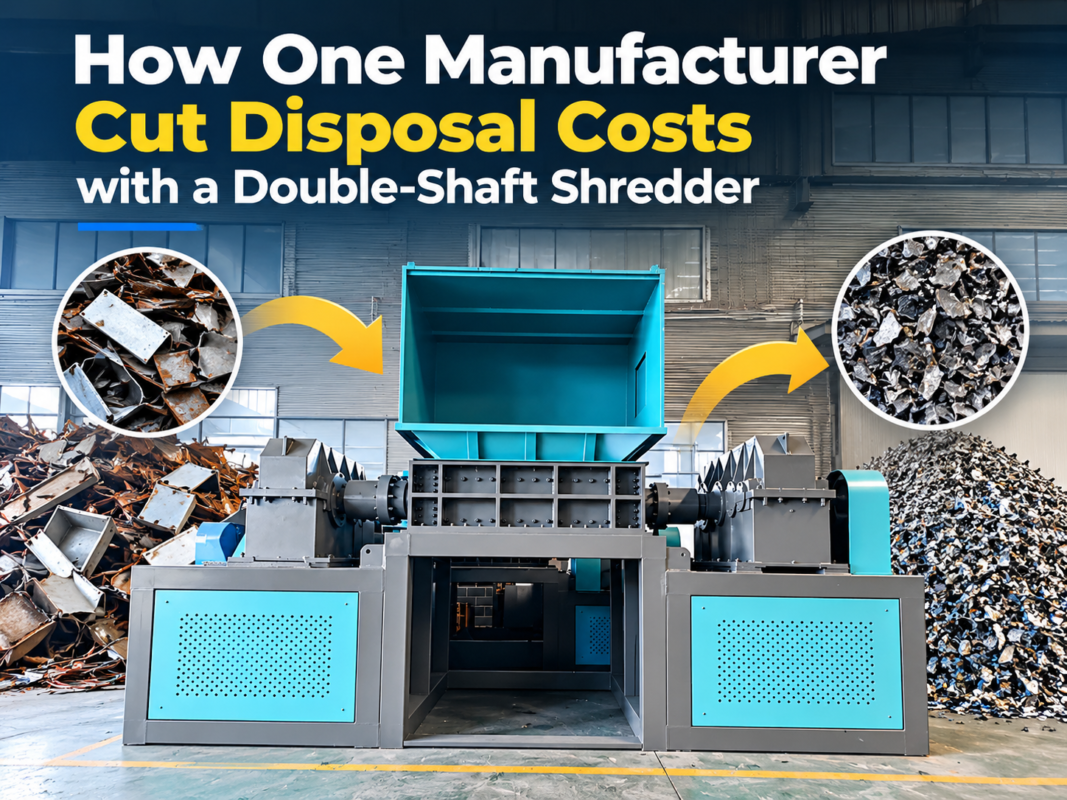
Why Scrap Metal Shears Are Essential In Scrap Yard Operations: A Comprehensive Guide


Introduction to the Role of Shears in Modern Recycling
In the rapidly evolving landscape of global manufacturing and environmental sustainability, the recycling industry stands as a cornerstone of the circular economy. At the heart of this industry lies the scrap yard, a facility tasked with transforming bulky, heterogeneous metal waste into high-quality raw materials for steel mills and foundries. To achieve this transformation efficiently, specialized machinery is required. Among the most critical tools in this environment is the scrap metal shear. Understanding Why Scrap Metal Shears Are Essential In Scrap Yard Operations requires a deep dive into the mechanics of volume reduction, material purity, and logistical optimization.
Scrap metal shears are heavy-duty hydraulic machines designed to cut large metal objects—such as structural steel, decommissioned vehicles, pipes, and industrial machinery—into smaller, manageable pieces. Without these machines, scrap yards would struggle with the sheer physical volume of incoming waste, leading to inefficient storage and prohibitively high transportation costs. HARSLE, a leader in metal fabrication machinery, provides advanced shearing solutions that address these challenges, ensuring that scrap yards can maintain high throughput and profitability.
Application Scenarios for Scrap Metal Shears
The versatility of scrap metal shears allows them to be deployed across various sectors of the recycling industry. One of the primary application scenarios is in Automotive Recycling. When a vehicle reaches the end of its life, it is stripped of fluids and valuable components, but the remaining chassis is a bulky mix of steel and alloys. Scrap metal shears, particularly large gantry shears, are used to cut these frames into furnace-ready sizes, allowing the metal to be melted down and reused in new vehicle production.
Another critical scenario is Demolition and Construction Waste Management. Large-scale demolition projects generate massive amounts of structural steel, I-beams, and rebar. These materials are often too long or too heavy to be transported directly to a mill. Mobile or stationary shears are essential here to process the steel on-site or at a nearby yard. By reducing the length of these beams, operators can maximize the weight capacity of their transport trucks, significantly lowering the carbon footprint and cost of logistics.
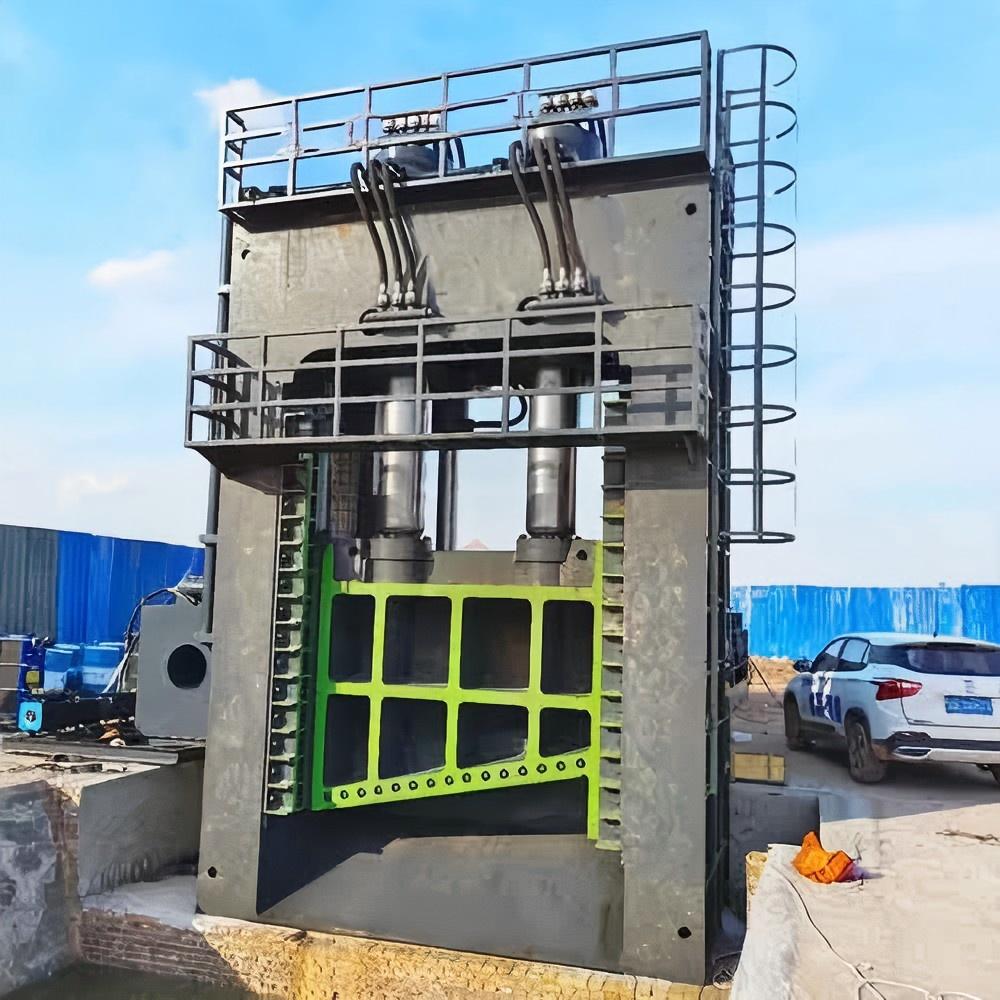
Furthermore, Shipbreaking and Industrial Decommissioning rely heavily on high-force shearing. Ships and large factory machines consist of thick-gauge steel that requires immense pressure to cut. Specialized scrap metal shears provide the necessary force to dismantle these structures safely and efficiently. In these scenarios, the shear acts as the primary tool for converting a liability (a massive, unusable structure) into an asset (processed scrap metal).
Material and Process Requirements
To understand why scrap metal shears are essential in scrap yard operations, one must consider the strict requirements of the end-users: the steel mills. Mills require scrap that meets specific size and density standards, often referred to as “furnace-ready” scrap. If the scrap is too large, it won’t fit into the electric arc furnace (EAF) or basic oxygen furnace (BOF). If it is too light or hollow, it causes inefficiencies in the melting process. Shearing solves both problems by cutting material to length and, in many cases, flattening it during the process.
The materials processed by these shears vary widely, including:
- HMS 1 & 2 (Heavy Melting Scrap): This includes wrought iron and steel scrap with a thickness of 1/4 inch and larger. Shears are vital for ensuring these pieces are cut to the standard 3×2 or 5×2 foot dimensions.
- Rebar and Wire: Tangled nests of rebar from construction sites are difficult to handle. Shears can quickly chop these into uniform lengths for easier baling or direct melting.
- Non-Ferrous Metals: While often processed by smaller alligator shears, aluminum extrusions and copper busbars also require precise shearing to remove contaminants or to fit into smaller crucibles.
The process also demands high precision in blade gap adjustment. Different thicknesses of metal require different clearances between the upper and lower blades to ensure a clean cut rather than a tear. Modern HARSLE shears incorporate adjustable blade seats and high-strength alloy blades to handle these diverse material requirements without frequent downtime for maintenance.
Recommended Machine Configuration
Choosing the right configuration is vital for maximizing the utility of a shear. Depending on the volume and type of scrap, yards typically choose between three main types of shears. Each has its own set of technical specifications that make it suitable for specific tasks.
1. Gantry Shears (Heavy-Duty)
Gantry shears are the workhorses of large-scale scrap yards. They feature a vertical cutting action and are often equipped with a side-press or a “wing” system that compresses the scrap into a dense log before the blade descends. This configuration is essential for processing heavy HMS and bulky industrial waste. Key features include a robust hydraulic system capable of 600 to 2000 tons of pressure and an automated PLC control system for continuous operation.
2. Container Shears (Continuous Feed)
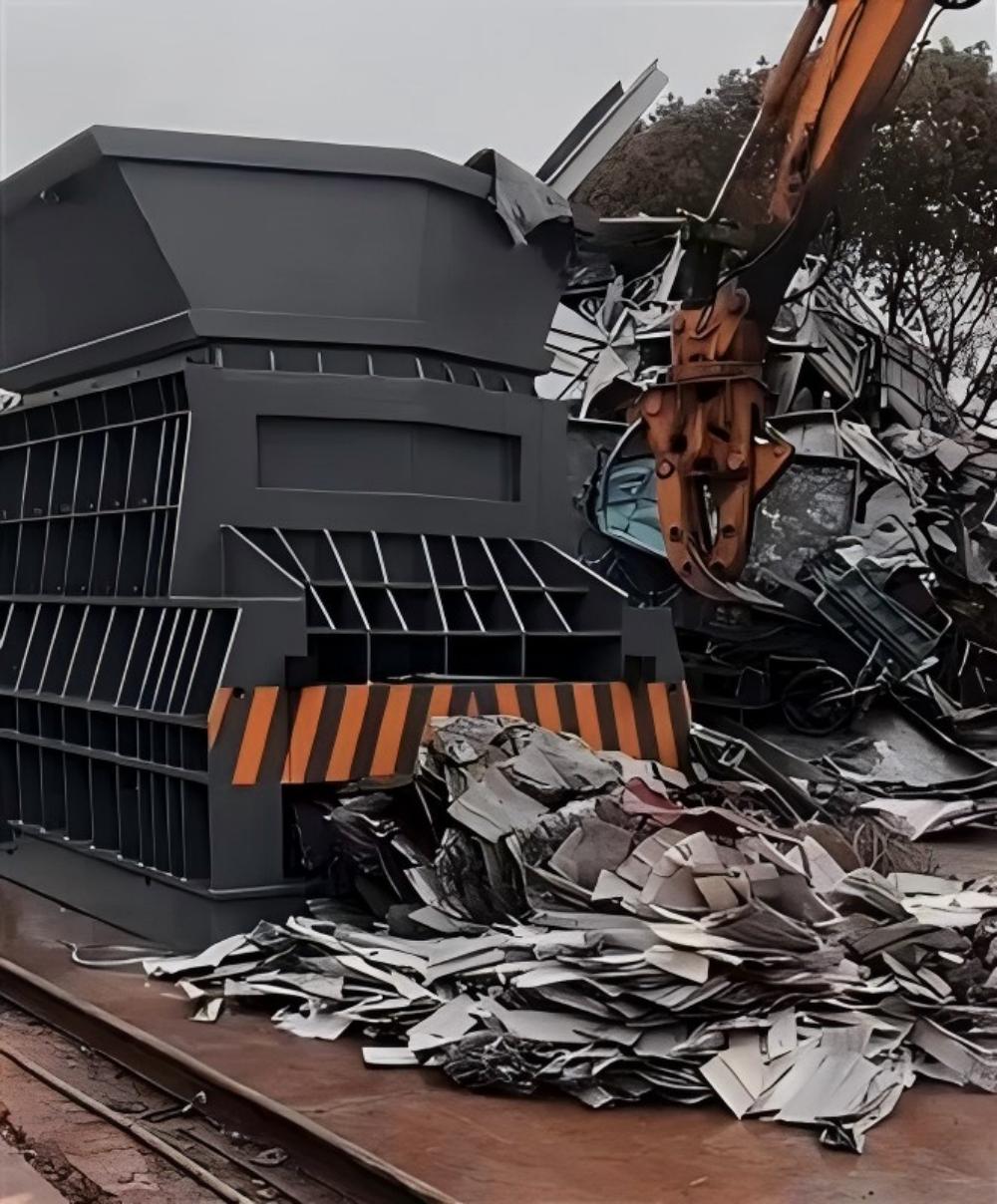
Container shears are a more recent innovation designed for high-efficiency, continuous feeding. Unlike gantry shears that work in cycles, container shears allow for the constant loading of material into a hopper. The material is pushed forward and sheared automatically. This configuration is ideal for yards with high volumes of lighter scrap, such as pipes, small beams, and automotive parts. They are often more compact and easier to install than traditional gantry shears.
3. Alligator Shears (Manual/Small Scale)
For smaller yards or for cleaning non-ferrous scrap, alligator shears are the preferred choice. These machines have a jaw-like cutting action and are typically operated manually. They are essential for removing steel ends from aluminum radiators or cutting copper tubing. While they lack the massive force of a gantry shear, their speed and simplicity make them indispensable for secondary processing tasks.
The Workflow of a Scrap Shearing Operation
The efficiency of a scrap yard is determined by its workflow. A well-integrated scrap metal shear streamlines the entire process from the moment material enters the yard until it is loaded for shipment. The typical workflow involves several distinct stages:
- Sorting and Pre-treatment: Incoming scrap is sorted by material type (ferrous vs. non-ferrous) and size. Large items that cannot be handled by the shear’s hopper are pre-cut using torches or mobile shears.
- Loading: A material handler (grapple crane) loads the scrap into the shear’s charging box. In a gantry shear, this box is often several meters long to accommodate large beams.
- Compression: Once loaded, the hydraulic lids or side presses close, crushing the scrap into a dense “log.” This step is crucial because it prevents the material from shifting during the cut and increases the density of the final product.
- Shearing: The hydraulic ram pushes the compressed log forward by a predetermined length (e.g., 600mm). The heavy-duty blade then descends, shearing the metal. This cycle repeats until the entire log is processed.
- Discharge and Sorting: The sheared pieces fall onto a conveyor belt or into a collection pit. Magnets are often used at this stage to separate any remaining ferrous material from non-metallic debris.
.jpg)
Productivity Benefits and ROI
Why are scrap metal shears essential in scrap yard operations from a financial perspective? The answer lies in the dramatic increase in productivity and the reduction of operational costs. Firstly, Volume Reduction is the most immediate benefit. Unprocessed scrap is mostly air; by shearing and densifying it, a yard can store three to four times more material in the same footprint. This allows for better inventory management and the ability to wait for favorable market prices before selling.
Secondly, Logistical Efficiency cannot be overstated. Transporting loose, bulky scrap is expensive because trucks reach their volume limit long before they reach their weight limit. Sheared scrap is dense, allowing trucks to be loaded to their maximum legal weight capacity. This reduces the number of trips required, saving on fuel, labor, and vehicle maintenance. For many yards, the savings in transportation alone can pay for a new HARSLE shear within a few years.
Thirdly, Market Value. Steel mills pay a premium for “clean,” sized scrap. By using a shear to remove attachments or to cut material to precise specifications, a scrap yard can move its product from a lower-tier category to a higher-tier, more profitable one. Furthermore, the automation provided by modern hydraulic shears reduces the need for manual labor and dangerous torch-cutting, leading to lower insurance premiums and a safer workplace.
Technical Specifications Table
To help buyers understand the capabilities of these machines, the following table outlines typical specifications for HARSLE scrap metal shears:
| Feature | Gantry Shear (Heavy) | Container Shear | Alligator Shear |
|---|---|---|---|
| Shearing Force | 630 – 2000 Tons | 400 – 800 Tons | 60 – 250 Tons |
| Blade Length | 1200 – 2200 mm | 800 – 1200 mm | 400 – 1200 mm |
| Max Cutting Thickness | Up to 100 mm (Steel) | Up to 60 mm (Steel) | Up to 30 mm (Steel) |
| Operation Mode | Automatic / PLC | Continuous / Automatic | Manual / Foot Pedal |
| Primary Use | Heavy HMS, I-Beams | Pipes, Auto Scrap | Non-ferrous, Cleaning |
Case Example: Optimizing a Mid-Sized Scrap Yard
Consider a mid-sized scrap yard in Eastern Europe that previously relied on manual torch cutting and a small, aging alligator shear. Their monthly throughput was capped at 800 tons due to the slow nature of manual processing. Their transportation costs were high because they could only fit 12 tons of loose scrap into a 25-ton capacity trailer.
After consulting with HARSLE, the yard invested in a 630-ton Gantry Shearing Machine. The results were transformative. Within the first three months, their throughput increased to 2,500 tons per month. The automated compression and shearing cycle allowed them to process a full truckload of scrap in under 30 minutes. More importantly, they were able to load their trailers to the full 25-ton capacity, effectively halving their shipping costs per ton. The yard also reported a 40% reduction in labor costs as the torch-cutting team was reassigned to more productive sorting roles. This case illustrates exactly why scrap metal shears are essential in scrap yard operations looking to scale.
Maintenance and Safety Considerations
While scrap metal shears are robust, their essential role means that downtime can be catastrophic for a yard’s bottom line. Regular maintenance is critical. This includes monitoring hydraulic oil levels, checking for leaks in high-pressure hoses, and ensuring the lubrication system for the slide guides is functioning correctly. Blade maintenance is particularly important; dull blades increase the load on the hydraulic system and result in poor-quality cuts. HARSLE machines are designed with easy-access maintenance points to minimize service time.
Safety is another reason why high-quality shears are essential. Manual cutting of scrap involves risks from fire, toxic fumes, and flying debris. A hydraulic shear encloses the cutting process within a heavy-duty frame. Modern machines feature emergency stop buttons, safety interlocks on access doors, and remote control operation, allowing the operator to stay at a safe distance from the moving parts and the material being processed.
Frequently Asked Questions (FAQ)
1. What is the difference between a scrap shear and a scrap baler?
A scrap shear is designed to cut metal into shorter lengths, whereas a baler compresses light-gauge metal (like car bodies or tin cans) into a dense cube. Shears are better for heavy structural steel, while balers are better for high-volume, thin-gauge materials.
2. How often do the blades need to be changed?
Blade life depends on the material being cut. For standard steel, blades can last several hundred hours before needing to be rotated or sharpened. Most HARSLE blades have four cutting edges, meaning they can be flipped three times before requiring a full replacement.
3. Can a scrap shear handle non-ferrous metals like aluminum?
Yes, scrap shears are excellent for aluminum, copper, and stainless steel. In fact, shearing is often preferred for non-ferrous metals because it doesn’t introduce the contaminants that melting or torch-cutting might.
4. Is a gantry shear or a container shear better for my yard?
If you process very heavy, thick structural steel, a gantry shear is necessary for its higher cutting force. If you process mostly lighter, long materials like pipes and profiles and want a faster, continuous workflow, a container shear is often the better choice.
Conclusion: Investing in the Future of Recycling
In conclusion, the question of Why Scrap Metal Shears Are Essential In Scrap Yard Operations is answered by the fundamental needs of the recycling industry: efficiency, density, and safety. As the demand for recycled steel continues to grow and environmental regulations become stricter, the ability to process scrap quickly and cleanly becomes a major competitive advantage. HARSLE’s range of shearing solutions provides the power and reliability needed to turn a chaotic pile of waste into a valuable industrial commodity.
Whether you are looking to upgrade an existing facility or start a new recycling venture, choosing the right scrap metal shear is the most important decision you will make. By focusing on high-quality hydraulic components, robust frame construction, and advanced automation, HARSLE ensures that your scrap yard remains productive and profitable for years to come.
Ready to optimize your scrap yard operations? Contact HARSLE today to speak with our technical experts about the best shearing solution for your specific material needs. Let us help you turn your scrap into gold with the industry’s most reliable metal fabrication equipment.