Key Questions to Ask Before Buying a Horizontal Baler for Your Plant

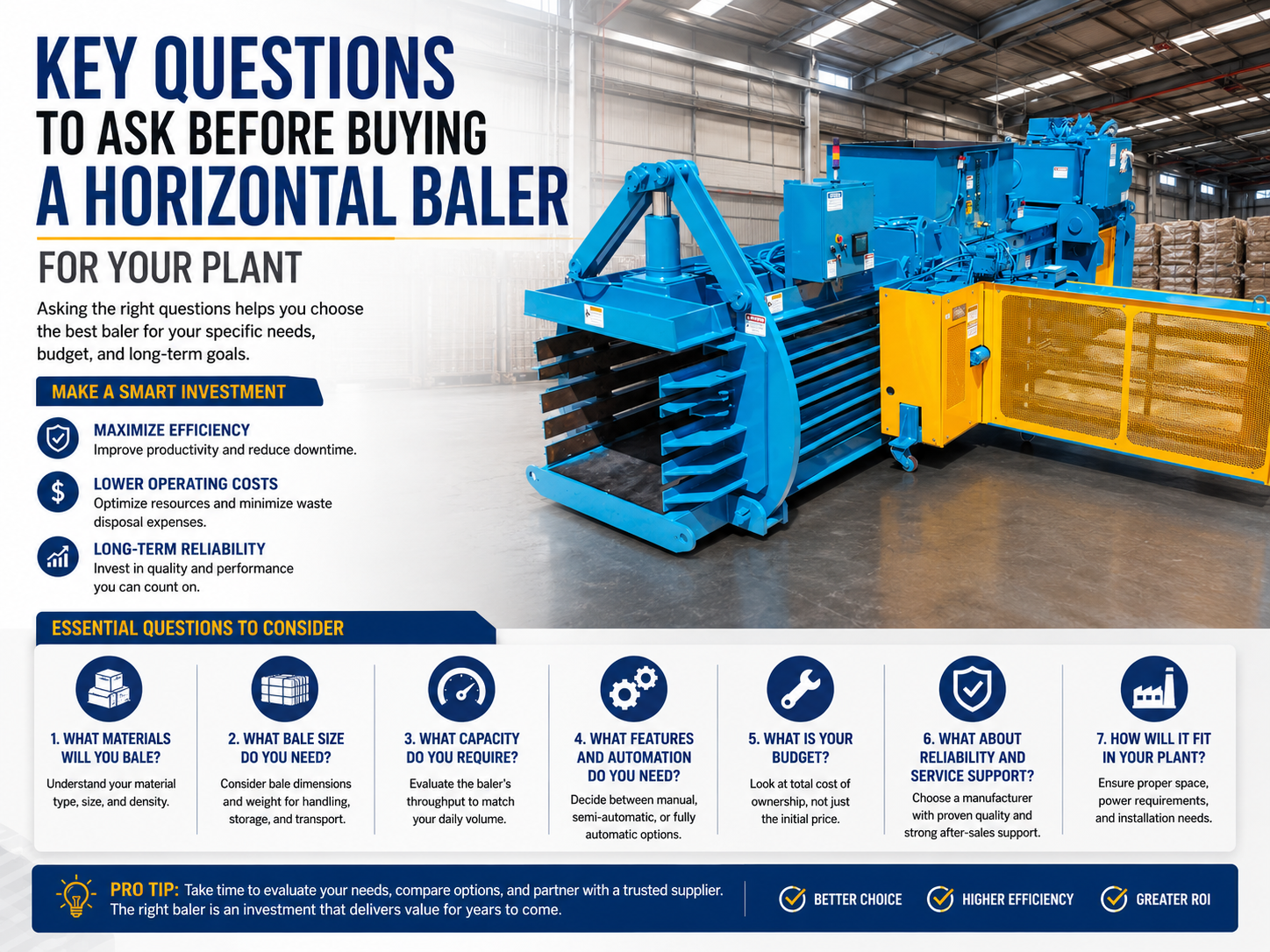
Introduction to Industrial Horizontal Balers
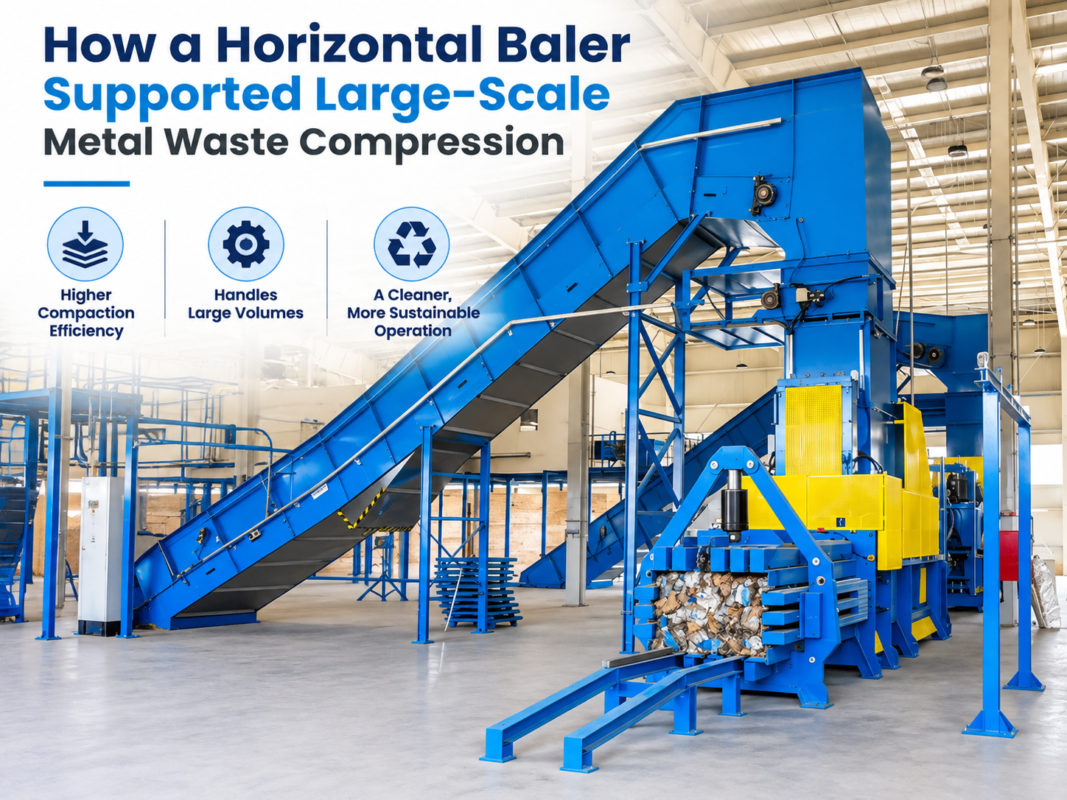
In the modern industrial landscape, waste management is no longer just a secondary concern; it is a critical component of operational efficiency and sustainability. For plants dealing with high volumes of recyclable materials—such as cardboard, plastics, paper, or non-ferrous metals—a horizontal baler is an indispensable asset. Unlike vertical balers, which are suited for smaller volumes, horizontal balers are designed for continuous operation, high throughput, and maximum bale density. However, purchasing such a machine is a significant capital investment that requires careful deliberation.
When evaluating your options, you must look beyond the initial price tag. The right machine can streamline your logistics, reduce labor costs, and even turn a waste stream into a revenue source. Conversely, a poorly chosen baler can lead to frequent downtime, safety hazards, and inefficient processing. This guide explores the key questions ask before buying a horizontal baler plant to ensure you select a model that aligns with your production goals and facility constraints.
Price Range Overview: What to Expect
The cost of a horizontal baler can vary significantly based on its capacity, automation level, and specialized features. Generally, industrial horizontal balers fall into three main price categories. Entry-level manual-tie horizontal balers typically range from $20,000 to $45,000. These machines are ideal for plants that process moderate amounts of waste and have personnel available to manually thread and tie the bales. While they offer the density of a horizontal system, they do not provide the full speed of automated versions.
Mid-range automatic-tie horizontal balers usually cost between $50,000 and $120,000. These are the workhorses of the recycling industry, featuring automated tying systems that significantly reduce labor requirements. They are designed for 24/7 operation and can handle a variety of materials with consistent bale weights. Finally, high-end, heavy-duty, or multi-material two-ram balers can exceed $200,000. These machines are engineered for the most demanding environments, capable of baling everything from scrap metal to high-density plastics with extreme pressure.
Understanding these price points is essential for budgeting, but it is equally important to remember that the cheapest option is rarely the most cost-effective in the long run. A machine that is underpowered for your volume will wear out prematurely, leading to high repair costs and lost productivity.
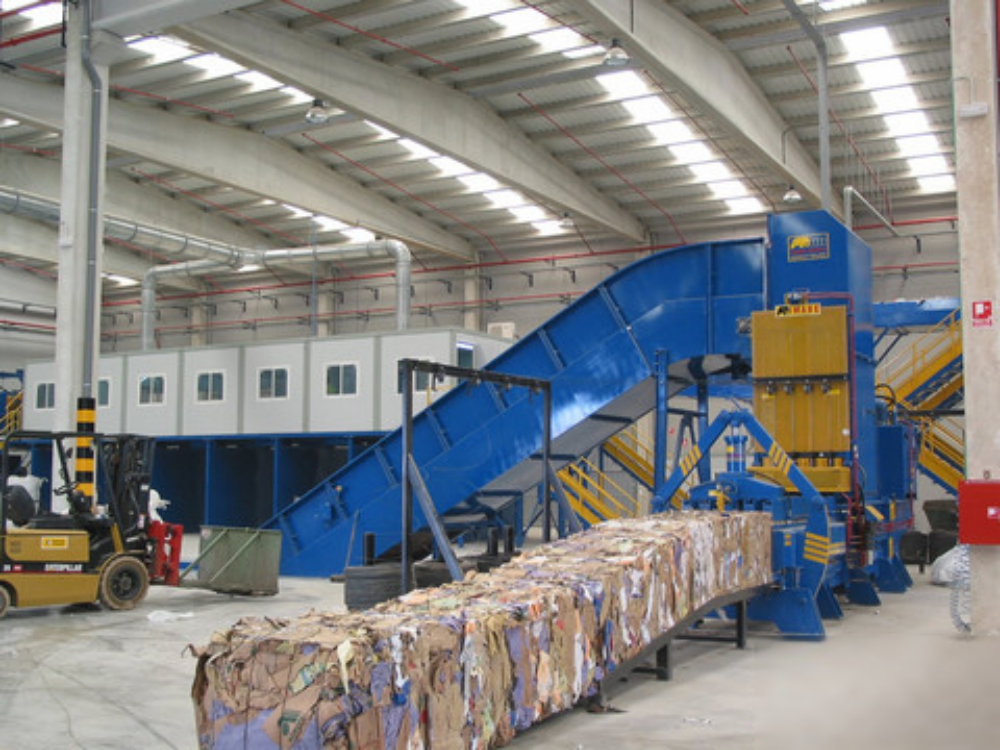
Main Cost Drivers: What Influences the Final Quote?
When you begin receiving quotes, you will notice price fluctuations even between machines that look similar. Several technical factors drive these costs. The first is the Cylinder Bore and System Pressure. The force exerted by the main ram determines the density of the bale. A larger cylinder bore requires more steel and a more robust hydraulic system, which increases the price but allows for heavier, more transport-efficient bales.
The second driver is Motor Horsepower and Cycle Time. A higher horsepower motor allows the hydraulic pump to move the ram faster, reducing the cycle time. If your plant needs to process 10 tons of material per hour, you will need a significantly more powerful (and expensive) motor than a plant processing 2 tons per hour. Additionally, the quality of the hydraulic components—such as the manifold, valves, and cooling system—plays a massive role in the machine’s longevity and price.
Material of construction and wear liners also impact the cost. High-quality balers, like those offered by HARSLE, utilize abrasion-resistant steel liners (such as Hardox) in high-wear areas. While this adds to the upfront cost, it prevents the frame from warping or wearing through over years of processing abrasive materials like dusty cardboard or metal scraps. When considering the key questions ask before buying a horizontal baler plant, always ask about the specific grade of steel used in the chamber.
Configuration Impact: Tailoring the Machine to Your Workflow
The configuration of your horizontal baler determines how well it integrates into your existing plant layout. One of the most critical decisions is the Feed Opening and Hopper Design. If you are feeding the baler with a large forklift or a wide conveyor, the hopper must be sized accordingly to prevent bridging (material getting stuck). A hopper that is too small will create a bottleneck, regardless of how fast the ram cycles.
Another configuration choice is the Tying System. Manual-tie balers require an operator to be present for every bale completion, which can be a labor drain. Auto-tie systems use a needle and twister mechanism to secure the bale automatically. Within auto-tie systems, you can choose between wire or plastic strapping. Wire is more common for heavy-duty applications, while plastic is often preferred in waste-to-energy plants where the bale must be incinerated without metal residue.

Furthermore, consider the Ejection System. Some balers are “closed-end,” meaning the bale is pushed against a solid door to achieve maximum density before being ejected. Others are “open-end” or “extrusion” style, where the friction of the previous bales provides the resistance. Extrusion balers allow for continuous feeding and are generally faster, but they may struggle with certain slippery materials like plastic film unless equipped with a hydraulic tensioning system.
Hidden Costs: Beyond the Purchase Price
When calculating the total cost of ownership, many plant managers overlook the “hidden” expenses associated with industrial machinery. Installation and Site Preparation are the first hurdles. A horizontal baler is a heavy piece of equipment that requires a reinforced concrete pad to handle the vibration and weight. You may also need to upgrade your electrical service to accommodate the high-amperage draw of the baler’s motors.
Freight and Rigging are also significant. Because of their size, horizontal balers often require oversized load permits and specialized cranes for offloading and positioning. Depending on your location, this can add thousands of dollars to the project. Furthermore, don’t forget the cost of Consumables. Baling wire is a recurring expense that fluctuates with steel prices. An efficient baler that uses less wire per bale or allows for thinner gauge wire can save significant money over its lifespan.
Finally, consider Maintenance and Spare Parts. Every baler will eventually need hydraulic oil changes, seal replacements, and blade sharpening. If the machine uses proprietary parts that must be shipped from overseas with long lead times, a simple breakdown could shut down your waste processing for weeks. Choosing a manufacturer like HARSLE, which prioritizes standard, high-quality components, ensures that maintenance is manageable and parts are accessible.
ROI Calculation: How the Baler Pays for Itself
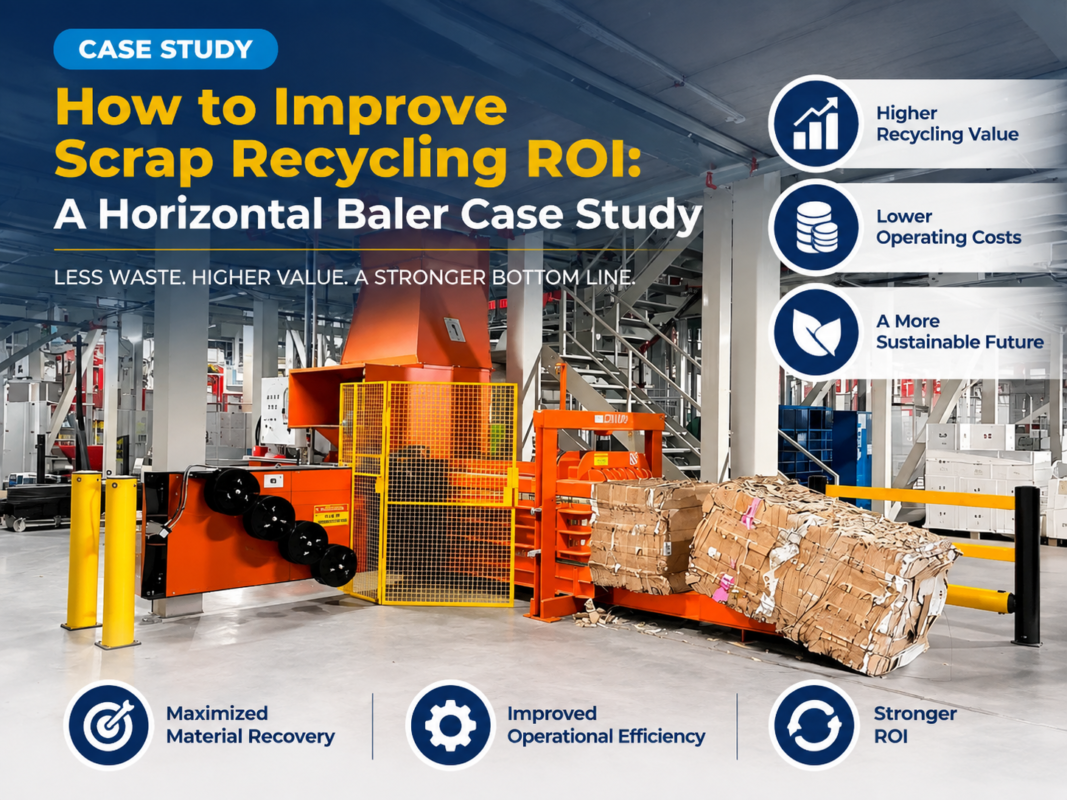
The primary justification for the key questions ask before buying a horizontal baler plant is the Return on Investment (ROI). A horizontal baler generates ROI through three main channels: labor savings, transportation savings, and material revenue. By automating the baling process, you can often reassign one or two employees who were previously spending their time breaking down boxes or managing loose waste.
Transportation savings are perhaps the most dramatic. Loose cardboard or plastic is mostly air. A horizontal baler creates high-density bales that maximize the weight capacity of a shipping container or truck. If you can increase your bale weight from 800 lbs to 1,200 lbs, you reduce the number of truck trips required by 33%. In an era of high fuel costs and driver shortages, these savings go straight to the bottom line.
Lastly, there is the Material Resale Value. Recyclers pay significantly more for “mill-size” bales that are clean and densely packed. In some cases, a plant that was previously paying a waste hauler to remove loose trash can flip the script and start receiving checks for their baled recyclables. When calculating ROI, compare your current monthly waste disposal costs against the monthly lease payment of the baler plus its operating costs. Most plants find that the machine pays for itself within 18 to 36 months.
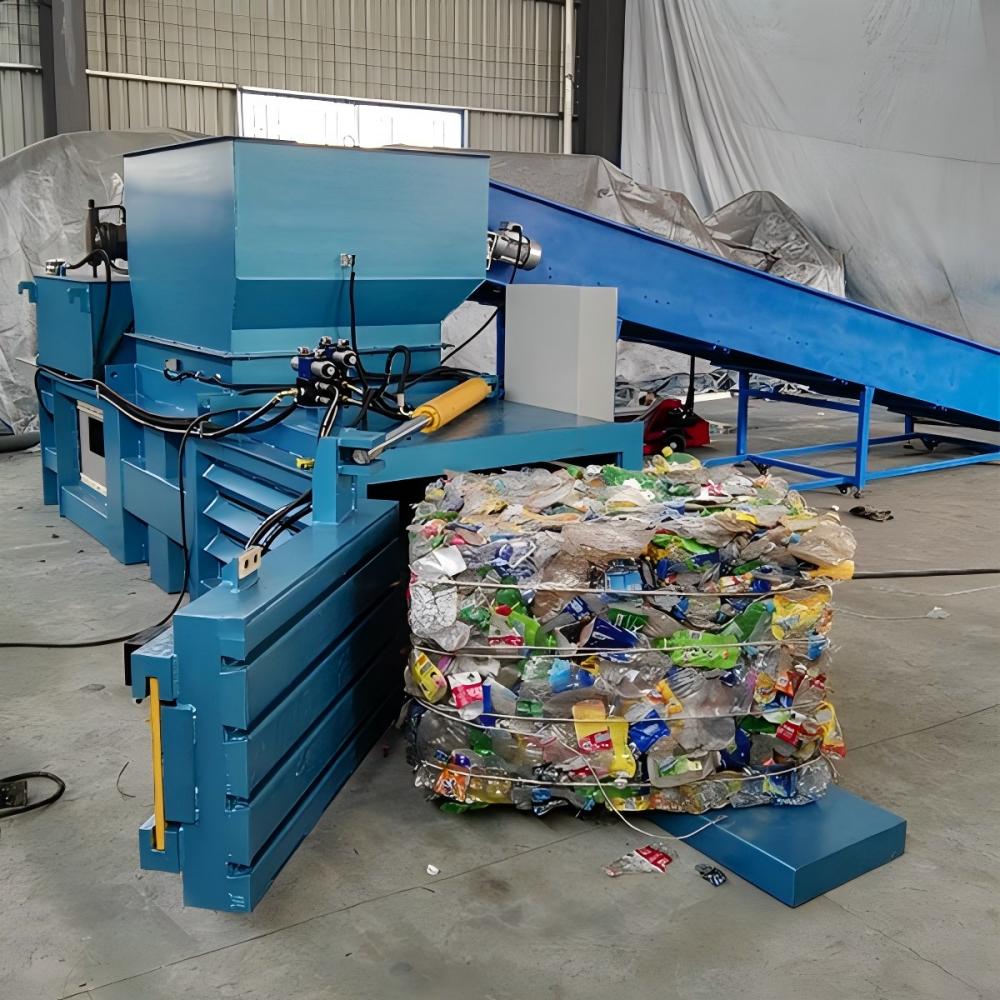
Buying Advice: Selecting the Right Partner
When you are ready to buy, the manufacturer you choose is just as important as the machine itself. Look for a supplier with a proven track record in metal fabrication and industrial machinery. Ask for references from plants similar to yours. A reputable manufacturer should be willing to provide a Material Test, where you send them a sample of your waste, and they bale it to demonstrate the density and cycle time you can expect.
Check the Safety Features. The baler must comply with local safety standards (such as ANSI or CE). It should feature emergency stop buttons, safety interlocks on all access doors, and clear labeling. A machine that lacks these features is a liability that could lead to catastrophic workplace injuries. Additionally, inquire about the Control System. Modern balers should feature a user-friendly PLC (Programmable Logic Controller) with a touchscreen interface that provides diagnostics and bale counts.
Finally, consider the Future-Proofing of your investment. Is the baler capable of handling a 20% increase in your production volume over the next five years? Can it be upgraded with a conveyor or an air-sort system later? Buying a machine that only meets your current needs is a common mistake. Always opt for a slightly higher capacity than you currently require to allow for business growth.
Frequently Asked Questions (FAQ)
1. What is the difference between a single-ram and a two-ram horizontal baler?
A single-ram baler uses one hydraulic cylinder to compress material against a door or through an extrusion neck. It is ideal for consistent materials like cardboard. A two-ram baler has a second cylinder that pushes the finished bale out the side. Two-ram balers are more versatile and can handle difficult materials like rubber, scrap metal, and mixed plastics because they don’t rely on friction for density.
2. How often does a horizontal baler require maintenance?
Daily checks should include inspecting hydraulic fluid levels and looking for leaks. Weekly maintenance involves greasing pivot points and cleaning out debris from behind the ram. A major service, including hydraulic oil filtration and blade inspection, should occur every 1,000 to 2,000 operating hours. Proper maintenance is the key to ensuring the key questions ask before buying a horizontal baler plant lead to a long-lasting machine.
3. Can one horizontal baler handle multiple types of material?
Yes, most horizontal balers can handle various materials, but you may need to adjust the pressure settings and tying configurations. For example, baling plastic requires more “memory” compensation than cardboard. If you plan to switch materials frequently, look for a baler with a PLC that allows you to save “recipes” or pre-set configurations for different waste streams.
4. What electrical requirements are typical for these machines?
Most industrial horizontal balers require 3-phase power, typically 208V, 230V, or 460V. The amperage requirement depends on the motor size (e.g., a 30HP motor will require a different circuit than a 100HP motor). Always consult with an industrial electrician before finalizing your purchase to ensure your facility can support the load.
5. How do I determine the right bale size for my plant?
The standard “mill-size” bale is approximately 60 x 30 x 42 inches. This size is preferred by most recyclers because it fits perfectly into standard shipping containers and trailers. Unless you have a very specific internal requirement, sticking to mill-size dimensions will ensure you get the best price for your recycled material.
6. Is an automatic tie system worth the extra cost?
If your plant produces more than 2-3 bales per hour, an automatic tie system is almost always worth the investment. The labor costs associated with manually tying 20+ bales a day quickly exceed the additional upfront cost of the auto-tie mechanism. It also improves safety by keeping operators away from the tying zone.