
Comprehensive Guide: How to Troubleshoot Material Backflow in an Industrial Shredder

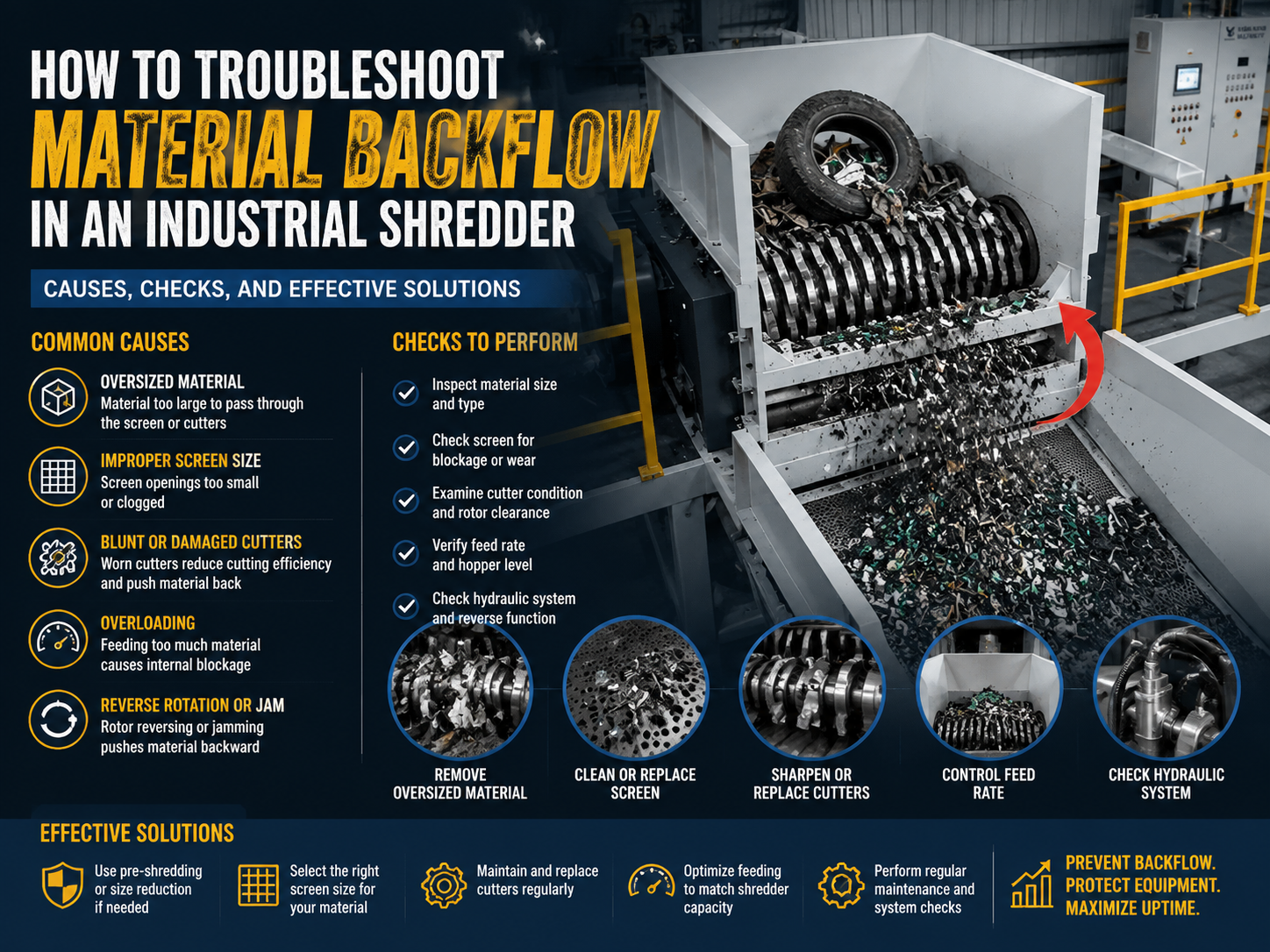
Introduction to Material Backflow in Industrial Shredding
In the high-stakes environment of metal fabrication and industrial recycling, the efficiency of an industrial shredder is paramount. However, one of the most frustrating and potentially dangerous issues operators face is material backflow—often referred to as ‘fly-back’ or ‘splashback.’ This phenomenon occurs when the material being fed into the machine is ejected back out of the hopper instead of being pulled into the cutting chamber. Not only does this significantly reduce throughput, but it also poses a severe safety risk to personnel and can lead to mechanical damage over time.
Understanding how to troubleshoot material backflow in an industrial shredder requires a deep dive into the physics of the cutting process. When a shredder’s blades engage with a workpiece, they must exert enough downward force and friction to overcome the material’s resistance. If the angle of attack is incorrect, or if the material is too buoyant or resilient, the energy of the rotating shafts can act like a catapult. This guide is designed to help plant managers and maintenance technicians identify the root causes of backflow and implement long-term technical solutions.
At HARSLE, we recognize that a shredder is the heartbeat of a scrap processing line. Whether you are dealing with aluminum extrusions, steel drums, or electronic waste, the consistency of the feed determines your bottom line. Troubleshooting backflow isn’t just about clearing a jam; it’s about optimizing the harmony between the hopper geometry, the blade profile, and the motor’s torque delivery. In the following sections, we will explore the technical nuances that keep material moving in the right direction.
Key Considerations for Shredder Performance
Before diving into specific mechanical fixes, it is essential to consider the broader operational context of your machinery. The first consideration is the material type. Different materials behave differently under the stress of a shredder’s teeth. For instance, hollow plastic containers or light-gauge metal sheets are more prone to bouncing on top of the blades, whereas heavy solid blocks might cause the machine to stall. Understanding the physical properties—such as elasticity, density, and shear strength—of your input material is the first step in troubleshooting backflow.
Safety is the second, and perhaps most critical, consideration. Material backflow is not just an efficiency problem; it is a projectile hazard. When troubleshooting, operators must ensure that all safety curtains, hopper extensions, and deflectors are in place. If a machine is frequently ejecting material, it may indicate that the original safety specifications of the hopper are being exceeded by the current material load. Never attempt to manually push material into a running shredder to stop backflow, as this can lead to catastrophic injury.
Thirdly, consider the machine’s design philosophy. Single-shaft shredders typically use a hydraulic ram to force material against a rotor, which inherently minimizes backflow. In contrast, twin-shaft or quad-shaft shredders rely on gravity and the ‘grab’ of the counter-rotating blades. If you are experiencing backflow in a multi-shaft system, the issue is often related to the ‘nip point’—the area where the two shafts meet. If the blades cannot find a purchase on the material, the upward rotation of the outer edges of the blades can lift the material back out of the chamber.
Finally, environmental factors such as moisture and temperature can play a role. Wet material can become slippery, reducing the friction necessary for the blades to pull it down. Conversely, extremely cold temperatures can make certain plastics or metals more brittle, causing them to shatter upon impact and send shards flying upward. A holistic view of the operating environment is necessary for effective troubleshooting.
Technical Details of the Shredding Mechanism
To effectively troubleshoot material backflow in an industrial shredder, one must understand the technical interaction between the blade geometry and the material. The ‘hook’ or ‘tooth’ of the shredder blade is designed to pierce and then pull. If the hook is worn down, the blade becomes a blunt instrument that strikes the material rather than grabbing it. This impact energy is often redirected upward, causing the material to jump. The radius of the blade and the number of hooks per disc are critical variables that must be matched to the material size.
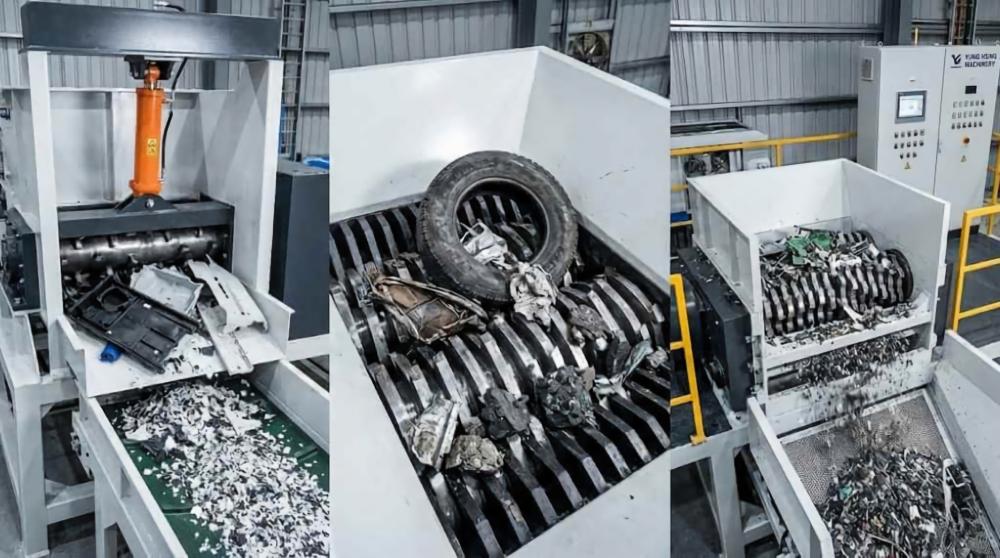
Another technical aspect is the clearance between the blades and the spacers or the counter-knives. In a well-maintained shredder, this clearance is kept to a minimum to ensure a clean shear. When the gap widens due to bearing wear or shaft deflection, the material can get wedged or ‘smeared’ between the blades. This creates a buildup of pressure that can eventually force the material to pop out of the cutting zone. Measuring these tolerances with a feeler gauge is a standard part of technical troubleshooting.
The rotational speed (RPM) and torque of the shafts also dictate how material is processed. High-speed shredders are more prone to backflow because the kinetic energy of the blades is higher, leading to more violent ‘bounces’ if the material isn’t immediately gripped. Low-speed, high-torque shredders are generally better at managing backflow, but even they can struggle if the PLC (Programmable Logic Controller) settings are not optimized. For example, if the ‘auto-reverse’ function is triggered too frequently or too aggressively, the sudden change in direction can toss material back into the hopper.
The Role of the Hopper and Baffles
The hopper is not just a funnel; it is a containment system. Technical troubleshooting should include an inspection of the hopper’s internal walls. Many industrial shredders feature ‘anti-backflow’ baffles or serrated plates on the hopper walls. These are designed to catch material that is being pushed upward and redirect it back toward the center of the shafts. If these baffles are worn smooth or have been removed, backflow will increase significantly.
Furthermore, the angle of the hopper walls impacts how material settles. If the walls are too steep, material may bridge, creating a void above the blades. When the bridge collapses, the sudden influx of material can overwhelm the blades, leading to a rejection of the excess. Conversely, if the walls are too shallow, the material may not feed into the nip point with enough gravitational pressure to ensure a consistent grab.
Step-by-Step Troubleshooting Guide
When you encounter persistent backflow, follow this systematic approach to identify and resolve the issue:
- Step 1: Visual Inspection of Blade Condition. Shut down and lock out the machine. Inspect the hooks on every blade. Are they rounded? Are there chipped teeth? If the leading edges are dull, they will push material rather than pulling it. Sharpening or replacing the blades is often the most effective fix for backflow.
- Step 2: Check the Feed Rate. Overloading the hopper is a primary cause of backflow. If the cutting chamber is completely buried in material, the blades cannot effectively ‘bite’ into individual pieces. Try reducing the feed rate to see if the backflow subsides. Consistent, metered feeding is always superior to bulk dumping.
- Step 3: Analyze Material Orientation. Long, thin materials (like pipes or extrusions) can sometimes stand vertically in the hopper. When the blades hit the end of a vertical piece, it acts like a spring and jumps back. Using a ‘pusher’ or changing the way material is loaded can help keep items horizontal and engaged with the blades.
- Step 4: Inspect the Screen (if applicable). Many shredders use a screen under the shafts to control output size. If the screen is clogged, material cannot exit the chamber, leading to a buildup that eventually forces material back up through the top. Ensure the screen is clear and the holes are not deformed.
- Step 5: Review PLC and Inverter Settings. Check the amperage limits that trigger an auto-reverse. If the limit is too low, the machine reverses before it can finish a cut, tossing the material back up. Adjusting the timing and sensitivity of the reverse cycle can stabilize the feed.
In many cases, the solution is a combination of these steps. For example, sharpening the blades while also installing a hopper extension can provide both better ‘grab’ and better containment. It is also worth checking the drive belts or hydraulic pressure; if the shafts are slipping under load, they won’t have the force necessary to pull the material through the shear point.
Selection Advice for Minimizing Backflow
If you are in the market for a new industrial shredder, or looking to upgrade your current setup, choosing a machine designed to prevent backflow is a wise investment. At HARSLE, we emphasize engineering solutions that address these common operational hurdles. When selecting a machine, look for the following features:
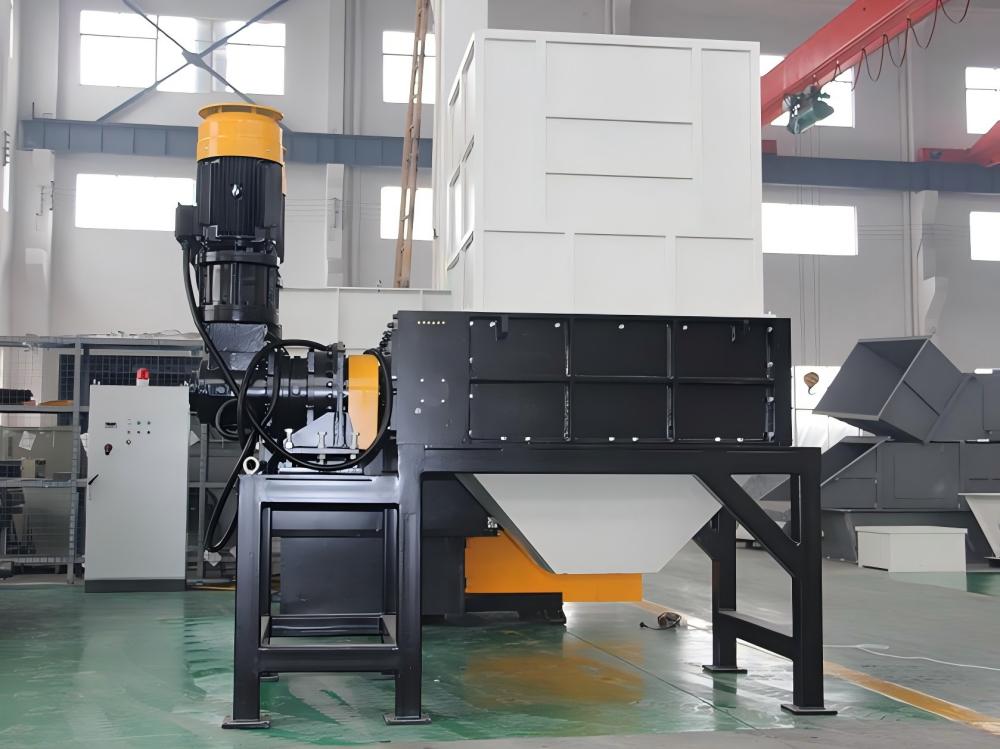
1. Advanced Blade Profiles: Look for blades specifically designed for your material. For example, ‘aggressive’ hooks with a deep undercut are excellent for grabbing bulky plastic or light metal, whereas ‘multi-tooth’ discs are better for consistent sizing of uniform materials. The metallurgy of the blade also matters; high-chromium or tungsten-carbide tipped blades maintain their sharpness longer, reducing the frequency of backflow issues caused by wear.
2. Integrated Ram or Pusher Systems: For single-shaft shredders, the design of the hydraulic ram is crucial. A ‘swing-arm’ ram or a horizontal pusher ensures that the material is constantly pressed against the rotor, leaving no room for it to bounce back. This is the most effective mechanical solution for backflow prevention in high-volume applications.
3. Hopper Geometry and Safety Features: A well-designed hopper should include ‘anti-flyback’ curtains made of heavy-duty rubber or chain mail. Additionally, the hopper should be deep enough to contain the maximum expected bounce height of the material. Some HARSLE models feature a ‘tapered’ hopper design that prevents material from bridging, ensuring a steady flow into the cutting zone.
4. Intelligent Control Systems: Modern shredders should come equipped with sophisticated PLC systems. These systems monitor the motor’s current and can distinguish between a minor resistance and a true jam. By fine-tuning the ‘reverse-and-restart’ logic, the machine can clear itself without ejecting material back into the hopper. Look for machines that allow for custom programming based on the specific density of your scrap.
Comparison Table: Shredder Types and Backflow Tendencies
| Shredder Type | Backflow Risk | Primary Cause | Best Prevention Method |
|---|---|---|---|
| Single-Shaft | Low | Ram pressure too low | Optimize hydraulic pusher settings |
| Twin-Shaft | Moderate | Dull blades / Light material | Install hopper baffles and sharpen hooks |
| Four-Shaft | Very Low | Screen clogging | Regular screen maintenance and cleaning |
| High-Speed Granulator | High | Centrifugal force | Use heavy-duty safety curtains and deep hoppers |
Frequently Asked Questions (FAQ)
1. Why does my shredder only eject material when it’s nearly empty?
This is a common issue known as ‘pop-corning.’ When the hopper is full, the weight of the material above keeps the pieces at the bottom pressed against the blades. When the hopper is nearly empty, there is no downward pressure, allowing the blades to strike the material and send it flying. The solution is to maintain a consistent ‘head’ of material in the hopper or use a weighted ‘press-down’ device.
2. Can I sharpen shredder blades without removing them?
While some minor touch-ups can be done with a hand grinder, it is generally not recommended for resolving backflow. To truly fix the issue, the blades need to be removed and ground to the correct profile on a precision machine to ensure the hook angle and clearances are restored to factory specifications. HARSLE provides detailed maintenance guides for blade refurbishment.
3. Is material backflow always a sign of a mechanical problem?
Not necessarily. Sometimes it is a sign of ‘material mismatch.’ If you are trying to shred material that is too large or too hard for the machine’s rated capacity, the blades will naturally reject it. Always check that your input material matches the machine’s technical specifications provided by the manufacturer.
4. How often should I check the clearances in the cutting chamber?
For high-volume operations, a weekly visual inspection is recommended, with a detailed measurement of clearances every month. If you notice an increase in backflow or a decrease in output quality (e.g., more ‘fines’ or unshredded pieces), check the clearances immediately, as this indicates shaft deflection or blade wear.
5. Do hopper extensions really help with backflow?
Yes, hopper extensions increase the ‘containment zone.’ By increasing the distance the material has to travel to exit the machine, you significantly reduce the risk of injury and keep the material within the machine’s influence, eventually allowing it to fall back into the blades.
Conclusion: Optimizing Your Shredding Operation
Troubleshooting material backflow in an industrial shredder is a vital skill for any metal fabrication or recycling professional. It requires a balance of mechanical maintenance, operational discipline, and technical understanding. By keeping your blades sharp, maintaining proper clearances, and ensuring your hopper is designed for the task at hand, you can eliminate the inefficiencies and hazards associated with fly-back. A shredder that pulls material consistently is a machine that generates profit and ensures a safe working environment.
At HARSLE, we are committed to providing not just high-quality machinery, but also the technical expertise needed to keep that machinery running at peak performance. Our range of single, twin, and four-shaft shredders are engineered with anti-backflow features and robust control systems to handle the toughest industrial challenges. If you are experiencing persistent issues with your shredding process, or if you are looking to invest in a machine that prioritizes efficiency and safety, our team of engineers is ready to assist you with customized solutions tailored to your specific material needs.
Remember, the key to successful shredding is not just power—it’s control. By implementing the troubleshooting steps outlined in this guide, you can transform your waste processing line into a model of industrial efficiency. Stay proactive with your maintenance, respect the physics of the cutting chamber, and your HARSLE equipment will provide years of reliable service in the demanding world of metal fabrication.


