
Industrial Shredder Gearbox Issues: How to Identify and Solve Them

Introduction to Industrial Shredder Gearbox Reliability
In the world of heavy-duty waste management and metal recycling, the industrial shredder stands as a cornerstone of productivity. At the heart of these powerful machines lies the gearbox—a critical component responsible for converting high-speed motor rotation into the massive torque required to tear through steel, plastic, and rubber. However, because the gearbox is subjected to extreme mechanical stress, it is often the primary site for operational failures. Understanding Industrial Shredder Gearbox Issues: Identify Solve Them is essential for any facility manager or maintenance engineer looking to minimize downtime and protect their capital investment.
HARSLE has long been at the forefront of manufacturing robust metal fabrication and recycling equipment. We recognize that a shredder is only as reliable as its drivetrain. When a gearbox fails, the entire production line grinds to a halt, leading to significant financial losses. This guide is designed to provide a deep dive into the common symptoms of gearbox distress, the underlying technical causes, and the practical solutions required to restore your machinery to peak performance.
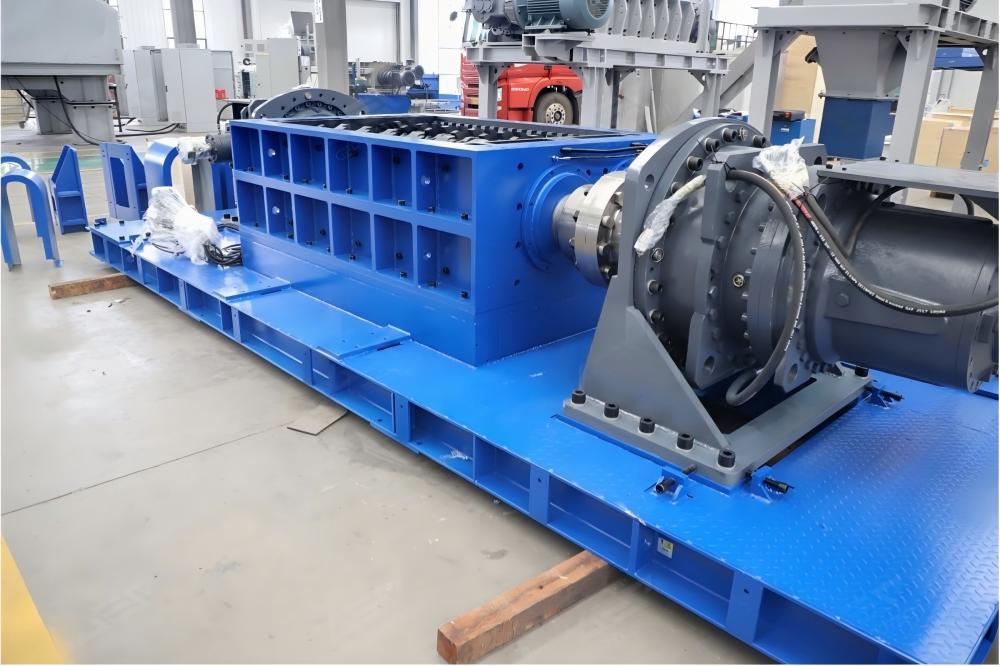
The complexity of modern gearboxes, particularly planetary and multi-stage helical designs used in double-shaft shredders, requires a sophisticated approach to troubleshooting. It is not enough to simply replace parts; one must understand the interplay between lubrication, heat dissipation, and structural alignment. By mastering the identification of early warning signs, operators can transition from reactive repairs to a proactive maintenance strategy that extends the lifespan of the equipment by years.
Key Considerations: Identifying Early Warning Signs
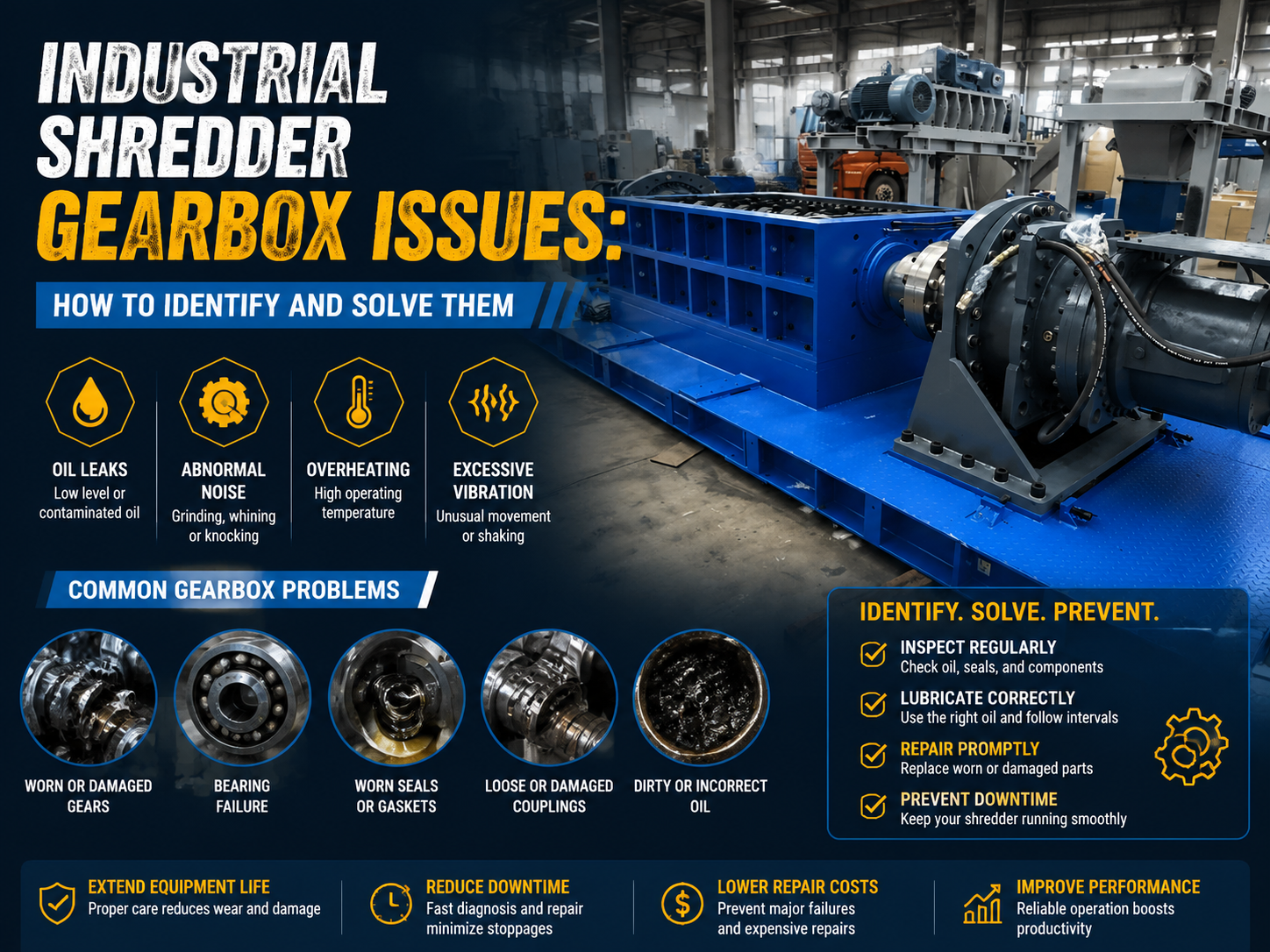
Identifying Industrial Shredder Gearbox Issues: Identify Solve Them begins with sensory observation. The gearbox often communicates its internal state through sound, temperature, and vibration. One of the most common indicators of trouble is abnormal noise. While shredders are inherently loud, a healthy gearbox produces a consistent, rhythmic hum. If you begin to hear high-pitched whining, it may indicate bearing wear or improper gear meshing. Conversely, a deep grinding or clunking sound often suggests broken gear teeth or significant internal debris.
Thermal monitoring is another critical aspect of identification. Gearboxes generate heat naturally due to friction, but excessive temperatures—typically anything exceeding 80°C (176°F) on the housing surface—are a red flag. Overheating can be caused by low oil levels, the use of incorrect lubricant viscosity, or internal friction from misaligned shafts. If the oil begins to oxidize due to high heat, its lubricating properties diminish, creating a vicious cycle of increasing friction and rising temperatures.
Vibration analysis is a more technical but highly effective method of identification. Excessive vibration can shake the entire shredder frame, leading to loosened bolts and structural fatigue. In many cases, vibration is the result of an unbalanced load or a coupling misalignment between the motor and the gearbox. Using handheld vibration meters can help maintenance teams quantify these issues before they lead to a catastrophic shaft breakage.
Finally, visual inspections for oil leaks should never be overlooked. A gearbox is a sealed system; any sign of oil on the exterior or the floor beneath the unit indicates a compromised seal. Leaks not only lead to low lubrication levels but also allow contaminants like dust and metal fines to enter the gearbox, where they act as an abrasive paste, rapidly wearing down precision-engineered gear surfaces.
Technical Details: The Mechanics of Gearbox Failure
To truly solve Industrial Shredder Gearbox Issues: Identify Solve Them, one must understand the internal mechanics. Most industrial shredders utilize planetary gearboxes because of their high torque density. In these systems, the load is shared among multiple planet gears. If one gear becomes chipped or misaligned, the load distribution is disrupted, putting immense pressure on the remaining gears. This often leads to a “domino effect” where the entire gear set fails shortly after the initial damage occurs.
Lubrication science plays a pivotal role in gearbox health. Industrial shredders require Extreme Pressure (EP) lubricants that contain additives designed to prevent metal-to-metal contact under heavy shock loads. Over time, these additives deplete. Furthermore, moisture contamination—common in outdoor recycling yards—can lead to oil emulsification. Emulsified oil loses its film strength, leading to “pitting” on the gear teeth. Pitting is a form of surface fatigue where small cavities form on the tooth face, eventually leading to large-scale spalling and gear failure.
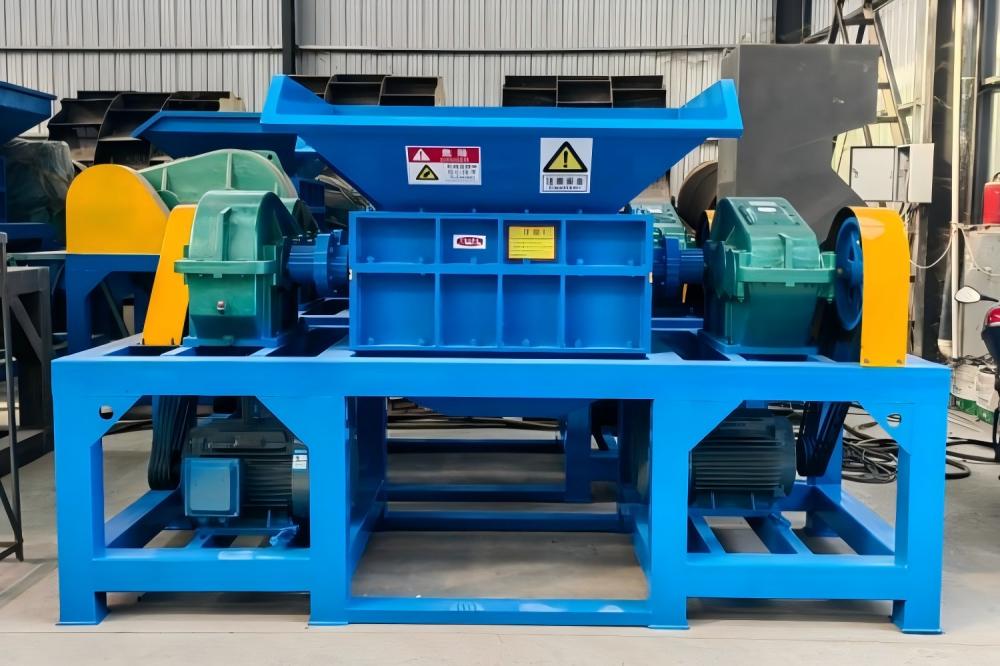
Bearing failure is another technical hurdle. Bearings in a shredder gearbox must handle both radial loads (from the rotation) and axial loads (from the shredding action pushing against the shafts). If the bearings are not seated correctly or if the preload is lost, the shafts can shift. Even a few microns of displacement can alter the gear mesh pattern, causing uneven wear and increasing the risk of tooth shear. HARSLE machines are engineered with high-capacity tapered roller bearings to mitigate these risks, but they still require periodic checks.
| Issue Type | Common Cause | Technical Symptom | Recommended Solution |
|---|---|---|---|
| Overheating | Low oil or high friction | Housing temp > 80°C | Check oil levels; verify viscosity |
| Excessive Noise | Gear tooth damage | Grinding/Clunking | Internal inspection; gear replacement |
| Oil Leakage | Seal degradation | Visible oil on housing | Replace lip seals or O-rings |
| Vibration | Misalignment | Structural shaking | Re-align motor and gearbox shafts |
| Contamination | Poor filtration | Dark, gritty oil | Flush system and replace oil filter |
Selection Advice: Choosing the Right Gearbox for Longevity
When purchasing or upgrading equipment, selecting the right gearbox is the best way to prevent future Industrial Shredder Gearbox Issues: Identify Solve Them. The first factor to consider is the Service Factor (SF). For industrial shredding, which involves frequent shock loads and reversals, a service factor of 2.0 or higher is generally recommended. This means the gearbox is rated for twice the actual torque produced by the motor, providing a safety buffer for when the shredder encounters unshreddable objects like heavy steel plates.
The choice between a planetary gearbox and a helical gearbox depends on your specific application. Planetary gearboxes are excellent for high-torque, compact spaces, making them ideal for mobile shredders or dense material processing. Helical gearboxes, while larger, are often easier to maintain and offer better heat dissipation. At HARSLE, we consult with our clients to determine the optimal drivetrain configuration based on the specific materials they intend to process, whether it be light plastics or heavy scrap metal.
Another critical selection criterion is the cooling system. For shredders operating in hot climates or 24/7 shifts, an internal splash lubrication system may not be sufficient. In these cases, an external oil cooling loop with a heat exchanger and pump is necessary. This ensures that the lubricant remains within its optimal temperature range, preserving its chemical integrity and protecting the internal components from thermal expansion issues.
Finally, consider the ease of serviceability. A gearbox that requires complete disassembly of the shredder just to change a seal is a liability. Look for designs that feature accessible inspection ports and modular components. HARSLE prioritizes maintenance-friendly designs, ensuring that routine tasks can be performed quickly, thereby reducing the total cost of ownership over the machine’s life cycle.
Step-by-Step Troubleshooting and Solutions
If you have identified Industrial Shredder Gearbox Issues: Identify Solve Them, follow this systematic approach to resolution. First, perform a “Lockout-Tagout” (LOTO) procedure to ensure the machine cannot be energized during inspection. Safety is paramount when dealing with high-torque machinery. Once the machine is safe, drain a small sample of the gear oil. If the oil contains metallic flakes or smells burnt, an internal failure is likely, and the gearbox will need to be opened.
For issues involving overheating, check the cooling fins on the gearbox housing. Often, these become clogged with dust and debris, preventing air-cooled units from shedding heat. Clean the exterior thoroughly. If the unit is water-cooled, check the heat exchanger for scale buildup or blockages. If the cooling system is functional but heat persists, check the oil level. Both under-filling and over-filling can cause overheating; over-filling leads to “churning,” where the gears must work harder to move through the excess oil, generating friction heat.
To solve vibration issues, use a laser alignment tool to check the coupling between the motor and the gearbox input shaft. Even a slight angular or parallel misalignment can cause the bearings to fail prematurely. If the alignment is correct but vibration remains, inspect the shredder blades. Dull or broken blades create uneven resistance, which sends shockwaves back through the drivetrain. Sharpening or replacing the cutting elements often solves what appears to be a gearbox problem.
When internal repairs are necessary, such as replacing a gear or bearing, always replace components in sets. Installing a new gear alongside a worn one will result in a poor mesh pattern and rapid failure of the new part. Ensure that all internal surfaces are cleaned with a lint-free cloth and that the new components are pre-lubricated before assembly. After any major repair, perform a “break-in” run with light loads to ensure everything is seated correctly before returning to full production capacity.
Frequently Asked Questions (FAQ)
How often should I change the oil in my industrial shredder gearbox?
For most HARSLE shredders, the first oil change should occur after the initial 500 hours of operation (the break-in period). Subsequent changes should typically happen every 2,500 to 4,000 hours, or at least once a year. However, if the shredder operates in extreme heat or dusty environments, more frequent changes are necessary. Regular oil analysis is the best way to determine the exact interval for your specific conditions.
What is the most common cause of gearbox failure in metal shredders?
The most common cause is “shock loading.” This occurs when the shredder encounters an object it cannot cut, causing an instantaneous spike in torque. While safety clutches and electronic torque limiters are designed to protect the system, repeated shock loads eventually lead to fatigue in the gear teeth and shafts. Proper pre-sorting of materials is the best preventative measure.
Can I use standard automotive gear oil in my shredder?
No. Industrial shredder gearboxes require specialized industrial gear oils with Extreme Pressure (EP) additives and anti-foaming agents. Automotive oils do not have the same load-carrying capacity and may break down under the high-torque, low-speed conditions typical of shredding operations. Always refer to the manufacturer’s manual for the correct ISO viscosity grade.
Why is my gearbox leaking oil from the input shaft?
This is usually due to a failed lip seal. Seals can fail due to normal wear, heat-induced hardening, or debris getting caught between the shaft and the seal. If the shaft itself is scored or pitted, simply replacing the seal may not work; the shaft may need to be polished or sleeved to provide a proper sealing surface.
How do I know if my gearbox bearings are failing?
Early signs of bearing failure include an increase in operating temperature and a change in the sound of the gearbox (usually a high-pitched whine). If you can detect axial or radial play in the input or output shafts by hand (when the machine is off), the bearings are significantly worn and must be replaced immediately to avoid gear damage.
Conclusion: Maintaining Peak Shredder Performance
Addressing Industrial Shredder Gearbox Issues: Identify Solve Them is a continuous process that combines technical knowledge with diligent maintenance habits. The gearbox is the muscle of your shredding operation, and its health directly dictates your facility’s throughput and profitability. By paying close attention to noise, heat, and vibration, and by adhering to a strict lubrication schedule, you can prevent the vast majority of common failures.
At HARSLE, we believe that providing high-quality machinery is only half the battle; supporting our customers with the knowledge to maintain that machinery is equally important. Whether you are operating a single-shaft plastic shredder or a massive double-shaft metal recycler, the principles of gearbox care remain the same. Invest in quality lubricants, train your operators to recognize early warning signs, and never ignore a small leak or a new sound.
In conclusion, while the industrial environment is harsh, your gearbox doesn’t have to suffer. With the right approach to identification and solving issues, you can ensure that your HARSLE equipment remains a reliable asset for decades. If you encounter a complex issue that requires expert intervention, our technical support team is always ready to assist with parts, advice, and on-site service to keep your production lines moving forward.


