Why Scrap Metal Shear Cuts Are Uneven and How to Correct Them

Introduction to Scrap Metal Shearing Precision
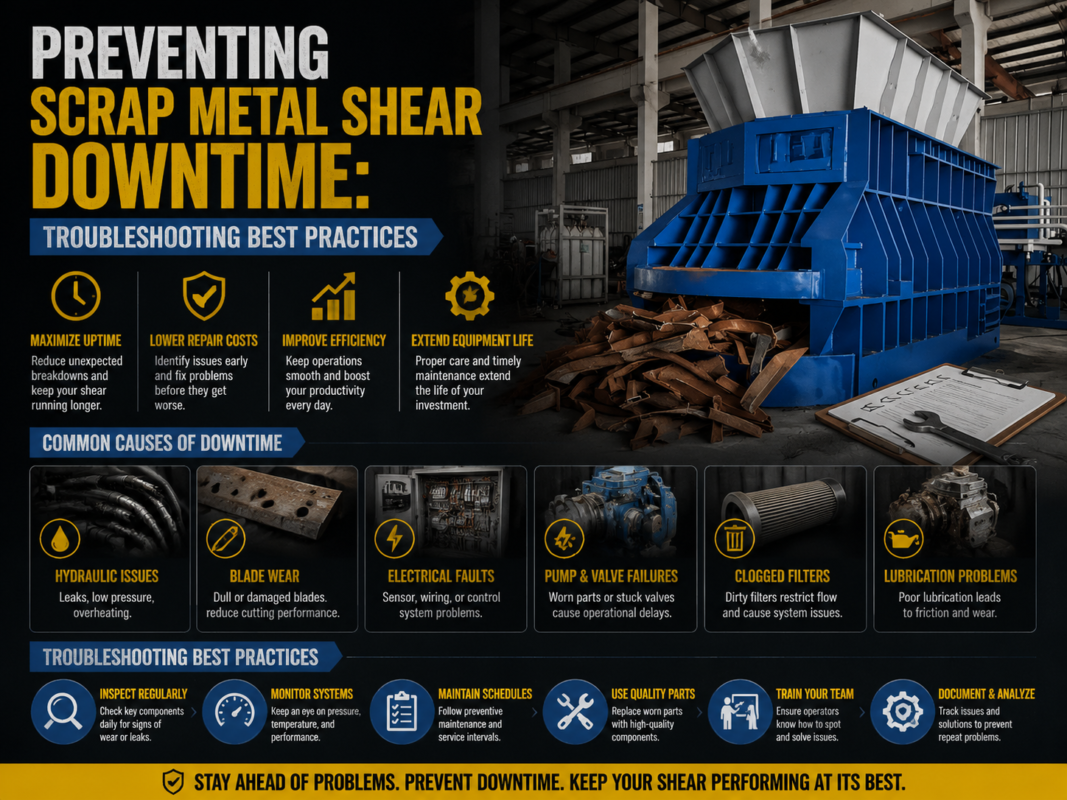
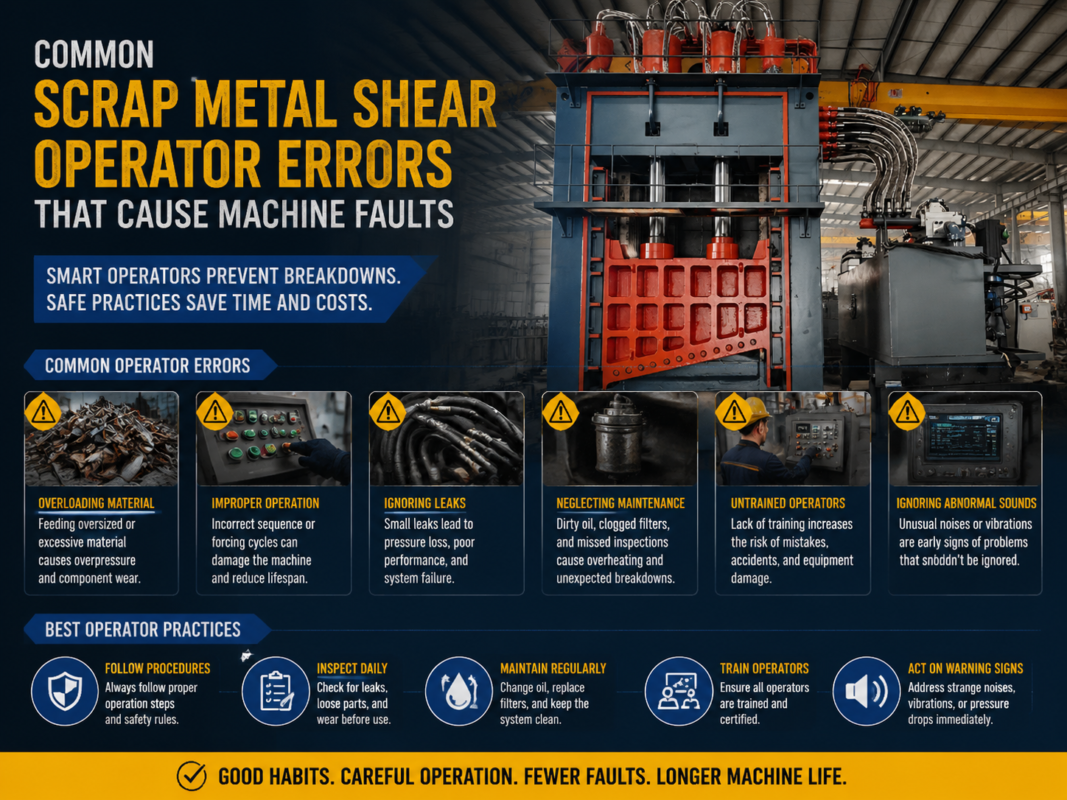
In the high-stakes world of metal recycling and industrial fabrication, the scrap metal shear is a workhorse. Whether you are operating a gantry shear, an alligator shear, or a container shear, the goal is always the same: efficient, clean, and consistent cuts. However, operators frequently encounter a frustrating issue: scrap metal shear cuts are uneven. This problem is more than just a cosmetic concern. Uneven cuts can lead to increased wear on the machine, safety hazards for operators, and a significant reduction in the resale value of the processed scrap material.
When scrap metal shear cuts are uneven, it often signals an underlying mechanical or operational discrepancy that, if left unaddressed, can lead to catastrophic machine failure. Understanding the root causes—ranging from blade dullness to hydraulic imbalances—is the first step toward optimization. At HARSLE, we recognize that downtime is costly. This guide is designed to provide a deep dive into the technical reasons behind uneven shearing and offer actionable solutions to ensure your equipment operates at peak performance.
Precision in shearing is governed by a delicate balance of force, geometry, and material science. When any of these factors are out of alignment, the resulting cut will deviate from the intended path. This article will explore the complexities of blade gap settings, the role of hydraulic synchronization, and the impact of material properties on the shearing process. By the end of this guide, you will have a comprehensive understanding of how to diagnose and correct uneven cuts in your scrap metal shear.
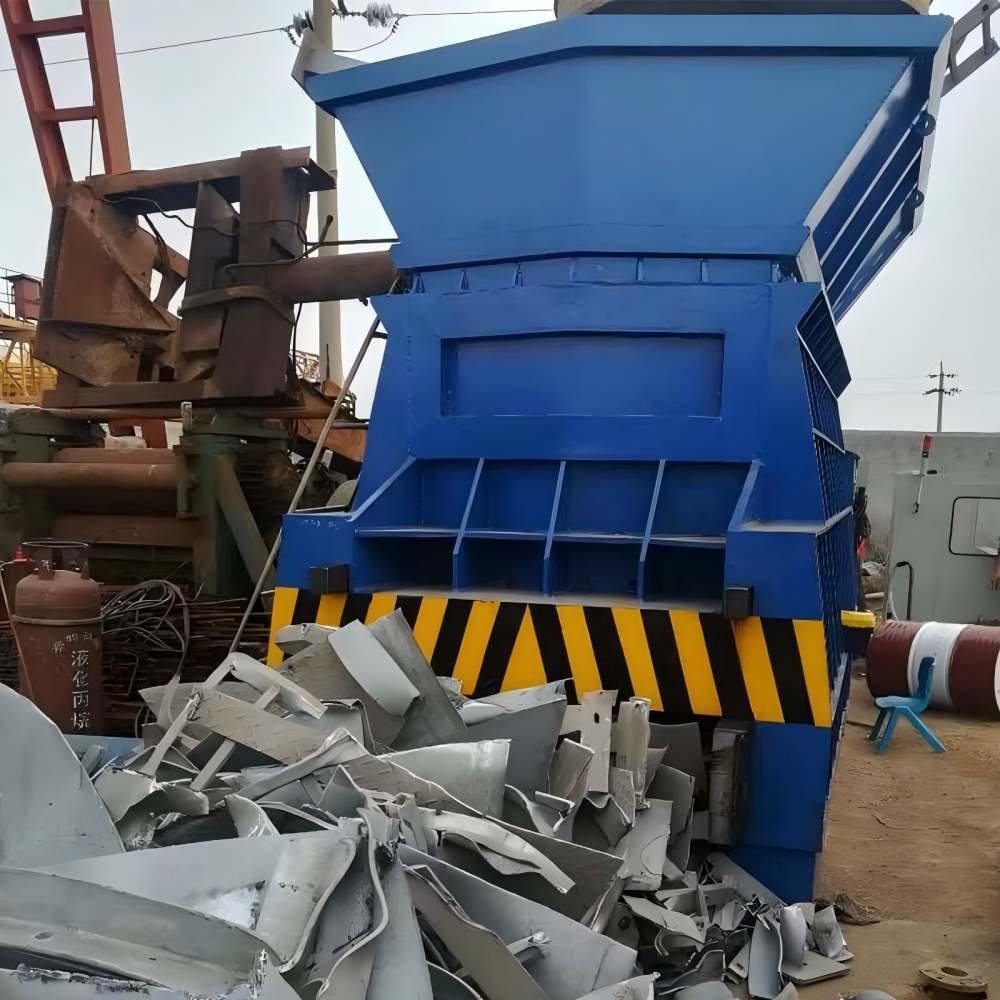
Key Considerations: Why Scrap Metal Shear Cuts Are Uneven
1. Improper Blade Clearance (The Blade Gap)
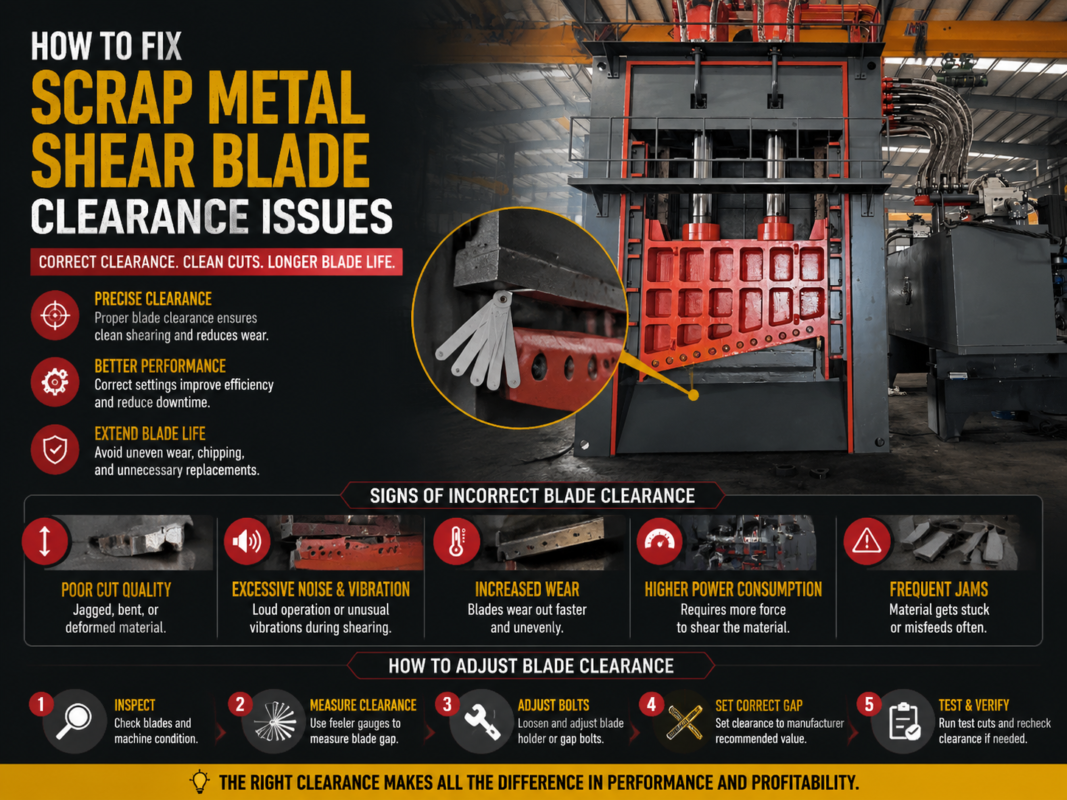
The most common reason why scrap metal shear cuts are uneven is improper blade clearance. The “gap” between the upper and lower blades must be precisely calibrated based on the thickness and tensile strength of the material being cut. If the gap is too wide, the metal will tend to fold or tear rather than shear cleanly, resulting in a jagged or slanted edge. Conversely, if the gap is too narrow, the blades may rub against each other, causing excessive heat, premature wear, and potential chipping of the blade edges.
In industrial scrap processing, operators often switch between different types of metal—such as aluminum, copper, and heavy steel—without adjusting the blade clearance. This oversight is a primary driver of uneven cuts. A general rule of thumb is that the blade gap should be approximately 7% to 10% of the material thickness. However, for high-tensile alloys, this percentage may need to be tighter to prevent the material from “slipping” during the stroke.
2. Blade Wear and Dullness
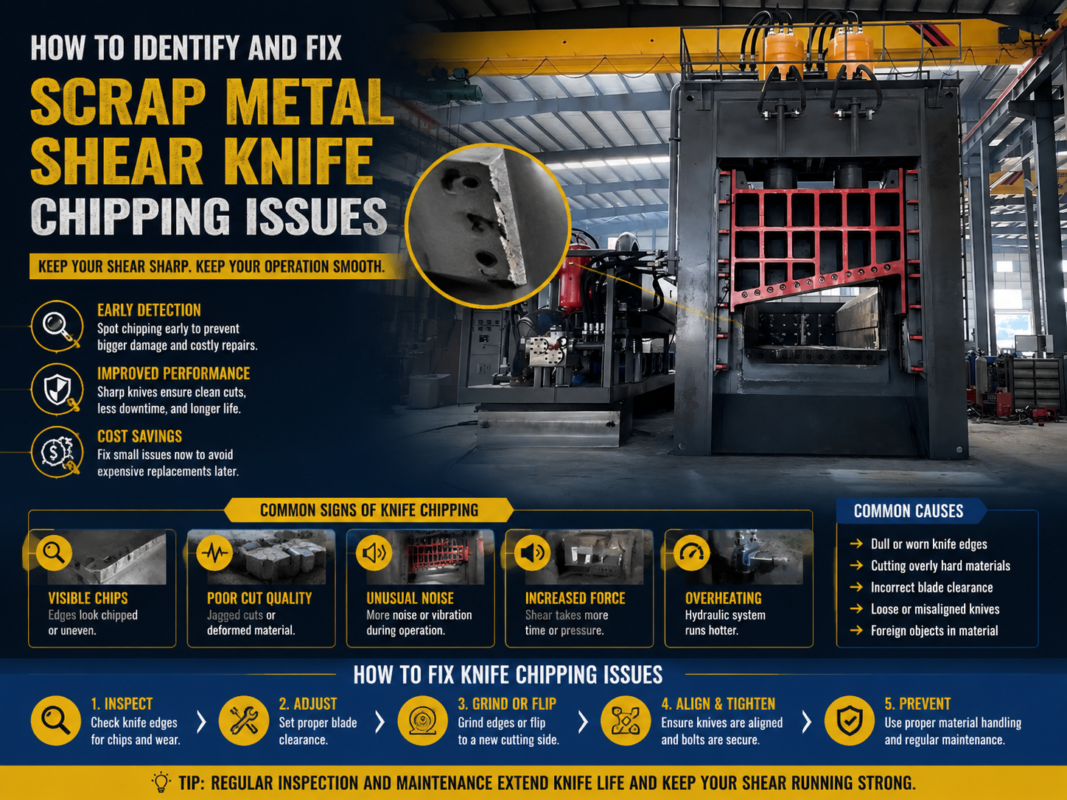
Scrap metal is notoriously abrasive. Over time, the sharp edges of the shearing blades become rounded. A dull blade does not penetrate the metal efficiently; instead, it pushes the material, leading to deformation before the actual fracture occurs. This deformation manifests as an uneven or “burred” cut. Furthermore, uneven wear across the length of the blade—often caused by consistently shearing smaller pieces on only one side of the machine—can cause the shear beam to tilt slightly during operation, further exacerbating the problem.
3. Hydraulic System Imbalance
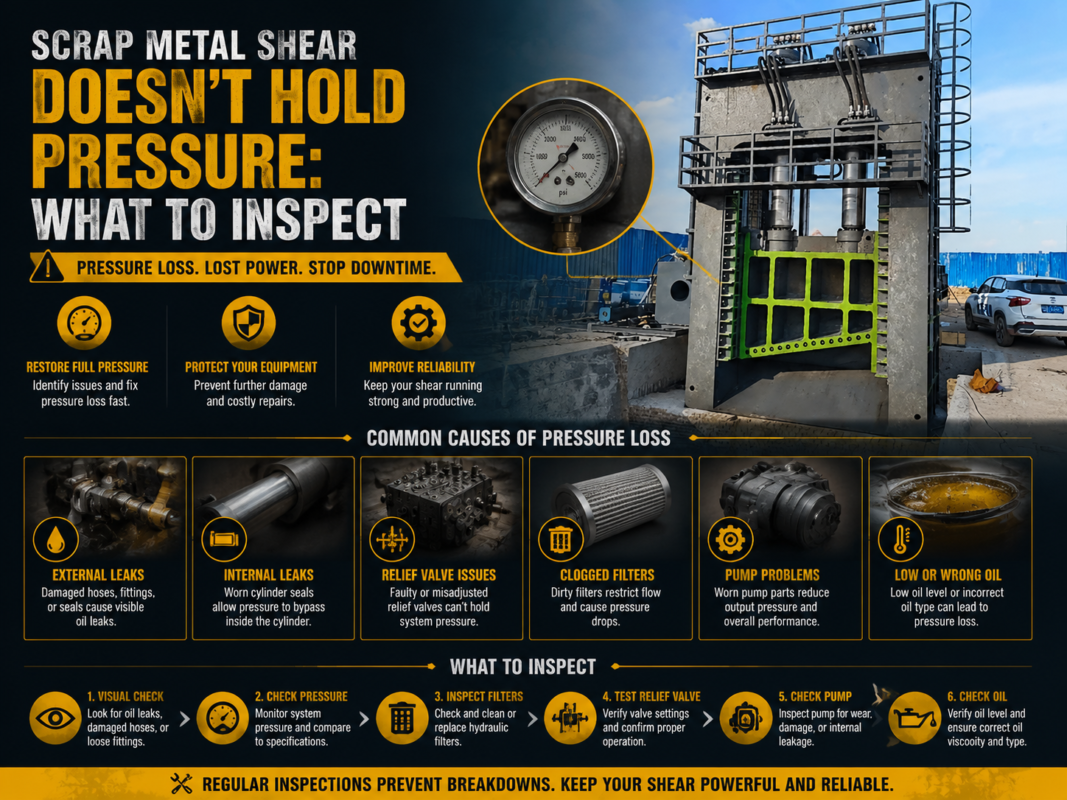
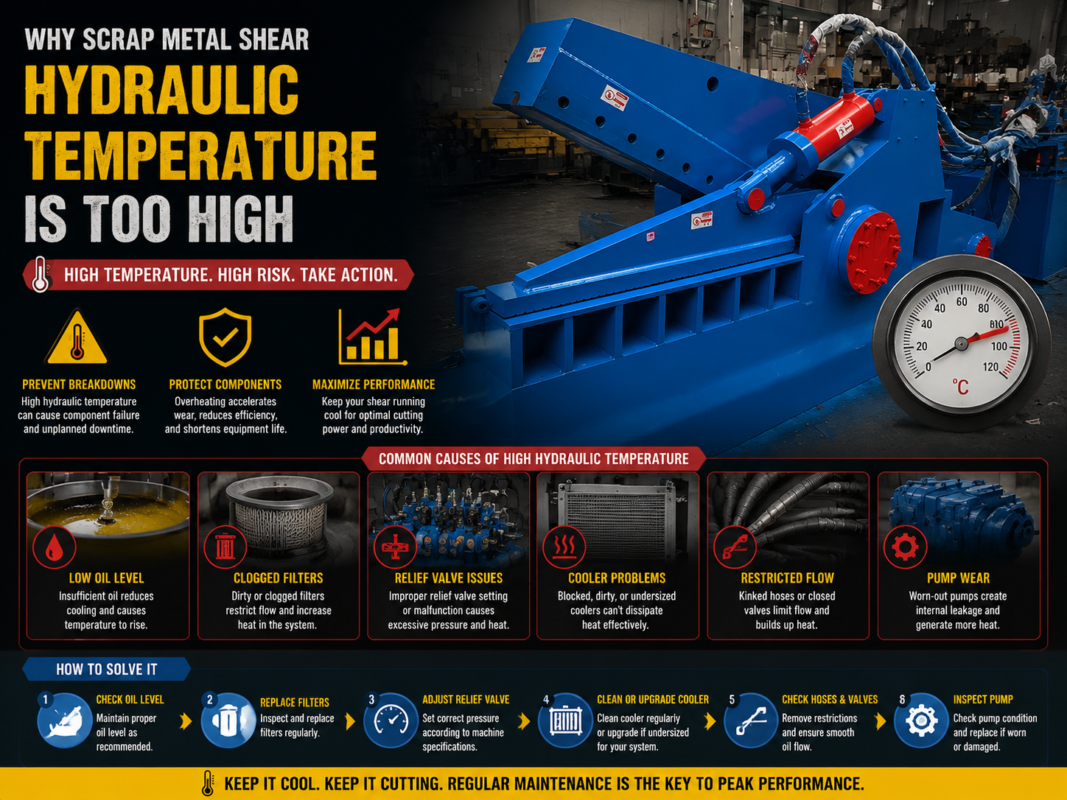
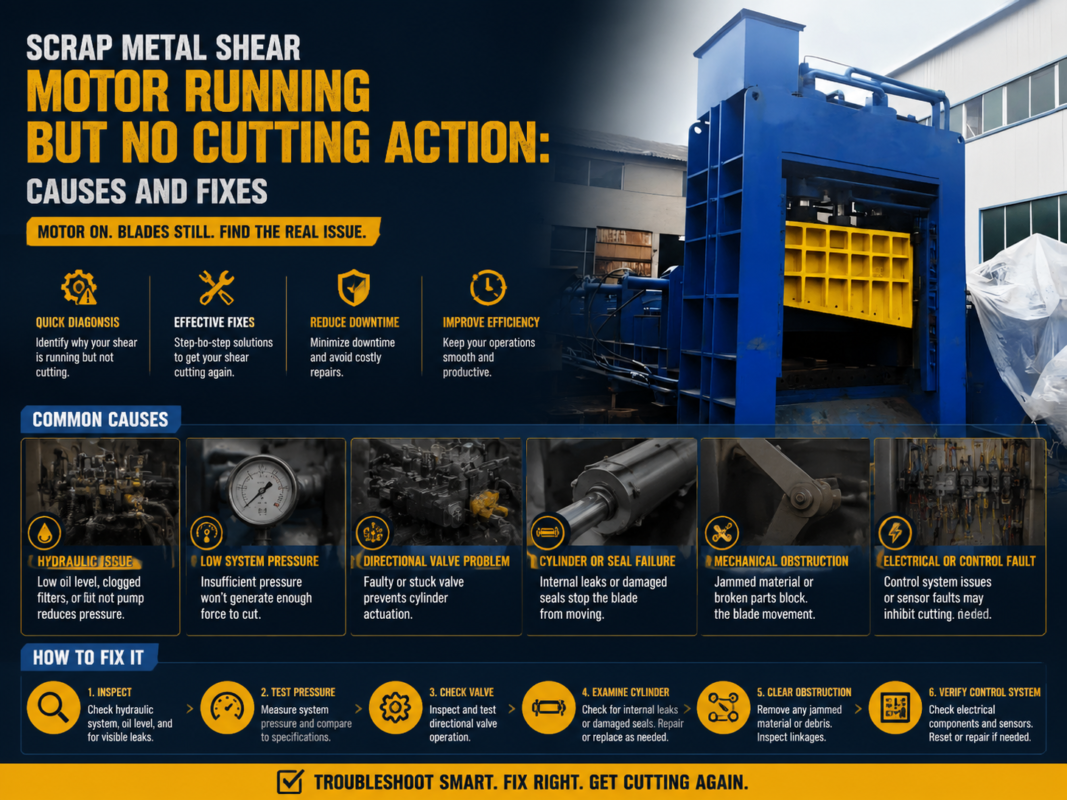
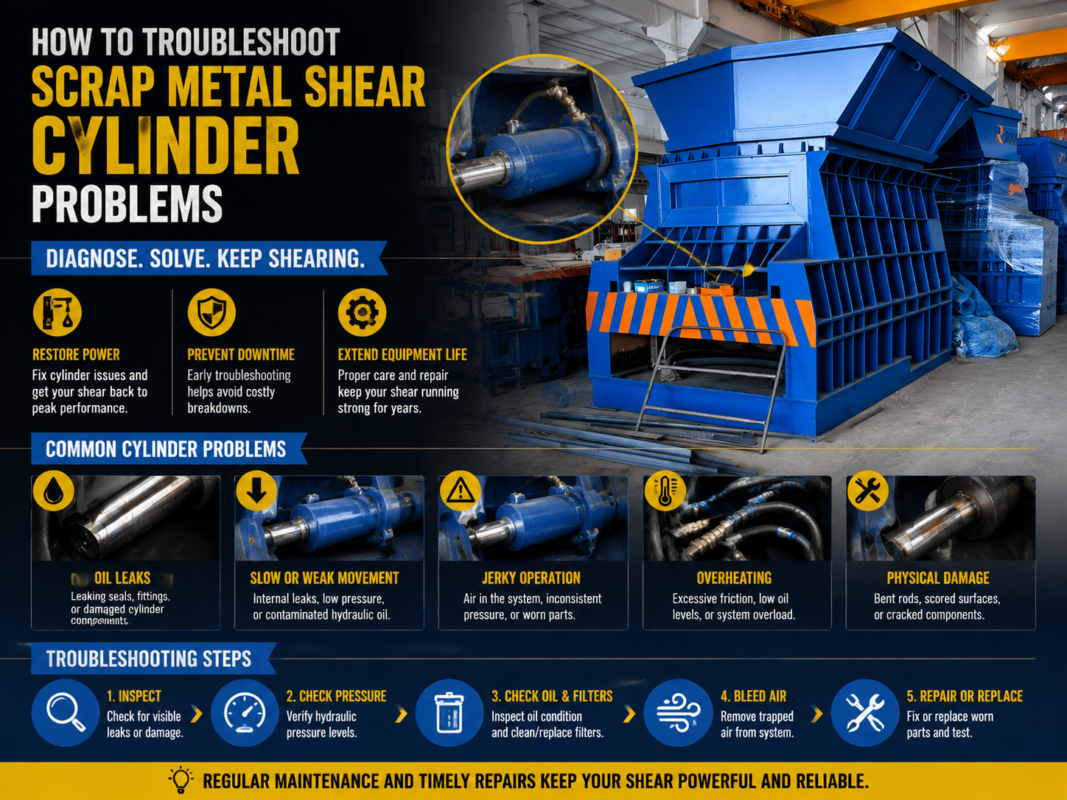
Most modern scrap shears, especially large gantry models, rely on dual hydraulic cylinders to drive the shearing beam. If these cylinders are not perfectly synchronized, one side of the beam will descend faster or with more force than the other. This lack of synchronization results in a slanted cut. Issues such as air trapped in the hydraulic lines, leaking seals, or a malfunctioning proportional valve can all lead to hydraulic imbalance. Regular monitoring of hydraulic pressure and fluid cleanliness is essential to prevent these issues.
4. Material Positioning and Stability
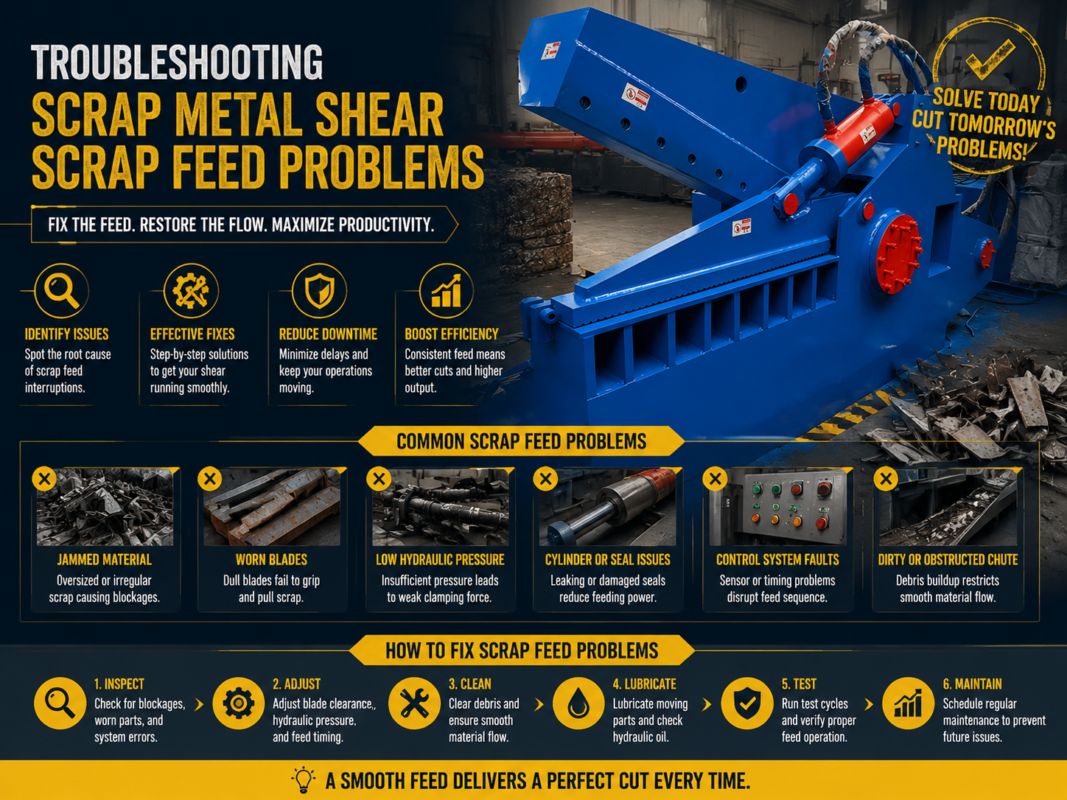
The way material is fed into the shear significantly impacts the quality of the cut. If the scrap is not held securely by the hold-down mechanism (the “stamper”), it can shift or rotate during the shearing stroke. This movement causes the blade to strike the material at an angle, leading to an uneven cut. In many cases, the problem isn’t the shear itself but the failure of the hold-down system to exert enough pressure to stabilize the workpiece against the shearing force.
Technical Details: The Mechanics of a Perfect Cut
The Physics of Shearing
To understand why cuts go wrong, we must understand the three stages of the shearing process: plastic deformation, penetration, and fracture. When the upper blade contacts the metal, it first pushes the material into the lower blade (plastic deformation). As the pressure increases, the blade enters the material (penetration). Finally, the internal stress exceeds the material’s strength, and it snaps (fracture). If the machine is misaligned, the fracture line will not be straight, leading to the “uneven” appearance.
Blade Geometry and Material Hardness
The angle of the blade (the rake angle) plays a crucial role. A higher rake angle reduces the required shearing force but can increase the tendency for the material to twist or bow. For scrap metal, which is often irregular in shape, maintaining a consistent rake angle is vital. Additionally, the hardness of the blades (typically measured in HRC) must be significantly higher than the material being cut. If you are shearing hardened steel scrap with standard blades, the blades will deflect, causing unevenness.
| Material Type | Recommended Blade Gap (% of Thickness) | Common Issues with Uneven Cuts |
|---|---|---|
| Soft Aluminum | 5% – 7% | Folding, excessive burrs |
| Mild Steel | 8% – 10% | Slanted edges, tearing |
| Stainless Steel | 10% – 12% | Work hardening, blade chipping |
| Heavy Rebar | 12% – 15% | Machine vibration, blade deflection |
The Role of the Guide Rails (Gibs)
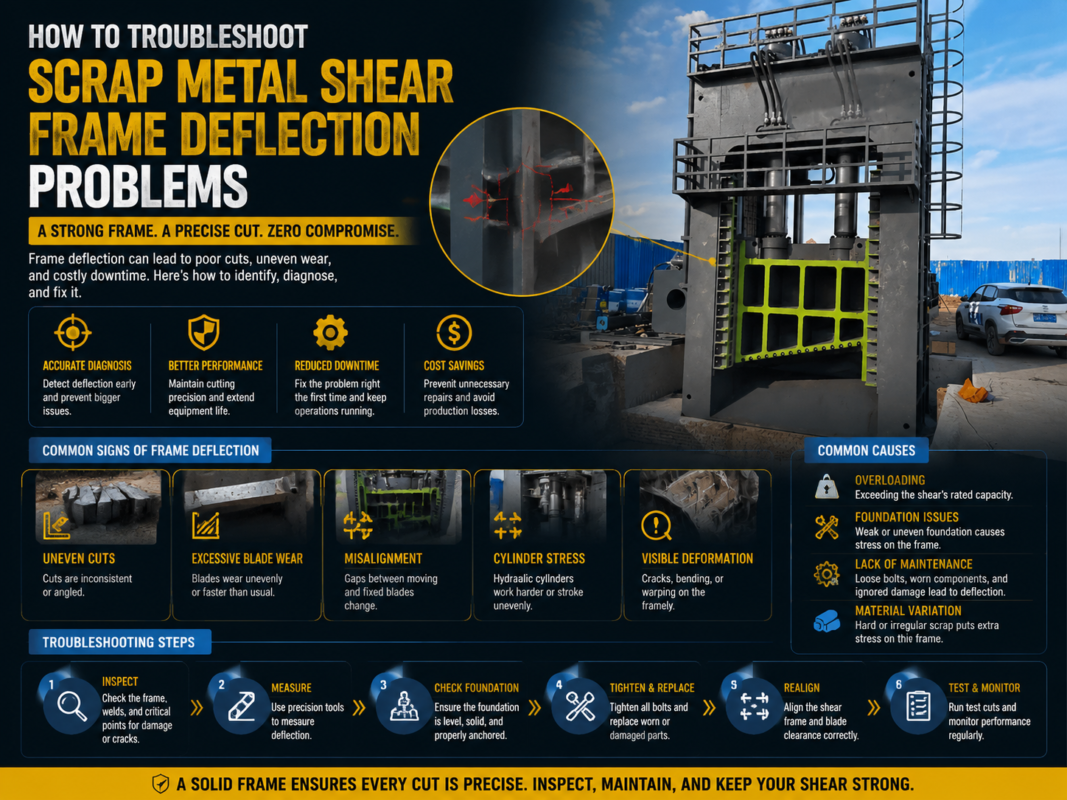
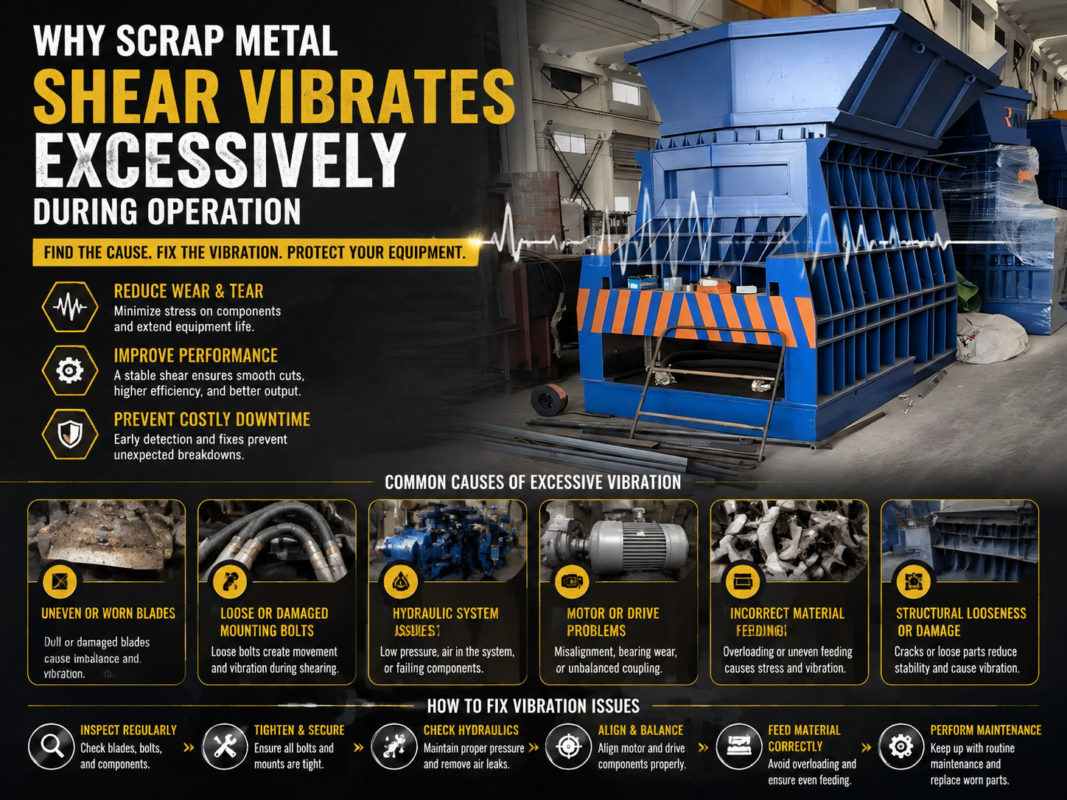
The shearing beam moves within a set of guide rails, often called gibs. These guides ensure that the beam moves in a perfectly vertical plane. Over years of heavy use, these gibs can wear down or become loose. Even a millimeter of “play” in the guide rails can allow the shearing beam to shift horizontally under load. This horizontal shift is a major technical cause of uneven cuts and can eventually lead to the blades striking each other, causing catastrophic damage.
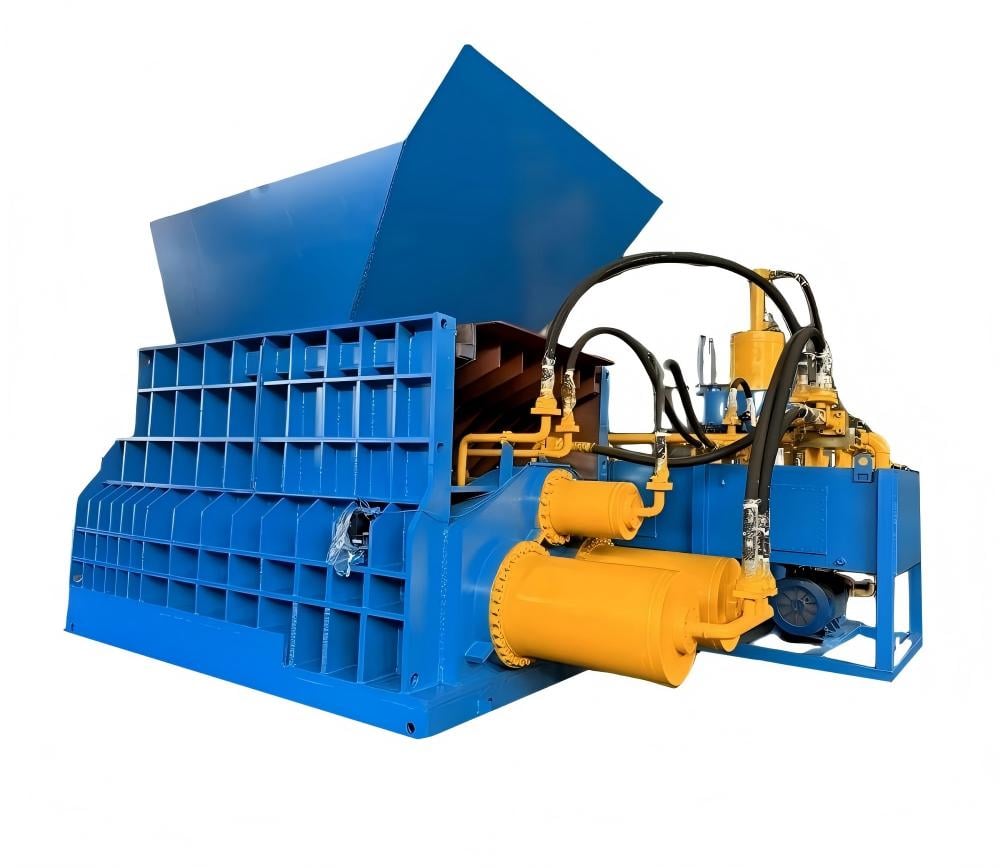
Selection Advice: Choosing the Right Shear to Avoid Uneven Cuts
Match the Machine to the Scrap Profile
One of the best ways to avoid uneven cuts is to select a machine that is appropriately rated for your specific scrap profile. If you are processing heavy I-beams with a light-duty alligator shear, the machine will flex under the load, inevitably leading to uneven cuts. When selecting a HARSLE shear, consider the maximum thickness and the yield strength of the toughest material you plan to process. Always opt for a machine with a 20% safety margin in terms of shearing force.
Look for Advanced Synchronization Features
For large-scale operations, gantry shears with electronic synchronization are superior. These machines use linear encoders to monitor the position of the shearing beam in real-time, adjusting the hydraulic flow to each cylinder to ensure the beam remains perfectly level. This technology virtually eliminates uneven cuts caused by hydraulic lag. When browsing HARSLE’s catalog, look for models equipped with PLC-controlled hydraulic systems for maximum precision.
Blade Quality and Replacement Ease
Not all blades are created equal. High-chrome, high-carbon tool steel blades offer the best longevity. Furthermore, consider how easy it is to rotate or replace the blades. Many HARSLE shears feature four-sided blades, allowing you to rotate the blade to a fresh edge three times before needing a full regrind or replacement. This feature ensures you can maintain sharp edges with minimal downtime, which is the best defense against uneven cuts.
How to Correct Uneven Scrap Metal Shear Cuts
If you have identified that your scrap metal shear cuts are uneven, follow these steps to correct the issue and restore precision to your fabrication or recycling process.
Step 1: Inspect and Rotate Blades
Begin by cleaning the blade area thoroughly. Inspect the edges for chips, rounding, or built-up material (galling). If the edges are dull, rotate the blades to a new side. If all sides are worn, the blades must be removed and professionally ground. Ensure that after grinding, you use shims to maintain the original height of the blade, as a shorter blade will change the shearing geometry.
Step 2: Calibrate the Blade Gap
Using a feeler gauge, check the gap between the upper and lower blades at multiple points along the length of the shear. The gap should be consistent from left to right. If the gap varies, adjust the blade seats or the guide rails according to the manufacturer’s manual. For HARSLE machines, this often involves adjusting the heavy-duty bolts on the blade carrier to ensure perfect parallelism.
Step 3: Check Hydraulic Synchronization
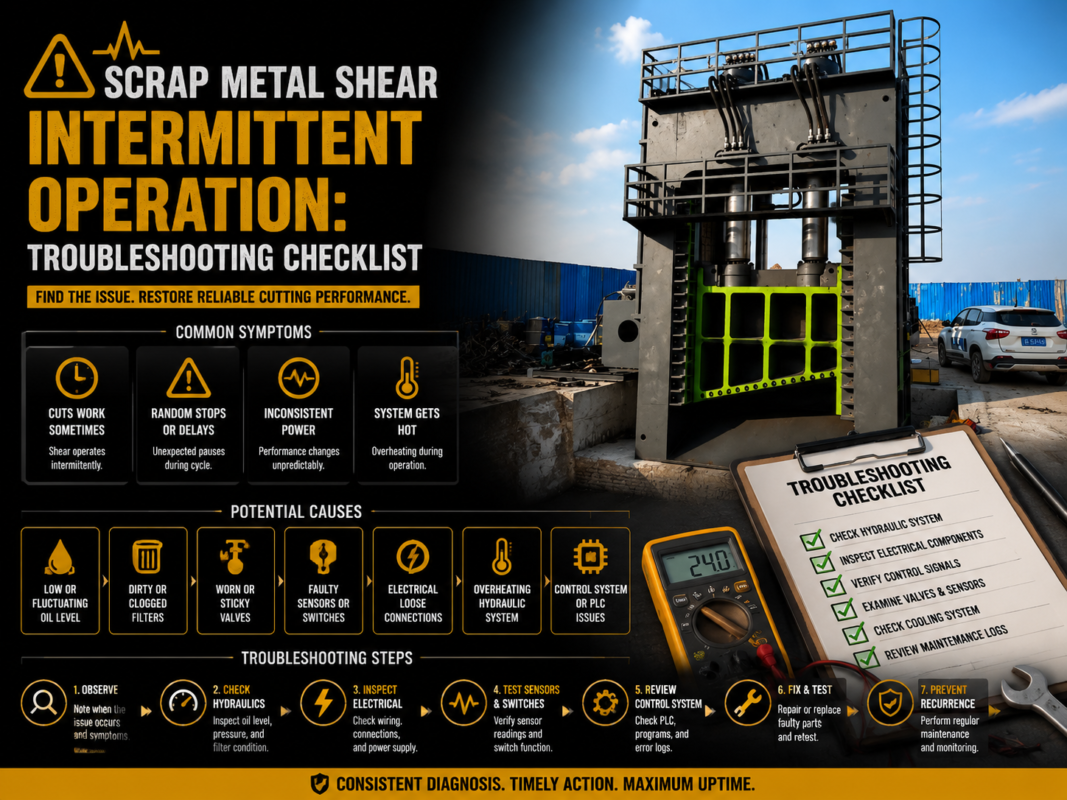
Observe the shearing beam during a dry cycle (without material). If one side hits the bottom limit before the other, you have a synchronization issue. Check for air in the system by bleeding the hydraulic cylinders. Inspect the proportional valves for debris. If the machine uses a torsion bar for synchronization, ensure the bearings are lubricated and the bar is not bent.
Step 4: Tighten the Guide Rails (Gibs)
Check for lateral movement in the shearing beam. If the beam can be wiggled by hand or shows visible shift during a cut, the gibs need adjustment. Most shears have adjustable bronze or plastic wear plates. Tighten these plates to remove the “play,” but ensure they are not so tight that they cause friction and overheating. Proper lubrication of these rails is critical for smooth, even movement.
Step 5: Verify Hold-Down Pressure
Ensure the hydraulic hold-down (stamper) is engaging before the shearing blade touches the metal. If the stamper is weak, the material will kick up or slide, causing an uneven cut. Check the pressure settings on the hold-down circuit and inspect the stamper feet for wear. Adding a textured surface to the stamper feet can help grip oily or smooth scrap more effectively.
Frequently Asked Questions (FAQ)
Q1: How often should I sharpen my scrap metal shear blades?
The frequency depends on the material being processed. For clean mild steel, blades may last 500-1,000 hours per edge. For abrasive or sandy scrap, this may drop to 200 hours. Always rotate or sharpen as soon as you notice the cut quality degrading or the machine straining.
Q2: Can I cut different thicknesses of metal without changing the blade gap?
While you can cut thinner material with a gap set for thicker material, the cut will be poor (lots of burrs). However, you should never cut thicker material with a gap set for thin material, as this can stall the machine or break the blades.
Q3: Why does my shear make a loud “bang” and produce a crooked cut?
A loud bang often indicates that the material is fracturing prematurely due to excessive hardness or that the blade gap is too wide, causing the material to “snap” rather than shear. This sudden release of energy can cause the beam to jump, resulting in a crooked cut.
Q4: Does temperature affect shearing precision?
Yes. In extremely cold environments, hydraulic oil becomes viscous, leading to sluggish cylinder response and synchronization issues. In very hot environments, thermal expansion can slightly alter the blade gap. Always allow the machine to reach operating temperature before performing precision work.
Q5: Is it worth repairing an old shear that consistently cuts unevenly?
If the frame is cracked or the guide rails are severely warped, replacement may be more cost-effective. However, most uneven cutting issues are related to blades, hydraulics, or adjustments, all of which are serviceable on high-quality machines like those from HARSLE.
Conclusion: Maintaining Excellence in Metal Shearing
Dealing with the fact that scrap metal shear cuts are uneven is a common challenge in the industrial sector, but it is one that can be managed with diligent maintenance and technical knowledge. By focusing on the “Big Three”—blade sharpness, gap calibration, and hydraulic synchronization—operators can ensure their scrap shears produce clean, consistent results day after day. Precision isn’t just about the final product; it’s about protecting your investment and ensuring the safety of your facility.
At HARSLE, we are committed to providing robust metal fabrication solutions that stand the test of time. Our shears are engineered with ease of maintenance in mind, featuring accessible adjustment points and high-durability components. Whether you are looking to troubleshoot an existing machine or are in the market for a new, high-precision scrap shear, understanding the mechanics of the cut is your greatest asset. Regular inspections and a proactive approach to repairs will keep your shearing operations profitable and efficient for years to come.
Remember, a well-maintained shear is a productive shear. Don’t let uneven cuts slow down your production line. Follow the steps outlined in this guide, consult your HARSLE manual, and keep your blades sharp. With the right care, your scrap metal shear will continue to be the backbone of your recycling or fabrication business.