How to Fix Scrap Metal Shear Blade Clearance Issues: A Comprehensive Industrial Guide

Introduction to Scrap Metal Shear Blade Clearance
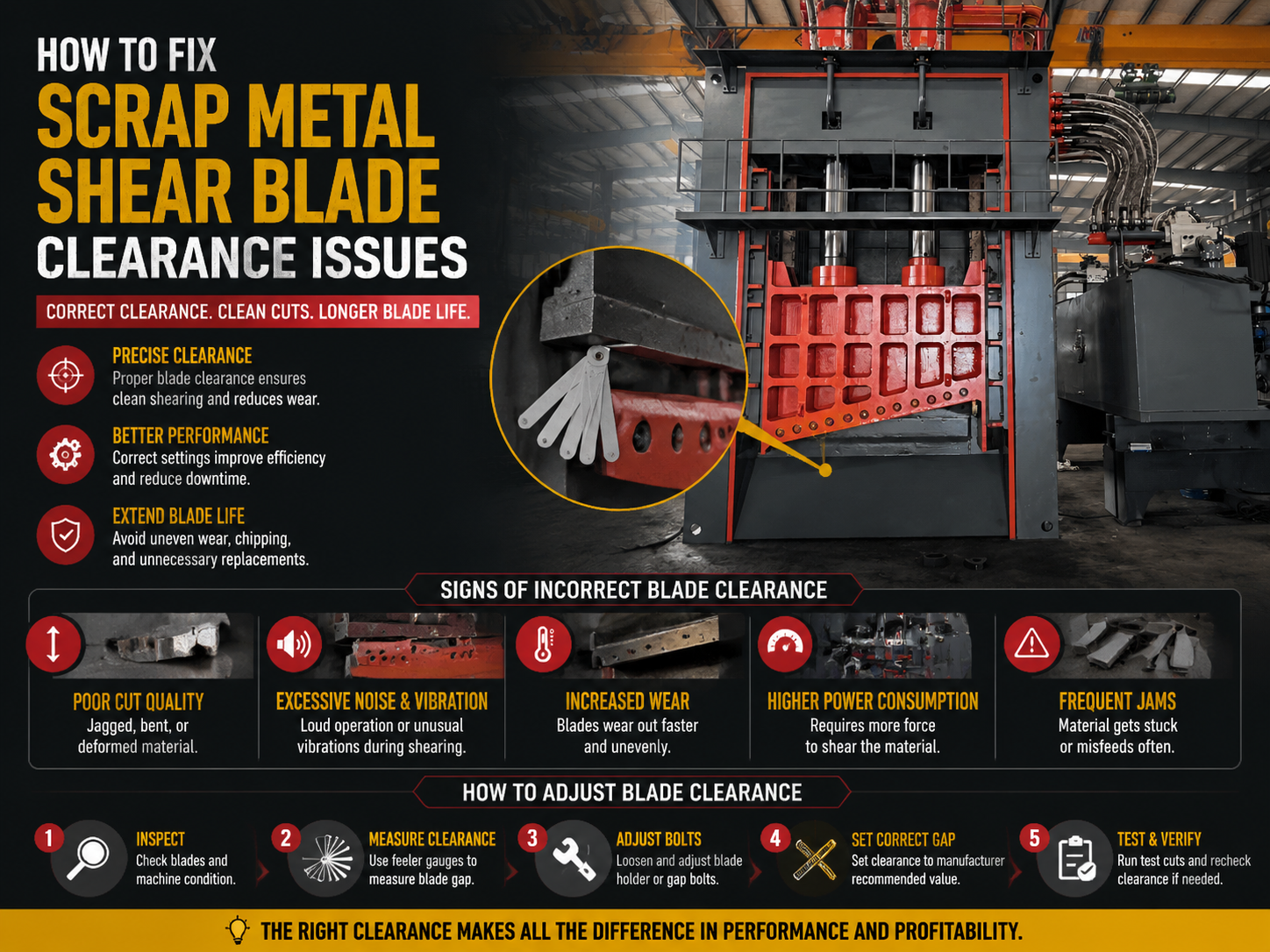
In the high-intensity world of metal recycling and industrial fabrication, the scrap metal shear stands as a cornerstone of productivity. Whether you are operating a massive gantry shear or a versatile alligator shear, the precision of the cut is dictated by one critical factor: blade clearance. Blade clearance, often referred to as the ‘blade gap,’ is the distance between the upper moving blade and the lower stationary blade as they pass each other during the shearing cycle. When this gap is incorrectly set, the consequences range from poor cut quality and excessive burrs to catastrophic mechanical failure of the machine’s hydraulic system and frame.
For operators using HARSLE equipment, maintaining the integrity of the shearing process is paramount. Improper clearance doesn’t just affect the immediate output; it accelerates the wear and tear on the blade edges, increases the energy consumption of the hydraulic pumps, and places undue stress on the cylinder seals. Learning how to fix scrap metal shear blade clearance issues is not merely a maintenance task—it is an essential skill for ensuring the longevity and profitability of your metal fabrication operations. This guide provides a deep dive into the technicalities of identifying, measuring, and correcting clearance discrepancies in industrial scrap shears.
The physics of shearing involves a combination of compression, plastic deformation, and eventual fracture. As the upper blade descends, it pushes the metal against the lower blade. If the clearance is too tight, the blades may collide or create double-shearing, which consumes excessive power. If the clearance is too wide, the metal will ‘fold’ or ‘tear’ rather than snap cleanly, leading to jagged edges and potential jamming. By mastering the adjustment process, you can ensure that your HARSLE shear operates at peak efficiency, regardless of the scrap grade being processed.
Key Considerations Before Adjusting Blade Clearance
Before attempting to fix scrap metal shear blade clearance issues, it is vital to understand the variables that influence the ‘ideal’ gap. There is no universal setting that works for every material. The clearance must be calibrated based on the thickness and the tensile strength of the scrap metal being processed. Generally, the rule of thumb for industrial shears is that the clearance should be approximately 7% to 10% of the material thickness. However, for harder alloys or stainless steel, this percentage may need to be adjusted to prevent blade chipping.
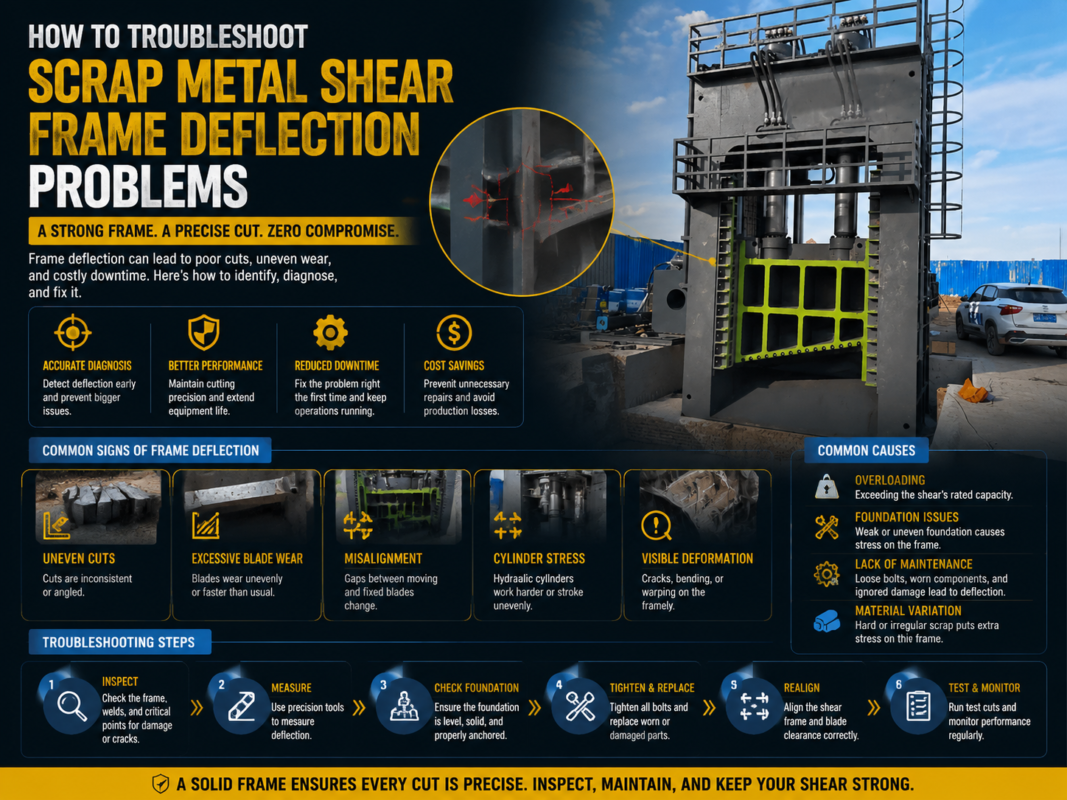
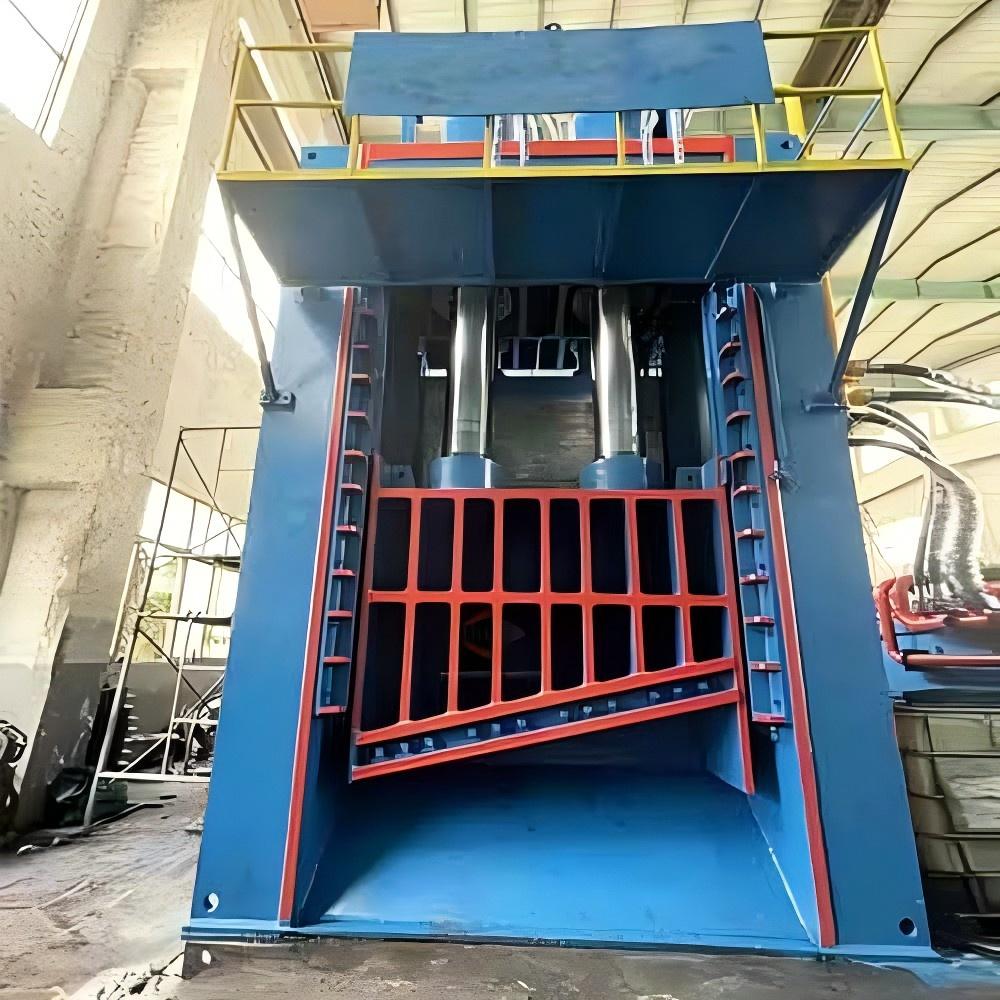
Another critical consideration is the condition of the blade seats and the gibs. Over time, the constant vibration and force of shearing can cause the bolts holding the blades to loosen or the guide rails (gibs) to wear down. If the guide system has too much play, the upper blade will deflect during the cut, rendering any static clearance adjustment useless. Therefore, a comprehensive inspection of the machine’s structural alignment must precede any fine-tuning of the blade gap. Operators should check for signs of ‘scuffing’ on the sides of the blades, which indicates that the clearance is too tight or the ram is misaligned.
Thermal expansion is an often-overlooked factor in scrap metal shear maintenance. During continuous operation, the friction generated by shearing and the heat from the hydraulic system can cause the metal components to expand. A clearance that is perfect at 8:00 AM when the machine is cold might become too tight by noon. Professional operators often set the clearance slightly wider when the machine is cold or perform a mid-shift check to ensure that thermal expansion hasn’t compromised the safety margins of the blade overlap.
Finally, safety must be the primary consideration. Industrial shears exert hundreds of tons of force. Before performing any adjustments, the machine must be fully powered down, the hydraulic pressure bled from the system, and mechanical safety locks engaged. Never attempt to measure clearance while the machine is in an active state. Using high-quality feeler gauges and ensuring the blades are clean of debris are the first steps toward an accurate adjustment.
Technical Details: Step-by-Step Guide to Fixing Clearance Issues
Step 1: Cleaning and Inspection
The first technical step in fixing clearance issues is a thorough cleaning of the shearing area. Scrap metal processing is inherently dirty, involving rust, scale, and oil. Use a wire brush or compressed air to clean the upper and lower blade surfaces. Inspect the blades for ‘mushrooming’ or rounded edges. If the blades are dull, adjusting the clearance will not solve the problem; the blades must be rotated to a fresh edge or reground. HARSLE blades are typically four-sided, allowing for multiple rotations before replacement is necessary.
Step 2: Measuring the Current Gap
To measure the clearance, the upper blade must be brought down to a position where it just begins to overlap with the lower blade. Using a set of precision feeler gauges, check the gap at both ends of the blade and at the center. In a perfect scenario, the gap should be uniform across the entire length. If you find that the gap is 0.5mm at the left and 0.8mm at the right, the blade seat or the ram guides require adjustment to restore parallelism. Record these measurements to track the wear patterns over time.
Step 3: Adjusting the Blade Seat or Gibs
Most modern scrap shears, such as the HARSLE MS series, feature adjustment bolts located behind the lower blade seat or on the side of the ram guides. To decrease the clearance, you will typically loosen the locking nuts and tighten the adjustment screws to push the blade closer to the centerline. This must be done in small increments—often a quarter-turn at a time. After each adjustment, re-measure with the feeler gauge. It is a meticulous process that requires patience to achieve the sub-millimeter precision required for clean shearing.
Step 4: Torque and Locking
Once the desired clearance is achieved, the locking bolts must be tightened to the manufacturer’s specified torque. Failure to properly torque these bolts can lead to the blades shifting during operation, which can cause the blades to ‘clash,’ resulting in expensive damage to the machine. After locking, cycle the machine several times without material (dry run) and then re-measure the clearance to ensure that the setting has held firm under the vibration of the cycle.
Selection Advice: Choosing the Right Shear and Blades
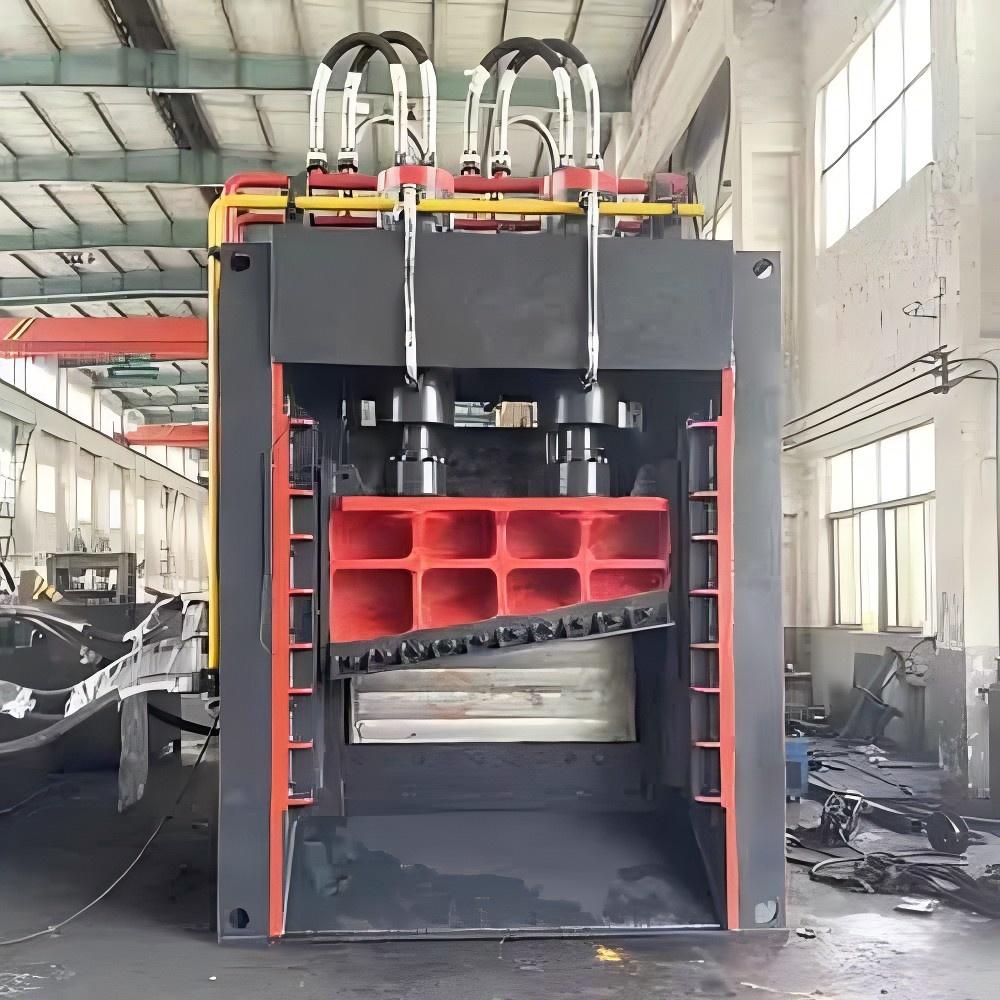
When it comes to preventing clearance issues before they start, selecting the right equipment is vital. Not all scrap shears are built the same. For heavy-duty demolition scrap, a gantry shear with a robust guide system is preferable because it maintains blade alignment better under lateral loads than a smaller alligator shear. When purchasing a HARSLE shear, consider the ‘stiffness’ of the frame. A stiffer frame experiences less deflection, meaning the blade clearance remains more consistent even when cutting at the machine’s maximum rated capacity.
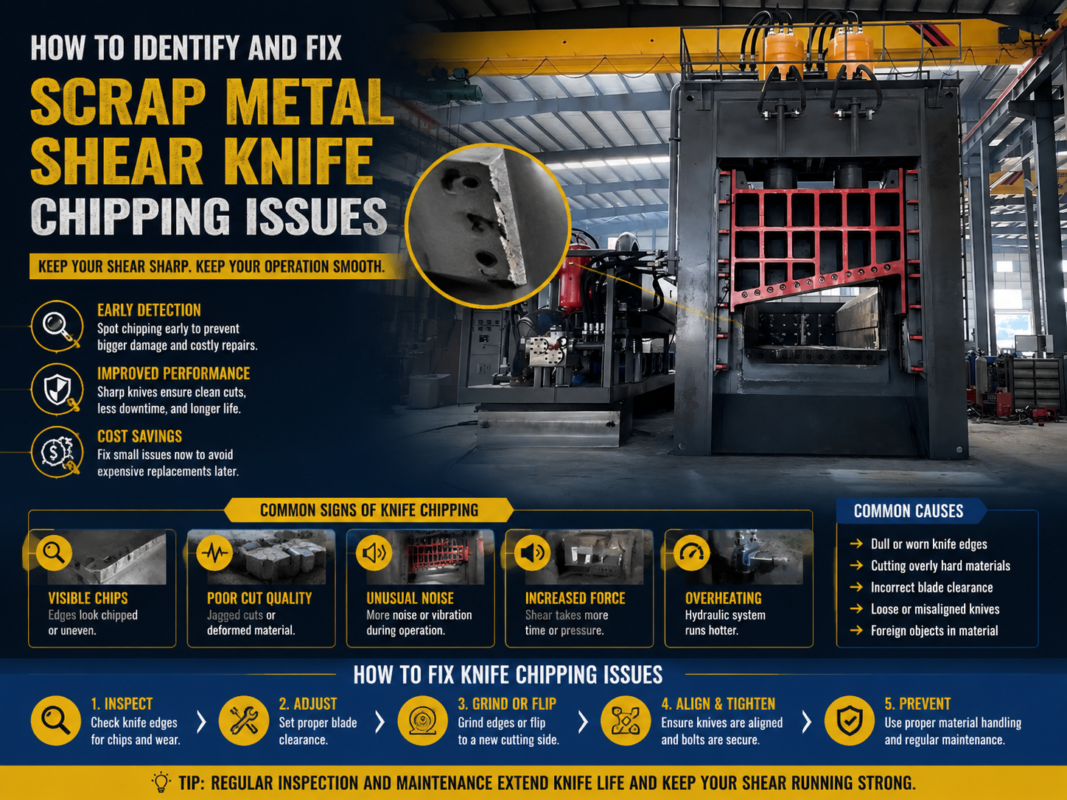
Blade material selection is another critical factor. High-chrome, high-carbon tool steels are standard for scrap shearing because they maintain their edge and resist deformation. However, if you are primarily shearing ‘shock-heavy’ materials like rebar or hardened axles, you may need blades with higher toughness to prevent chipping when the clearance is tight. Always consult with HARSLE technical support to match the blade grade to your specific scrap profile. Using the wrong blade material can lead to premature edge rounding, which mimics the symptoms of poor clearance.
Furthermore, consider the ease of adjustment when selecting a machine. Some older designs require shimming the blades—a tedious process involving placing thin metal strips behind the blade to move it forward. Modern HARSLE shears utilize mechanical adjustment screws or hydraulic clamping systems that make fixing scrap metal shear blade clearance issues much faster and more accurate. Investing in a machine with user-friendly adjustment mechanisms will save hundreds of hours in maintenance labor over the life of the equipment.
Finally, evaluate the hydraulic system. A shear is only as good as its ability to hold the material steady. If the hold-down cylinder (the ‘stamper’) is weak, the material will move during the cut, forcing the blades apart and creating a ‘false’ clearance issue. Ensure your selected machine has a synchronized hold-down force that exceeds the shearing force to keep the material locked in place during the entire stroke.
Detailed Clearance Reference Table
To assist operators in the field, the following table provides a general guideline for blade clearance based on common scrap metal thicknesses. Note that these values should be adjusted based on the specific tensile strength of the material.
| Material Thickness (mm) | Recommended Clearance (mm) – Mild Steel | Recommended Clearance (mm) – Stainless/Hard Alloy | Notes |
|---|---|---|---|
| 5mm – 10mm | 0.4mm – 0.7mm | 0.5mm – 0.8mm | Use tighter gaps for cleaner edges on thin plate. |
| 10mm – 20mm | 0.8mm – 1.5mm | 1.0mm – 1.8mm | Ensure hold-down pressure is maximized. |
| 20mm – 40mm | 1.6mm – 3.0mm | 2.0mm – 3.5mm | Check for blade deflection mid-cut. |
| 40mm – 60mm+ | 3.5mm – 5.0mm | 4.0mm – 6.0mm | Gantry shears only; check gib lubrication. |
Frequently Asked Questions (FAQ)
1. How often should I check the blade clearance on my scrap shear?
For high-volume operations running multiple shifts, a quick visual inspection should be done daily. A precise measurement with feeler gauges should be performed weekly or whenever the machine begins to produce excessive burrs or ‘smearing’ on the cut edges. If you change the type of material being processed (e.g., moving from thin sheet to heavy structural steel), the clearance should be re-evaluated immediately.
2. What happens if the blade clearance is too small?
If the clearance is too small, the blades may come into contact with each other, especially if there is any slight deflection in the ram. This causes ‘blade clashing,’ which can shatter the hardened tool steel blades, damage the blade seats, and put extreme pressure on the hydraulic cylinders. It also increases the power required to complete a cut, leading to higher electricity costs and oil overheating.
3. Can I fix clearance issues by just tightening the blade bolts?
Tightening the bolts is part of the solution, but it is rarely the whole fix. If the clearance is off, it is usually because the adjustment screws have moved, the blades have worn down, or the gibs (guides) are loose. You must follow the full adjustment procedure: measure, adjust the seat/gibs, and then torque the bolts. Simply tightening a loose bolt without checking the gap can result in an uneven and dangerous clearance setting.
4. Why does my shear cut well at the start of the blade but poorly at the end?
This is a classic sign of non-parallelism. It indicates that the upper blade is not traveling perfectly parallel to the lower blade. This can be caused by uneven wear in the guide rails (gibs) or a misalignment in the hydraulic cylinders. You will need to adjust the gibs to ensure the ram travels straight throughout its entire stroke.
5. Do I need to shim my blades?
Shimming is often necessary on older machines or when blades have been reground multiple times. Regrinding reduces the thickness of the blade, which increases the gap. To compensate, precision-ground metal shims are placed behind the blade to bring it back to the correct position. However, on modern HARSLE shears, mechanical adjustment bolts often eliminate the need for manual shimming.
Conclusion: Maintaining Peak Shearing Performance
Mastering the ability to fix scrap metal shear blade clearance issues is a fundamental aspect of industrial maintenance that directly impacts the bottom line. A well-adjusted shear produces cleaner scrap, which often fetches a higher price at the mill, and reduces the secondary processing required to remove burrs or tangles. More importantly, maintaining the correct clearance protects your investment in HARSLE machinery, preventing the structural fatigue and hydraulic failures that arise from improper shearing forces.
Consistency is the key to success in metal fabrication. By implementing a rigorous schedule of inspection, cleaning, and precision adjustment, you can ensure that your scrap metal shear remains a reliable workhorse for years to come. Remember that the blade clearance is a dynamic setting; it requires attention as materials change and as the machine ages. Whether you are dealing with light aluminum or heavy structural I-beams, the principles of proper gap management remain the same.
In conclusion, always prioritize safety, use the right tools for measurement, and don’t hesitate to reach out to professional technicians if you encounter structural alignment issues that go beyond simple blade adjustment. With the right approach, your HARSLE scrap metal shear will continue to deliver the power and precision that the modern recycling industry demands. Keep your blades sharp, your clearance tight, and your production lines moving.