Comprehensive Guide: How to Troubleshoot Scrap Metal Shear Cylinder Problems

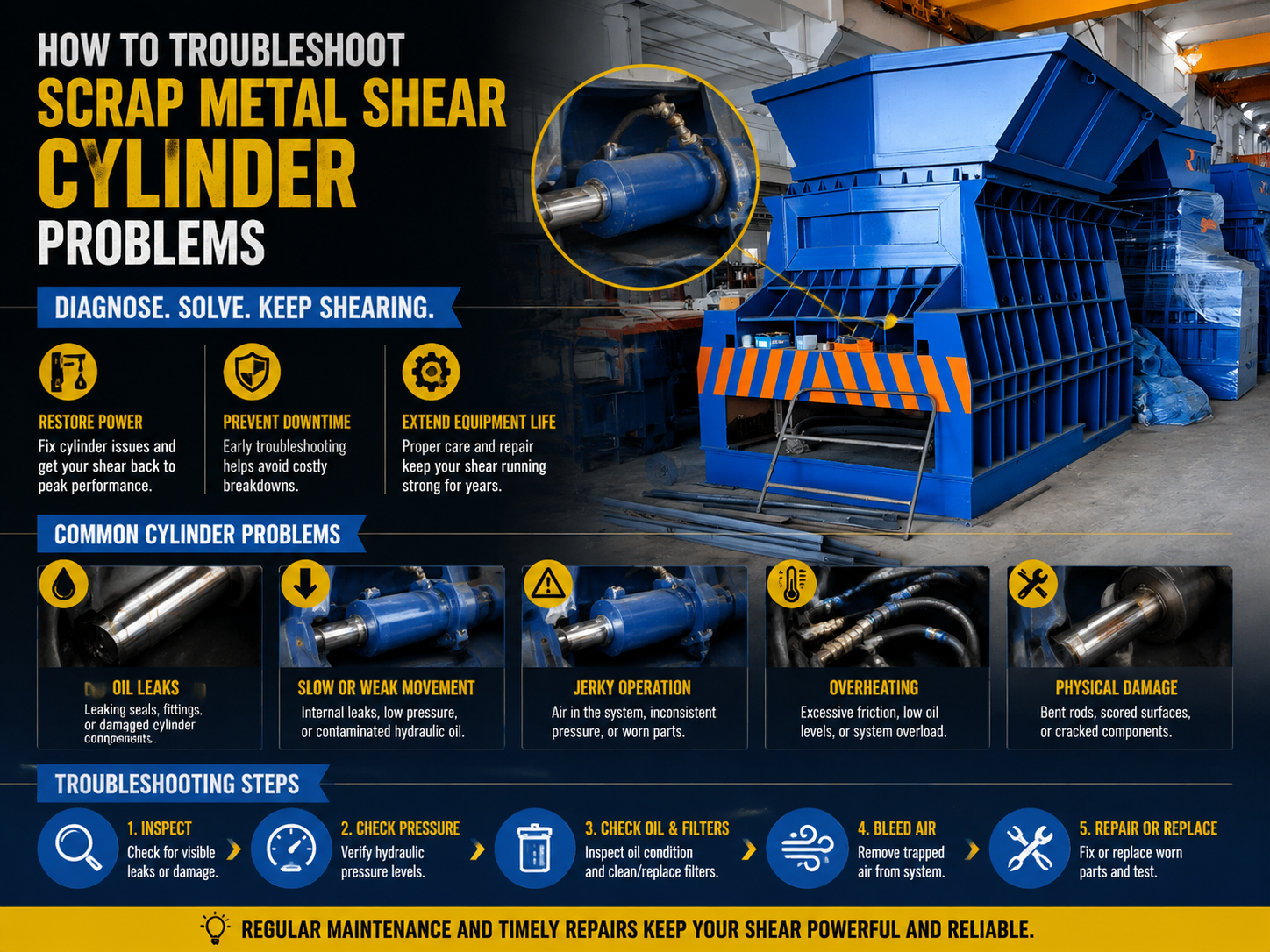
Introduction to Scrap Metal Shear Cylinder Performance
In the high-intensity world of metal recycling, the scrap metal shear stands as a cornerstone of productivity. These machines are designed to exert massive force, transforming bulky metal waste into manageable, high-value scrap. At the heart of this operation lies the hydraulic cylinder. When a cylinder fails or underperforms, the entire production line grinds to a halt, leading to significant financial losses and operational delays. Understanding how to troubleshoot scrap metal shear cylinder problems is not just a maintenance skill; it is a vital necessity for any facility manager or machine operator.
Hydraulic cylinders in scrap shears operate under extreme conditions, including high pressure, fluctuating temperatures, and exposure to abrasive dust and debris. Over time, even the most robust HARSLE machinery requires systematic inspection to ensure the hydraulic components are functioning at peak efficiency. Troubleshooting involves a blend of visual inspection, pressure testing, and an understanding of fluid dynamics. By identifying the root cause of a cylinder issue early, you can prevent catastrophic failures that might require a full cylinder replacement.
This guide is designed to provide a deep dive into the technical aspects of cylinder failure, offering actionable steps to diagnose and rectify common issues. Whether you are dealing with a slow-moving ram, external fluid leaks, or unusual noises during the shearing cycle, the following sections will equip you with the knowledge to restore your equipment to its optimal state. We will explore the mechanical, hydraulic, and environmental factors that influence cylinder health, ensuring your scrap metal shear remains a reliable asset in your fabrication arsenal.
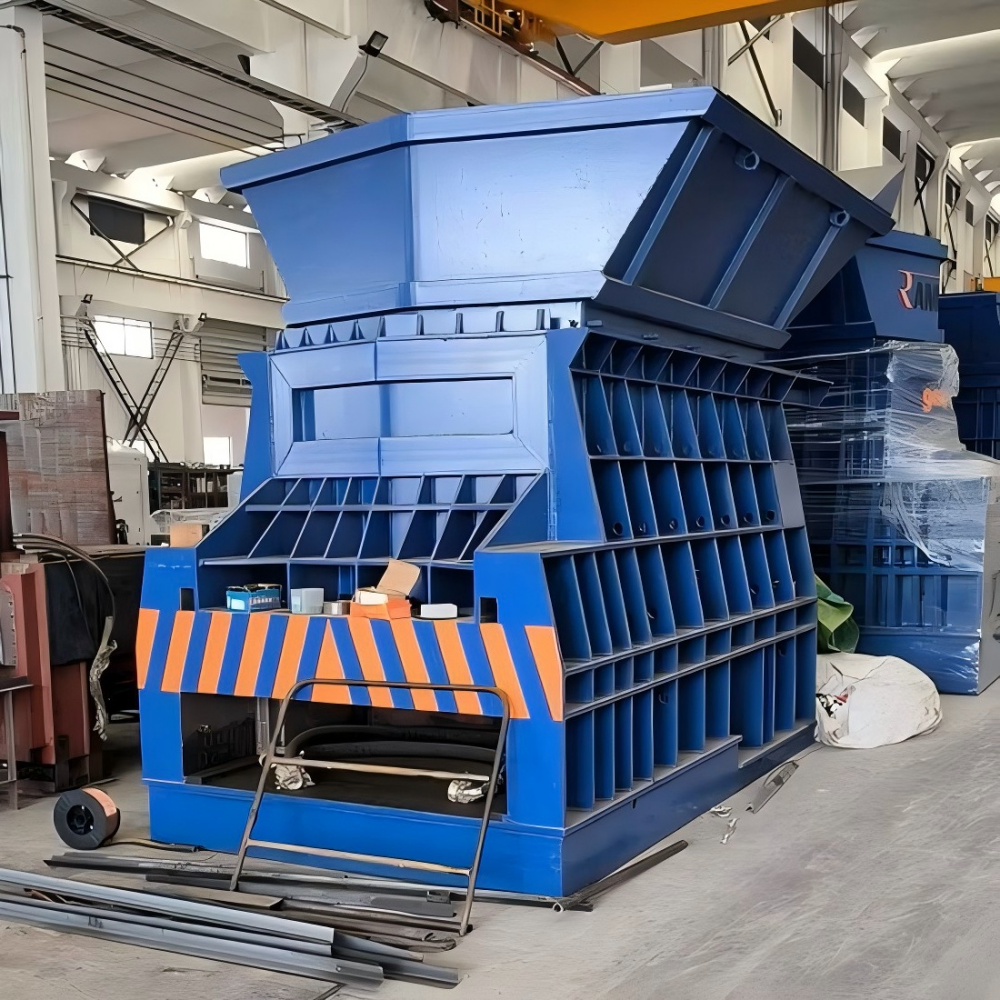
Key Considerations Before Troubleshooting
Before diving into the mechanical specifics, safety must be the primary consideration. Scrap metal shears utilize immense hydraulic pressure, often exceeding 3000 PSI. A pinhole leak in a hydraulic hose or cylinder seal can release a high-velocity stream of oil capable of penetrating the skin, leading to serious injury or even death. Always ensure the machine is powered down, the hydraulic pressure is fully bled from the system, and the shear blade is mechanically locked in a safe position before beginning any inspection.
Another key consideration is the environment in which the shear operates. Scrap yards are notoriously dirty. Contaminants like metal shavings, grit, and moisture are the natural enemies of hydraulic systems. When you troubleshoot scrap metal shear cylinder problems, you must consider whether the failure is a result of internal wear or external contamination. A clean workspace is essential during the diagnostic process to prevent further debris from entering the open hydraulic lines.
Furthermore, understanding the specific type of shear you are working with—whether it is a crocodile shear, a container shear, or a vertical heavy-duty shear—is crucial. Each design has unique cylinder configurations and mounting styles. Reviewing the manufacturer’s technical manual, such as those provided by HARSLE, will give you the necessary specifications for operating pressures, seal types, and torque requirements for mounting bolts. Having this data on hand ensures that your troubleshooting is based on facts rather than guesswork.
Technical Details: Identifying Common Cylinder Failures
1. External and Internal Leaks
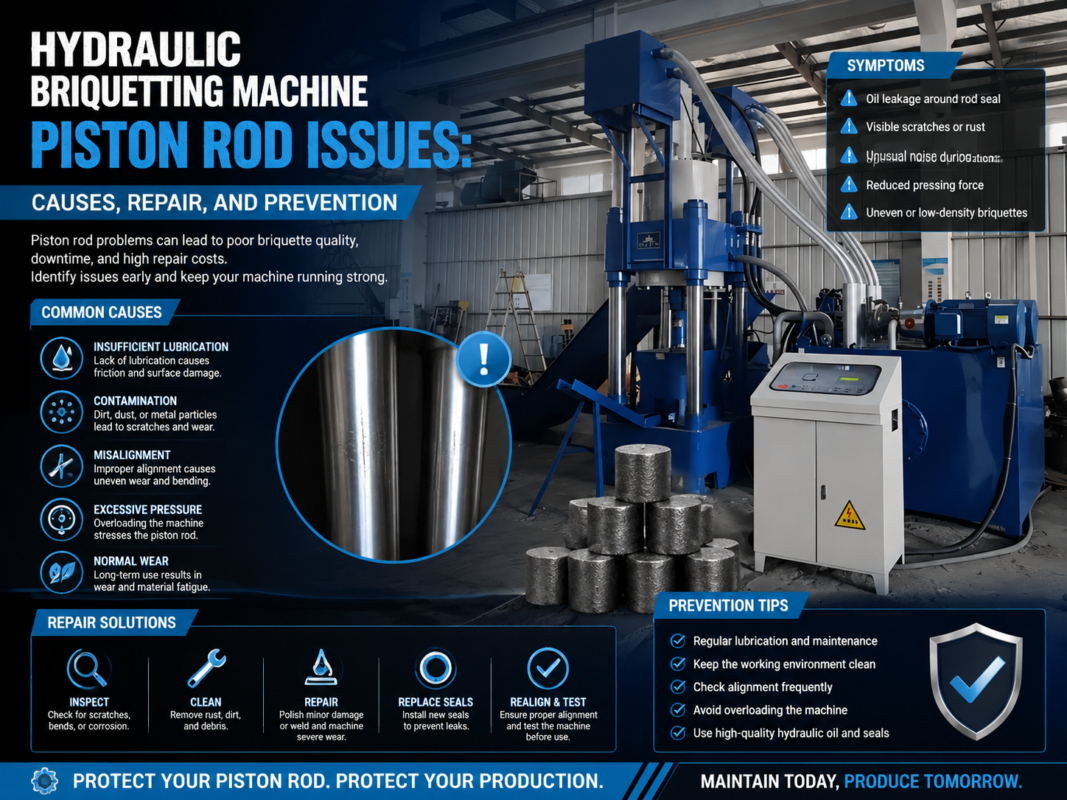
Leaks are the most common symptom of cylinder distress. External leaks are usually easy to spot, manifesting as puddles of hydraulic fluid around the rod end or the cylinder head. These are typically caused by worn rod seals or a damaged wiper seal. If the wiper seal fails, it allows dirt to enter the cylinder, which eventually scores the rod and destroys the primary pressure seals. Regular inspection of the rod surface for scratches or pitting is a critical step in diagnosing external leaks.
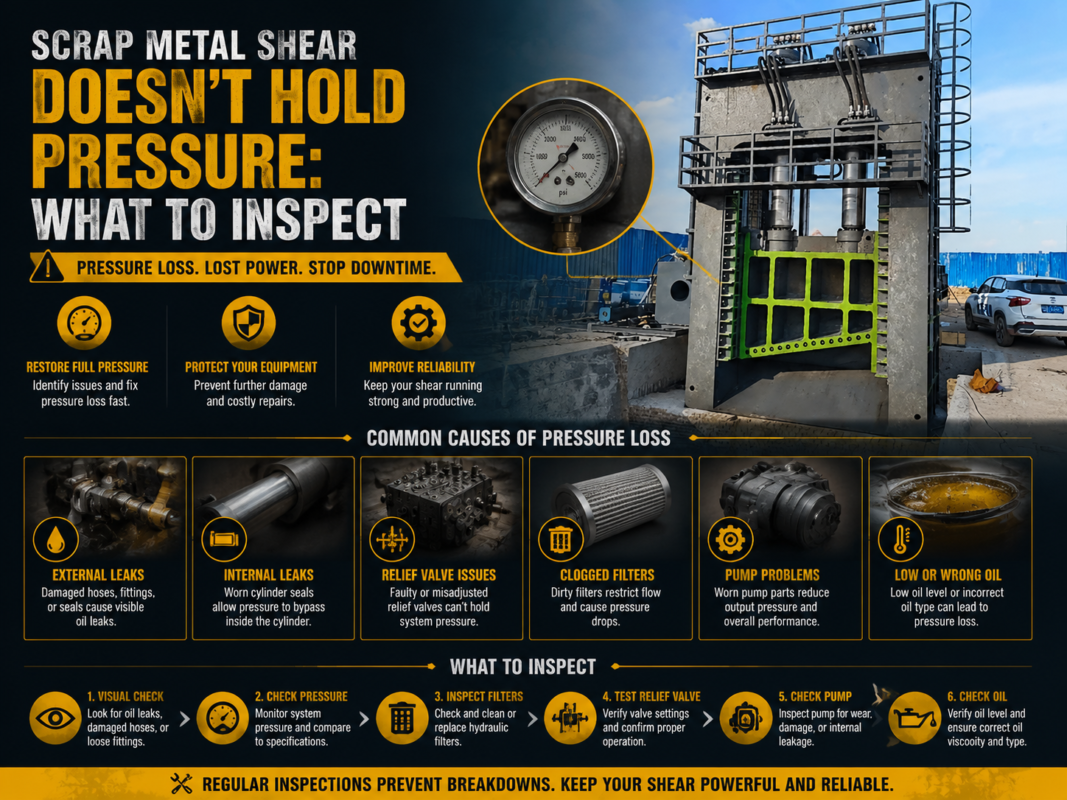
Internal leaks, or “bypassing,” are more deceptive. This occurs when the piston seals fail, allowing hydraulic fluid to flow from the high-pressure side of the piston to the low-pressure side. The result is a loss of shearing force and a “drifting” cylinder that cannot hold its position under load. To diagnose an internal leak, you can perform a “drift test” by extending the cylinder and then closing the supply valves. If the rod begins to retract or move without operator input, the internal seals are likely compromised.
2. Cylinder Scoring and Rod Damage
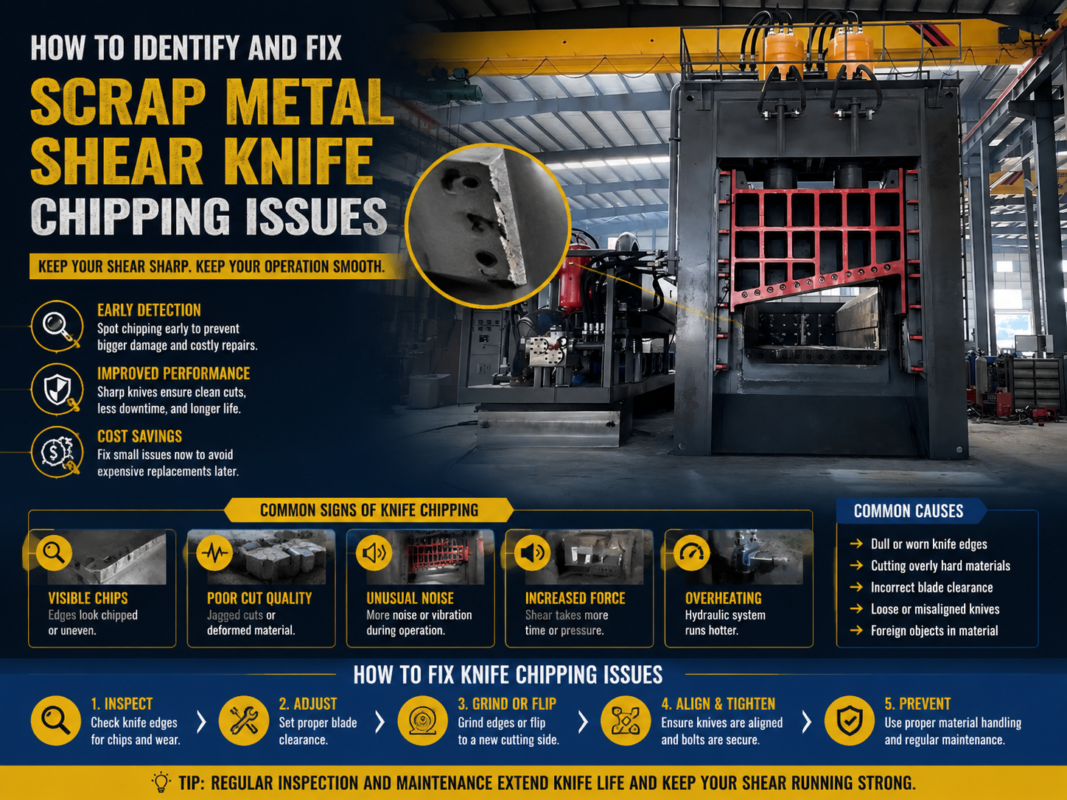
The piston rod is the most exposed part of the cylinder. In scrap metal shearing, it is common for pieces of metal to fly off and strike the rod. Even a small nick or dent can act like a file, shredding the seals every time the rod passes through the cylinder head. Scoring on the internal barrel of the cylinder is equally problematic. This is often caused by contaminated hydraulic fluid or a broken piston ring. Once the barrel is scored, the cylinder will never achieve a perfect seal, leading to constant internal leakage and reduced efficiency.
3. Pressure Fluctuations and Cavitation
If the shear is operating slowly or with a jerky motion, the problem may not be the cylinder itself but the fluid being supplied to it. Air trapped in the hydraulic system causes cavitation, which sounds like marbles rattling inside the cylinder. Cavitation can erode the internal surfaces of the cylinder and the pump. Troubleshooting this involves checking the reservoir fluid levels, inspecting intake lines for cracks, and ensuring the system is properly bled of air. Consistent pressure is required for the cylinder to generate the tonnage needed for heavy scrap.
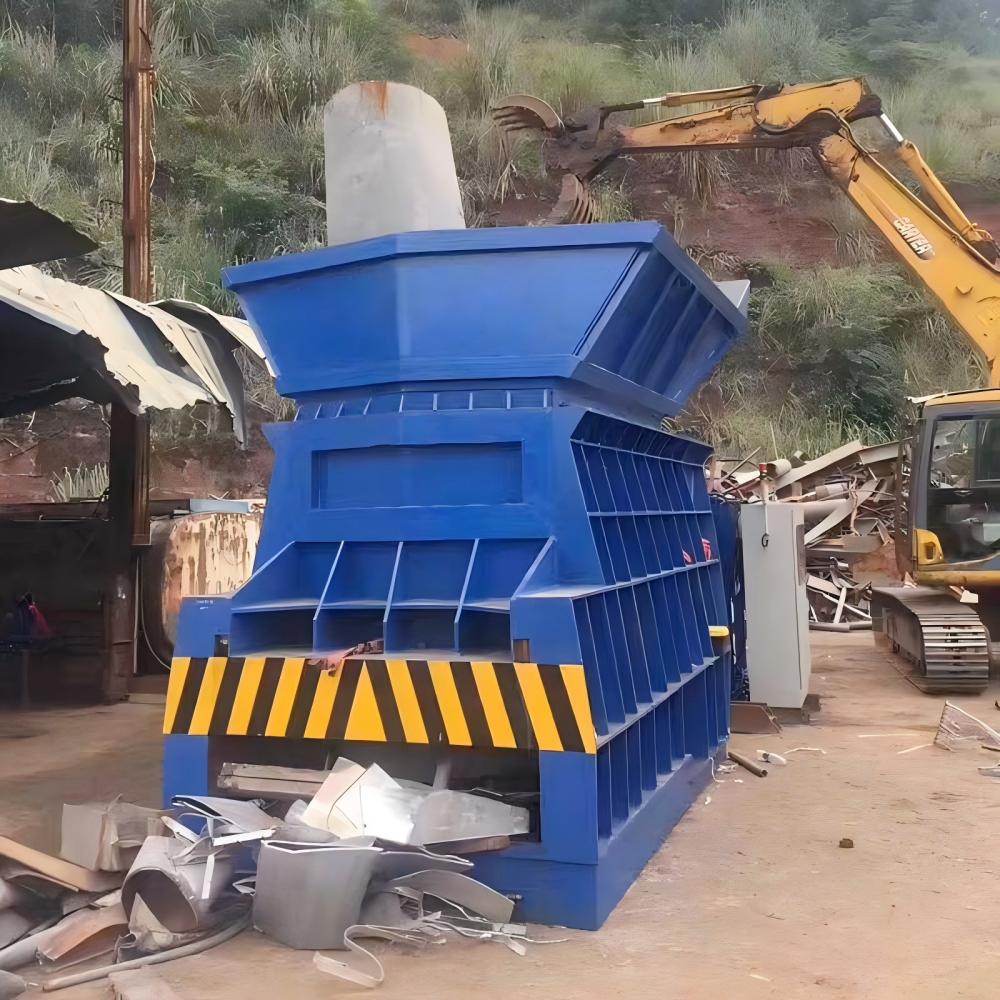
4. Misalignment and Side Loading
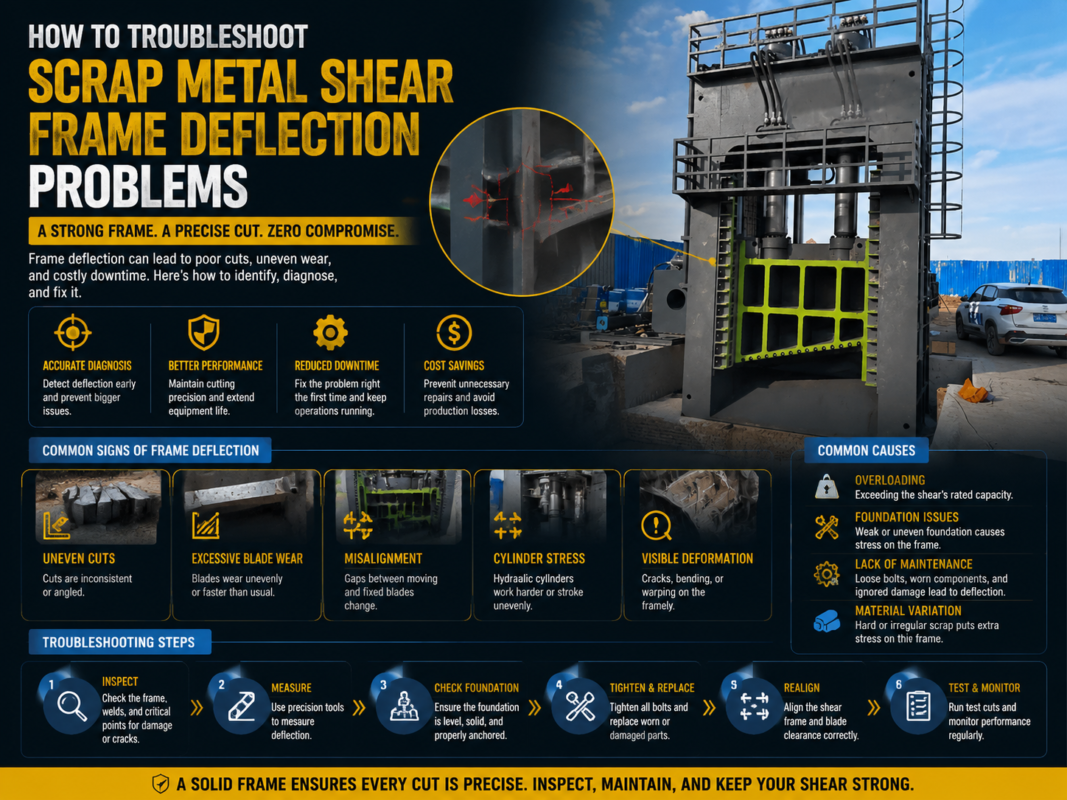
Hydraulic cylinders are designed to push and pull in a straight line. In scrap metal shears, the immense force of the cut can sometimes cause the machine frame to flex, leading to side loading on the cylinder rod. Side loading puts uneven pressure on the wear rings and seals, causing them to fail prematurely on one side. If you notice that your seals are consistently failing in the same spot, check the alignment of the cylinder mounts and the straightness of the shear’s guide rails. Misalignment is a silent killer of hydraulic components.
Selection Advice: Choosing Replacement Parts and Seals
When troubleshooting leads to the conclusion that parts must be replaced, selection is critical. Not all seals are created equal. For scrap metal shears, you should always opt for high-performance polyurethane or Viton seals that can withstand high temperatures and pressure spikes. Standard nitrile seals may be cheaper, but they will quickly harden and fail in the demanding environment of a metal recycling facility.
If the cylinder barrel or rod is beyond repair, selecting a replacement requires matching the bore, stroke, and rod diameter exactly. However, it is also an opportunity to upgrade. For instance, choosing a rod with a thicker chrome plating or a barrel made from higher-grade honed tubing can extend the service life of the machine. HARSLE recommends using OEM (Original Equipment Manufacturer) parts whenever possible to ensure compatibility with the existing hydraulic circuit and mounting geometry.
Consider the following table when selecting replacement components for your scrap shear cylinder:
| Component | Common Material | Selection Criteria | Maintenance Tip |
|---|---|---|---|
| Piston Rod | 40Cr / 45# Steel | Hard chrome plating thickness (>20 microns) | Check for nicks and straightness monthly. |
| Cylinder Barrel | ST52.3 / E355 Honed Tube | Surface finish (Ra < 0.4) and wall thickness | Inspect for internal scoring during seal changes. |
| Seals | PU / NBR / Viton | Pressure rating and temperature range | Replace as a complete kit, never individually. |
| Wear Rings | Phenolic Resin / Bronze | Load bearing capacity and friction coefficient | Ensure they are properly seated to prevent side loading. |
Step-by-Step Troubleshooting Checklist
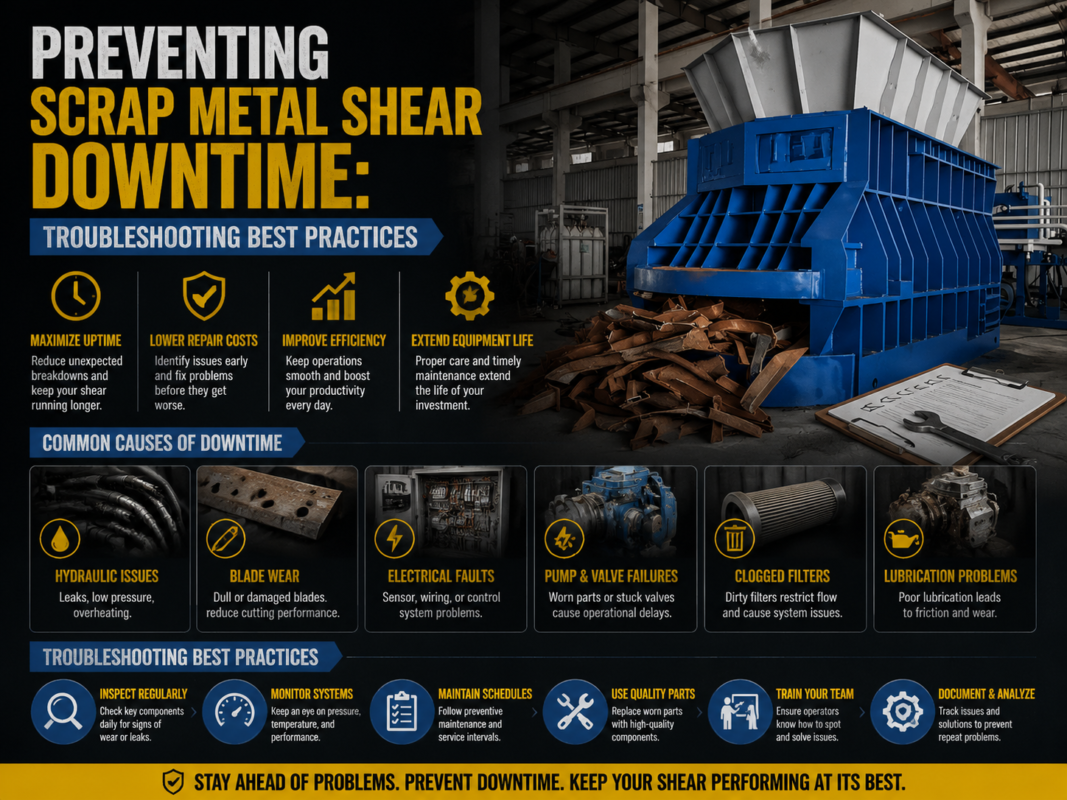
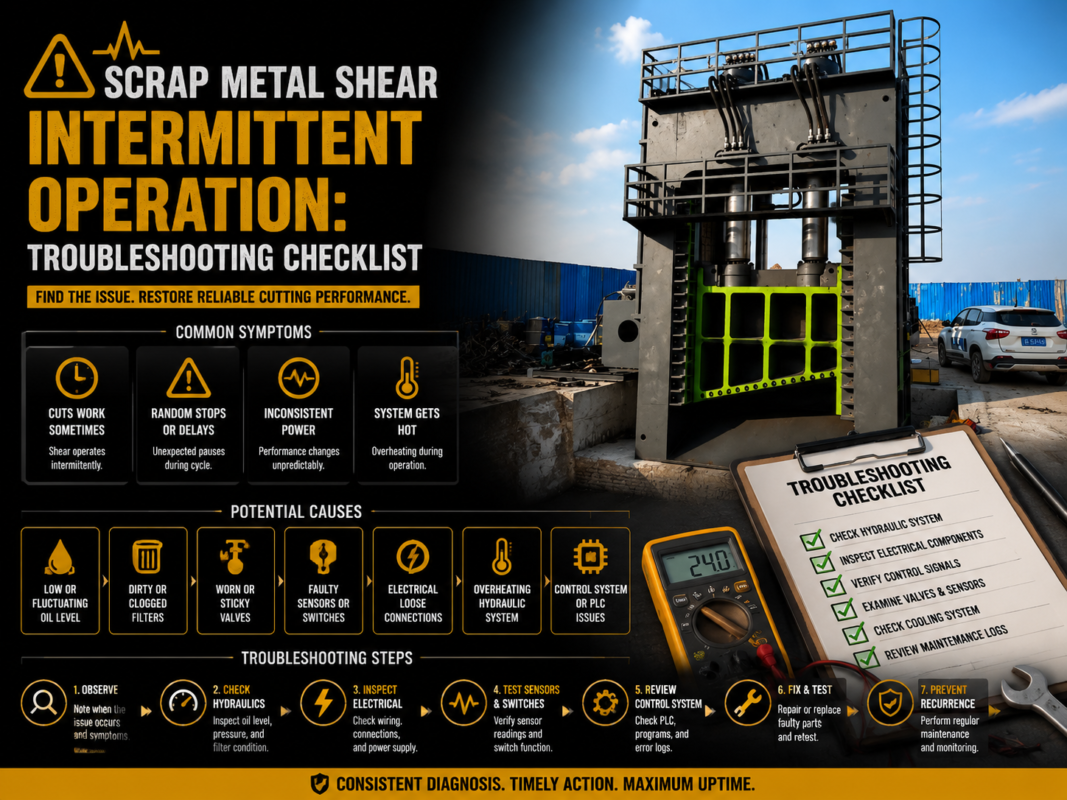
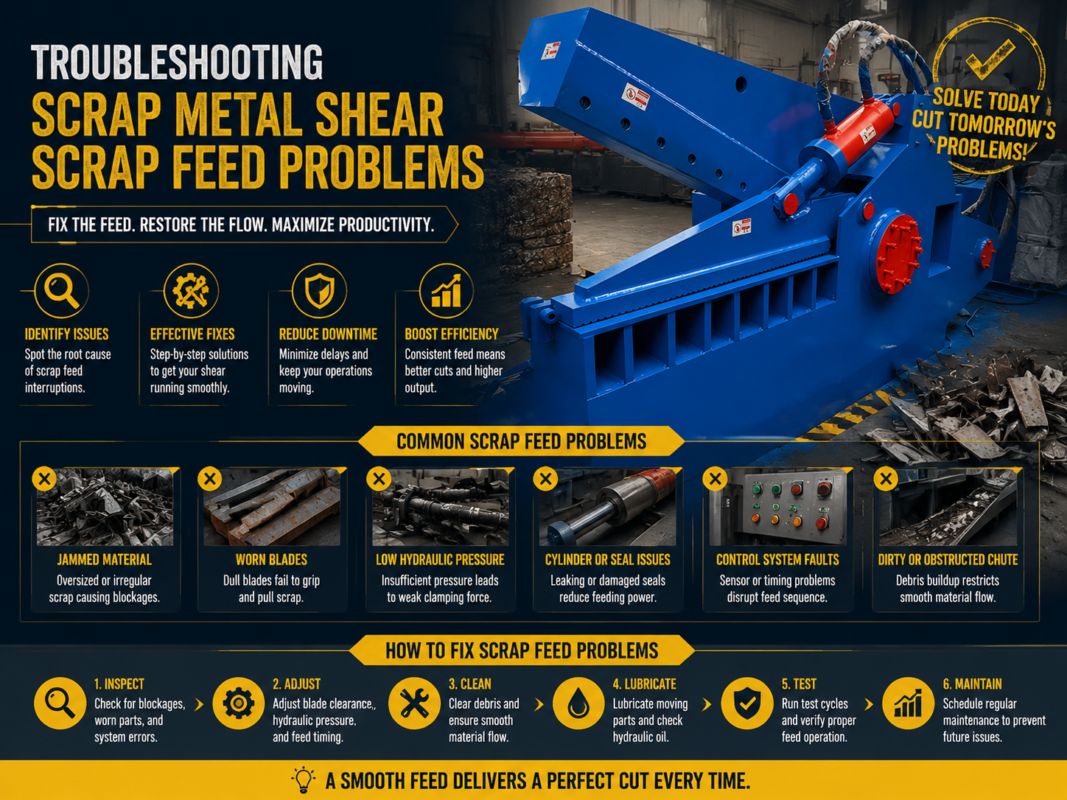
To effectively troubleshoot scrap metal shear cylinder problems, follow this systematic approach to narrow down the cause of the failure:
- Step 1: Visual Inspection. Look for oil leaks at the rod end, head, and ports. Check the rod for physical damage or discoloration (which indicates overheating).
- Step 2: Check Fluid Levels and Quality. Ensure the hydraulic reservoir is full. Look for foam or cloudiness in the oil, which indicates air or water contamination.
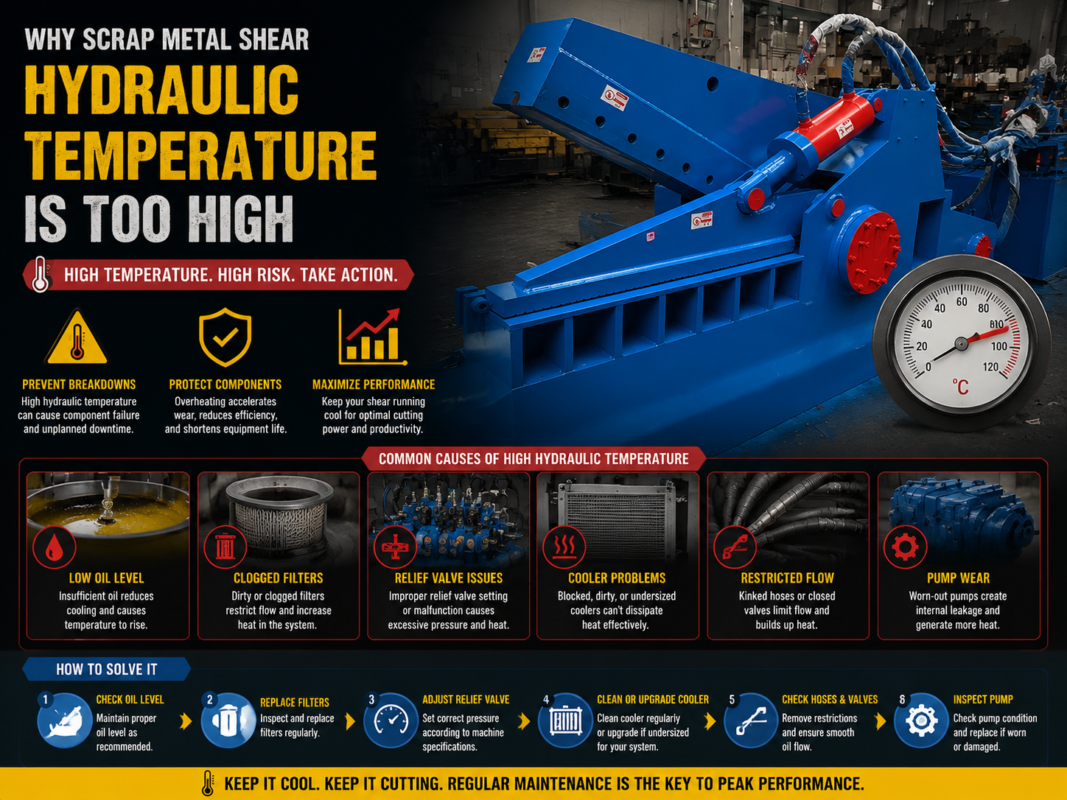
- Step 3: Monitor Operating Temperature. Use an infrared thermometer to check the cylinder temperature. A cylinder that is significantly hotter than the rest of the system is likely experiencing internal leakage.
- Step 4: Pressure Testing. Install pressure gauges at the cylinder ports. Compare the readings to the machine’s specifications. A drop in pressure during the stroke indicates a pump or valve issue, while a drop at the end of the stroke indicates a cylinder seal issue.
- Step 5: Cycle Time Analysis. Time the extension and retraction of the cylinder. If the times are slower than factory specs, check for flow restrictions or internal bypassing.
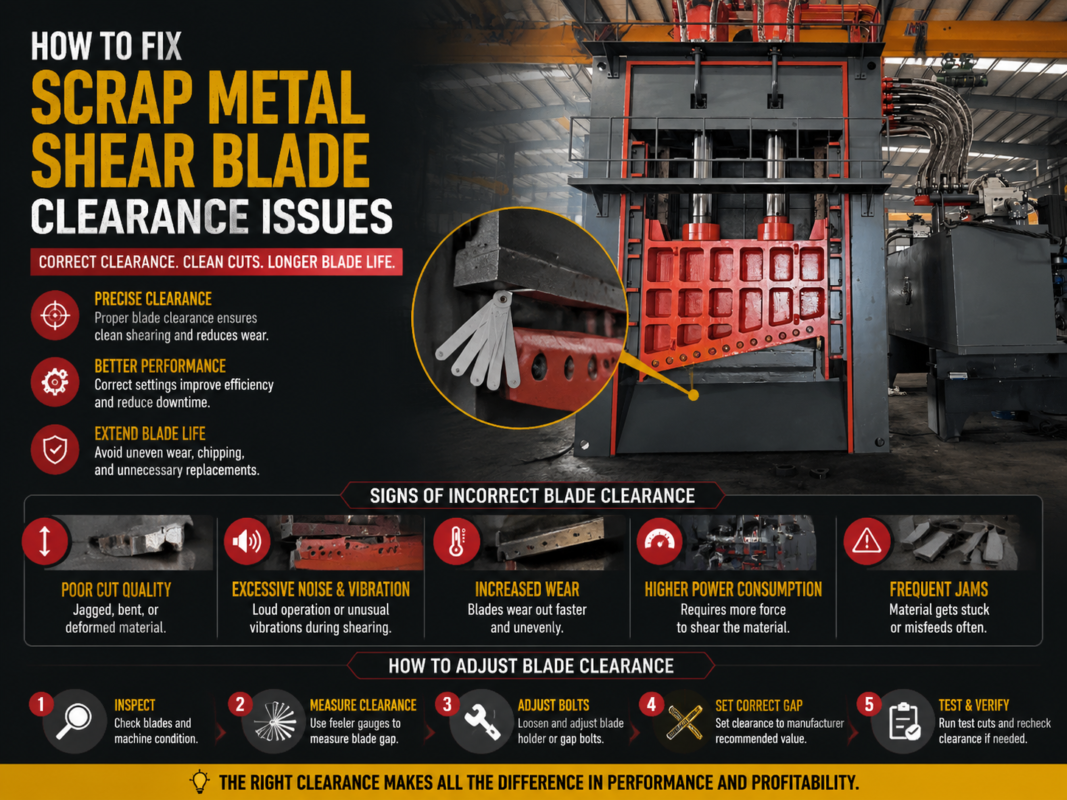
- Step 6: Inspect Mounts and Bushings. Loose mounting bolts or worn bushings can cause misalignment, leading to seal failure. Tighten all hardware to the specified torque.
Frequently Asked Questions (FAQ)
Why is my scrap metal shear losing cutting power?
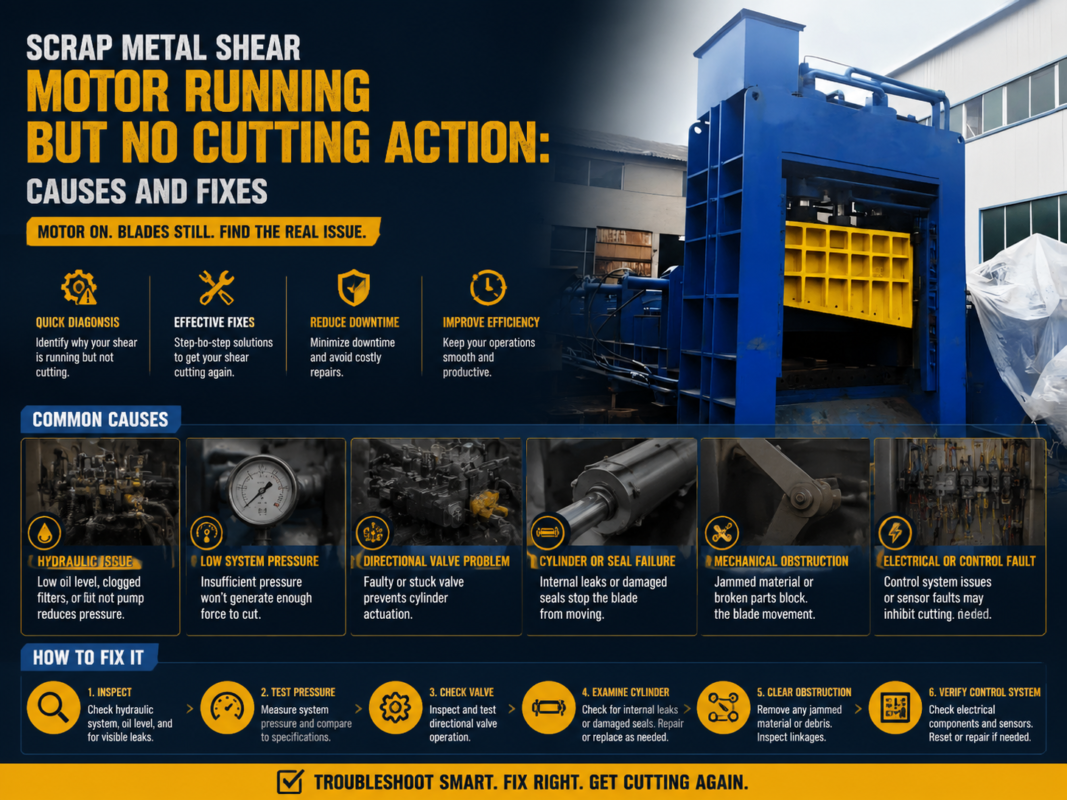
Loss of cutting power is usually attributed to a drop in hydraulic pressure. This can be caused by a failing pump, a misadjusted relief valve, or internal leakage within the cylinder. If the cylinder seals are worn, the oil bypasses the piston, preventing the build-up of the necessary tonnage to shear the metal.
How often should I change the seals in my shear cylinder?
There is no fixed timeframe, as it depends on the duty cycle and environment. However, in a high-volume scrap yard, a proactive seal replacement every 2,000 to 3,000 operating hours is recommended. Waiting for a leak to occur can lead to rod damage, which is much more expensive to repair.
What causes the cylinder rod to vibrate or chatter?
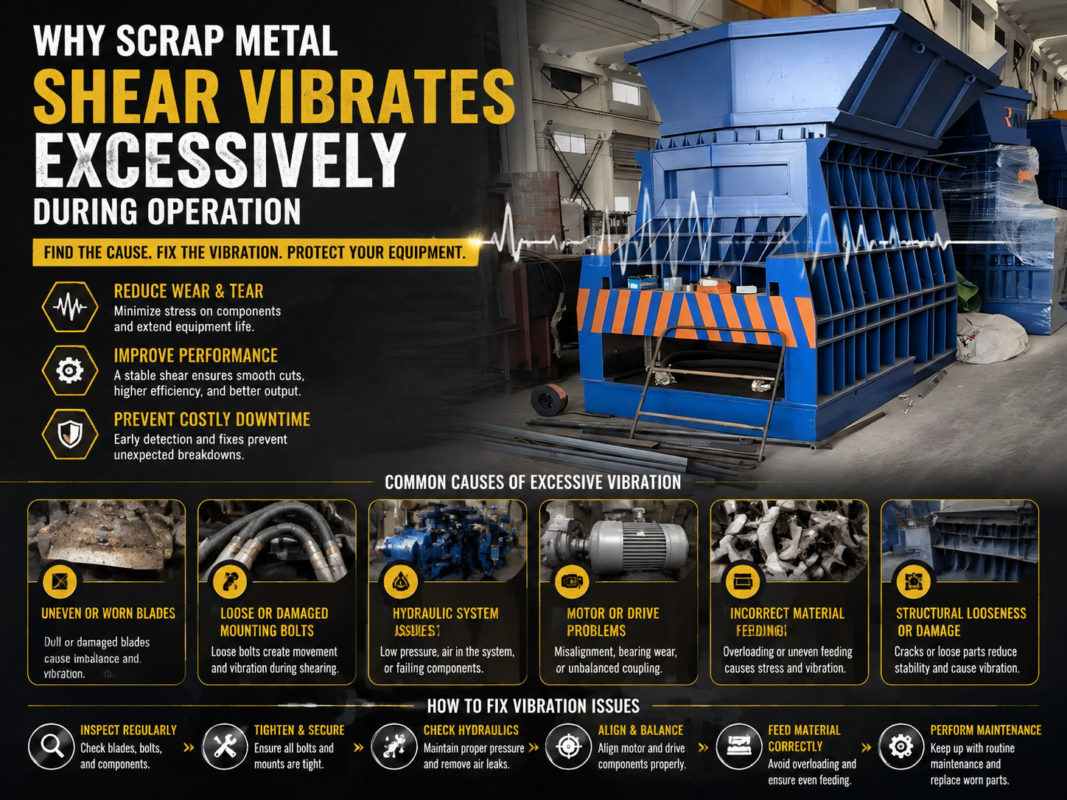
Chattering is often caused by air trapped in the cylinder or insufficient lubrication of the wear rings. It can also be a sign of “stick-slip” phenomenon, where the seals are too tight or the rod surface is too dry. Bleeding the system and checking the hydraulic oil additives can often resolve this.
Can I repair a scored cylinder barrel?
Minor scratches can sometimes be honed out, but deep scores usually require the barrel to be replaced. Attempting to use a badly scored barrel with new seals will result in immediate seal failure. For industrial shears, replacing the barrel is often more cost-effective than attempting a complex internal repair.
Is it normal for the cylinder to get hot during operation?
Hydraulic systems generate heat, and a temperature of 40°C to 60°C (104°F to 140°F) is generally normal. However, if the cylinder exceeds 80°C (176°F), it indicates a problem, such as excessive friction or internal oil bypassing, which generates heat through turbulence.
Conclusion: Maintaining Peak Performance
Successfully learning how to troubleshoot scrap metal shear cylinder problems is the key to maintaining a productive and profitable recycling operation. By understanding the symptoms of seal failure, rod damage, and hydraulic contamination, operators can intervene before minor issues escalate into major mechanical breakdowns. The hydraulic cylinder is a precision component that demands respect and regular care. Through consistent visual inspections, fluid analysis, and adherence to safety protocols, you can ensure your HARSLE scrap shear delivers the power and reliability you need for years to come.
Remember that troubleshooting is a process of elimination. Start with the simplest possibilities—like low oil or loose fittings—before moving to complex internal diagnostics. Investing in high-quality replacement parts and following a strict preventative maintenance schedule will not only save money on repairs but also extend the overall lifespan of your machinery. In the demanding world of metal fabrication and recycling, a well-maintained cylinder is the difference between a smooth operation and a costly standstill.