Recycling Baler Safety Interlock Problems: Troubleshooting and Reset Guide

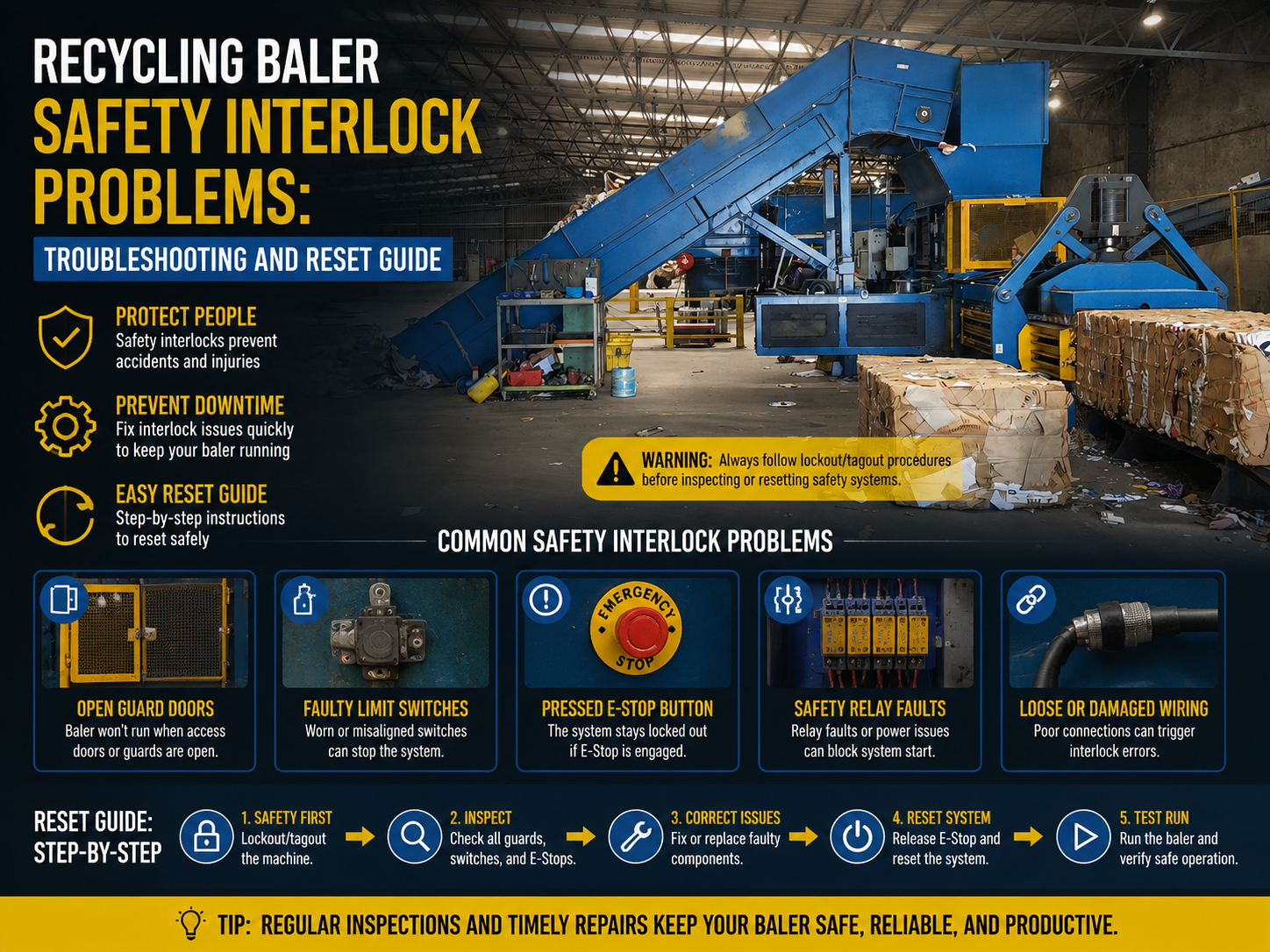
Introduction to Recycling Baler Safety Interlocks
In the high-pressure world of waste management and material recovery, the recycling baler stands as a cornerstone of efficiency. Whether processing cardboard, plastics, or non-ferrous metals, these machines exert immense hydraulic force to compress loose materials into manageable blocks. However, with great power comes the necessity for rigorous safety protocols. The safety interlock system is the primary guardian of operator safety, designed to prevent the machine from operating if a door is open, a guard is removed, or an emergency stop is engaged. When these systems fail, it leads to frustrating downtime and, more importantly, potential safety hazards.
Understanding Recycling Baler Safety Interlock Problems: Troubleshooting Reset procedures is essential for any facility manager or maintenance technician. An interlock is not just a simple switch; it is a complex integration of mechanical, electrical, and sometimes optical components that communicate directly with the machine’s Programmable Logic Controller (PLC). When the PLC does not receive the ‘safe’ signal, it cuts power to the hydraulic pump or prevents the directional valves from shifting, effectively locking the machine in place. This guide aims to provide a deep dive into the common causes of interlock failure and how to systematically resolve them.
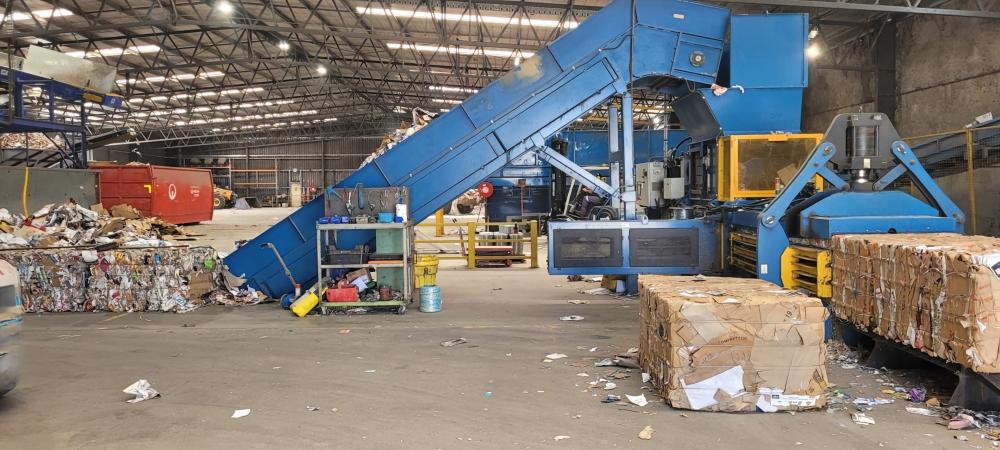
Modern recycling balers, such as those manufactured by HARSLE, utilize sophisticated safety relays and dual-channel circuits to ensure that a single component failure does not lead to a dangerous situation. However, the harsh environment of a recycling center—filled with dust, debris, vibration, and heavy impact—can take a toll on even the most robust components. This article will explore the technical nuances of these systems, providing you with the knowledge to identify whether a problem is a simple mechanical misalignment or a deeper electrical fault.
Key Considerations for Safety Interlock Systems
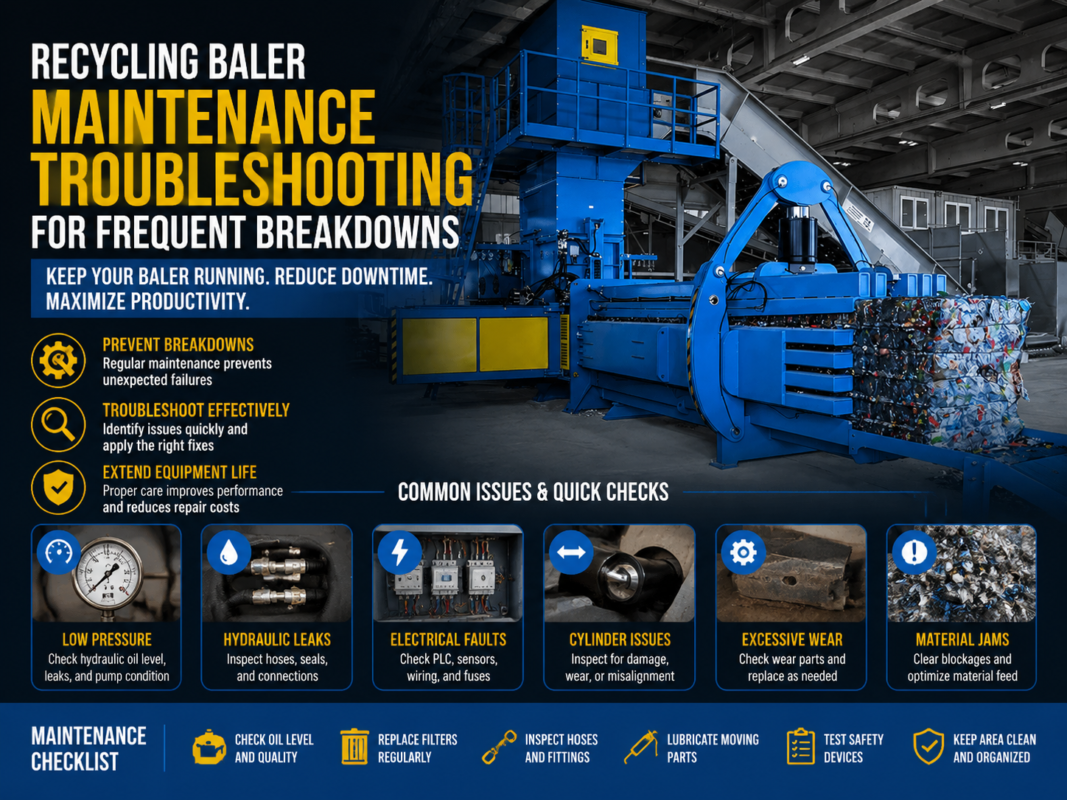
Before diving into the technical troubleshooting steps, it is crucial to understand the environment in which these machines operate. Recycling balers are subjected to constant vibration and the ingress of fine particulates. These factors are the leading causes of Recycling Baler Safety Interlock Problems: Troubleshooting Reset issues. A limit switch that is slightly out of alignment due to the constant jarring of the hydraulic ram will fail to engage, sending an error signal to the control panel. Similarly, dust buildup on a magnetic sensor can interfere with the magnetic field, leading to intermittent failures that are notoriously difficult to diagnose.
Another key consideration is the type of interlock system installed. Older machines may rely on simple mechanical limit switches, while newer, high-performance balers use non-contact RFID or magnetic sensors. Mechanical switches are prone to physical wear and breakage, whereas electronic sensors are more sensitive to electrical noise and wiring issues. Knowing which system your baler uses is the first step in effective troubleshooting. Furthermore, the safety logic often requires a specific sequence of events to reset; for example, the emergency stop must be pulled out, and then a ‘reset’ button must be pressed to clear the fault in the safety relay.
Safety must always be the priority. Before performing any troubleshooting on the interlock system, ensure that the machine is properly locked out and tagged out (LOTO). Never attempt to bypass or ‘jump’ a safety interlock to keep production running. Bypassing safety features is not only a violation of OSHA and international safety standards but also poses a life-threatening risk to operators. The goal of troubleshooting should always be to restore the system to its original, safe operating condition.
Technical Details: How Interlocks Work and Why They Fail
The Architecture of a Safety Circuit
A typical recycling baler safety circuit consists of several components wired in series or monitored by a dedicated safety relay. These include the emergency stop buttons, the loading gate limit switches, and the bale discharge door sensors. In a dual-channel system, two separate signals must reach the safety relay simultaneously. If there is a discrepancy between these two signals (for example, one switch closes but the other remains open), the relay will detect a fault and prevent the machine from starting. This redundancy is designed to protect against a single point of failure, such as a welded contact in a switch.
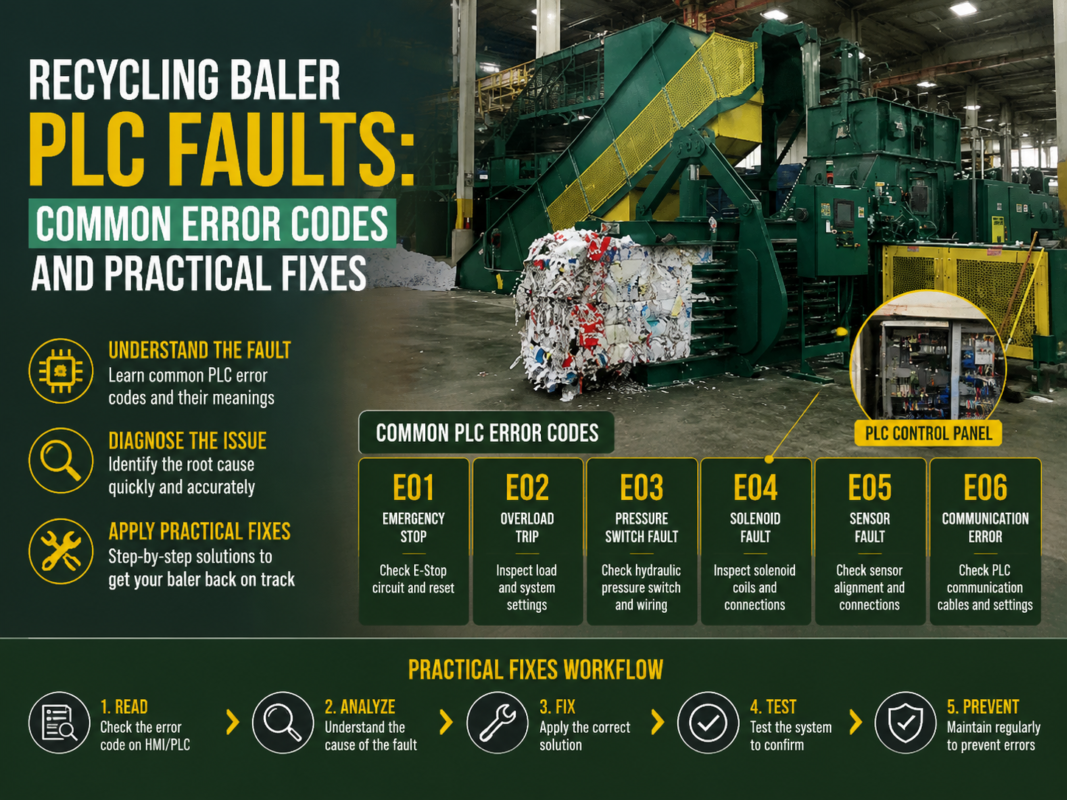
The PLC monitors the state of these safety relays. When a gate is opened, the circuit is broken, and the PLC immediately de-energizes the output to the hydraulic motor starter. Understanding this logic flow is essential for Recycling Baler Safety Interlock Problems: Troubleshooting Reset. If the PLC screen displays a “Gate Open” error even when the gate is closed, the technician must trace the signal from the switch, through the wiring, to the safety relay, and finally to the PLC input module.
Common Failure Modes
- Mechanical Misalignment: The most common issue. The heavy doors of a baler can sag over time, or the mounting brackets for the limit switches can bend. If the actuator does not fully depress the switch, the circuit remains open.
- Debris Interference: Cardboard scraps or plastic film can get lodged behind a limit switch arm or between a magnetic sensor and its target, preventing proper contact or proximity.
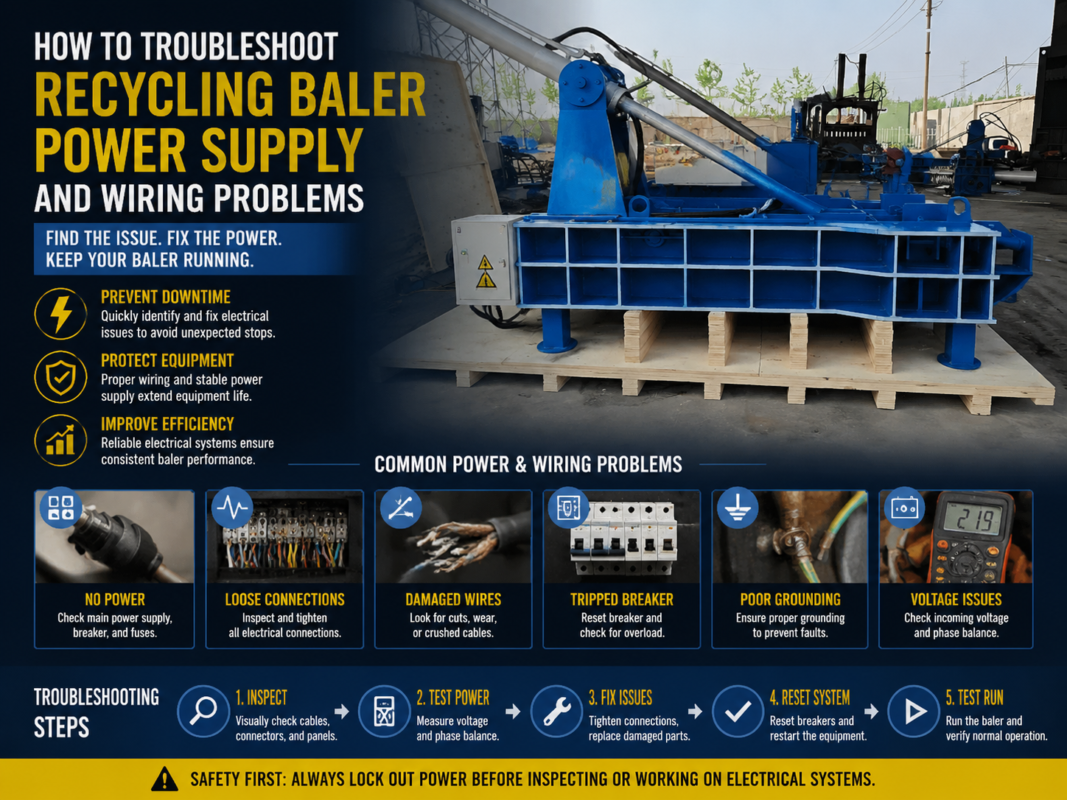
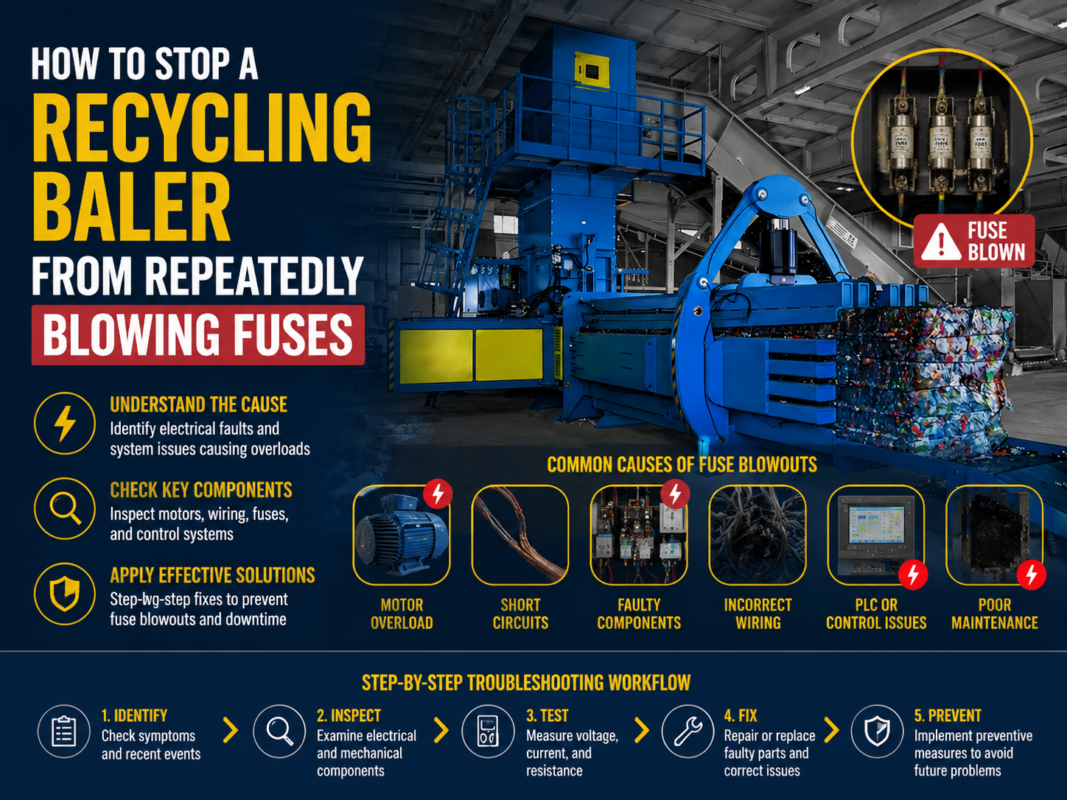
- Wiring Fatigue: Because balers vibrate significantly, wires can vibrate loose from their terminals, or the insulation can chafe against the machine frame, causing a short circuit.
- Safety Relay Internal Faults: Occasionally, the safety relay itself may fail or enter a ‘lockout’ state due to a detected internal error. This often requires a power cycle or a specific reset sequence.
Step-by-Step Troubleshooting and Reset Guide
Step 1: Visual Inspection and Cleaning
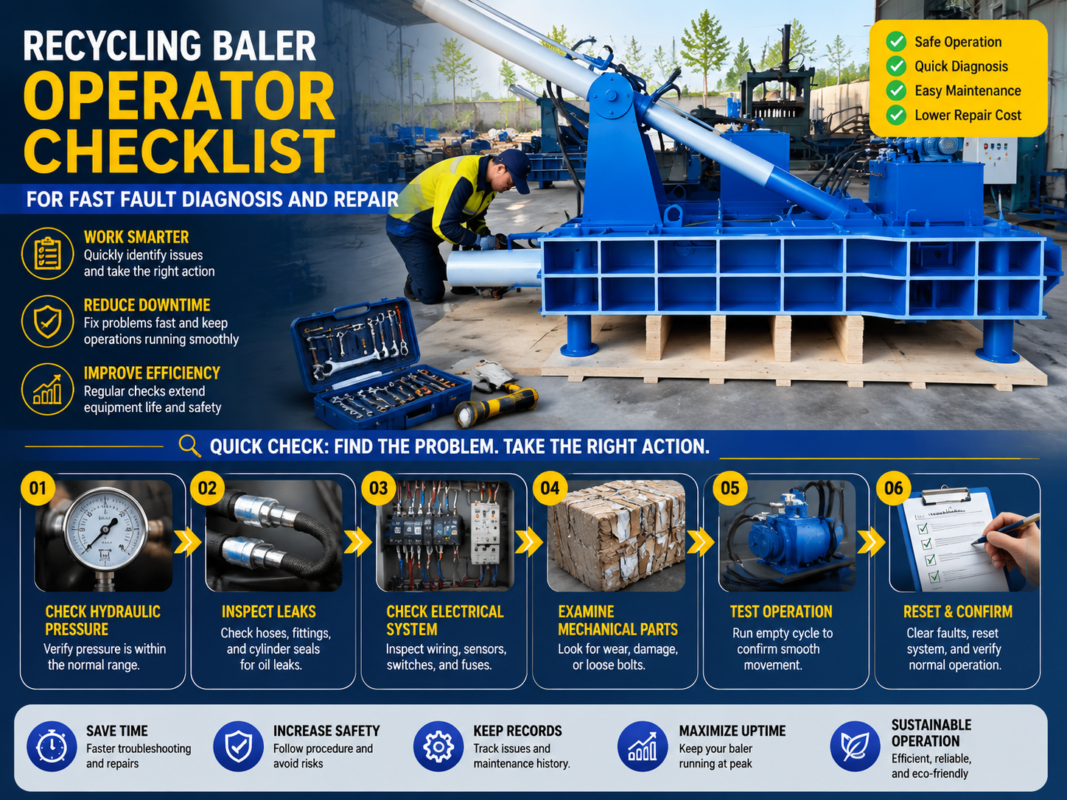
Start with the simplest solution. Inspect all safety gates and doors to ensure they are fully closed and latched. Look for any visible debris that might be obstructing the sensors. Use compressed air to blow out dust from mechanical limit switches. Check the physical condition of the switches; if an arm is bent or a housing is cracked, it will likely need replacement. Ensure that magnetic sensors are clean and that the gap between the sensor and the magnet is within the manufacturer’s specified range (usually 2-5mm).
Step 2: Checking the Control Panel for Error Codes
Modern balers provide diagnostic feedback via an HMI (Human Machine Interface) screen. Look for specific error codes related to the safety circuit. Common messages include “E-Stop Engaged,” “Gate Interlock Fault,” or “Safety Relay Error.” If the screen indicates a specific door is open, focus your efforts there. If the error is general, it may indicate a problem with the main safety relay or the emergency stop circuit.
Step 3: Testing Continuity and Voltage
Using a multimeter, you can test the functionality of the switches. With the power off and the machine locked out, check for continuity across the switch terminals when the gate is closed. For a Normally Closed (NC) circuit, you should see zero resistance. If the switch shows an open circuit when it should be closed, the switch is faulty. For powered sensors (like RFID or optical), check for the presence of the correct supply voltage (usually 24V DC) at the sensor head.
Step 4: The Reset Procedure
Once the physical fault is corrected, the system must be reset. This is not always as simple as pressing ‘Start.’ Follow this general sequence:
- Ensure all Emergency Stop buttons are pulled out/released.
- Close all safety gates and ensure they are latched.
- Press the ‘Safety Reset’ button on the control panel. This clears the fault in the safety relay.
- Check the HMI for any remaining alarms. If clear, press the ‘Motor Start’ button.
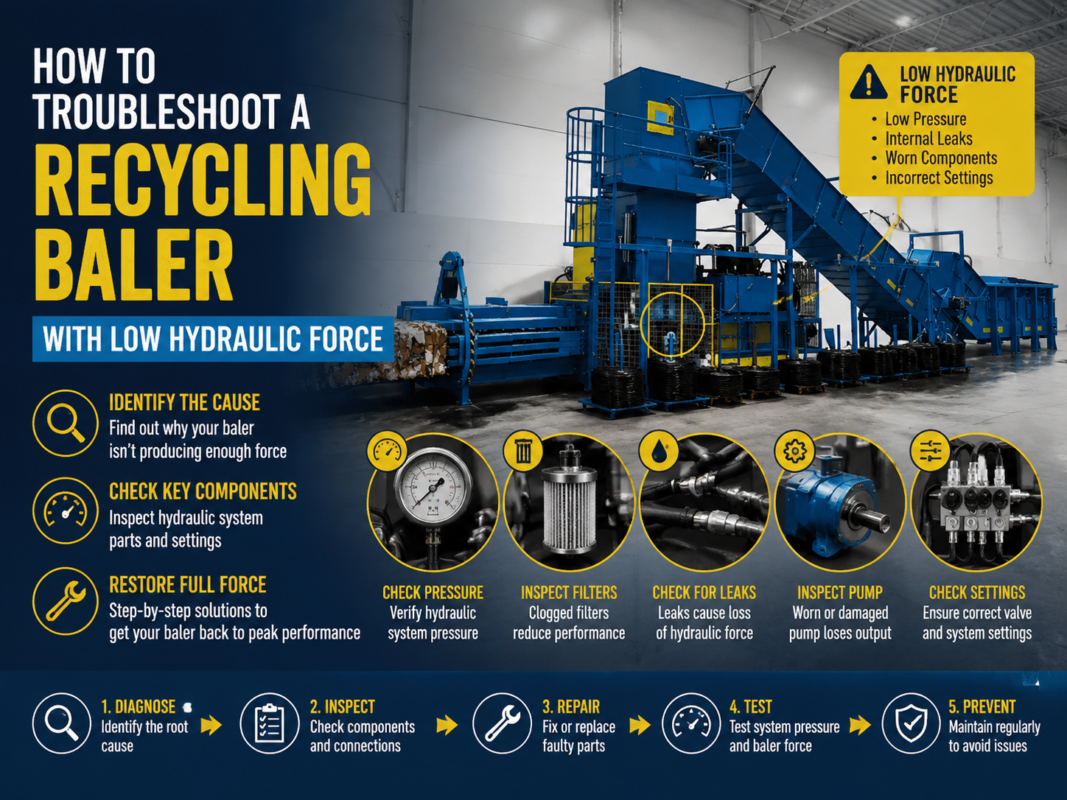
- If the hydraulic pump starts but the ram won’t move, check for secondary interlocks, such as the bale-out door or the wire-tie system.
Selection Advice: Choosing a Baler with Reliable Safety Systems
When purchasing a new recycling baler, the quality of the safety interlock system should be a primary consideration. Not all systems are created equal. Look for machines that utilize high-quality, brand-name safety components (such as those from Sick, Pilz, or Allen-Bradley). These components are more durable and have better documentation for troubleshooting. HARSLE balers, for instance, are engineered with industrial-grade safety architectures that prioritize both operator protection and ease of maintenance.
Consider the following checklist when evaluating a baler’s safety features:
| Feature | Why It Matters | What to Look For |
|---|---|---|
| Sensor Type | Durability in harsh environments. | Non-contact magnetic or RFID sensors (IP67 or IP69K rated). |
| Safety Relay | Ensures redundant monitoring. | Dual-channel safety monitoring relays with diagnostic LEDs. |
| HMI Diagnostics | Reduces troubleshooting time. | Clear, descriptive error messages instead of vague codes. |
| Wiring Quality | Prevents intermittent faults. | Shielded cables and vibration-resistant terminal blocks. |
Furthermore, ask the manufacturer about the availability of replacement parts. Safety switches are wear items, and having a local supply or a fast-shipping partner is critical for minimizing downtime. A well-designed baler will also have the safety components mounted in protected areas, away from direct contact with the material being baled, yet still accessible for maintenance.
Frequently Asked Questions (FAQ)
Why does my baler stop mid-cycle and show a gate error?
This is often caused by vibration. As the ram compresses the material, the machine shakes, which can cause a slightly misaligned or loose limit switch to momentarily lose contact. The PLC detects this as the gate being opened and halts the cycle for safety. Tighten all mounting bolts and ensure the switch is firmly engaged.
Can I bypass a faulty interlock just to finish the current bale?
Absolutely not. Bypassing a safety interlock is extremely dangerous and illegal in most jurisdictions. If a switch is faulty, it must be replaced. Most modern safety relays are designed to detect ‘jumper wires’ and will fault out anyway, preventing the machine from running in an unsafe state.
How often should I test the safety interlocks?
Safety interlocks should be tested at the start of every shift. The operator should verify that the machine stops immediately when an E-stop is pressed or when a safety gate is opened. This daily check ensures that the system is functioning as intended and can catch potential problems before they lead to an accident.
What does it mean when the safety relay has a flashing red light?
A flashing red light on a safety relay usually indicates a ‘fault’ or a ‘discrepancy.’ This happens when the two channels of the safety circuit are not in the same state (e.g., one is closed, one is open). This can be caused by a failing switch, a broken wire in one channel, or a timing issue where one switch closes much later than the other.
Conclusion: Maintaining a Safe and Productive Baling Operation
Mastering Recycling Baler Safety Interlock Problems: Troubleshooting Reset is about more than just fixing a machine; it is about maintaining a culture of safety and efficiency. While interlock problems can be a source of frustration, they are a vital sign that the machine’s safety systems are doing their job. By following a systematic approach—visual inspection, diagnostic review, electrical testing, and proper reset procedures—technicians can quickly return the baler to service without compromising safety.
Investing in high-quality machinery from reputable manufacturers like HARSLE ensures that you have a robust foundation to work from. However, even the best machines require diligent maintenance. Keep your sensors clean, your wiring secure, and your operators trained. A well-maintained safety system not only prevents accidents but also extends the lifespan of the machine by ensuring it operates within its designed parameters. Remember, in the world of industrial recycling, the most productive machine is a safe machine.