How to Diagnose Air in Recycling Baler Hydraulic Lines: A Comprehensive Guide

Introduction to Hydraulic Health in Recycling Balers
In the demanding world of waste management and metal fabrication, the recycling baler stands as a cornerstone of efficiency. These machines, designed by industry leaders like HARSLE, utilize immense hydraulic force to compress materials ranging from cardboard and plastics to scrap metal. However, the lifeblood of these machines—the hydraulic fluid—must remain pure and incompressible to function correctly. When air infiltrates the hydraulic lines, it compromises the entire system’s integrity, leading to reduced performance, increased wear, and potential mechanical failure.
To diagnose air in recycling baler hydraulic lines is to engage in a critical maintenance task that ensures the longevity of your equipment. Air is naturally compressible, unlike hydraulic oil. When air bubbles enter the high-pressure environment of a baler’s cylinders and pumps, they collapse violently or expand rapidly, causing a phenomenon known as aeration or cavitation. This not only slows down the cycle time of the baler but also generates excessive heat and noise, which are the primary indicators that something is wrong within the circuit.
Understanding the nuances of hydraulic systems is essential for any facility manager or operator. A recycling baler operates under extreme pressure, often exceeding 3,000 PSI. At these levels, even a small amount of entrained air can lead to significant energy loss and component erosion. This guide will walk you through the complexities of identifying, diagnosing, and resolving air-related issues in your hydraulic lines, ensuring your HARSLE machinery continues to operate at peak capacity.
Maintenance professionals often overlook the subtle signs of air contamination until a major breakdown occurs. By adopting a proactive diagnostic approach, you can save thousands of dollars in replacement parts and prevent costly downtime. Whether you are dealing with a vertical baler or a high-capacity horizontal scrap baler, the principles of hydraulic fluid dynamics remain the same. Let’s explore the key considerations and technical steps required to keep your lines clear and your pressure consistent.
Key Considerations: Why Air is a Critical Threat
Before diving into the diagnostic steps, it is vital to understand why air is so detrimental to a recycling baler. The primary function of hydraulic fluid is to transmit power. Because liquids are virtually incompressible, they transmit force instantaneously. Air, however, is highly compressible. When air enters the lines, the system becomes “spongy.” The ram may hesitate, jerk, or fail to reach full compaction force, directly impacting the density of your bales and the efficiency of your recycling operation.
There are two main ways air interacts with hydraulic oil: aeration and cavitation. Aeration occurs when outside air is sucked into the system, usually through a leak in the suction line or a low fluid level in the reservoir. Cavitation, on the other hand, occurs when the fluid demand of the pump exceeds the amount of fluid being supplied, causing vapor bubbles to form and then collapse. Both conditions are destructive, but they require different diagnostic focuses. Identifying which one is affecting your baler is the first step toward a permanent fix.
Another key consideration is the “Diesel Effect.” When air bubbles are trapped in hydraulic oil and subjected to rapid high pressure (such as when the baler ram meets resistance), the air can heat up to the point of spontaneous combustion. This micro-explosion chars the surrounding oil, leading to carbon deposits, seal damage, and rapid fluid degradation. If you notice your hydraulic oil turning dark or smelling burnt despite regular changes, air contamination is likely the culprit.
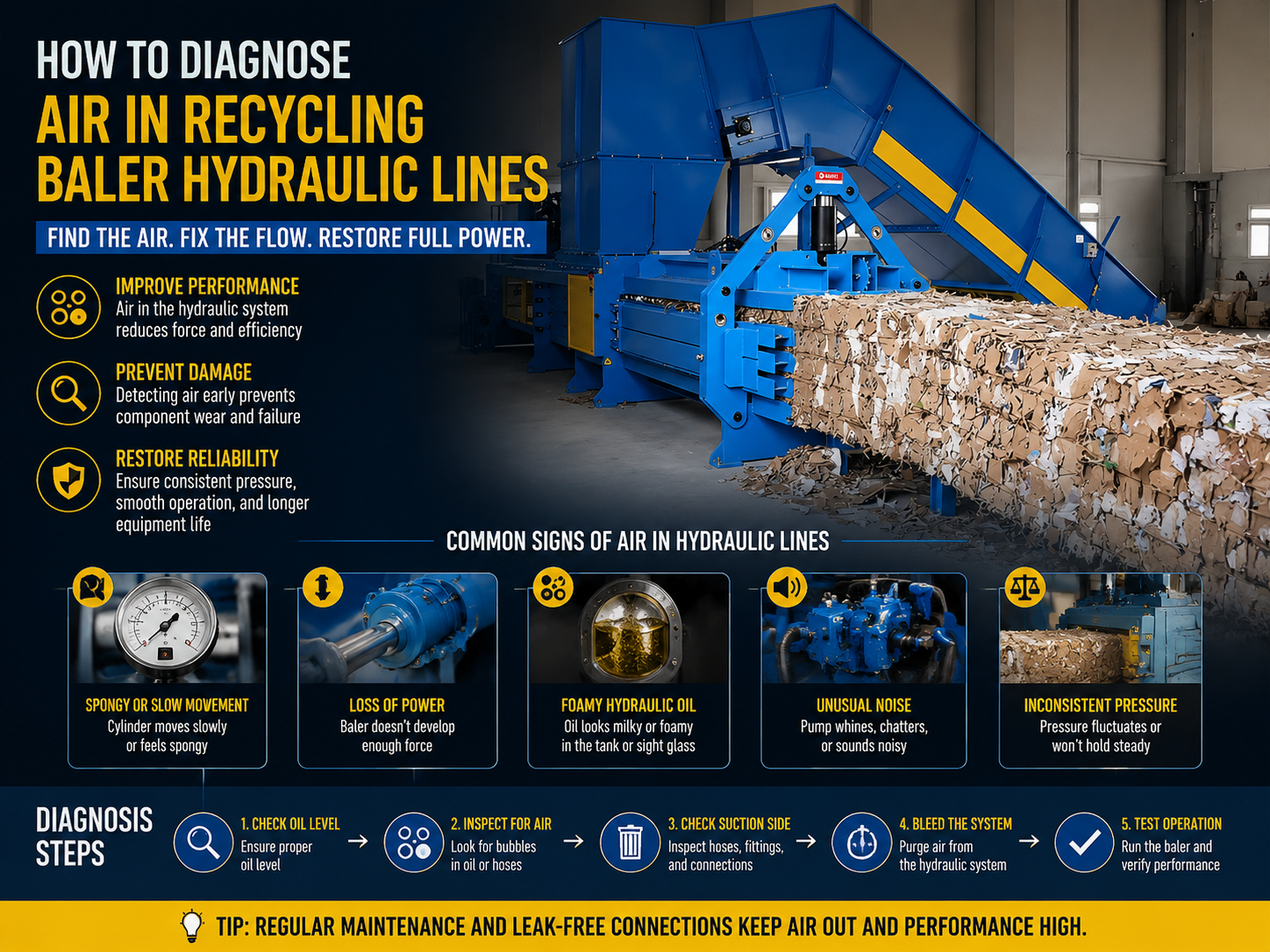
- System Noise: Excessive whining or banging sounds are the most common indicators of air.
- Fluid Appearance: Milky or foamy oil in the sight glass suggests high levels of entrained air.
- Erratic Movement: If the baler ram moves in a stuttering fashion, air is likely trapped in the cylinders.
- Increased Temperature: Air bubbles generate friction and heat when compressed, leading to overheating.
Finally, consider the environmental impact. A baler struggling with air in its lines consumes more electricity to achieve the same compaction results. In a high-volume facility, this inefficiency translates to higher operational costs. By learning to diagnose air in recycling baler hydraulic lines, you are not just fixing a machine; you are optimizing your entire production workflow.
Technical Details: The Science of Aeration and Cavitation
To effectively diagnose hydraulic issues, one must understand the physics at play. Hydraulic oil typically contains about 9% dissolved air by volume. Under normal conditions, this air stays in solution and does not affect performance. However, when pressure drops or temperatures rise, this dissolved air can become entrained (visible bubbles). This is governed by Henry’s Law, which states that the amount of dissolved gas in a liquid is proportional to the partial pressure of that gas above the liquid.
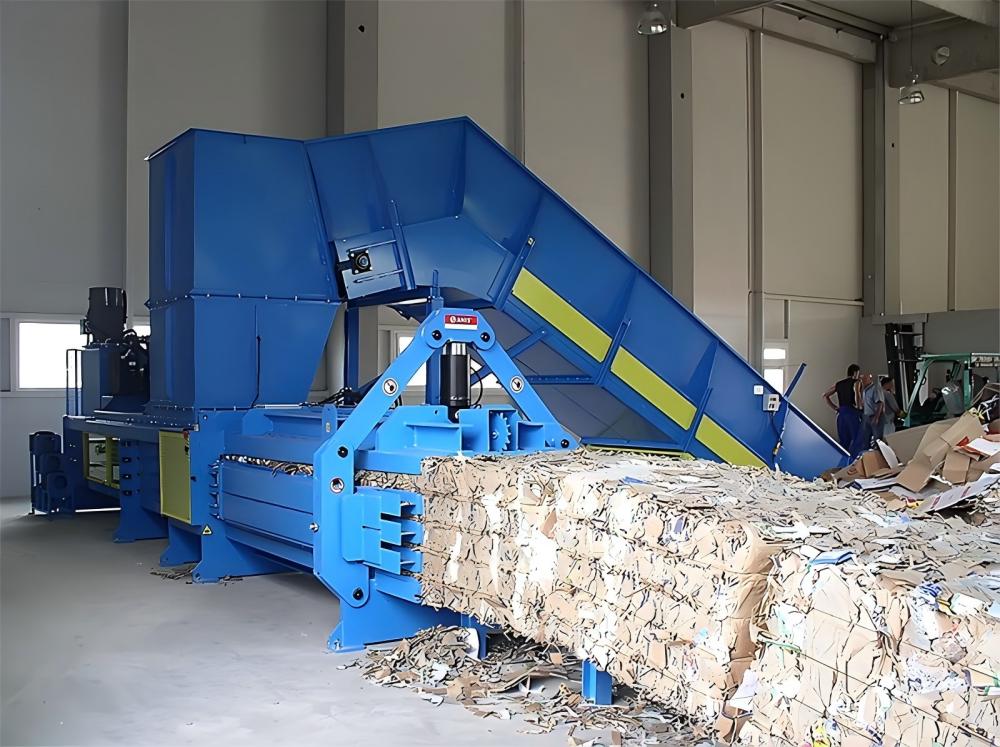
When you diagnose air in recycling baler hydraulic lines, you are looking for the point of entry. The suction side of the pump is the most vulnerable area. Because this side operates at sub-atmospheric pressure, any loose fitting, cracked hose, or worn shaft seal will pull air into the system rather than leaking oil out. This makes leaks on the suction side difficult to spot visually, as there is no tell-tale puddle of oil on the floor.
Cavitation is slightly different but equally dangerous. It often happens due to a clogged suction strainer or an inlet pipe that is too small for the pump’s flow rate. As the pump tries to pull oil that isn’t there, the pressure drops below the vapor pressure of the oil, creating cavities. When these cavities reach the pressure side of the pump, they implode with enough force to pit metal surfaces. This creates a distinct “marbles in a can” sound that every operator should be trained to recognize.
| Symptom | Potential Cause | Diagnostic Action |
|---|---|---|
| High-pitched whining | Pump Cavitation | Check suction strainer for clogs |
| Spongy ram movement | Entrained Air (Aeration) | Bleed cylinders and check suction fittings |
| Foaming oil in reservoir | Return line above oil level | Ensure return pipe is submerged |
| Overheating oil | Diesel Effect / Compression | Check for air leaks in suction side |
The technical solution often involves checking the Reynolds number of the fluid flow and ensuring that the reservoir design allows for adequate “dwell time.” Dwell time is the period the oil spends in the tank, allowing air bubbles to rise to the surface and escape. If a reservoir is too small or lacks proper baffling, the air is simply recirculated back into the pump, compounding the problem. HARSLE balers are engineered with optimized reservoirs to minimize this risk, but improper maintenance can still lead to issues.
Step-by-Step: How to Diagnose Air in Recycling Baler Hydraulic Lines
Follow this systematic approach to diagnose air in recycling baler hydraulic lines and restore your machine to full functionality. Safety is paramount; always ensure the baler is locked out and the ram is mechanically secured before performing inspections.
Step 1: Visual Inspection of the Hydraulic Fluid
Start at the reservoir. Check the sight glass while the machine is running. If the oil appears milky, cloudy, or has a layer of foam on top, air is definitely present. If the oil is clear when the machine is off but becomes cloudy during operation, you have entrained air that is being whipped into the oil by the pump.
Step 2: The Sound Test
Listen to the pump. A healthy hydraulic pump produces a steady, low-frequency hum. If you hear a sharp, high-pitched shriek, the pump is cavitating. If you hear erratic “banging” or “knocking” sounds coming from the lines or cylinders, large pockets of air are moving through the system. Use a mechanic’s stethoscope to pinpoint the exact location of the noise.
Step 3: Check the Suction Line and Fittings
Since the suction line is the most common entry point for air, inspect every connection between the reservoir and the pump inlet. Even if a fitting feels tight, the O-ring inside might be brittle or cracked. A common trick is to pour oil over the suspected fitting while the machine is running; if the pump noise momentarily changes or quietens, you’ve found your leak.
Step 4: Inspect the Pump Shaft Seal
The pump shaft seal is a frequent culprit. If the seal is worn, it can draw air into the pump housing. Look for signs of “weeping” oil around the shaft when the machine is off, but remember that it may only suck air in when the machine is under load. Replacing this seal is a standard maintenance task for high-hour recycling balers.
Step 5: Verify Reservoir Levels and Return Lines
Ensure the hydraulic fluid is at the correct level. If the level is too low, a vortex can form at the suction inlet, pulling air directly into the pump. Additionally, check that the return line discharges oil well below the minimum oil level. If oil splashes into the reservoir from above, it will create bubbles, much like a waterfall.
Step 6: Bleeding the Cylinders
If the air is trapped in the cylinders, you may need to “bleed” the system. Most HARSLE balers have specific procedures for this. Generally, it involves cycling the ram to its full extension and retraction multiple times at low pressure. Some cylinders feature bleed screws at the highest point; carefully cracking these (with extreme caution regarding high-pressure spray) can release trapped air pockets.
Selection Advice: Choosing a Baler Built for Reliability
When purchasing new equipment, selecting a machine designed to minimize hydraulic issues is crucial. HARSLE recycling balers are engineered with several features that help prevent air infiltration and simplify the process to diagnose air in recycling baler hydraulic lines. When evaluating your next purchase, consider the following technical aspects.
First, look at the reservoir design. A high-quality baler should have a reservoir with internal baffles. These baffles slow down the fluid velocity, giving air bubbles time to rise and dissipate before the oil reaches the suction strainer. Furthermore, the suction and return lines should be positioned as far apart as possible to maximize this de-aeration process.
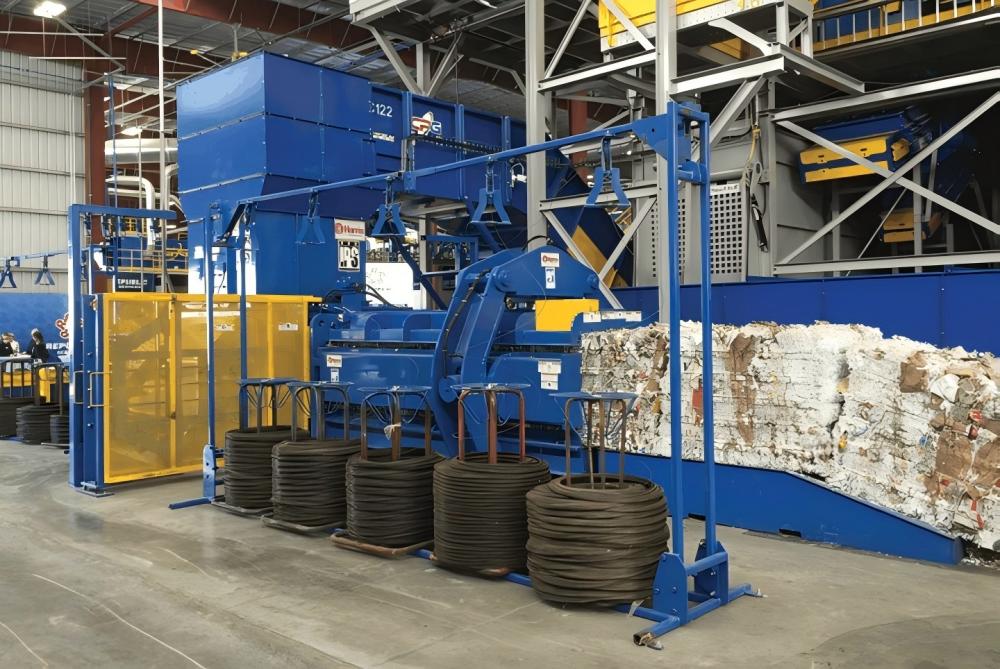
Second, prioritize machines with high-quality filtration systems. Contaminants in the oil can cause premature wear on seals and valves, which eventually leads to air leaks. A system with a suction strainer and a high-efficiency return line filter is essential. HARSLE integrates advanced filtration to ensure that the hydraulic fluid remains clean, reducing the likelihood of cavitation caused by clogged inlets.
Third, consider the ease of maintenance. Are the hydraulic fittings easily accessible? Does the pump have a clear diagnostic port? A baler that is difficult to service will often be neglected, leading to the very air-in-line issues we are trying to avoid. HARSLE focuses on ergonomic designs that allow technicians to perform routine checks quickly and accurately.
Finally, check the specifications of the hydraulic pump and motor. Overloading a pump or running it at speeds beyond its rating can cause localized pressure drops that lead to cavitation. Ensure the baler you choose is rated for your specific material throughput. A heavy-duty scrap metal baler requires a much more robust hydraulic circuit than a light-duty cardboard baler.
FAQ: Troubleshooting Hydraulic Air Issues
How can I tell the difference between aeration and cavitation?
Aeration usually results in foamy oil and is caused by air entering from the outside (leaks). Cavitation is caused by a lack of oil reaching the pump (vacuum) and results in a distinct metallic “marbling” sound. Aeration makes the system spongy; cavitation destroys the pump internals.
Can air in the lines cause the baler to lose pressure?
Yes. Because air is compressible, the hydraulic system must first compress the air before it can build pressure against the load. This results in a significant drop in effective compaction force and can prevent the baler from completing its cycle.
Is it safe to operate a baler if I suspect air in the lines?
No. Operating a baler with air in the lines can lead to catastrophic pump failure, blown seals, and overheating. It also poses a safety risk, as the ram movement may become unpredictable or jerky.
How often should I check for air in my HARSLE baler?
Visual checks of the oil level and clarity should be performed daily. A more thorough inspection of fittings and hoses should be part of your monthly preventative maintenance schedule.
What is the fastest way to remove air from a hydraulic system?
The most effective way is to cycle the system through its full range of motion several times without a load. This encourages air to move back to the reservoir where it can escape. For stubborn pockets, using the bleed valves on the cylinders is necessary.
Conclusion
Learning how to diagnose air in recycling baler hydraulic lines is an essential skill for maintaining the productivity and safety of your recycling operations. Air contamination is more than just a minor nuisance; it is a systemic threat that can lead to expensive repairs and significant downtime. By understanding the symptoms—such as unusual noises, spongy controls, and foamy oil—you can intervene before permanent damage occurs to your HARSLE equipment.
Regular maintenance remains the best defense. Ensuring that all suction-side fittings are tight, maintaining proper oil levels, and using high-quality hydraulic fluid will prevent most air-related issues. When problems do arise, a systematic diagnostic approach—moving from the reservoir to the pump and finally to the cylinders—will help you identify the root cause quickly.
Investing in high-quality machinery from HARSLE provides a foundation of reliability, but the longevity of any industrial baler depends on the care it receives. By keeping your hydraulic lines free of air, you ensure that your baler delivers the maximum compaction force, cycle after cycle, year after year. Stay vigilant, listen to your machine, and prioritize hydraulic health to keep your recycling facility running at its best.