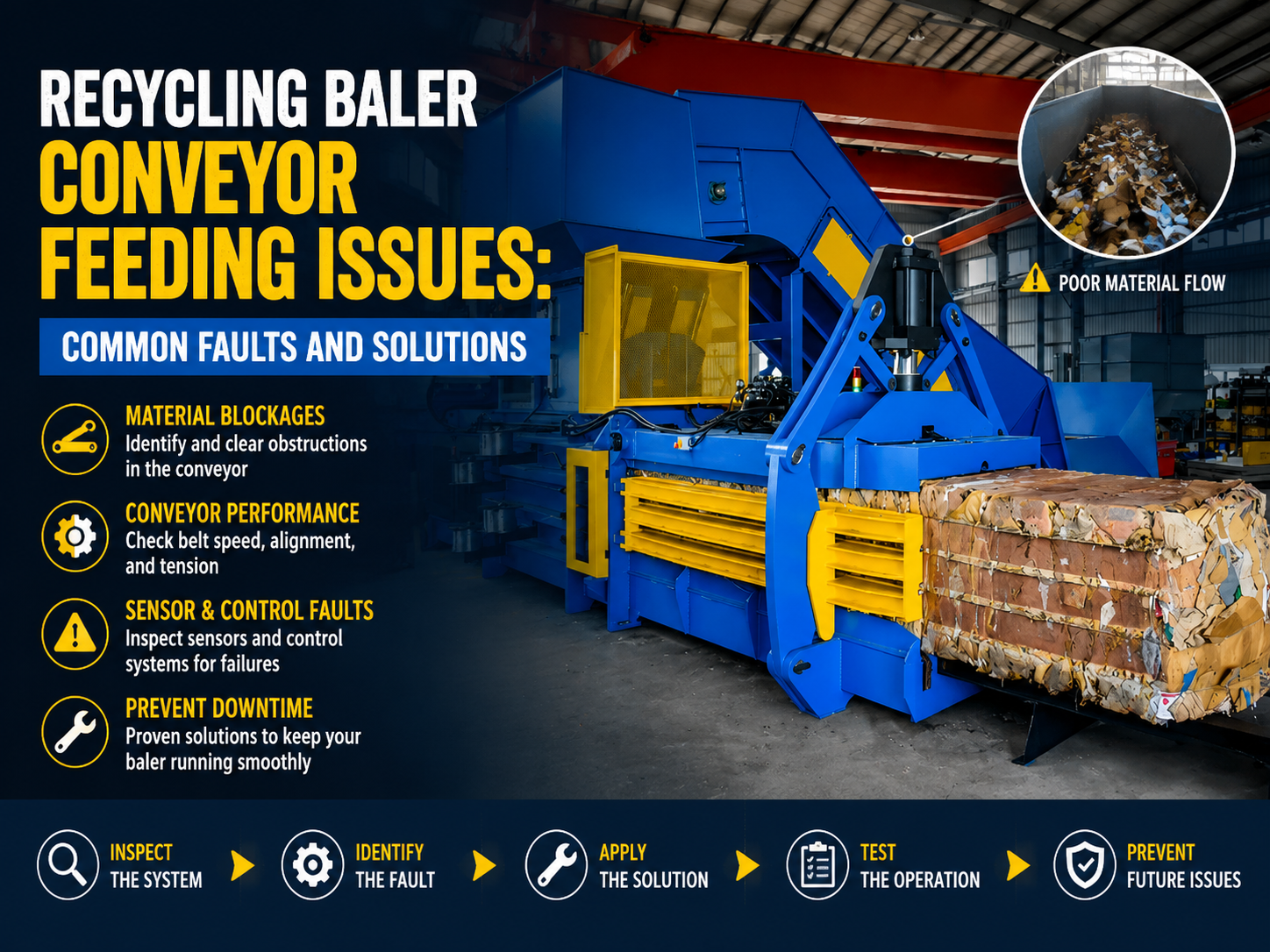
Recycling Baler Conveyor Feeding Issues: Common Faults and Solutions

Introduction to Recycling Baler Conveyor Systems
In the high-stakes world of industrial recycling and metal fabrication, the efficiency of a recycling baler is only as good as the system that feeds it. The conveyor belt serves as the primary artery of the operation, transporting diverse materials—ranging from loose paper and plastics to heavy-duty scrap metal—into the baling chamber. When the conveyor experiences feeding issues, the entire production line grinds to a halt, leading to significant downtime, increased labor costs, and potential damage to the baler itself. Understanding Recycling Baler Conveyor Feeding Issues: Common Faults Solutions is essential for any facility manager looking to maintain peak operational efficiency.
HARSLE has long been at the forefront of providing robust metal fabrication equipment, and we recognize that the integration between the conveyor and the baler is a critical point of failure if not managed correctly. A well-functioning conveyor ensures a consistent flow of material, which allows the hydraulic system of the baler to operate within its designed pressure parameters. Conversely, inconsistent feeding can lead to ‘dry cycles’ or overcharging, both of which stress the machine’s structural integrity. This guide aims to provide a comprehensive technical deep-dive into the most frequent conveyor problems and the professional strategies used to resolve them.
Modern recycling facilities operate under grueling conditions. Dust, moisture, varying material densities, and 24/7 duty cycles create an environment where mechanical wear is inevitable. However, most feeding issues are not the result of catastrophic failure but rather a series of small, manageable faults that accumulate over time. By identifying these early and implementing the correct solutions, operators can extend the lifespan of their equipment and ensure a safer working environment. In the following sections, we will explore the technical nuances of conveyor mechanics and provide actionable advice for troubleshooting.
Key Considerations for Conveyor Feeding Systems
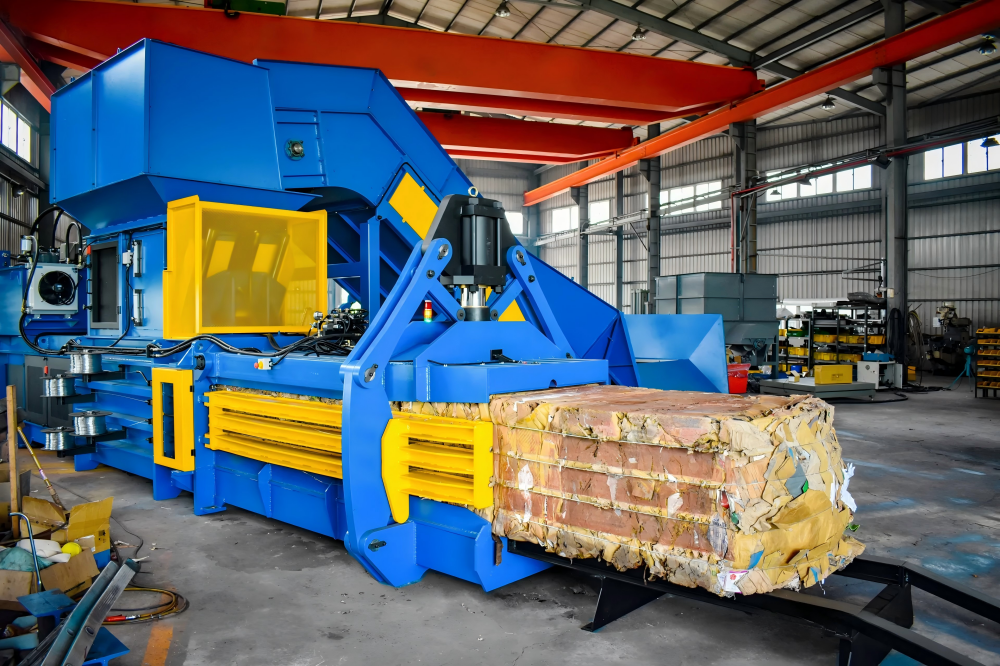
Before diving into specific faults, it is vital to understand the key considerations that influence conveyor performance in a recycling context. The first consideration is material characteristics. Not all conveyors are created equal; a belt designed for lightweight cardboard will fail rapidly if used to transport heavy copper wiring or jagged aluminum extrusions. The abrasive nature of metal scrap requires reinforced belts, often with steel cleats or chain-edge designs, to prevent punctures and tearing. When feeding issues arise, the first question should always be: Is the conveyor currently handling the material it was engineered for?
Another critical factor is the incline angle. Most recycling balers require the conveyor to move material from floor level up into a raised hopper. If the angle is too steep, material may roll back or ‘avalanche,’ causing a blockage at the base of the conveyor. This is particularly common with round or high-density objects. To combat this, conveyors often utilize ‘cleats’ or ‘flights’—raised ribs on the belt that catch the material. If these cleats are worn or improperly spaced, feeding efficiency drops significantly. Operators must ensure that the conveyor’s incline and cleat profile are optimized for the specific friction coefficient of the recycled material.
Environmental factors also play a massive role. In many recycling yards, conveyors are exposed to the elements. Rain can lubricate the underside of a belt, causing it to slip on the drive pulley, while extreme heat can cause the belt material to expand, leading to tracking issues. Furthermore, the buildup of ‘fines’—small particles of dust, glass, or metal—can infiltrate the rollers and bearings. This grit acts as an abrasive paste, rapidly wearing down components and increasing the torque required to move the belt. A key consideration for any solution is how well the system is shielded from these environmental contaminants.
Technical Details: Common Faults and Professional Solutions
1. Belt Slippage and Loss of Traction
Belt slippage is perhaps the most common issue in recycling baler conveyors. It occurs when the drive pulley rotates, but the belt remains stationary or moves at a slower speed. This is usually caused by a lack of tension or a reduction in the coefficient of friction between the belt and the pulley. In recycling environments, moisture, oil from scrap metal, or even fine dust can coat the pulley, acting as a lubricant. When the belt slips, it generates intense heat through friction, which can glaze the belt’s underside or, in extreme cases, cause a fire hazard.
The Solution: The first step is to check the take-up unit. Most conveyors use a screw-type or gravity-based take-up to maintain tension. Adjusting the tensioning bolts can often resolve minor slippage. However, if the slippage persists, ‘pulley lagging’ should be inspected. Lagging is a rubberized coating applied to the drive pulley to increase grip. If the lagging is worn smooth, it must be replaced. Additionally, installing a ‘snub pulley’ can increase the arc of contact between the belt and the drive pulley, providing more surface area for traction. For oily environments, specialized oil-resistant belts are a necessity.
2. Belt Misalignment and Tracking Issues
Tracking refers to the belt’s ability to run centrally along the rollers. When a belt ‘wanders’ to one side, it can rub against the conveyor frame, leading to frayed edges and structural damage to the belt. In a recycling baler setup, tracking issues are often caused by uneven loading. If material is consistently dropped onto one side of the conveyor rather than the center, the off-center weight pushes the belt out of alignment. Over time, this can also lead to the ‘bowing’ of the belt, making it nearly impossible to track correctly.
The Solution: Correcting tracking requires a systematic approach. First, ensure the conveyor frame is level and square. A frame that has been bumped by a forklift or shifted due to floor vibration will never track correctly. Second, check for debris buildup on the return rollers and tail pulleys. Even a small amount of compacted waste on a roller can change its effective diameter, pulling the belt to one side. Finally, utilize ‘training idlers’—pivoting rollers that automatically adjust to steer the belt back to the center. Operators should be trained to load the conveyor centrally to prevent the root cause of the issue.
3. Material Jamming and Hopper Bridging
Feeding issues often occur at the transition point between the conveyor and the baler hopper. ‘Bridging’ happens when bulky materials wedge against each other across the opening of the hopper, creating a blockage while the conveyor continues to dump material on top. This can lead to a massive pile-up that requires manual intervention to clear. Jamming can also occur at the ‘tail’ end of the conveyor if material falls behind the belt and gets trapped between the belt and the pulley, potentially causing the belt to snap or the motor to burn out.
The Solution: To prevent bridging, the hopper design must feature flared walls or a ‘negative taper’ where the opening widens toward the bottom. If the baler is already installed, adding a mechanical ‘agitator’ or a vibratory motor to the hopper walls can help break up bridges. To prevent tail-end jams, ‘V-plows’ or ‘scrapers’ should be installed on the return side of the belt. These devices deflect stray material away from the pulley. Furthermore, integrating an infrared sensor at the top of the hopper can automatically pause the conveyor if a blockage is detected, preventing an overflow.
4. Motor and Gearbox Overheating
The drive system of a recycling conveyor is under constant stress. If the conveyor is frequently overloaded or if there is excessive friction in the system (due to seized rollers or over-tensioning), the motor will draw more current than it is rated for, leading to overheating. In many cases, the thermal overload protection will trip, shutting down the line. Frequent tripping is a sign that the system is either mechanically compromised or under-powered for the volume of material being processed.
The Solution: Start by performing a ‘drag test.’ With the power off and the belt empty, can the belt be moved manually (on smaller systems) or does it show signs of extreme resistance? Replace any seized idlers or rollers immediately. Check the gearbox oil levels and look for metal shavings, which indicate internal wear. If the motor is consistently running hot despite a healthy mechanical system, consider installing a Variable Frequency Drive (VFD). A VFD allows for a ‘soft start,’ reducing the initial torque spike, and enables the operator to match the conveyor speed precisely to the baler’s cycle time, reducing unnecessary strain.
Selection Advice for Recycling Baler Conveyors
Choosing the right conveyor is the best way to prevent feeding issues before they start. When selecting a system for a HARSLE baler, or any industrial recycling machine, capacity matching is paramount. The conveyor’s ‘Tons Per Hour’ (TPH) rating should exceed the baler’s maximum throughput by at least 20%. This buffer accounts for surges in material delivery and prevents the conveyor from constantly operating at its mechanical limit. Furthermore, the width of the conveyor should be slightly narrower than the baler’s feed opening to ensure all material falls cleanly into the chamber without snagging on the edges.
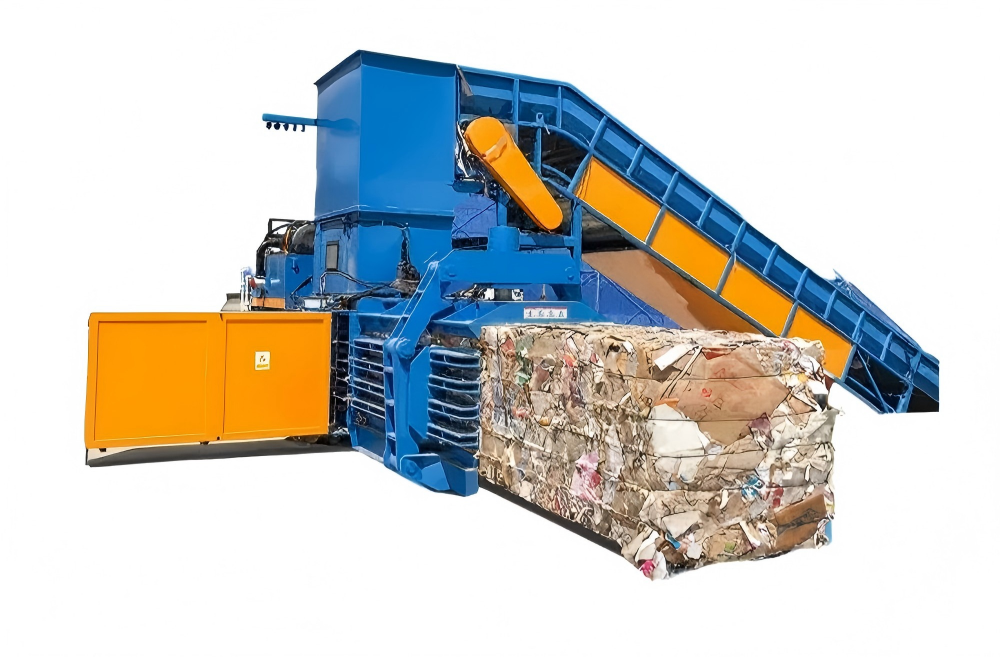
Material type dictates the belt construction. For general paper and plastic recycling, a heavy-duty PVC or rubber belt is usually sufficient. However, for scrap metal, a ‘Steel Slat’ or ‘Chain-Edge’ conveyor is highly recommended. These systems use metal plates or reinforced rubber bolted to a drive chain. This design eliminates the tracking and slippage issues associated with friction-drive belts, as the chain provides a positive mechanical link to the drive sprockets. While more expensive initially, chain-edge conveyors offer a much lower total cost of ownership in harsh metal-fabrication environments.
Finally, consider the ease of maintenance. Look for conveyors with ‘external’ bearings that can be greased without removing guards, and ‘quick-release’ tensioners that allow for fast belt changes. A conveyor that is difficult to service will inevitably be neglected, leading to the very faults we have discussed. Ensure that the manufacturer provides a detailed spare parts list and that critical components like rollers and belt fasteners are readily available.
Preventative Maintenance Checklist
To keep your recycling baler conveyor running smoothly, follow this structured maintenance schedule:
| Frequency | Component | Action Required |
|---|---|---|
| Daily | Belt Surface | Check for tears, punctures, or embedded metal shards. |
| Daily | Hopper/Chute | Clear any debris or ‘wrap’ (wires/strings) around the rollers. |
| Weekly | Belt Tracking | Observe the belt under load; adjust if it drifts more than 1 inch. |
| Weekly | Scrapers/Plows | Ensure scrapers are in contact with the belt and clearing material. |
| Monthly | Bearings/Rollers | Lubricate all grease points; check for noisy or seized rollers. |
| Monthly | Drive Chain/V-Belts | Check tension and wear on the motor-to-gearbox drive system. |
| Quarterly | Gearbox | Check oil levels and inspect for leaks or contamination. |
Frequently Asked Questions (FAQ)
What is the most common cause of conveyor belt failure in recycling?
The most common cause is ‘mistracking’ leading to edge damage. In recycling, this is usually triggered by uneven material loading or the buildup of debris on the return rollers. Once the edge of the belt is frayed, it loses structural integrity and is prone to snapping under high tension.
Can I use a standard warehouse conveyor for a metal baler?
Generally, no. Standard warehouse conveyors are designed for boxed goods and lack the impact resistance and puncture protection required for loose scrap metal. Using a light-duty conveyor will result in frequent belt punctures and motor burnouts due to the higher weight and friction of metal scrap.
How do I know if my conveyor belt is too tight?
A belt that is too tight will put excessive load on the motor and bearings. Signs of over-tightening include a humming sound from the bearings, the motor running unusually hot, or the belt ‘stretching’ and becoming thinner in the middle. There should always be a slight amount of ‘sag’ on the return side of the belt.
Why does my conveyor stop when the baler starts its compression cycle?
This is often due to an electrical interlock or a voltage drop. Many systems are wired so the conveyor pauses while the baler ram is moving to prevent overfilling. If it’s an unplanned stop, it may be that the baler’s hydraulic pump is drawing so much power that the voltage drops below the threshold for the conveyor motor’s contactor.
Conclusion
Managing Recycling Baler Conveyor Feeding Issues: Common Faults Solutions is a continuous process of observation, adjustment, and preventative care. The conveyor is not merely an accessory but a vital component of the baling system. By addressing issues like slippage, tracking, and jamming with technical precision, facilities can ensure that their HARSLE equipment operates at maximum capacity with minimal interruptions.
Investing in the right conveyor technology—such as chain-edge designs for heavy scrap—and adhering to a strict maintenance schedule will pay dividends in the form of reduced repair costs and extended equipment life. Remember that a clean conveyor is a functional conveyor; removing debris and ensuring proper alignment are the simplest yet most effective ways to prevent catastrophic failure. For those looking to upgrade their recycling operations, choosing a partner like HARSLE ensures access to the engineering expertise needed to integrate these complex systems seamlessly. With the right approach, your feeding system can become a reliable, high-performance asset that drives your recycling business forward.