Comprehensive Guide: How to Inspect Hydraulic Systems in a Recycling Baler

The Critical Importance of Hydraulic System Maintenance
In the world of waste management and metal fabrication, the recycling baler stands as a cornerstone of efficiency. Whether you are processing cardboard, plastics, or scrap metal, the hydraulic system is the literal heart of the machine. To inspect hydraulic systems in a recycling baler is not merely a suggestion; it is a fundamental requirement for operational safety and longevity. A well-maintained hydraulic system ensures that the ram exerts the necessary force to create dense, transportable bales while minimizing energy consumption and preventing catastrophic component failure.
Neglecting these systems leads to a cascade of issues. Minor leaks can evolve into significant environmental hazards and fire risks. Contaminated oil can erode precision-engineered valves and pumps, leading to thousands of dollars in replacement costs. Furthermore, an inefficient hydraulic system increases cycle times, directly impacting the throughput and profitability of your facility. By implementing a rigorous inspection routine, operators can identify wear and tear before it results in unplanned downtime, ensuring that the HARSLE equipment remains a reliable asset for years to come.
Safety is perhaps the most compelling reason to prioritize these inspections. Hydraulic systems operate under immense pressure, often exceeding 3,000 PSI. A pinhole leak in a high-pressure hose can cause serious injury through fluid injection. Regular inspections allow for the identification of frayed hoses or loose fittings that could fail under load. This proactive approach fosters a culture of safety and professionalism within the industrial environment, protecting both the workforce and the machinery.
Finally, the resale value of industrial machinery is heavily dependent on its maintenance history. A recycling baler with a documented record of hydraulic inspections and fluid changes will command a much higher price on the secondary market. For businesses looking to optimize their capital investments, understanding how to inspect hydraulic systems in a recycling baler is a vital skill that pays dividends in both the short and long term.
Daily Inspection Protocols for Recycling Balers
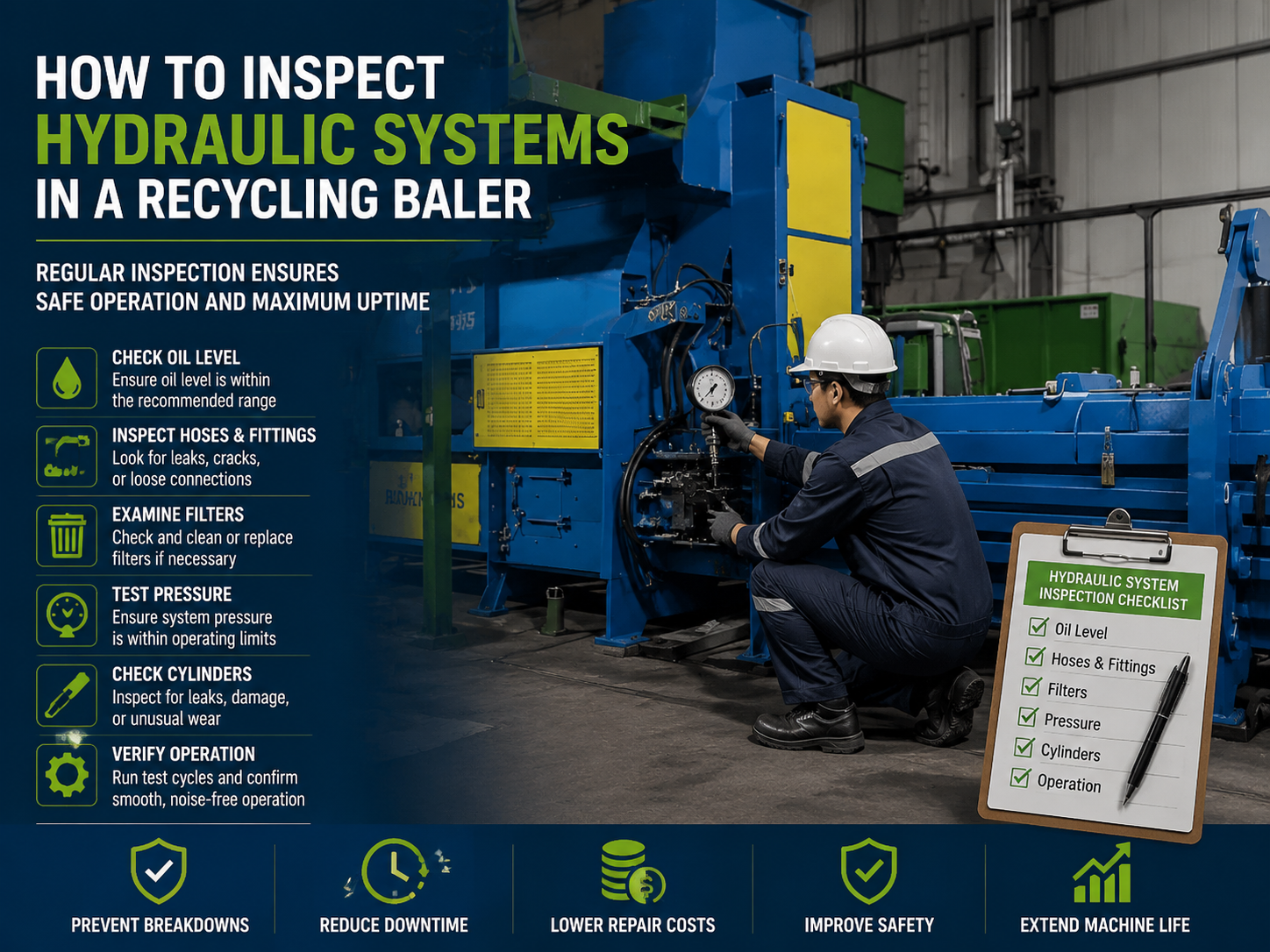
The first line of defense against machinery failure is the daily walk-around inspection. This should be performed at the start of every shift before the machine is powered on. Operators should look for any visible signs of hydraulic fluid on the floor or the machine’s frame. Even a small puddle can indicate a failing seal or a loose connection that could worsen under the heat and pressure of operation. Checking the fluid level via the sight glass is also essential; low fluid levels can lead to pump cavitation, which introduces air into the system and causes rapid internal damage.
During the daily check, pay close attention to the temperature of the hydraulic oil. Most modern balers are equipped with temperature gauges. If the oil is running consistently hot (above 140°F or 60°C), it may indicate that the cooling system is failing or that the oil is bypassing a valve internally. Overheated oil loses its lubricating properties and can damage seals throughout the entire system. Additionally, listen for unusual noises during the initial startup. A high-pitched whining or growling sound from the pump is a clear signal that something is wrong, often related to suction line restrictions or air ingestion.
The condition of the hydraulic hoses must also be assessed daily. Look for signs of “weeping” at the crimped ends, as well as any abrasions on the hose jacket. In a recycling environment, debris can often rub against hoses, wearing down the protective outer layer and exposing the wire reinforcement. If the wire braid is visible or rusted, the hose must be replaced immediately. A daily inspection log should be kept to track these observations, providing a historical record that can help identify recurring issues or patterns of wear.
In-Depth Hydraulic, Electrical, and Mechanical Checks
Hydraulic Component Analysis
To effectively inspect hydraulic systems in a recycling baler, one must go beyond the surface. The hydraulic cylinders are the workhorses of the baler. Inspect the cylinder rods for any signs of scoring, pitting, or discoloration. A blueish tint on the rod often indicates excessive heat. Ensure the rod wipers are clean and intact; their job is to prevent contaminants from entering the cylinder and damaging the internal seals. If you notice oil leaking from the rod end, the internal packings likely need replacement.
The hydraulic pump and control valves require technical scrutiny. Check the mounting bolts of the pump to ensure they haven’t vibrated loose. For the valves, observe the manual overrides and solenoids. If a valve is sticking, it may be due to varnish buildup in the oil or a mechanical failure of the return spring. Testing the system pressure with a calibrated gauge can confirm if the relief valves are set correctly. If the pressure is too low, the baler won’t produce dense bales; if it’s too high, you risk bursting hoses or damaging the structural frame of the machine.
Electrical System Integration
While the focus is on hydraulics, the electrical system controls the hydraulic flow. Inspect the control panel for loose wiring or signs of overheating (such as scorched insulation). Ensure that all limit switches and proximity sensors are clean and properly aligned. In a recycling baler, these sensors tell the hydraulic system when to reverse the ram or stop the cycle. If a sensor is covered in dust or misaligned, it can cause the ram to over-travel, leading to severe mechanical damage to the hydraulic cylinders and the baler frame.
Mechanical Integrity and Wear Plates
The mechanical structure of the baler must be able to withstand the forces generated by the hydraulics. Inspect the ram’s guide tracks and wear plates. If the wear plates are excessively worn, the ram will develop play, causing it to tilt during the compression stroke. This misalignment puts side-load pressure on the hydraulic cylinder rods, which is a leading cause of seal failure. Check the shear blades for sharpness; dull blades increase the force required to cut through material, putting unnecessary strain on the hydraulic system and increasing energy consumption.
The Lubrication Plan: Ensuring Smooth Operation
Lubrication is the partner of hydraulic health. While the hydraulic oil lubricates the internal components, the external moving parts—such as hinges, pivot pins, and ram guides—require regular greasing. A comprehensive lubrication plan should specify the type of grease to be used (typically an Extreme Pressure or EP2 grade) and the frequency of application. Over-greasing can be just as detrimental as under-greasing, as excess grease can attract abrasive dust and grit, creating a grinding paste that accelerates wear.
For balers equipped with automatic lubrication systems, the inspection involves checking the reservoir levels and ensuring that all distribution lines are clear and delivering grease to the intended points. If the system is manual, operators must follow a checklist to ensure no grease nipple is overlooked. Particular attention should be paid to the main pivot pins of the compression doors and the ram’s guide shoes. Proper lubrication reduces friction, which in turn reduces the heat generated during operation, indirectly benefiting the hydraulic system’s performance.
Troubleshooting Signals: What Your Baler is Telling You
Learning to inspect hydraulic systems in a recycling baler involves becoming a “machine whisperer.” Certain signals indicate specific failures. For instance, if the ram moves slowly but the pump is quiet, the problem might be an internal leak in the cylinder or a malfunctioning directional valve. If the system is vibrating excessively, it could be due to air in the lines or a pump that is out of alignment with the electric motor. This vibration can lead to fatigue failure of hydraulic lines and fittings if not addressed promptly.
Another common signal is “spongy” operation. If the ram feels like it is bouncing or doesn’t hold pressure, air is likely trapped in the hydraulic fluid. This can happen after a hose replacement or if the fluid level was allowed to drop too low. Bleeding the system or checking the suction line for leaks is necessary. Furthermore, if the oil appears milky, it is contaminated with water. This requires an immediate oil change and an investigation into how the water entered the system (often through a faulty reservoir breather or a leak in the oil cooler).
Comprehensive Maintenance Schedule Table
To maintain peak performance, follow this structured maintenance schedule for your recycling baler’s hydraulic and mechanical systems.
| Frequency | Component | Action Required |
|---|---|---|
| Daily | Fluid Levels | Check sight glass; top off with approved hydraulic oil if necessary. |
| Daily | Hoses & Fittings | Visual check for leaks, abrasions, or weeping. |
| Daily | Safety Switches | Test E-stop and interlock switches for proper function. |
| Weekly | Cylinder Rods | Clean and inspect for scoring or leaks at the rod seal. |
| Weekly | Air Filter/Breather | Clean or replace the reservoir breather cap. |
| Monthly | Oil Quality | Check for clarity, smell (burnt odor), and water contamination. |
| Monthly | Wear Plates | Measure clearance and adjust or replace if out of spec. |
| Quarterly | Oil Analysis | Send a sample to a lab to check for microscopic metal particles. |
| Bi-Annually | Hydraulic Filters | Replace all return line and suction filters. |
| Annually | Full System Flush | Drain reservoir, clean suction screen, and replace hydraulic oil. |
Frequently Asked Questions (FAQ)
How often should I change the hydraulic oil in my recycling baler?
Generally, hydraulic oil should be changed every 2,000 operating hours or once a year, whichever comes first. However, this can vary based on the environment. In dusty or high-heat settings, more frequent changes or at least quarterly oil analysis is recommended to ensure the fluid maintains its protective properties.
What type of hydraulic oil is best for a HARSLE recycling baler?
Most industrial balers use an ISO 46 or ISO 68 anti-wear (AW) hydraulic oil. The specific grade depends on your local climate; ISO 46 is better for cooler environments, while ISO 68 provides better viscosity in hotter conditions. Always refer to your HARSLE operator manual for the exact specification.
Why is my baler making a loud banging noise when the ram reverses?
This is often caused by “hydraulic shock.” It can occur if the decompression cycle is not functioning correctly or if there is air in the system. It can also be a mechanical issue, such as a loose wear plate or a broken ram guide. Immediate inspection is required to prevent structural damage.
Can I use any grease for the pivot pins?
No, you should use a high-quality Lithium-based grease with Extreme Pressure (EP) additives. This type of grease is designed to stay in place under the high-load, slow-movement conditions typical of recycling baler components.
What are the signs of a failing hydraulic pump?
Common signs include increased noise (cavitation or aeration), excessive heat generation at the pump housing, slower cycle times, and an inability to reach maximum system pressure. If you suspect pump failure, a flow test should be performed by a qualified technician.
How do I prevent leaks in my hydraulic system?
The best way to prevent leaks is to ensure all fittings are tightened to the correct torque and to replace hoses before they reach the end of their service life. Avoid over-pressurizing the system beyond the manufacturer’s recommendations, as this puts undue stress on seals and connections.