Aluminium Extrusion Press Applications In Consumer Electronics Housing Manufacturing: A Comprehensive Guide

Introduction to Aluminium Extrusion in the Electronics Sector
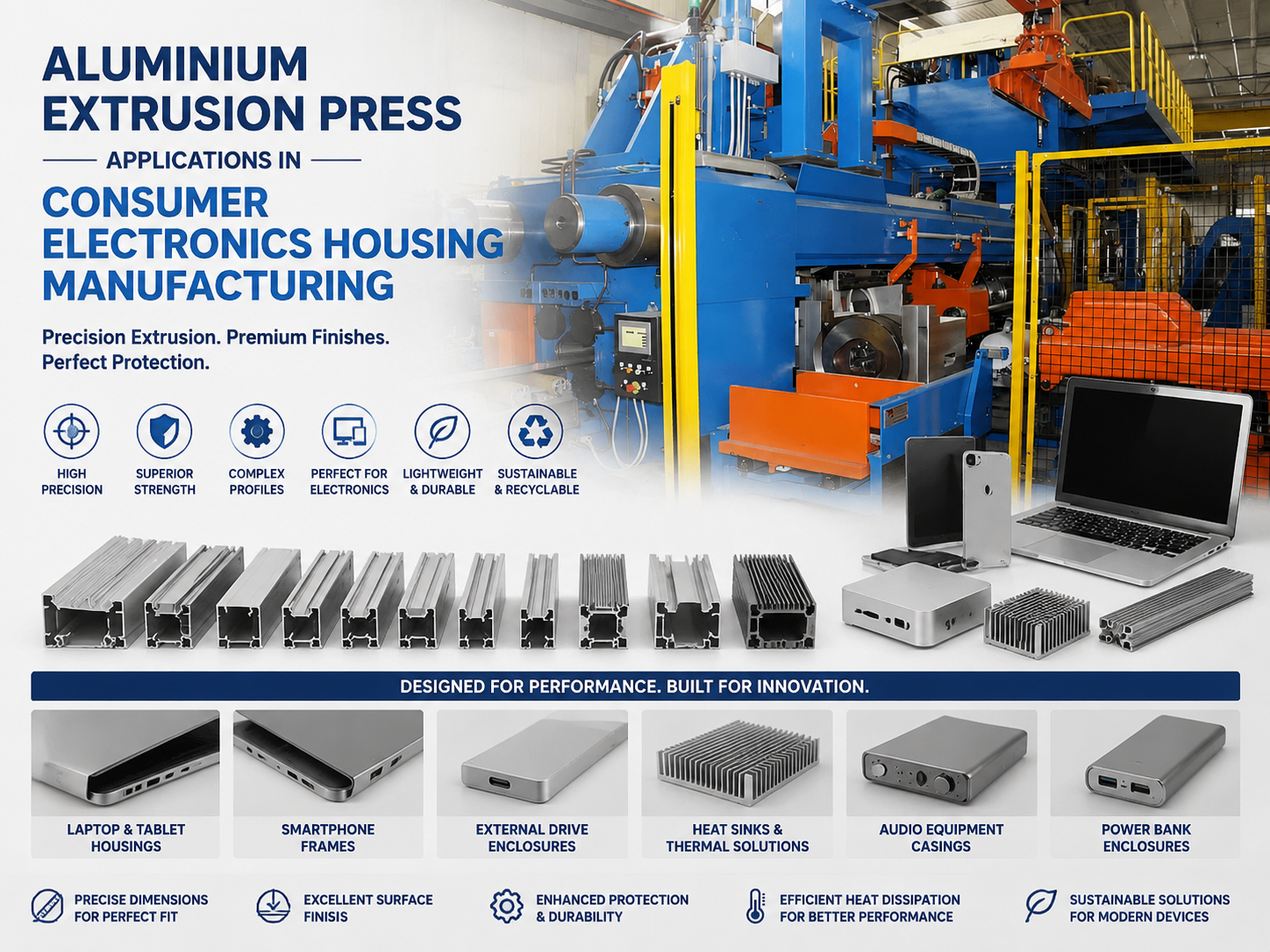
In the modern industrial landscape, the demand for sleek, durable, and lightweight consumer electronics has never been higher. From the ultra-thin chassis of premium laptops to the robust mid-frames of flagship smartphones, the aesthetic and structural integrity of these devices often depend on a single manufacturing process: aluminium extrusion. The use of Aluminium Extrusion Press Applications In Consumer Electronics Housing Manufacturing has revolutionized how brands approach product design, allowing for complex geometries that were previously impossible or too expensive to produce via traditional machining alone.
Aluminium is the material of choice for the electronics industry due to its exceptional strength-to-weight ratio, excellent thermal conductivity, and superior recyclability. However, transforming raw aluminium billets into the precise profiles required for high-end gadgets requires sophisticated machinery. This is where the aluminium extrusion press becomes the heart of the production line. By forcing heated aluminium through a precision-engineered die, manufacturers can create continuous profiles that serve as the foundation for device housings, heat sinks, and internal structural components.
As consumer expectations for device thinness and heat dissipation increase, the role of the extrusion press has evolved. It is no longer just about pushing metal; it is about controlling grain structure, ensuring surface perfection for subsequent anodizing, and maintaining tolerances within microns. This guide explores the intricate details of how HARSLE’s extrusion technology powers the next generation of consumer electronics.
Application Scenario: Where Extrusion Meets Consumer Tech
The application of aluminium extrusion in consumer electronics is vast and varied. One of the most prominent scenarios is the production of laptop enclosures. High-end laptops often utilize a ‘unibody’ construction, where the main chassis is carved from a single piece of metal. While the final details are achieved through CNC machining, the initial ‘blank’ or profile is often produced via an aluminium extrusion press. This method significantly reduces material waste compared to machining a solid block of aluminium, as the extrusion can be shaped closely to the final dimensions of the laptop shell.
Smartphones represent another critical application scenario. The internal mid-frame of a smartphone acts as the ‘skeleton’ of the device, providing rigidity and mounting points for the screen, battery, and logic board. These mid-frames must be incredibly strong to prevent bending (the infamous ‘bendgate’ issues) while remaining light. Extrusion allows for the creation of complex internal hollows and ribs that provide maximum strength with minimum material. Furthermore, the external bands of many premium phones are extruded profiles that are later bent and polished to a mirror finish.
Beyond mobile devices, Aluminium Extrusion Press Applications In Consumer Electronics Housing Manufacturing extend to home entertainment systems and wearables. Smartwatch casings, high-fidelity audio amplifier heat sinks, and even the frames of ultra-thin OLED televisions rely on extruded aluminium. In these cases, the extrusion process is favored because it can produce long, consistent sections with integrated cooling fins or mounting tracks, which are essential for managing the heat generated by high-performance electronic components.
Material and Process Requirements
Manufacturing housings for consumer electronics is significantly more demanding than producing architectural profiles for windows or doors. The material requirements are stringent, typically focusing on the 6xxx series aluminium alloys, such as 6063, 6061, and the more specialized 6013. These alloys offer a perfect balance of extrudability, mechanical strength, and, most importantly, surface finish quality. For electronics, the surface must be free of ‘pick-up’ marks, die lines, or structural streaks, as these defects will be magnified during the anodizing or bead-blasting stages.
The process requirements involve precise temperature control. The aluminium billet must be heated to a specific ‘sweet spot’—usually between 450°C and 500°C—to ensure it flows smoothly through the die without causing excessive wear or resulting in a grainy surface texture. The speed of the extrusion (the ‘exit speed’) must also be meticulously managed. If the metal is pushed too fast, frictional heat can cause localized melting or tearing; if too slow, the productivity drops and the grain structure may become uneven.
Furthermore, the quenching process—where the extruded profile is rapidly cooled as it leaves the die—is critical for achieving the desired ‘T’ temper (such as T4 or T6). In electronics, consistent hardness across the entire length of the profile is essential for subsequent CNC machining. If the hardness varies, the CNC tools may chatter or wear unevenly, leading to dimensional inaccuracies in the final housing. HARSLE machines incorporate advanced cooling systems, including air and water mist options, to ensure uniform quenching profiles.
Recommended Machine Configuration
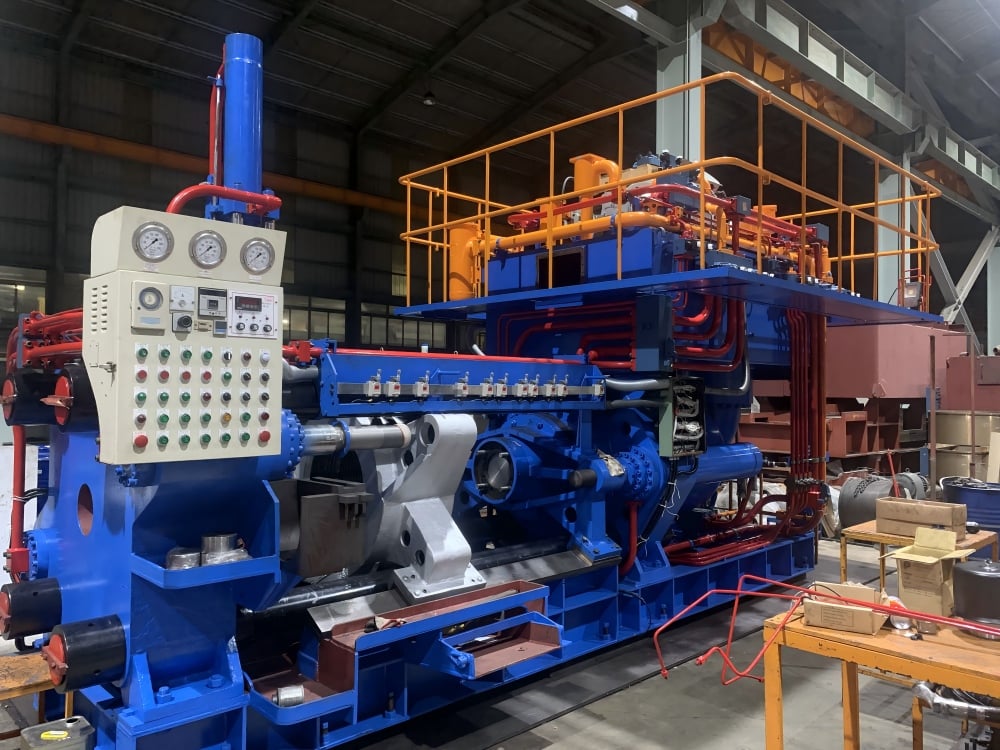
For consumer electronics housing, the recommended machine configuration typically centers around a medium-tonnage press, ranging from 600 tons to 2500 tons, depending on the size of the component (e.g., a smartwatch frame vs. a 17-inch laptop chassis). A high-precision HARSLE extrusion press for this sector should include several key features:
- Servo-Driven Hydraulic Systems: Unlike traditional constant-speed pumps, servo-driven systems allow for precise control over the ram speed and pressure. This is vital for maintaining the steady flow required for thin-walled electronic profiles.
- Advanced PLC Control: A robust control system (such as Siemens or Mitsubishi) with a user-friendly HMI allows operators to store ‘recipes’ for different profiles, ensuring repeatability and reducing setup times.
- Precision Die Heating: The die must be heated uniformly to prevent ‘cold starts’ which can damage the die and produce scrap material. Integrated die ovens are a standard recommendation.
- Double Puller Systems: To maximize productivity and ensure the profile remains straight, a double puller system is used to guide the extrusion away from the press, minimizing the ‘dead time’ between cycles.
- Automated Handling Tables: Electronics profiles are easily scratched. Automated tables with Kevlar or felt-lined rollers protect the surface finish during cooling and stretching.
The configuration must also account for the ‘container’ and ‘stem’ alignment. In high-end electronics manufacturing, even a slight misalignment can lead to wall thickness variations. HARSLE’s presses utilize high-rigidity frames and precision-guided containers to maintain alignment under extreme pressures, ensuring that a 0.8mm wall thickness remains exactly 0.8mm throughout the production run.
Workflow: From Billet to Electronic Housing
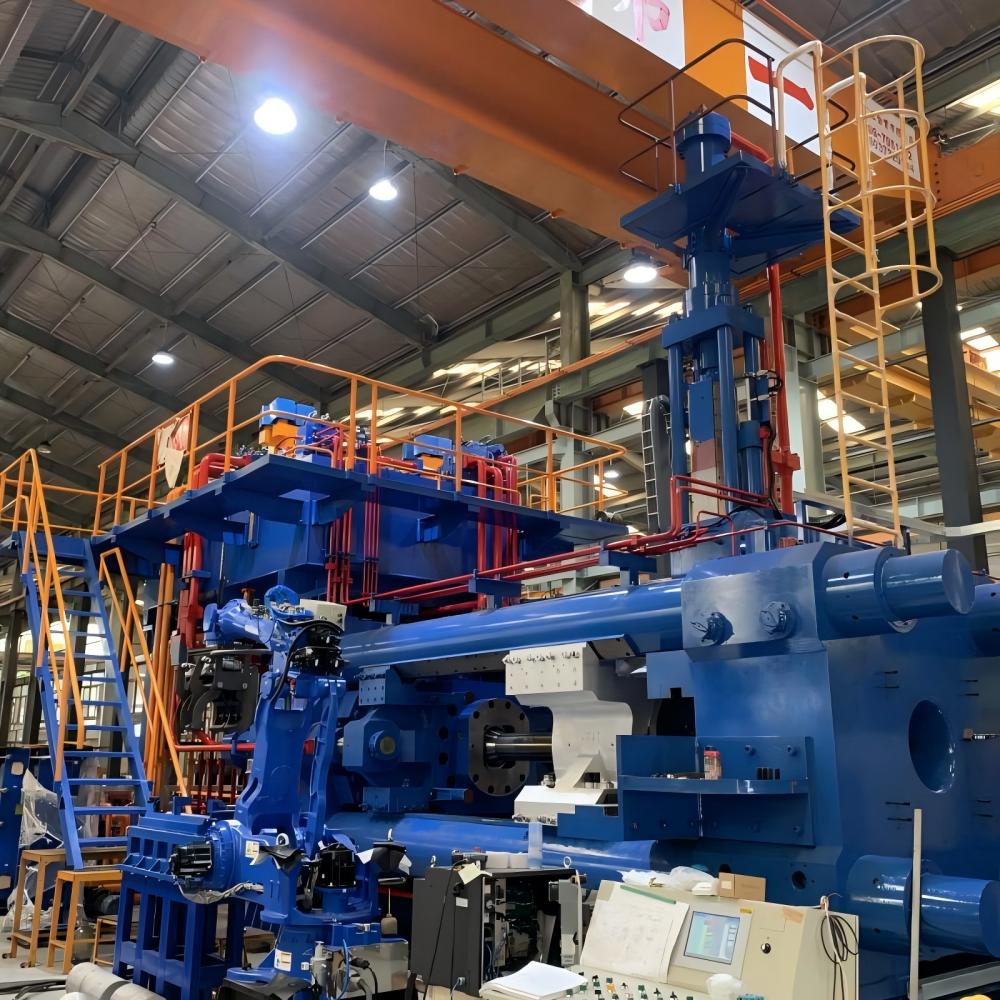
The workflow of Aluminium Extrusion Press Applications In Consumer Electronics Housing Manufacturing is a multi-stage process that requires synchronization between several pieces of equipment. It begins with the Billet Preparation, where long logs of aluminium are cut into shorter billets and heated in a gas or induction furnace. Once the billet reaches the optimal temperature, it is transferred to the press loader.
The second stage is the Extrusion Stroke. The hydraulic ram pushes the billet into the container and through the die. As the metal emerges, it takes the shape of the electronic housing profile. A Puller grips the end of the profile, applying a constant tension to keep it straight as it moves onto the Run-out Table. Immediately after exiting the die, the profile undergoes Quenching via fans or water sprays to ‘freeze’ its metallurgical structure.
Once the profile has cooled sufficiently, it moves to the Stretching station. Here, the profile is pulled from both ends to straighten any minor twists and to relieve internal stresses. After stretching, the long profiles are Cut to Length into manageable pieces. These pieces then enter an Aging Oven, where they are held at a lower temperature for several hours to achieve the final hardness (T6 temper). The final stage before the housing goes to the CNC shop is Surface Inspection and sometimes a preliminary chemical wash to ensure no contaminants are present.
Productivity Benefits of Extrusion in Electronics
Why choose extrusion over other methods like die-casting or full-block machining? The primary benefit is Material Efficiency. In the production of a laptop frame, starting with an extruded profile that already mimics the ‘hollow’ shape of the chassis can reduce material waste by up to 60% compared to machining from a solid slab. This not only lowers the cost of raw materials but also reduces the energy required for recycling the chips (swarf) generated during machining.
Another significant benefit is Structural Integrity. Extrusion aligns the grain structure of the aluminium along the length of the profile, which results in superior mechanical properties compared to casting. This allows designers to create thinner walls without sacrificing the ‘stiffness’ of the device. For consumer electronics, where every millimeter counts, this structural advantage is indispensable. Additionally, the extrusion process allows for the integration of complex features like screw bosses, sliding tracks, and interlocking hinges directly into the profile, reducing the need for secondary assembly steps.
Finally, Aesthetic Consistency is a major driver. Extruded aluminium provides a much more consistent surface for anodizing than cast aluminium. Castings often have porosity or silicon inclusions that appear as spots or ‘clouds’ after the anodizing process. Extruded profiles, particularly those produced on high-quality HARSLE presses, offer a uniform ‘canvas’ for the vibrant colors and metallic finishes that define modern consumer tech brands.
Case Example: Smartphone Mid-Frame Production
Consider a leading smartphone manufacturer looking to produce a new model with a high-strength 6013 aluminium mid-frame. The challenge was to create a profile with extremely thin walls (0.7mm) and internal cooling channels to assist with the heat from the 5G chipset. By utilizing a HARSLE 1250T high-precision extrusion press, the manufacturer was able to achieve a stable production speed of 15 meters per minute while maintaining a wall thickness tolerance of +/- 0.05mm.
The HARSLE system’s integrated nitrogen cooling for the die allowed for longer production runs without die wear, which is often a problem with the harder 6013 alloy. By switching from a traditional machining-only approach to an ‘extrude-then-CNC’ workflow, the manufacturer reduced the total production time per unit by 25% and decreased the scrap rate by 40%. The resulting mid-frames were not only lighter but also showed a 15% increase in tensile strength, providing better protection for the internal electronics during drop tests.
Frequently Asked Questions (FAQ)
1. What is the best aluminium alloy for electronics housings?
The 6063 alloy is the most common due to its excellent surface finish and ease of extrusion. However, for devices requiring higher strength, 6061 or 6013 are preferred. 6013, in particular, is gaining popularity in the smartphone industry for its superior dent resistance and machining characteristics.
2. How does extrusion affect the anodizing quality?
Extrusion creates a uniform grain structure. If the extrusion press maintains consistent temperature and pressure, the resulting profile will have a consistent ‘texture’ at the microscopic level. This ensures that the acid etching and dye absorption during anodizing are uniform, preventing color variations across the device housing.
3. Can thin-walled profiles be extruded reliably?
Yes, but it requires a high-precision press with stable hydraulic control. For walls thinner than 1.0mm, the die design must be perfect, and the press must have a very low ‘breakout’ pressure to prevent the metal from surging and deforming the thin sections as they exit the die.
4. What is the typical lifespan of an extrusion die for electronics?
Because electronics profiles often have sharp corners and thin fins, die wear can be higher than in architectural applications. However, with proper die nitriding and the use of nitrogen cooling during extrusion, a single die can typically produce between 2,000 and 5,000 kilograms of profile before requiring significant maintenance.
5. Why is a servo-motor system important for this application?
Servo-motors allow the HARSLE press to control the flow of oil with extreme precision. This translates to a constant ram speed, which is critical for maintaining the dimensions of delicate electronic profiles. It also reduces energy consumption by up to 50% compared to older hydraulic systems.
Conclusion and Call to Action
The role of Aluminium Extrusion Press Applications In Consumer Electronics Housing Manufacturing continues to expand as devices become more integrated into our daily lives. The ability to combine lightweight strength with premium aesthetics makes aluminium extrusion an unbeatable process for the tech industry. However, achieving the precision required for the latest gadgets demands more than just a standard press; it requires a partner who understands the nuances of metal flow, thermal management, and surface integrity.
HARSLE is at the forefront of this technological evolution, providing high-performance aluminium extrusion presses tailored for the rigorous demands of the electronics sector. Our machines are designed to deliver the precision, efficiency, and reliability that global brands depend on. Whether you are setting up a new production line for laptop chassis or looking to optimize your smartphone frame manufacturing, HARSLE has the expertise and equipment to elevate your production capabilities.
Ready to enhance your manufacturing precision? Contact HARSLE today to speak with our technical experts about our range of aluminium extrusion presses and how we can customize a solution for your specific consumer electronics applications. Let’s build the future of technology together.