How Aluminium Extrusion Press Technology Supports Marine Component Production

Introduction to Marine-Grade Aluminium Extrusion
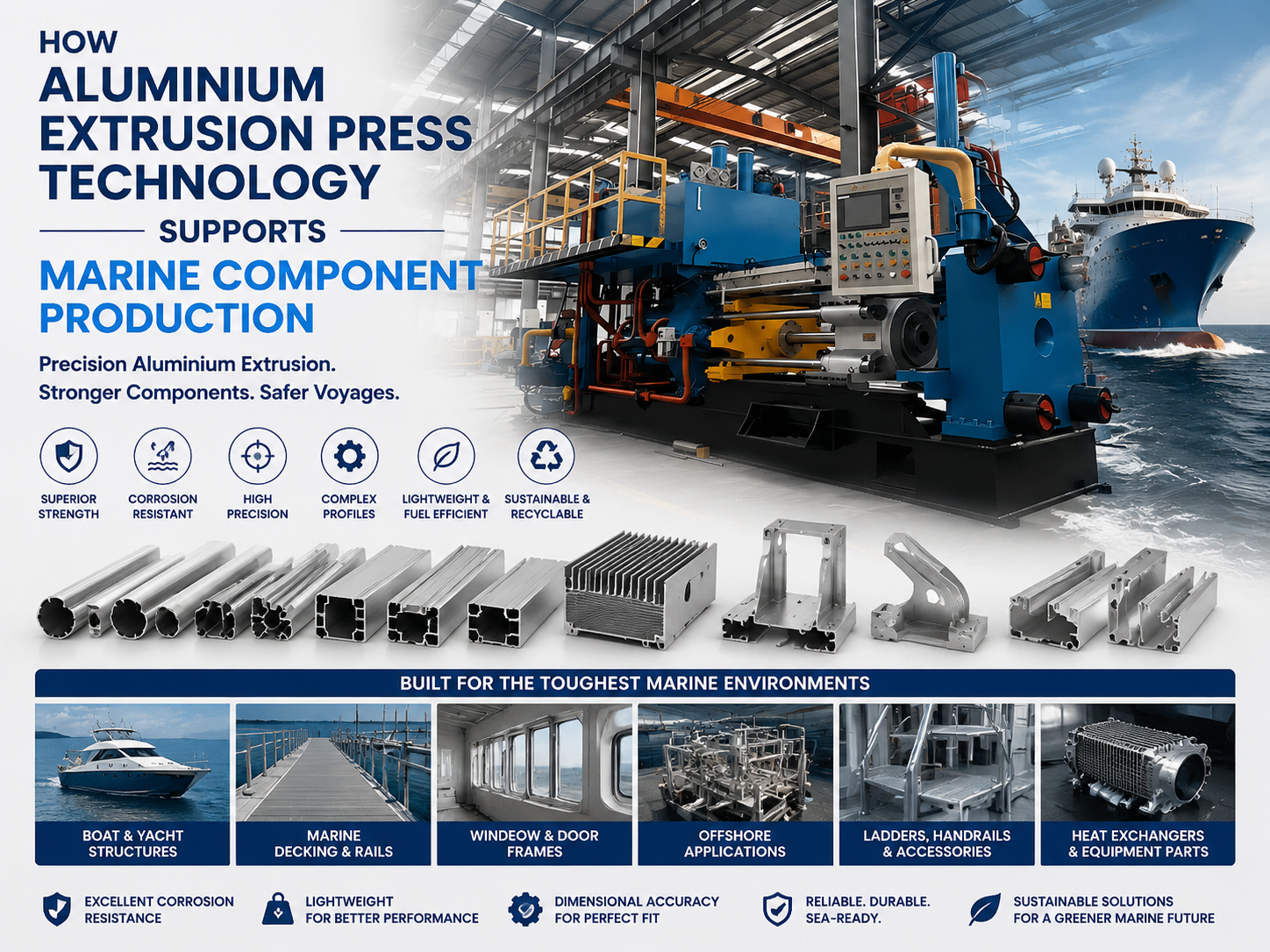
The maritime industry has undergone a significant transformation over the last few decades, shifting from heavy steel constructions to lightweight, high-strength aluminium alloys. This shift is driven by the need for fuel efficiency, higher speeds, and superior corrosion resistance in harsh saltwater environments. Central to this industrial evolution is the role of advanced machinery. Specifically, Aluminium Extrusion Press Technology Supports Marine Component Production by enabling the creation of complex, seamless, and high-integrity profiles that are essential for modern shipbuilding and offshore engineering.
Aluminium extrusion is a process where aluminium alloy material is forced through a die with a specific cross-sectional profile. In the marine sector, these profiles range from simple structural beams to intricate, hollow shapes used in heat exchangers and cabin frameworks. The precision offered by modern extrusion presses allows manufacturers to meet the stringent safety and performance standards required by international maritime organizations. As we delve deeper into this technology, it becomes clear that the synergy between metallurgical science and mechanical engineering is what makes high-performance marine vessels possible.
Application Scenario: Where Extruded Components Meet the Sea
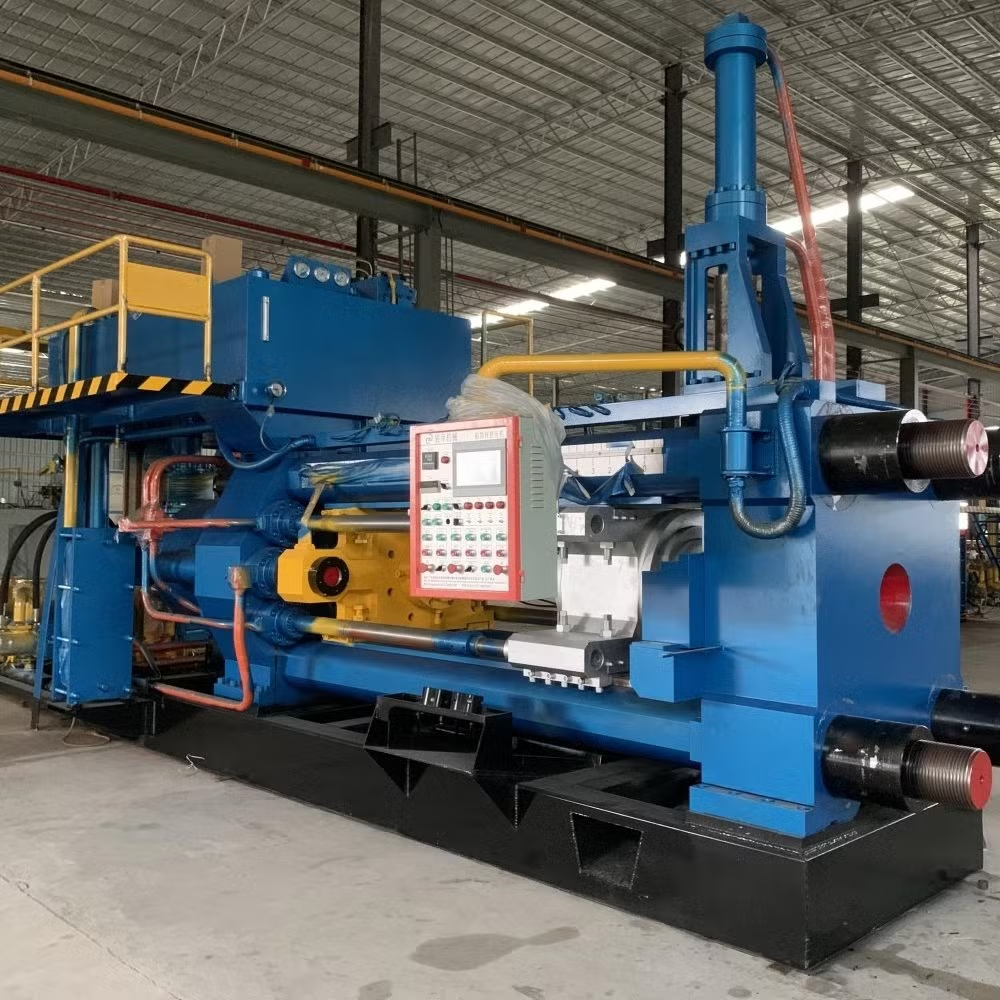
The application of extruded aluminium in the marine industry is vast and varied. One of the primary scenarios is the construction of high-speed ferries and catamarans. These vessels rely on the lightweight nature of aluminium to achieve high speeds while maintaining stability. Extruded longitudinal stiffeners and deck planks provide the necessary structural rigidity without the weight penalty of traditional steel. By utilizing Aluminium Extrusion Press Technology Supports Marine Component Production, shipyards can order custom-length profiles that reduce the number of welds required, thereby minimizing potential points of structural failure.
Beyond the hull and deck, extrusion technology is vital for the offshore oil and gas sector. Helidecks, gangways, and cable trays on offshore platforms are frequently made from extruded aluminium. These components must withstand constant exposure to salt spray and extreme weather. The ability to extrude large-scale, interlocking panels allows for rapid assembly on-site, which is a critical factor in offshore logistics. Furthermore, luxury yachts utilize extrusion for aesthetic and functional purposes, such as window frames, sliding door tracks, and mast sections, where surface finish and dimensional accuracy are paramount.
In naval defense, the demand for stealth and speed has led to the increased use of aluminium in littoral combat ships and patrol boats. Extrusion presses capable of handling high-strength alloys allow for the production of armored plating supports and internal bulkheads that contribute to the vessel’s overall survivability. The versatility of the extrusion process means that a single press can produce hundreds of different parts for a single ship, making it an indispensable asset in the marine manufacturing supply chain.
Material and Process Requirements for Marine Alloys
Not all aluminium is created equal, especially when it comes to marine applications. The industry primarily relies on the 5xxx and 6xxx series alloys. The 5xxx series (such as 5083 and 5456) is known for its exceptional corrosion resistance and weldability, making it ideal for hull plating. However, these alloys are often work-hardened. The 6xxx series (such as 6061, 6082, and 6005A) is heat-treatable and offers a great balance of strength and extrudability, making it the go-to choice for structural profiles produced via extrusion presses.
The extrusion process for marine-grade alloys requires precise temperature control. If the billet is too cold, the pressure required to extrude increases, potentially damaging the die or the press. If it is too hot, the metal may suffer from “hot shortness” or surface tearing. Modern Aluminium Extrusion Press Technology Supports Marine Component Production by incorporating sophisticated induction heating systems that ensure the billet reaches a uniform temperature before entering the container. This uniformity is crucial for maintaining the mechanical properties of the alloy throughout the length of the profile.
Furthermore, the quenching process—the rapid cooling of the profile as it exits the die—is critical for 6xxx series alloys to achieve their desired temper (usually T5 or T6). Marine components often require specific mechanical properties to handle dynamic loads at sea. Therefore, the extrusion line must be equipped with high-velocity air or water quench systems that can be adjusted based on the profile’s wall thickness and alloy composition. This level of process control ensures that every batch of marine components meets the rigorous certification standards of bureaus like DNV, ABS, or Lloyd’s Register.
Recommended Machine Configuration for Marine Extrusion
To successfully produce marine-grade components, an extrusion press must be configured for power, precision, and durability. HARSLE recommends a heavy-duty hydraulic system as the heart of the press. For marine profiles, which often involve large cross-sections, a press capacity ranging from 2500 tons to 5000 tons is typically required. This ensures that the machine has enough “reserve power” to handle the high flow stress of marine alloys without straining the hydraulic pumps or the main cylinder.
The machine should feature a high-precision PLC (Programmable Logic Controller) system, such as those from Siemens or Mitsubishi, to manage the complex extrusion cycles. A key feature in this configuration is the “Constant Speed Extrusion” control. This allows the operator to maintain a steady exit speed, which is vital for the surface quality and internal structure of the profile. Additionally, the container heating system should be multi-zoned to prevent heat loss during the extrusion stroke, ensuring the metal flows evenly through the die.
Key Components of a Marine-Ready Extrusion Line:
- Double Puller System: To maintain tension and prevent twisting of long profiles, a double puller system is essential. This ensures that the marine stiffeners remain perfectly straight, reducing the need for intensive post-extrusion straightening.
- Advanced Die Cooling: Using liquid nitrogen to cool the die can significantly increase extrusion speeds and improve the surface finish of the marine components, reducing the friction that causes heat buildup.
- Automated Handling System: Given the size of marine profiles, automated cooling tables and walking beams are necessary to move the profiles gently, preventing surface scratches that could lead to localized corrosion in saltwater.
Workflow: From Billet to Marine Component
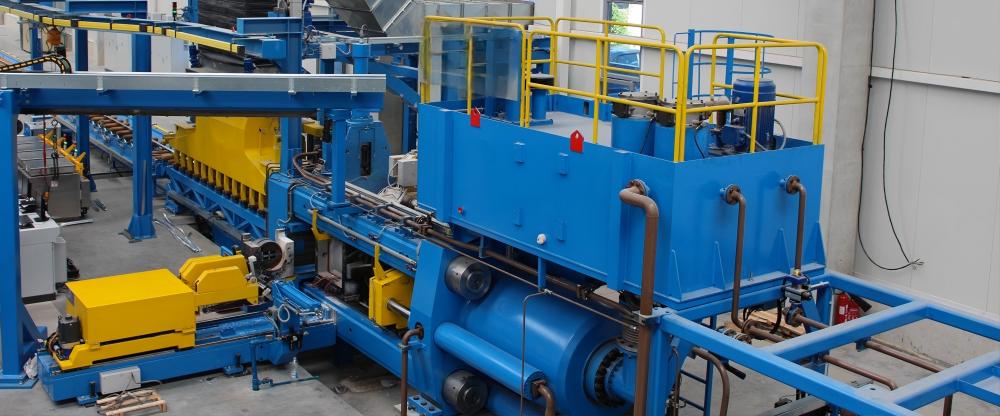
The workflow of producing a marine component begins with the selection of high-quality, homogenized billets. These billets are loaded into a log furnace where they are heated to approximately 450°C to 500°C. Once heated, a log shear cuts the billet to the required length, and it is transferred to the extrusion press. The Aluminium Extrusion Press Technology Supports Marine Component Production by utilizing a hydraulic ram to push the billet through the container and into the die. As the metal emerges from the die, it takes the shape of the marine profile.
As the profile exits, it passes through a quench box. For marine structural parts, water quenching is often preferred to achieve the high strength levels required for the T6 temper. The profile is then pulled along a cooling table by a mechanical puller. Once the profile has cooled to a manageable temperature, it is moved to a stretching machine. Stretching is a critical step; it straightens the profile and relieves internal stresses caused during the extrusion and quenching phases. This ensures that when the shipyard cuts the profile, it does not warp or spring out of shape.
The final stages involve cutting the profiles to the exact lengths required by the ship’s design and then placing them in an aging furnace. The aging process involves heating the profiles to a lower temperature (around 170°C to 190°C) for several hours to allow for the precipitation of alloying elements, which significantly increases the hardness and tensile strength of the metal. After aging, the components undergo rigorous quality checks, including dimensional inspection and hardness testing, before being shipped to the shipyard for assembly.
Productivity Benefits of Advanced Extrusion Technology
Investing in modern Aluminium Extrusion Press Technology Supports Marine Component Production yields significant productivity gains. One of the most notable benefits is the reduction in material waste. Traditional machining of marine parts from solid blocks can result in up to 70% material loss. In contrast, extrusion is a near-net-shape process, meaning the profile is produced very close to its final dimensions, drastically reducing the need for secondary machining and saving on expensive alloy costs.
Energy efficiency is another major advantage. Modern HARSLE extrusion presses utilize servo-driven hydraulic systems that only consume power when the machine is actively moving. This can lead to energy savings of up to 30% compared to older, constant-speed pump systems. In an industry where operational costs are under constant scrutiny, these savings contribute directly to the manufacturer’s bottom line. Furthermore, the high degree of automation in modern lines reduces the labor required per ton of output, allowing manufacturers to scale production without a proportional increase in headcount.
The ability to produce “multi-hollow” profiles is perhaps the greatest productivity benefit for the marine sector. These are complex shapes with multiple internal chambers that can serve as conduits for wiring, plumbing, or even structural reinforcement. Producing these as a single extruded piece eliminates the need to weld multiple smaller parts together. This not only speeds up the vessel’s assembly time but also results in a stronger, lighter, and more reliable component that is less prone to fatigue and corrosion at weld seams.
Case Example: Large-Scale Decking for a Cruise Liner
A prominent European shipyard recently faced a challenge in sourcing high-strength, lightweight decking for a new class of luxury cruise liners. The design required 12-meter long interlocking panels that could support significant weight while remaining thin enough to maximize cabin ceiling heights. By partnering with a manufacturer utilizing HARSLE’s 3500-ton Aluminium Extrusion Press Technology Supports Marine Component Production, they were able to develop a custom 6082-T6 alloy profile.
The extrusion press allowed for the creation of a wide, thin-walled profile with internal stiffening ribs. Because the press featured an advanced cooling and stretching system, the 12-meter sections were produced with a straightness tolerance of less than 0.5mm per meter. This precision allowed the shipyard to snap the panels together with minimal effort, reducing deck installation time by 40%. The final deck was 25% lighter than the previous steel-and-wood composite design, contributing to a significant reduction in the ship’s fuel consumption and an increase in its top speed during sea trials.
Frequently Asked Questions (FAQ)
1. Why is aluminium preferred over steel for marine components?
Aluminium offers a much higher strength-to-weight ratio than steel, which is crucial for vessel speed and fuel efficiency. Additionally, marine-grade aluminium alloys naturally form a protective oxide layer that provides superior resistance to saltwater corrosion compared to untreated steel.
2. What is the most common alloy used in marine extrusions?
The 6082 alloy is widely used for structural marine extrusions due to its high strength and excellent corrosion resistance. For components requiring even higher corrosion resistance but lower strength, 5xxx series alloys are often used, though they are more difficult to extrude.
3. How does the extrusion press ensure the strength of the marine part?
The press works in tandem with the quenching and aging systems. By controlling the temperature and speed of extrusion, followed by rapid cooling and heat treatment, the press technology ensures the alloy reaches its optimal metallurgical state for maximum strength.
4. Can an extrusion press handle the large sizes needed for shipbuilding?
Yes, large-capacity presses (3000 tons and above) are designed specifically to produce large-scale profiles. These machines can produce profiles that are several hundred millimeters wide and many meters long, perfect for hull stiffeners and deck planks.
5. What maintenance is required for an aluminium extrusion press in a marine production environment?
Regular maintenance of the hydraulic seals, alignment of the container and stem, and monitoring of the heating elements are essential. In a marine production setting, it is also important to ensure the hydraulic oil remains free of contaminants to prevent wear on the precision valves.
Conclusion: The Future of Marine Fabrication with HARSLE
As the maritime industry continues to push the boundaries of design and sustainability, the importance of efficient manufacturing technology cannot be overstated. Aluminium Extrusion Press Technology Supports Marine Component Production by providing the tools necessary to create the next generation of lightweight, durable, and high-performance vessels. HARSLE remains at the forefront of this field, offering robust and technologically advanced extrusion solutions that empower manufacturers to meet the challenges of the sea.
Whether you are looking to upgrade an existing production line or establish a new facility for marine component fabrication, choosing the right machinery is the first step toward success. With HARSLE’s expertise in hydraulic press technology and commitment to innovation, your production capabilities will reach new horizons. Explore our range of aluminium extrusion presses today and see how we can help you navigate the future of marine engineering.