Scrap Metal Shear Applications in Foundry Feedstock Preparation: A Comprehensive Guide

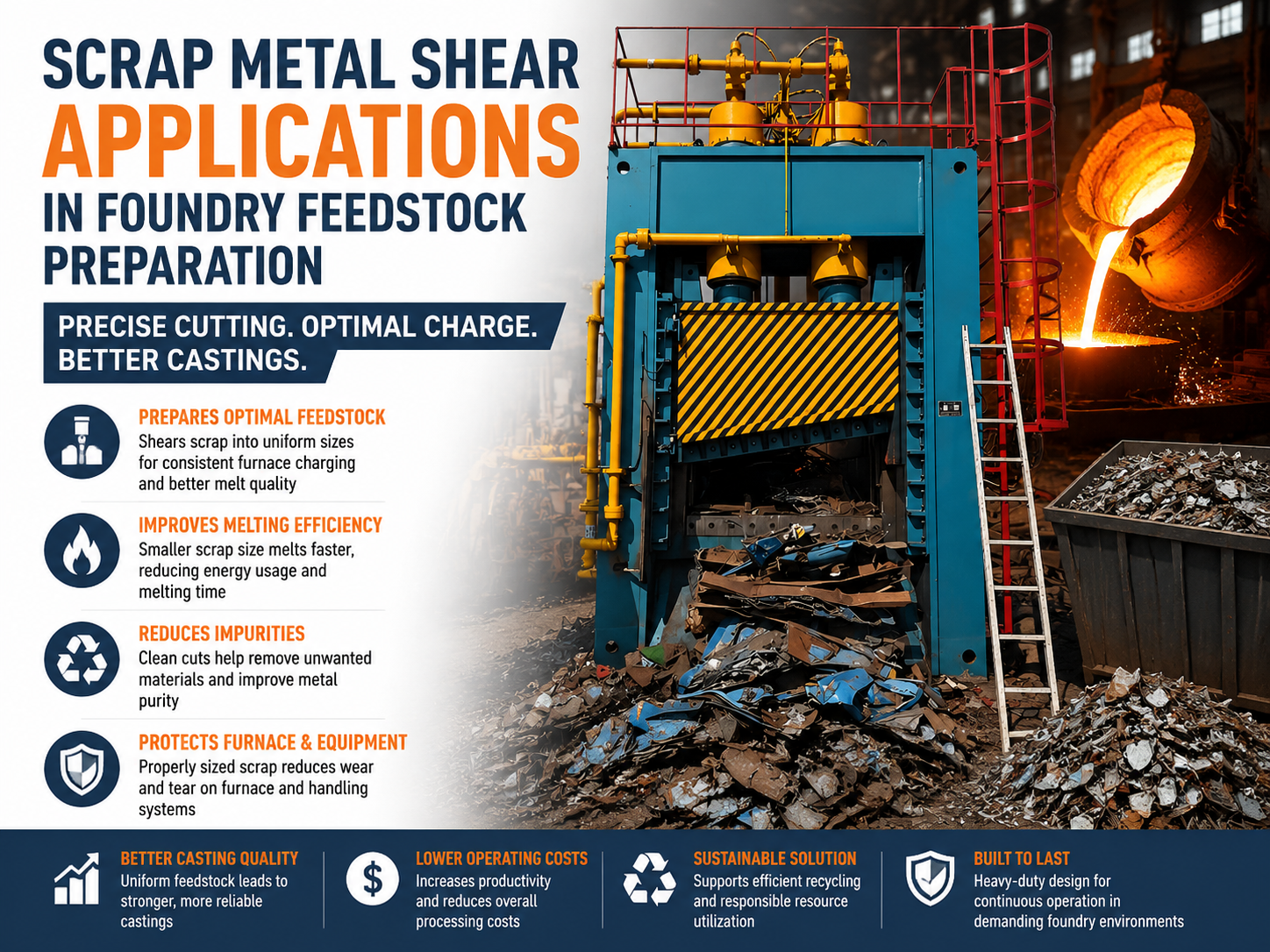
Introduction to Scrap Metal Shear Applications in Foundry Feedstock Preparation
In the modern metallurgical industry, the efficiency of a foundry is often determined long before the first ingot is cast. The preparation of feedstock—the raw scrap metal that is melted down—is a critical phase that dictates energy consumption, furnace longevity, and the quality of the final product. Scrap Metal Shear Applications In Foundry Feedstock Preparation have become the backbone of this preliminary stage, replacing outdated, labor-intensive methods with high-speed, automated hydraulic solutions. As foundries strive for higher throughput and lower operational costs, the role of heavy-duty shearing machinery, such as those manufactured by HARSLE, has never been more prominent.
Foundries require scrap that is not only clean but also sized precisely to fit the dimensions of their induction or electric arc furnaces (EAF). Oversized scrap can lead to ‘bridging,’ where material wedges itself across the furnace mouth, preventing the melt from progressing and creating dangerous pressure build-ups. Conversely, scrap that is too small or low-density may result in excessive oxidation and metal loss. This is where the scrap metal shear enters the workflow, providing a controlled, mechanical method to transform bulky, irregular scrap into dense, uniform feedstock ready for the melt shop.
HARSLE, a leader in metal fabrication machinery, understands that the foundry environment is one of the most demanding industrial settings. The equipment used must withstand continuous operation, handle diverse alloys, and deliver consistent results. This article explores the intricate details of how scrap metal shears are applied in feedstock preparation, the technical requirements of the process, and the significant productivity gains realized by integrating advanced shearing technology into the foundry supply chain.
Application Scenario: The Foundry Intake and Processing Yard
The primary application scenario for scrap metal shears occurs at the intersection of the scrap yard and the foundry intake. Large-scale foundries often receive ‘unprepared’ scrap, which includes structural steel, decommissioned machinery, automotive frames, and industrial offcuts. This material is typically too large for direct charging into a furnace. In the past, foundries relied on manual oxygen-fuel torch cutting, a process that is slow, hazardous, and environmentally damaging due to the release of fumes and the waste of gas.
By implementing Scrap Metal Shear Applications In Foundry Feedstock Preparation, foundries can process hundreds of tons of scrap daily with minimal labor. The shear is typically positioned in a dedicated processing zone where cranes or telehandlers feed the machine. The sheared material is then conveyed directly to charging buckets or storage bins. This setup is common in gray iron foundries, steel mills, and non-ferrous smelting operations where the volume of material necessitates a high-speed mechanical solution.
Furthermore, the application extends to specialized recycling centers that act as dedicated suppliers to foundries. These facilities use gantry shears or container shears to meet strict ‘foundry grade’ specifications. By shearing scrap to lengths of 2 feet or less (often referred to as ‘busheling’ or ‘short steel’), these suppliers can command higher market prices, while foundries benefit from material that is easier to handle and melts more efficiently. The versatility of HARSLE shears allows them to handle everything from thin-walled tubing to heavy I-beams, making them indispensable in these high-volume scenarios.
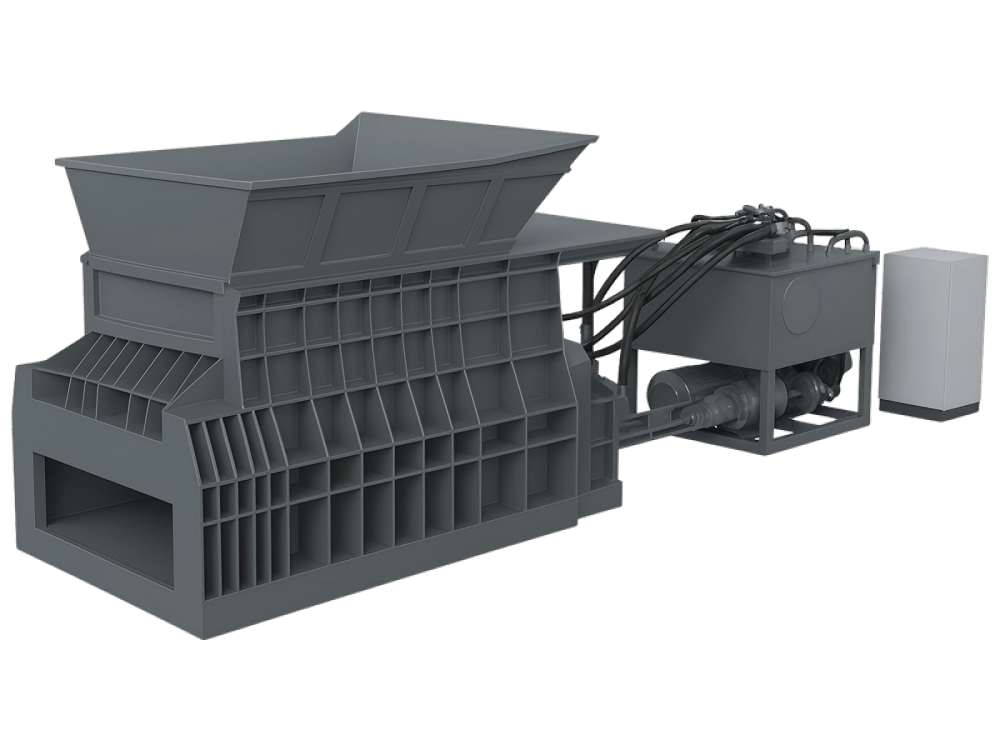
Material and Process Requirements for Foundry Feedstock
To understand why shearing is so vital, one must look at the specific requirements of the foundry melting process. Not all scrap is created equal, and the furnace’s efficiency is highly sensitive to the physical characteristics of the charge. The following factors are critical in feedstock preparation:
- Size and Geometry: Most induction furnaces have a specific ‘charging window.’ Scrap must be cut to lengths that allow it to fall freely into the crucible. If the scrap is too long, it can bridge; if it is too wide, it may damage the refractory lining of the furnace.
- Bulk Density: High-density feedstock is preferred because it allows for more weight to be loaded into the furnace per charge. Shearing compresses and cuts the material, naturally increasing its bulk density compared to loose, tangled scrap.
- Chemical Purity: While shears do not chemically clean metal, the shearing process often knocks off heavy rust, scale, and attachments (like rubber or plastic) that would otherwise contaminate the melt.
- Consistency: Automated shearing ensures that every piece of feedstock falls within a specific size range, allowing the furnace operators to predict melt times and energy usage with high precision.
The process of Scrap Metal Shear Applications In Foundry Feedstock Preparation must also account for the hardness and thickness of the material. For example, alloy steels used in the mining or construction industries require shears with high cutting forces and specialized blade alloys. HARSLE machines are engineered with high-pressure hydraulic systems that provide the necessary tonnage to slice through hardened materials without stalling or causing excessive wear on the mechanical components. This capability ensures that the foundry can accept a wider variety of scrap types, potentially lowering their raw material costs by purchasing lower-grade, oversized scrap and processing it in-house.
Recommended Machine Configuration for Foundries
Choosing the right machine configuration is essential for optimizing the feedstock preparation line. Depending on the volume and type of scrap, HARSLE recommends two primary types of shears: the Gantry Shear and the Container Shear.
1. Heavy-Duty Gantry Shears
For large-scale foundries processing heavy structural scrap, the Gantry Shear is the gold standard. These machines feature a vertical cutting gate and a horizontal compression box. The scrap is loaded into the box, where side rams compress it into a dense log before the heavy blade descends to shear it to the desired length. HARSLE’s gantry shears often feature cutting forces ranging from 400 to 2000 tons, capable of handling the thickest steel plates and beams found in industrial scrap.
2. Container Shears
Container shears are a more compact and often mobile solution. They are designed for continuous feeding, where the material is pushed through a shearing head by a hydraulic ram. These are excellent for foundries with limited space or those that need to move the processing equipment between different scrap piles. The ‘box-free’ design of some container shears allows for faster cycle times when dealing with lighter or medium-grade scrap.
Technical Specifications to Consider
| Feature | Gantry Shear (HARSLE Q91 Series) | Container Shear (HARSLE CS Series) |
|---|---|---|
| Cutting Force | 500 – 1600 Tons | 400 – 800 Tons |
| Feeding Method | Compression Box / Pusher | Continuous Gravity / Pusher |
| Best For | Heavy structural steel, HMS 1/2 | Light to medium scrap, high mobility |
| Automation | Full PLC Control | Remote Control / Automatic |
In addition to the shear type, the hydraulic system configuration is paramount. Foundries should look for machines with variable displacement pumps and high-efficiency motors to reduce energy consumption during idle times. HARSLE integrates advanced PLC (Programmable Logic Controller) systems that allow operators to set precise cut lengths, ensuring the feedstock meets the exact requirements of the furnace charging system.
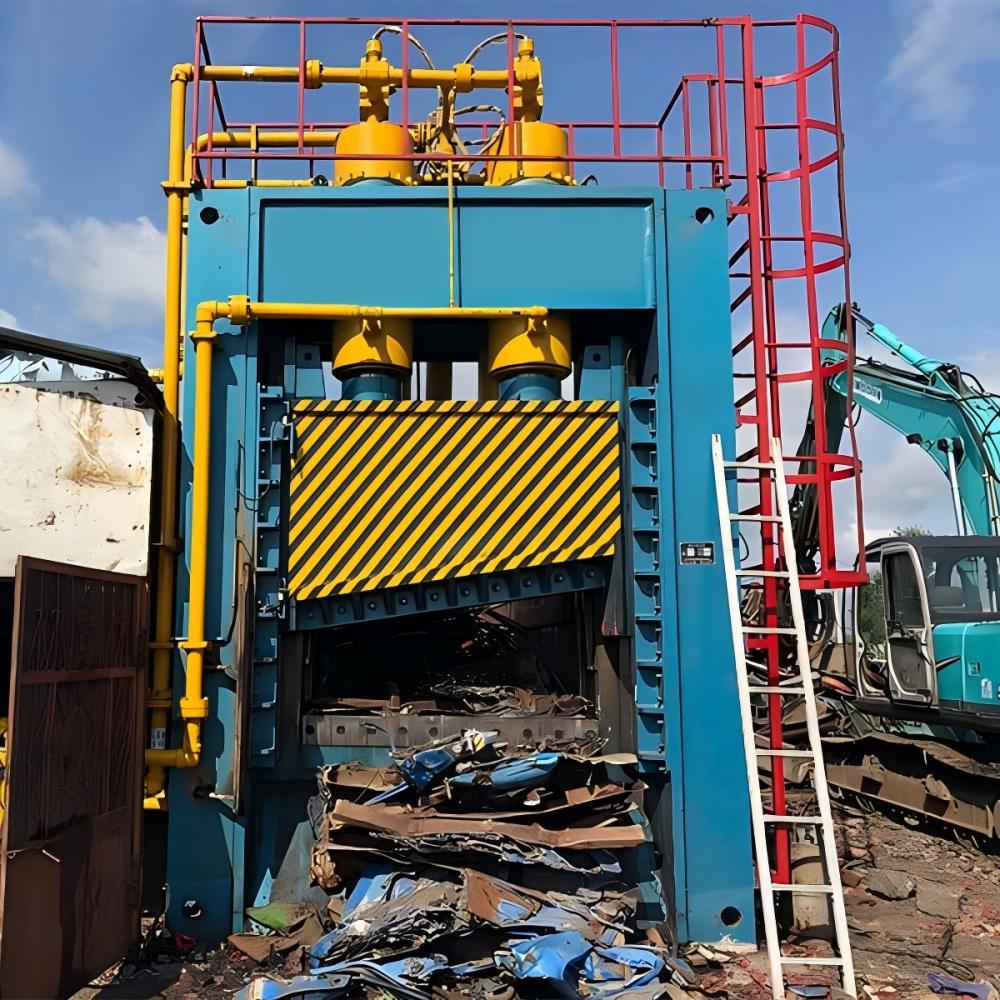
Workflow: From Raw Scrap to Furnace-Ready Charge
The integration of Scrap Metal Shear Applications In Foundry Feedstock Preparation follows a systematic workflow designed to maximize efficiency and safety. Understanding this workflow helps foundry managers identify bottlenecks and optimize their material handling processes.
- Collection and Sorting: Scrap is collected from various sources and sorted by material type (e.g., carbon steel, stainless steel, aluminum). Sorting is crucial because different alloys require different melting parameters and shearing forces.
- Pre-Compression (Optional): For very bulky scrap, such as car bodies or large tanks, a baler or the compression box of a gantry shear is used to reduce the volume before the actual shearing takes place.
- Feeding the Shear: A crane equipped with a grapple or magnet loads the scrap into the shear’s hopper or charging box. HARSLE shears are designed with wide openings to accommodate irregular shapes, reducing the need for pre-cutting.
- The Shearing Cycle: The machine’s hydraulic rams secure the material. The shear blade then descends, cutting the metal into uniform lengths. The PLC system controls the ‘stroke’ and ‘feed’ to ensure consistency.
- Discharge and Separation: The sheared pieces fall onto a vibrating conveyor or a belt. At this stage, magnetic separators can be used to remove any remaining non-ferrous contaminants, and dust extraction systems can capture fine particles.
- Storage and Charging: The prepared feedstock is moved to storage bunkers or directly into charging buckets. Because the material is now uniform and dense, it can be packed tightly into the buckets, maximizing the weight of each furnace charge.
This streamlined workflow significantly reduces the ‘tap-to-tap’ time in the foundry. By having a consistent supply of properly sized feedstock, the furnace can be charged more quickly, and the melting process becomes more predictable, leading to better overall plant utilization.
Productivity Benefits of Advanced Shearing Technology
The transition to automated Scrap Metal Shear Applications In Foundry Feedstock Preparation offers a multitude of benefits that directly impact a foundry’s bottom line. These benefits extend beyond simple labor savings and touch upon energy efficiency, safety, and material yield.
1. Enhanced Energy Efficiency: Properly sized and dense scrap melts faster. In an induction furnace, the electromagnetic field couples more effectively with dense loads, reducing the time and kilowatt-hours required to reach the melting point. This can lead to energy savings of 5-10% per melt cycle.
2. Reduced Labor and Increased Safety: Manual torch cutting is one of the most dangerous jobs in a scrap yard. By replacing it with a hydraulic shear, foundries eliminate the risks of fires, explosions (from cutting sealed containers), and respiratory issues from fumes. A single shear operator can replace a crew of five or more manual cutters.
3. Lower Consumable Costs: Torch cutting requires expensive gases (oxygen, acetylene, or propane) and constant replacement of tips and hoses. A hydraulic shear, while requiring an initial investment, has much lower ongoing consumable costs, primarily limited to blade sharpening and hydraulic oil maintenance.
4. Improved Furnace Longevity: Oversized scrap that bridges or bangs against the furnace walls during charging causes mechanical wear and thermal shock to the refractory lining. Uniformly sheared feedstock slides into the furnace smoothly, extending the life of the lining and reducing downtime for repairs.
5. Better Inventory Management: Sheared scrap is easier to weigh, transport, and store. Foundries can more accurately track their inventory levels and ensure they have the right mix of materials for upcoming production runs.
Case Example: Upgrading a Mid-Sized Iron Foundry
Consider a mid-sized iron foundry that produces automotive components. Previously, they purchased pre-cut ‘short steel’ from external vendors at a premium price. To reduce costs, they decided to bring the feedstock preparation in-house by installing a HARSLE 600-ton Gantry Shear.
The Challenge: The foundry was spending approximately $50 more per ton for pre-processed scrap. With a monthly consumption of 2,000 tons, this represented an additional cost of $100,000 per month. Furthermore, the quality of the external scrap was inconsistent, leading to occasional furnace bridging.
The Solution: By installing the HARSLE Gantry Shear, the foundry began purchasing ‘unprepared’ structural scrap directly from demolition sites and local scrap yards. They utilized the shear to process this material into 18-inch lengths, perfect for their induction furnaces.
The Result: The foundry saw an immediate reduction in raw material costs. The investment in the HARSLE shear was recouped in less than eight months. Additionally, the furnace operators reported a 12% increase in melting speed due to the higher density and better sizing of the in-house prepared feedstock. The safety record of the yard also improved, as the hazardous torch-cutting area was completely decommissioned.
Frequently Asked Questions (FAQ)
What is the best shear for a small foundry?
For smaller foundries with lower volume requirements, a HARSLE Container Shear or a smaller Crocodile Shear (Alligator Shear) is often the best choice. These machines offer a lower footprint and lower initial investment while still providing the necessary force to prepare feedstock for smaller furnaces.
How often do the shear blades need to be replaced?
Blade life depends heavily on the material being cut. For standard carbon steel, blades can often last for several hundred hours of operation before needing to be rotated or sharpened. HARSLE blades are typically four-sided, meaning they can be rotated three times to expose a fresh cutting edge before requiring professional grinding.
Can scrap shears handle non-ferrous metals like aluminum or copper?
Yes, Scrap Metal Shear Applications In Foundry Feedstock Preparation are highly effective for non-ferrous metals. In fact, because aluminum and copper are softer than steel, the shears can often operate at higher speeds or handle larger cross-sections of material. This is vital for aluminum smelters that process large extrusions or engine blocks.
What maintenance is required for a hydraulic scrap shear?
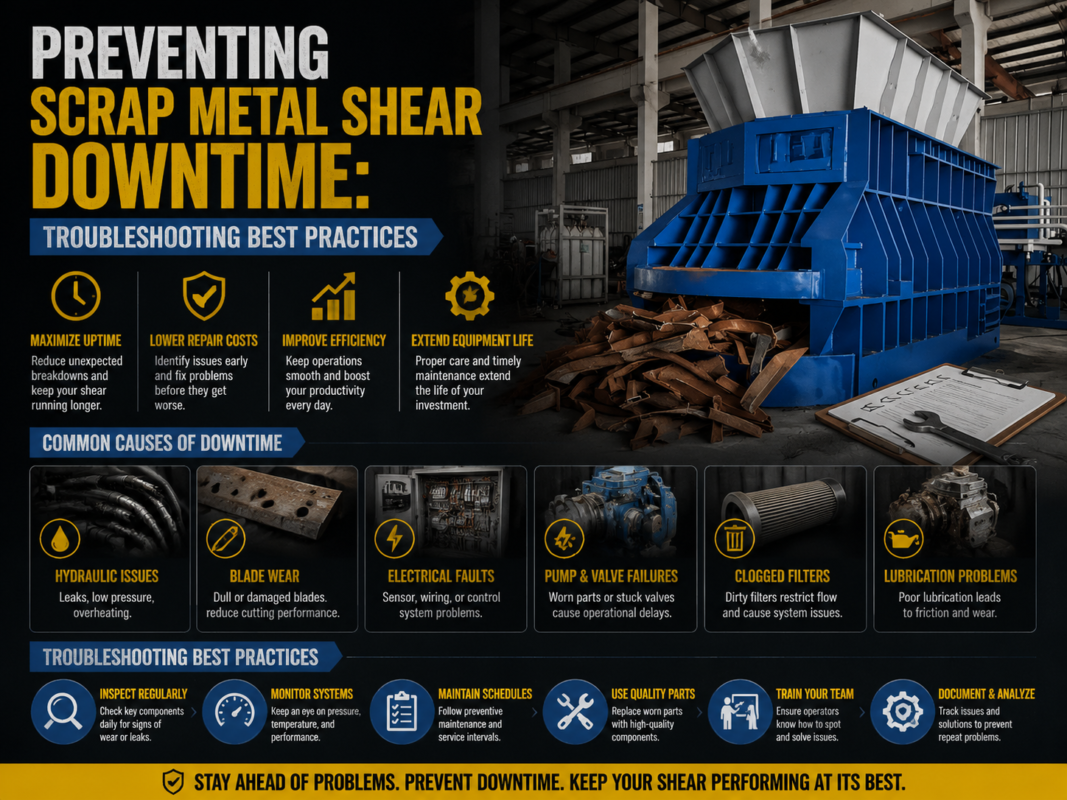
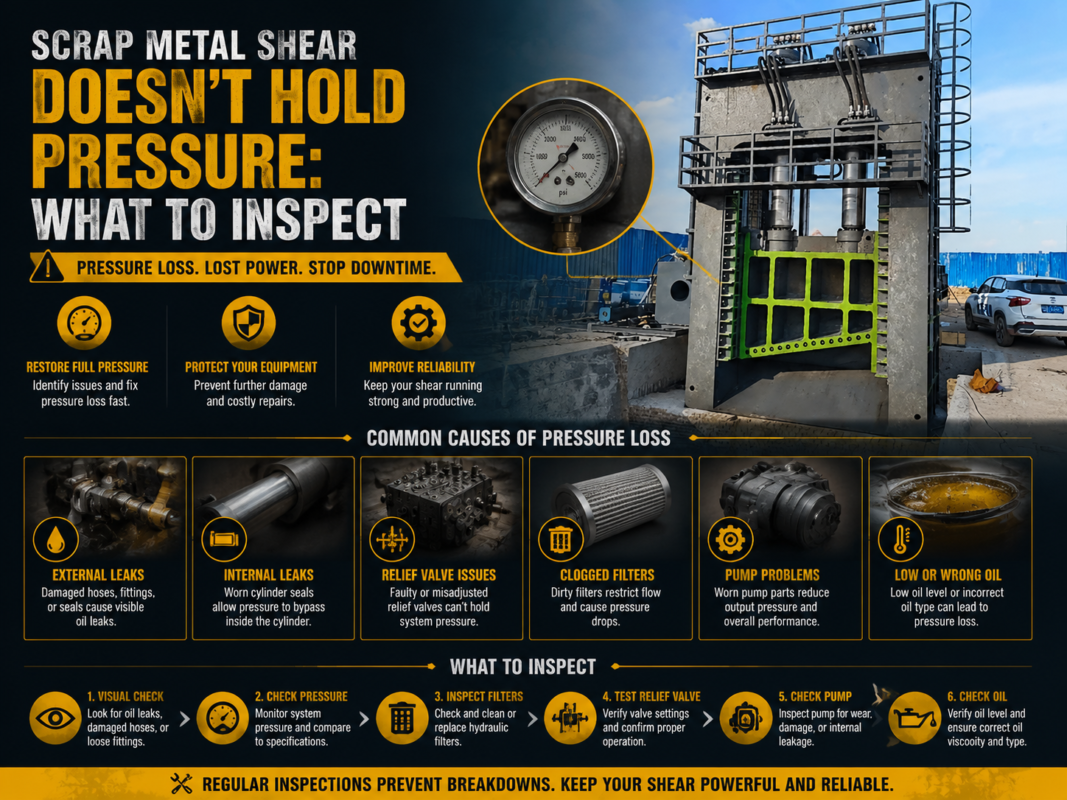
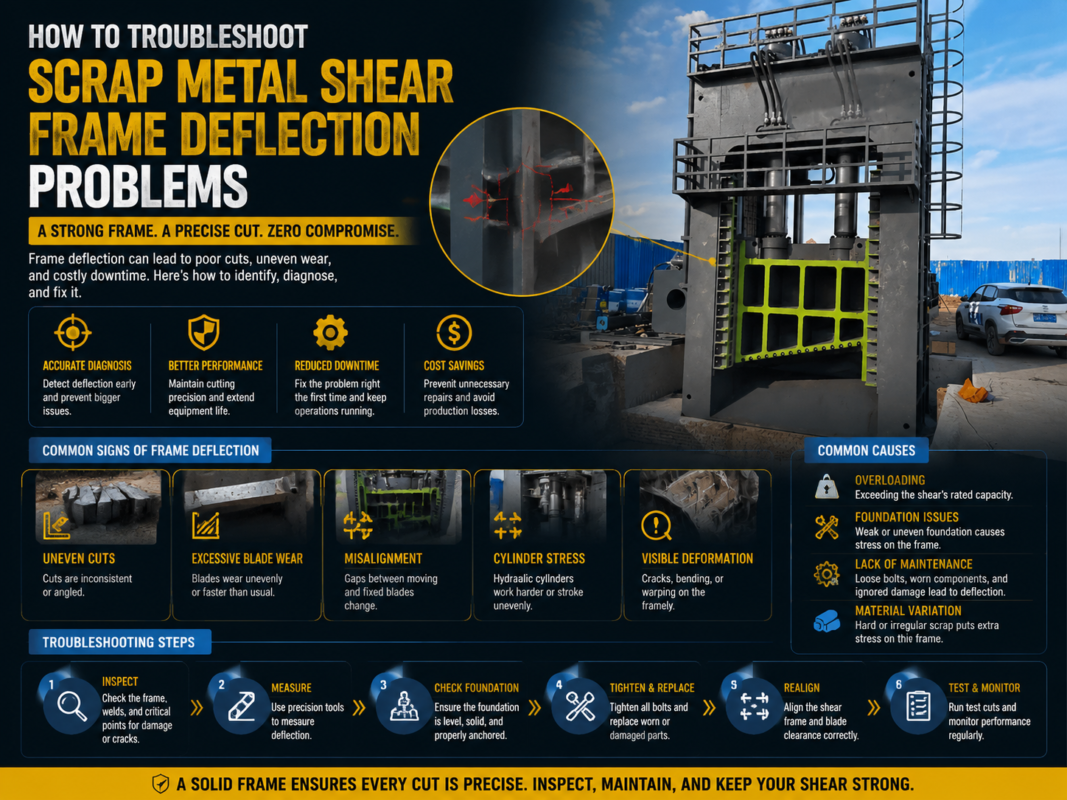
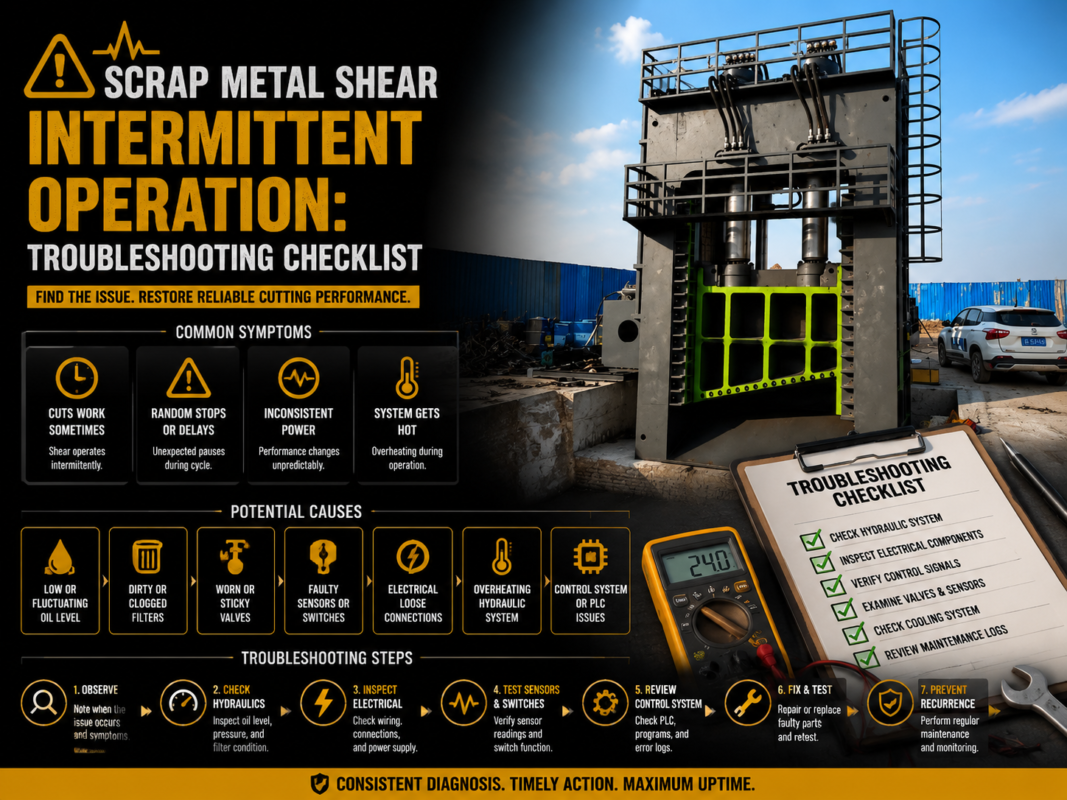
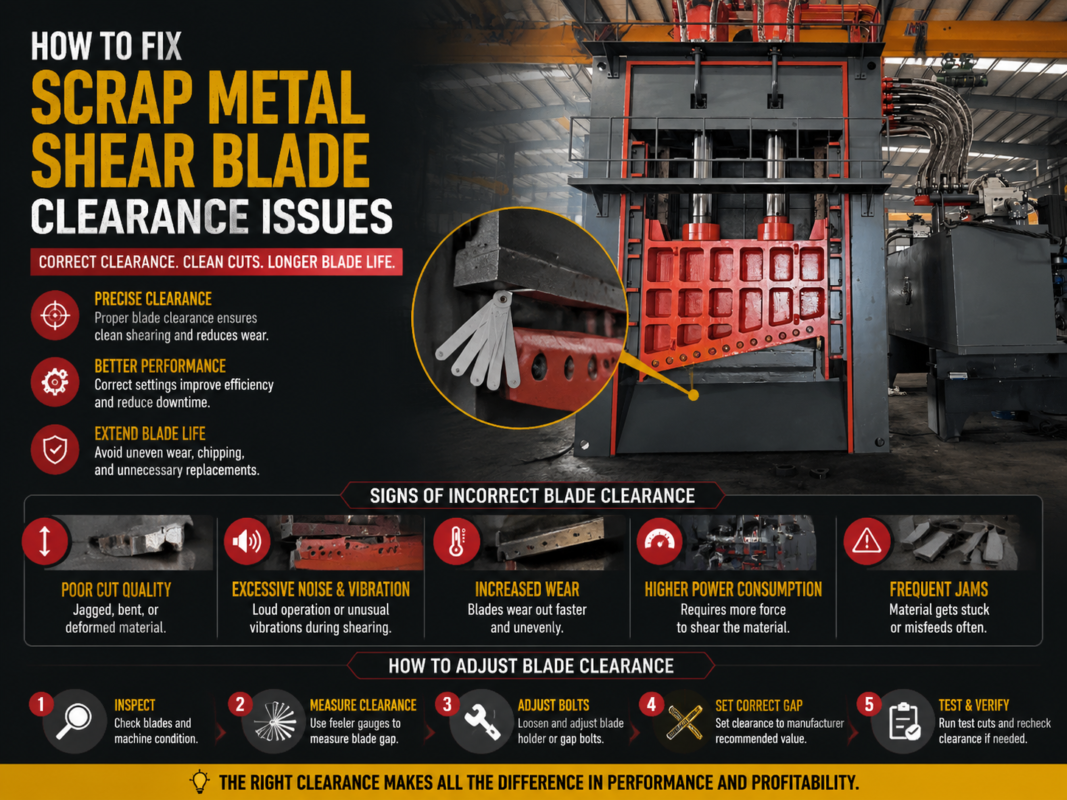
Regular maintenance includes monitoring hydraulic oil levels and cleanliness, lubricating moving parts (like the slide ways), checking for leaks in hoses and cylinders, and ensuring the blade gap is correctly adjusted. HARSLE machines are designed with accessible maintenance points to simplify these tasks.
Does the shear help in removing contaminants?
While a shear is not a separator, the physical action of compressing and cutting often breaks loose non-metallic attachments like concrete, wood, or heavy plastic. When combined with a vibrating discharge conveyor, these contaminants can be easily removed before the metal reaches the furnace.
Conclusion and Call to Action
The strategic implementation of Scrap Metal Shear Applications In Foundry Feedstock Preparation is a transformative step for any foundry looking to modernize its operations. By taking control of the feedstock preparation process, foundries can significantly reduce raw material costs, improve furnace efficiency, and create a safer, more sustainable working environment. HARSLE’s range of hydraulic shears—from the massive power of the Gantry series to the versatile efficiency of the Container series—provides the perfect solution for foundries of all sizes.
Don’t let inefficient feedstock preparation hold back your production capacity. Invest in a solution that delivers precision, power, and reliability. Contact HARSLE today to consult with our engineering experts and find the ideal scrap metal shear for your foundry’s specific needs. Visit our website to explore our full catalog of metal fabrication machinery and take the first step toward a more profitable melt shop.