Horizontal Baler Buying Guide for Exporters and Distributors: Standards and Installation Tips

Introduction to Horizontal Baler Procurement for Global Markets
In the rapidly evolving landscape of global waste management and material recovery, the horizontal baler stands as a cornerstone technology. For exporters and distributors, understanding the nuances of these machines is not just about knowing the price; it is about recognizing the engineering standards, operational efficiencies, and installation requirements that dictate long-term profitability. Horizontal balers are designed for high-volume processing of paper, cardboard, plastics, and non-ferrous metals, offering a level of automation and density that vertical balers simply cannot match.
As a distributor, your role is to bridge the gap between high-quality manufacturing and the end-user’s specific operational needs. This requires a deep dive into the technical specifications that differentiate a standard machine from a high-performance industrial asset. Whether you are supplying a municipal recycling facility or a private manufacturing plant, the criteria for selection must include durability, ease of maintenance, and compliance with international safety standards. This guide provides a comprehensive roadmap for navigating the complexities of horizontal baler procurement.
Price Range Overview: Understanding the Investment Tiers
The market for horizontal balers is broad, with prices varying significantly based on capacity, automation, and build quality. For exporters and distributors, it is essential to categorize these machines into tiers to better advise clients on their capital expenditure (CAPEX) planning. Generally, the price of a horizontal baler can range from $15,000 to well over $150,000.
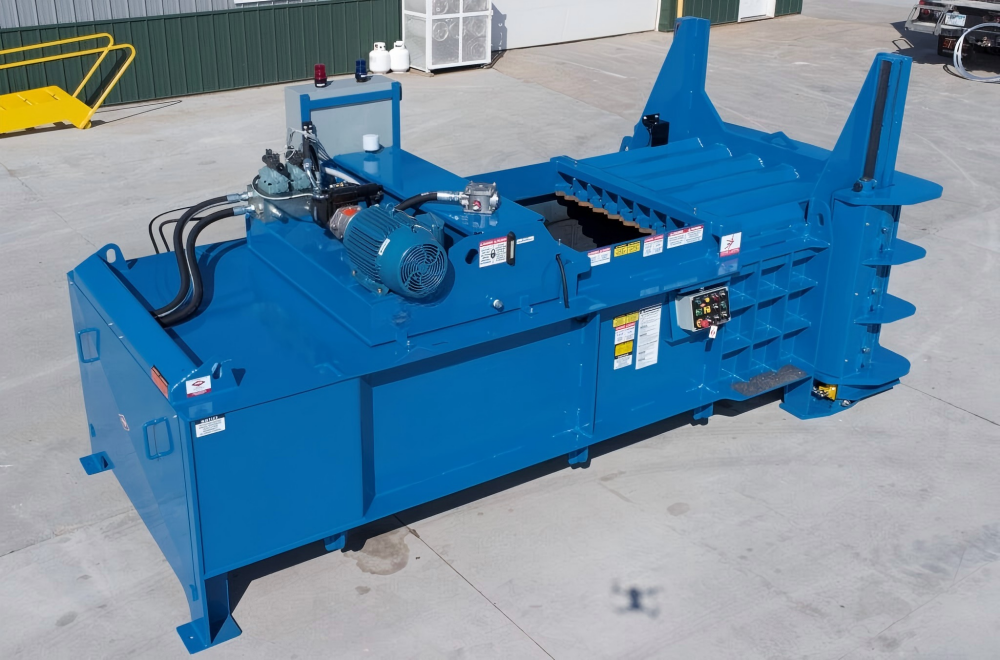
- Entry-Level Semi-Automatic Balers ($15,000 – $35,000): These machines typically feature manual tying systems and lower hydraulic pressure (40-60 tons). They are ideal for smaller distribution centers or facilities with moderate waste streams. While they require more labor for the tying process, they offer a significant upgrade over vertical units in terms of throughput.
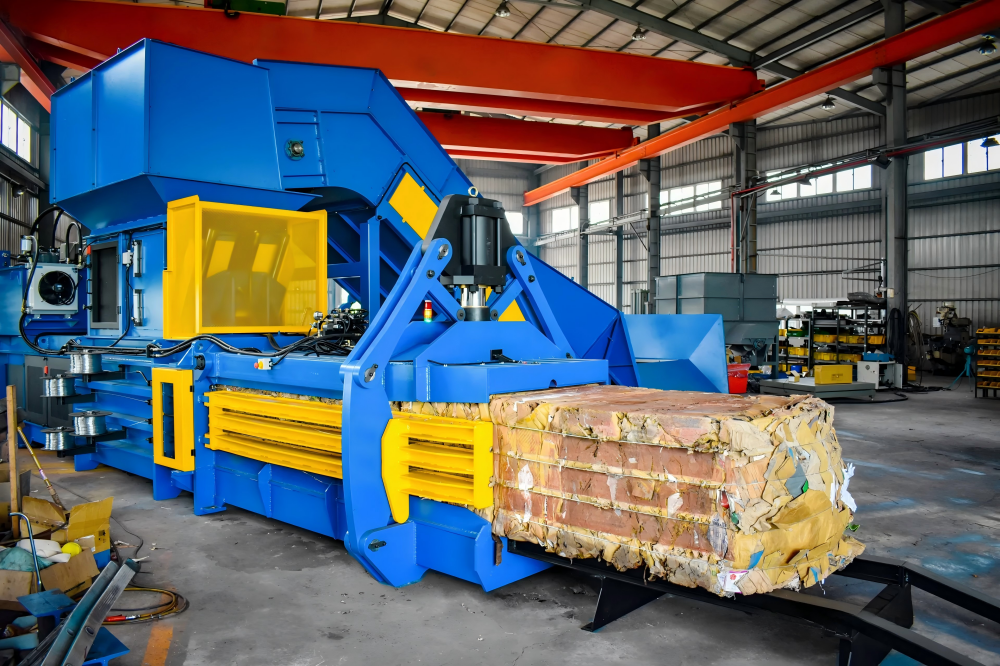
- Mid-Range Automatic Tie Balers ($40,000 – $85,000): This is the most popular segment for industrial distributors. These machines offer full automation, including auto-tying mechanisms and advanced PLC controls. With pressures ranging from 60 to 100 tons, they can handle a wide variety of materials and produce consistent, high-density bales suitable for export.
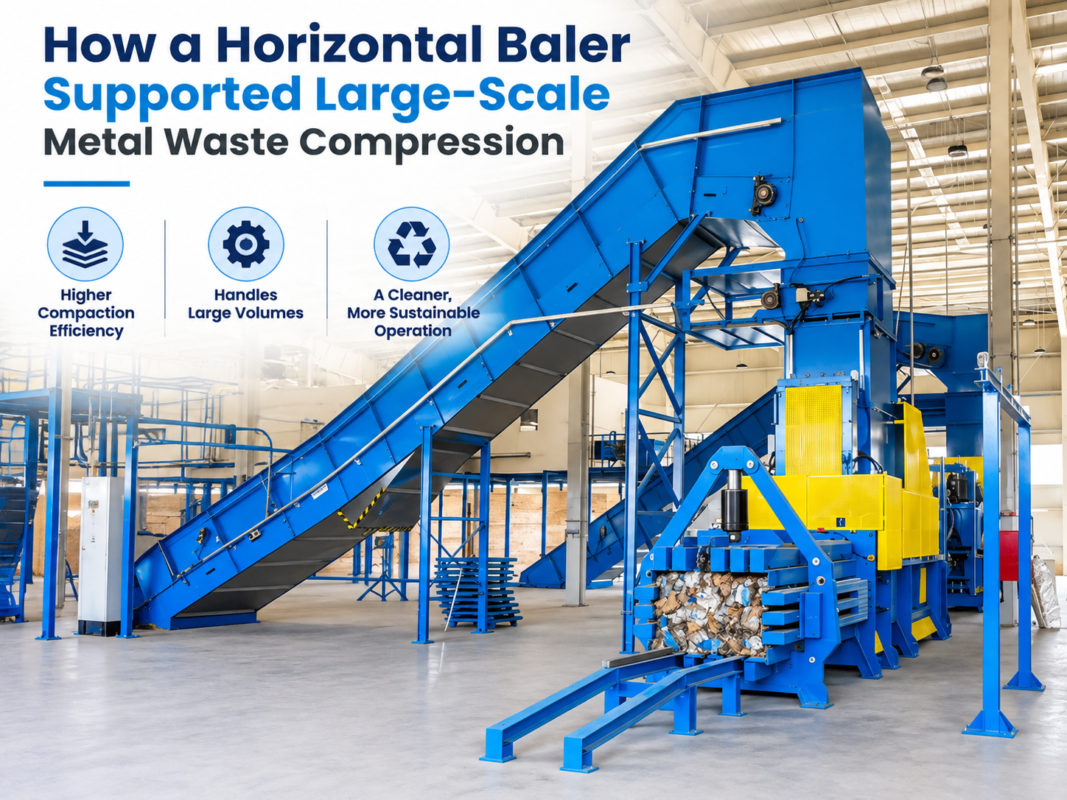
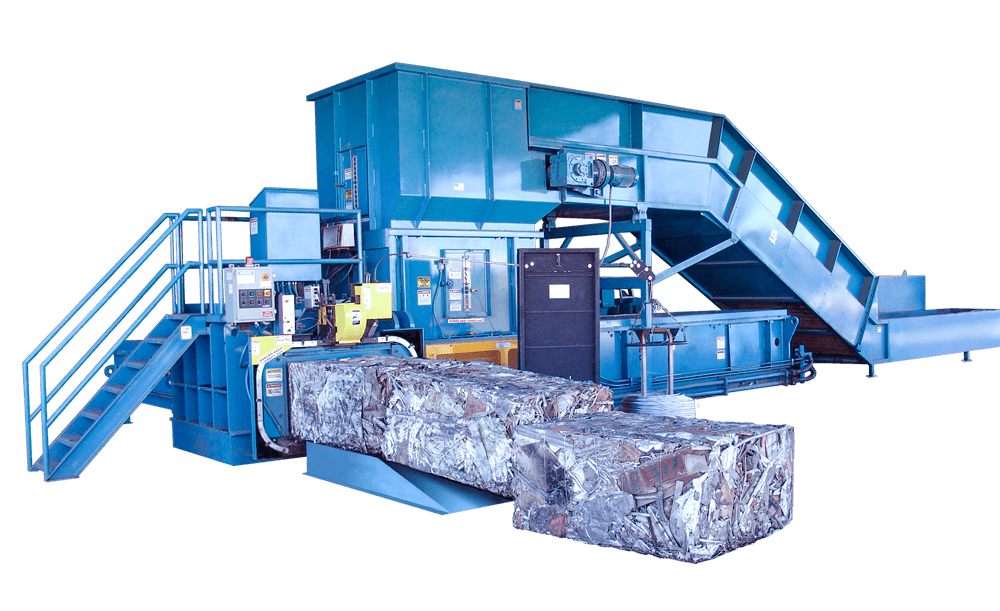
- High-End Heavy-Duty & Two-Ram Balers ($90,000 – $200,000+): Designed for 24/7 operations and extremely high volumes, these machines feature massive feed openings, high-speed hydraulic cycles, and the ability to process difficult materials like heavy plastics or scrap metal. Two-ram balers, in particular, offer the highest versatility in material switching.
Main Cost Drivers in Horizontal Baler Manufacturing
When evaluating the price of a horizontal baler, several key engineering factors drive the final cost. As a distributor, explaining these to your clients helps justify the investment in higher-quality machinery. The first major driver is the Hydraulic System. The quality of the pumps, valves, and cylinders determines the machine’s cycle time and pressing force. High-end brands like Rexroth or Vickers are more expensive but offer superior reliability and easier sourcing of spare parts globally.
The Structural Integrity of the frame is another critical factor. A baler subjected to 100 tons of pressure thousands of times a year must be built with high-grade structural steel (such as Q345B or better). The thickness of the chamber walls and the inclusion of replaceable wear liners (like Hardox) significantly increase the machine’s lifespan but also its manufacturing cost. Furthermore, the Automation Level—specifically the complexity of the PLC (Programmable Logic Controller) and the sensor array—adds to the cost. A Siemens or Mitsubishi PLC system provides better diagnostic capabilities and smoother operation than generic alternatives.
Configuration Impact: Tailoring the Machine to the Application
The configuration of a horizontal baler must match the specific material and volume requirements of the end-user. One of the most significant configuration choices is the Tying System. Automatic wire-tier systems are essential for high-throughput environments, but they require precise calibration. For exporters, ensuring the machine is configured for the specific gauge of wire available in the destination country is a vital detail that is often overlooked.
The Feed Opening Size and hopper configuration also play a massive role in efficiency. If the baler is being fed by a conveyor, the hopper must be designed to prevent bridging and ensure a steady flow of material into the compression chamber. Additionally, the Cooling System is a configuration detail that varies by geography. In hotter climates, an oversized air-cooled or water-cooled oil heat exchanger is necessary to prevent hydraulic fluid degradation, which can lead to pump failure and seal leaks.
Technical Specification Comparison Table
| Feature | Semi-Automatic (Entry) | Automatic Tie (Mid-Range) | Two-Ram (High-End) |
|---|---|---|---|
| Pressing Force | 40 – 60 Tons | 60 – 120 Tons | 100 – 200+ Tons |
| Bale Weight (OCC) | 300 – 500 kg | 500 – 800 kg | 700 – 1100 kg |
| Cycle Time | 40 – 60 Seconds | 20 – 40 Seconds | 15 – 25 Seconds |
| Motor Power | 15 – 22 kW | 30 – 55 kW | 75 – 150+ kW |
| Tying Method | Manual Wire/Tape | Auto-Wire Tier | Auto-Wire/Plastic Tie |
Hidden Costs: What Exporters and Distributors Must Anticipate
The purchase price of the machine is only one part of the total cost of ownership. For exporters, Logistics and Shipping represent a significant hidden cost. Horizontal balers are heavy and often oversized (OOG). Shipping a 15-ton machine requires specialized containers (like Flat Racks) or break-bulk shipping, which can cost significantly more than standard 40ft HQ containers. Furthermore, the machine must be properly treated for maritime transport to prevent corrosion of the hydraulic rods and electrical components.
Installation and Commissioning are other areas where costs can escalate. A horizontal baler requires a reinforced concrete foundation to handle the vibration and weight. If the client’s floor is not up to spec, the cost of concrete work must be factored in. Additionally, the initial fill of Hydraulic Oil can be expensive. A large baler might require 600 to 1,200 liters of high-quality anti-wear hydraulic oil, which is rarely included in the machine’s base price. Finally, consider the Electrical Infrastructure. These machines have high startup currents; the facility may need to upgrade its transformers or install soft-starters to avoid tripping the local grid.
ROI Calculation: Proving the Value to the End-User
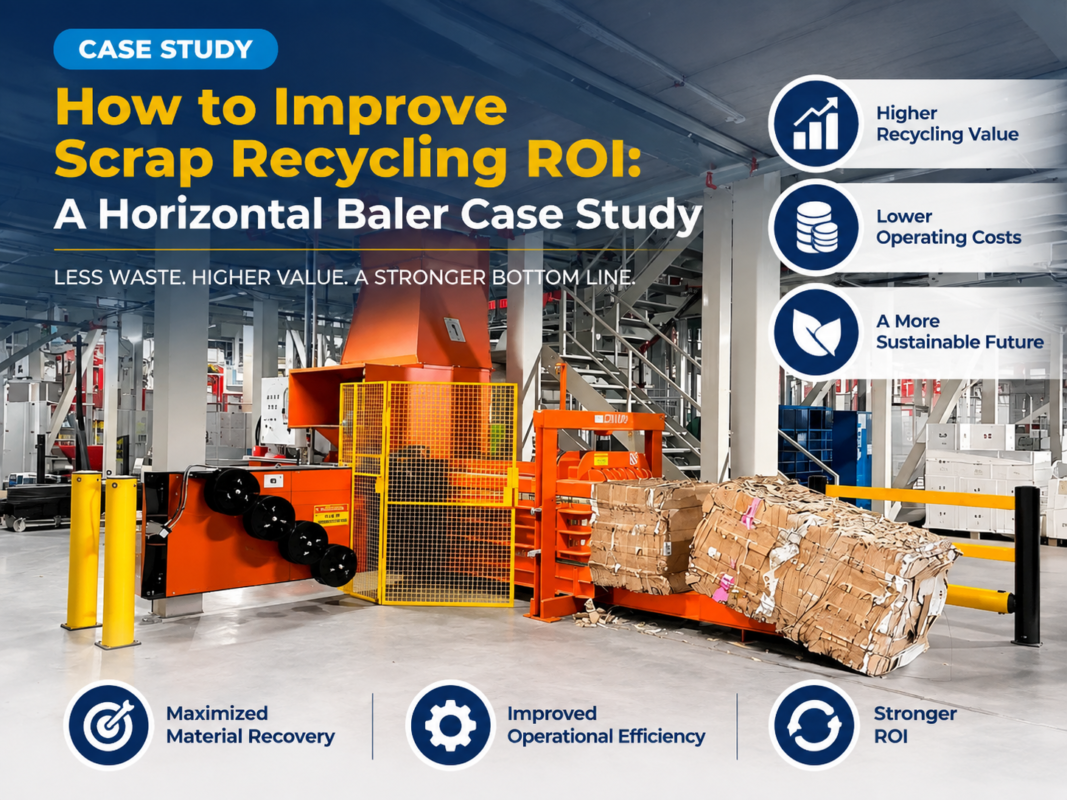
For a distributor, the ability to calculate and present a clear Return on Investment (ROI) is the most powerful sales tool. The ROI of a horizontal baler is primarily driven by Labor Savings and Transportation Efficiency. A horizontal baler with an automatic tie system can replace 2-3 manual laborers required for a vertical baler setup. Over a year, these wage savings can cover a significant portion of the machine’s cost.
Even more impactful is the Bale Density. In the export market, shipping costs are determined by volume. A high-density horizontal baler can fit significantly more weight into a shipping container compared to loose material or low-density bales. For example, if a horizontal baler increases the weight of a 40ft container from 15 tons to 22 tons, the shipping cost per ton drops by over 30%. When combined with the higher market price paid for clean, dense bales by paper mills and plastic recyclers, the machine often pays for itself within 12 to 24 months.
Buying Advice: Standards and Quality Assurance
When sourcing horizontal balers for international distribution, adherence to International Standards is non-negotiable. For the European market, CE certification is mandatory, covering both mechanical safety and electromagnetic compatibility. For North America, UL-listed electrical components and ANSI/PMMI safety standards are the benchmarks. As a distributor, you must verify that the manufacturer’s certifications are authentic and up-to-date.
We recommend a Factory Audit or a third-party inspection before the machine leaves the plant. Key areas to inspect include the quality of the welds (ultrasonic testing if possible), the alignment of the ram, and the functionality of the safety interlocks. For exporters, it is also wise to request a “Spare Parts Kit” that includes common wear items like oil filters, proximity switches, and tying needles. Having these on hand in the destination country reduces downtime and enhances your reputation as a reliable distributor.
Installation Tips for Long-Term Performance
Successful installation begins long before the machine arrives. The Site Preparation must include a level, reinforced concrete pad. Any slope in the floor can cause the frame to twist under pressure, leading to premature wear of the ram guides. Electrical stability is equally important; ensure the voltage fluctuation is within ±5%. Using a voltage stabilizer is highly recommended in regions with unstable power grids.
During the Initial Start-up, it is critical to purge air from the hydraulic system. Air trapped in the cylinders can cause “spongy” operation and cavitation in the pumps, which leads to rapid failure. Distributors should also provide comprehensive Operator Training. Most mechanical failures in horizontal balers are caused by improper feeding (e.g., putting non-compressible items like large metal shafts into a paper baler) or neglecting the daily lubrication of the tying mechanism. A well-trained operator is the best insurance policy for the machine’s longevity.
Frequently Asked Questions (FAQ)
1. What is the difference between a closed-end and an open-end horizontal baler?
Closed-end balers have a door that stays shut during the compression cycle, allowing for higher pressure and density, making them ideal for plastics. Open-end balers use a long extrusion channel to create a continuous bale, which is better for high-volume paper and cardboard processing where speed is the priority.
2. How often should the hydraulic oil be changed?
For most industrial horizontal balers, the hydraulic oil should be sampled every 2,000 hours and replaced every 4,000 to 6,000 hours, depending on the operating environment and the quality of the filtration system. Always replace the filters whenever the oil is changed.
3. Can one horizontal baler handle both plastic and cardboard?
Yes, most modern horizontal balers can handle multiple materials. However, the PLC settings (like pressure and dwell time) must be adjusted for each material. For facilities that frequently switch between very different materials, a two-ram baler is often the most efficient choice as it clears the chamber completely between bales.
4. What are the power requirements for a standard 60-ton horizontal baler?
Typically, a 60-ton baler requires a 30kW to 45kW main motor. You will need a 3-phase power supply (380V-480V depending on the country) with a dedicated circuit breaker capable of handling the high starting current of the hydraulic pumps.
5. How do I ensure the bales meet export standards?
Export standards usually require a specific bale size (to fit 2-wide and 2-high in a container) and a minimum density. Ensure your baler is configured to produce bales that are approximately 1100mm wide and 750-800mm high. This maximizes the volume utilization of standard shipping containers.
6. What maintenance is required for the automatic tying system?
The tying system is the most complex part of the machine. It requires daily cleaning to remove dust and debris, weekly lubrication of moving parts, and monthly inspection of the cutters and twisters. Using the correct grade of baling wire is also essential to prevent jams.