Why Your Horizontal Baler Is Heating the Hydraulic Oil Too Much: A Comprehensive Troubleshooting Guide

Introduction
In the high-pressure world of metal fabrication and waste management, the horizontal baler serves as the backbone of operational efficiency. However, operators often encounter a frustrating and potentially damaging issue: the hydraulic system runs excessively hot. When your horizontal baler is heating the hydraulic oil too much, it is not just a minor inconvenience; it is a warning sign that your system is losing efficiency, consuming excess energy, and accelerating the degradation of critical components.
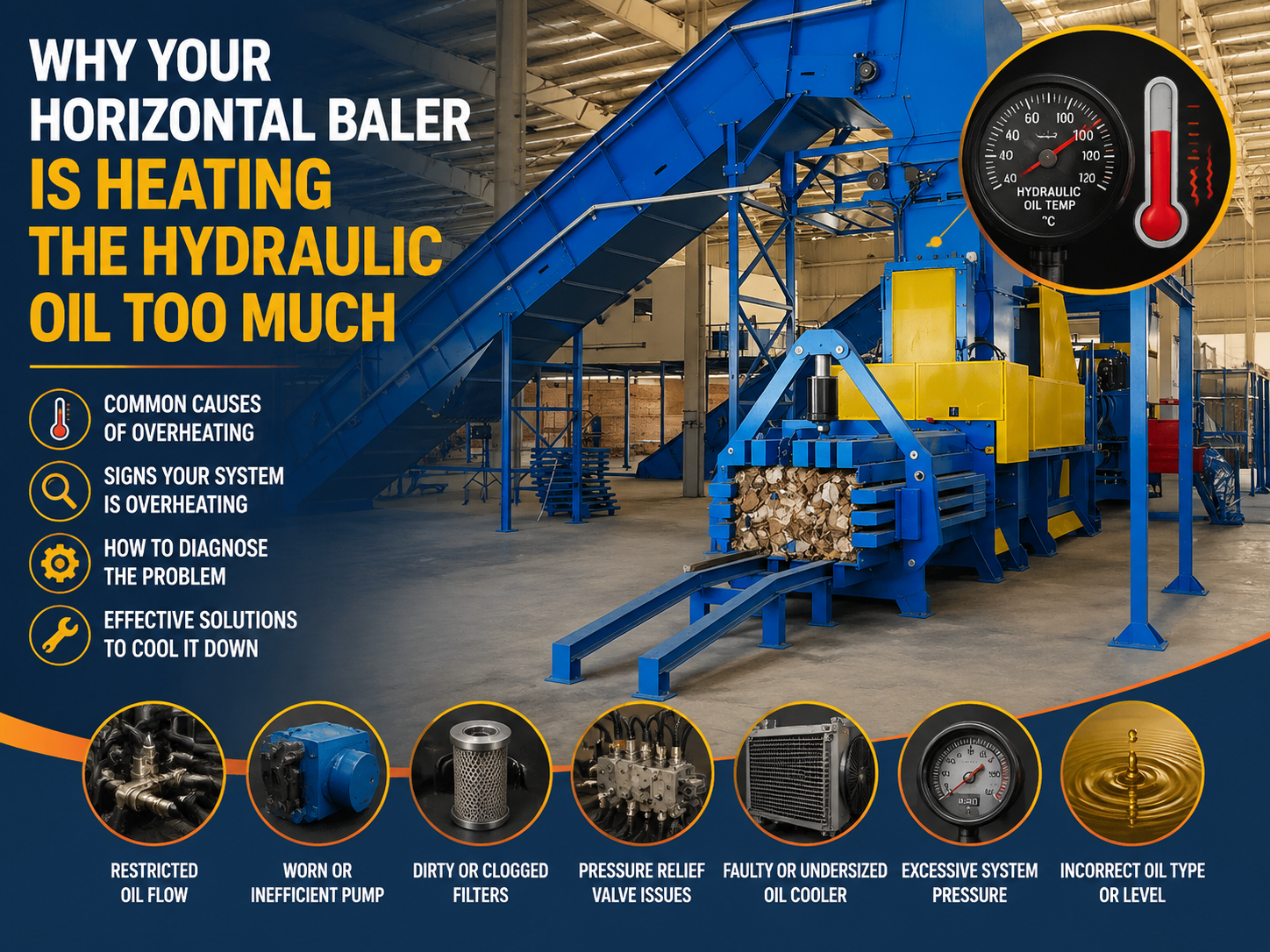
Hydraulic oil serves as both the power transmission medium and the coolant for your baler. When temperatures exceed the recommended operating range—typically between 45°C and 60°C—the oil begins to lose its viscosity, leading to internal leakage, pump wear, and seal failure. Understanding why your horizontal baler is heating the hydraulic oil too much requires a deep dive into the mechanical, environmental, and operational factors that govern hydraulic performance.
At HARSLE, we prioritize the longevity of your equipment. This guide explores the technical intricacies of hydraulic heat generation, providing you with actionable insights to diagnose, resolve, and prevent overheating in your industrial baler systems. By maintaining optimal thermal conditions, you ensure that your machinery remains productive, safe, and cost-effective for years to come.
Key Considerations: The Physics of Hydraulic Heat
The primary reason a hydraulic system generates heat is the conversion of mechanical energy into thermal energy due to inefficiency. In an ideal system, all power provided by the electric motor would be converted into useful work at the cylinder. In reality, friction, pressure drops, and internal leakage convert a portion of that energy into heat. When your horizontal baler is heating the hydraulic oil too much, it indicates that the system is working harder than it should to achieve the same output.
One of the most common culprits is the relief valve setting. If the relief valve is set too low, or if it is leaking internally, oil is constantly being bypassed back to the reservoir at high pressure. This process, known as ‘throttling,’ generates significant heat without performing any useful work. Operators should regularly check the pressure settings against the manufacturer’s specifications to ensure the system is not dumping energy unnecessarily.
Another critical factor is the condition of the hydraulic oil itself. Over time, oil undergoes oxidation and thermal breakdown, which changes its viscosity and lubricating properties. If the oil is too thin, it leaks past pump seals and cylinder pistons, creating internal ‘slippage’ that generates heat. Conversely, if the oil is too thick, the pump must work harder to move the fluid, increasing the load on the motor and raising the temperature.
Environmental factors also play a significant role. If the baler is located in a poorly ventilated area or exposed to direct sunlight, the ambient temperature can overwhelm the cooling system. Industrial environments are often dusty, and if the oil cooler fins are clogged with debris, the heat exchange process is severely compromised. Keeping the cooling system clean is a fundamental step in managing hydraulic temperature.
Technical Details: Diagnosing the Root Cause
When investigating why your horizontal baler is heating the hydraulic oil too much, you must look at the system as a series of interconnected loops. The pump, the control valves, the cylinders, and the reservoir all contribute to the thermal balance. A systematic approach to troubleshooting will help you isolate the specific component responsible for the heat spike.
Start by checking the hydraulic pump. A worn pump will exhibit increased internal leakage, which is a major source of heat. You can perform a flow test to compare the actual output against the theoretical output of the pump. If there is a significant discrepancy, the pump is likely bypassing fluid internally and needs to be rebuilt or replaced. This is a common issue in older machines that have seen heavy duty cycles.
Next, examine the directional control valves. These valves are responsible for directing the flow of oil to the cylinders. If a valve is sticking or failing to shift completely, it can create a restriction in the flow path. Any restriction in a hydraulic circuit causes a pressure drop, and according to the laws of thermodynamics, that pressure drop is converted directly into heat. Ensure that all solenoids are functioning correctly and that the valve spools are moving freely.
The hydraulic reservoir itself acts as the primary heat sink for the system. If the reservoir is undersized for the application, or if the oil level is too low, there isn’t enough fluid volume to dissipate the heat generated during the compression cycle. Always maintain the oil level within the sight glass range and ensure that the reservoir is clean and free of sludge, which can act as an insulator and prevent heat transfer to the tank walls.
Selection Advice: Choosing the Right Equipment
Preventing the issue of a horizontal baler heating the hydraulic oil too much starts long before the machine is installed. When selecting a baler for your facility, it is crucial to match the machine’s capacity and cooling capabilities to your specific throughput requirements. A machine that is constantly running at 100% duty cycle will inevitably generate more heat than one that is sized appropriately for the workload.
Consider the cooling system options offered by HARSLE. Depending on your climate and usage intensity, you may need an air-cooled heat exchanger or a water-cooled system. Air-cooled systems are generally easier to maintain but require adequate airflow. Water-cooled systems are highly efficient but require a consistent water supply and may be susceptible to scaling or corrosion if not managed properly.
Look for balers that feature variable displacement pumps. Unlike fixed displacement pumps that move a constant volume of oil regardless of the load, variable displacement pumps adjust their flow based on the system’s demand. This significantly reduces the amount of oil being bypassed through the relief valve, thereby minimizing heat generation during idle or low-load periods.
Finally, prioritize equipment with advanced monitoring systems. Modern HARSLE balers often come equipped with temperature sensors and PLC-based diagnostics that alert the operator when the oil temperature approaches critical levels. Investing in these features allows you to intervene before the heat causes permanent damage to the seals, hoses, and pump components.
FAQ: Frequently Asked Questions
- Q: What is the ideal operating temperature for hydraulic oil in a baler?
A: Most hydraulic systems operate best between 45°C and 60°C. Temperatures exceeding 80°C can cause rapid degradation of the oil and damage to seals. - Q: How often should I change the hydraulic oil?
A: This depends on the usage, but generally, hydraulic oil should be tested annually. If the oil shows signs of oxidation, water contamination, or particulate buildup, it should be changed immediately. - Q: Can a clogged filter cause the oil to heat up?
A: Yes. A clogged filter creates a pressure drop across the filter element. This restriction forces the pump to work harder, which generates heat. Always replace filters according to the maintenance schedule. - Q: Why does my baler heat up only during the compression stroke?
A: This is normal to some extent, but if it is excessive, it may indicate that the relief valve is opening prematurely or that the cylinder seals are leaking internally under high pressure.
Conclusion
Addressing the issue of a horizontal baler heating the hydraulic oil too much is essential for maintaining the productivity and longevity of your metal fabrication equipment. By understanding the relationship between mechanical efficiency, fluid dynamics, and environmental factors, you can take proactive steps to keep your system running cool. Whether it is cleaning the heat exchanger, adjusting relief valves, or upgrading to a more efficient pump system, every maintenance action contributes to a more reliable operation.
At HARSLE, we are committed to providing high-quality industrial machinery and the knowledge to support it. If you find that your equipment is consistently running hot despite your best efforts, it may be time to consult with our technical team for a comprehensive system audit. Remember, a well-maintained hydraulic system is the key to a profitable and efficient baling operation. Stay ahead of the heat, and ensure your horizontal baler continues to perform at its peak.