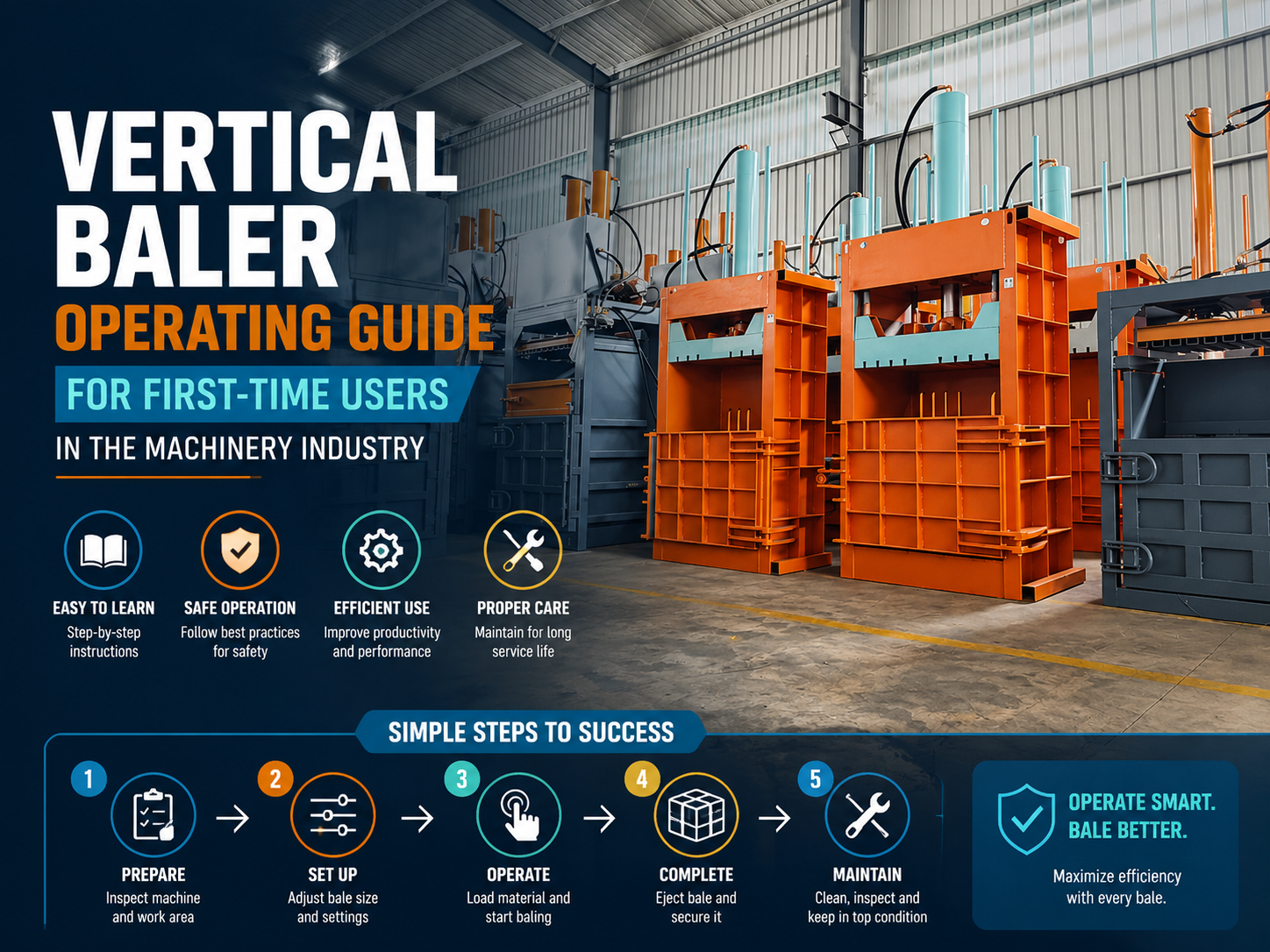
Comprehensive Vertical Baler Operating Guide for First-Time Users in the Machinery Industry

Technical Overview of Vertical Baler Systems
In the modern industrial landscape, waste management is no longer a secondary concern but a core operational pillar. For first-time users in the machinery industry, understanding the Vertical Baler Operating First-Time Users In Machinery Industry is essential for optimizing floor space and improving recycling efficiency. A vertical baler is a powerful hydraulic machine designed to compress recyclable materials—such as cardboard, plastics, textiles, and light metal scraps—into dense, manageable blocks known as bales. Unlike horizontal balers, which require significant floor space, vertical balers operate upward and downward, making them ideal for facilities with limited footprints.
The fundamental principle of a vertical baler lies in its hydraulic system. A high-pressure hydraulic pump forces fluid into a cylinder, which drives a heavy-duty steel platen downward into a compression chamber. This platen exerts several tons of force on the material, crushing it until it reaches a specific density. HARSLE vertical balers are engineered with high-grade structural steel to withstand the immense stresses of repetitive compression cycles. For a first-time operator, the machine might seem intimidating, but its design is centered on safety and simplicity, featuring interlocking doors and emergency stop mechanisms that ensure the machine only operates when the chamber is securely closed.
Beyond the physical structure, the technical sophistication of modern vertical balers includes programmable logic controllers (PLCs) that monitor pressure levels and cycle times. This automation reduces the margin for human error, ensuring that every bale produced meets the weight and density requirements for transport and sale to recycling centers. Understanding the Vertical Baler Operating First-Time Users In Machinery Industry involves recognizing that these machines are not just ‘trash compactors’ but precision-engineered tools that contribute to a facility’s bottom line by turning waste into a revenue stream.
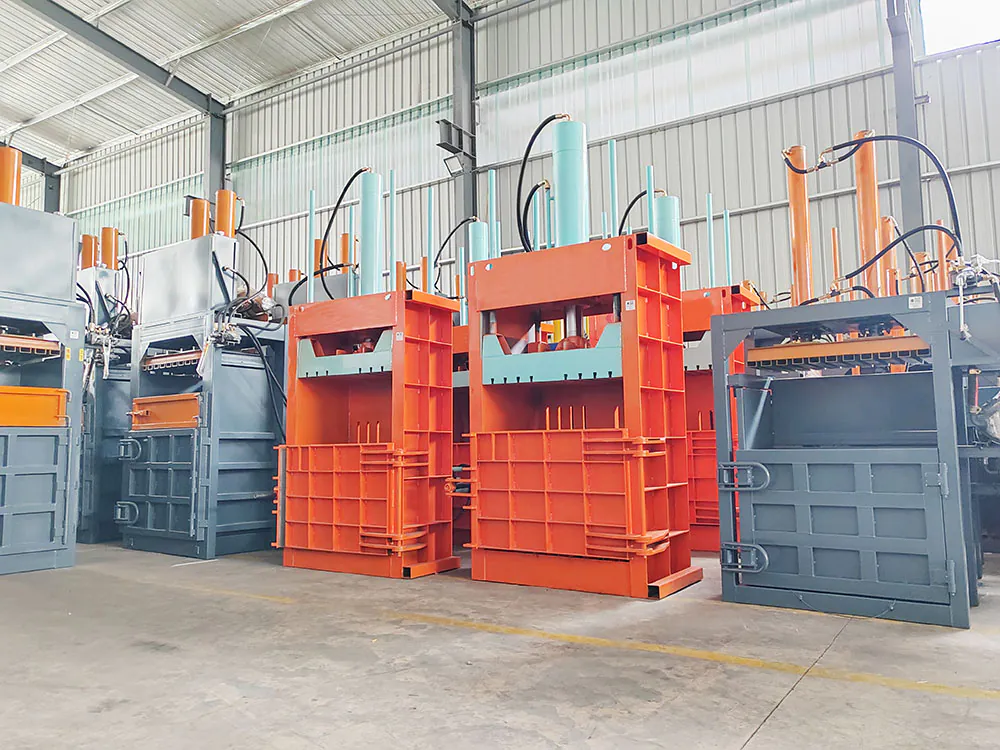
Core Parameters for Vertical Baler Operation
When evaluating a vertical baler, several core parameters define its performance and suitability for specific industrial tasks. For first-time users, these specifications are the roadmap to successful operation. The most critical parameter is the Nominal Pressure, usually measured in tons. This indicates the maximum force the hydraulic ram can exert. For light cardboard, a 10-30 ton press may suffice, whereas heavy-duty industrial plastics or thin metal shavings might require 50 to 100 tons of force.
Another vital parameter is the Cycle Time. This refers to the duration it takes for the platen to travel from its starting position, compress the material, and return to the top. In a high-volume machinery environment, a faster cycle time (e.g., 30-45 seconds) is preferred to prevent bottlenecks in the waste processing line. However, speed must be balanced with the Motor Power (measured in kW or HP). A more powerful motor can drive the hydraulic pump more efficiently, but it also increases energy consumption, which must be factored into the facility’s operational costs.
The Bale Size and Weight are parameters that directly impact logistics. Standard vertical balers produce bales that fit on a standard pallet (e.g., 1100 x 700 x 800 mm). The weight of these bales can range from 200kg to over 500kg depending on the material. For first-time users, it is crucial to ensure that the facility’s forklifts or pallet jacks are rated to handle the weight of the finished bales. Finally, the Chamber Dimensions dictate the maximum size of the waste material that can be loaded without prior shredding, which is a significant factor in labor efficiency.
Calculation Method for Baler Efficiency and ROI
To truly master the Vertical Baler Operating First-Time Users In Machinery Industry, one must be able to calculate the machine’s efficiency and the return on investment (ROI). The first calculation is Bale Density. Density is calculated as the mass of the bale divided by its volume (ρ = m/V). High-density bales are more valuable to recyclers because they maximize the weight capacity of transport trucks, reducing shipping costs per ton. If your bales are consistently low-density, you may need to adjust the pressure settings or increase the dwell time (the time the platen stays at the bottom of the stroke).
The second calculation involves Throughput Capacity. To estimate how much material your baler can handle in an 8-hour shift, use the formula: (60 minutes / Cycle Time in minutes) x Bale Weight x Efficiency Factor. The efficiency factor accounts for the time spent loading the machine and tying off the bales (usually around 0.6 to 0.7 for manual loading). For example, if a baler has a 1-minute cycle time and produces 300kg bales, the theoretical capacity is 18,000kg per hour, but with an efficiency factor of 0.6, the realistic output is closer to 10,800kg per hour.
Finally, the ROI Calculation is essential for management. Compare the monthly cost of waste removal (dumpster rentals and hauling fees) against the revenue generated from selling baled recyclables plus the savings from reduced hauling frequency. Most industrial facilities find that a HARSLE vertical baler pays for itself within 12 to 24 months, depending on the volume of material processed. This financial clarity is vital for first-time users justifying the equipment purchase to stakeholders.
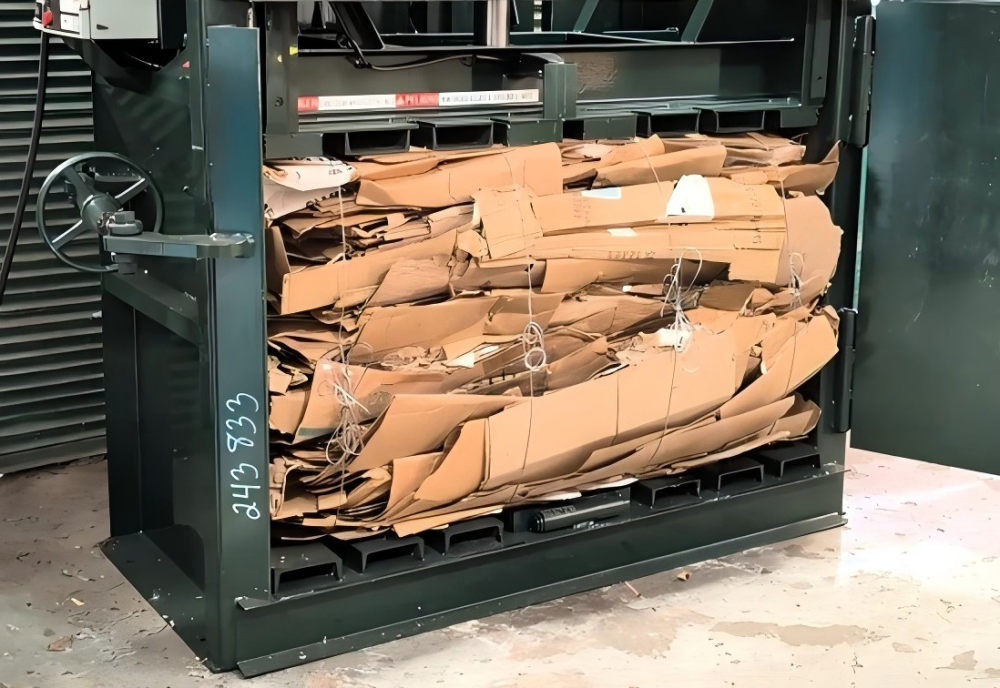
Vertical Baler Technical Parameter Table
The following table provides a comparison of typical specifications for vertical balers used in the machinery industry. These values are representative of HARSLE’s industrial-grade equipment.
| Model Series | Nominal Pressure (Tons) | Bale Size (L*W*H mm) | Motor Power (kW) | Cycle Time (Sec) | Bale Weight (kg) |
|---|---|---|---|---|---|
| HVB-30 | 30 | 800 x 600 x 600 | 5.5 | 35 | 150 – 250 |
| HVB-50 | 50 | 1100 x 700 x 800 | 7.5 | 45 | 250 – 400 |
| HVB-80 | 80 | 1100 x 800 x 900 | 11.0 | 50 | 400 – 600 |
| HVB-100 | 100 | 1200 x 1000 x 1000 | 15.0 | 60 | 600 – 800 |
| HVB-120 | 120 | 1500 x 1000 x 1100 | 18.5 | 70 | 800 – 1000 |
Common Engineering Mistakes for First-Time Users
Operating a vertical baler seems straightforward, but several common engineering and operational mistakes can lead to equipment failure or safety hazards. One of the most frequent errors is Uneven Loading. When material is piled on one side of the chamber, the platen descends at an angle, putting immense lateral stress on the hydraulic cylinder and the guide rails. Over time, this causes seal leaks and structural warping. First-time users must be trained to distribute material evenly across the chamber floor.
Another mistake is Neglecting Hydraulic Maintenance. The hydraulic oil is the lifeblood of the baler. Operating with contaminated oil or failing to check oil levels leads to pump cavitation and overheating. In a machinery industry setting, airborne dust and metal particles can easily contaminate the system if the reservoir is not properly sealed. Regular oil filtration and cooling system checks are mandatory to prevent expensive downtime. Furthermore, many users ignore the Bypass of Safety Interlocks. In an attempt to speed up production, operators might try to disable door sensors. This is a critical safety violation that can lead to catastrophic injury and voids all manufacturer warranties.
Finally, Incorrect Material Sorting can damage the machine. While vertical balers are robust, attempting to compress solid steel blocks or heavy engine parts in a machine designed for cardboard or light scrap will cause the relief valves to trigger constantly or, worse, cause the frame to crack. Always verify that the material hardness and density are within the machine’s rated specifications. For first-time users, keeping a ‘permitted materials’ list posted near the machine is a best practice that prevents these engineering blunders.
Selection Checklist for Vertical Balers
Choosing the right machine is as important as operating it correctly. Use this checklist to ensure you select the best vertical baler for your machinery industry application:
- Material Type: Identify the primary material (Cardboard, Plastic, Metal, or Textile). Different materials require different platen designs (e.g., spiked platens for plastic).
- Volume Requirements: Calculate your daily waste volume. If you produce more than 10 tons of waste per day, you might need a heavy-duty model or multiple units.
- Space Constraints: Measure the ceiling height. Vertical balers require significant overhead clearance for the hydraulic cylinder when the platen is in the up position.
- Power Supply: Ensure your facility has the correct electrical phase (usually 3-phase 380V/415V) to support the baler’s motor.
- Bale Handling: Do you have a forklift or a specialized bale trolley to move the finished product?
- Safety Certifications: Ensure the machine complies with CE, ISO, or local safety standards like ANSI or OSHA.
- Ejection System: Look for automatic bale ejection systems to reduce manual labor and improve safety during the unloading process.
Frequently Asked Questions (FAQ)
1. How often should I change the hydraulic oil in my vertical baler?
For most industrial applications, hydraulic oil should be changed every 2,000 operating hours or once a year, whichever comes first. However, you should check the oil level and clarity monthly. If the oil appears milky or dark, it may be contaminated with water or particulates and should be replaced immediately.
2. Can a vertical baler handle metal scraps?
Yes, but only light-gauge metals such as aluminum cans, thin copper wiring, or light steel shavings. For heavy metal plates or structural steel, a specialized metal scrap baler or a heavy-duty hydraulic press is required. Always check the tonnage rating before attempting to bale metal.
3. What is the ‘dwell time’ and why is it important?
Dwell time is the duration the platen stays at the maximum compression point before retracting. Increasing the dwell time allows the material to ‘set’ and lose its elasticity, resulting in a tighter, denser bale that is less likely to expand or break the ties after ejection.
4. Why are my bale ties snapping?
Bale ties usually snap due to over-filling the chamber or using the wrong gauge of wire. Ensure you are using the recommended wire diameter for your bale weight. Also, avoid ‘over-baling’—trying to force too much material into a single bale beyond the machine’s height limit.
5. Is it necessary to bolt the baler to the floor?
While some smaller models are stable enough to stand freely, it is highly recommended to bolt industrial vertical balers to a level concrete floor. This prevents the machine from shifting during high-pressure cycles and ensures the structural integrity of the frame over years of use.
6. How do I know when the bale is finished?
Most modern HARSLE balers are equipped with a ‘Bale Full’ indicator light. This sensor triggers when the platen reaches a specific height at a specific pressure, signaling to the operator that it is time to tie off the bale and eject it.
7. Can one person operate a vertical baler?
Yes, vertical balers are designed for single-person operation. However, safety protocols should always be followed, and the operator should be fully trained on the emergency stop procedures and the correct way to tie and eject bales.
8. What should I do if the platen gets stuck?
If the platen becomes stuck, immediately press the emergency stop. Check for material jams or obstructions in the guide rails. Never reach into the chamber while the power is on. If the jam is hydraulic, consult a qualified technician to check the valve solenoids and pump pressure.