What to Check Before Installing a Vertical Baler in Your Factory: A Comprehensive Technical Guide

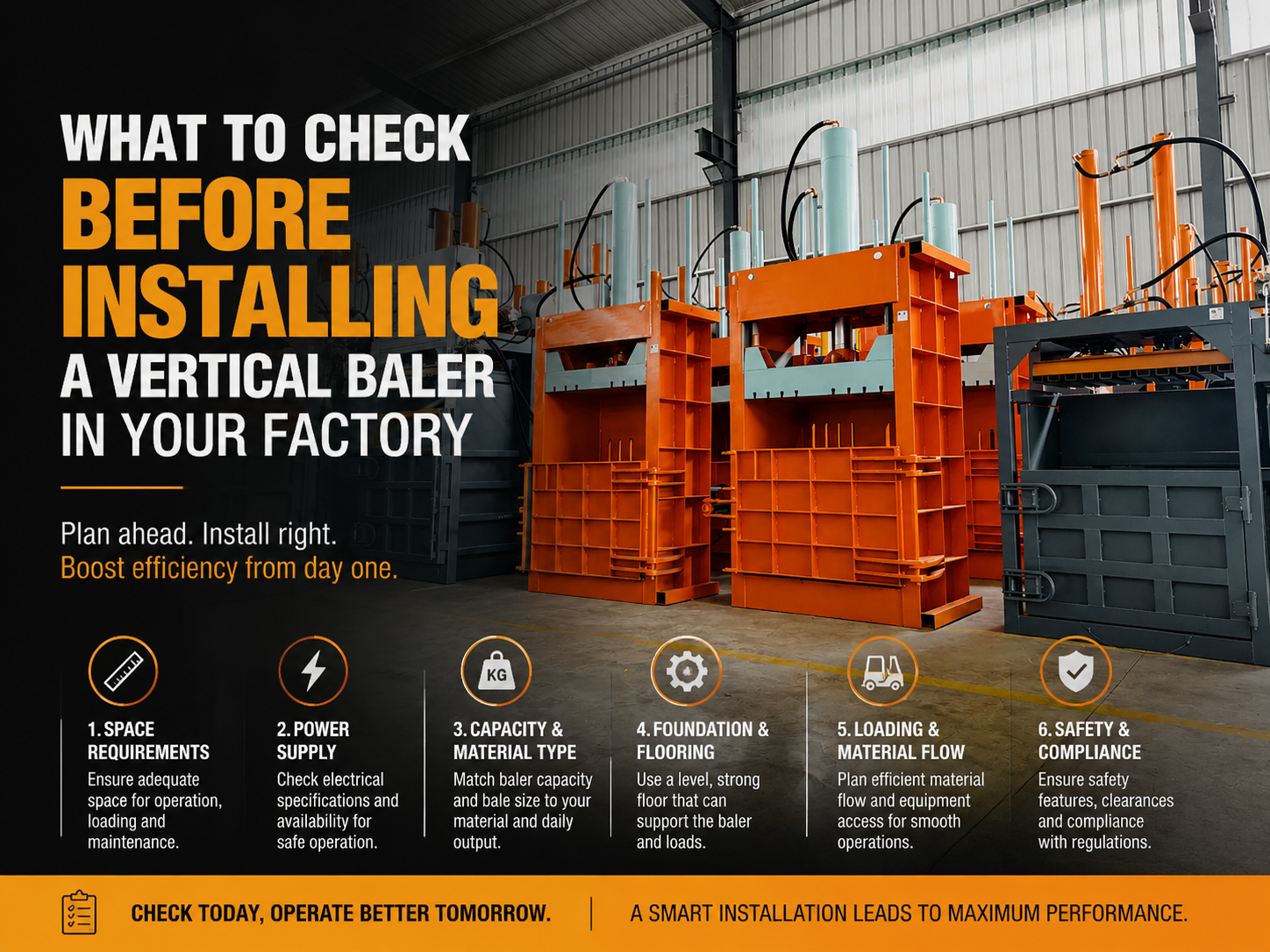
Technical Overview of Vertical Baler Systems
A vertical baler is a cornerstone of modern industrial waste management, designed to compress recyclable materials—such as cardboard, plastics, textiles, and light metals—into dense, manageable blocks known as bales. Unlike horizontal balers, which occupy a significant footprint, vertical balers operate on a top-down compression principle, making them ideal for factories where floor space is at a premium. Understanding the mechanics of these machines is the first step to a successful installation. At its core, a vertical baler consists of a heavy-duty steel frame, a hydraulic power unit, a pressing ram, and a bale chamber.
The hydraulic system is the heart of the machine. It involves a motor-driven pump that forces hydraulic oil into a cylinder, extending the ram to apply thousands of pounds of pressure onto the waste material. The structural integrity of the frame is paramount; it must withstand the outward force exerted by the compressed material without deforming. HARSLE vertical balers are engineered with reinforced steel plates and precision-welded joints to ensure long-term durability under high-stress cycles. Before you even consider the logistics of delivery, you must understand that these machines are not just ‘plug-and-play’ appliances; they are heavy industrial tools that require specific environmental and operational conditions.
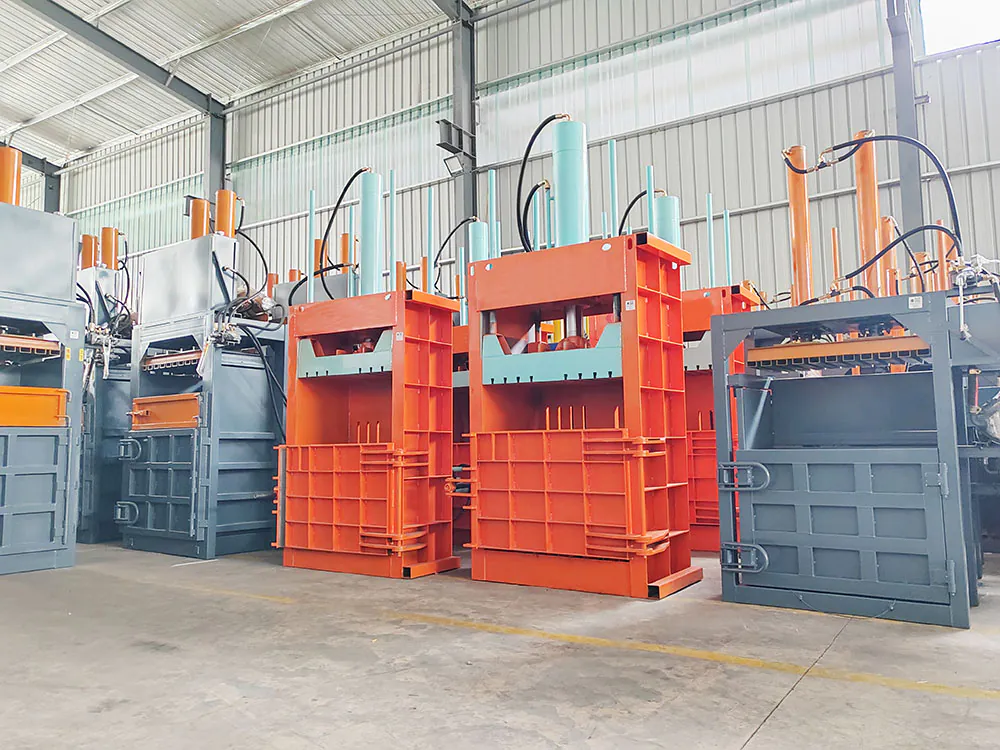
Furthermore, the control system—often a PLC (Programmable Logic Controller)—manages the safety interlocks and cycle times. Modern vertical balers include sensors that prevent operation if the loading door is open or if the bale chamber is not properly secured. This technical sophistication means that the installation process must account for electrical stability and sensor calibration. A failure to check these technical prerequisites before installation can lead to premature component wear, safety hazards, or operational downtime that negates the efficiency gains the baler was intended to provide.
Core Parameters to Evaluate
When you check before installing a vertical baler in your factory, you must analyze several core parameters that dictate the machine’s performance and suitability for your specific waste stream. The first and most critical parameter is the Nominal Pressure, usually measured in tons. For instance, a 30-ton baler is suitable for cardboard and plastic film, whereas a 60-ton or 100-ton model might be required for denser materials like aluminum cans or heavy textiles. The pressure determines the density of the final bale, which directly impacts your shipping costs and the price you receive from recyclers.
The Cycle Time is another vital metric. This refers to the time it takes for the ram to complete one full downward and upward stroke. In a high-volume factory, a slow cycle time can create a bottleneck in the production line. Typically, industrial vertical balers have cycle times ranging from 35 to 60 seconds. You must balance the need for speed with the power consumption of the motor. A faster cycle often requires a larger motor and more robust hydraulic cooling systems, which in turn affects your factory’s electrical load requirements.
Bale Dimensions and Weight are parameters that affect your downstream logistics. You must ensure that the bale size produced by the machine (e.g., 1100 x 700 x 800 mm) is compatible with your transport vehicles and the requirements of your recycling partner. If the bales are too heavy for your existing forklifts to move, or too large to fit through your warehouse doors, the installation will be a failure regardless of how well the machine operates. Additionally, the Feed Opening Size must be large enough to accommodate your largest pieces of waste without requiring excessive manual pre-cutting, which increases labor costs.
Calculation Method for Throughput and Tonnage
To ensure you select the right machine, you need to perform a throughput calculation. The goal is to match the machine’s capacity with your factory’s waste generation rate. The basic formula for hourly throughput is: (Bale Weight × 3600) / (Cycle Time + Loading Time). For example, if a machine produces a 300kg bale and has a cycle time of 45 seconds, and it takes your operator 2 minutes to load the chamber, the total cycle is 165 seconds. This results in approximately 6.5 bales per hour, or 1,950kg of material processed per hour.
Another critical calculation involves the Compaction Ratio. This is the ratio of the volume of loose material to the volume of the compressed bale. Cardboard typically has a compaction ratio of about 10:1. If your factory generates 100 cubic meters of loose cardboard daily, a 10:1 ratio means you will produce 10 cubic meters of baled material. Knowing this allows you to calculate the storage space required for finished bales before they are collected. If your storage area is too small, your production floor will quickly become cluttered, creating a fire hazard and violating safety regulations.
Finally, consider the Floor Loading Pressure. A vertical baler concentrates a massive amount of weight on a small footprint. You must calculate the pressure exerted on the concrete floor: Total Machine Weight / Footprint Area. If the machine weighs 4,000kg and has a footprint of 2 square meters, it exerts 2,000kg per square meter. You must verify with a structural engineer that your factory floor can support this static load, plus the dynamic load generated during the compression stroke, to prevent floor cracking or structural failure.
Vertical Baler Parameter Table
| Model Series (HARSLE Y82) | Nominal Force (kN) | Bale Size (L*W*H) (mm) | Motor Power (kW) | Cycle Time (s) | Machine Weight (kg) |
|---|---|---|---|---|---|
| Y82-30 | 300 | 800 x 600 x 600 | 7.5 | 40 | 1,800 |
| Y82-60 | 600 | 1000 x 800 x 900 | 11 | 45 | 3,200 |
| Y82-100 | 1000 | 1100 x 900 x 1000 | 15 | 55 | 5,500 |
| Y82-150 | 1500 | 1200 x 1000 x 1100 | 22 | 60 | 8,500 |
Common Engineering Mistakes During Installation
One of the most frequent mistakes when factories check before installing a vertical baler is neglecting Vertical Clearance. While the footprint of the machine might fit in a corner, the hydraulic cylinder often extends upward during the stroke or is shipped in a vertical position. If your ceiling height or overhead piping/lighting is lower than the maximum height of the extended ram, you will face significant installation hurdles. Always measure the ‘operating height’ rather than just the ‘static height’ of the machine.
Another common oversight is Electrical Phase and Voltage Mismatch. Industrial balers typically run on three-phase power (e.g., 380V or 480V). Many facilities assume their existing outlets are sufficient, only to find that the motor requires a dedicated circuit with a specific breaker rating to handle the start-up current (inrush current). Running a baler on an undersized electrical supply can lead to motor burnout or frequent tripping of the circuit breakers, which disrupts the entire factory’s power grid.
Inadequate Operator Space is a third major mistake. A vertical baler requires space not just for the machine itself, but for the operator to load material, tie off the bales, and remove the finished bale with a pallet jack or forklift. If the machine is tucked too tightly into a corner, the operator will struggle to perform these tasks safely, leading to increased labor time and potential injury. There should be at least 1.5 to 2 meters of clear space in front of the loading door and the bale discharge area.
Lastly, many ignore the Environmental Conditions. Hydraulic systems are sensitive to temperature. If the baler is installed in an unheated warehouse in a cold climate, the hydraulic oil may become too viscous, leading to pump cavitation. Conversely, in extremely hot environments without proper ventilation, the oil can overheat, causing seal failure. Proper site selection must include a check for ambient temperature stability and adequate airflow to dissipate heat from the hydraulic power unit.
Selection Checklist for Factory Managers
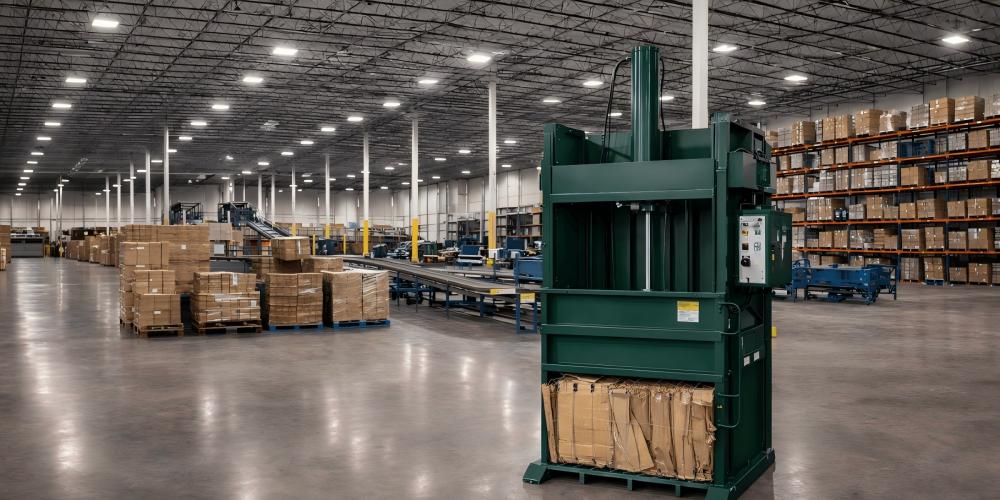
To ensure a smooth procurement and installation process, follow this comprehensive checklist. First, identify your primary waste material. Different materials require different ram faces and retention teeth. For example, plastic film is ‘springy’ and requires a baler with long retention teeth to prevent the material from expanding back up after the ram retracts. Second, determine your volume. If you produce more than 10 tons of waste per week, you might need a heavy-duty model or even a horizontal baler.
- Site Survey: Measure ceiling height, door widths, and floor load capacity.
- Power Supply: Confirm 3-phase power availability and install a dedicated disconnect switch.
- Logistics: Ensure a forklift or crane with sufficient lifting capacity is available for offloading the machine.
- Material Compatibility: Verify the baler is rated for the specific density of your waste (e.g., OCC, HDPE, PET).
- Safety Compliance: Ensure the machine meets local safety standards (CE, ANSI, OSHA) and has emergency stop buttons accessible.
- Consumables: Stock up on baling wire or strapping tape before the machine arrives.
- Training: Schedule a session for operators to learn safe loading, tying, and ejection procedures.
Beyond the physical installation, consider the Maintenance Access. The hydraulic pump, filters, and oil reservoir need regular servicing. If the machine is installed against a wall in a way that blocks access to the service panels, maintenance will be neglected, leading to a shorter machine lifespan. A good rule of thumb is to leave at least 60cm of space around the sides and rear of the unit for technician access.
Frequently Asked Questions (FAQ)
1. How often does the hydraulic oil need to be changed?
For most HARSLE vertical balers, we recommend a complete hydraulic oil change every 2,000 operating hours or once a year, whichever comes first. However, you should check the oil level and clarity monthly. If the oil appears cloudy or dark, it may be contaminated with water or particulates and should be replaced immediately to protect the pump and valves.
2. Can I use one baler for both cardboard and plastic?
Yes, most vertical balers are versatile enough to handle both. However, you should not mix the materials in a single bale, as this will significantly reduce the resale value of the recyclables. It is best practice to run ‘batches’—for example, baling all cardboard in the morning and all plastic in the afternoon. Ensure the chamber is completely cleared between material types.
3. What safety features should I check before installing a vertical baler in my factory?
Key safety features include dual-hand controls (to keep hands away from the ram), safety interlock switches on all doors (the machine should not run if a door is open), and an emergency stop button. Additionally, check for a ‘bale full’ indicator light, which prevents over-packing the chamber and straining the hydraulic system.
4. Do I need a special foundation for the baler?
Generally, a standard reinforced industrial concrete floor (at least 150mm thick) is sufficient for vertical balers up to 60 tons. For larger 100-ton or 150-ton models, you should consult a structural engineer to determine if a thickened pad or steel plate reinforcement is necessary to distribute the load and prevent the floor from sinking or cracking over time.
5. How do I choose between wire and plastic strapping?
This depends on the material and your recycler’s preference. Wire is stronger and better for heavy, dense bales like cardboard or metal. Plastic strapping is often cheaper and easier to handle but can snap under the high expansion pressure of materials like plastic film or foam. Always check with your waste collector to see which they prefer, as some recycling facilities have automated wire-cutting machines.