A Technical Guide to Briquette Density, Shape, and Size Optimization

Technical Overview
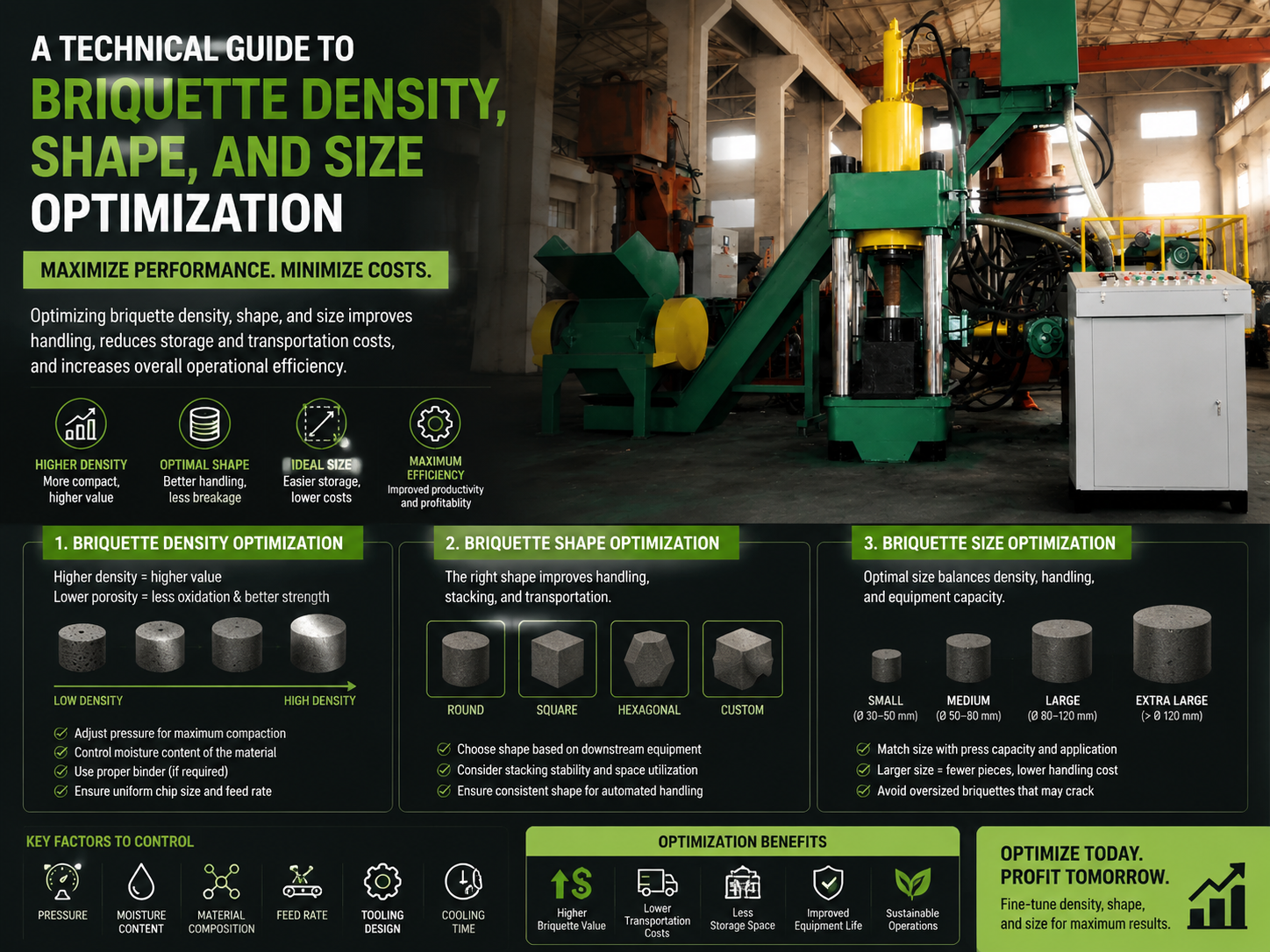
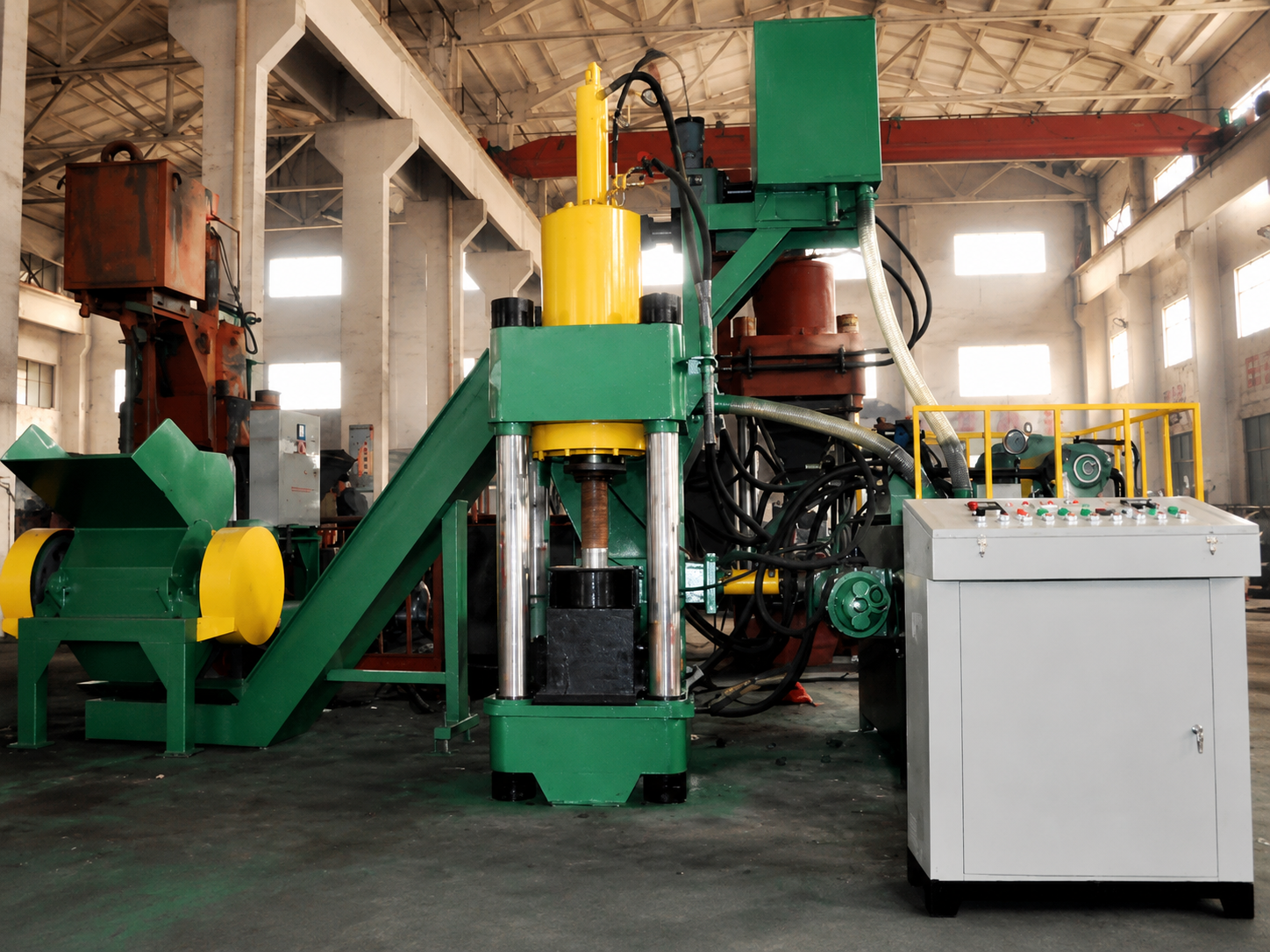
In the modern metal fabrication landscape, the efficient management of metal swarf and chips is not merely a matter of waste disposal; it is a critical component of operational profitability and environmental compliance. HARSLE briquetting machines transform loose, voluminous metal waste into high-density, manageable briquettes. Understanding the physics behind this transformation is essential for manufacturers looking to maximize the value of their scrap metal.
A Technical Briquette Density, Shape, Size Optimization process involves balancing hydraulic pressure, material feed rates, and die geometry. When metal chips are compressed, the goal is to eliminate interstitial air and create a solid mass that retains its structural integrity during transport and melting. Achieving this requires a deep understanding of the material’s yield strength and the machine’s compression capabilities.
The optimization of these parameters directly impacts the recovery rate during the smelting process. High-density briquettes minimize oxidation losses, as the reduced surface area prevents the metal from burning off prematurely in the furnace. Furthermore, optimized briquettes are easier to handle, store, and transport, significantly reducing logistics costs for fabrication facilities.
HARSLE engineering teams emphasize that there is no ‘one-size-fits-all’ approach to briquetting. Different metals—ranging from aluminum and copper to cast iron and steel—exhibit unique deformation characteristics. By tailoring the compression cycle, manufacturers can ensure that every briquette meets the specific requirements of their downstream metallurgical processes.
Core Parameters
The primary parameter in any briquetting operation is density. Density is defined as the mass per unit volume of the finished briquette. Achieving a high density is crucial for reducing the porosity of the material, which in turn prevents contaminants from being trapped within the briquette. A well-compressed briquette should ideally reach 70% to 90% of the theoretical density of the parent metal.
Shape optimization is the second pillar of efficient briquetting. While cylindrical briquettes are the industry standard due to their uniform stress distribution, specialized shapes may be required for specific furnace charging systems. The geometry of the die must be engineered to allow for easy ejection while maintaining the structural integrity of the briquette under high-pressure conditions.
Size optimization refers to the physical dimensions of the briquette, which must be compatible with the melting equipment. If a briquette is too large, it may not melt uniformly; if it is too small, it may be prone to crumbling. HARSLE machines allow for adjustable stroke lengths and pressure settings, enabling operators to fine-tune the size to match the specific requirements of their induction or arc furnaces.
Material moisture and oil content also play a significant role in these core parameters. Residual cutting fluids can act as a lubricant during the compression phase, which may be beneficial for die longevity but can negatively impact the final density if not managed correctly. Pre-processing steps, such as centrifuging or shredding, are often required to ensure the raw material is in an optimal state for the briquetting press.
Calculation Method
Calculating the required pressure for a specific briquette density involves the use of the compaction ratio formula. The compaction ratio is the relationship between the volume of loose chips and the volume of the finished briquette. To calculate this, engineers must first determine the bulk density of the loose material, which varies significantly depending on the chip morphology and the type of metal.
The formula for required force is generally expressed as: F = P × A, where F is the total force applied by the hydraulic cylinder, P is the specific pressure required for the material, and A is the cross-sectional area of the die. For most aluminum alloys, a specific pressure of 150-200 MPa is sufficient, whereas harder materials like steel or stainless steel may require pressures exceeding 300 MPa.
To optimize the process, operators should conduct a series of test runs, measuring the weight and volume of the resulting briquettes. By plotting the density against the applied pressure, a ‘compaction curve’ can be generated. This curve identifies the point of diminishing returns, where additional pressure no longer yields a significant increase in density, thereby saving energy and reducing wear on the machine components.
Furthermore, the dwell time—the duration for which the maximum pressure is held—is a critical variable in the calculation. A longer dwell time allows for the elastic recovery of the metal to stabilize, resulting in a more stable briquette. HARSLE control systems allow for precise timing of this dwell phase, ensuring that the internal stresses of the briquette are neutralized before ejection.
Parameter Table
| Material Type | Recommended Density (g/cm³) | Specific Pressure (MPa) | Dwell Time (s) |
|---|---|---|---|
| Aluminum | 2.1 – 2.4 | 150 – 200 | 2 – 4 |
| Copper | 7.5 – 8.2 | 250 – 300 | 4 – 6 |
| Cast Iron | 5.5 – 6.5 | 200 – 250 | 3 – 5 |
| Steel | 6.0 – 7.0 | 300 – 400 | 5 – 8 |
| Brass | 7.0 – 7.8 | 220 – 280 | 3 – 6 |
Common Engineering Mistakes
One of the most frequent mistakes in briquetting is the failure to properly prepare the raw material. Feeding long, stringy chips directly into the press without shredding them leads to inconsistent density and potential mechanical jams. Shredding ensures a uniform particle size, which is essential for achieving a homogeneous briquette structure.
Another common error is ignoring the temperature of the material. While metal chips are typically processed at ambient temperatures, excessive heat from the machining process can alter the material’s ductility. If the chips are too hot, they may fuse to the die walls, causing damage to the machine and resulting in poor surface finish on the briquettes.
Over-pressurization is also a significant concern. Many operators believe that higher pressure always equates to better quality. However, excessive pressure can lead to ‘spring-back’—a phenomenon where the briquette expands upon ejection due to internal residual stresses. This not only weakens the briquette but also places unnecessary strain on the hydraulic seals and the die assembly.
Finally, neglecting regular maintenance of the die and punch assembly is a recipe for failure. As these components wear, the clearance between them increases, leading to ‘flashing’—where material is forced into the gap between the punch and die. This flashing can cause the machine to seize and significantly reduces the quality of the briquettes produced. Operators should implement a strict preventative maintenance schedule, including daily checks of hydraulic fluid levels and weekly inspections of the die liner for signs of scoring or fatigue.
Selection Checklist
- Material Compatibility: Ensure the press is rated for the specific hardness and abrasiveness of your metal scrap.
- Throughput Requirements: Calculate your daily volume of swarf to select a machine with the appropriate cycle time and hopper capacity.
- Automation Level: Consider whether you need a fully automated system with conveyors and auto-feeders or a manual-load unit.
- Maintenance Accessibility: Choose a design that allows for easy inspection and replacement of wear parts like the die liner and punch.
- Energy Efficiency: Look for variable frequency drives (VFDs) and energy-saving hydraulic circuits to reduce long-term operating costs.
- After-Sales Support: Verify that the manufacturer provides comprehensive technical support and readily available spare parts.
- Environmental Integration: Assess if the machine includes integrated oil filtration and recovery systems to reclaim expensive cutting fluids.
Advanced Optimization Strategies
To achieve true A Technical Briquette Density, Shape, Size Optimization, facilities must look beyond the machine itself. Integrating the briquetting process into the production line via automated swarf handling systems reduces manual labor and contamination risks. By utilizing a closed-loop system, the cutting fluid recovered from the briquettes can be filtered and returned to the CNC machines, creating a circular economy within the factory floor. Furthermore, implementing IoT-enabled sensors on the briquetting press allows for real-time monitoring of pressure and cycle times, enabling predictive maintenance that prevents downtime before it occurs.
FAQ
Q: Why is my briquette crumbling after ejection?
A: This is likely due to insufficient dwell time or inadequate pressure. Ensure the material is properly shredded and that the hydraulic system is reaching the target pressure setpoint. Also, check for excessive moisture content which can prevent proper bonding.
Q: How often should I replace the die?
A: Die life depends on the abrasiveness of the material. For cast iron, expect more frequent wear than for aluminum. Regular inspection of the internal diameter is recommended. A general rule of thumb is to inspect every 50,000 cycles.
Q: Can I mix different types of metal in the briquetting machine?
A: It is highly recommended to keep metal streams separate to maintain the value of the scrap. Mixing metals can contaminate the melt and reduce the quality of the final product, often rendering the scrap unsellable to high-end smelters.
Q: What is the benefit of a HARSLE briquetting machine over traditional scrap handling?
A: HARSLE machines provide a significant return on investment by reducing volume by up to 90%, recovering expensive cutting fluids, and increasing the market value of your scrap metal by turning waste into a premium furnace-ready product.
Q: How do I optimize for different metal types?
A: Use the HARSLE control panel to save specific ‘recipes’ for different materials. This allows for quick switching between production runs without manual recalibration, ensuring consistent density regardless of the alloy being processed.
Q: Does the shape of the briquette affect the melting speed?
A: Yes. A cylindrical shape provides a balanced surface-area-to-volume ratio, which is ideal for most induction furnaces. However, for specialized applications, custom die shapes can be engineered to optimize heat penetration during the melting phase.