Scrap Metal Shear Won’t Start: Electrical Faults to Inspect

Introduction to Scrap Metal Shear Electrical Troubleshooting
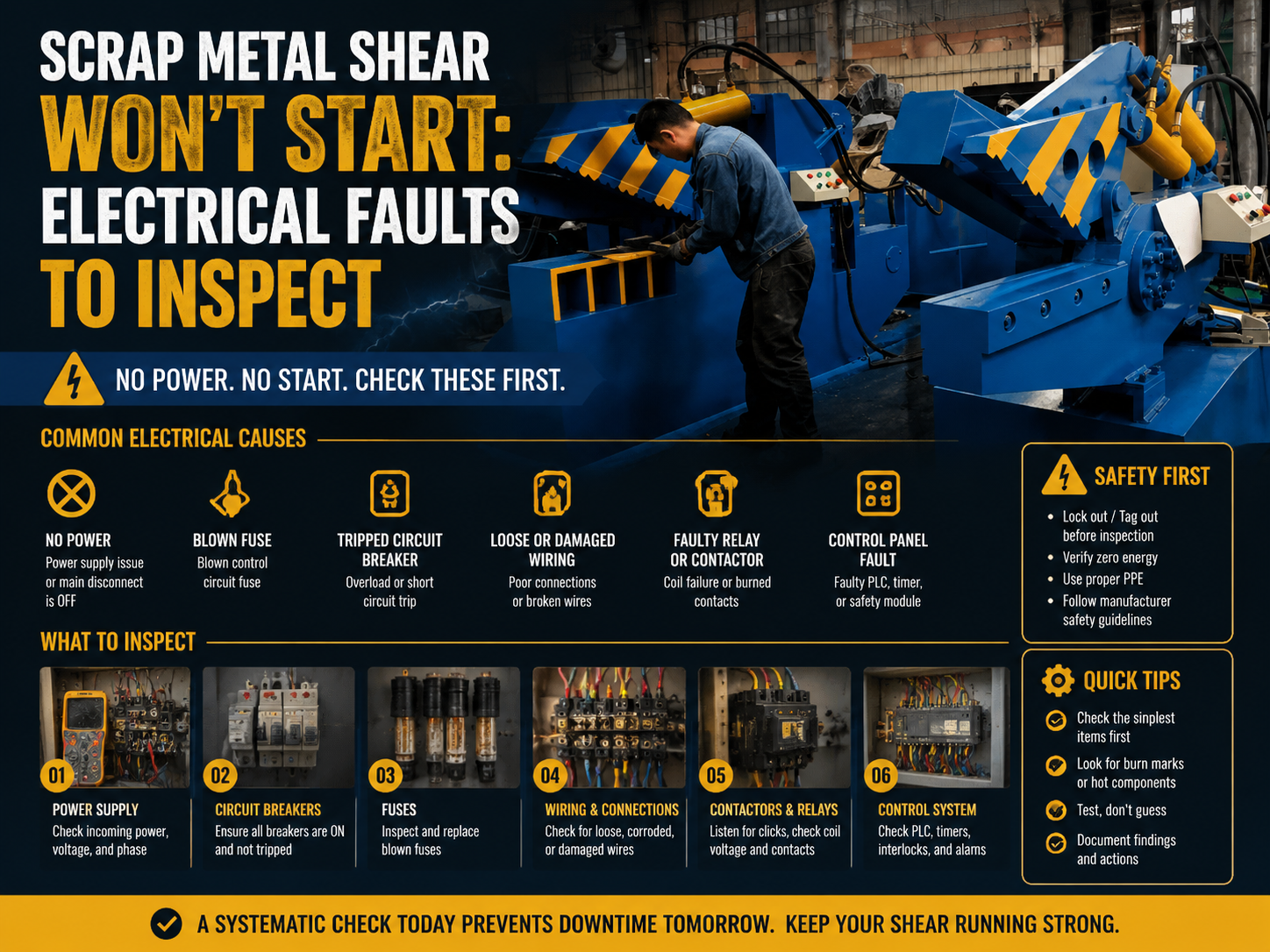
In the high-intensity environment of a metal recycling facility, the scrap metal shear is the heart of the operation. These machines, designed by manufacturers like HARSLE to withstand immense pressure and repetitive cycles, are generally robust. However, like any complex industrial machinery, they are susceptible to downtime. One of the most frustrating issues a shop foreman or operator can face is when a Scrap Metal Shear Won’t Start: Electrical Faults Inspect becomes the primary task of the day. Electrical failures are often more elusive than mechanical ones because they aren’t always visible to the naked eye.
When a shear fails to initiate its cycle, the cause can range from a simple tripped breaker to a sophisticated PLC logic error. Understanding the electrical architecture of these machines is vital for minimizing downtime and ensuring the safety of the maintenance team. This guide provides a deep dive into the systematic inspection of electrical components, helping you identify why your scrap metal shear is unresponsive and how to rectify the situation using professional industrial standards.
HARSLE emphasizes that while mechanical wear is expected, electrical systems require a clean, stable environment—something often lacking in scrap yards. Dust, vibration, and temperature fluctuations can all lead to premature electrical failure. By following a structured diagnostic approach, you can quickly move from a state of paralysis to full operational capacity, ensuring your metal fabrication and recycling throughput remains consistent.
Key Considerations Before Inspecting Electrical Faults
Before diving into the control cabinet, safety must be the absolute priority. Industrial shears operate on high-voltage power, typically 380V to 480V three-phase AC. This level of electricity is lethal. Always implement a strict Lockout/Tagout (LOTO) procedure before opening any electrical panels or touching exposed terminals. Ensure that all residual energy in the hydraulic system is bled off, as electrical troubleshooting often requires toggling valves that could cause unexpected mechanical movement.
Another key consideration is the environment. Scrap yards are notorious for metallic dust, which is conductive. If this dust enters the electrical cabinet, it can cause short circuits or “ghost” signals in the PLC. Before inspecting, check if the cabinet seals are intact and if the cooling fans are functioning. Overheating is a common reason for modern shears to shut down automatically to protect sensitive electronic components.
Finally, consider the history of the machine. Has it recently been moved? Was there a recent power surge or a lightning storm? Often, the “won’t start” condition is a result of an external factor rather than a component failure. Checking the main factory breaker and the incoming voltage stability should always be the first step in your diagnostic checklist. If the incoming power is imbalanced across the three phases, the motor protection circuit will prevent the shear from starting to avoid burning out the main motor.
Technical Details: Common Electrical Faults to Inspect
1. Emergency Stop and Safety Interlock Loops
The most common reason a Scrap Metal Shear Won’t Start: Electrical Faults Inspect process begins is a triggered safety device. Industrial shears are equipped with multiple Emergency Stop (E-Stop) buttons and safety limit switches on access doors or guards. If any of these switches are engaged, or if a wire has vibrated loose from a safety relay, the control circuit will remain open.
Inspect each E-Stop button to ensure they are physically reset. Use a multimeter to check for continuity across the safety loop. In many HARSLE models, the PLC will have an input LED indicating the status of the safety circuit. If the LED is off, the machine “thinks” an emergency is in progress and will refuse to energize the starter contactor.
2. Motor Starter and Thermal Overload Relays
The main hydraulic pump motor is protected by a thermal overload relay. If the shear was pushed beyond its capacity or if the hydraulic oil was too viscous (cold start), the motor may have drawn excessive current, causing the relay to trip. Look for a small red or yellow reset button on the overload block located beneath the main contactor.
If the relay trips immediately upon resetting, do not force it. This indicates a genuine electrical fault, such as a grounded motor winding or a seized pump. Inspect the contactor points for “pitting” or carbon buildup. If the contacts are welded shut or heavily oxidized, they will fail to pass current to the motor, or worse, cause a single-phase condition that destroys the motor.
3. PLC and Control Logic Failures
Modern scrap metal shears rely on a Programmable Logic Controller (PLC) to manage the sequence of the shear cycle. If the PLC has lost its program (rare but possible due to battery failure) or if it is stuck in a fault state, the machine will not respond to start commands. Check the status lights on the PLC: ‘Power’ should be green, ‘Run’ should be green, and ‘Fault’ or ‘Error’ should be off.
If the ‘Fault’ light is blinking, consult the HARSLE technical manual for the specific error code. Often, the PLC is waiting for a specific condition to be met—such as the “Shear Head Up” limit switch being active. If that switch is broken or misaligned, the PLC logic prevents the start of the next cycle to avoid mechanical interference.
4. Control Transformer and Fuses
The control circuit usually operates at a lower voltage (24V DC or 110V AC) than the main motor. This voltage is stepped down by a control transformer. If the transformer fails or if a secondary fuse is blown, the buttons on the operator console will have no power. The machine will appear completely “dead” despite having main power at the disconnect.
Check all small glass or cartridge fuses within the cabinet. Use a voltmeter to verify that the transformer is outputting the correct secondary voltage. A common cause for blown control fuses is a shorted solenoid coil on the hydraulic valve bank. If a coil burns out, it can pull excessive current through the control circuit, blowing the fuse instantly.
Selection Advice: Choosing a Shear with Reliable Electronics
When purchasing a new scrap metal shear, the quality of the electrical components is just as important as the steel frame. At HARSLE, we prioritize the use of internationally recognized brands like Schneider, Siemens, or Omron for our electrical suites. This ensures that if a component does fail, replacements are easily sourced locally, and the reliability of the parts is significantly higher than generic alternatives.
Look for machines that feature well-organized, labeled wiring. A “rat’s nest” of wires in a control cabinet is a nightmare for troubleshooting. High-quality shears will have wire numbers that correspond to the electrical schematic provided in the manual. Furthermore, consider shears with integrated diagnostic screens (HMI). An HMI can tell the operator exactly why the machine won’t start—for example, “Error: Rear Guard Open”—saving hours of manual testing with a multimeter.
Additionally, ensure the machine has adequate electrical protection. This includes phase-loss monitors, which prevent the motor from running if one of the three incoming power lines fails, and surge suppressors to protect the PLC from voltage spikes. Investing in a machine with a robust electrical design reduces the long-term cost of ownership by preventing the very faults we are discussing today.
Maintenance Checklist for Shear Electrical Systems
| Component | Inspection Frequency | Action Required |
|---|---|---|
| Control Cabinet | Monthly | Vacuum out dust; check door seals for integrity. |
| Terminal Screws | Quarterly | Check for tightness; vibration can loosen connections over time. |
| Limit Switches | Weekly | Ensure switches are clean and actuators move freely. |
| Contactors | Bi-Annually | Inspect for signs of overheating or contact pitting. |
| Emergency Stops | Daily | Test functionality to ensure the machine stops immediately. |
| Cooling Fans | Monthly | Clean filters and verify fans are spinning to prevent PLC overheat. |
Frequently Asked Questions (FAQ)
Why does my shear motor hum but not start?
A humming motor usually indicates a “single-phase” condition, where one of the three power phases is missing. This could be due to a blown fuse, a bad contactor pole, or a break in one of the power lines. Turn off the power immediately to prevent motor burnout and check the voltage at the motor terminals.
The PLC ‘Run’ light is on, but the machine won’t cycle. What’s wrong?
This usually means the PLC is running its program but is waiting for an input signal that isn’t arriving. Check the limit switches and sensors. If the PLC doesn’t receive a signal that the clamp is retracted or the blade is up, it will not initiate the next step in the sequence.
Can I bypass a safety limit switch to keep production moving?
Absolutely not. Bypassing safety devices is a major OSHA violation and puts operators at risk of severe injury or death. If a switch is faulty, replace it immediately with an OEM part from HARSLE. Safety circuits are designed to protect both the human and the machine.
How does heat affect the electrical system of a scrap shear?
Excessive heat increases the resistance in wires and can cause sensitive electronics like the PLC or VFD (Variable Frequency Drive) to malfunction or shut down. Ensure the electrical cabinet is not in direct sunlight and that all cooling systems are operational.
What should I do if I smell burning plastic inside the cabinet?
Immediately shut down the main power disconnect. A burning smell indicates an electrical fire or a severely overheating component (likely a transformer or a loose connection). Do not restart the machine until the source of the heat is identified and repaired.
Conclusion: Maintaining Electrical Health for Peak Performance
When a Scrap Metal Shear Won’t Start: Electrical Faults Inspect becomes a necessity, the key is a calm, methodical approach. By understanding the interplay between the power supply, the control logic, and the safety systems, you can demystify the electrical cabinet and return your machine to service safely. Most issues are found in the simplest places: a loose wire, a tripped reset, or a dirty limit switch.
HARSLE remains committed to providing high-performance scrap metal shears that are as easy to maintain as they are powerful. By choosing equipment with high-quality components and following a rigorous preventative maintenance schedule, you can ensure that your electrical system remains a silent, reliable partner in your recycling operations. Remember, the goal is not just to fix the fault, but to understand why it happened to prevent future occurrences, keeping your facility productive and your team safe.