Scrap Metal Baler Bale Size Inconsistent? Troubleshooting the Root Causes

Introduction: The Importance of Bale Uniformity in Metal Recycling
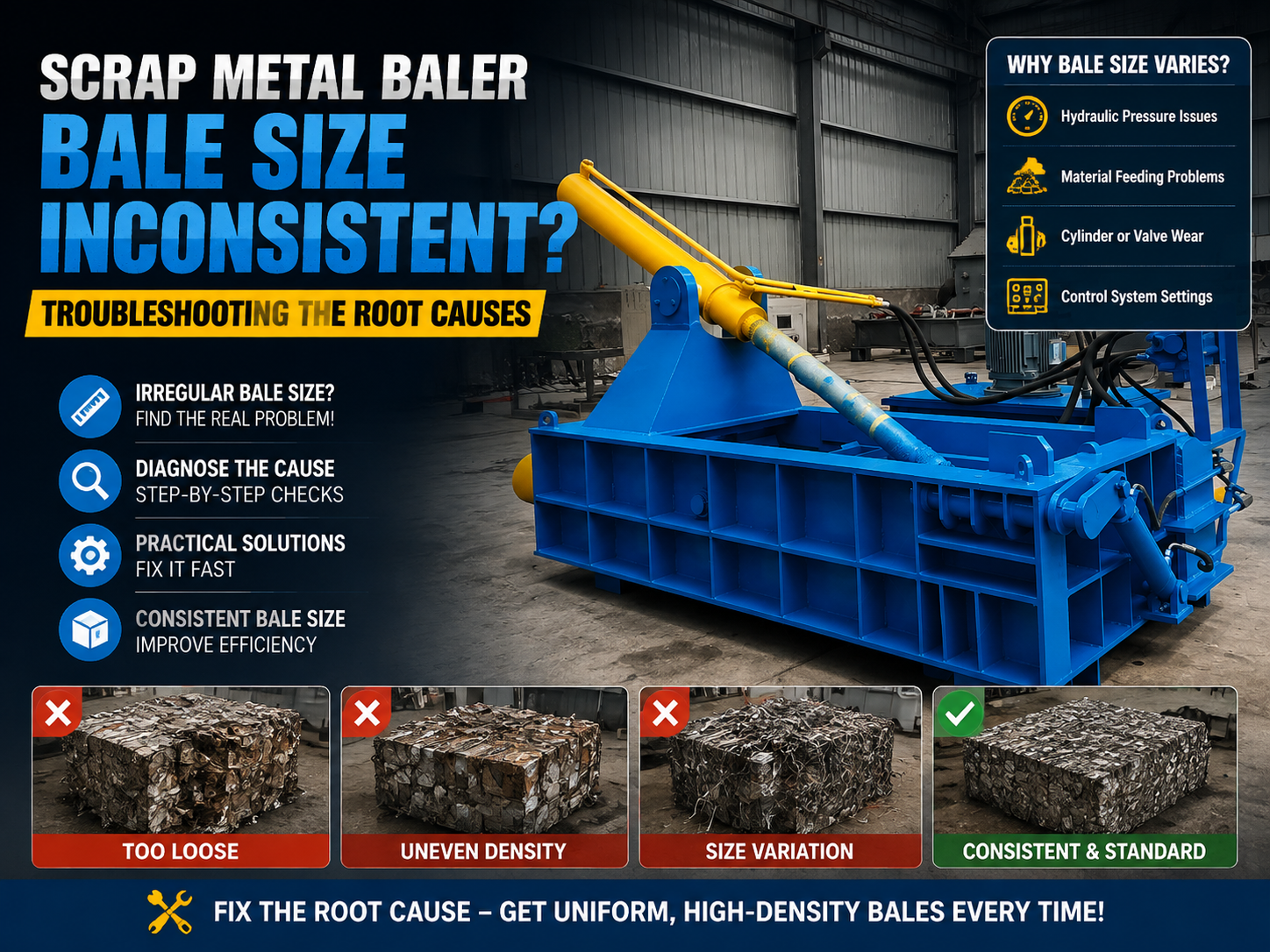
In the high-stakes world of metal recycling and fabrication, efficiency is measured by the density and uniformity of the output. When you operate a scrap metal baler, your goal is to produce consistent, stackable, and transportable bales that meet the strict requirements of steel mills and foundries. However, operators often face a frustrating challenge: Scrap Metal Baler Bale Size Inconsistent? Troubleshooting the Root Causes is essential to maintaining operational throughput and profitability.
Inconsistent bale sizes are more than just a cosmetic issue; they represent a breakdown in the mechanical or hydraulic integrity of your equipment. Whether the bales are coming out too loose, too small, or varying in length, these discrepancies can lead to logistical nightmares, increased shipping costs, and potential rejection of loads by downstream buyers. Understanding the root causes of these inconsistencies is the first step toward restoring your production line to peak performance.
At HARSLE, we emphasize that precision engineering is the backbone of effective scrap management. A baler that functions correctly should deliver repeatable results cycle after cycle. When that consistency falters, it is rarely due to a single catastrophic failure, but rather a combination of wear, calibration drift, or improper material handling. This guide serves as a comprehensive resource for identifying and resolving these persistent issues.
By diving deep into the technical aspects of hydraulic pressure, sensor accuracy, and material density, we aim to provide you with a roadmap for troubleshooting. Whether you are managing a large-scale recycling facility or a specialized fabrication shop, these insights will help you minimize downtime and maximize the value of your scrap metal output.
Key Considerations: Why Bale Consistency Matters
The primary reason for maintaining consistent bale size is the optimization of logistics. Transporting scrap metal is expensive, and shipping companies charge based on both weight and volume. If your bales are inconsistent in size, you cannot stack them efficiently in containers or on flatbed trucks. This leads to wasted space, which directly translates to higher freight costs per ton of material processed.
Furthermore, steel mills and smelters have specific requirements for the dimensions of the scrap they accept. If a bale is too large, it may not fit into the charging box of a furnace. If it is too small or too loose, it may fall apart during handling, creating safety hazards and operational delays. Consistent bale sizing ensures that your product is ready for immediate consumption, which is a key competitive advantage in the scrap metal market.
Another critical factor is the wear and tear on the baler itself. When a machine struggles to produce a uniform bale, it often indicates that the hydraulic system is working harder than necessary. This can lead to premature failure of seals, valves, and pumps. By addressing the root causes of inconsistency early, you are not just fixing a production issue; you are extending the overall lifespan of your expensive industrial machinery.
Finally, consider the impact on your labor costs. Operators who have to constantly adjust the machine, manually intervene in the baling process, or re-process failed bales are less productive. A well-tuned baler allows for automated, hands-off operation, freeing your team to focus on material sorting and logistics rather than troubleshooting mechanical errors.
Technical Details: Troubleshooting the Root Causes
When investigating why your scrap metal baler is producing inconsistent bale sizes, the first place to look is the hydraulic system. Hydraulic pressure is the lifeblood of the baler, and any fluctuation in pressure will directly affect the compression force applied to the scrap. Check your hydraulic pump for signs of cavitation or wear, and ensure that the pressure relief valves are set to the manufacturer’s specifications. If the pressure is dropping mid-cycle, the bale will not reach the required density, leading to size variations.
Next, examine the sensor and limit switch configuration. Modern scrap metal balers rely on a series of sensors to determine when a bale has reached the desired length or density. If these sensors are covered in metal dust, debris, or oil, they may trigger prematurely or fail to trigger at all. Regularly cleaning these sensors and verifying their calibration is a simple yet effective maintenance step that can resolve many consistency issues.
The material feed process is another common culprit. If the scrap is not being fed into the chamber uniformly, the compression plate will encounter uneven resistance. For example, if you are feeding large, bulky items on one side of the chamber and fine scrap on the other, the resulting bale will be lopsided or inconsistent in density. Implementing a consistent feeding protocol, or using a pre-crusher for oversized items, can significantly improve the uniformity of your bales.
Finally, inspect the wear plates and the compression ram. Over time, the internal walls of the baling chamber can become worn, creating gaps where material can get stuck or bypass the compression force. If the ram itself has developed play or misalignment, it will not exert force evenly across the entire surface of the scrap. Replacing worn liners and checking the ram guides for excessive clearance are essential technical tasks for restoring bale consistency.
Selection Advice: Choosing the Right Baler for Your Needs
When selecting a scrap metal baler, the most common mistake is choosing a machine that is underpowered for the type of material you intend to process. If you are baling heavy-gauge steel, you need a machine with a higher compression force and a more robust structural frame. Attempting to process heavy material in a light-duty baler will inevitably lead to structural deformation and inconsistent bale sizes as the machine struggles to contain the force.
Consider the automation level of the baler. For high-volume operations, a fully automated baler with integrated bale length sensors and automatic tying systems is highly recommended. These systems remove the human element from the process, ensuring that every bale is tied and ejected at the exact same point in the cycle. While the initial investment is higher, the reduction in labor and the increase in consistency provide a rapid return on investment.
Look for manufacturers that offer modular designs. A modular baler allows you to upgrade specific components, such as the hydraulic power unit or the control system, as your business grows. This flexibility ensures that your equipment can evolve with your needs, preventing the need for a full machine replacement when your production requirements change.
Finally, prioritize after-sales support and the availability of spare parts. Even the best-engineered baler will eventually require maintenance. Choosing a partner like HARSLE, which provides comprehensive technical support and readily available replacement parts, ensures that if an issue does arise, you can get back to full production capacity with minimal downtime.
FAQ: Common Questions About Scrap Metal Baler Performance
- Q: How often should I calibrate my baler sensors?
A: We recommend checking sensor calibration during every scheduled maintenance interval, or at least once a month if the machine is running multiple shifts. - Q: Why does my bale size change when I switch material types?
A: Different metals have different densities and spring-back characteristics. You may need to adjust your pressure settings or cycle times when switching from aluminum to steel. - Q: Can worn hydraulic seals cause inconsistent bale sizes?
A: Yes. Internal leakage in hydraulic cylinders can cause the ram to drift or lose pressure, resulting in uneven compression and inconsistent bale dimensions. - Q: What is the most common cause of loose bales?
A: Loose bales are usually caused by insufficient hydraulic pressure or a failure in the tying mechanism. Ensure your pump is delivering the correct PSI and that your wire or strapping is tensioned properly. - Q: How do I know if my baler is overloaded?
A: Signs of overloading include excessive noise from the hydraulic pump, slow cycle times, and the machine failing to reach the end of its stroke.
Conclusion: Maintaining Excellence in Metal Fabrication
Achieving consistent bale size is a hallmark of a professional and efficient metal recycling operation. By understanding the root causes of inconsistencies—ranging from hydraulic pressure fluctuations and sensor errors to material feed issues and mechanical wear—you can take proactive steps to ensure your HARSLE scrap metal baler remains a reliable asset for years to come.
Remember that maintenance is not an expense; it is an investment in your operational uptime. By adhering to a strict maintenance schedule, training your operators on proper feeding techniques, and utilizing high-quality replacement parts, you can eliminate the frustration of inconsistent output. If you find that you are still facing challenges, do not hesitate to reach out to our technical support team for a detailed assessment of your equipment.
In the competitive landscape of metal fabrication and recycling, the quality of your output defines your reputation. By focusing on the details of your baling process, you ensure that your business remains at the forefront of the industry, delivering high-density, uniform bales that meet the highest standards of the global market. Trust in HARSLE to provide the equipment and the knowledge you need to succeed.