Comprehensive Guide to Recycling Baler Hydraulic Oil Maintenance and Change Schedule

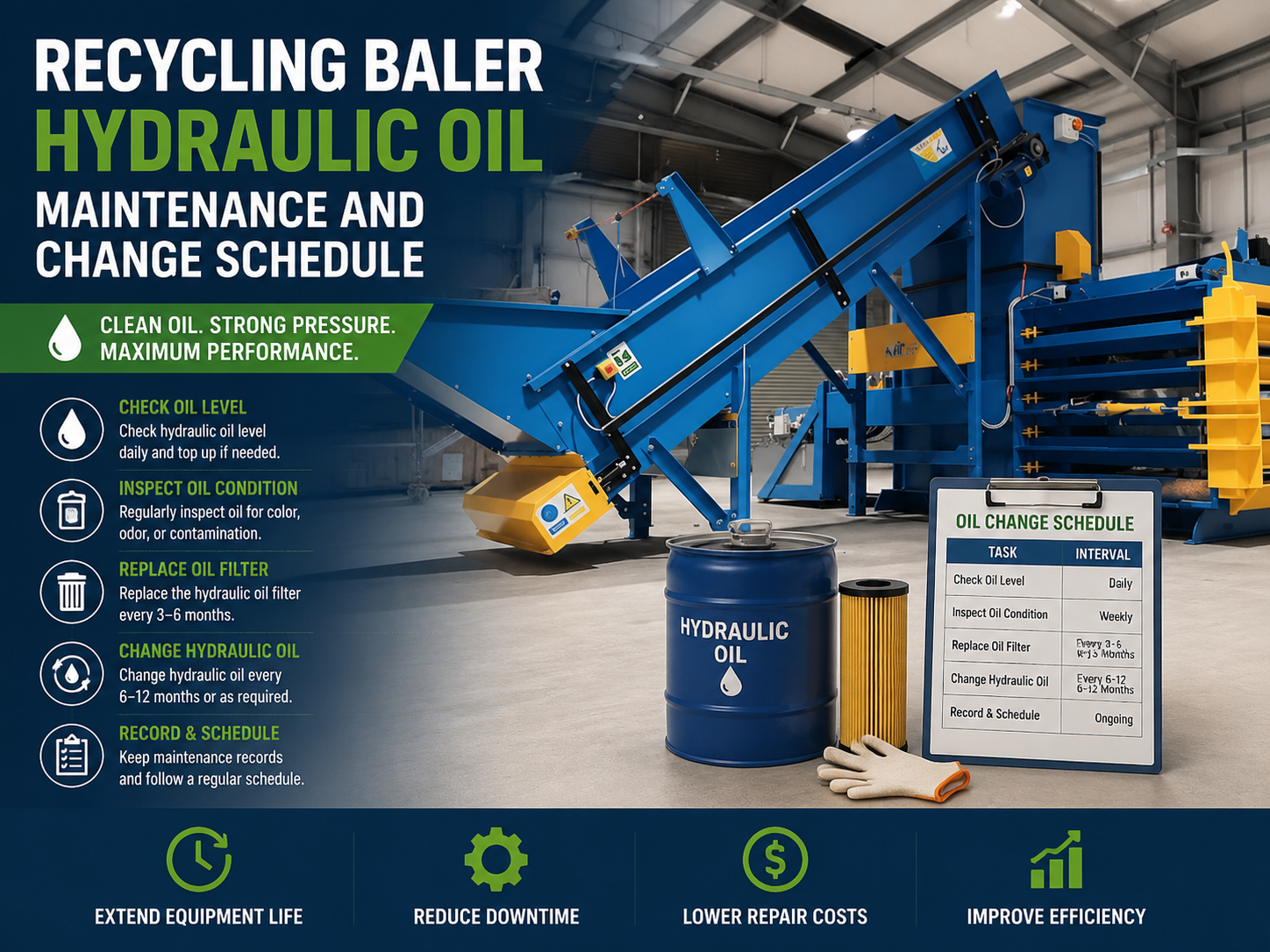
The Critical Role of Hydraulic Oil in Recycling Baler Performance
In the world of metal fabrication and waste management, the recycling baler stands as a cornerstone of efficiency. Whether you are processing scrap metal, cardboard, or plastics, the heart of this machine is its hydraulic system. Understanding the Recycling Baler Hydraulic Oil Maintenance Change Schedule is not merely a suggestion for operational longevity; it is a fundamental requirement for safety, power, and cost-efficiency. Hydraulic oil serves multiple purposes: it transmits power, lubricates moving parts, dissipates heat, and seals internal clearances. When the oil degrades, the entire system suffers, leading to sluggish cycle times, increased energy consumption, and eventually, catastrophic component failure.
For operators using HARSLE recycling balers, maintaining the hydraulic fluid’s integrity ensures that the ram force remains consistent. High-pressure systems are incredibly sensitive to contaminants. Even microscopic particles can act as an abrasive, wearing down pump vanes and valve seats. By adhering to a strict maintenance protocol, facilities can extend the life of their equipment by decades. This guide provides an exhaustive look at how to manage your hydraulic system, from daily checks to the complex process of a full oil change.
Moreover, the economic impact of neglected maintenance cannot be overstated. A sudden pump failure due to contaminated oil can cost thousands of dollars in parts alone, not to mention the lost revenue from facility downtime. Proactive maintenance, centered around a well-defined Recycling Baler Hydraulic Oil Maintenance Change Schedule, transforms reactive repair costs into predictable, manageable operational expenses. In the following sections, we will break down the technical nuances of hydraulic fluid management and provide a roadmap for peak machine performance.
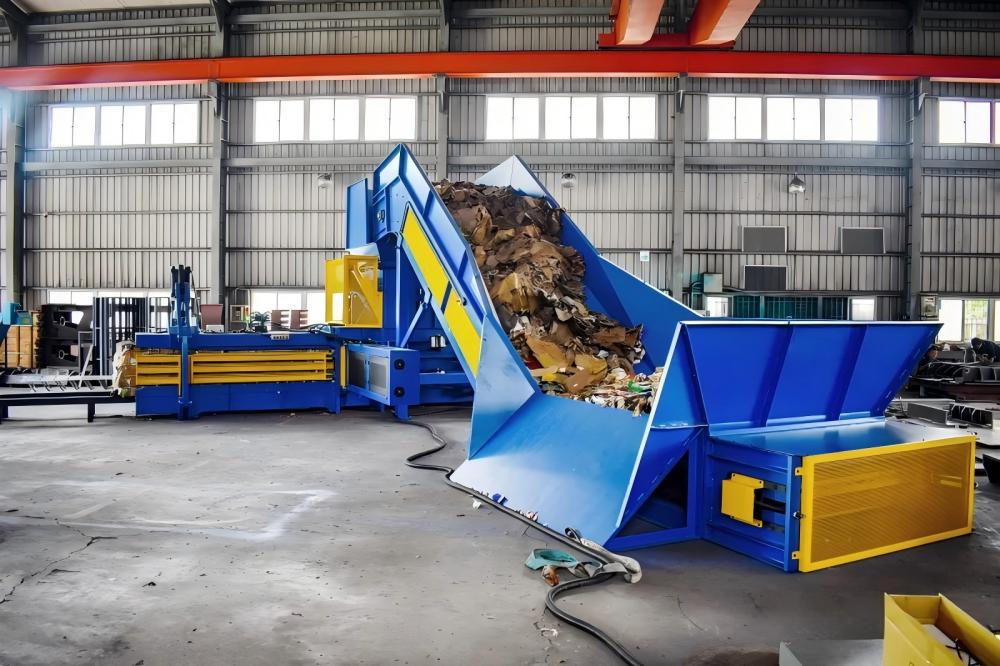
Why Maintenance Matters: Protecting Your Investment
The hydraulic system of a recycling baler operates under immense pressure, often exceeding 2500 PSI. At these levels, the hydraulic oil is the lifeblood of the machine. Over time, this oil undergoes thermal degradation and oxidative stress. Oxidation occurs when the oil reacts with oxygen, especially at high temperatures, leading to the formation of sludge and varnish. These byproducts clog filters and cause valves to stick, which can lead to erratic ram movement or the inability to reach full compaction pressure.
Another critical factor is moisture. In recycling environments, temperature fluctuations can cause condensation inside the hydraulic reservoir. Water in the oil reduces lubricity, promotes rust on internal steel components, and can lead to cavitation in the hydraulic pump. Cavitation occurs when vapor bubbles collapse violently under pressure, pitting the metal surfaces of the pump and significantly shortening its lifespan. A regular Recycling Baler Hydraulic Oil Maintenance Change Schedule allows you to detect these issues before they cause permanent damage.
Finally, the viscosity of the oil is paramount. Viscosity is the measure of a fluid’s resistance to flow. If the oil is too thick (high viscosity), the pump has to work harder, increasing energy costs and heat generation. If it is too thin (low viscosity), it won’t provide an adequate lubricating film, leading to metal-on-metal contact. Regular testing and scheduled changes ensure that the oil remains within the manufacturer’s specified viscosity range, protecting the precision-engineered components of your HARSLE baler.
Daily Inspection: The First Line of Defense
A successful maintenance program begins with the daily walk-around. Before the shift starts, operators should perform a visual inspection of the entire hydraulic circuit. Start by checking the oil level in the reservoir. Most HARSLE balers are equipped with a sight glass. The oil should be at the designated level when the rams are fully retracted. If the level is low, it indicates a leak that must be addressed immediately. Adding oil without finding the leak is a temporary fix that leads to environmental hazards and wasted resources.
Next, observe the color and clarity of the oil through the sight glass. Fresh hydraulic oil is typically clear with a golden hue. If the oil appears milky, it is contaminated with water. If it looks dark or smells burnt, it has undergone thermal breakdown and needs to be tested or changed. These visual cues are the simplest part of the Recycling Baler Hydraulic Oil Maintenance Change Schedule but are often the most effective at preventing major breakdowns.
Temperature monitoring is also a daily requirement. Most modern recycling balers include a temperature gauge on the tank. The ideal operating temperature for hydraulic oil is between 100°F and 140°F (38°C to 60°C). If the temperature consistently exceeds 150°F, the oil will degrade rapidly, and seals will begin to harden and leak. Check that the oil cooler (air or water-cooled) is functioning correctly and that the cooling fins are not clogged with dust or debris from the recycling process.
Hydraulic, Electrical, and Mechanical Checks
Hydraulic System Integrity
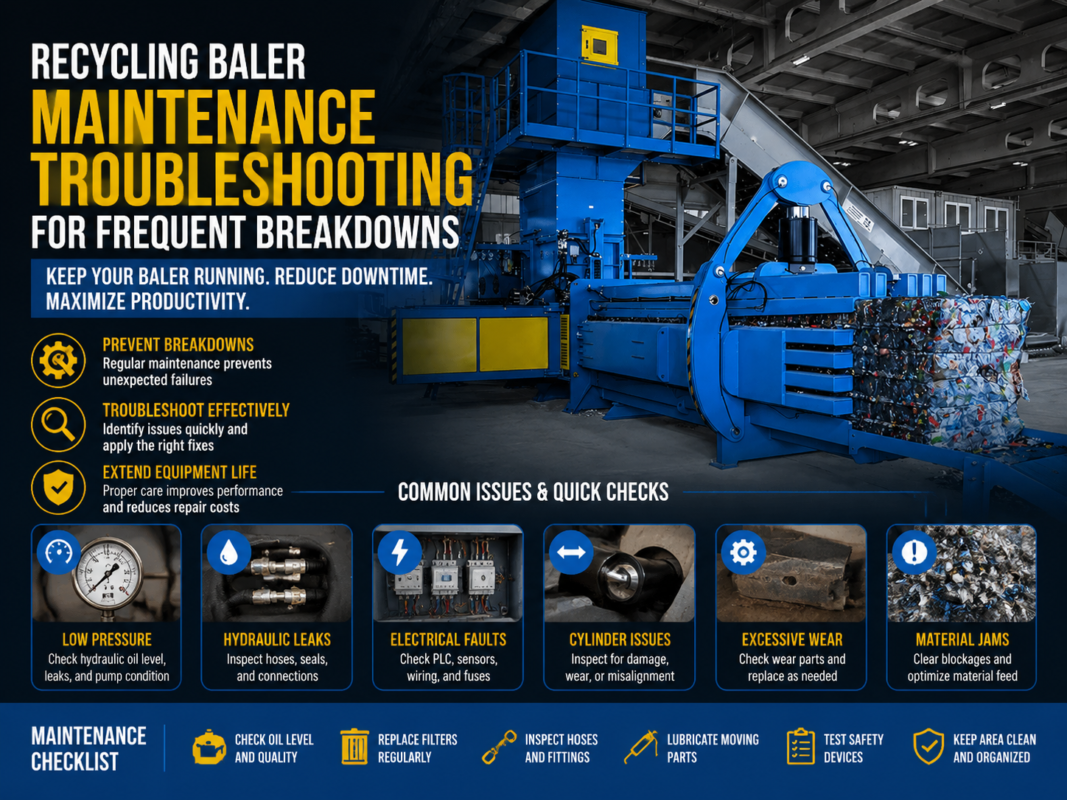
Beyond the oil itself, the hardware containing it requires scrutiny. Inspect all hydraulic hoses for signs of abrasion, kinking, or “weeping” at the fittings. In a recycling baler, hoses are often exposed to vibrating components and sharp debris. A burst hose under high pressure is a severe safety risk. Ensure that all clamps are tight and that hoses have enough slack to move during the cylinder’s stroke without rubbing against the frame.
Electrical Control Systems
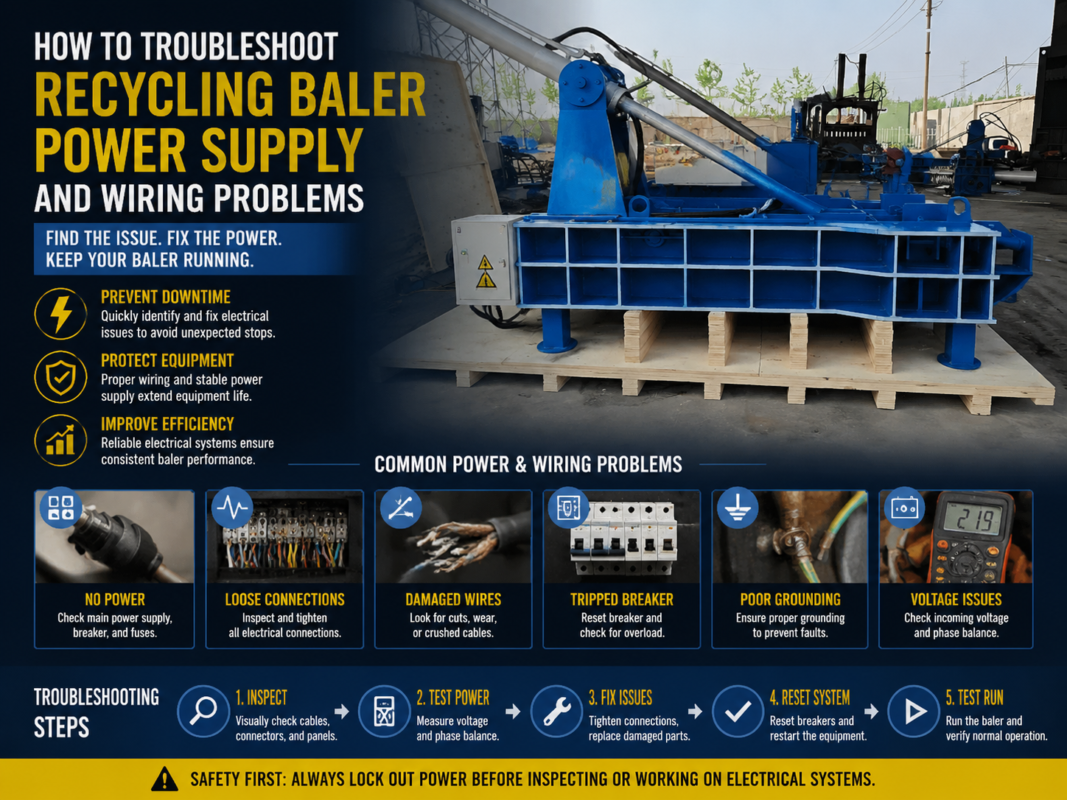
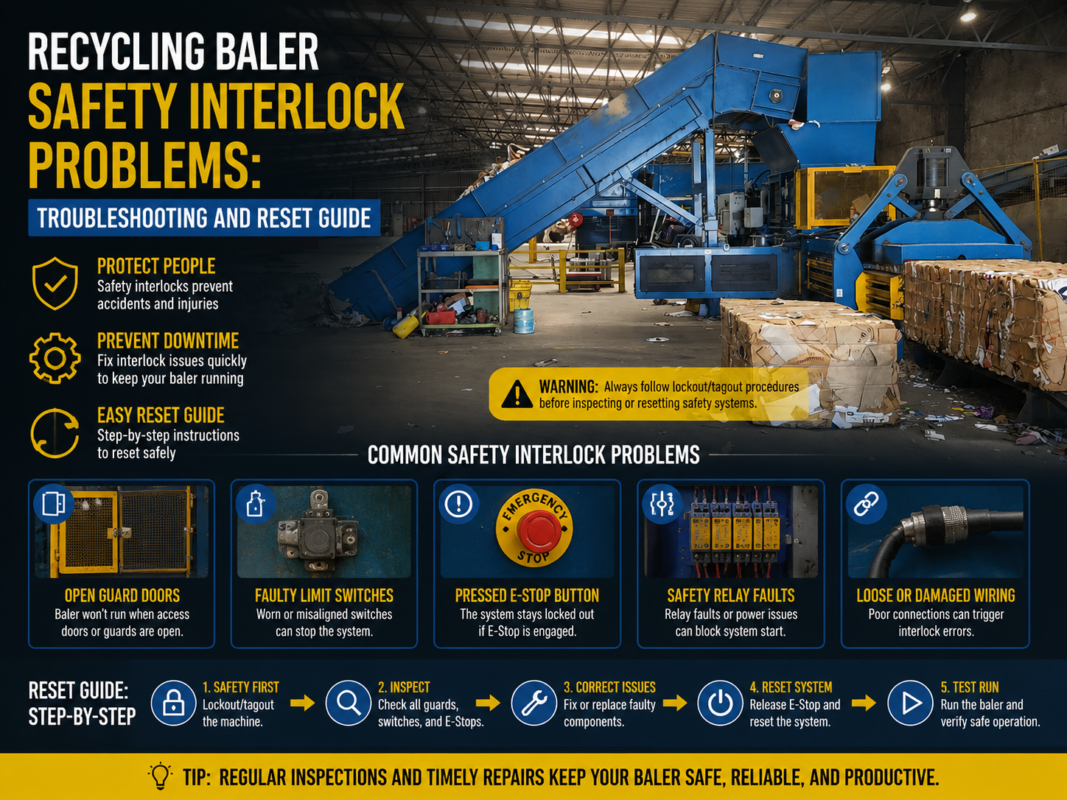
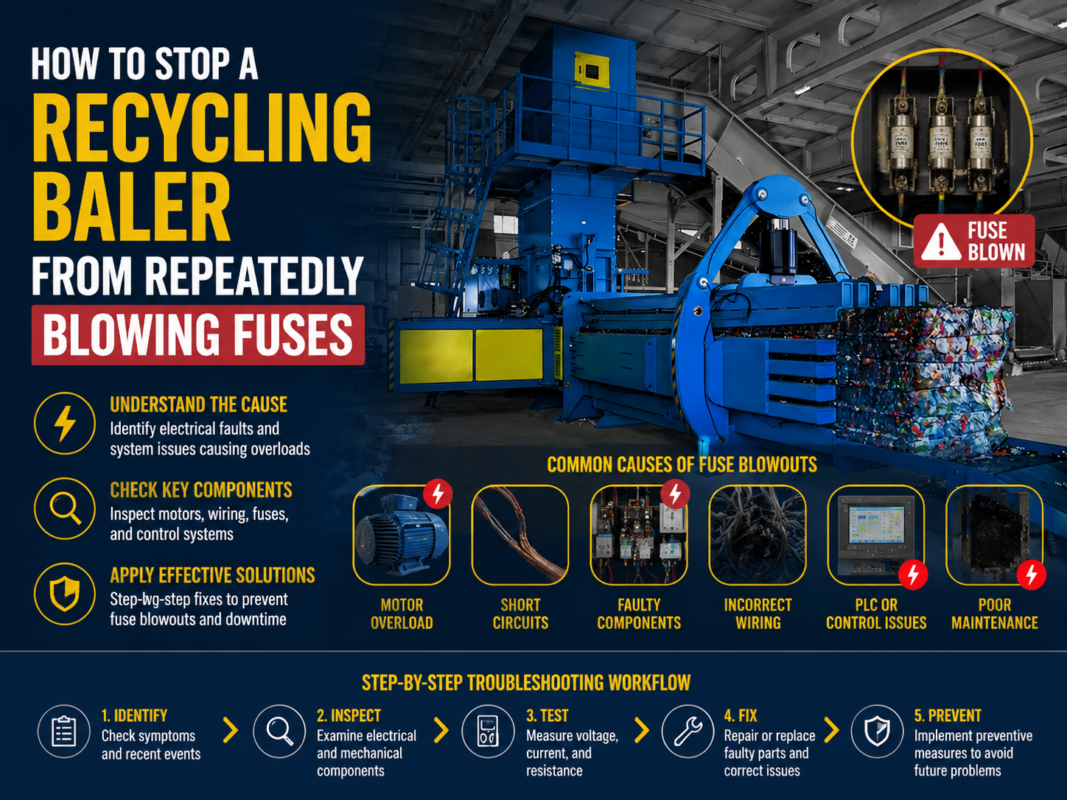
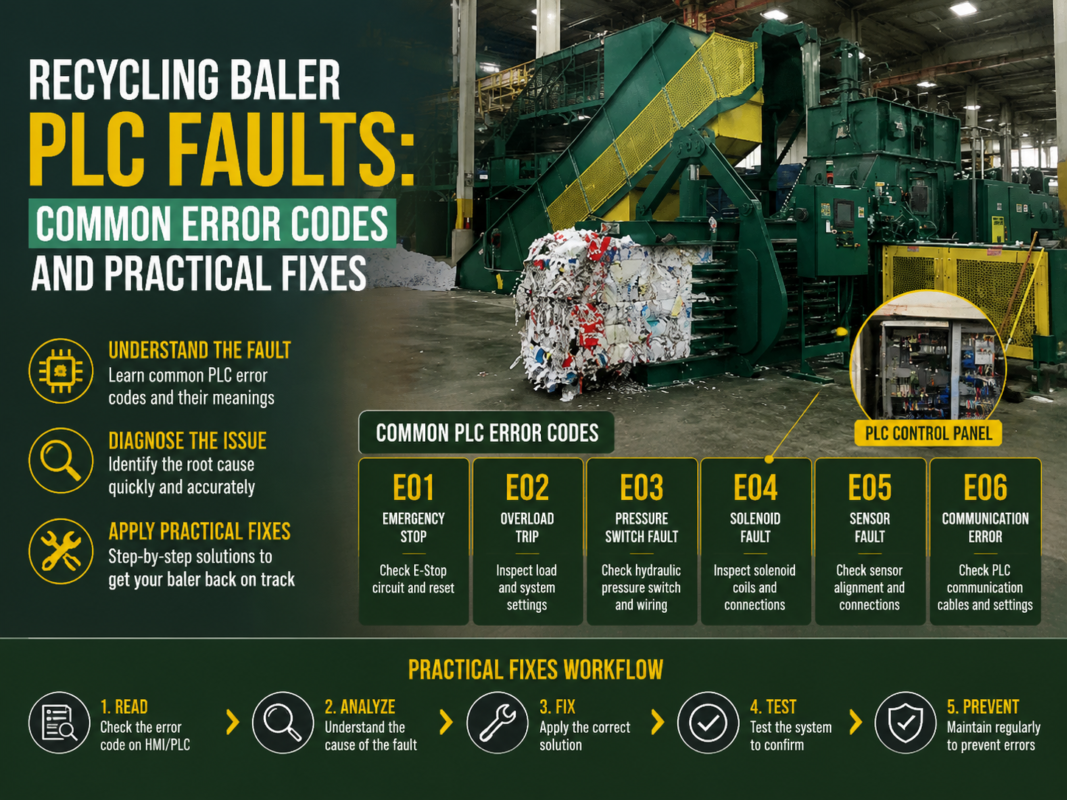
The hydraulic system is governed by electrical solenoids and PLCs. Check the wiring to the hydraulic valves for any signs of fraying or loose connections. Ensure that the emergency stop buttons and safety interlocks are functioning correctly. In many cases, what appears to be a hydraulic pressure issue is actually an electrical fault in the pressure transducer or a failing solenoid coil. Integrating electrical checks into your Recycling Baler Hydraulic Oil Maintenance Change Schedule ensures a holistic approach to machine health.
Mechanical Structure and Wear
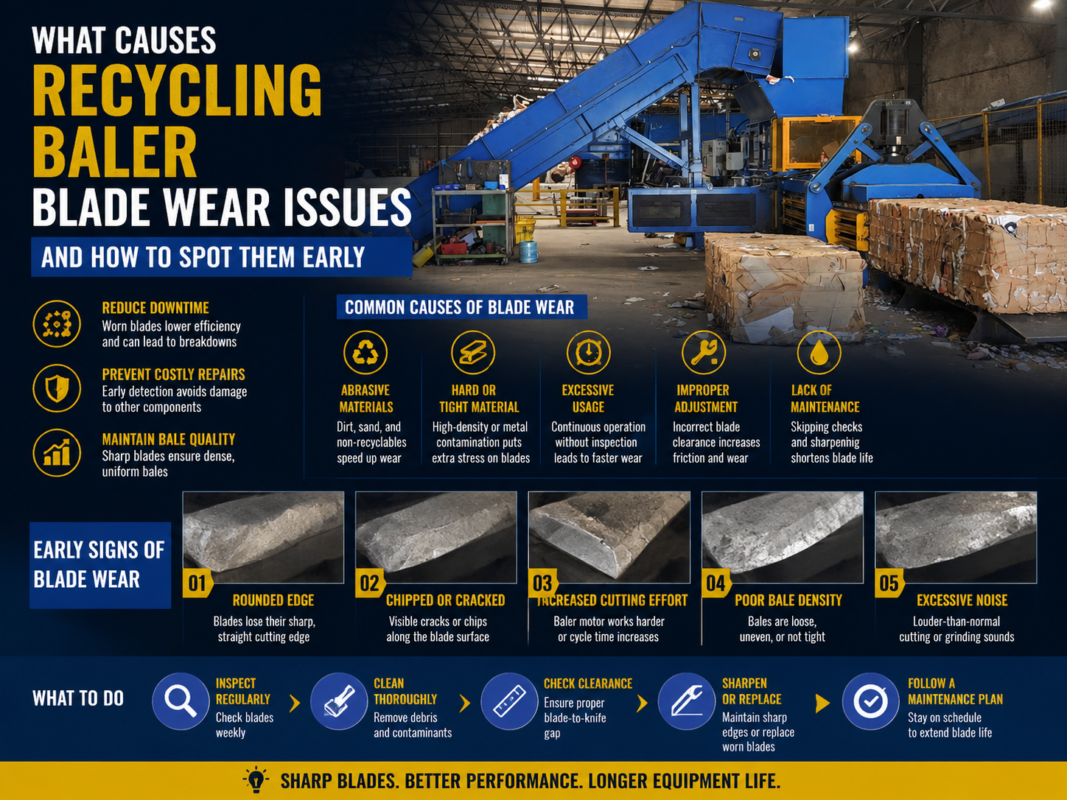
The mechanical components, such as the ram guides and the shear blades, interact directly with the hydraulic force. If the ram is misaligned, it creates side-loading on the hydraulic cylinder, leading to premature seal wear and potential rod bending. Inspect the wear plates (liners) inside the baling chamber. If they are excessively worn, the gap between the ram and the chamber wall increases, allowing material to wedge behind the ram and strain the hydraulic system.
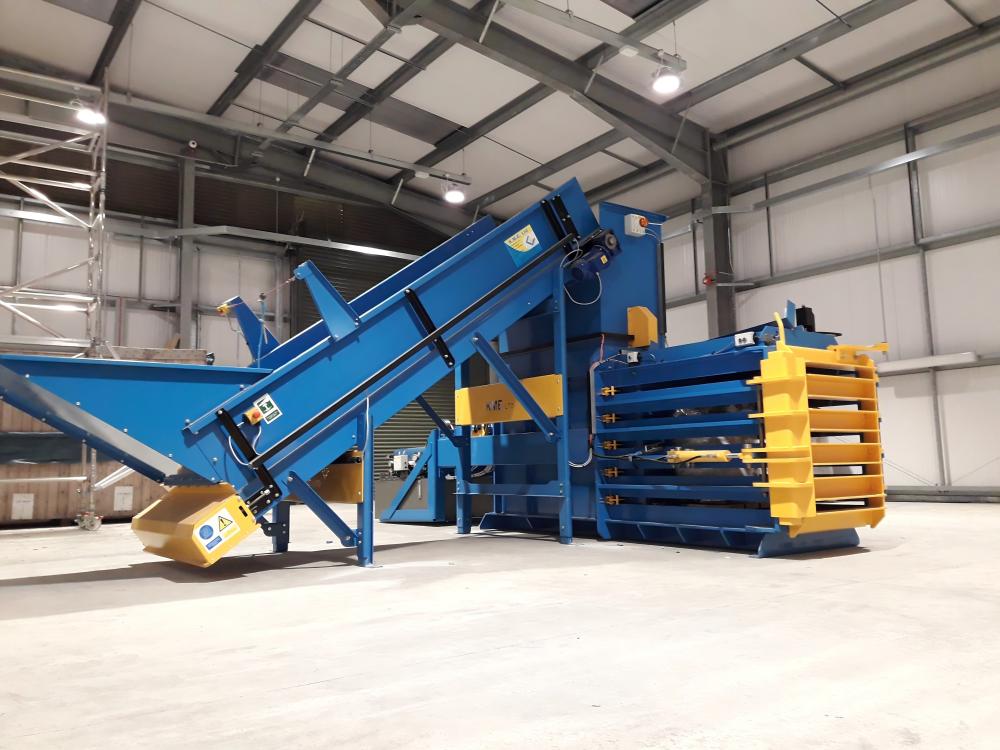
Lubrication Plan: Beyond the Hydraulic Tank
While the hydraulic oil is the primary lubricant for internal components, the external moving parts of a recycling baler require a dedicated lubrication plan. Pivot points on the bale door, the hinges of the charging hopper, and the bearings of the motor all require regular greasing. Use a high-quality lithium-based grease or a lubricant specified by HARSLE to ensure compatibility with the environment.
For horizontal balers with automatic wire-tying systems, lubrication is even more critical. The twisting mechanism and the wire cutters operate in a dusty environment. These parts should be cleaned and lubricated daily to prevent the wire from snapping or the knotter from jamming. A failure in the tying system often leads to the baler being stuck in mid-cycle, putting unnecessary static pressure on the hydraulic valves.
Consistency is key. Create a lubrication map for your machine, marking every grease nipple and oiling point. Assigning this task to a specific operator ensures accountability. Remember, over-greasing can be just as harmful as under-greasing, as excess lubricant can attract grit and abrasive dust, creating a grinding paste that wears down pins and bushings.
Troubleshooting Signals: When to Act Immediately
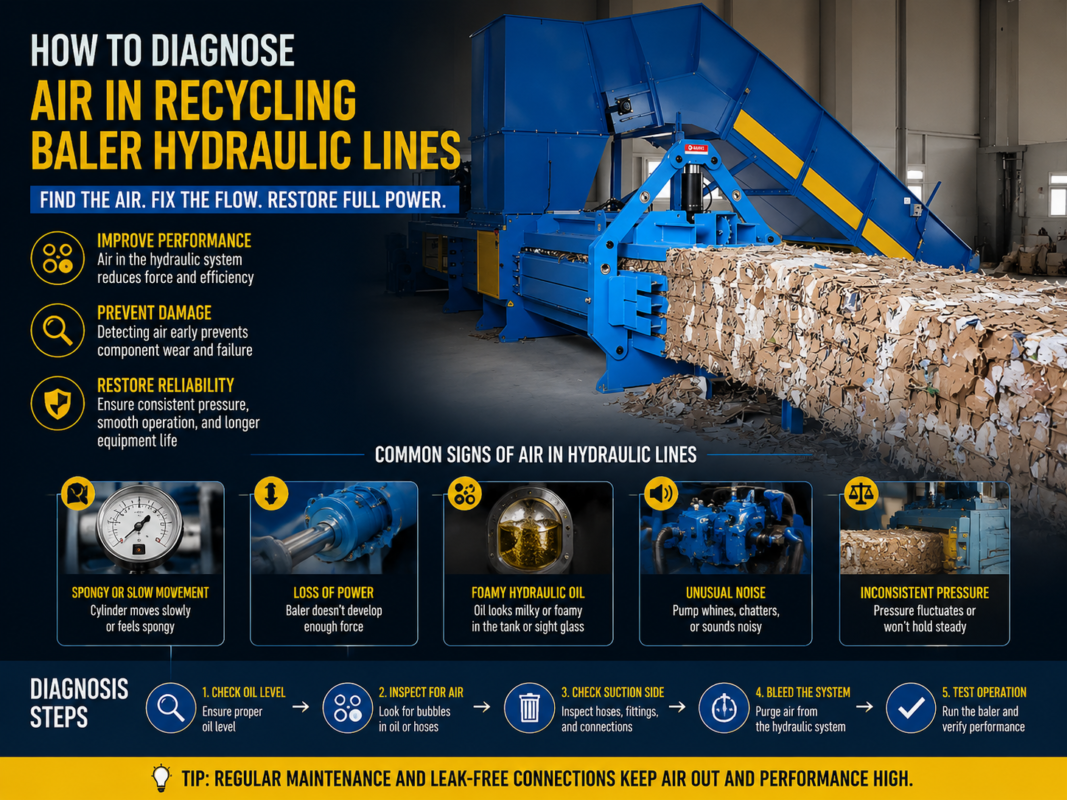
Even with a strict Recycling Baler Hydraulic Oil Maintenance Change Schedule, issues can arise. Operators must be trained to recognize the “warning signs” of hydraulic distress. Unusual noise is the most common indicator. A high-pitched whining or screaming sound often points to pump cavitation or aeration (air entering the system). If you hear a “clunking” sound, it may indicate a loose mechanical mounting or a failing cylinder internal piston nut.
Slow cycle times are another red flag. If the baler takes significantly longer to complete a stroke than it did when the oil was fresh, it suggests internal leakage. This could be oil bypassing the piston seals inside the cylinder or a worn-out hydraulic pump that can no longer maintain flow under pressure. Monitoring cycle times weekly can help you track the gradual decline of system efficiency.
Lastly, keep an eye out for foaming oil in the reservoir. Foam is a sign of air contamination or the breakdown of anti-foaming additives in the oil. Foamy oil is compressible, which leads to “spongy” machine operation and loss of precision. If you see foam, stop the machine and investigate the suction line for leaks or check if the oil level has dropped low enough to allow the pump to suck in air.
The Master Maintenance Schedule Table
To keep your recycling baler in top condition, follow this comprehensive schedule. Note that these intervals are based on standard 8-hour shift operations; if running double or triple shifts, frequency should be increased accordingly.
| Frequency | Task Category | Action Required |
|---|---|---|
| Daily | Hydraulic | Check oil level, temperature, and color. Inspect for leaks. |
| Daily | Mechanical | Clean debris from the ram track and limit switches. |
| Weekly | Lubrication | Grease all pivot points, door hinges, and guide rollers. |
| Weekly | Hydraulic | Check filter bypass indicators. Clean oil cooler fins. |
| Monthly | Mechanical | Inspect shear blades for sharpness and proper clearance. |
| Monthly | Electrical | Inspect control cabinet for dust; tighten terminal screws. |
| Quarterly | Hydraulic | Take an oil sample for laboratory analysis (spectrography). |
| 6 Months | Hydraulic | Replace all hydraulic filters (suction and return line). |
| Yearly / 2000 Hrs | Hydraulic | Complete oil change, tank cleaning, and suction strainer replacement. |
Step-by-Step: How to Change Recycling Baler Hydraulic Oil
When the Recycling Baler Hydraulic Oil Maintenance Change Schedule dictates a full fluid replacement, it must be done correctly to avoid introducing new contaminants. First, ensure the ram is fully retracted to return as much oil as possible to the tank. Follow Lock-Out Tag-Out (LOTO) procedures to ensure the machine cannot be started during the process.
Drain the oil while it is still warm, as this helps keep contaminants in suspension so they flow out with the fluid. Once drained, open the inspection covers on the reservoir. This is a crucial step: use lint-free rags to wipe down the interior of the tank. You will likely find a layer of “sludge” at the bottom; this must be removed completely. Inspect the suction strainer and replace it if necessary. This is also the best time to replace all return-line filters.
When refilling, do not simply pour the oil from the drum into the tank. New oil is often not clean enough for high-pressure hydraulic systems. Use a filter cart (kidney loop system) to pump the new oil into the reservoir. This ensures the oil passes through a high-efficiency filter before entering your machine. Once filled to the correct level, start the pump and cycle the cylinders several times without load to bleed any trapped air from the system. Re-check the oil level and top off if needed.
Frequently Asked Questions (FAQ)
1. What type of hydraulic oil should I use for my recycling baler?
Most industrial recycling balers require an ISO VG 46 or ISO VG 68 anti-wear (AW) hydraulic oil. The specific grade depends on your ambient operating temperature. Always consult your HARSLE manual, as using the wrong viscosity can void your warranty and damage the pump.
2. How often should I really change the hydraulic oil?
While a general rule is every 2,000 operating hours or once a year, the best practice is to base the change on oil analysis. If the analysis shows the additive package is still active and contamination levels are low, you may extend the interval. Conversely, in harsh, dusty environments, you may need to change it every 1,000 hours.
3. Can I mix different brands of hydraulic oil?
It is generally discouraged to mix different brands or types of oil. Even if they have the same viscosity, the additive packages (zinc-based vs. ashless) may react poorly, leading to cloudiness or sediment formation. If you must switch brands, a full system flush is recommended.
4. Why is my hydraulic oil turning milky?
Milky oil is a definitive sign of water contamination. This usually happens due to condensation or a leak in a water-cooled heat exchanger. You must find the source of the water, drain the oil, flush the system, and replace it with fresh fluid immediately to prevent rust and pump cavitation.
5. What are the benefits of a filter cart?
A filter cart allows you to clean the oil while the machine is running (kidney looping) and ensures that new oil is pre-filtered. It is one of the best investments for maintaining a Recycling Baler Hydraulic Oil Maintenance Change Schedule, as it significantly reduces the particle count in the system.
Conclusion
Maintaining a recycling baler is a commitment to operational excellence. By following a structured Recycling Baler Hydraulic Oil Maintenance Change Schedule, you protect the complex hydraulic heart of your machinery, ensure the safety of your operators, and maximize your return on investment. HARSLE machinery is built to withstand the rigors of heavy industrial use, but even the toughest steel requires the protection of clean, high-quality hydraulic fluid. Stay proactive, monitor your system daily, and never underestimate the power of a clean filter and fresh oil.