
Industrial Shredder Won’t Start? A Practical Troubleshooting Checklist

Introduction: The High Cost of Shredder Downtime
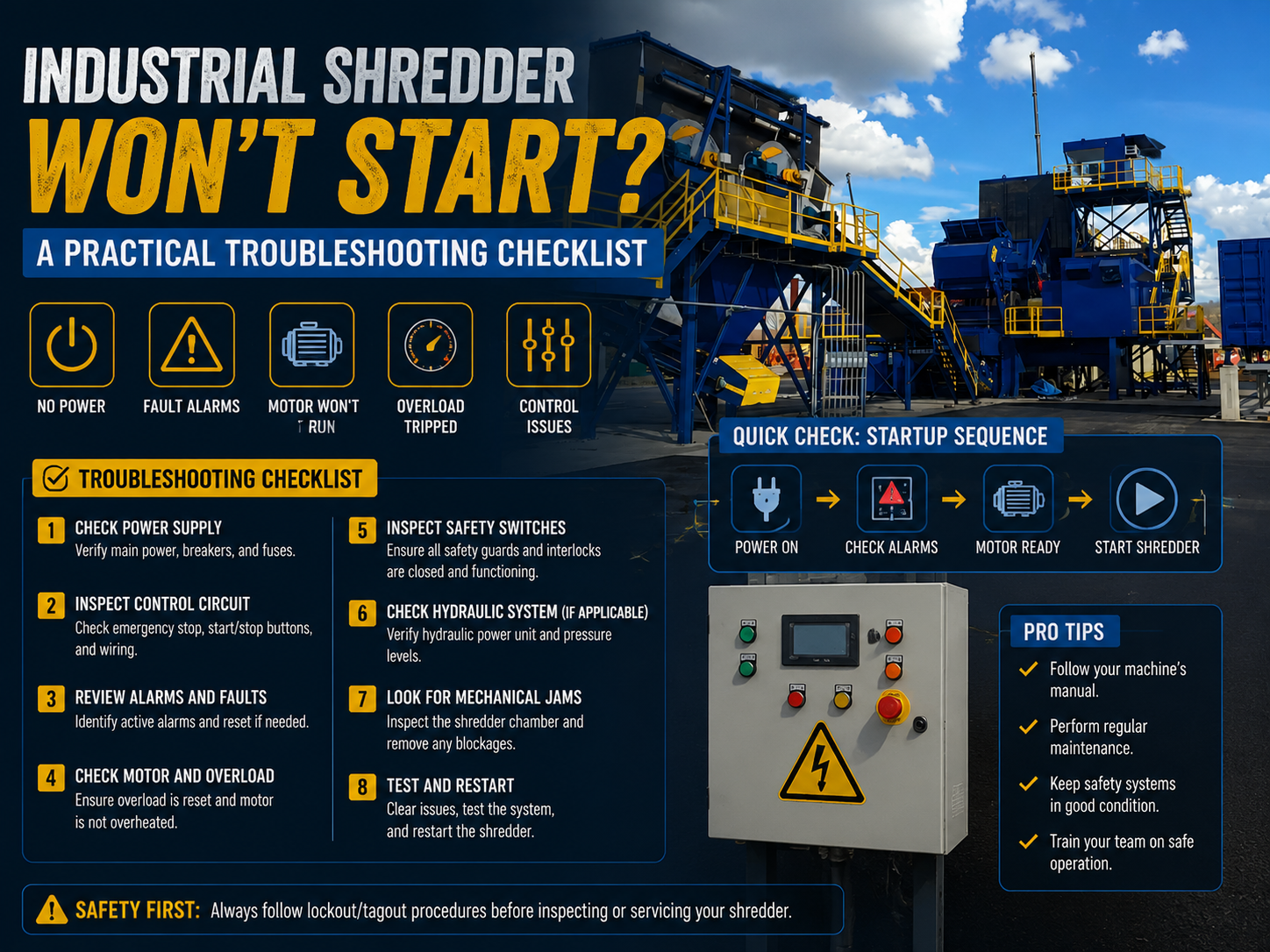
In the world of metal fabrication and waste management, the industrial shredder is the workhorse that keeps operations moving. Whether you are processing scrap metal, plastic, or industrial waste, a sudden failure to start can bring your entire production line to a grinding halt. When an Industrial Shredder Won’t Start, the immediate reaction is often frustration, but a systematic approach to troubleshooting can save hours of downtime and thousands of dollars in unnecessary service calls. This Practical Troubleshooting Checklist is designed to guide operators and maintenance teams through the most common causes of startup failure, from simple safety oversights to complex electrical issues.
Industrial shredders, such as those manufactured by HARSLE, are engineered for durability and high torque. However, the harsh environments in which they operate—filled with dust, vibration, and heavy impact—can lead to wear and tear that affects the startup sequence. Understanding the logic behind how these machines initiate power is the first step in diagnosing why they won’t turn on. Most modern shredders utilize a series of safety interlocks and electronic monitoring systems that must all report a “ready” status before the main motor is allowed to engage. If even one sensor is out of alignment, the machine will remain dormant.
This guide will walk you through the essential steps to identify the root cause of a non-starting shredder. We will cover the basics of electrical supply, the intricacies of the control panel, mechanical obstructions, and the critical role of safety protocols. By the end of this article, you will have a comprehensive understanding of how to get your equipment back online safely and efficiently.
Key Considerations: Safety and Initial Checks
Before diving into the mechanical or electrical components of the machine, safety must be the absolute priority. Industrial shredders are powerful machines capable of exerting immense force. Attempting to troubleshoot without following proper safety protocols can lead to catastrophic injury. Always implement Lock-Out Tag-Out (LOTO) procedures before inspecting any internal components or electrical cabinets. This ensures that the machine cannot be accidentally energized while someone is working on it.
The first and most common reason an industrial shredder won’t start is actually the simplest: the Emergency Stop (E-Stop) button. It sounds elementary, but in a busy factory environment, an E-Stop might be bumped or pressed by a colleague without the operator’s knowledge. Check every E-Stop button on the machine, the control console, and any remote stations. These buttons often require a twist or a pull to reset. If the E-Stop circuit is open, the PLC (Programmable Logic Controller) will prevent the motor contactors from engaging.
Another key consideration is the power supply itself. Industrial shredders typically require three-phase power. If one phase is lost (a condition known as single-phasing), the motor may hum but fail to turn, or the control system may detect the imbalance and prevent startup entirely to protect the motor from burning out. Use a multimeter to verify that the correct voltage is reaching the main disconnect and that all three phases are balanced. Additionally, check for blown fuses or tripped circuit breakers in the main electrical panel of the facility.
Environmental factors also play a role. If your shredder is located in an unheated facility during winter, the hydraulic oil (if the machine uses a hydraulic drive) may be too viscous to flow properly. Many high-end shredders have low-temperature sensors that prevent startup until the oil has been preheated to a safe operating temperature. Conversely, if the machine was recently running and shut down, it might be in a thermal lockout state, requiring a cooling period before the internal thermistors allow a restart.
Technical Details: Deep Dive into Component Failure
If the basic checks do not resolve the issue, it is time to look deeper into the technical components of the shredder. The startup sequence of an industrial shredder involves a handshake between the user interface, the PLC, the motor starters, and the mechanical drive train. A failure in any of these links will result in a machine that refuses to budge.
1. Control Panel and PLC Diagnostics
Modern HARSLE shredders are equipped with PLC systems that provide diagnostic feedback via an HMI (Human Machine Interface) screen. Look for error codes or status messages. Common messages include “Safety Circuit Open,” “Motor Overload,” or “Phase Loss.” If the screen is blank, the problem likely lies in the 24V DC power supply that runs the control logic. Check the power supply module inside the cabinet; if the “OK” LED is off, the module may have failed or there may be a short circuit in the field wiring.
2. Motor Contactor and Overload Relays
The motor contactor is the heavy-duty switch that sends high-voltage power to the motor. If you hear a “click” when you press the start button but the motor doesn’t turn, the contactor may have pitted or welded contacts. If you don’t hear a click, the coil in the contactor might be burnt out, or the PLC is not sending the signal to the coil. Additionally, check the thermal overload relay. If the shredder was worked too hard during the previous shift, the overload may have tripped. Most overloads have a manual reset button that must be pressed before the machine can start again.
3. Sensor and Interlock Alignment
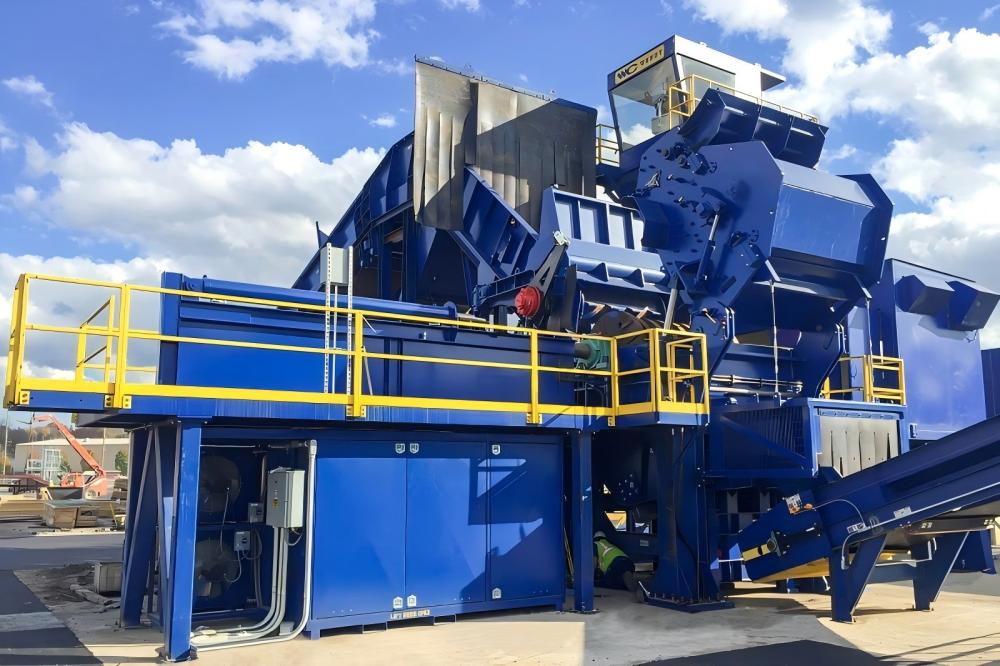
Industrial shredders are wrapped in safety sensors. Access doors, hopper lids, and discharge chutes often have limit switches or proximity sensors. If a door is slightly ajar due to vibration or debris buildup, the sensor will signal the PLC that the machine is in an unsafe state. Inspect all safety switches for physical damage or misalignment. In dusty environments, optical sensors can become obscured, leading to false readings. Cleaning the lenses of these sensors is a routine but vital part of troubleshooting.
4. Mechanical Jams and Material Bridging
Sometimes the electrical system is perfectly fine, but the machine is mechanically locked. If the shredder was shut down while full of material, the blades might be wedged against a piece of scrap. This is known as a “hard start” condition. Most industrial shredders are not designed to start under full load. You may need to manually clear the cutting chamber or use the “reverse” function (if the control system allows it) to back the material out of the blades before the motor can generate enough torque to start in the forward direction.
5. Hydraulic System Issues
For shredders with hydraulic drives, the problem might be related to fluid dynamics. If the hydraulic pump cannot build enough pressure to overcome the initial resistance of the drive motor, the system will stall. Check the hydraulic fluid levels, the condition of the filters, and the operation of the solenoid valves. A stuck valve can prevent oil from reaching the drive motor, effectively keeping the shredder in a “neutral” state despite the pump running.
Selection Advice: Choosing a Shredder for Reliability
When purchasing an industrial shredder, reliability and ease of troubleshooting should be top priorities. A machine that is difficult to diagnose will inevitably lead to longer periods of downtime. When evaluating equipment from manufacturers like HARSLE, consider the following features that contribute to better uptime and easier maintenance:
- Advanced Diagnostics: Look for machines with intuitive HMI screens that provide clear, plain-language error messages rather than obscure numeric codes.
- Quality Components: Ensure the electrical cabinet uses globally recognized brands for contactors, PLCs, and drives (such as Siemens, Schneider, or ABB). This makes finding replacement parts much easier.
- Accessibility: A well-designed shredder has easy access points for inspecting blades, clearing jams, and servicing sensors. If you have to dismantle half the machine just to check a limit switch, your MTTR (Mean Time To Repair) will be unacceptably high.
- Robust Safety Systems: While safety interlocks can sometimes be a source of startup issues, a high-quality system is designed to be durable and resistant to vibration, reducing the frequency of “nuisance trips.”
Furthermore, consider the type of drive system. Electric direct-drive shredders are generally simpler to troubleshoot than hydraulic systems because they have fewer components (no pumps, valves, or hoses). However, hydraulic drives offer superior torque management for extremely heavy-duty applications. Your choice should depend on your specific material processing needs and the technical expertise of your maintenance staff.
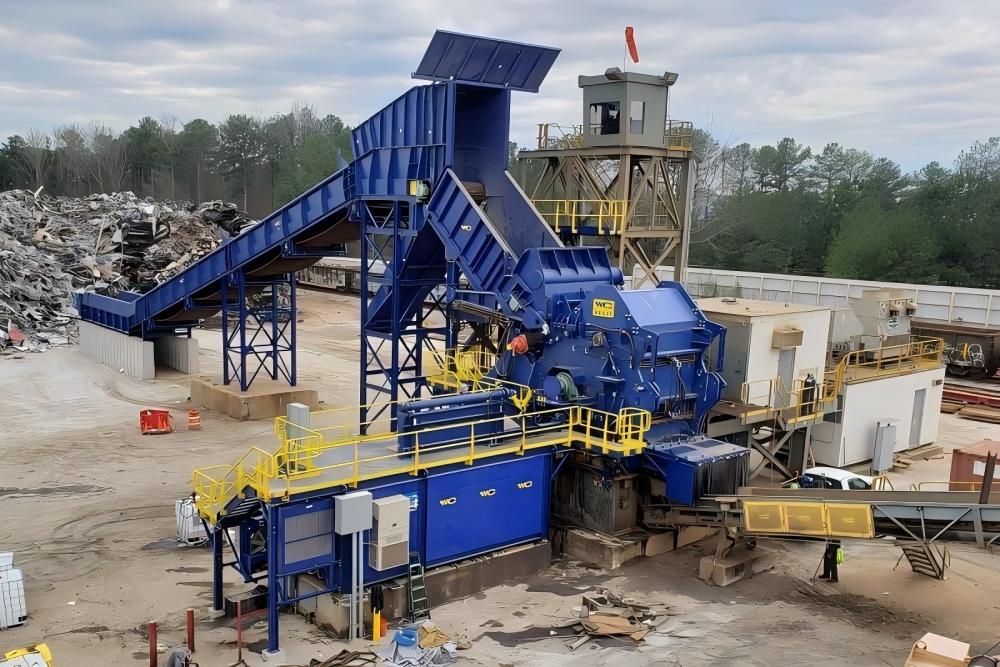
Investing in a preventative maintenance contract can also mitigate the risk of the “won’t start” scenario. Regular inspections by factory-trained technicians can identify wearing components—like a fraying belt or a weakening capacitor—before they lead to a total machine failure. HARSLE provides comprehensive support and documentation to ensure that operators are well-equipped to handle routine maintenance and basic troubleshooting.
Troubleshooting Checklist Summary
| Category | Checklist Item | Action Required |
|---|---|---|
| Safety | Emergency Stops | Ensure all E-Stops are pulled out/reset. |
| Electrical | Main Power Supply | Verify 3-phase voltage and check for blown fuses. |
| Control | PLC Error Codes | Check HMI for specific fault messages. |
| Mechanical | Chamber Obstruction | Clear any material wedged in the blades. |
| Sensors | Interlock Switches | Confirm all doors and guards are fully closed. |
FAQ: Common Shredder Startup Questions
Why does my shredder hum but not start?
This is usually a sign of “single-phasing,” where one of the three power phases is missing. It can also be caused by a seized bearing or a major mechanical jam that prevents the motor from turning. Turn off the power immediately to prevent motor burnout and check the electrical supply and the cutting chamber.
The HMI says “Motor Overload,” but the machine is cold. Why?
This can happen if the thermal overload relay needs a manual reset, or if the sensor itself has failed. In some cases, a loose wire on the thermistor circuit can trick the PLC into thinking the motor is overheating. Check the connections inside the motor junction box and the control cabinet.
Can I bypass a safety sensor just to finish a shift?
Absolutely not. Bypassing safety interlocks is extremely dangerous and often illegal. It voids warranties and puts operators at risk of severe injury. If a sensor is faulty, it must be replaced with an identical, certified component before the machine is returned to service.
How often should I check the electrical connections?
In high-vibration environments like metal shredding, electrical connections can loosen over time. It is recommended to perform a “tug test” and thermal imaging scan of the control cabinet every six months to identify loose wires or overheating components before they cause a failure.
Conclusion: Proactive Maintenance for Long-Term Success
An Industrial Shredder Won’t Start is a problem that can usually be solved with a calm, methodical approach. By following this Practical Troubleshooting Checklist, you can eliminate the most likely culprits and get your production back on track. Remember that the best way to handle a machine that won’t start is to prevent the issue from occurring in the first place through rigorous maintenance and operator training.
Choosing high-quality machinery from a reputable manufacturer like HARSLE ensures that you have the technical foundation and support needed to maintain high uptime. Whether it’s ensuring your safety interlocks are clean or verifying your three-phase power balance, a little attention to detail goes a long way in the demanding world of industrial metal fabrication. Keep this guide handy in your maintenance office, and ensure your team is trained in both the operation and the basic diagnostics of your shredding equipment. With the right knowledge and the right tools, you can turn a potential disaster into a minor, manageable delay.


