How to Select Ancillary Equipment for an Aluminium Extrusion Press Line: A Comprehensive Engineering Guide

Technical Overview: The Ecosystem of an Aluminium Extrusion Press Line
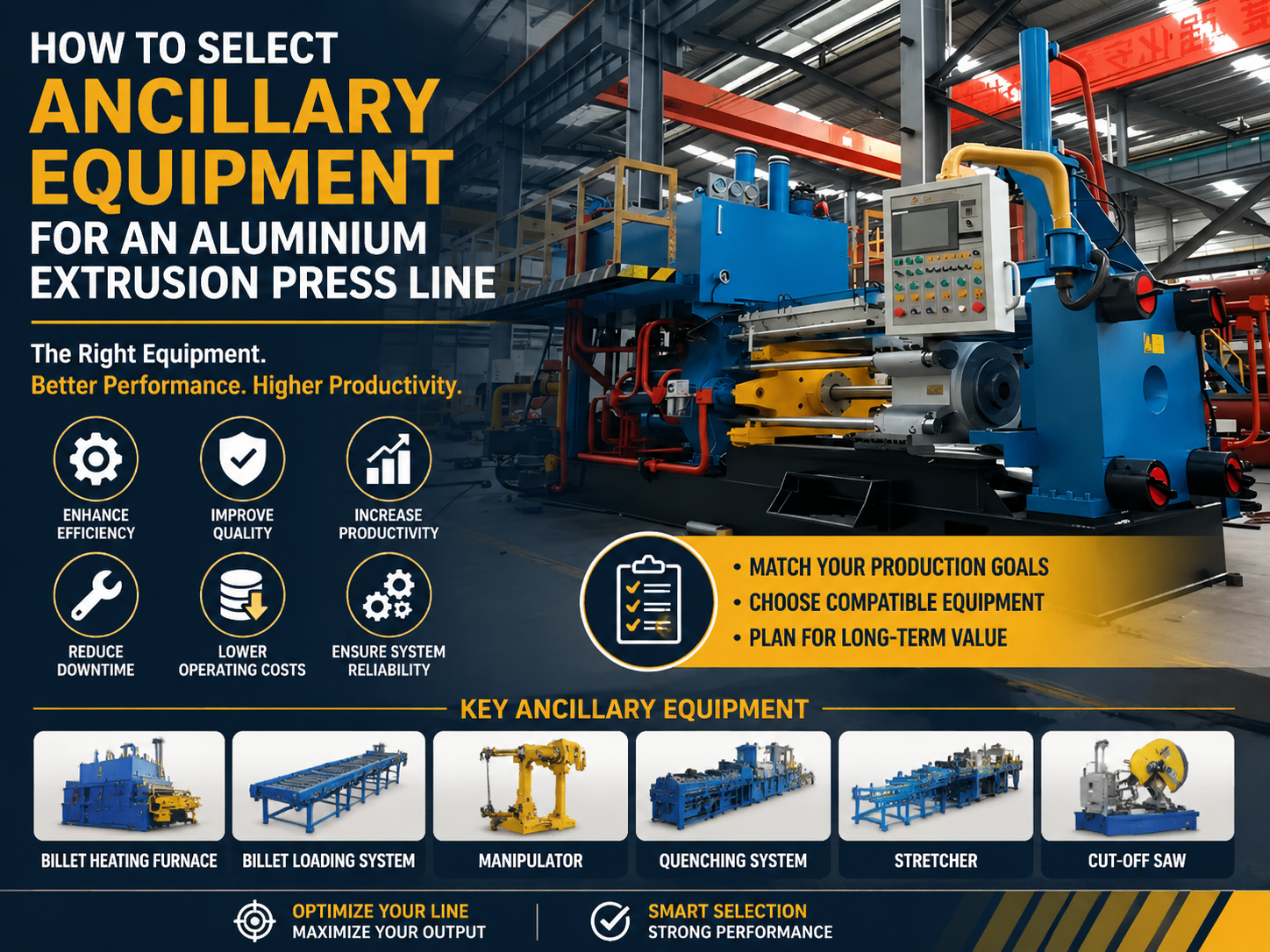
The efficiency of an aluminium extrusion press line is rarely determined by the press itself alone. While the press provides the force, the ancillary equipment acts as the nervous system and the circulatory system of the entire production floor. To effectively select ancillary equipment for an aluminium extrusion press line, one must view the line as an integrated, high-speed synchronization of thermal, mechanical, and logistical processes. From the moment a billet enters the furnace to the final cut at the saw, every piece of equipment must be calibrated to the press’s cycle time.
Ancillary equipment typically includes the billet heating furnace, the log shear, the puller system, the cooling table, the stretcher, and the finishing saw. Each of these components must communicate via a centralized PLC (Programmable Logic Controller) to ensure that the material flow remains constant. If the billet heater is too slow, the press sits idle; if the cooling table is undersized, the press must slow down to prevent material pile-ups. Understanding this interdependence is the first step in optimizing your facility.
Modern extrusion lines are increasingly moving toward automation and Industry 4.0 integration. When selecting equipment, it is no longer sufficient to look at mechanical specifications alone. You must evaluate the data-logging capabilities, energy efficiency ratings, and the ease of integration with existing ERP systems. HARSLE emphasizes that the goal of selecting ancillary equipment is to minimize dead-cycle time—the time the press spends waiting for the next billet or for the profile to be cleared from the exit side.
Furthermore, the choice of ancillary equipment is heavily influenced by the specific alloys being extruded and the complexity of the profiles. Harder alloys require higher-precision heating and more robust pulling systems, while thin-walled, complex profiles demand advanced cooling systems to prevent deformation. By selecting equipment that matches the specific metallurgical requirements of your product mix, you ensure higher yield rates and superior surface finish quality.
Core Parameters for Ancillary Equipment Selection
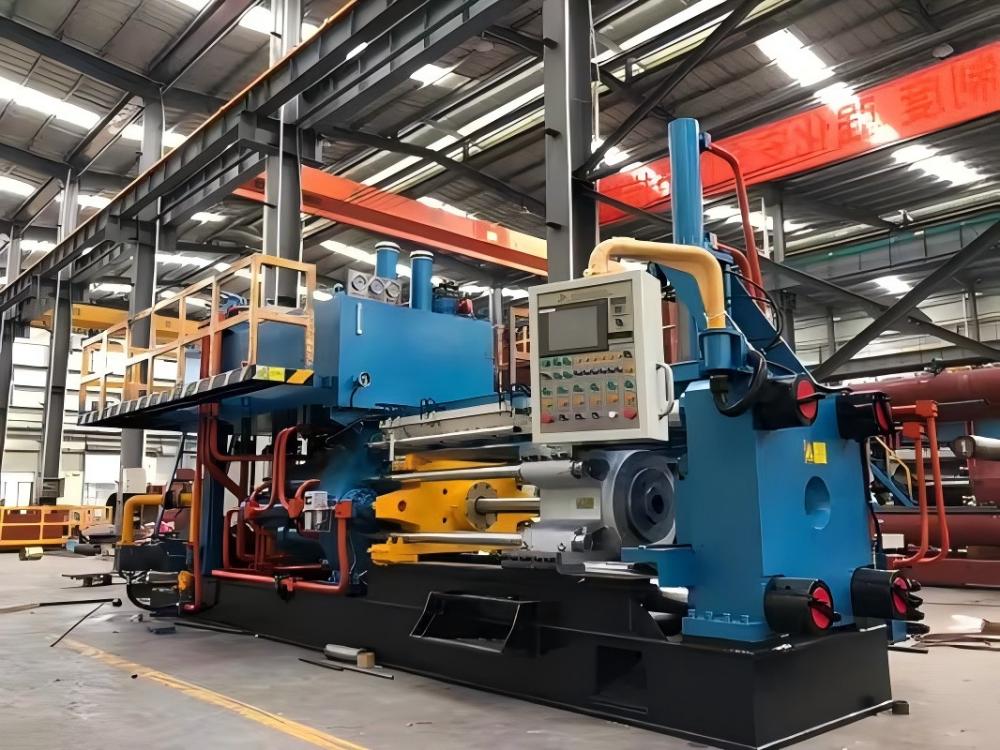
When you begin to select ancillary equipment for an aluminium extrusion press line, the primary parameter is the ‘Press Capacity’ measured in Metric Tons. The ancillary equipment must be sized to handle the maximum billet diameter and length that the press can accommodate. For instance, a 2000-ton press requires a billet heater capable of maintaining a consistent temperature profile across the entire length of the billet, ensuring that the core and the surface temperatures are within a tight tolerance, usually ±5°C.
The second core parameter is the ‘Cycle Time Synchronization’. The puller speed must be perfectly matched to the extrusion speed of the press. If the puller is too slow, the profile will buckle; if it is too fast, the profile will stretch beyond tolerance or break. Modern pullers utilize high-precision servo motors that adjust speed in real-time based on feedback from the press’s ram speed, ensuring a constant tension on the profile as it exits the die.
Energy consumption is a critical parameter that often gets overlooked during the initial procurement phase. Billet heaters, in particular, are significant energy consumers. Selecting induction heating over gas-fired furnaces can offer faster ramp-up times and better temperature control, though the initial capital expenditure is higher. You must calculate the total cost of ownership (TCO) by factoring in energy costs, maintenance intervals, and the expected lifespan of the heating elements or burners.
Finally, consider the ‘Material Handling Capacity’ of the cooling table and the stretcher. The cooling table must be wide enough to accommodate the maximum number of profiles extruded simultaneously (multi-hole dies). The stretcher must have sufficient clamping force to straighten the profiles without inducing work hardening or surface defects. These parameters are non-negotiable and must be verified against the technical specifications of your press to ensure a balanced production line.
Calculation Method for System Sizing
To accurately select ancillary equipment, you must perform a throughput calculation. Start by determining the ‘Maximum Extrusion Output’ (kg/hr). This is calculated by multiplying the press cycle time by the billet weight and accounting for the die factor. Once you have the maximum output, the ancillary equipment must be sized to handle at least 110% of this capacity to allow for buffer and maintenance overheads.
For the billet heater, use the formula: Heating Capacity (kg/hr) = (Billet Weight / Cycle Time) * 1.2. This ensures that the furnace can keep up with the press even during peak production. For the cooling table, the calculation is based on the ‘Cooling Rate’ required for the specific alloy. Aluminium alloys like 6063 require specific cooling gradients to achieve the desired T6 temper. If the cooling table is too short, the profile will not reach the required temperature before hitting the stretcher, leading to inconsistent mechanical properties.
The stretcher force calculation is equally vital. The required force is determined by the cross-sectional area of the profile and the yield strength of the alloy. The formula is: Stretching Force (kN) = Area (mm²) * Yield Strength (MPa) * Safety Factor. A safety factor of 1.5 is generally recommended to account for variations in material temperature and profile geometry. Always ensure the stretcher’s maximum capacity exceeds this calculated value.
Lastly, calculate the ‘Sawing Capacity’ based on the length of the cooling table and the required cut-to-length precision. The saw must be capable of handling the maximum profile width and thickness while maintaining a tolerance of ±0.5mm. By using these mathematical models, you remove the guesswork from the selection process and ensure that your line operates at peak efficiency from day one.
Parameter Table: Essential Specifications
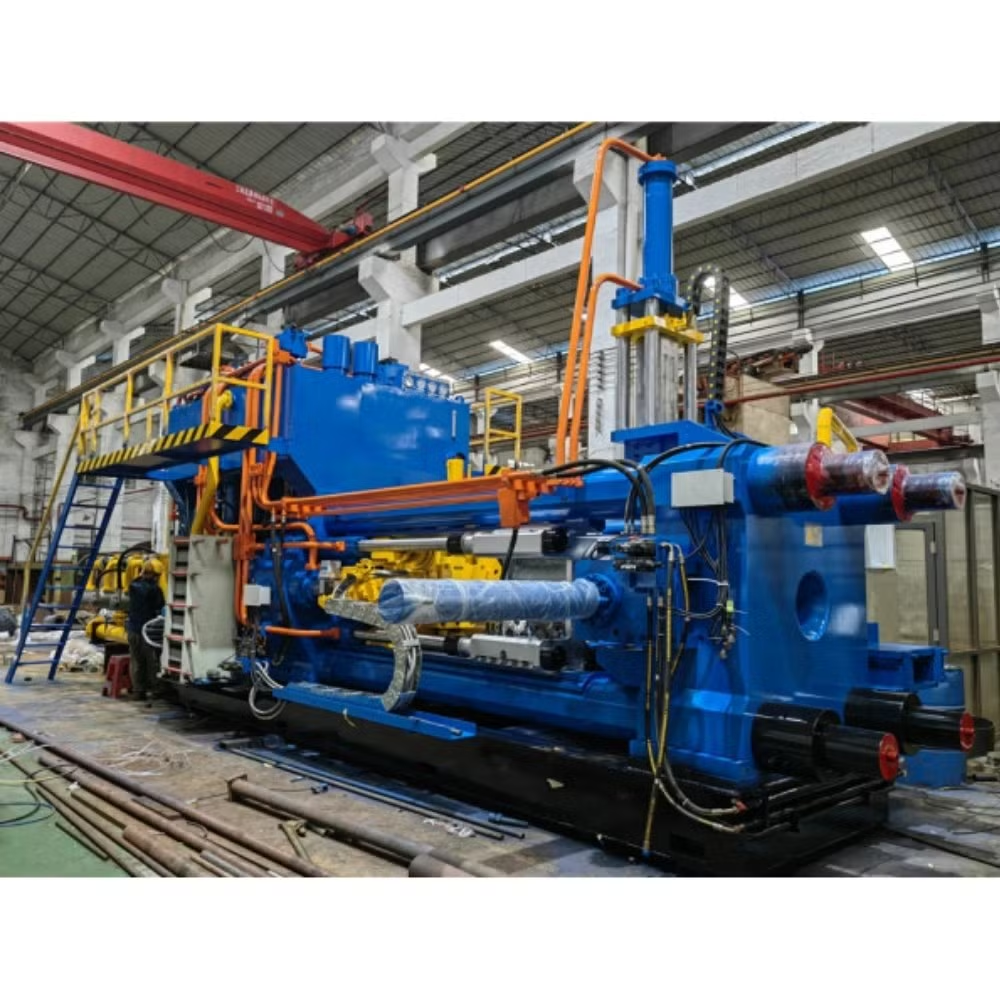
| Equipment | Key Parameter | Typical Range | Selection Priority |
|---|---|---|---|
| Billet Heater | Heating Rate | 10-50 tons/hr | High |
| Puller | Tension Control | 0.5-5.0 kN | High |
| Cooling Table | Surface Area | 20-60 meters | Medium |
| Stretcher | Clamping Force | 50-500 tons | High |
| Finishing Saw | Cutting Precision | ±0.2mm | Medium |
Common Engineering Mistakes in Equipment Selection
One of the most frequent mistakes when selecting ancillary equipment for an aluminium extrusion press line is ‘Capacity Mismatch’. This occurs when a company purchases a high-speed press but pairs it with a cooling table that is too short or a billet heater that cannot maintain the required temperature for the maximum billet size. This creates a bottleneck that effectively renders the high-speed press useless, as the entire line is forced to slow down to match the slowest component.
Another common error is ignoring the ‘Maintenance Accessibility’ of the equipment. In an extrusion environment, heat, dust, and metal shavings are constant. If the ancillary equipment is designed without easy access to critical components like sensors, motors, and hydraulic valves, maintenance will be delayed, leading to unplanned downtime. Always prioritize equipment with modular designs and clear diagnostic interfaces that allow your maintenance team to identify and resolve issues quickly.
Underestimating the importance of ‘Automation Integration’ is a critical oversight. Many buyers focus on the mechanical robustness of the equipment but fail to ensure that the control systems can communicate with the press. If the puller and the press are not synchronized via a common communication protocol (like Profinet or EtherCAT), you will experience frequent profile breakage and surface defects. Ensure that all ancillary equipment is compatible with your primary control architecture.
Finally, failing to account for ‘Future-Proofing’ is a mistake that costs companies dearly. If you anticipate moving into more complex, high-value profiles, ensure that your ancillary equipment has the flexibility to handle different alloy types and profile geometries. For example, selecting a stretcher with adjustable clamping heads or a cooling table with variable fan speeds provides the versatility needed to adapt to changing market demands without requiring a complete line overhaul.
Selection Checklist for Procurement
- Compatibility Check: Does the equipment interface seamlessly with the existing press PLC?
- Throughput Verification: Does the equipment capacity exceed the press output by at least 10%?
- Energy Efficiency: Have you compared the energy consumption of different heating and cooling technologies?
- Maintenance Support: Is there a local service team or readily available spare parts for the chosen brand?
- Safety Standards: Does the equipment comply with international safety regulations (CE, ISO)?
- Material Flexibility: Can the equipment handle the range of alloys and profile sizes you plan to produce?
- Data Logging: Does the equipment provide real-time performance data for quality control?
FAQ: Frequently Asked Questions
How do I determine the right cooling table length?
The length of the cooling table is determined by the extrusion speed and the time required for the profile to reach a temperature suitable for stretching. Generally, a longer table is better as it allows for more controlled cooling, which is essential for maintaining the mechanical properties of the aluminium alloy.
Is induction heating better than gas heating for billets?
Induction heating is generally faster and offers better temperature uniformity, which is critical for high-quality surface finishes. However, gas-fired furnaces are often more cost-effective for high-volume, standard-alloy production. The choice depends on your specific product mix and energy costs.
Why is puller synchronization so important?
The puller maintains the tension on the profile as it exits the die. If the puller is not synchronized with the press ram speed, the profile will either stretch too much (causing necking) or buckle (causing surface defects). Proper synchronization is the key to consistent profile quality.
What maintenance is required for the stretcher?
The stretcher requires regular inspection of the clamping heads, hydraulic seals, and alignment rails. Because the stretcher is under high mechanical stress, it is vital to perform periodic load tests and lubrication of all moving parts to prevent premature wear and ensure safety.
Can I mix and match brands for my extrusion line?
Yes, you can mix brands, but it is highly recommended to ensure that all equipment uses the same communication protocols. Using a single-source provider like HARSLE for the entire line often simplifies integration and provides a single point of contact for service and support.