Horizontal Baler Installation Guide: Foundation, Power, and Layout Requirements

Technical Overview of Horizontal Baler Installation
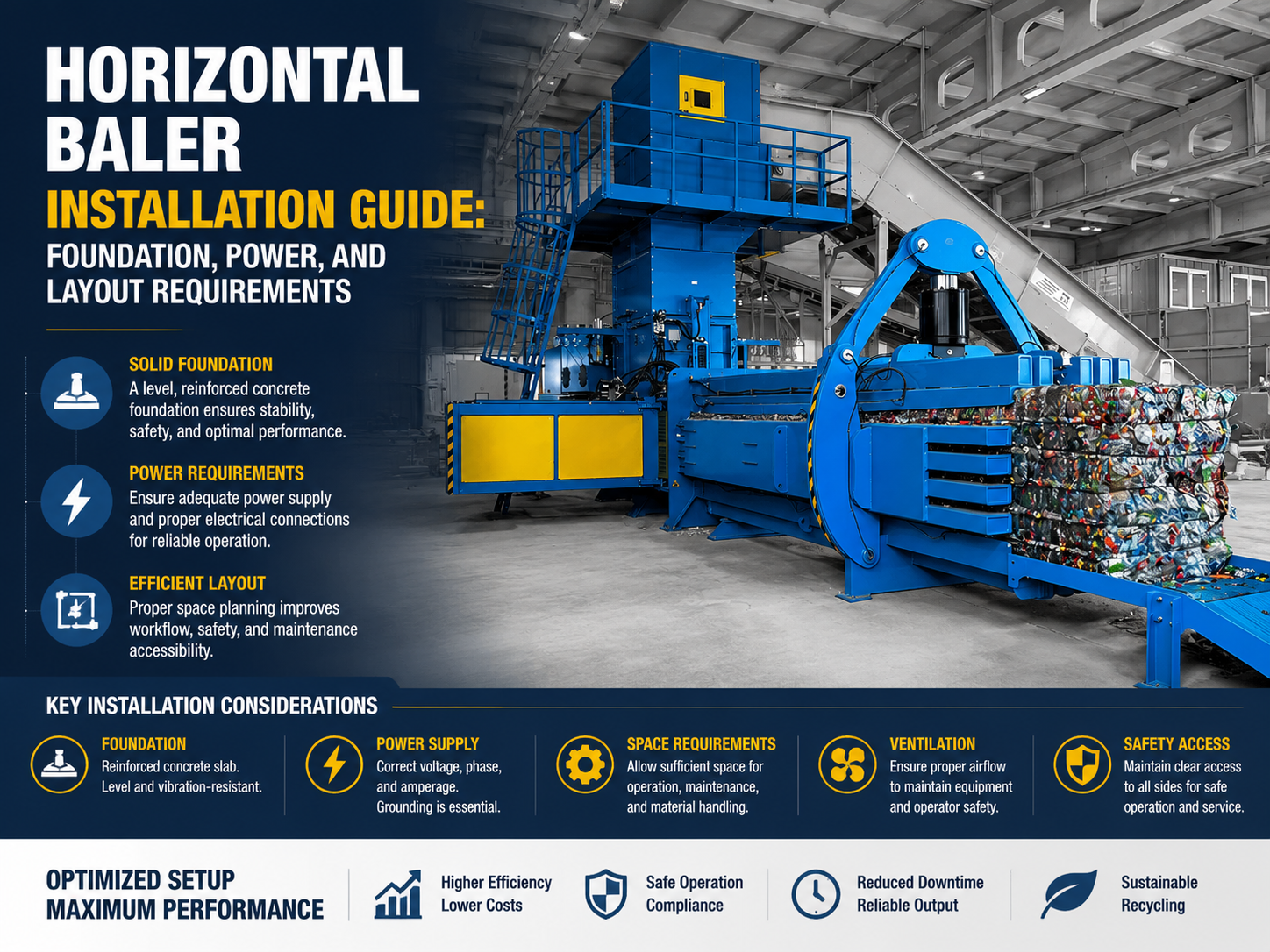
The installation of a horizontal baler is a sophisticated engineering task that extends far beyond simply placing a machine on a factory floor. As a cornerstone of modern recycling and waste management, the horizontal baler exerts massive hydraulic forces—often exceeding 100 tons—to compress materials like cardboard, plastics, and non-ferrous metals into dense, transportable units. For HARSLE equipment, the installation process is the first step in ensuring a twenty-year service life. A successful setup requires a holistic understanding of structural engineering, electrical load management, and ergonomic workflow design.
Horizontal balers are characterized by their continuous feeding capabilities and high throughput. Unlike vertical balers, which are often standalone units with minimal footprint requirements, horizontal models are integrated systems that may include conveyors, air-sort systems, and automated wire-tying mechanisms. Consequently, the Horizontal Baler Installation : Foundation, Power, Layout Requirements must be addressed during the facility planning stage, long before the machine arrives on-site. Failure to prepare the site correctly can lead to structural cracks in the floor, electrical fires, or inefficient material handling that bottlenecks the entire production line.
From a technical standpoint, the installation must account for both static and dynamic loads. The static load is the weight of the machine itself, while the dynamic load includes the vibration and shifting forces generated during the compression stroke and the ejection of the bale. Furthermore, the hydraulic system requires specific environmental conditions to prevent overheating and oil degradation. This guide provides a deep dive into the critical parameters necessary for a professional HARSLE horizontal baler installation.
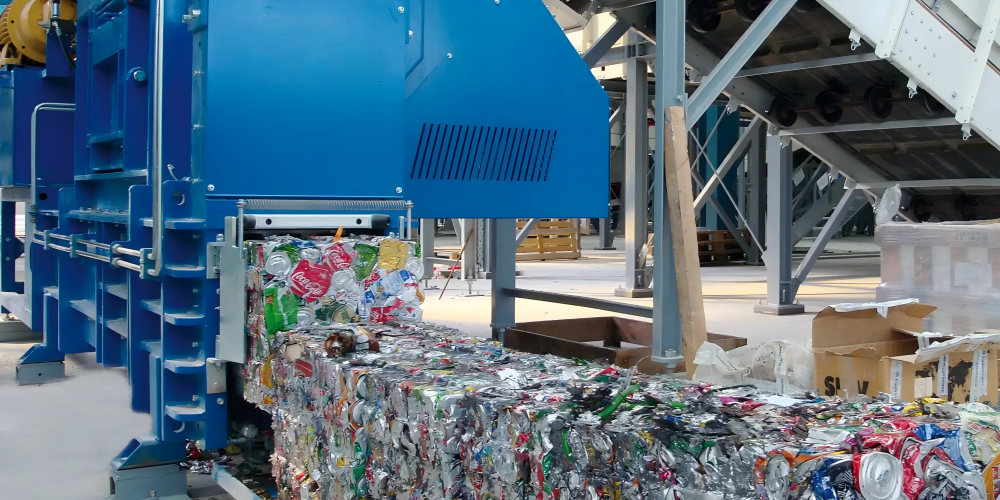
Core Parameters for Site Preparation
Before the physical installation begins, engineers must evaluate the site against the machine’s core parameters. The primary concern is the physical dimensions and the weight distribution of the unit. A standard mid-sized horizontal baler can weigh between 10,000 and 30,000 kilograms. This weight is not distributed evenly; the majority of the mass is concentrated at the hydraulic cylinder end and the compression chamber. Therefore, the floor must be rated for high point-loading rather than just average square-foot pressure.
Another core parameter is the operational clearance. Horizontal balers require significant space for the bale discharge path. Depending on the model, a finished bale can be up to 2 meters long, and the machine needs at least 5 to 10 meters of clear space in front of the discharge gate to allow for bale accumulation and forklift access. Additionally, side clearances are necessary for maintenance access to the hydraulic power unit (HPU) and the wire-tying needles. HARSLE recommends a minimum of 1.5 meters of clearance on all sides of the machine to comply with safety regulations and facilitate easy servicing.
Environmental parameters also play a role. Horizontal balers are often installed in semi-outdoor or unheated warehouse environments. However, the hydraulic fluid has an optimal operating temperature range (typically 15°C to 50°C). If the installation site is prone to extreme cold, tank heaters must be installed. Conversely, in high-temperature environments, additional oil coolers or heat exchangers are required to prevent seal failure and maintain pressure consistency. Dust control is another factor; recycling facilities are inherently dusty, so the installation layout should allow for adequate ventilation to prevent the electrical cabinets from overheating.
Calculation Method for Foundation and Power
Calculating the foundation requirements involves determining the minimum concrete thickness and reinforcement density. A common formula used in industrial engineering for heavy machinery is the 1.5x rule: the foundation should ideally weigh at least 1.5 times the weight of the machine to dampen vibrations effectively. For a 20-ton baler, this implies a substantial concrete slab. The concrete should have a minimum compressive strength of 3,000 PSI (C25/30 grade). To calculate the required thickness (T), engineers use the formula: T = √(P / (4 * σ)), where P is the maximum load and σ is the allowable soil bearing pressure. In most industrial settings, a reinforced concrete slab of 200mm to 300mm is the standard requirement.
Power calculations are equally critical. The total power consumption is not just the sum of the motor horsepowers. You must account for the “Inrush Current” or “Starting Current,” which can be 5 to 7 times the rated current of the motor. For a 45kW motor, the startup draw can momentarily spike to over 200 Amps. To calculate the required wire gauge, use the formula: I = P / (V * √3 * PF), where I is current, P is power in watts, V is voltage, and PF is the power factor (usually 0.85 for hydraulic motors). It is essential to size the circuit breakers and cables based on the peak load to prevent nuisance tripping and voltage drops that can damage the PLC (Programmable Logic Controller).
Layout calculations must also factor in the “Cycle Time” and “Material Density.” If the baler processes 10 tons of cardboard per hour, the layout must accommodate the inflow of 10 tons of loose material and the outflow of approximately 15-20 bales. This requires calculating the square footage needed for the feeding conveyor’s incline and the storage area for finished bales. A bottleneck in the layout can reduce the machine’s effective ROI by 30% or more, regardless of the machine’s theoretical speed.
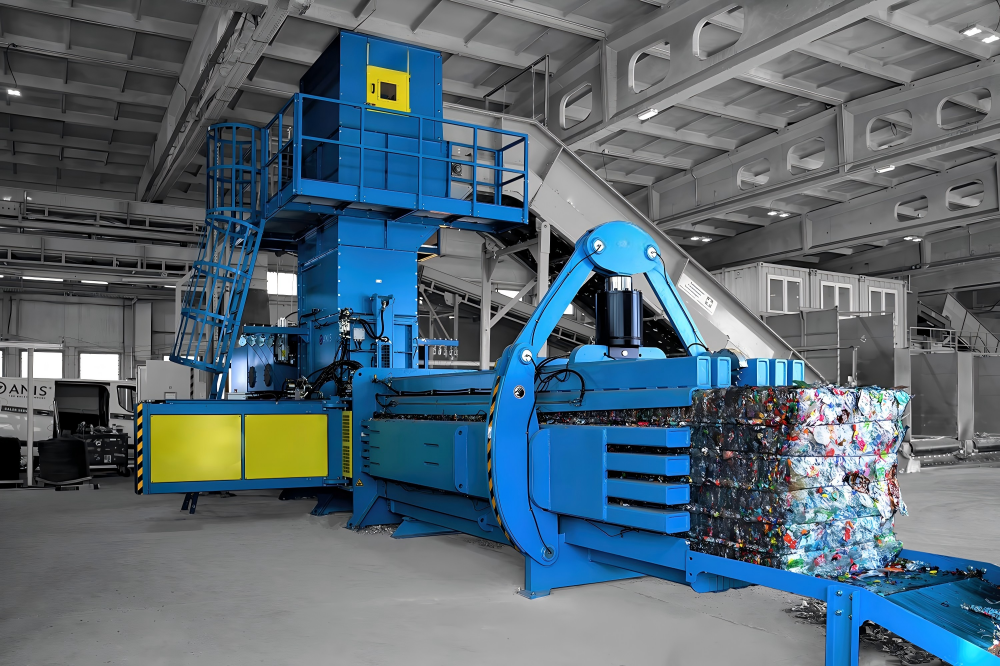
Parameter Table: Installation Specifications
| Baler Model Class | Main Motor Power (kW) | Min. Concrete Thickness (mm) | Required Amperage (400V) | Min. Operating Area (sqm) | Foundation Reinforcement |
|---|---|---|---|---|---|
| Light Duty (30-50T) | 15 – 22 | 150 | 60A | 60 | Single Layer Rebar |
| Medium Duty (60-100T) | 30 – 45 | 200 | 100A | 100 | Double Layer Rebar |
| Heavy Duty (120-200T) | 55 – 110 | 300+ | 200A+ | 180 | Heavy Industrial Mesh |
| Auto-Tie High Speed | 75 – 150 | 250 | 250A | 150 | Vibration Dampening Pads |
Common Engineering Mistakes in Installation
One of the most frequent mistakes in Horizontal Baler Installation : Foundation, Power, Layout Requirements is the failure to properly level the machine. A horizontal baler operates with a long-stroke ram. If the frame is even slightly tilted (more than 2mm per meter), the ram will exert uneven pressure on the wear plates and hydraulic seals. This leads to premature wear, oil leaks, and in extreme cases, structural twisting of the baler frame. Installers must use precision laser levels or high-grade spirit levels and utilize heavy-duty steel shims to ensure the machine is perfectly horizontal before anchoring it to the floor.
Another common error is undersizing the electrical supply. Many facilities use existing wiring that is not rated for the continuous high-torque demands of a hydraulic pump. This results in voltage sag. When the voltage drops, the motor draws more current to maintain torque, leading to excessive heat and eventual motor winding failure. Furthermore, improper grounding (earthing) can cause “ghost” errors in the PLC and touch-screen interface, as the high-frequency noise from the motors interferes with low-voltage control signals. Always ensure a dedicated, clean ground line is established for the baler.
Layout mistakes often involve ignoring the “Human Factor” and maintenance access. Placing a baler too close to a wall might save floor space, but it makes it impossible to change a hydraulic hose or service the wire-tying unit without moving the entire machine. Similarly, failing to account for the swing radius of the electrical cabinet doors or the access height for the oil reservoir can turn simple 30-minute maintenance tasks into multi-hour ordeals. Finally, neglecting the drainage and pit requirements for conveyor-fed systems can lead to debris accumulation that poses a fire hazard.
Selection Checklist for Installation Readiness
- Foundation Check: Is the concrete cured for at least 28 days? Is the surface flat within a 5mm tolerance across the entire footprint?
- Power Supply: Is the transformer capacity sufficient for the peak inrush current? Are the cables sized for the distance from the main breaker to the machine to prevent voltage drop?
- Access Routes: Is there a clear path for the delivery truck and a forklift/crane with sufficient lifting capacity (check the machine’s shipping weight)?
- Hydraulic Fluid: Do you have the correct grade of anti-wear hydraulic oil (e.g., ISO VG 46 or 68) ready for the initial fill?
- Safety Zones: Are the emergency stop locations accessible? Is there enough space for safety fencing if required by local regulations?
- Material Handling: Is the feeding conveyor aligned with the hopper? Is the bale discharge area clear of structural columns or other machinery?
- Environmental Controls: Is the area well-ventilated? If outdoors, is the machine protected from direct rain and extreme sunlight?
Frequently Asked Questions (FAQ)
1. Does a horizontal baler need to be bolted to the floor?
Yes, HARSLE strongly recommends anchoring the horizontal baler using heavy-duty expansion bolts or chemical anchors. The dynamic forces generated during the compression and shearing of material can cause the machine to “walk” or shift over time, which can stress the hydraulic connections and electrical conduits. Anchoring ensures the machine remains aligned with its feeding and discharge systems.
2. What type of electrical protection is required?
A dedicated circuit breaker with a D-curve (designed for high inductive loads) is essential. Additionally, we recommend a phase-failure protector and an over-current relay. For regions with unstable power grids, a voltage stabilizer or surge protector is highly advised to protect the sensitive PLC and HMI components from power spikes.
3. Can I install a horizontal baler on an asphalt surface?
No. Asphalt is a semi-solid material that deforms under high pressure and temperature. The weight of a horizontal baler, combined with the heat from the hydraulic system, will cause the machine to sink and become unlevel. A reinforced concrete pad is the only acceptable foundation for industrial-grade balers.
4. How much ceiling height is required?
The ceiling height must account for the machine’s height plus the height of the feeding hopper and any overhead conveyors. Generally, a minimum of 5 to 6 meters is required. You must also ensure there is enough overhead clearance for a crane or forklift to perform maintenance on the hydraulic cylinders if they ever need to be removed.
5. How often should the foundation be inspected?
The foundation and anchor bolts should be inspected every six months. Look for cracks in the concrete around the anchor points and ensure the bolts remain tight. Vibration can occasionally loosen anchors, and any movement in the machine should be addressed immediately to prevent long-term structural damage.
6. What are the cooling requirements for the hydraulic system?
Most HARSLE horizontal balers come equipped with an air-cooled or water-cooled heat exchanger. For air-cooled units, ensure there is at least 2 meters of clear space around the fan to allow for hot air dissipation. If the ambient temperature regularly exceeds 35°C, you may need to upgrade to a larger cooling unit or ensure the facility has high-volume exhaust fans.