Semi-Automatic Horizontal Baler Guide: When It Makes Sense for Industrial Plants

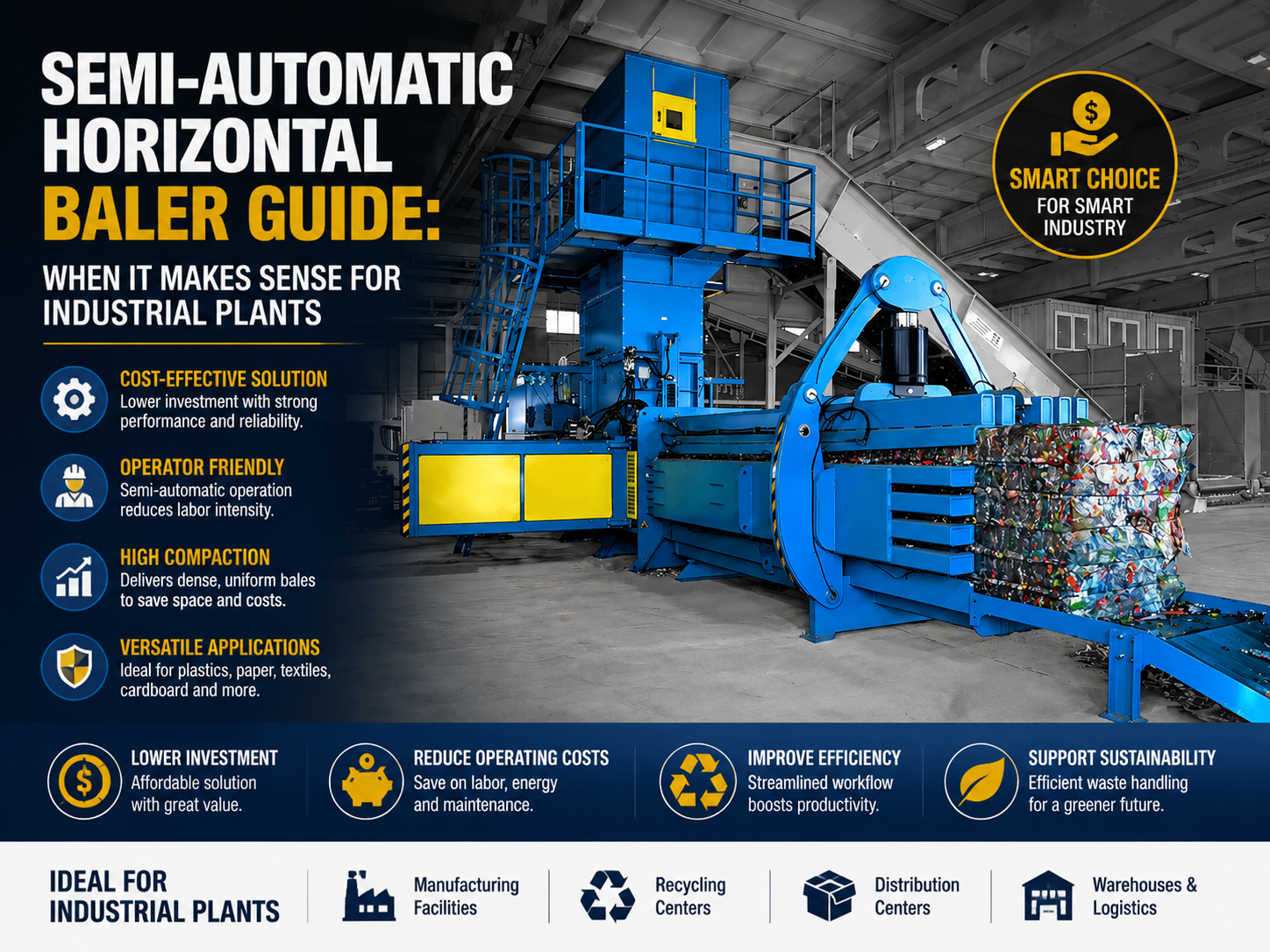
Technical Overview of Semi-Automatic Horizontal Balers
In the modern industrial landscape, waste management is no longer a secondary concern; it is a critical component of operational efficiency and sustainability. The Semi-Automatic Horizontal Baler : When It Makes Sense Industrial Plants often becomes the focal point of this discussion. Unlike vertical balers, which are limited by manual loading and height constraints, or fully automatic balers, which require significant capital investment, the semi-automatic horizontal baler offers a middle-ground solution. These machines are designed to handle moderate to high volumes of waste materials, including cardboard, plastics, paper, and even light metal scraps, by compressing them into dense, manageable bales.
The technical architecture of a semi-automatic horizontal baler consists of a large hopper, a powerful hydraulic ram, and a compression chamber. The “semi-automatic” designation refers specifically to the tying process. While the compression, shearing, and bale ejection are handled automatically by the machine’s PLC (Programmable Logic Controller) and hydraulic system, the operator must manually thread and tie the wires or plastic straps around the bale once it reaches the desired length. This design allows for a continuous feed of material into the hopper—often via conveyor belt or air-trim system—without the extreme cost associated with fully automated tying heads.
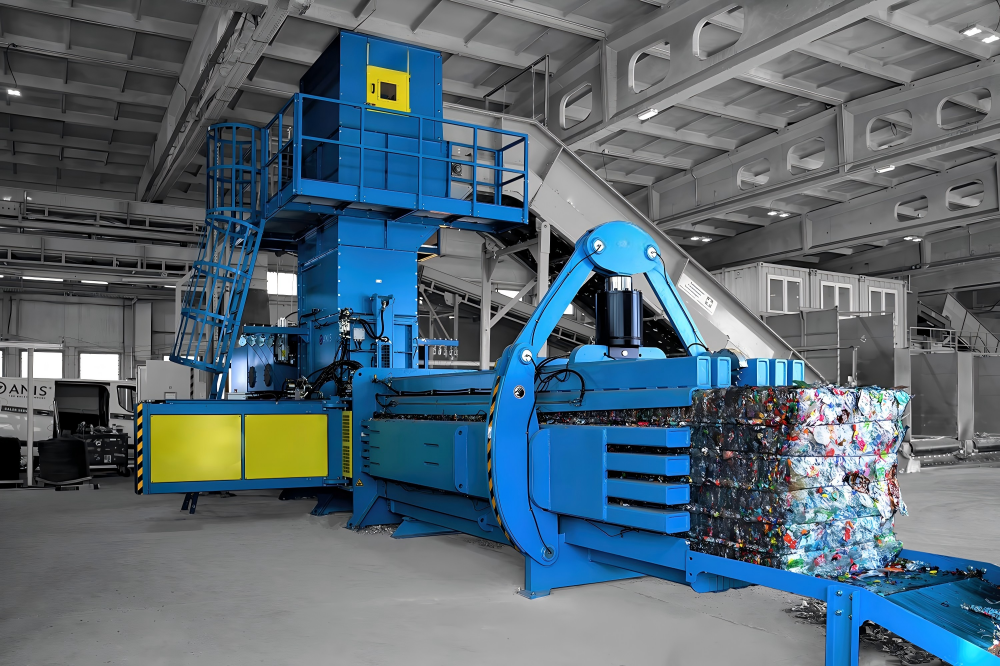
From an engineering perspective, these machines utilize high-pressure hydraulic cylinders to exert forces ranging from 30 to over 120 tons. The horizontal orientation allows for a much larger feed opening compared to vertical units, making it possible to process bulky items like large shipping boxes or industrial plastic wrap without pre-shredding. The integration of high-efficiency motors and variable displacement pumps in modern HARSLE models ensures that energy consumption is minimized while maximizing the throughput speed, a critical factor for plants operating on tight schedules.
Furthermore, the structural integrity of the baler is paramount. Industrial-grade semi-automatic balers are constructed with heavy-duty steel plates and reinforced stress points to withstand the repetitive high-pressure cycles. The inclusion of replaceable wear liners within the compression chamber extends the machine’s lifespan, ensuring that the abrasive nature of certain waste materials does not lead to premature structural failure. For industrial plants, this translates to a lower total cost of ownership and higher reliability over a 10-to-15-year operational horizon.
Core Parameters of Semi-Automatic Horizontal Balers
Understanding the core parameters is essential when determining if a Semi-Automatic Horizontal Baler : When It Makes Sense Industrial Plants. The first and most critical parameter is the Pressing Force (Tonnage). This dictates the density of the final bale. For standard cardboard (OCC), a 50-ton press is often sufficient, but for denser materials like PET plastics or aluminum cans, higher tonnages are required to achieve the necessary bale weights for optimal shipping rates. Higher density leads to fewer bales, which reduces wire consumption and transportation costs.
The second parameter is the Cycle Time. This is the duration it takes for the hydraulic ram to move from its home position, compress the material, and return. In a high-volume industrial setting, a cycle time of 40 to 60 seconds is standard. However, this must be balanced with the Feed Opening size. A larger feed opening allows for more material to be processed per cycle, effectively increasing the hourly throughput even if the cycle time is slightly longer. Engineers must evaluate the volume of waste generated per hour to ensure the baler does not become a bottleneck in the production line.
Motor Power and Hydraulic Flow Rate are also vital. Most industrial semi-automatic balers utilize motors ranging from 15kW to 45kW. The hydraulic flow rate, measured in liters per minute (LPM), determines the speed of the ram. Modern systems often employ “regenerative circuits” that allow the ram to move faster during the non-compression part of the stroke, saving time and energy. Additionally, the Bale Size (e.g., 1100mm x 750mm x Variable Length) should be compatible with standard shipping containers or truck dimensions to maximize logistics efficiency.
Lastly, the Cooling System and Oil Filtration are often overlooked but are essential for continuous operation. Industrial plants often run multiple shifts; without an efficient air or water cooling system for the hydraulic oil, the machine may overheat, leading to seal failure and decreased performance. High-quality filtration systems ensure that contaminants do not damage the sensitive valves and pumps, maintaining the precision of the PLC-controlled operations.
Calculation Method for Throughput and ROI
To determine if a semi-automatic horizontal baler is the right investment, industrial managers must perform specific calculations. The primary calculation is the Hourly Throughput (T). This can be estimated using the formula: T = (V / C) × W, where V is the volume of the compression chamber, C is the cycle time in hours, and W is the expected density of the material. For example, if a baler has a chamber that holds 1.5 cubic meters, a cycle time of 45 seconds, and processes cardboard at a compressed density of 400kg/m³, the theoretical throughput can be calculated to ensure it meets the plant’s daily waste generation.
Another critical calculation is the Bale Density and Shipping Optimization. Logistics companies often charge by the truckload. If a plant produces bales that are too light, they will pay to ship “air.” By calculating the target bale weight (e.g., 500kg for cardboard) and dividing the total monthly waste by this weight, managers can determine how many bales will be produced and how many truckloads will be required. Comparing this to the cost of shipping loose waste or smaller vertical bales provides a clear picture of the potential savings in transportation costs.
Return on Investment (ROI) calculations must also include labor costs. While a semi-automatic baler requires an operator for the tying process, it is significantly faster than a vertical baler. If a plant currently uses three vertical balers and three operators, switching to one semi-automatic horizontal baler with a conveyor feed might reduce labor requirements to a single operator. The formula for ROI is: ROI = (Annual Savings in Labor + Annual Savings in Logistics + Revenue from Recyclables) / Total Investment Cost. In many industrial scenarios, the ROI for a HARSLE semi-automatic baler is achieved within 12 to 24 months.
Finally, consider the “Compaction Ratio.” Different materials have different ratios; for instance, loose cardboard has a much higher compaction ratio than plastic film. Understanding these ratios helps in selecting the right ram pressure. A higher compaction ratio requires more force to reach the desired density. By analyzing the specific waste stream of the plant, engineers can specify a machine that provides the optimal balance between power and energy consumption, avoiding the mistake of over-specifying a machine that is too expensive to run.
Technical Parameter Table
| Parameter | Entry-Level (HBA-30) | Mid-Range (HBA-60) | High-Capacity (HBA-100) |
|---|---|---|---|
| Pressing Force | 30 Tons | 60 Tons | 100 Tons |
| Motor Power | 11 kW / 15 HP | 22 kW / 30 HP | 45 kW / 60 HP |
| Feed Opening Size | 1000 x 700 mm | 1200 x 1000 mm | 1500 x 1100 mm |
| Bale Size (W x H) | 800 x 600 mm | 1100 x 750 mm | 1100 x 1100 mm |
| Cycle Time | 50 Seconds | 45 Seconds | 40 Seconds |
| Throughput (OCC) | 1.5 – 2 Tons/Hr | 3 – 5 Tons/Hr | 6 – 8 Tons/Hr |
| Machine Weight | ~4,500 kg | ~8,500 kg | ~14,000 kg |
Common Engineering Mistakes in Baler Selection
One of the most frequent mistakes in selecting a Semi-Automatic Horizontal Baler : When It Makes Sense Industrial Plants is undersizing the feed hopper. Even if the pressing force is sufficient, a small hopper will struggle with large cardboard boxes or bulky plastic containers, leading to “bridging.” Bridging occurs when material wedges itself across the opening, preventing it from falling into the compression chamber. This requires manual intervention, defeating the purpose of an automated feed system and creating a significant safety hazard for operators.
Another common error is ignoring the material’s “memory” or elasticity. Materials like plastic film or certain types of foam have high elasticity; they want to expand after the ram retracts. If the baler is not equipped with sufficient “retainer dogs” (metal teeth that hold the material in place) or if the hydraulic pressure is too low, the bale will expand significantly, making it difficult to tie and potentially causing the wires to snap. Engineers must ensure the baler design matches the specific rebound characteristics of the waste stream.
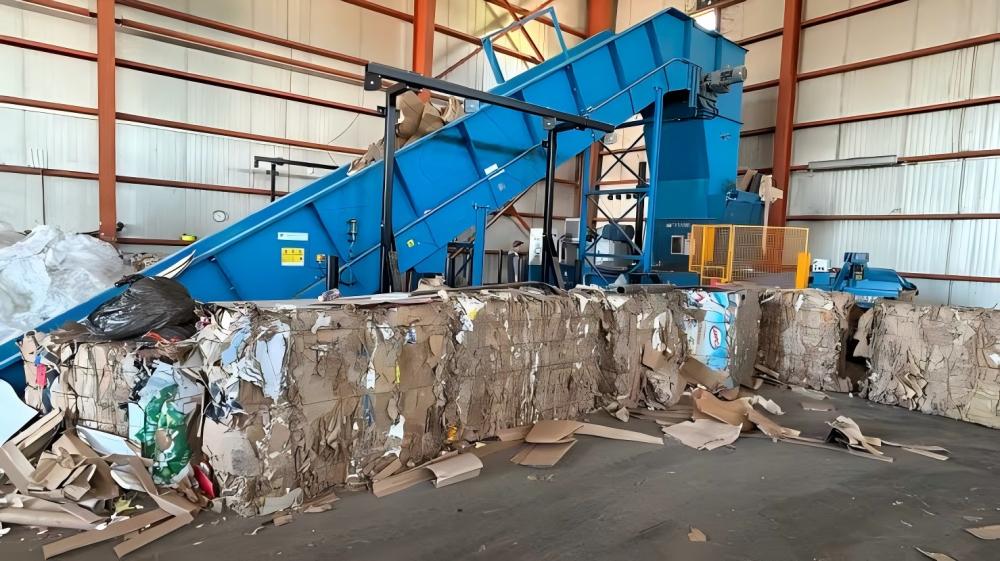
Inadequate cooling and filtration are also major pitfalls. In a high-throughput industrial environment, the hydraulic oil can reach temperatures exceeding 70°C if not properly managed. High temperatures degrade the oil’s viscosity, leading to increased wear on the pump and valves. Furthermore, many plants fail to implement a rigorous maintenance schedule for the shear blades. If the blades become dull, the machine will consume more power to cut through the material at the top of the chamber, and the resulting “tails” can interfere with the tying process.
Finally, many buyers fail to account for the electrical infrastructure required. A 45kW motor has a significant startup current draw. Without a soft-starter or a VFD (Variable Frequency Drive), the sudden load can cause voltage drops in the plant’s electrical grid, affecting other sensitive machinery. It is essential to consult with the plant’s electrical engineer to ensure the power supply can handle the peak loads of the baler’s hydraulic system during the final stages of compression.
Selection Checklist for Industrial Plants
- Material Type and Volume: Document the exact types of waste (OCC, PET, HDPE, Paper) and the peak volume generated per hour.
- Space Constraints: Measure the available floor space, including the area needed for the conveyor, the bale ejection zone, and the operator’s workspace for tying.
- Feed Method: Determine if the baler will be fed manually, by forklift, by conveyor, or by an air-conveyance system.
- Bale Weight Requirements: Check with your recycling partner to find the minimum bale weight required to receive the highest market value for your materials.
- Electrical Specifications: Confirm the available voltage (e.g., 380V, 415V, 480V) and ensure the circuit breaker can handle the motor’s full load amps.
- Safety Features: Ensure the machine includes emergency stops, safety interlocks on all access doors, and a Category 3 or 4 safety circuit if required by local regulations.
- Maintenance Access: Verify that there is enough clearance around the machine to perform hydraulic oil changes and cylinder seal replacements.
- Operator Training: Plan for the training of at least two operators per shift on the manual tying process and basic troubleshooting.
Frequently Asked Questions (FAQ)
1. What is the main difference between a semi-automatic and a fully automatic horizontal baler?
The primary difference lies in the tying mechanism. In a semi-automatic baler, an operator must manually thread the wires through the bale and tie them off. In a fully automatic baler, the machine uses a specialized “twister” or “tier” head to perform this task without human intervention. Fully automatic machines are more expensive and are typically reserved for plants processing more than 10 tons of waste per hour.
2. How many people are needed to operate a semi-automatic horizontal baler?
Typically, only one operator is needed. Their primary task is to monitor the feed and perform the tying process once the bale is complete. If the machine is fed by a conveyor, the operator can often perform other tasks nearby until the “bale full” alarm sounds. This makes it a very labor-efficient solution for most medium-sized industrial plants.
3. Can a semi-automatic horizontal baler handle metal scraps?
Yes, but with limitations. These machines are excellent for light non-ferrous metals like aluminum cans, copper wiring, or thin-gauge steel trimmings. However, they are not designed for heavy structural steel or thick plates. For those materials, a dedicated scrap metal baler with higher tonnages and hardened steel liners is required to prevent damage to the machine.
4. What kind of maintenance is required for the hydraulic system?
Regular maintenance includes checking oil levels daily, replacing the oil filter every 500-1000 hours, and performing a full oil change every 2000-4000 hours depending on the environment. It is also crucial to inspect the hydraulic hoses for leaks or abrasions and to ensure the cooling fans are free of dust and debris to prevent overheating.
5. How long does it take to tie a bale manually?
With a trained operator, the manual tying process usually takes between 2 to 5 minutes, depending on the number of wires used (typically 3 to 5). While this pauses the compression cycle briefly, the overall throughput remains much higher than that of a vertical baler because the feeding process is continuous during the compression phase.
6. Is it worth buying a semi-automatic baler if we only produce 2 tons of waste per day?
If your waste is bulky and takes up significant floor space, or if you are paying high fees for frequent waste pickups, it may still be worth it. However, for 2 tons per day, a high-end vertical baler might be more cost-effective. The semi-automatic horizontal baler truly “makes sense” when waste volume exceeds 5 tons per day or when labor reduction is a primary goal.