
Hammer Shredder Rotor Balancing Guide for Smooth and Reliable Operation

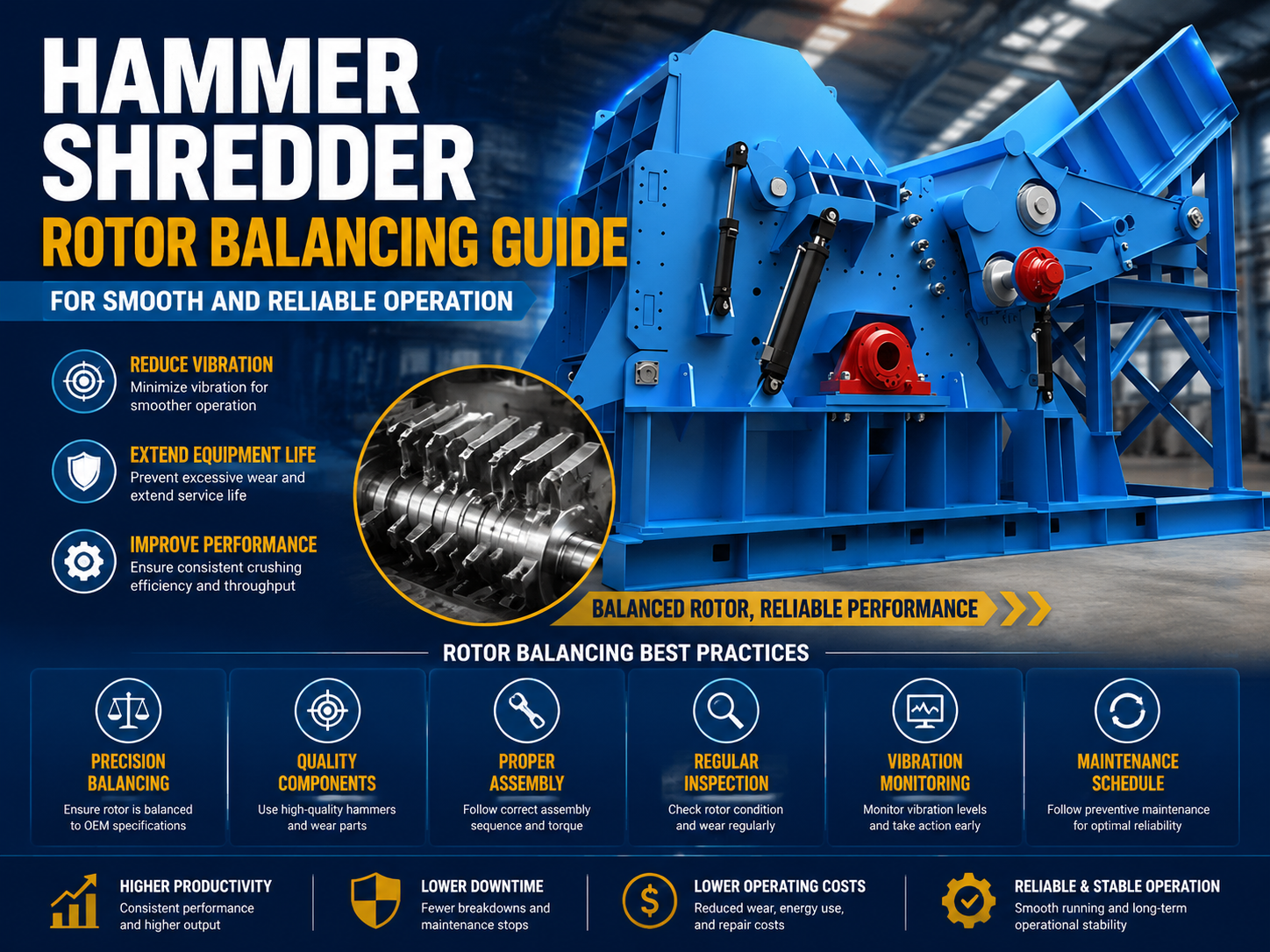
Technical Overview of Hammer Shredder Rotor Balancing
In the world of heavy-duty metal recycling and scrap processing, the hammer shredder stands as a cornerstone of efficiency. However, the heart of this machine—the rotor—operates under extreme mechanical stress. Achieving Hammer Shredder Rotor Balancing Smooth Reliable Operation is not merely a maintenance preference; it is a fundamental requirement for safety, longevity, and cost-effectiveness. A rotor that is out of balance generates excessive centrifugal forces that can lead to catastrophic structural failure, premature bearing wear, and significant downtime.
Rotor balancing involves the process of aligning the principal inertia axis of the rotor assembly with its geometric rotational axis. In a hammer shredder, this is particularly challenging because the rotor is a complex assembly consisting of a central shaft, multiple discs or spiders, hammer pins, and the hammers themselves. Unlike a solid cylinder, the mass distribution in a shredder rotor changes as hammers wear down or are replaced. Therefore, balancing must be viewed as a continuous lifecycle process rather than a one-time factory setting.
There are two primary types of unbalance: static and dynamic. Static unbalance occurs when the center of gravity is offset from the axis of rotation, causing the rotor to always stop with the heavy side down. Dynamic unbalance is more complex, occurring when the principal inertia axis is tilted relative to the rotational axis, creating a couple-force that generates wobbling. For high-speed industrial shredders, dynamic balancing is essential to ensure that the machine operates without destructive vibrations at its rated RPM.
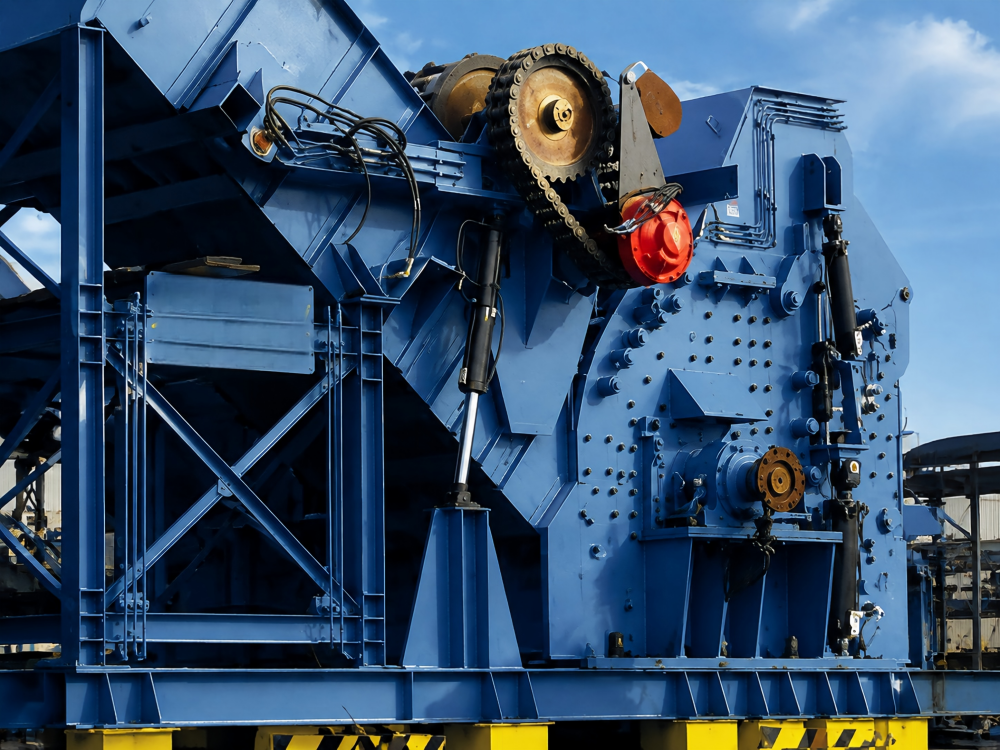
The physics of an unbalanced rotor are governed by the formula for centrifugal force: F = m × r × ω². Here, ‘m’ represents the unbalanced mass, ‘r’ is the distance from the center, and ‘ω’ is the angular velocity. Because the force increases with the square of the speed, even a small unbalance at high RPMs can result in thousands of pounds of unnecessary force being hammered into the machine’s frame and foundation every second. This is why precision balancing is the key to Hammer Shredder Rotor Balancing Smooth Reliable Operation.
Core Parameters for Effective Rotor Balancing
To achieve a balanced state, engineers must monitor several core parameters. The first is the Balance Quality Grade (G-Grade), defined by ISO 1940/1. For most industrial shredders, a grade of G6.3 is standard, though high-performance machines may require G2.5. This grade represents the permissible residual unbalance relative to the rotor’s mass and operating speed. Lower numbers indicate a more precise balance requirement.
The second parameter is Rotational Speed (RPM). Shredders typically operate between 400 and 1,200 RPM depending on the material being processed. As speed increases, the tolerance for unbalance narrows significantly. It is crucial to balance the rotor at its actual operating speed or use scaling factors to ensure stability across the entire operational range. Variable frequency drives (VFDs) can complicate this, as they allow the machine to run at various speeds, potentially hitting resonance frequencies if the rotor is not perfectly tuned.
Thirdly, we must consider Mass Distribution and Symmetry. In a hammer shredder, the hammers are the primary wear components. If hammers are replaced individually rather than in balanced sets, the rotor’s mass distribution becomes asymmetrical. Precision rotors utilize a staggered hammer pattern to ensure that the impact forces are distributed evenly across the shaft, which also aids in maintaining dynamic balance during operation. The weight of each hammer must be recorded and matched with its counterpart on the opposite side of the rotor.
Finally, Vibration Amplitude and Velocity serve as the primary indicators of balance health. Modern shredders are equipped with vibration sensors (accelerometers) that provide real-time data. A velocity of less than 2.8 mm/s is generally considered excellent, while anything above 7.1 mm/s indicates a need for immediate inspection and re-balancing. Monitoring these parameters ensures Hammer Shredder Rotor Balancing Smooth Reliable Operation throughout the machine’s service life.
Calculation Method for Residual Unbalance
Calculating the required balance weights involves determining the amount of residual unbalance that can be tolerated. The standard formula for Permissible Residual Unbalance (Uper) is: Uper = 1000 × (G × M) / ω. In this equation, ‘G’ is the balance grade (e.g., 6.3), ‘M’ is the rotor mass in kilograms, and ‘ω’ is the angular velocity in radians per second. This calculation gives the result in gram-millimeters (g·mm).
Once the total permissible unbalance is known, it must be divided between the correction planes. For a standard shredder rotor, there are usually two correction planes located at the outer discs. If the rotor is long, a third central plane may be used. The distribution of correction weights is handled through vector addition. Since unbalance is a vector quantity (having both magnitude and direction), adding a weight at 0 degrees does not just add mass; it shifts the center of gravity in that specific direction.
During a field balance, technicians use a portable balancer to measure the original vibration (O). They then add a known ‘trial weight’ (T) at a specific angle and measure the new vibration (O+T). By comparing the change in vibration caused by the trial weight, the instrument calculates the exact mass and angle required to cancel out the original unbalance. This iterative process is the most reliable way to achieve Hammer Shredder Rotor Balancing Smooth Reliable Operation in a field environment where the rotor cannot be removed and placed on a balancing machine.
It is also important to account for the ‘hammer swing’ radius. Since hammers are pinned and can swing, they must be secured in their extended (working) position during the balancing process. If the hammers are allowed to flop around, the center of gravity will shift, rendering the balance data useless. Specialized jigs or centrifugal locking methods are often employed to ensure the hammers remain in a consistent radial position during the test spins.
Rotor Balancing Parameter Table
The following table provides a reference for typical balancing requirements based on rotor size and application. These values are intended as a general guide for achieving Hammer Shredder Rotor Balancing Smooth Reliable Operation.
| Rotor Diameter (mm) | Operating Speed (RPM) | ISO Balance Grade | Max Vibration Velocity (mm/s) | Recommended Inspection Interval |
|---|---|---|---|---|
| 800 – 1200 | 1000 – 1200 | G6.3 | 4.5 | Weekly |
| 1200 – 1600 | 750 – 1000 | G6.3 | 5.0 | Bi-Weekly |
| 1600 – 2200 | 500 – 750 | G16 | 6.3 | Monthly |
| 2200+ | 400 – 600 | G16 | 7.1 | Monthly |
Note: Larger rotors often operate at lower speeds and can tolerate a slightly higher balance grade (G16) due to the massive inertia involved, but the goal should always be to minimize vibration to the lowest possible level to protect the bearings and housing.
Common Engineering Mistakes in Rotor Balancing
One of the most frequent mistakes in shredder maintenance is Partial Hammer Replacement. When a few hammers break or wear faster than others, operators are often tempted to replace only the damaged ones. This creates a massive weight disparity. Even if the new hammers are the same “model,” manufacturing tolerances and wear on the remaining hammers mean the rotor will be significantly out of balance. Always replace hammers in full rows or diametrically opposed pairs, ensuring the weights are matched within 1-2%.
Another common error is Ignoring Thermal Expansion. Shredders generate significant heat during operation. As the shaft and discs heat up, they expand. If the rotor was balanced cold but operates at 80°C, the slight change in geometry can shift the balance. High-end balancing procedures involve “hot balancing” or accounting for thermal growth in the initial calculations. Furthermore, if the rotor has been repaired via welding, internal stresses can cause the rotor to bow slightly as it reaches operating temperature, leading to mysterious vibration issues.
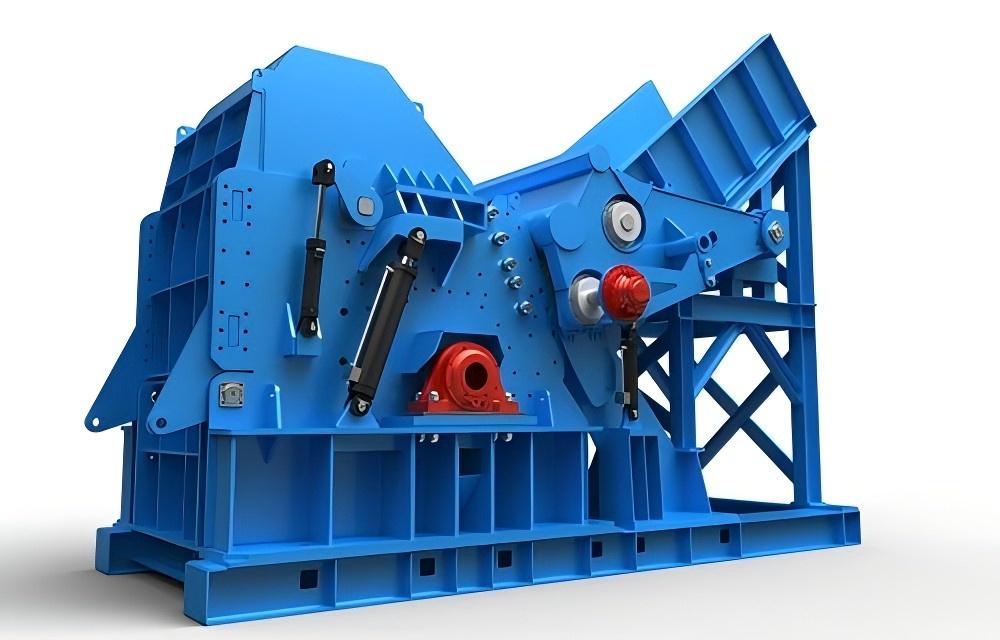
Neglecting the Bearing Fit is a third critical mistake. A rotor can be perfectly balanced, but if the bearings have excessive internal clearance or if the bearing housings are worn (loose fit), the rotor will “float.” This mechanical looseness mimics the symptoms of unbalance on a vibration analyzer but cannot be fixed by adding weights. Engineers must ensure that the mechanical integrity of the support system is perfect before attempting to fine-tune the balance of the rotor itself.
Finally, many operators fail to Clean the Rotor before balancing. Accumulated dust, grease, or wedged pieces of scrap metal act as parasitic mass. If you balance a dirty rotor, and then the dirt falls off during operation, the rotor will immediately go out of balance again. A thorough pressure wash and inspection of the rotor pockets are mandatory prerequisites for any balancing exercise aimed at Hammer Shredder Rotor Balancing Smooth Reliable Operation.
Selection Checklist for a Balanced Rotor System
When purchasing a new hammer shredder or a replacement rotor, use this checklist to ensure the equipment is designed for Hammer Shredder Rotor Balancing Smooth Reliable Operation:
- Material Quality: Is the shaft made from high-alloy forged steel (e.g., 42CrMo) to resist bowing and fatigue?
- Balancing Certificate: Does the manufacturer provide a dynamic balancing report showing the residual unbalance and the G-grade achieved?
- Hammer Weight Matching: Does the supplier provide a weight map for the hammers, ensuring they are grouped in balanced sets?
- Vibration Monitoring: Is the machine equipped with integrated, permanent vibration sensors with automatic shut-off capabilities?
- Disc Design: Are the rotor discs keyed and shrink-fitted to the shaft to prevent independent movement or shifting?
- Access for Maintenance: Is there sufficient space and specialized ports to add balance weights without fully dismantling the machine?
- Bearing Protection: Are the bearings housed in heavy-duty, self-aligning pillow blocks with effective dust seals?
Frequently Asked Questions (FAQ)
How often should I balance my hammer shredder rotor?
Routine balancing should be checked whenever a full set of hammers is replaced. Additionally, if the vibration sensors show an upward trend in velocity (exceeding 6-7 mm/s), an immediate balance check is required. For high-volume operations, a professional dynamic balance check every six months is recommended as preventative maintenance.
Can I balance a rotor by just adding weights to the outside of the shredder?
No. Balancing must be done on the rotor itself. Adding weights to the pulley or the coupling might reduce vibration at that specific point, but it creates internal “bending moments” in the shaft that will eventually lead to shaft failure. Always apply correction weights to the designated balancing planes on the rotor discs.
What is the difference between static and dynamic balancing for a shredder?
Static balancing is done while the rotor is stationary or rotating very slowly; it only corrects the center of gravity. Dynamic balancing is done at operating speeds and corrects the “wobble” or couple-unbalance. Because shredder rotors are long and heavy, dynamic balancing is the only way to ensure Hammer Shredder Rotor Balancing Smooth Reliable Operation.
Why does my shredder vibrate even after balancing?
If balancing doesn’t solve the vibration, the issue is likely “mechanical looseness,” misalignment with the motor, or a bent shaft. Check the bearing clearances, the tightness of the foundation bolts, and the alignment of the coupling. Resonance (running at a speed that matches the natural frequency of the structure) can also cause extreme vibration despite a balanced rotor.
Does hammer wear affect the balance?
Yes, significantly. Hammers do not wear perfectly evenly. As they lose mass, the balance of the rotor shifts. This is why it is critical to use high-quality, wear-resistant hammers and to monitor vibration levels daily. If one hammer breaks off entirely, the resulting unbalance is an emergency situation that requires an immediate stop to prevent machine destruction.
What are the best materials for balance weights?
Balance weights should be made of the same material as the rotor discs (usually structural steel) and must be securely welded using certified welding procedures. The weights should be shaped to minimize windage and must be placed where they will not interfere with the hammer swing or the material flow path.


