
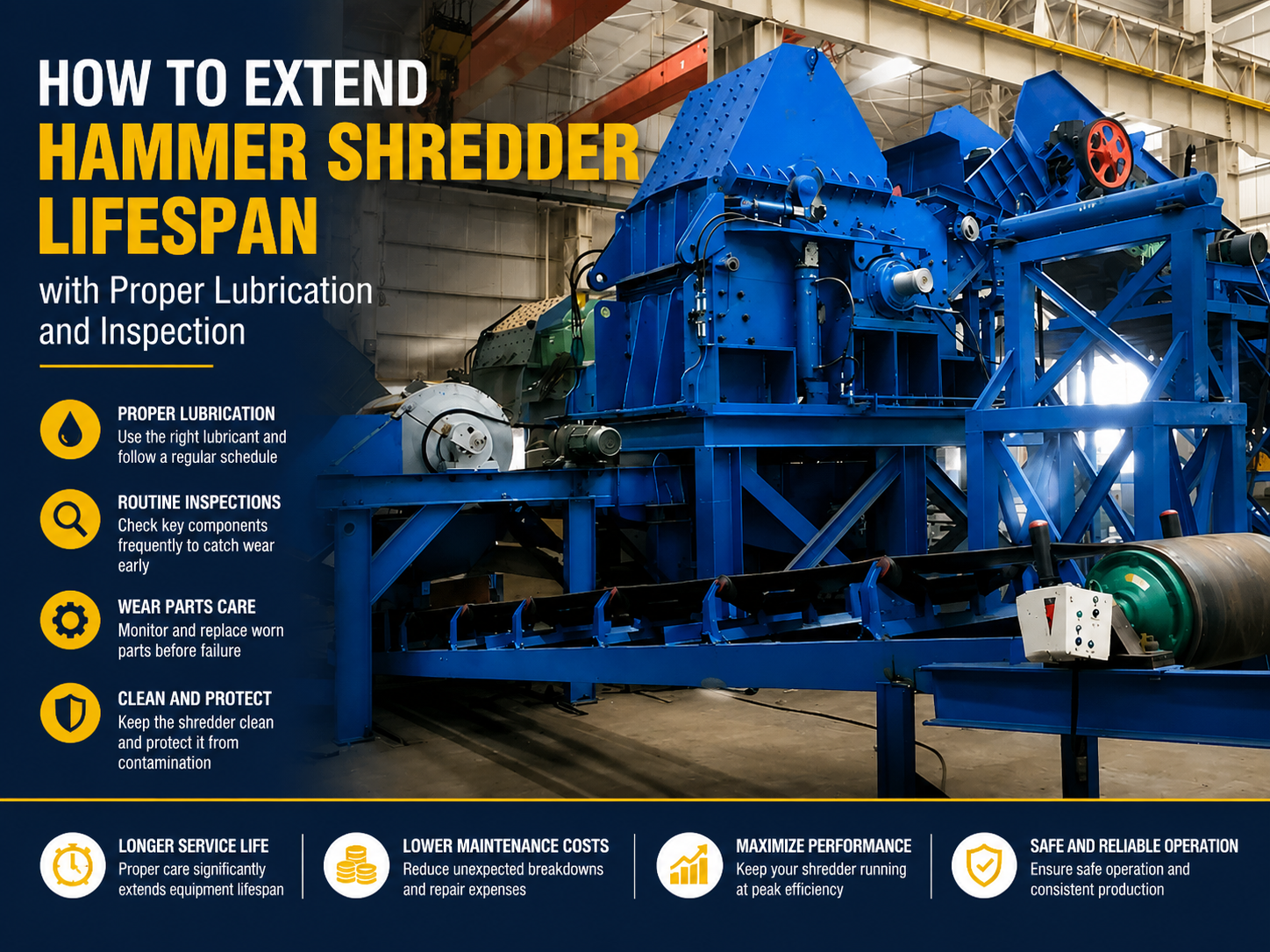
How to Extend Hammer Shredder Lifespan with Proper Lubrication and Inspection

Technical Overview of Hammer Shredder Longevity
The hammer shredder is the workhorse of the metal recycling and material processing industry. Designed to reduce bulky scrap into manageable, high-density fragments, these machines operate under extreme mechanical stress. To extend hammer shredder lifespan with proper lubrication and inspection, one must first understand the physics at play. A hammer shredder functions by utilizing high-velocity rotating hammers that strike the input material, shattering it against anvil plates and grates. This process generates immense kinetic energy, significant heat, and constant vibration.
HARSLE engineering emphasizes that the longevity of a shredder is not merely a product of its build quality but a result of consistent, scientifically-backed maintenance. The primary points of failure in these machines are the main rotor bearings, the hammer pins, and the internal liners. Without a rigorous lubrication schedule, the friction generated at the high-speed bearings can lead to thermal expansion, surface pitting, and eventual catastrophic seizure. Similarly, without regular inspection, minor structural fatigue in the rotor or hammers can escalate into a mechanical failure that compromises the entire unit.
Effective maintenance strategies focus on the ‘Tribology’ of the machine—the science of wear, friction, and lubrication. By maintaining a consistent film of lubricant between moving parts, operators can reduce the coefficient of friction, thereby lowering the operating temperature. Furthermore, a structured inspection routine allows for the detection of ‘creep’ or microscopic fractures in the metallurgy of the hammers before they break off and cause internal damage. In this guide, we will delve into the specific parameters and methodologies required to keep your HARSLE hammer shredder running at peak efficiency for decades.
The Role of Lubrication in High-Impact Environments
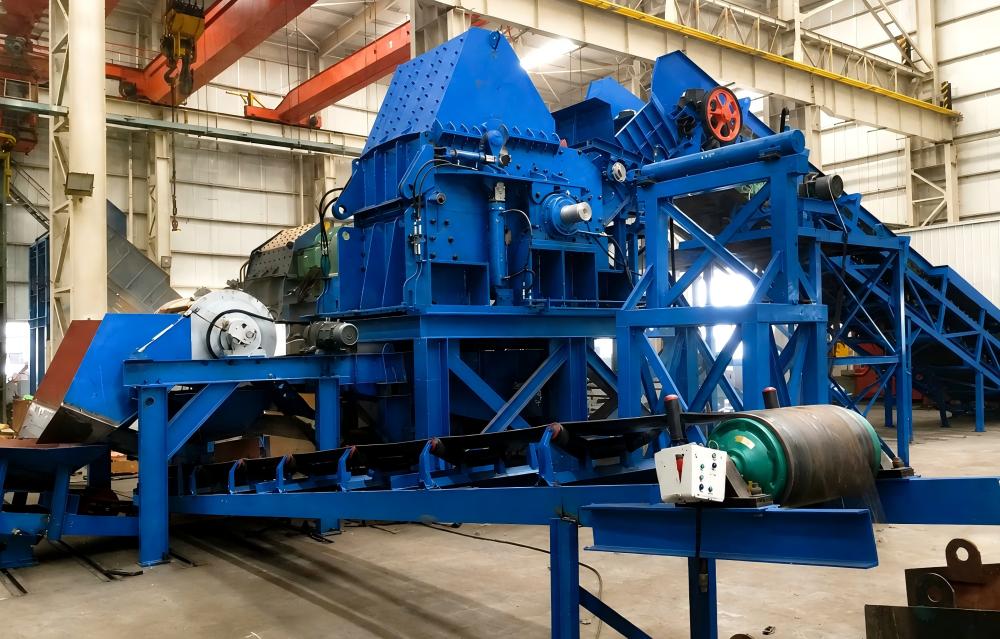
Lubrication in a hammer shredder serves three primary purposes: reducing friction, dissipating heat, and sealing out contaminants. Because shredders often operate in dusty, outdoor, or semi-enclosed environments, the grease used must act as a barrier against abrasive particles like metal dust and sand. If these particles enter the bearing housing, they act as a grinding paste, rapidly accelerating the wear of the rolling elements.
For HARSLE machinery, we recommend high-pressure (EP) lubricants that contain additives like molybdenum disulfide or graphite. These additives provide a ‘solid’ layer of protection even when the liquid oil film is momentarily squeezed out by heavy impact loads. The choice of grease consistency, typically measured by the NLGI (National Lubricating Grease Institute) grade, is also vital. Most industrial shredders require an NLGI 2 grade for standard temperatures, though colder climates may necessitate an NLGI 1 to ensure pumpability in automatic systems.
Core Parameters for Shredder Maintenance
To effectively extend hammer shredder lifespan with proper lubrication and inspection, operators must monitor several core technical parameters. These metrics provide a real-time health check of the machine and dictate when maintenance interventions are necessary. Ignoring these values often leads to premature component failure and increased downtime.
- Rotor Operating Temperature: The temperature of the main bearing housings should be monitored constantly. A steady-state temperature between 60°C and 75°C is normal. If temperatures exceed 90°C, it indicates either a lack of lubrication, over-greasing, or an impending bearing failure.
- Vibration Amplitude: Measured in mm/s (velocity) or g (acceleration), vibration is the clearest indicator of rotor imbalance. High vibration levels put undue stress on the frame and the foundation bolts.
- Hammer Wear Profile: Hammers should be inspected for the ’rounding’ of their leading edges. Once a hammer loses a certain percentage of its mass (typically 20-30%), the shredding efficiency drops, and the power consumption of the motor increases.
- Lubricant Contamination Level: Periodic grease analysis can reveal the presence of metallic shavings, indicating internal wear that is not yet visible to the naked eye.
- Drive Belt Tension: For belt-driven shredders, improper tension can lead to slippage (generating heat) or excessive radial load on the motor and rotor bearings.
Understanding these parameters allows for a transition from reactive maintenance (fixing things when they break) to predictive maintenance (fixing things before they break). HARSLE machines are designed with access points that make monitoring these parameters straightforward, but the responsibility lies with the operator to record and analyze this data daily.
Calculation Method for Lubrication Intervals
Determining how often to lubricate a hammer shredder is not a matter of guesswork. It involves calculating the ‘Grease Relubrication Interval’ based on the bearing type, speed, and operating conditions. A common formula used in industrial engineering is the SKF relubrication formula, adapted for high-impact machinery.
The base interval (tf) can be estimated using the following variables:
- n: Rotational speed (RPM).
- d: Bearing bore diameter (mm).
- k: Product of factors representing temperature, dust, and vibration.
For a typical hammer shredder, the formula might look like this: tf = k * ( (14,000,000 / (n * √d)) – 4 * d ). However, because shredders operate in ‘Very Harsh’ conditions, the factor ‘k’ is significantly reduced (often to 0.1 or 0.05), meaning the interval is much shorter than it would be for a clean-room motor. For example, if a standard calculation suggests 1000 hours, the environmental factors of a metal shredder might bring that down to every 8 to 24 hours of operation.
Additionally, the quantity of grease is critical. Over-filling a bearing housing causes ‘churning,’ where the grease is rapidly agitated, leading to extreme heat buildup. The standard calculation for grease quantity (G) in grams is: G = 0.005 * D * B, where D is the outside diameter of the bearing and B is the width. Using this precise amount ensures the bearing is protected without being smothered.
Hammer Shredder Technical Parameter Table
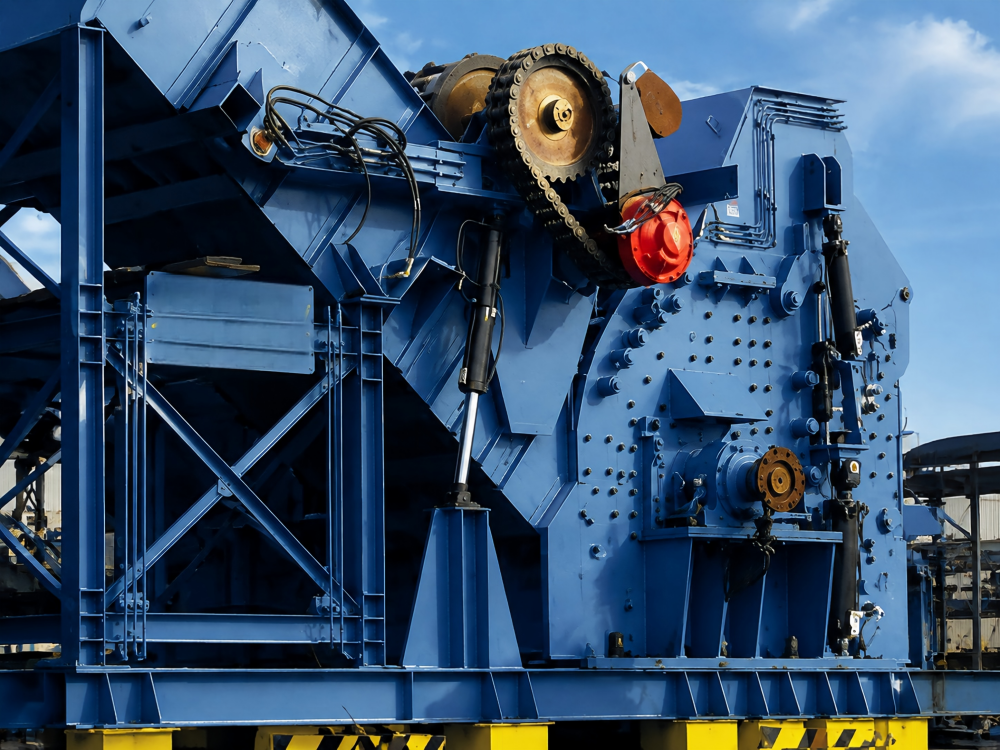
The following table outlines the standard operating and maintenance parameters for a mid-to-high capacity HARSLE hammer shredder. These values serve as a baseline for establishing your inspection protocols.
| Parameter | Standard Range | Critical Limit | Action Required |
|---|---|---|---|
| Main Bearing Temp | 60°C – 75°C | >95°C | Shut down and inspect lubrication |
| Vibration Velocity | <4.5 mm/s | >7.1 mm/s | Rebalance rotor / Check hammers |
| Lubrication Frequency | Every 8-12 Hours | >24 Hours | Immediate manual greasing |
| Hammer Clearance | 10mm – 25mm | >40mm | Adjust or replace grates/hammers |
| Motor Load | 70% – 85% | >100% | Reduce feed rate / Check for jams |
| Grease Type | NLGI 2 EP | N/A | Ensure compatibility with existing grease |
Common Engineering Mistakes in Shredder Maintenance
Even experienced maintenance teams can fall into traps that inadvertently shorten the machine’s life. One of the most common mistakes is mixing incompatible greases. Not all greases are chemically compatible; for instance, mixing a lithium-complex grease with a polyurea-based grease can cause the lubricant to thin and run out of the bearing, leaving it dry. Always stick to one brand and type, or perform a thorough flush before switching.
Another frequent error is ignoring the ‘First Hour’ symptoms. After a hammer change or a long period of downtime, the first hour of operation is critical. Many operators fail to perform a ‘warm-up’ cycle, where the machine is run empty to allow the lubricant to distribute and the metal components to reach thermal equilibrium. Sudden full-load operation can cause localized overheating and stress fractures.
Neglecting the foundation and mounting bolts is a third major mistake. Because hammer shredders generate significant vibration, the bolts securing the machine to the concrete pad can stretch or loosen over time. A loose foundation allows the entire chassis to flex, which misaligns the drive shaft and puts immense radial stress on the bearings. This often manifests as a bearing failure, but the root cause is actually structural. Regular torque checks on all structural fasteners are essential to extend hammer shredder lifespan with proper lubrication and inspection.
Finally, many operators rely solely on visual inspections of the hammers. While visual checks are good for seeing major wear, they cannot detect internal fatigue. HARSLE recommends periodic Dye Penetrant Testing (DPT) or ultrasonic testing on the rotor shaft and hammer pins during major overhauls to identify microscopic cracks that could lead to a catastrophic ‘thrown hammer’ event.
Selection Checklist for Maintenance-Friendly Shredders
When purchasing a new shredder or upgrading an existing one, look for features that facilitate easy maintenance. A machine that is hard to service will inevitably be neglected. Use this checklist during your selection process:
- Automatic Lubrication System: Does the machine include a PLC-controlled auto-greaser? This removes human error from the lubrication cycle.
- Hydraulic Housing Opening: Can the upper housing be opened hydraulically for easy access to the rotor and hammers?
- Vibration Sensors: Are integrated vibration transducers included to provide real-time feedback to the control room?
- Replaceable Liners: Are the internal wear plates (liners) bolted or welded? Bolted liners are much easier to replace during routine maintenance.
- Bearing Housing Design: Are the bearings housed in split-block pillows for easier replacement without stripping the entire shaft?
- Safety Interlocks: Does the machine have robust safety protocols that prevent operation during inspection?
- Tooling Compatibility: Does the manufacturer provide specialized tools for hammer removal and pin extraction?
Frequently Asked Questions (FAQ)
1. How often should I change the hammers in my shredder?
Hammer life depends entirely on the abrasiveness of the material being processed. For clean aluminum scrap, hammers may last weeks. For contaminated steel scrap, they may need flipping or replacing every few days. The rule of thumb is to replace or flip them when the shredding efficiency (tons per hour) drops by 15% or when the leading edge is rounded beyond the manufacturer’s spec.
2. Can I use a thinner grease in winter?
Yes, in extremely cold environments, an NLGI 1 or even NLGI 0 grease may be necessary to ensure the lubricant flows through the lines of an automatic system. However, ensure the grease still has the required Extreme Pressure (EP) additives to handle the impact loads of the shredder.
3. Why is my shredder vibrating more than usual after a hammer change?
This is usually due to a weight imbalance. Even new hammers can have slight variations in mass. It is critical to weigh hammers and install them in balanced pairs or sets across the rotor. If one side of the rotor is even a few hundred grams heavier than the opposite side, the centrifugal force at high RPM will cause significant vibration.
4. What is the most critical part to inspect daily?
The hammer pins and their locking mechanisms. A failed pin can result in a hammer being ejected at high velocity, which can destroy the internal grates, the rotor, and pose a severe safety risk to personnel. Daily visual checks of the pin security are mandatory.
5. How does HARSLE support long-term maintenance?
HARSLE provides detailed maintenance manuals, specialized tool kits, and remote technical support. We also offer high-quality replacement parts, including hammers with various metallurgical compositions (Manganese, Chrome, etc.) tailored to your specific material processing needs.
6. Is it better to over-grease than under-grease?
Neither is ideal, but over-greasing is a common cause of high bearing temperatures. Excess grease causes internal friction (churning), which generates heat. It is best to follow the calculated grease quantity and interval precisely to maintain the ideal lubricating film without causing thermal issues.


