How to Integrate a Hammer Shredder into an Industrial Scrap Recycling Line

Technical Overview of Hammer Shredder Integration
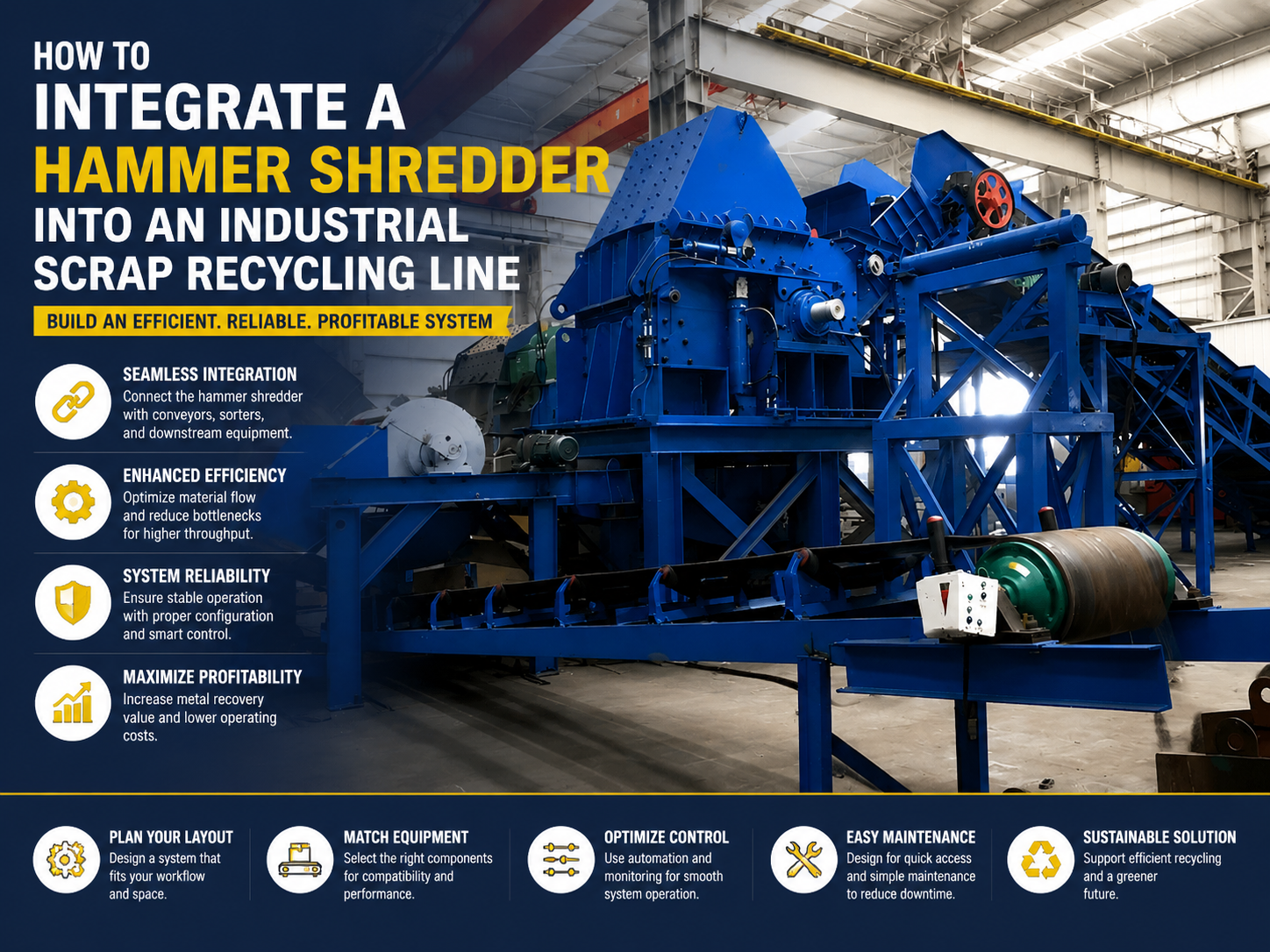
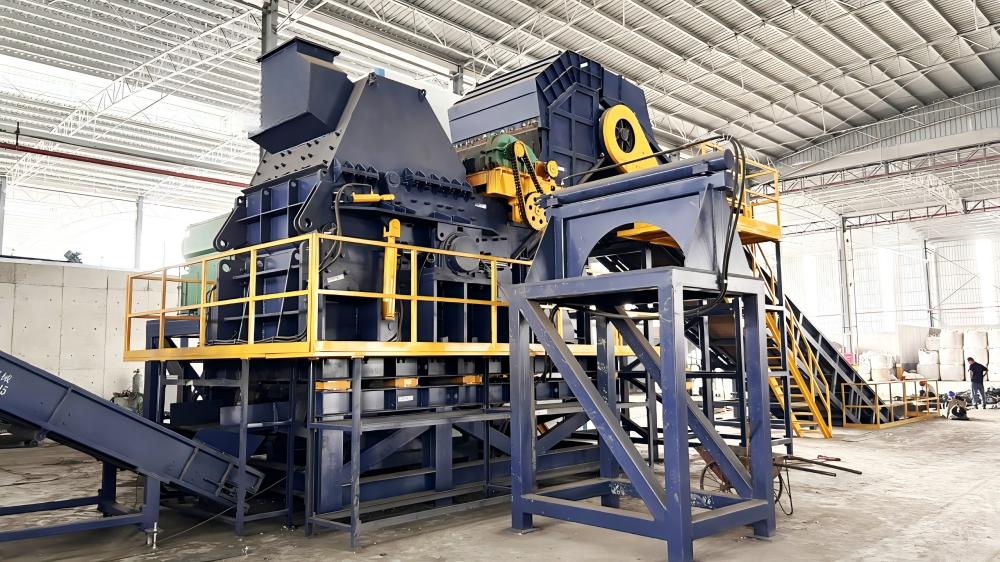
To successfully integrate a hammer shredder into an industrial scrap recycling line, one must first understand the mechanical synergy required between the shredder and its surrounding components. A hammer shredder, or hammer mill, operates on the principle of high-velocity impact. Unlike shear shredders that use torque to cut, hammer shredders utilize the kinetic energy of massive rotating hammers to shatter material against internal liners and grate bars. This process is essential for liberating different materials in complex scrap, such as separating copper windings from steel housings in electric motors or cleaning aluminum scrap from contaminants.
Integration begins with the feeding system. A consistent, controlled flow of material is critical. If the feed rate is too high, the rotor may stall or experience excessive wear; if too low, the machine operates inefficiently, wasting energy. Most modern industrial lines utilize a vibrating feeder or a heavy-duty slat conveyor equipped with a variable frequency drive (VFD). This allows the control system to adjust the input speed based on the motor load of the shredder, ensuring the machine stays within its optimal performance envelope.
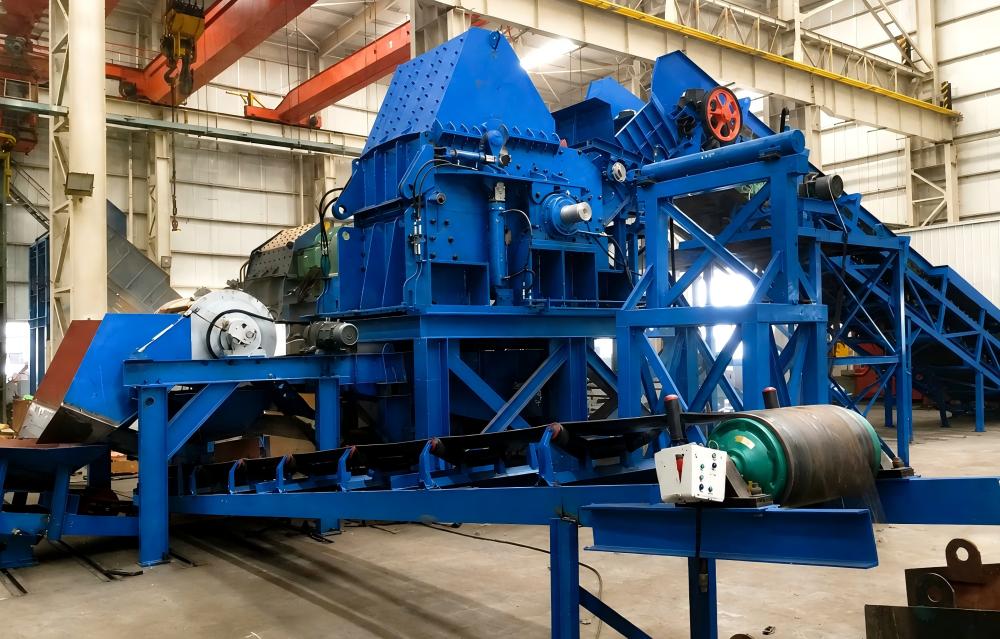
Downstream integration is equally vital. Once the material passes through the discharge grates, it must be quickly evacuated to prevent heat buildup and secondary grinding, which creates unnecessary fines. A typical configuration includes a heavy-duty discharge conveyor followed by a magnetic drum or overbelt magnet to extract ferrous metals. For non-ferrous recovery, eddy current separators and air classifiers (Z-boxes) are integrated further down the line to sort aluminum, copper, and light fluff (plastics/foam). The seamless transition between these stages defines the overall efficiency of the recycling plant.
Finally, structural integration cannot be overlooked. Hammer shredders generate significant dynamic loads and vibrations. The foundation must be engineered with vibration-damping mounts or massive concrete plinths to prevent structural fatigue in the surrounding facility. HARSLE recommends a holistic approach where the shredder is treated not as a standalone unit, but as the heart of a synchronized circulatory system of material flow.
Core Parameters for Successful Integration
When you integrate a hammer shredder into an industrial scrap recycling line, several core parameters dictate the success of the installation. The most critical is the Rotor Tip Speed. For scrap metal, tip speeds typically range between 50 and 70 meters per second. This speed provides the necessary kinetic energy to fracture tough alloys while maintaining a manageable wear rate on the hammers. If the speed is too low, the material will bounce rather than break; if too high, the hammers will wear prematurely due to excessive friction and heat.
Another essential parameter is the Grate Opening Size. The grates determine the final product size. Smaller openings result in a more uniform, denser product (ideal for furnace charging) but significantly reduce throughput and increase energy consumption per ton. Engineers must balance the requirements of the end-buyer (the steel mill or smelter) with the operational costs of the shredding line. Often, a two-stage approach is used where a primary shredder produces large fragments, followed by a secondary hammer mill for final sizing.
The Hammer Geometry and Metallurgy also play a pivotal role. Hammers are typically cast from manganese steel or specialized alloy steels with high chromium content. Manganese steel is preferred for its work-hardening properties; the more it is struck by hard scrap, the harder its surface becomes. The weight of the individual hammers must be matched to the density of the scrap. For light scrap like aluminum cans, lighter hammers are sufficient, but for heavy scrap like engine blocks, massive hammers weighing 50kg to 150kg each are required to maintain momentum through the impact zone.
Calculation Method for Shredder Capacity and Power
To accurately integrate a hammer shredder into an industrial scrap recycling line, engineers must calculate the required power and expected throughput. The basic formula for the kinetic energy (E) of a rotating hammer is:
E = ½ * I * ω²
Where I is the moment of inertia of the rotor assembly and ω is the angular velocity. However, for practical industrial application, we often use the Specific Energy Consumption (SEC) method. SEC is measured in kilowatt-hours per ton (kWh/t). For mixed scrap metal, the SEC typically ranges from 15 to 30 kWh/t depending on the desired density and fragment size.
To calculate the required motor power (P) for a target throughput (T) in tons per hour, the formula is:
P (kW) = T (t/h) × SEC (kWh/t) / Efficiency Factor
The efficiency factor accounts for mechanical losses in the drive system (belts, bearings) and usually ranges from 0.85 to 0.92. For example, if you aim to process 10 tons of scrap per hour with an SEC of 20 kWh/t, you would require a motor of approximately 235 kW. It is always advisable to oversize the motor by 20% to handle peak loads caused by “unshreddables” or surges in material density.
Parameter Table for Industrial Hammer Shredders
The following table provides a reference for selecting the appropriate shredder model when planning to integrate a hammer shredder into an industrial scrap recycling line. These values are representative of HARSLE’s heavy-duty industrial series.
| Model Series | Rotor Diameter (mm) | Motor Power (kW) | Throughput (t/h) | Max Feed Size (mm) | Typical Application |
|---|---|---|---|---|---|
| HS-800 | 800 | 90 – 132 | 3 – 6 | 400 | Electronic Waste, Al-Profiles |
| HS-1200 | 1200 | 200 – 315 | 8 – 15 | 800 | Car Baler Scrap, White Goods |
| HS-1600 | 1600 | 450 – 800 | 20 – 40 | 1200 | Heavy HMS, Engine Blocks |
| HS-2000 | 2000 | 1000+ | 50 – 80 | 1500 | Full ELV (End-of-Life Vehicles) |
Common Engineering Mistakes in Shredder Integration
One of the most frequent mistakes when you integrate a hammer shredder into an industrial scrap recycling line is neglecting the Infeed Control Logic. Many operators rely on manual feeding, which leads to “slugging” the machine. When a large mass of scrap enters the chamber all at once, the motor current spikes, often triggering a safety shutdown. A sophisticated PLC-based control system should be implemented to monitor the motor’s amperage and automatically pause or reverse the infeed conveyor when the current exceeds a pre-set threshold. This ensures the shredder operates at its maximum continuous rating without risking damage.
Another common error is Inadequate Dust and Fines Management. Shredding metal, especially contaminated scrap, generates significant amounts of dust, metallic fines, and light organic matter. If a proper cyclonic dust extraction system is not integrated, these particles can settle in the motor windings, causing electrical failures, or accumulate in the bearings, leading to premature wear. Furthermore, environmental regulations in most jurisdictions require active dust suppression or filtration to maintain air quality standards.
Thirdly, engineers often underestimate the importance of Magnetic Separation Placement. If the magnetic separator is placed too far from the shredder discharge, the material may have already settled or tangled, making it harder to pull ferrous pieces out of the mix. Conversely, if it is too close, the high velocity of the material coming off the shredder belt might overcome the magnetic force. The ideal integration involves a “head pulley” magnet or an overbelt magnet positioned at a point where the material flow is thin and evenly distributed.
Finally, Maintenance Access is frequently overlooked during the layout phase. Hammer shredders require regular hammer rotations and replacements, as well as grate inspections. If the surrounding conveyors and structures are built too tightly around the machine, maintenance tasks that should take four hours can take two days. HARSLE designs its shredders with hydraulic opening housings, but the facility layout must provide enough clearance for these components to swing open and for overhead cranes to lift the heavy rotor if necessary.
Selection Checklist for Integrating a Hammer Shredder
Before finalizing your plan to integrate a hammer shredder into an industrial scrap recycling line, use this checklist to ensure all technical and operational requirements are met:
- Material Characterization: Have you defined the maximum thickness and tensile strength of the toughest scrap in your feed?
- Power Supply Capacity: Does your facility have the electrical infrastructure to handle the high starting current (Inrush current) of a large shredder motor? (Consider Soft Starters or VFDs).
- Foundation Engineering: Has a structural engineer reviewed the dynamic load specifications to design a vibration-isolated foundation?
- Upstream/Downstream Synchronization: Are the conveyor speeds interlocked with the shredder’s PLC to prevent bottlenecks?
- Wear Part Logistics: Do you have a storage plan for spare hammers, pins, and grates to minimize downtime?
- Safety Systems: Are emergency stop circuits integrated across the entire line, including the shredder, conveyors, and separators?
- Environmental Compliance: Is the noise attenuation (enclosures) and dust collection system sufficient for local regulations?
- Separation Efficiency: Is the downstream sorting equipment (Eddy Current, X-Ray, etc.) sized to handle the peak throughput of the shredder?
Frequently Asked Questions (FAQ)
1. How often should hammers be replaced in a scrap recycling line?
The lifespan of hammers depends entirely on the abrasiveness of the material and the metallurgy of the hammers. In a typical industrial scrap recycling line processing mixed steel scrap, hammers may need to be rotated every 40-80 hours and replaced every 150-300 hours. Using high-quality manganese steel from HARSLE can extend these intervals significantly.
2. Can a hammer shredder process unshreddable items like large shafts?
Hammer shredders are designed with a “reject door” or a “bale breaker” feature. If an unshreddable object (like a solid steel shaft or a large piece of manganese track) enters the chamber, the hammers will push it toward a safety release door, allowing it to exit the chamber without destroying the rotor. However, frequent encounters with unshreddables will cause significant wear and potential fatigue.
3. What is the difference between a vertical and horizontal hammer shredder?
Horizontal shredders (the most common) use a horizontal rotor and are excellent for high-volume throughput and heavy scrap. Vertical shredders (often called densifiers) use a vertical shaft and are better for “balling up” thin scrap like aluminum or copper wire to increase its bulk density. Most integrated scrap recycling lines use horizontal shredders for primary processing.
4. How do I reduce the noise generated by the shredder?
Integrating a hammer shredder involves managing noise levels that can exceed 110 dB. This is typically handled by installing the shredder inside a sound-insulated enclosure (doghouse) and using rubber-lined chutes for material transfer. Additionally, ensuring the hammers are balanced reduces mechanical vibration noise.
5. Why is the moisture content of the scrap important?
If the scrap is too wet or contains high amounts of oil/sludge, it can cause the fines to stick to the grates, eventually clogging them. This reduces throughput and increases the risk of internal fires due to friction. When you integrate a hammer shredder, consider a pre-treatment stage or a specialized dust extraction system if processing wet materials.
6. What role does the fly-wheel play in the shredder?
In many designs, the rotor itself acts as a massive flywheel. The stored rotational energy helps the machine maintain speed when a particularly tough piece of scrap enters the chamber. This prevents the motor from stalling and smooths out the power consumption peaks, which is vital for the stability of the industrial power grid.